
Reviewed · OLD TOWN WALKING TOURS
Zagreb: City and WWII Tunnels Walking Tour
Zagreb’s best sights are packed into a compact route, and this tour links them with a useful story: grand Lower Town parks give way to market stalls, wartime tunnels, and the medieval Upper Town. The most unusual stop is the Grič Tunnel, followed by views from Grič Hill and the landmarks around Gradec.
I like the tour’s efficient route and its mix of everyday Zagreb with major sights. Dolac Market and Tkalčićeva Street feel more connected to local life than a string of monuments, while guides such as Marko, Robert, Iva, and Lucia add humor, history, food tips, and practical advice. The main drawback is important: the funicular is closed for renovation until March 2026, and the tunnels can also be unavailable on certain dates.
In This Review
- Key points at a glance
- Why this route works so well in Zagreb
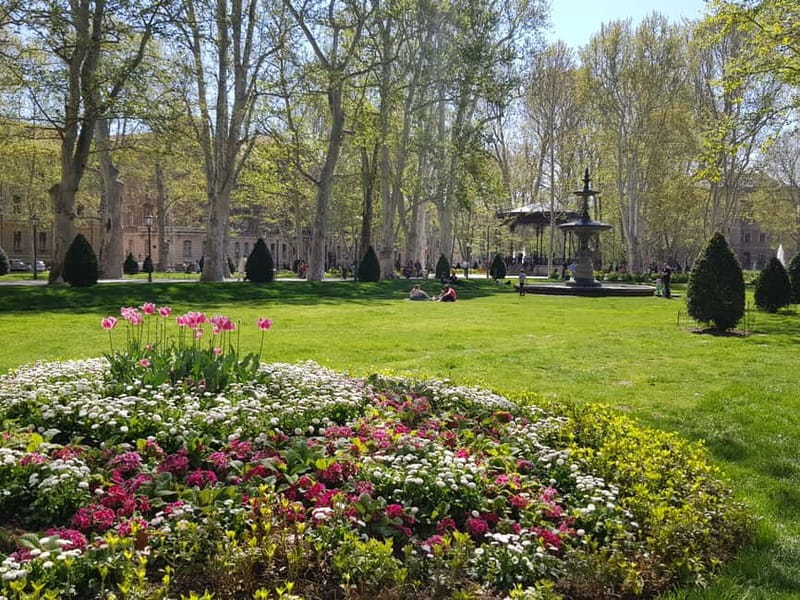
- Starting among the trees at Zrinjevac Park
- Ban Jelačić Square and Zagreb Cathedral
- Dolac Market: the most local-feeling stop
- Inside the Grič Tunnel
- The funicular and the climb to Gradec
- Lotrščak Tower and the views from Grič Hill
- St. Mark’s Church and the Stone Gate
- Ending on Tkalčićeva Street
- The guides make the difference
- Weather, timing, and what to bring
- Who should book this Zagreb walk?
- Should you book it?
- FAQ
- How long does the Zagreb City and WWII Tunnels Walking Tour last?
- Where does the tour start?
- Where does the tour finish?
- Is the funicular ride included?
- Is the tour offered in English?
- Are food and drinks included?
Key points at a glance
- WWII tunnels beneath the city: See a less polished but important part of Zagreb’s recent past.
- A complete central-Zagreb route: Cover Zrinjevac, Ban Jelačić Square, the cathedral, Dolac Market, Gradec, and Tkalčićeva Street.
- English-speaking local guides: Guides including Marko, Robert, Iva, Lucy, and Lucia are praised for clear explanations, warmth, and humor.
- Upper Town views: Grič Hill gives you a useful visual introduction to Zagreb’s layout.
- Funicular plans need checking: The ride is included when operating, but renovation keeps it closed until March 2026.
- Good value at $23: Two and a half hours with a licensed guide costs less than many larger city sightseeing tours.
Why this route works so well in Zagreb
This is a sensible first look at Zagreb because it connects the city’s two main historic zones without wasting time on long transfers. You begin in the Lower Town, where parks and broad streets reflect the city’s later growth, then walk uphill into Gradec, the older Upper Town.
The route also moves through several different versions of Zagreb. You get formal squares, a working food market, a wartime tunnel, a short funicular journey when available, medieval gates, political symbols, and café streets. That variety keeps the walk from becoming a parade of statues and dates.
The tour lasts about 2.5 hours. That is long enough to give each area some context, but short enough to fit into a day of independent exploring. I would use it early in your stay, since the guide’s restaurant suggestions and orientation can help you plan the rest of your time.
The price is $23 per person. For that fee, you receive a licensed guide and the funicular ticket when the funicular is running. Food, drinks, and entry to anything beyond the stated route are not included. Since Zagreb’s center is easy to explore on foot, the main value is not transportation. It is the explanation, the route planning, and the chance to ask questions as you go.
More Old Town Walking Tours in Zagreb
- Zagreb: Small Group Walking Tour City Center and WW2 Tunnels
★ 4.9 · 895 reviews - Walking tour of Zagreb
★ 5.0 · 383 reviews - Zagreb Small Group Guided Walking Tour with WW2 Tunnels
★ 5.0 · 380 reviews
Starting among the trees at Zrinjevac Park
Meet in front of the Meteorological station at Trg Nikole Zrinskog 2. The tour begins in Zrinjevac Park, one of the Lower Town’s most photogenic public spaces.
This is a pleasant opening because you are not thrown straight into a lecture beside a busy road. The park gives your guide room to introduce Zagreb and point out the city’s layout. You can take photos here, but keep the camera down long enough to listen. The early explanation helps the later walk make sense.
Zrinjevac is also a good place to arrive a little early. The meeting point is specific, but central squares can be confusing when you are unfamiliar with local names. Have the address ready on your phone and look for the Meteorological station rather than simply waiting somewhere in the park.
From here, the route moves toward Bogovićeva Street. This part of Zagreb is lined with bars and restaurants, so the guide can help you notice where the city’s café culture takes place. It is not a formal sightseeing stop in the same way as the cathedral, but it gives the tour a more ordinary, lived-in feel.
Ban Jelačić Square and Zagreb Cathedral
Next comes Ban Jelačić Square, Zagreb’s central meeting point. It is an easy place to understand the city’s geography, since many routes through the center lead here.
Your guide pauses for photographs and explains the square and its role in Zagreb. This is also where the Lower Town and the route toward the Upper Town begin to feel connected. If you are still getting your bearings, pay attention to the directions and street names. You will likely pass through this square again during your stay.
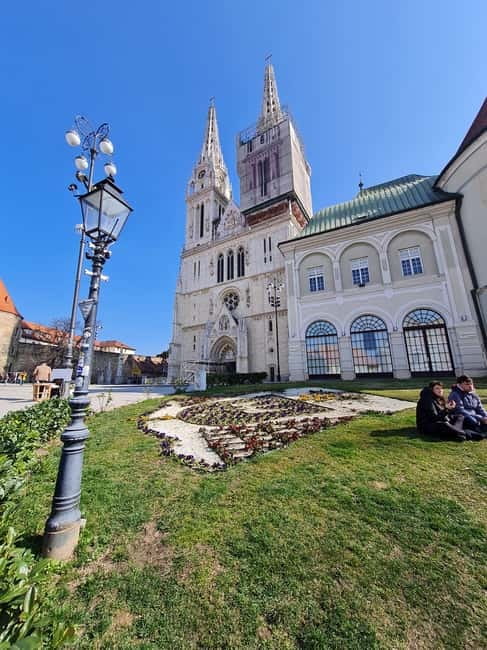
The cathedral follows. Its twin towers are among Zagreb’s most recognizable sights, though the building and nearby monuments have been affected by earthquake repairs. Access and visibility can change, and some parts of the city remain under repair. The tour still gives you the cathedral’s place in Zagreb’s story, even if you cannot see every detail or enter every building.
That is one reason a guide helps here. A quick photo stop on its own tells you what the cathedral looks like. A good explanation tells you why it matters and how it fits into the city’s past and present.
Dolac Market: the most local-feeling stop
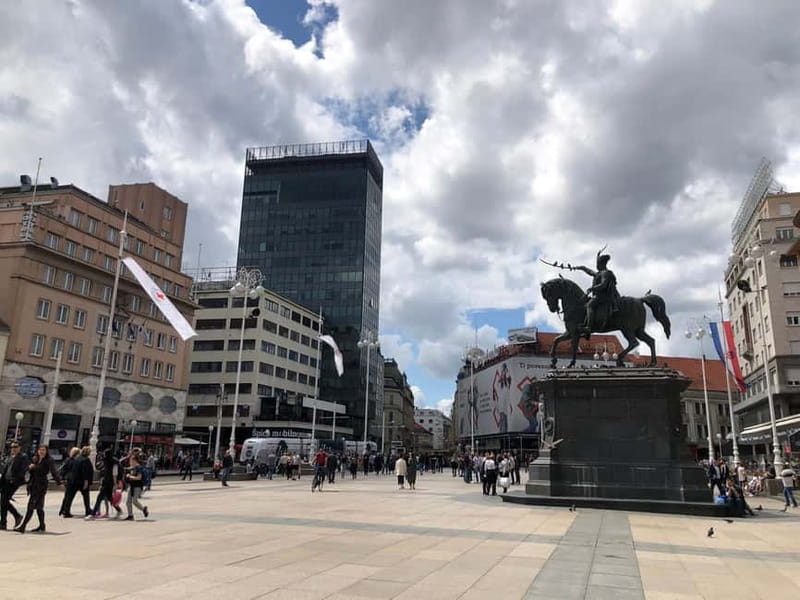
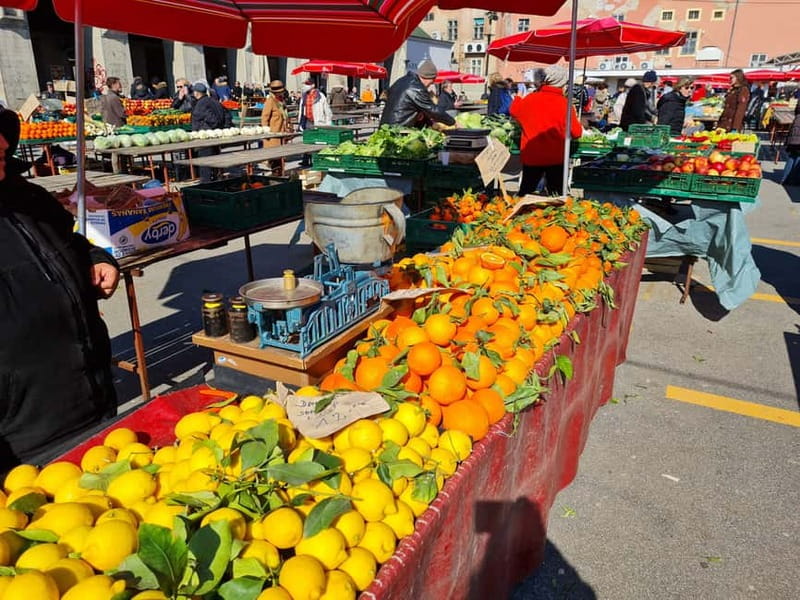
Dolac Market is one of the strongest parts of the walk. You pass from the cathedral into a place where Zagreb’s daily food trade takes center stage.
The market is a useful counterpoint to the monumental sights. Instead of only hearing about rulers, churches, and old walls, you see the practical side of city life. The tour includes time to visit and sightsee, but food and drinks are not included, so you should not expect a market tasting.
If you are interested in local food, this is a good place to ask questions. Your guide may offer tips about what to buy or where to eat later, though the exact advice depends on the person leading your group. Several guides receive strong praise for useful restaurant suggestions, so keep your phone handy and note names as they come up.
The market can be busy, and you will need to stay close to the group. This is a walking tour, not a slow shopping visit. If you want to browse every stall, plan to return on your own.
Same stretch of coast, a completely different day out:
- From Zagreb: Plitvice & Rastoke Guided Day Trip with Ticket
★ 4.9 · 2,955 reviews - Zagreb: Rastoke & Plitvice Lakes Guided Tour with Ticket
★ 4.9 · 1,897 reviews - Communism & Croatian Homeland War Tour
★ 5.0 · 1,355 reviews - Best of Zagreb with the WW2 Tunnels
★ 5.0 · 973 reviews
Inside the Grič Tunnel
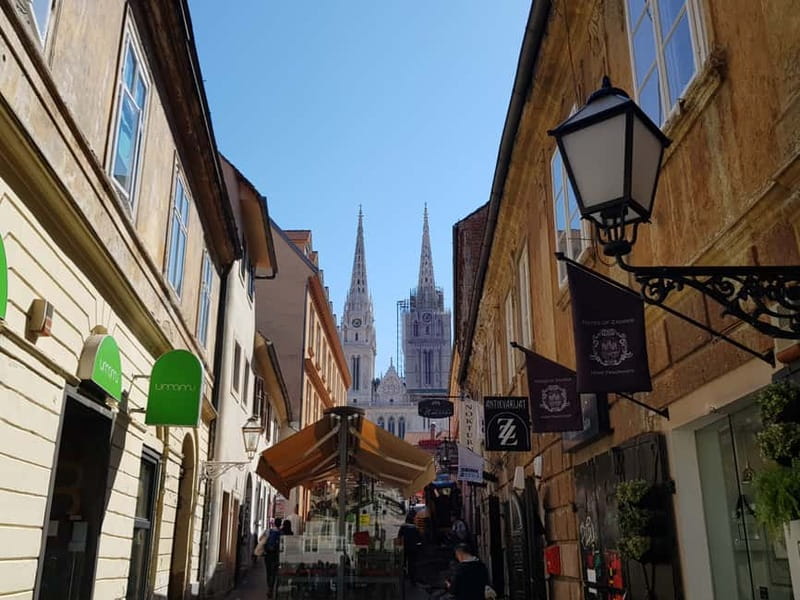
The walk then turns toward the WWII tunnels, one of the route’s most distinctive stops. The Grič Tunnel adds a layer of recent history that many standard city walks skip.
The tunnel is not a grand monument. That is precisely why it works. You leave the open market streets and enter a more enclosed space tied to Zagreb’s wartime experience. Your guide supplies the context, helping you connect the tunnel with the city above.
Conditions inside may feel different from the streets, so sensible walking shoes are a good idea. The tour operates in all weather, but the tunnel itself does not operate on certain dates. Check the current conditions before booking if this stop is the main reason you are interested.
One practical warning matters here: the tunnel and other sights can be affected by repairs or operating schedules. The route remains worthwhile without one stop, but you should not assume every listed feature will be available on every date.
The funicular and the climb to Gradec
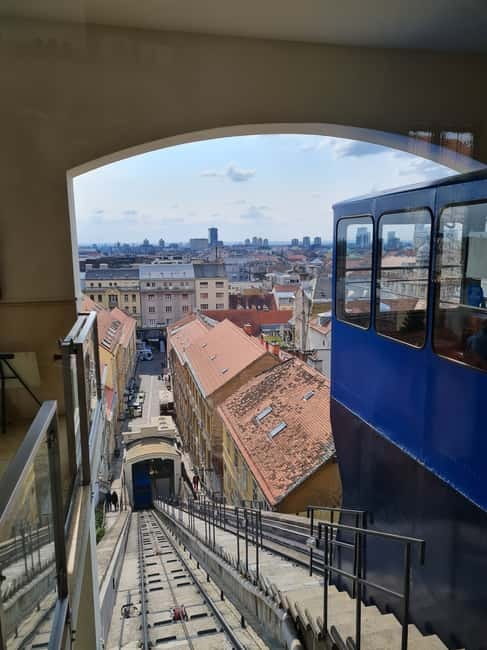
Under normal conditions, the tour includes a ride on Zagreb’s famously short funicular. The ride takes about two minutes and links the Lower Town with the Upper Town.
It is a charming little piece of city transport rather than a major sightseeing journey. You will not spend long on board, but it saves part of the climb and gives the route a memorable change of pace.
At present, the funicular is closed for renovation until March 2026. If you book before it reopens, expect the guide to use the walking route instead. Several people found the closure disappointing, especially after seeing the ride listed as a highlight, but also felt that it did not spoil the tour. That is a fair assessment. The funicular is fun, but it is not the reason to book this experience.
Once you reach Grič Hill, you enter Gradec, Zagreb’s Upper Town. The change in atmosphere is clear. The streets feel older and more enclosed, and the city opens out below you from the hilltop viewpoints.
Lotrščak Tower and the views from Grič Hill
Lotrščak Tower is one of the Upper Town’s key landmarks and a natural place for your guide to explain Zagreb’s defenses and old town structure. The stop is primarily sightseeing and photography, not a guaranteed tower visit.
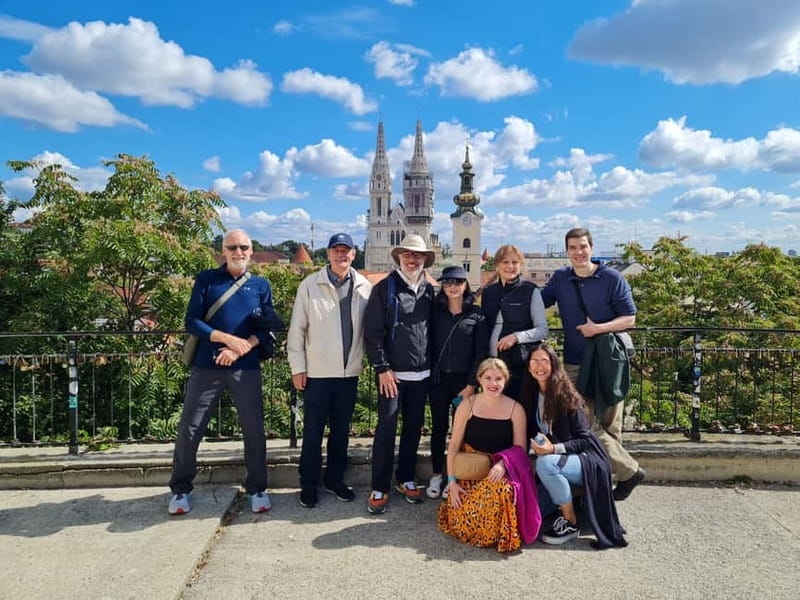
The views from Grič Hill are valuable because they give you a visual map. After walking through the Lower Town, you can look back and understand how the parks, squares, and central streets fit together. On a clear day, this is one of the best points for city photographs.
You will want comfortable shoes here. The route includes steady walking and changes in elevation, even though it is not described as a strenuous hike. The tour is wheelchair accessible, but conditions around old-town streets and any temporary repair work can vary, so ask the provider about the exact route if you need detailed mobility information.
St. Mark’s Church and the Stone Gate
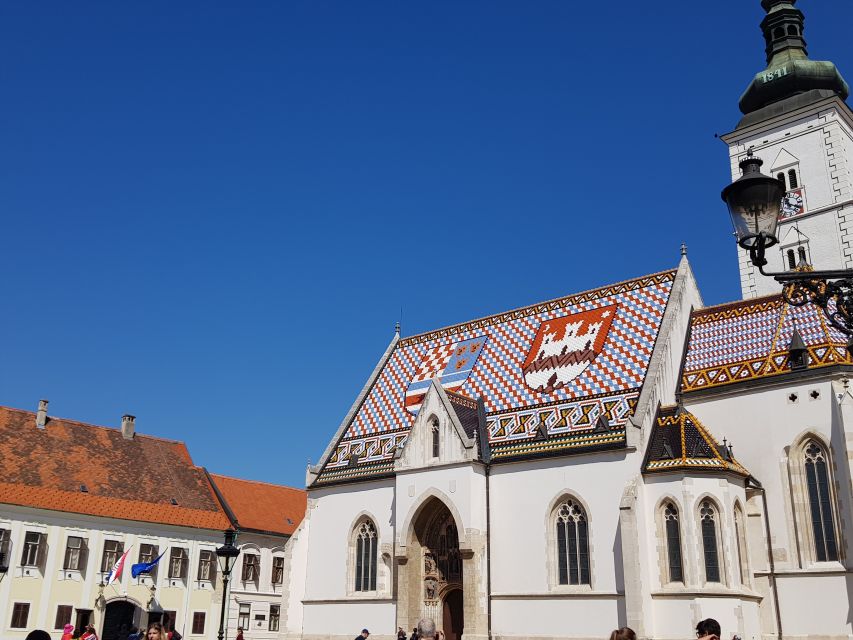
The Upper Town section continues to St. Mark’s Church, best known for its colorful tiled roof. It is one of Zagreb’s most recognizable images and a strong photo stop.
The church is also a useful reminder that the Upper Town is not just a scenic quarter. It is tied to Zagreb’s civic and political life, and your guide can explain the symbols and buildings around the square. The exact access arrangements can change, so treat this as a guided exterior stop unless your guide says otherwise.
The Stone Gate follows. This old gateway is one of the most atmospheric points on the route because it is both a passage and a place of devotion. The tour gives you time to see it and hear why it matters, rather than simply walking through without context.
These stops are compact, but do not rush them. They are the part of Zagreb where a few minutes of explanation can transform an attractive street into a place with meaning.
Ending on Tkalčićeva Street
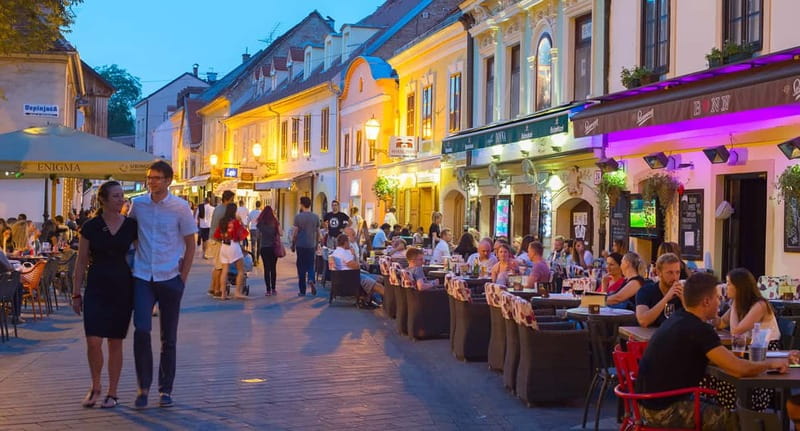
The route descends from Gradec toward Tkalčićeva Street before finishing back at Ban Jelačić Square. Tkalčićeva is known for its bars and restaurants, making it a practical place to continue your evening or stop for a snack.
Food and drinks are not included, which is actually useful here. You can choose your own place and budget instead of being tied to a group meal. Ask the guide for suggestions, especially if you want something beyond the most obvious café option.
The final return to Ban Jelačić Square makes the tour easy to use as an orientation walk. You finish near the same central area where you started, with a better sense of where the Lower Town, market, Upper Town, and restaurant streets sit in relation to one another.
The guides make the difference
The strongest part of this experience is the guiding. The listed language is English, and the guides are licensed. Names that appear repeatedly in the tour operation include Marko, Robert, Iva, Lucy, and Lucia, though you will need to check who is assigned to your departure.
Marko is described as energetic, patient, and especially good at answering questions. His tours combine history, food advice, local jokes, and stories about Zagreb. Robert is known for a humorous, lively style and for adding practical suggestions about places to eat and things to do next.
Iva is warm and clear, with a style that helps people feel comfortable asking questions. Lucy and Lucia are also praised for strong explanations, clear speaking voices, and good control of the pace. One useful detail from the feedback is that even a somewhat larger group was managed well, though a big group can still make it harder to hear or take photographs.
Guide quality can vary from one departure to another, as it does on any shared walking tour. Still, the repeated pattern is encouraging: the guides explain clearly, add humor, and take pride in their city without turning the walk into a nonstop lecture.
Weather, timing, and what to bring
The tour operates in all weather conditions. Bring water, wear shoes suited to several hours on city streets, and dress for the forecast. The route includes parks, squares, market areas, old-town streets, and a hill, so comfort matters more than stylish footwear.
Allow the full 2.5 hours. The walk is packed with stops, but the pace is generally described as manageable rather than rushed. If you have a train, museum booking, or meal reservation immediately afterward, leave extra time.
The funicular is closed for renovation until March 2026, and the WWII tunnels and funicular may not operate on certain dates. Check availability and current operating information before you commit to the experience. If the funicular is essential to you, wait until it reopens or confirm the replacement route.
You can cancel up to 24 hours ahead for a full refund, and the reserve-now, pay-later option gives you some flexibility. The activity is wheelchair accessible, though anyone needing a precise route assessment should confirm current conditions before arrival.
Who should book this Zagreb walk?
I would recommend it most strongly if you are visiting Zagreb for the first time, have only a day or two, or want a clear introduction before exploring alone. It is also a good choice if you enjoy history but prefer it mixed with markets, cafés, views, and local stories.
Families and mixed-age groups may like the short funicular ride when it operates, the varied stops, and the moderate length. Food-focused visitors will appreciate ending near Tkalčićeva and passing through Dolac Market, though you should budget separately for anything you buy.
You may want a different experience if you prefer long museum visits, private guiding, or a slow photography walk. The route covers many places, so most stops are introductions rather than extended visits. Earthquake repairs and temporary closures can also limit what you see inside certain sites.
Should you book it?
At $23, this is a strong-value way to get oriented in central Zagreb. You cover the Lower and Upper Town, see the cathedral, market, tunnel, tower, church, gate, and main squares, and receive the local context that a self-guided walk often misses.
Book it if you want a lively overview and useful advice for the rest of your visit. Just adjust your expectations about the funicular: until March 2026, the tour cannot provide that ride. If the tunnels are your priority, confirm they will be open on your date. With those points understood, this is an efficient and personable introduction to Zagreb.
FAQ
How long does the Zagreb City and WWII Tunnels Walking Tour last?
The tour lasts 2.5 hours. Check availability for the starting times offered on your chosen date.
Where does the tour start?
Meet in front of the Meteorological station at Trg Nikole Zrinskog 2, beside Zrinjevac Park.
Where does the tour finish?
The activity ends back at the meeting point in the central area.
Is the funicular ride included?
The funicular ticket is included when the funicular is operating. It is closed for renovation until March 2026, so walking is expected during that period.
Is the tour offered in English?
Yes. The tour has a live English-speaking guide.
Are food and drinks included?
No. Food and drinks are not included, but the route passes Dolac Market, Bogovićeva Street, and Tkalčićeva Street, where you can decide where to eat or stop for a snack.
More Walking Tours in Zagreb
- Zagreb: Restaurants, Food & Old Town Walking Tour
★ 5.0 · 191 reviews - Zagreb Unveiled: Private walking tour with a local guide
★ 5.0 · 185 reviews - Zagreb Walking Food Tour – Sightseeing – Dolac Market Visit
★ 5.0 · 38 reviews - Exclusive old Zagreb walking tour
★ 4.4 · 32 reviews
Just added around Zagreb
- Toast to the Morning After: Zagreb Museum of Hangovers Visit★ 4.0 · 39 reviews
- From Split: Transfer to Zagreb with Stop at Plitvice Lakes★ 4.6 · 44 reviews
- Private Walking Tour of Zagreb★ 4.9 · 5 reviews
- Jump into Zagreb: Walking Tour with local guide★ 4.8 · 3 reviews
- From Zagreb to Plitvice Lakes and Rastoke – Private day tour★ 5.0 · 4 reviews
- From Zagreb: Varazdin Baroque Town & Trakoscan Castle★ 4.9 · 38 reviews
- From Zagreb: Plitvice Lakes & Rastoke Private Tour★ 5.0 · 9 reviews
- From Zagreb: Prehistoric and Medieval Croatia Tour★ 4.9 · 3 reviews
Old Town Walking Tours, compared.
Walking Tour of Split and Diocletian’s Palace
Read our review →
Krka Waterfalls tour with Trogir Walking tour and Krka panoramic boat cruise
Read our review →
City Walls Early Morning or Sunset Walking Tour
Read our review →
Plitvice Lakes with Boat Ride and Zadar Old Town Tour
Read our review →Browse the lists this tour appears in