
Reviewed · OLD TOWN WALKING TOURS
Walking tour of Zagreb
Zagreb reveals itself best on foot, and this tour gives you a quick route through its parks, market lanes, medieval streets, and Upper Town viewpoints. You’ll hear stories about Croatian politics, war, folklore, food, and daily life rather than simply ticking off monuments. Guides such as Robert, Marko, Marco, Iva, and Lucia are praised for mixing clear history with humor and useful local advice.
I especially like the stop at Dolac Market, where Zagreb’s food culture feels more tangible than it does in a museum. I also like the Grič Tunnel and Upper Town section, which add a little mystery and atmosphere to a standard city walk.
The main drawback is that this is an overview, not a deep visit inside each sight. Cathedral access may be limited by earthquake repairs, and the funicular is closed for renovation until March 2026, so you should not book this expecting a ride right now.
In This Review
- Key points to know before booking
- Starting beneath the trees at Zrinjevac Park
- Ban Josip Jelačić Square and the city center
- Zagreb Cathedral and the limits of earthquake repairs
- Dolac Market, where Zagreb gets practical
- Beneath Grič Hill in the Second World War tunnel
- The funicular and the climb to Upper Town
- Lotrščak Tower and the Grič cannon
- Fifty minutes in medieval Gornji Grad
- Petrinjska Gate and Tkalčićeva Street
- What the $24.20 price delivers
- Pace, weather, and practical comfort
- Who should book this Zagreb walk?
- Should you book it?
- FAQ
- How long does the walking tour of Zagreb last?
- What language is the tour offered in?
- Where does the tour begin?
- Where does the tour end?
- Is the funicular ride included?
- Will the tour enter Zagreb Cathedral?
- Can the Grič Tunnel be visited on every tour?
- What happens if the weather is poor?
Key points to know before booking
- A strong first-day orientation: The route covers Zagreb’s central sights in about two and a half hours.
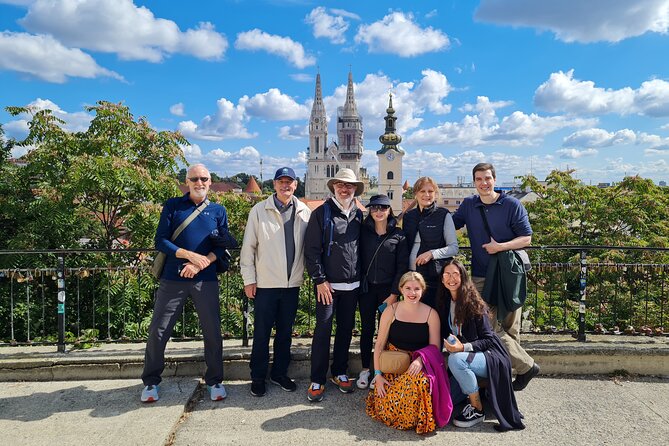
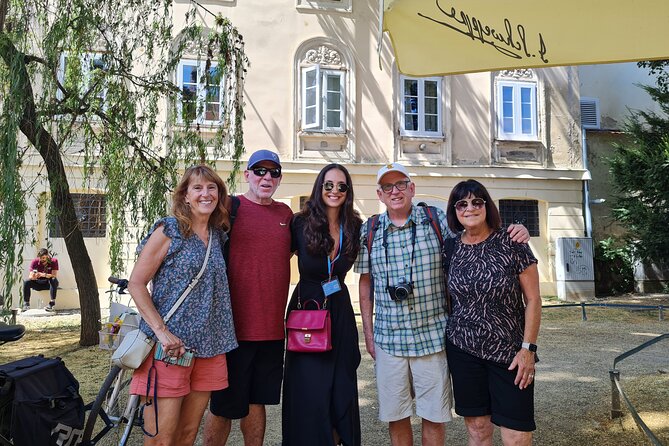
- The guide makes the difference: Robert, Marko, Marco, Iva, Lucia, and Lucy are all named in the feedback, with humor and clear storytelling praised repeatedly.
- The market adds local flavor: Dolac is not just a photo stop. You’ll hear about Croatian produce and food traditions.
- Grič Tunnel is a memorable detour: This former Second World War military tunnel offers a cool, unusual shortcut beneath the city.
- The funicular is not currently operating: Its ticket is included when the railway runs, but renovation is scheduled through March 2026.
- The group can reach 25 people: That is still manageable, though it may feel less personal than a tiny private walk.
Starting beneath the trees at Zrinjevac Park
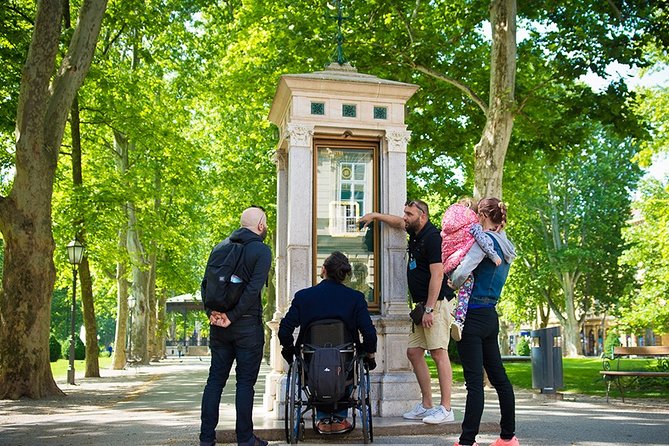
The walk begins at Zrinjevac 2, in Zagreb’s elegant Zrinjevac Park. This is a sensible meeting place, but use the clock in the park as your visual marker. One person had trouble getting the exact point to appear correctly in Google Maps and Apple Maps, so arriving early and looking for the clock can save a rushed start.
Zrinjevac is a pleasant introduction to central Zagreb. Its formal paths and open lawns give the guide room to explain how the city is arranged before the group moves into tighter streets. You’ll have time for photos, too, which helps ease you into the pace of the walk.
From here, you pass along Bogovićeva ulica, a street lined with bars and restaurants. The stop is brief, but it gives you a glimpse of Zagreb’s cafe culture and a useful sense of where people go for a drink or meal.
More Old Town Walking Tours in Zagreb
- Zagreb: Small Group Walking Tour City Center and WW2 Tunnels
★ 4.9 · 895 reviews - Zagreb: City and WWII Tunnels Walking Tour
★ 4.9 · 845 reviews - Zagreb Small Group Guided Walking Tour with WW2 Tunnels
★ 5.0 · 380 reviews
Ban Josip Jelačić Square and the city center
The route then reaches Ban Josip Jelačić Square, Zagreb’s main meeting place. This is the city’s central reference point, so learning its name and layout early makes the rest of your stay easier.
The guide explains the square’s place in Croatian public life and helps connect the surrounding streets to the older districts uphill. It is also a practical point for getting your bearings. From here, you can later return to the market, walk toward the Lower Town, or find public transportation.
The square itself is open and easy to photograph, but it can feel more like a starting hub than a historic monument. The value comes from the explanation and context, not from spending a long time standing in one spot.
Zagreb Cathedral and the limits of earthquake repairs
Zagreb Cathedral is one of the city’s major landmarks, with its tall Gothic form visible from several points in the center. The tour allows about 20 minutes here, giving the guide time to explain its role in the city and Croatian religious life.
There is an important catch. Earthquake damage and continuing repairs have affected access and views around the cathedral. You may not be able to go inside, and construction materials can interfere with photographs. Treat this as an exterior history stop rather than a guaranteed interior visit.
That limitation does not make the stop pointless. A good guide can still explain why the cathedral matters and help you understand how Zagreb’s major buildings have been affected. Just keep your expectations realistic and dress for the weather, since much of this experience takes place outside.
Dolac Market, where Zagreb gets practical

Dolac Market is one of the most useful stops on the walk. It is Zagreb’s oldest green market, and the tour encourages you to notice more than the stalls themselves. You’ll hear about local food products and the role the market plays in everyday life.
I like this part because it gives the city a human scale. Grand squares and historic towers tell you how Zagreb was built, but a market shows how the city is used. You can listen for the sounds of vendors, look at the produce, and ask the guide what foods are associated with the region.
The visit is short, around 15 minutes, so it is not a full market-shopping session. If you want to return for a closer look or to buy something, ask the guide for advice before the group moves on. Several guides also offer restaurant suggestions, which can be especially useful if Zagreb is your first stop in Croatia.
Same stretch of coast, a completely different day out:
- From Zagreb: Plitvice & Rastoke Guided Day Trip with Ticket
★ 4.9 · 2,955 reviews - Zagreb: Rastoke & Plitvice Lakes Guided Tour with Ticket
★ 4.9 · 1,897 reviews - Communism & Croatian Homeland War Tour
★ 5.0 · 1,355 reviews - Best of Zagreb with the WW2 Tunnels
★ 5.0 · 973 reviews
Beneath Grič Hill in the Second World War tunnel
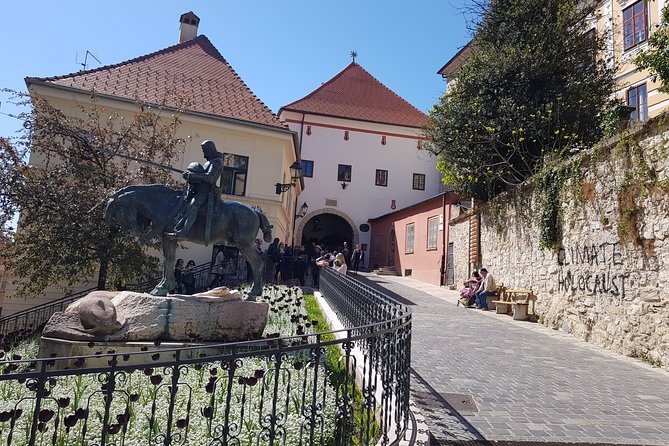
The Grič Tunnel is one of the more unusual stops. Built beneath Grič Hill and used for military purposes during the Second World War, it now serves as a public passage and tourist attraction.
The tunnel changes the mood of the walk. Instead of another square or church facade, you get a short underground passage with a clear connection to Zagreb’s wartime past. One guide, Lucia, was specifically praised for making the tunnels a highlight.
The tour allows about 10 minutes here. That is enough to pass through and hear the basic story, but not enough for a long historical presentation. The tunnel may also be closed on certain dates, so do not treat it as guaranteed. If it is unavailable, the guide will need to adjust the route.
The funicular and the climb to Upper Town
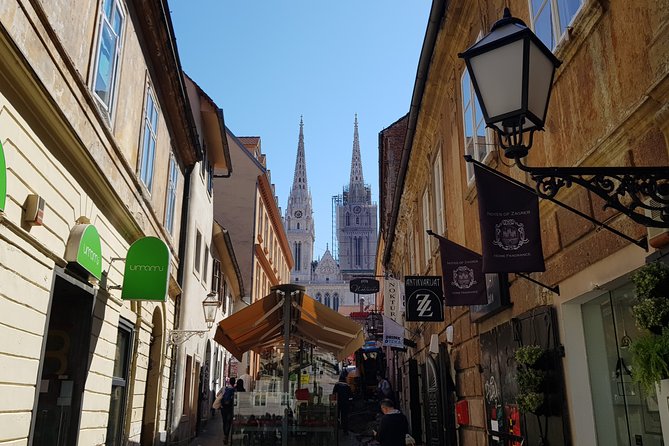
The historic Zagreb Funicular Railway is normally a neat part of the route. It carries you from the lower streets toward the medieval Upper Town, and the ride is famously short. The ticket is included when the railway is operating.
At present, however, the funicular is closed for renovation until March 2026. The tour information also notes that service can be affected on certain dates, so check the operating status close to your visit. The walk can continue without it, but you should expect to climb on foot if the railway is unavailable.
The ride itself lasts only about five minutes, so it is more of a charming transport link than a major attraction. Its real value is that it saves your legs before the Upper Town section. If you have mobility concerns, confirm current arrangements before booking, because the route includes hills, stairs, and uneven historic streets.
Lotrščak Tower and the Grič cannon
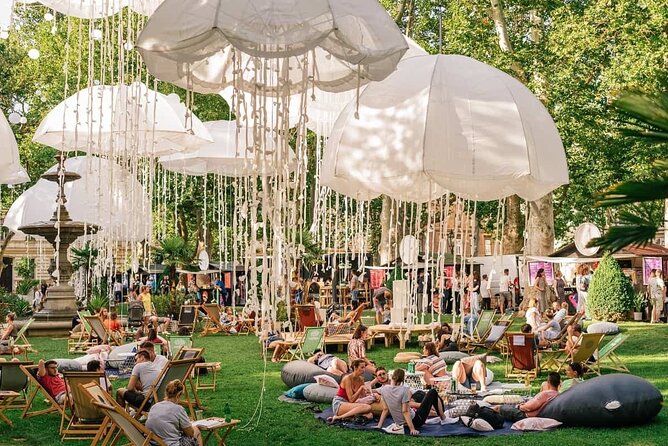
At the top, the group reaches Lotrščak Tower, a historic guard tower associated with the famous Grič cannon. The stop is brief, around five minutes, but the cannon gives the guide an easy way to explain how the medieval city was protected and how old customs remain part of Zagreb’s identity.
You may hear about the daily noon cannon tradition, a small detail that helps bring the tower to life. The tour does not promise extended tower access, so think of this as a guided exterior visit and photo stop.
The tower also marks the shift from Zagreb’s commercial center to the quieter, older Upper Town. The streets feel more intimate here, and the city’s past is easier to picture.
Fifty minutes in medieval Gornji Grad
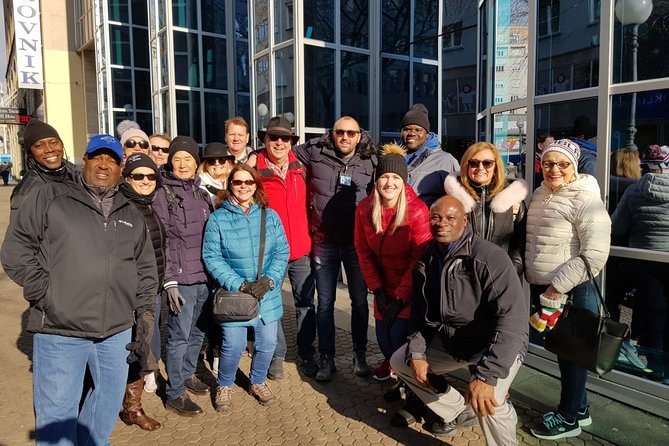
The longest section is Upper Town, or Gornji Grad, with about 50 minutes set aside. This is where the tour earns much of its value. You will see St. Mark’s Church, the Croatian Parliament, the Croatian Government Building, and the Museum of Broken Relationships, while the guide explains how the old district fits into modern Zagreb.
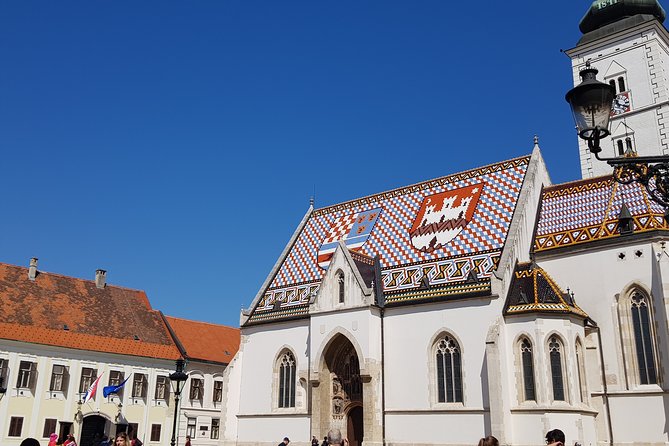
St. Mark’s Church is especially recognizable for its colorful tiled roof. The church is a quick visual lesson in Zagreb’s symbols, but the surrounding streets are just as important. Cobblestones, old facades, narrow passages, and hilltop views give you a sense of the city before its modern expansion.
The Upper Town stop also allows time for panoramic views and photographs. The views are not the only reason to linger. This is where a good guide can connect medieval Zagreb with current politics, civic life, and local stories.
The guides praised most often are not simply reciting dates. Robert is described as lively and helpful with current events, city life, restaurants, and museums. Marko and Marco are repeatedly praised for answering questions, speaking clearly, and keeping the history entertaining. Iva and Lucia are also noted for friendly, well-explained walks.
That range matters because the tour depends heavily on the person leading it. The route is set, but the stories, humor, and willingness to answer questions can shape the experience. A small group makes it easier to ask questions, although the maximum size is 25 people, so do not expect the intimacy of a private guide.
Petrinjska Gate and Tkalčićeva Street
The walk leaves Upper Town through Petrini Pyli, a medieval city gate. This is a short stop, but walking through an old gate gives you a physical sense of how the historic city was entered and defended.
The final main section descends to Tkalčićeva Street. This pedestrian zone is packed with bars and restaurants and is one of the liveliest places on the route. It is a useful contrast to the quiet Upper Town. You move from medieval lanes to a social street where Zagreb’s cafe and evening scene are on display.
The tour ends at the Ban Josip Jelačić statue on the main square, close to the starting point. That makes it easy to continue exploring, return to your hotel, or ask the guide for a meal recommendation before parting.
What the $24.20 price delivers
At $24.20 per person, this is a reasonably priced introduction to Zagreb. You receive roughly two to three hours with a licensed English-speaking guide, plus the funicular ticket when it is operating.
The value comes from the amount of orientation packed into a short period. You cover parks, the main square, the cathedral, the market, a tunnel, the Upper Town, a medieval gate, and Tkalčićeva Street. A self-guided walk could cover the same streets, but it would be harder to connect Croatian politics, local food, wartime history, and medieval Zagreb into one clear story.
The price is less compelling if you want museum admission or detailed interior visits. The stops are mainly exterior, and the cathedral may be restricted by repairs. The funicular closure also removes one included feature until renovation ends.
I would book it early in a Zagreb stay. Several guides give restaurant, museum, and sightseeing suggestions, and that advice can help you plan the rest of your visit. The fact that this experience is often reserved well ahead of time, around 42 days on average, also suggests that popular dates may fill before arrival.
Pace, weather, and practical comfort
The advertised duration is two to three hours, while the listed stops add up to about 160 minutes. In practice, expect roughly two and a half hours, with time spent walking between locations and listening to explanations.
The pace is described as relaxed and manageable, but this is still a city walk with hills and historic paving. Wear comfortable shoes. The Upper Town climb and descent are the parts most likely to test your legs, especially if the funicular remains closed.
Bring a warm layer. One person found the conditions chilly, and the tour spends most of its time outdoors. Weather matters enough that the experience requires good conditions. If poor weather causes cancellation, you will be offered another date or a full refund.
The tour is offered in English and uses a mobile ticket. Service animals are allowed, the meeting point is near public transportation, and most people can participate. Because the route includes outdoor walking, a tunnel, and a hill, confirm the current route if you have specific access needs.
Who should book this Zagreb walk?
I would choose this tour if you are arriving in Zagreb and want a clear introduction before exploring alone. It suits first-time visitors, couples, families, and solo visitors who prefer a local guide to set the city in context.
It is also a good match for people who enjoy history with a human touch. The guides cover military events, city politics, folklore, food, and present-day life, not just architecture. You can ask questions about restaurants and what to see next, which adds practical value.
You may want something else if you have only one specific goal, such as a long cathedral visit, a museum tour, or an architectural study. This walk gives you a broad foundation rather than a specialist lesson.
Free cancellation is available up to 24 hours before the start time for a full refund. Changes or cancellations within 24 hours are not accepted for a refund, so keep an eye on the forecast and your plans.
Should you book it?
Yes, if you want a lively first look at Zagreb for $24.20. The route is well chosen, the guide’s storytelling is the central asset, and the mix of Dolac Market, Grič Tunnel, Upper Town, and Tkalčićeva Street gives you more than a row of monuments.
Book with two cautions: the funicular is closed until March 2026, and earthquake repairs may limit cathedral access. If you are comfortable with a mostly outdoor walk and want useful local guidance from people such as Robert, Marko, Marco, Iva, or Lucia, this is a good-value way to get your bearings.
FAQ
How long does the walking tour of Zagreb last?
The tour lasts approximately two to three hours. The planned stops add up to about 160 minutes, so you can expect the walk to take around two and a half hours in normal conditions.
What language is the tour offered in?
The tour is offered in English.
Where does the tour begin?
The meeting point is Zrinjevac 2, 10000 Zagreb, Croatia. Use the clock in Zrinjevac Park as a practical landmark because map applications may not show the meeting point precisely.
Where does the tour end?
The tour ends at the Ban Josip Jelačić statue on Trg bana Josipa Jelačića, Zagreb’s main square. The end point is close to the starting area.
Is the funicular ride included?
The funicular ticket is included if the railway is operating. The funicular is closed for renovation until March 2026, so a ride is not currently guaranteed.
Will the tour enter Zagreb Cathedral?
The tour includes a stop at Zagreb Cathedral, but interior access is not guaranteed. Earthquake repairs have affected the building, and construction may limit both entry and photographs.
Can the Grič Tunnel be visited on every tour?
No. The Grič Tunnel may not operate on certain dates. If it is closed, the route may need to be adjusted.
What happens if the weather is poor?
This experience requires good weather. If it is canceled because of poor weather, you will be offered a different date or a full refund. You can cancel for a full refund up to 24 hours before the start time.
More Walking Tours in Zagreb
- Zagreb: Restaurants, Food & Old Town Walking Tour
★ 5.0 · 191 reviews - Zagreb Unveiled: Private walking tour with a local guide
★ 5.0 · 185 reviews - Zagreb Walking Food Tour – Sightseeing – Dolac Market Visit
★ 5.0 · 38 reviews - Exclusive old Zagreb walking tour
★ 4.4 · 32 reviews
Just added around Zagreb
- Toast to the Morning After: Zagreb Museum of Hangovers Visit★ 4.0 · 39 reviews
- From Split: Transfer to Zagreb with Stop at Plitvice Lakes★ 4.6 · 44 reviews
- Private Walking Tour of Zagreb★ 4.9 · 5 reviews
- Jump into Zagreb: Walking Tour with local guide★ 4.8 · 3 reviews
- From Zagreb to Plitvice Lakes and Rastoke – Private day tour★ 5.0 · 4 reviews
- From Zagreb: Varazdin Baroque Town & Trakoscan Castle★ 4.9 · 38 reviews
- From Zagreb: Plitvice Lakes & Rastoke Private Tour★ 5.0 · 9 reviews
- From Zagreb: Mrežnica kayaking & Rastoke village – day trip★ 4.9 · 27 reviews
Old Town Walking Tours, compared.
Walking Tour of Split and Diocletian’s Palace
Read our review →
Krka Waterfalls tour with Trogir Walking tour and Krka panoramic boat cruise
Read our review →
City Walls Early Morning or Sunset Walking Tour
Read our review →
Plitvice Lakes with Boat Ride and Zadar Old Town Tour
Read our review →Browse the lists this tour appears in