
Reviewed · OLD TOWN WALKING TOURS
Private Walking Tour of Zagreb
Zagreb’s best introduction comes underground as well as above it. This private walk links the city’s grand parks, medieval lanes, market life, WW2 tunnels, and Upper Town views into one clear 2.5-hour route. You begin at Zrinjevac and finish at Ban Jelacic Square, with the city’s story filling in as you go.
I like the private format and the calm pace, especially if you want to ask questions or need extra time on stairs and slopes. I also like the mix of famous sights and ordinary Zagreb life, from the Cathedral and Stone Gate to Dolac Market and Tkalciceva Street. The main drawback is timing: $76 per person is a serious price for a walking tour, and the funicular is closed for renovation until March 2026.
In This Review
- Key points at a glance
- Starting beneath Zagreb’s history
- Ban Jelacic Square and the story behind Zagreb’s name
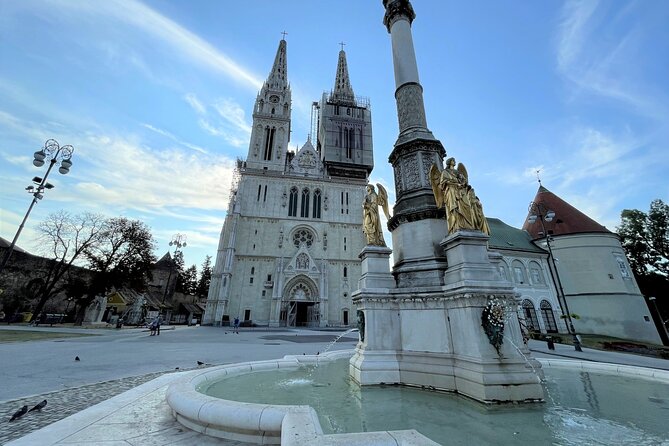
- The Cathedral, repairs, and a city still being rebuilt
- Dolac Market, Zagreb’s everyday center
- Tkalciceva Street and the art of lingering
- The WW2 tunnel beneath the streets
- Gradec, Strossmayer Promenade, and the rooftop view
- Lotrscak Tower and Saint Mark’s Church
- The old pharmacy and Stone Gate
- Witchcraft stories and the final walk to the square
- What $76 per person gets you
- Who should book this Zagreb walk?
- Should you book it?
- FAQ
- How long does the Private Walking Tour of Zagreb last?
- What language is the tour offered in?
- Is the tour private?
- Where does the tour begin?
- Where does the tour end?
- Does the tour include the WW2 tunnel?
- Is hotel pickup included?
- Can I cancel for a full refund?
- Can I ride Zagreb’s funicular during the tour?
Key points at a glance
- WW2 tunnel visit: Go below the streets before continuing toward Gradec.
- Private English-language walk: You get a licensed local guide and a group reserved for your party.
- Zagreb’s full historic core: The route covers Zrinjevac, Ban Jelacic Square, the Cathedral, Dolac, Gradec, and Stone Gate.
- Local daily life: Hear about Zagreb’s cafe habits, lounging culture, and the role of Dolac Market.
- Strong Upper Town views: Strossmayer Promenade gives you a rooftop panorama, with Lotrscak Tower and Saint Mark’s Church nearby.
- Funicular note: Zagreb’s old funicular is part of the story, but it is closed for renovation until March 2026.
Starting beneath Zagreb’s history
Meet your guide beside the meteorological station at Trg Nikola Subic Zrinski 2, on the north side of Zrinjevac Park. The meeting point is specific and easy to identify: look for the small display showing temperature and barometric pressure.
Zrinjevac is a graceful place to begin. Its formal park setting gives you a quick sense of Zagreb as a Central European capital, but the tour does not stay among polished facades. Your guide uses the park as a starting point before moving into the city’s older quarters and explaining how Zagreb developed from two medieval settlements.
The first part is useful because Zagreb can feel spread out when you arrive. A private guide gives you a map in your head before you set off on your own. You learn where the main square sits, how the Upper Town relates to the newer center, and why the Cathedral, market, and medieval gates matter.
If your accommodation is a centrally located hotel or hostel, pickup and drop-off are included. Otherwise, plan to meet at Zrinjevac. The activity is offered in English, and the private format means you are not sharing the guide with a large group.
More Old Town Walking Tours in Zagreb
- Zagreb: Small Group Walking Tour City Center and WW2 Tunnels
★ 4.9 · 895 reviews - Zagreb: City and WWII Tunnels Walking Tour
★ 4.9 · 845 reviews - Walking tour of Zagreb
★ 5.0 · 383 reviews
Ban Jelacic Square and the story behind Zagreb’s name
From Zrinjevac, you walk to Ban Jelacic Square, the city’s main meeting point. This is where you begin to understand Zagreb as a living capital rather than a collection of monuments.
Your guide explains how Zagreb got its name and places the modern square within the city’s older story. The square is also the practical center of Zagreb, so it is a helpful reference point for later meals, shopping, and independent walks.
I value this sort of opening because it gives you context before the sightseeing gathers speed. Instead of hearing isolated facts at each stop, you can connect the square with the Cathedral, Dolac Market, and Upper Town. The tour also ends here, so you can return easily to the same central point after saying goodbye.
The Cathedral, repairs, and a city still being rebuilt
The Cathedral of the Assumption of the Blessed Virgin Mary is one of Zagreb’s key landmarks. The walk covers its origins, the damage and difficulties it has endured, and its ongoing renovation.
That renovation is an important part of what you see. It reminds you that historic buildings are not frozen museum pieces. The Cathedral has had to survive events that changed the city, and keeping it standing requires years of work.
Expect to hear more than the usual quick note about its age. The guide explains why the Cathedral matters to Zagreb and how repairs have shaped its appearance. Since the tour is on foot, you may view the building from outside rather than treating it as a long interior visit. The information provided focuses on its history, problems, and restoration.
For you, the practical benefit is simple: the Cathedral is much easier to appreciate once you know what it has been through. Allow a little patience around this stop, since renovation can affect what is visible.
Dolac Market, Zagreb’s everyday center
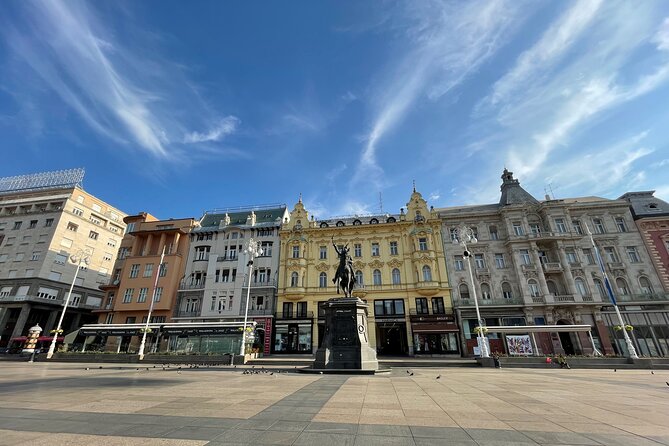
Next comes Dolac Market, often called the belly of Zagreb. That nickname tells you what makes the place important. It is not just a sightseeing stop. It is tied to food, shopping, and the daily rhythm of the city.
Your guide helps you read the market as part of local life. You may notice the difference between a formal square and a place where people come to buy what they need. The market gives the walk a welcome change of pace after the grand scale of the Cathedral.
I particularly like that Dolac is included because it brings the tour down to street level. You get a look at how Zagreb functions between its monuments. The schedule is not presented as a market shopping trip, so you should not expect a long browsing session or a food tasting. Think of it as an introduction to the place, with time to return on your own later.
Same stretch of coast, a completely different day out:
- From Zagreb: Plitvice & Rastoke Guided Day Trip with Ticket
★ 4.9 · 2,955 reviews - Zagreb: Rastoke & Plitvice Lakes Guided Tour with Ticket
★ 4.9 · 1,897 reviews - Communism & Croatian Homeland War Tour
★ 5.0 · 1,355 reviews - Best of Zagreb with the WW2 Tunnels
★ 5.0 · 973 reviews
Tkalciceva Street and the art of lingering
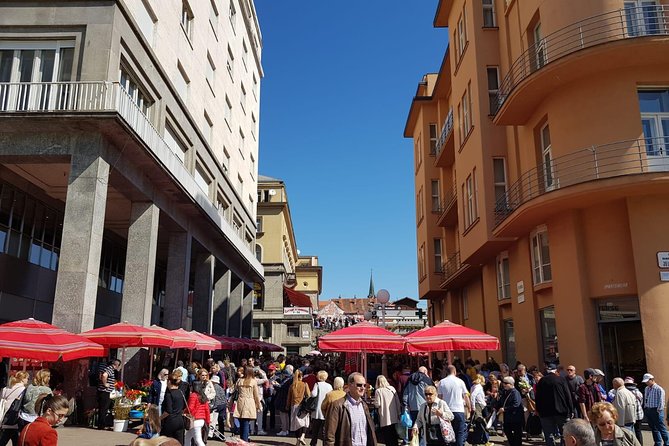
From Dolac, the route continues to Tkalciceva Street, Zagreb’s well-known bar street. This is where the guide talks about the local philosophy of lounging and other everyday habits.
That subject may sound modest beside medieval walls and religious buildings, but it is one of the most useful parts of a city walk. You learn that understanding Zagreb involves watching how people use public space. Cafes, conversation, and unhurried time are part of the city’s character.
Tkalciceva also helps connect old Zagreb with its current social life. You are not only looking at architecture. You are seeing where the city goes out, meets friends, and takes a break.
The street is known for its steady flow of people, so it may feel busier than the quieter parts of Gradec. That is part of the point, though the route is still a walking tour rather than a nightlife outing. If you want to return for drinks or dinner, the guide’s explanation gives you a better sense of why the street is popular.
The WW2 tunnel beneath the streets
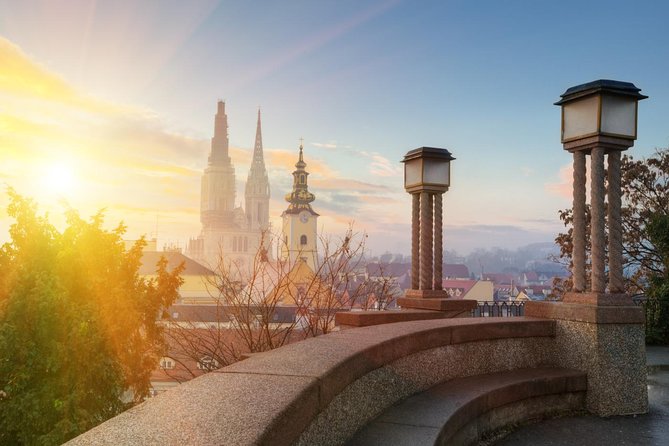
One of the most distinctive stops is the WW2 tunnel. Do not skip this part. It changes the way you see Zagreb because the city’s story continues below the pavement.
The tunnel provides a physical reminder of wartime Zagreb. Rather than only hearing about major events in a square or church, you enter a space built for a difficult period. The contrast between the open streets above and the enclosed passage below makes this a memorable pause.
The supplied details do not promise a long tunnel exploration or a special exhibit, so keep your expectations measured. You will visit the tunnel as one part of a broader city walk. Still, it adds a layer that many standard sightseeing routes leave out.
For many people, this is the stop that makes the tour feel more complete. You see the city’s public face, its market life, its medieval center, and a wartime space that is easy to miss if you explore only at street level.
Gradec, Strossmayer Promenade, and the rooftop view
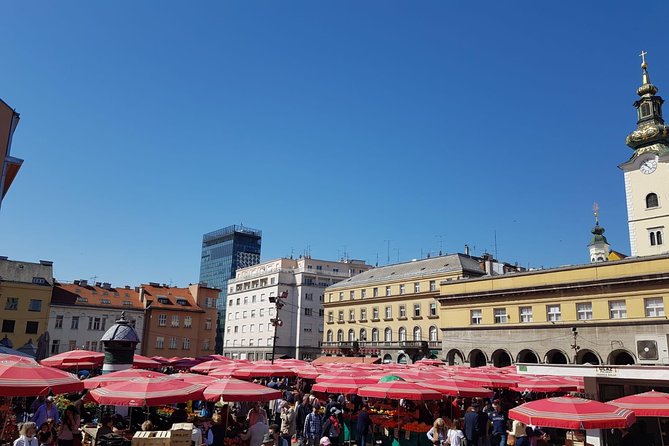
The route then climbs toward Gradec, one of the two medieval settlements that formed Zagreb. This is the Upper Town, and the mood changes as the streets become older and the views open up.
A short stroll away is the Zagreb funicular, described as the city’s oldest form of public transportation. It has served Zagreb for more than 135 years and has long been part of the city’s identity. At present, though, the funicular is closed for renovation until March 2026.
That closure matters if you are booking soon. You will learn about the funicular and see the area, but you should not expect to ride it during the stated closure period. The walk continues on foot, so comfortable shoes are sensible.
In Gradec, Strossmayer Promenade is the scenic reward. It is described as the best place on this route for broad views across Zagreb’s rooftops. I like this stop because it gives you a moment to pause after the denser streets below. You can look out over the city and understand how the Upper Town sits above the newer center.
The route includes some stairs and slopes. One past party found the pace manageable even with a pregnant participant, but that should not be treated as a guarantee for every person or condition. If hills are difficult for you, ask about the route before booking and wear shoes with a firm sole.
Lotrscak Tower and Saint Mark’s Church
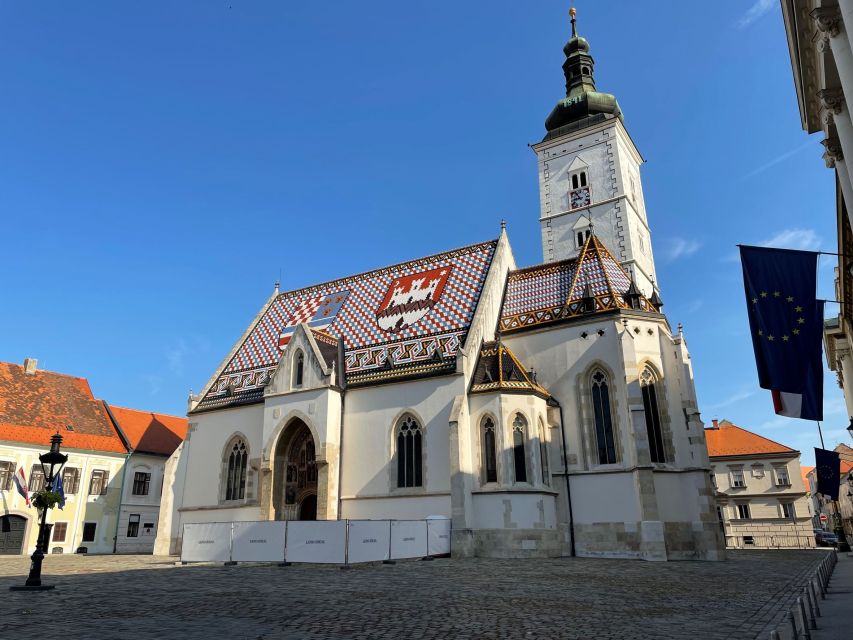
Gradec brings two of Zagreb’s most recognizable sights: Lotrscak Tower and Saint Mark’s Church.
Lotrscak Tower adds a defensive note to the Upper Town. It helps you picture the old settlement as a walled place rather than simply a pretty hill of historic buildings. The tower is part of the visual identity of Gradec and fits naturally into the walk toward the church.
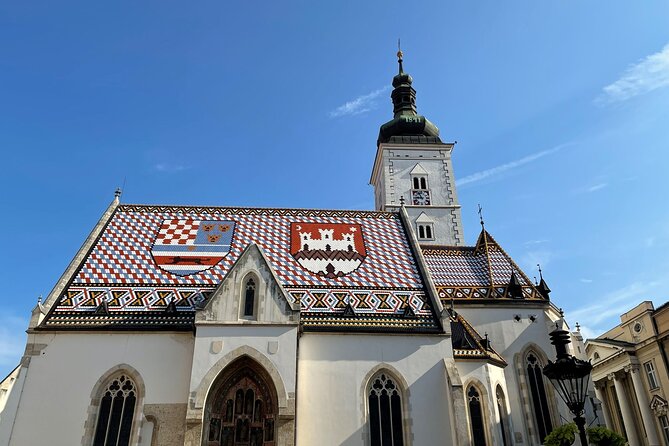
Saint Mark’s Church is famous for its patterned roof, which appears on Zagreb postcards more than any other image. The roof is the immediate attraction, but the guide’s role is to place it within the story of the Upper Town and the city.
You should not expect a long museum-style stop at either sight. This is a walking overview, so the value comes from the guide’s explanation and the way the stops fit together. If you later want more time for photographs, the private format may make it easier to pause, depending on the day’s pace.
The old pharmacy and Stone Gate
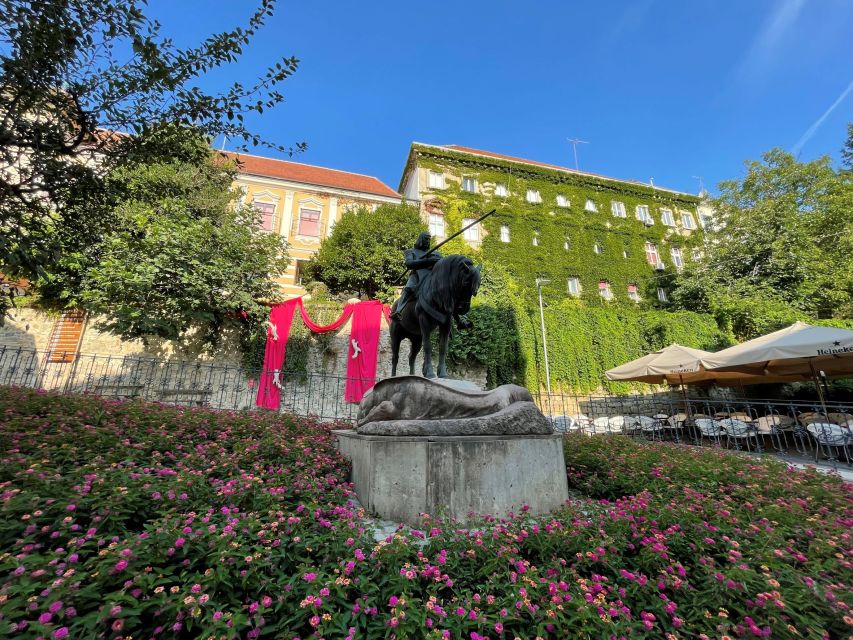
After Gradec, you descend toward one of Zagreb’s oldest pharmacies, dating from the 14th century. This detail gives the old town a human scale. Medieval Zagreb was not only about churches, towers, and city walls. It also had places where people sought practical help in daily life.
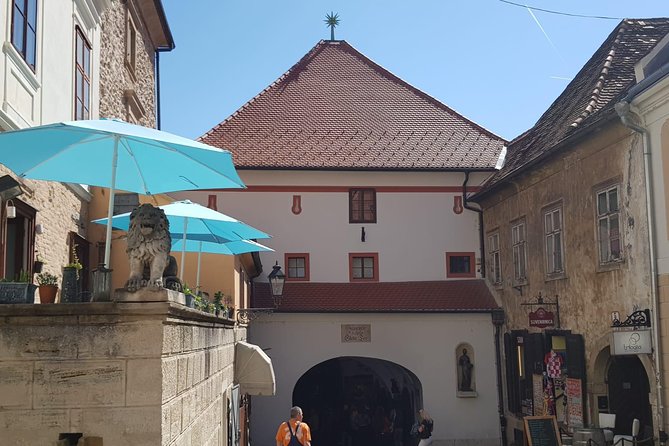
The route then passes through Stone Gate, the only surviving gate from the old city walls. This is a powerful stop because the gate is both a fragment of defense and a place of worship.
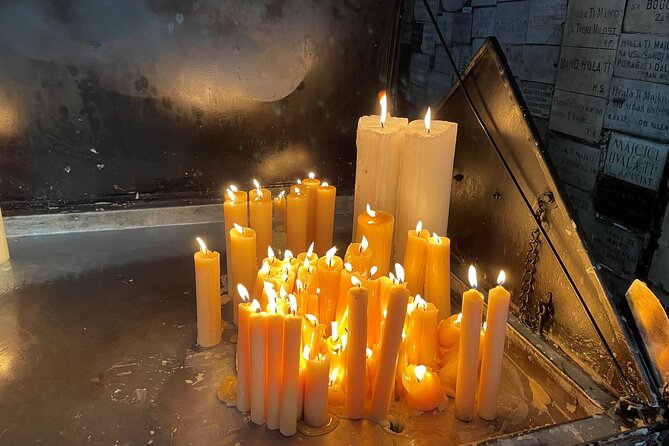
Inside is a small chapel with a miraculous image of Our Lady, the patron saint of Zagreb. The chapel is not a grand open space. Its appeal is its compact, personal atmosphere, tucked into a passage that once formed part of the city’s fortifications.
You will want to enter quietly and give the chapel proper respect. The guide explains its importance, but the stop also works without a long speech. The combination of an old gate, a sacred image, and a working city passage makes Stone Gate one of the most memorable parts of the route.
Witchcraft stories and the final walk to the square
After the old town, your guide adds stories about witchcraft and points out less obvious places along the way. This gives the final section a little mystery without turning the whole tour into a ghost walk.
The supplied information does not specify the exact stories or locations, so you should view this part as a collection of local tales and overlooked details rather than a separate theatrical performance. That is still useful. A good city walk teaches you where to look, not only what to photograph.
The tour ends back at Ban Jelacic Square. This is a practical finish because the square is central and familiar. You can continue to lunch, return to your hotel, revisit Dolac, or set off in another direction without having to arrange a complicated ride back.
What $76 per person gets you
At $76 per person, this is not the cheapest way to see Zagreb’s center. You are paying for a private 150-minute walk, a licensed local guide, English-language service, and a route that combines the main sights with the WW2 tunnel and local customs.
The value depends on how you travel. If you want a fast list of landmarks and are happy to read signs or follow a map, the price may feel high. If you want one person to explain the links between Zagreb’s medieval settlements, market, wartime spaces, religious buildings, and cafe culture, the private format makes more sense.
You also gain flexibility that a large group often lacks. A past booking described the pace as calm, with enough room for a participant who needed to manage stairs and slopes. That does not remove the physical demands of walking, but it suggests that the experience is not built around racing from stop to stop.
The tour includes hotel pickup and drop-off only for centrally located hotels and hostels. The meeting point at Zrinjevac is otherwise straightforward. You can cancel up to 24 hours before the start for a full refund, and you can reserve now and pay later, which helps if your Croatia plans are still shifting.
Who should book this Zagreb walk?
I would choose this tour for a first visit to Zagreb, especially if you have only part of a day to get oriented. The route covers enough ground to show you how the center fits together, but it also leaves you with several places worth revisiting.
It suits couples, families, and small private parties who prefer questions and conversation over a fixed group script. The calm pace also helps if someone in your party cannot move quickly, though you still need to handle slopes and stairs.
History-minded visitors will appreciate the Cathedral, medieval Gradec, Stone Gate, and WW2 tunnel. Food and city-life enthusiasts will get more from Dolac Market and Tkalciceva Street. If your main goal is riding the funicular, wait until after its renovation, since it is closed until March 2026.
The tour is less suitable if you want extensive interior visits, a food tasting, or a long stop at every landmark. It is a broad city introduction, not a museum tour or a restaurant crawl.
Should you book it?
Book this private Zagreb walk if you want a well-shaped first look at the capital with a local guide, a manageable pace, and more than the standard postcard stops. The WW2 tunnel, Stone Gate chapel, market culture, and witchcraft stories give the route extra character.
Think carefully about the $76 price if you are traveling alone or trying to keep costs low. For a private party, the fee can be reasonable because the guide’s attention stays with your group. For a solo visitor, compare it with a shared walk or self-guided route.
If you book, meet at the meteorological station in Zrinjevac, wear comfortable shoes, and remember that the funicular is not operating until March 2026. For most first-time visitors who value context and an easy-to-follow introduction, this is a strong way to get your bearings in Zagreb.
FAQ
How long does the Private Walking Tour of Zagreb last?
The tour lasts 150 minutes, or 2.5 hours.
What language is the tour offered in?
The live tour guide speaks English.
Is the tour private?
Yes. The experience is organized for a private group rather than a shared group.
Where does the tour begin?
It begins at Trg Nikola Subic Zrinski 2 in Zrinjevac Park, next to the meteorological station on the park’s north side.
Where does the tour end?
The walk ends at Ban Jelacic Square.
Does the tour include the WW2 tunnel?
Yes. Visiting the WW2 tunnel is one of the listed highlights.
Is hotel pickup included?
Hotel pickup and drop-off are included for centrally located hotels and hostels.
Can I cancel for a full refund?
Yes. You can cancel up to 24 hours in advance for a full refund.
Can I ride Zagreb’s funicular during the tour?
The funicular is closed for renovation until March 2026, so you should not expect to ride it during that closure period.
More Walking Tours in Zagreb
- Zagreb Small Group Guided Walking Tour with WW2 Tunnels
★ 5.0 · 380 reviews - Zagreb: Restaurants, Food & Old Town Walking Tour
★ 5.0 · 191 reviews - Zagreb Unveiled: Private walking tour with a local guide
★ 5.0 · 185 reviews - Zagreb Walking Food Tour – Sightseeing – Dolac Market Visit
★ 5.0 · 38 reviews
Just added around Zagreb
- Toast to the Morning After: Zagreb Museum of Hangovers Visit★ 4.0 · 39 reviews
- From Split: Transfer to Zagreb with Stop at Plitvice Lakes★ 4.6 · 44 reviews
- Jump into Zagreb: Walking Tour with local guide★ 4.8 · 3 reviews
- From Zagreb to Plitvice Lakes and Rastoke – Private day tour★ 5.0 · 4 reviews
- From Zagreb: Varazdin Baroque Town & Trakoscan Castle★ 4.9 · 38 reviews
- From Zagreb: Plitvice Lakes & Rastoke Private Tour★ 5.0 · 9 reviews
- From Zagreb: Prehistoric and Medieval Croatia Tour★ 4.9 · 3 reviews
- From Zagreb: Mrežnica kayaking & Rastoke village – day trip★ 4.9 · 27 reviews
Old Town Walking Tours, compared.



Walking Tour of Split and Diocletian’s Palace
Read our review →


Krka Waterfalls tour with Trogir Walking tour and Krka panoramic boat cruise
Read our review →
City Walls Early Morning or Sunset Walking Tour
Read our review →
Plitvice Lakes with Boat Ride and Zadar Old Town Tour
Read our review →Browse the lists this tour appears in