
Reviewed · ZAGREB TOURS
Communism & Croatian Homeland War Tour
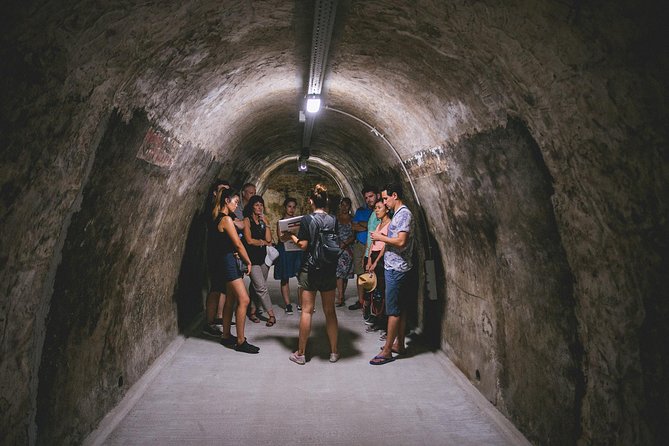
The most revealing part of this Zagreb tour happens below street level. You enter World War II-era tunnels and an authentic basement shelter, then connect those spaces to the political upheavals that shaped modern Croatia. Guides such as Ivana, Darko, Luka, and Diana use maps, photos, personal family stories, and a short multimedia presentation to make difficult events easier to follow.
I like the clear connection between places and events, and I like that the tour does not stop at textbook dates. The guides explain how ordinary people experienced communism, air raids, and the Croatian Homeland War. The main consideration is its serious, lecture-like character. You will walk easily, but you will also listen closely for much of the two to two-and-a-half hours.
In This Review
- Key points
- Why Zagreb’s recent past matters
- Meeting at Ban Josip Jelačić Square
- Entering Tunel Grič and the air-raid shelter
- Kaptol, a basement, and the breakup of Yugoslavia
- How the guides explain a difficult subject
- The pace, walking, and amount of information
- What you get for $47.16
- Who should book this Zagreb tour
- Practical details before you reserve
- Should you book the Communism and Croatian Homeland War Tour?
- FAQ
- Where does the Communism and Croatian Homeland War Tour begin?
- Where does the tour end?
- What time does the tour start?
- How long does the tour last?
- Is Tunel Grič included?
- Is the tour offered in English?
- How many people can join the group?
- Can children participate?
- What is the cancellation policy?
Key points
- World War II tunnels: Enter Tunel Grič and the basement shelter used during air raids on Zagreb.
- Modern Croatian history: Follow the story from the early 20th century through the breakup of Yugoslavia and the 1990 to 1995 war.
- Strong visual teaching: Maps, photographs, and a multimedia presentation help explain complicated borders and political changes.
- Guide-led experience: English-speaking local guides including Ivana, Darko, Luka, and Diana bring different personal styles and family perspectives.
- Easy central meeting point: Begin and end at the Ban Josip Jelačić statue in Zagreb’s main square.
- Small group format: The tour accepts no more than 20 people, keeping the discussion manageable.
Why Zagreb’s recent past matters
Zagreb is easy to enjoy as a city of cafés, markets, churches, and Austro-Hungarian streets. But its modern identity makes much more sense once you understand the century of conflict and political change behind it.
This tour focuses on Croatia’s path through World War II, communist Yugoslavia, the breakup of that country, and the Croatian War of Independence, often called the Homeland War. The subject is not light. You will hear about political divisions, war, displacement, and the effects on families and daily life.
That seriousness is also the tour’s strength. Instead of treating Croatian history as a string of names and dates, the guides connect major events to places in central Zagreb. You get a clearer sense of how a city functions during crisis, why shelters mattered, and how public memory is shaped after a war.
The title emphasizes communism, but you should expect a wider examination of Croatian and Balkan history. The communist period is one part of the story, not the whole program. The main focus is the political and military path toward Croatian independence in the 1990s.
Other Zagreb days people book alongside this one:
- From Zagreb: Plitvice & Rastoke Guided Day Trip with Ticket
★ 4.9 · 2,955 reviews - Zagreb: Rastoke & Plitvice Lakes Guided Tour with Ticket
★ 4.9 · 1,897 reviews - Best of Zagreb with the WW2 Tunnels
★ 5.0 · 973 reviews
Meeting at Ban Josip Jelačić Square
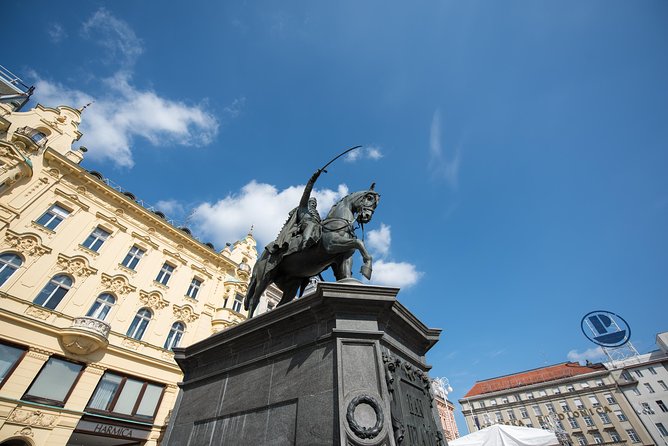
The tour begins at the Ban Josip Jelačić statue, at Trg bana Josipa Jelačića 15. This is Zagreb’s central meeting point and an easy place to reach by public transportation.
The schedule is specific. You meet at 3 p.m. from Monday through Saturday, and at 11 a.m. on Sunday. Arrive a little early so you can find the guide and settle in before the explanation begins.
The opening section lasts about 30 minutes and costs nothing beyond the tour itself. Do not expect a long sightseeing circuit around the square. The guide uses this central location to establish the political setting and introduce the people, movements, and turning points that will appear later.
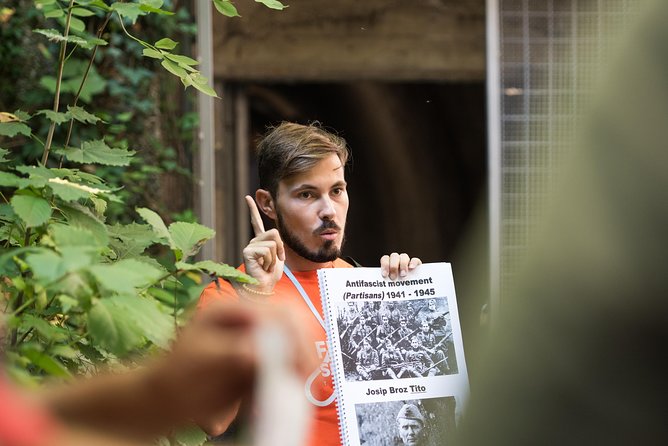
This is where the tour’s teaching style becomes clear. Guides such as Ivana have used booklets filled with maps and photographs, while Darko is known for a quick pace, humor, and a direct presentation. Diana has also made a point of stopping in shaded areas on hot days, a small practical touch that matters during a summer afternoon.
The group can include up to 20 people. That is large enough to create energy but small enough for questions. Since this is a walking and listening tour, stay near the guide, especially when the group moves through busy central streets.
Entering Tunel Grič and the air-raid shelter
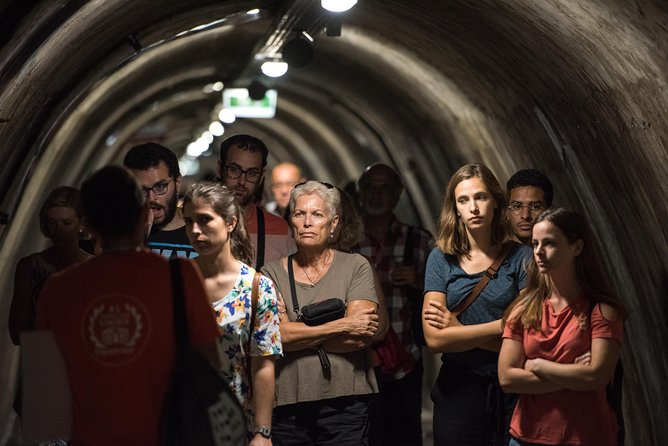
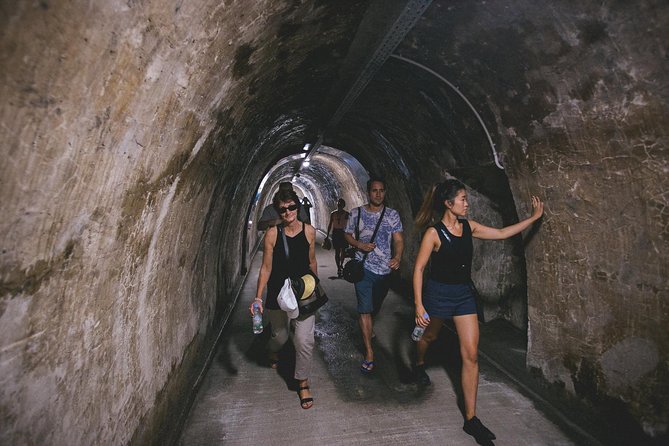
The next major stop is Tunel Grič, a World War II-era underground passage beneath Zagreb. You visit the tunnel and a basement area used as a shelter during air raids.
The tunnel itself is freely accessible to the public, so the value of this stop is not simply getting inside. The guide supplies the missing context. You learn how such underground spaces fit into life during wartime, and how they were later understood during the communist era.
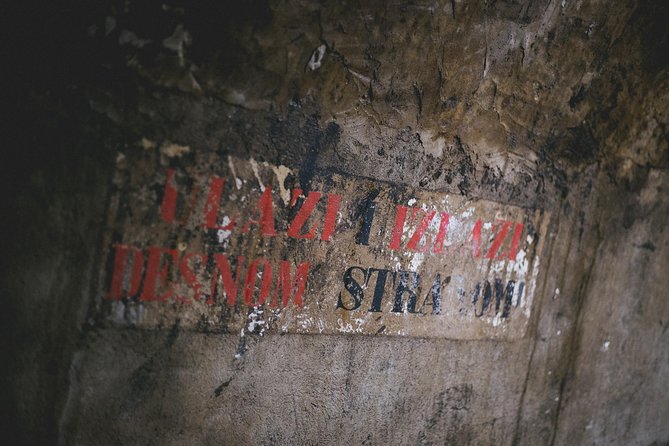
This is one of the tour’s strongest moments because the setting does some of the teaching. A shelter feels different from a photograph in a museum. The space helps you think about the practical side of air raids: where people went, what a basement meant, and how war reached the city rather than remaining a distant event on a map.
The tunnel is not available as part of the tour during public events held there or during Zagreb’s Christmas Market. If your visit falls into one of those periods, the route may need to change. Check the operating details before booking if entering the tunnel is especially important to you.
You should also expect this portion to be more explanatory than scenic. Tunel Grič is not a grand underground attraction with a long list of displays. Its value comes from the guide’s narration and the link between the physical shelter and the larger story.
Kaptol, a basement, and the breakup of Yugoslavia
The tour continues to Kaptol, where you visit another basement used as a bombing shelter. This setting supports the discussion of the fall of Yugoslavia and Croatia’s war for independence.
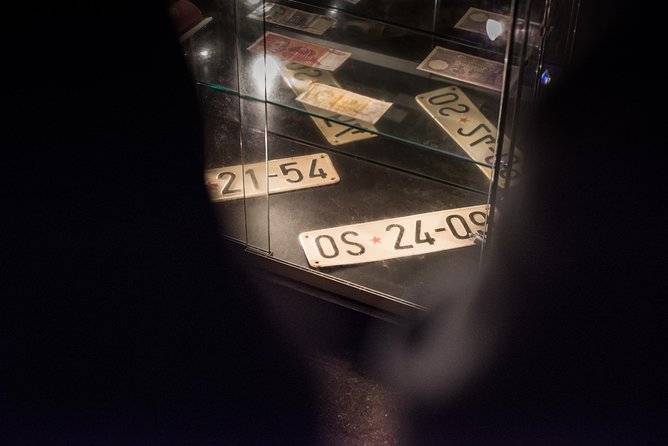
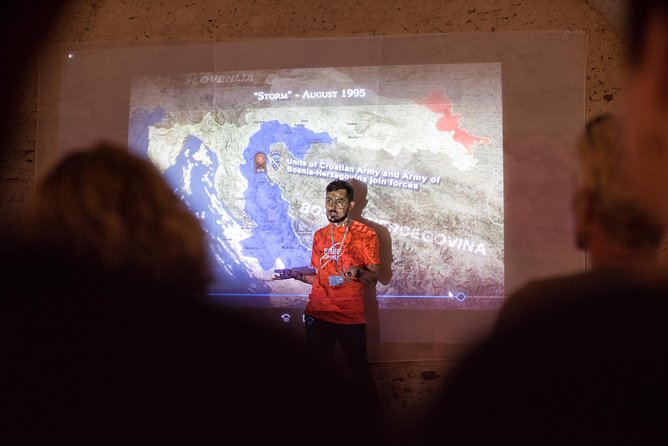
The basement is used with a multimedia presentation about the Croatian Homeland War. The film lasts about 20 minutes, according to the detailed timing provided by the operator. It gives the tour a more formal ending after the outdoor explanations and tunnel visit.
Expect this part to be sobering. The subject includes the collapse of a state, armed conflict, and the experience of people living through war. It is not entertainment, and the presentation may feel intense after an already serious walk.
Still, the visual material has a clear purpose. Balkan political history can become confusing when you are trying to keep track of changing borders, political parties, leaders, and competing national claims. Maps and photographs give you something concrete to follow.
The basement also reinforces an important point: recent Croatian history is not only about military campaigns. It is about ordinary people seeking safety, losing homes, and trying to understand events that changed their country in a very short time.
Same stretch of coast, a completely different day out:
- Plitvice Lakes with Ticket & Rastoke Guided Tour from Zagreb
★ 5.0 · 966 reviews - Zagreb: Small Group Walking Tour City Center and WW2 Tunnels
★ 4.9 · 895 reviews - Zagreb: Skip-the-Ticket-Line Museum of Broken Relationships
★ 4.5 · 847 reviews - Zagreb: City and WWII Tunnels Walking Tour
★ 4.9 · 845 reviews
How the guides explain a difficult subject
The quality of the guide matters more here than on a simple city walk. You are not mainly paying to look at famous buildings. You are paying for someone to organize a complicated subject and answer questions without turning the tour into a political argument.
Ivana is described as a former teacher with a large collection of maps and photographs. Her approach includes personal family anecdotes, but she also openly reminds the group that a Croatian guide naturally presents one national viewpoint. She encourages people to seek other perspectives on the regional conflicts.
That admission is useful. A good historical tour should explain its point of view rather than pretend to have none. Ivana’s willingness to identify the limits of her perspective gives you a better basis for judging the material.
Darko’s style is more brisk and humorous. He has been praised for making a difficult subject digestible while still giving enough detail to understand the period. Luka is described as organized and well prepared, while Diana is noted for her clear answers and calm handling of questions.
The guide assigned to your departure may vary, so you should not book with the expectation of a particular person unless the operator confirms it. What remains consistent is the local perspective, English-language instruction, and focus on Croatia’s modern political story.
The pace, walking, and amount of information
The advertised duration is about two hours, but you should allow closer to two and a half hours. One timing breakdown suggests roughly 30 minutes at the opening point, an hour around Tunel Grič, and another hour in Kaptol, including the multimedia section.
That difference matters if you have a train, restaurant reservation, or another scheduled activity afterward. I would leave at least an hour of spare time rather than trying to fit the tour into a tight afternoon.
The walking itself is not the hard part. The route stays in central Zagreb, and most people can participate. The greater demand is concentration. You will spend extended periods standing and listening, then move between stops while keeping track of a large amount of information.
On hot days, the lack of shade could make the outdoor sections tiring, although guides have adjusted explanations to shaded spots when possible. Wear comfortable shoes, bring water, and consider the Sunday morning departure if you prefer cooler conditions.
Children can join, but they must be accompanied by an adult. Because the material concerns war and political violence, parents should decide if the subject suits their children. The tour is better for older children and teenagers who can follow a serious historical discussion.
What you get for $47.16
At $47.16 per person, this is not the cheapest way to spend two hours in Zagreb. You can walk around Ban Jelačić Square, Kaptol, and the Upper Town without paying for a guide, and Tunel Grič itself is free to enter.
The value comes from the interpretation. You receive a certified local guide, access to the wartime basement setting, the tunnel visit when available, and the multimedia presentation about the Homeland War. You also gain a framework for understanding places and events that can otherwise seem disconnected.
I consider the price fair if you want an organized introduction to modern Croatia and would otherwise struggle to sort out the political background yourself. It is especially useful early in a Croatian trip, before visiting other parts of the country where war memorials, damaged buildings, and regional differences may raise questions.
The price is harder to justify if you mainly want conventional sightseeing. Zagreb’s most attractive architecture and public squares are not the focus here. This is a history lesson conducted on foot, with several meaningful locations rather than a long list of picture stops.
Who should book this Zagreb tour
I would recommend it to you if you want to understand Croatia beyond its coast, food, and medieval towns. It suits people who enjoy political history, oral history, museums, and serious conversations about how countries change.
It is also useful for anyone traveling through several parts of Croatia. The tour can pull together the names, dates, and conflicts you encounter elsewhere. A guide may explain events through a Croatian lens, but the strongest presentations also point out that other communities remember the same wars differently.
You may want to skip it if you dislike long explanations or find modern wars too upsetting for a holiday activity. The tour is not built around comic stories, shopping, or architectural highlights. Even the humor used by some guides serves to make a heavy subject easier to absorb.
If you are unsure, consider your timing. Book it near the start of your visit if you want a foundation for the rest of your trip. Choose it later if you prefer to gather your own impressions first and then use the tour to connect them.
Practical details before you reserve
The experience is offered in English and comes with a mobile ticket. Confirmation is provided when you book, and the activity begins and ends at the Ban Josip Jelačić statue.
The group maximum is 20 people. That limit is helpful for hearing the guide and asking questions, though the exact feel of the group depends on the departure size.
Free cancellation is available if you cancel at least 24 hours before the local start time. Cancellations or changes made within 24 hours are not refunded or accepted. The tour also requires a minimum number of participants, so if the operator cancels for that reason, you receive a different option or a full refund.
The experience is near public transportation, and most people can participate. No special access details are provided for every part of the route, so contact the operator if you have specific mobility concerns about tunnels, basements, or standing for long periods.
Should you book the Communism and Croatian Homeland War Tour?
Book it if you want a clear, serious explanation of Croatia’s 20th-century story, especially the breakup of Yugoslavia and the 1990s war. The tunnels and basement shelters give the subject a physical setting, while maps, photographs, family stories, and the final film help you follow events that are often hard to grasp from guidebooks alone.
Skip it if your ideal Zagreb outing is mostly architecture, cafés, and relaxed sightseeing. The route has few conventional attractions, and the presentation can feel long if you are not interested in politics or war.
For the right audience, $47.16 is a reasonable price for a focused local history lesson. I would schedule it with extra time afterward, arrive ready to listen, and book it early in your Zagreb stay if you want the rest of Croatia to make more sense.
FAQ
Where does the Communism and Croatian Homeland War Tour begin?
It begins at the Ban Josip Jelačić statue at Trg bana Josipa Jelačića 15 in Zagreb.
Where does the tour end?
The tour ends back at the meeting point by the Ban Josip Jelačić statue.
What time does the tour start?
It starts at 3 p.m. from Monday through Saturday and at 11 a.m. on Sundays.
How long does the tour last?
The listed duration is approximately two hours, though the detailed timing and some experiences indicate that you should allow about two to two and a half hours.
Is Tunel Grič included?
Yes, the tour includes the World War II underground tunnels when they are available. The tunnel portion is not included during public events held there or during the Christmas Market.
Is the tour offered in English?
Yes. The tour is offered in English and includes a mobile ticket.
How many people can join the group?
The group has a maximum of 20 participants.
Can children participate?
Yes, most people can participate, but children must be accompanied by an adult.
What is the cancellation policy?
You can cancel at least 24 hours before the local start time for a full refund. Cancellations and changes made less than 24 hours before the start time are not refunded or accepted.
Just added around Zagreb
- Toast to the Morning After: Zagreb Museum of Hangovers Visit★ 4.0 · 39 reviews
- From Split: Transfer to Zagreb with Stop at Plitvice Lakes★ 4.6 · 44 reviews
- Private Walking Tour of Zagreb★ 4.9 · 5 reviews
- Jump into Zagreb: Walking Tour with local guide★ 4.8 · 3 reviews
- From Zagreb to Plitvice Lakes and Rastoke – Private day tour★ 5.0 · 4 reviews
- From Zagreb: Varazdin Baroque Town & Trakoscan Castle★ 4.9 · 38 reviews
- From Zagreb: Plitvice Lakes & Rastoke Private Tour★ 5.0 · 9 reviews
- From Zagreb: Prehistoric and Medieval Croatia Tour★ 4.9 · 3 reviews
Zagreb Tours, compared.
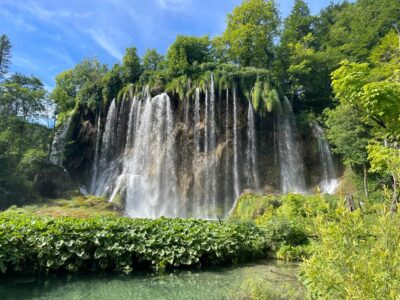
Rastoke & Plitvice Lakes Guided Tour with Ticket
Read our review →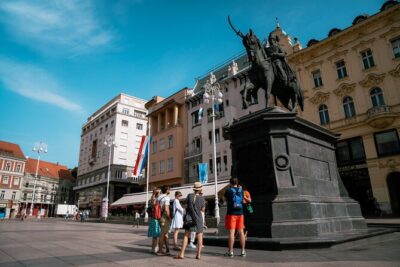
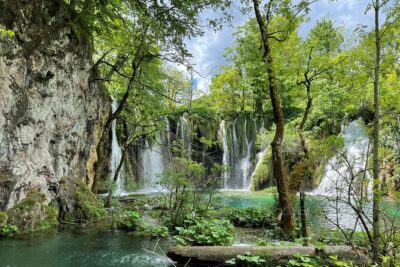
Plitvice Lakes with Ticket & Rastoke Guided Tour from Zagreb
Read our review →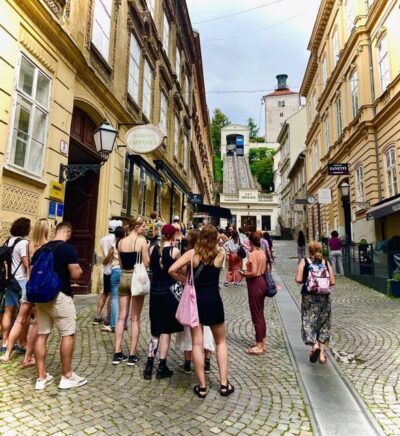
Small Group Walking Tour City Center and WW2 Tunnels
Read our review →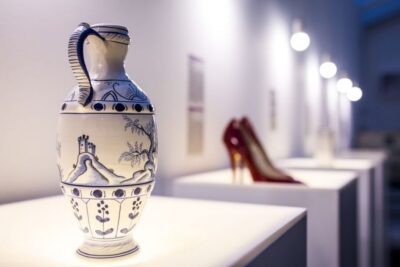
Skip-the-Ticket-Line Museum of Broken Relationships
Read our review →
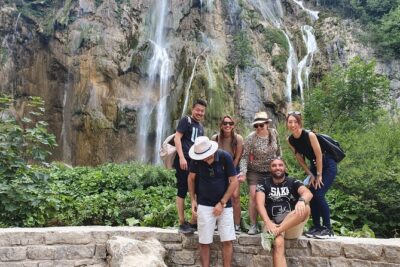
Plitvice and Rastoke day trip from Zagreb w/ticket (guar. dep.)
Read our review →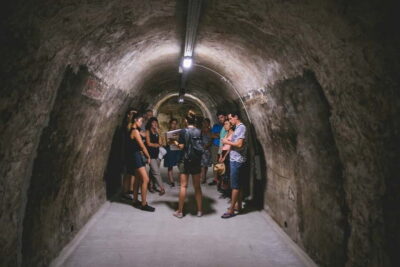
Browse the lists this tour appears in