
Reviewed · ZAGREB TOURS
Zagreb: Communism and Croatian Homeland War Tour
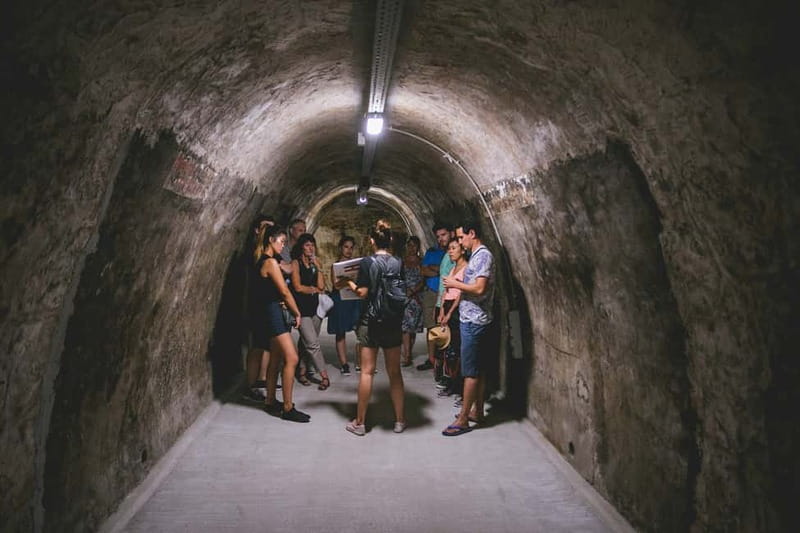
Zagreb’s recent past is not tucked away in a museum. It is under your feet in the World War II tunnels, and in a basement where people sheltered during air raids in the 1990s. This tour connects those places to the fall of Communist Yugoslavia and Croatia’s fight for independence.
I like the clear two-part structure: first, a walk through 20th-century history, then a visit to a real shelter with a Homeland War video presentation. I also like the personal touch some guides bring, including family stories and an effort to explain Croatian, Serbian, and other viewpoints rather than offering only one national story.
The main drawback is its subject matter. War, political collapse, and civilian fear are not light sightseeing topics, and the tunnels may be unavailable during events. The route is also unsuitable for wheelchair users and people with mobility impairments.
In This Review
- Key points before you book
- Why Zagreb’s tunnels tell more than one story
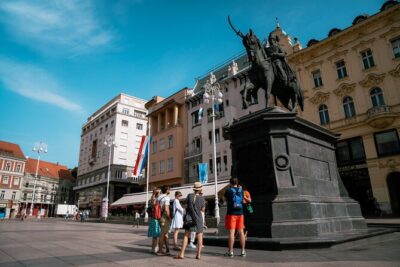
- Meeting at Ban Jelačić Square
- Life under Communist Yugoslavia
- The breakup of Yugoslavia and Croatia’s independence
- The basement shelter and the Homeland War video
- Guides who make difficult history accessible
- How much walking and how much history?
- Is $44 a fair price?
- Who should take this tour?
- Practical verdict: should you book it?
- FAQ
- Where does the Zagreb Communism and Croatian Homeland War Tour start?
- Where does the tour finish?
- How long does the tour last?
- What languages are available?
- Does the tour visit WWII tunnels?
- Does the tour enter a real air-raid shelter?
- Is a Homeland War video included?
- Can I bring luggage or a large bag?
- Can children join the tour?
- Is the tour suitable for wheelchair users?
- Are pets allowed?
- Can I cancel for a refund?
Key points before you book
- The WWII tunnels frame Zagreb’s 20th century, from the Second World War through Communist Yugoslavia and the Homeland War.
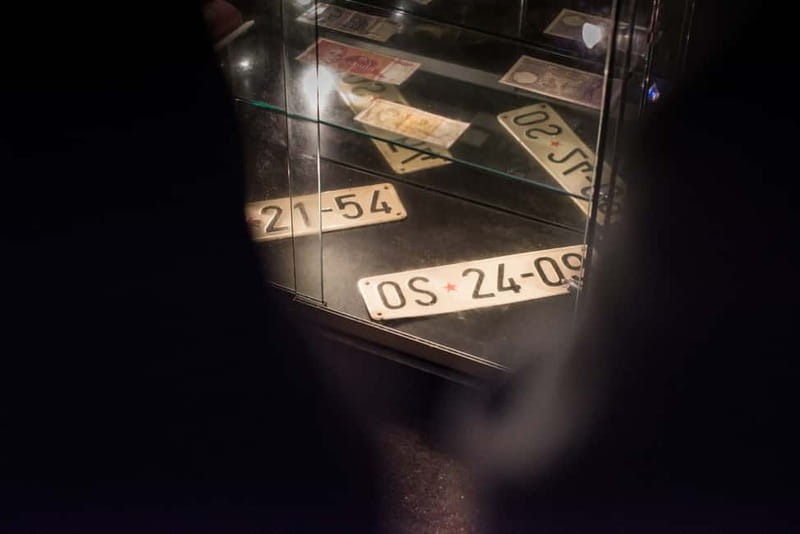
- The final basement is an authentic 1990s shelter, not simply a recreated exhibit.
- Guides such as Darko, Ivana, Vid, Diana, and Didi are praised for storytelling, humor, clarity, and personal insight.
- The tour lasts 2.5 hours and begins and ends at Ban Jelačić Square.
- The price is $44 per person, reasonable if you want historical context rather than a standard city walk.
- English and Spanish tours are available, but the route is not suitable for guests with mobility limitations.
Why Zagreb’s tunnels tell more than one story
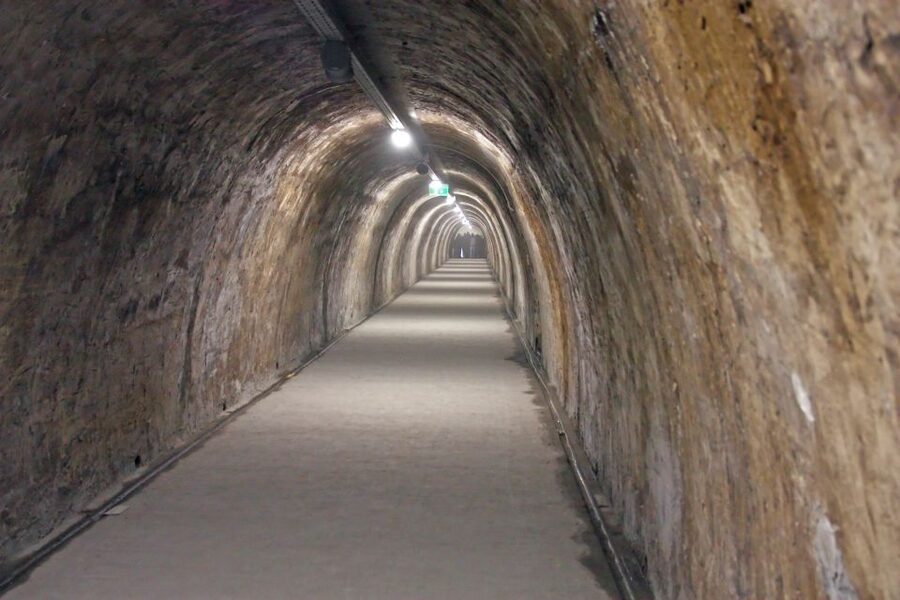
The WWII tunnels are the tour’s strongest setting. They do not cover just one conflict. Instead, they help explain how Zagreb and Croatia moved through several major political periods during one turbulent century.
You begin with the Second World War, then move into almost five decades of Communist Yugoslavia. From there, the story turns to the collapse of communism, the breakup of Yugoslavia, and Croatia’s Homeland War. That sequence matters because the later conflict did not appear from nowhere. It grew from political change, competing national aims, and the failure of a shared state.
I find this kind of setting more useful than a string of unrelated monuments. In a tunnel, the subject feels tied to the city itself. You are not simply hearing dates while looking at elegant squares. You are learning how Zagreb’s public spaces and private shelters were shaped by fear, ideology, and war.
The tunnels are underground, so expect a change from the open streets to a darker, more enclosed environment. If you dislike confined spaces, this is worth considering before booking. The tunnels can also be closed during events, so availability is not guaranteed on every departure.
Other Zagreb days people book alongside this one:
- From Zagreb: Plitvice & Rastoke Guided Day Trip with Ticket
★ 4.9 · 2,955 reviews - Zagreb: Rastoke & Plitvice Lakes Guided Tour with Ticket
★ 4.9 · 1,897 reviews - Communism & Croatian Homeland War Tour
★ 5.0 · 1,355 reviews
Meeting at Ban Jelačić Square
The tour starts in front of the horse statue at Ban Jelačić Square, Zagreb’s main square. This is a practical meeting point because it is easy to identify and the tour returns there at the end.
Arrive ready for a walking tour, not a bus ride. The route includes several guided stops, a photo stop, sightseeing, a tunnel visit, and the basement shelter. The supplied timing breaks the experience into short sections of roughly 20 minutes, 15 minutes, 30 minutes, and an hour, though the exact flow can vary.
That pacing gives the guide room to explain the political background before asking you to enter the more serious spaces. I prefer this approach to being dropped straight into a shelter without context. The history becomes easier to follow when you first understand the city and the country around it.
You should leave large bags and luggage behind. Pets are not allowed, and children must be accompanied by an adult. Unaccompanied minors cannot join the activity.
Life under Communist Yugoslavia
One of the tour’s goals is to explain everyday life in Zagreb during the communist era. This is important because many visitors know the broad political label but have little sense of how that system affected ordinary people.
Your guide discusses almost 50 years of Communist Yugoslavia and the way Zagreb changed during that period. The tour then links that era to the fall of communism in Croatia. You get a political timeline, but the best guides also make space for personal experience.
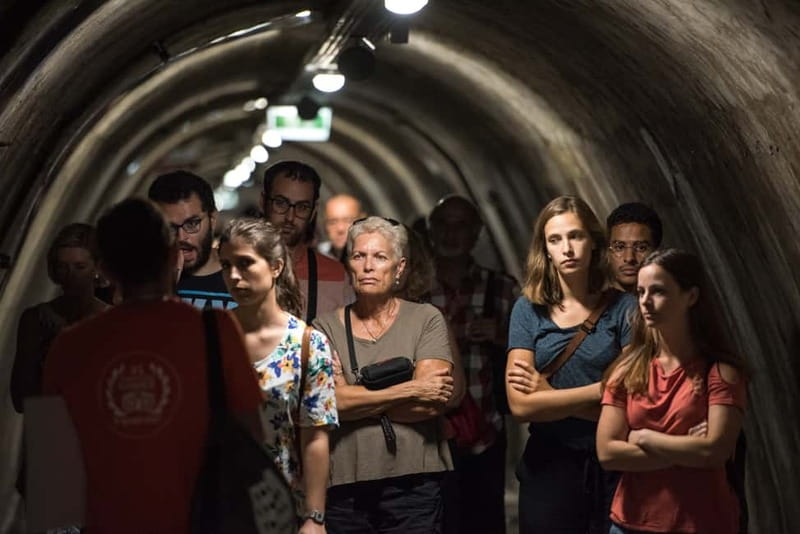
That personal layer is one of the tour’s most praised features. Ivana, Darko, Vid, Diana, and Didi are among the guides singled out for clear explanations, energy, humor, and strong storytelling. Some guides have family ties to the events they describe, giving the subject a human scale that a textbook cannot provide.
One guide, Ivanka, is described as a historian who openly recognized that a Croatian guide might naturally present one viewpoint. She encouraged attention to Slovenian, Serbian, and other perspectives. That matters with a subject this sensitive. You should expect a Croatian perspective, but the tour appears to make a real effort to discuss the region’s competing experiences.
The discussion is not only about leaders and borders. It is about how people understood their country, their identity, and their future as Yugoslavia weakened. If you have already visited Zagreb’s churches and central streets, this section adds the political background that standard sightseeing often skips.
The breakup of Yugoslavia and Croatia’s independence
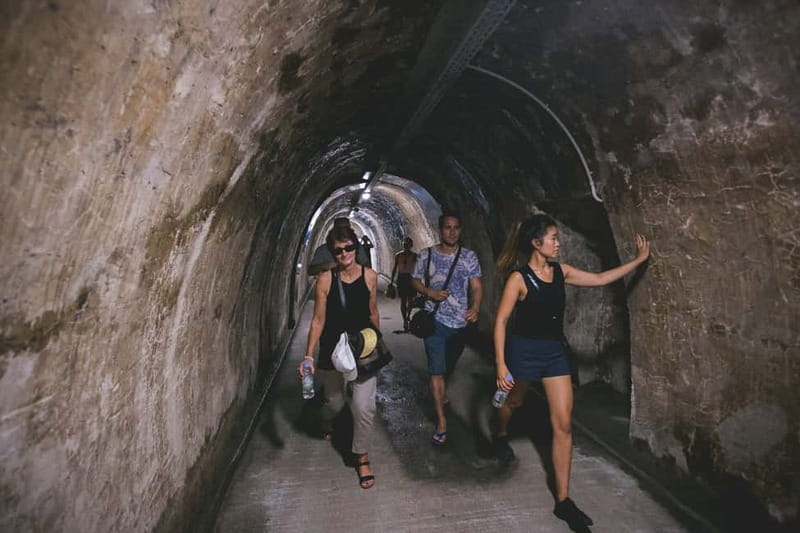
The tour’s central historical question is how Yugoslavia fell apart and how Croatia fought for independence. The guide explains the turbulent years that led to the Homeland War and places Zagreb inside that wider regional crisis.
This is a difficult subject to present in two and a half hours. You will not receive every military, political, or diplomatic detail. What you do get is a structured introduction to the period, with the city’s shelters and tunnels providing a physical link to the events.
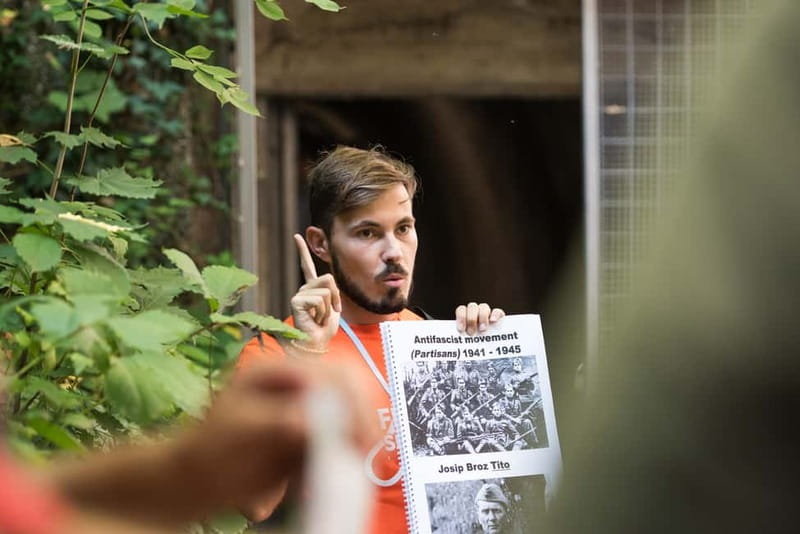
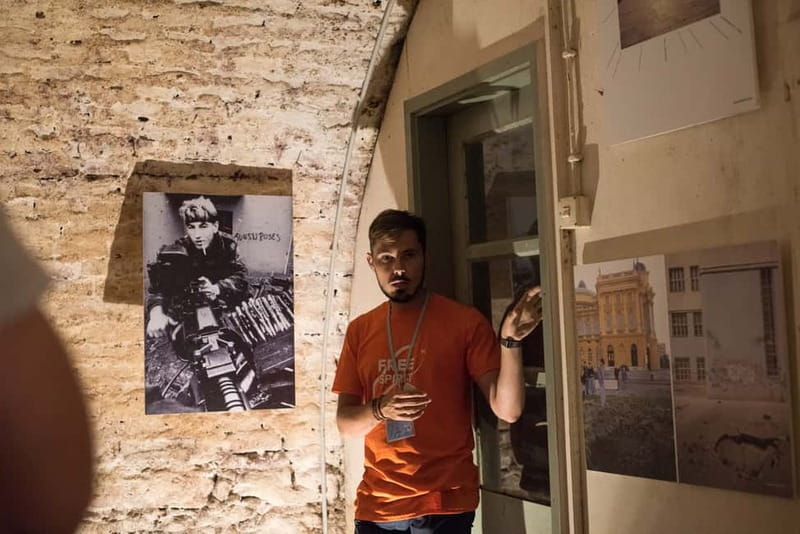
A strong guide makes a big difference here. Darko is praised for combining maps, photographs, humor, and personal stories. Other guides are described as articulate, passionate, and able to keep the group involved by asking questions. That variety means the tone can depend on who leads your departure, but the repeated emphasis is on clear teaching rather than a dry recitation of facts.
The tour is also useful for visitors who know the dates but not the human impact. A guide who grew up during the wars can explain what the period meant in daily life. Another guide’s family story can show how political change affected people close to home.
I would not book this expecting a simple patriotic account. The strongest version of the tour treats the period as complicated and painful. It aims to explain Croatia’s road to independence while recognizing that the surrounding countries and communities experienced the breakup differently.
Same stretch of coast, a completely different day out:
- Best of Zagreb with the WW2 Tunnels
★ 5.0 · 973 reviews - Plitvice Lakes with Ticket & Rastoke Guided Tour from Zagreb
★ 5.0 · 966 reviews - Zagreb: Small Group Walking Tour City Center and WW2 Tunnels
★ 4.9 · 895 reviews - Zagreb: Skip-the-Ticket-Line Museum of Broken Relationships
★ 4.5 · 847 reviews
The basement shelter and the Homeland War video
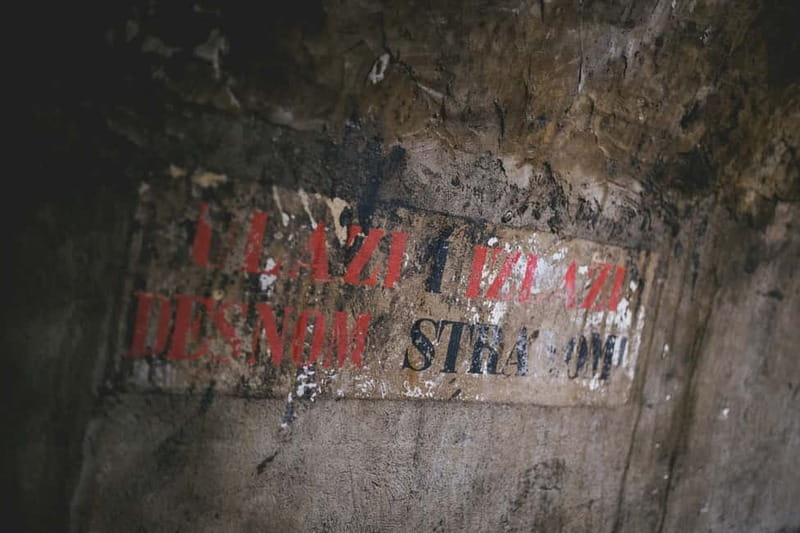
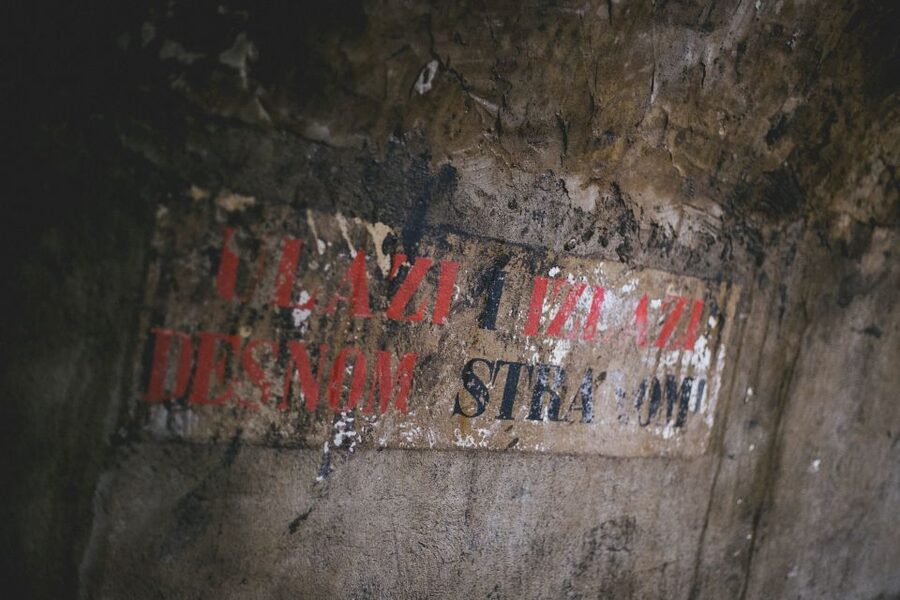
The tour finishes in a basement used by local people as a shelter during air raids on Zagreb in the 1990s. This is the most emotionally direct stop because it shows where civilians sought safety.
The basement is authentic, which gives it a different force from a modern museum display. You can connect the guide’s explanation to a real place where people waited during attacks. The setting helps turn an abstract account of the war into something easier to grasp.
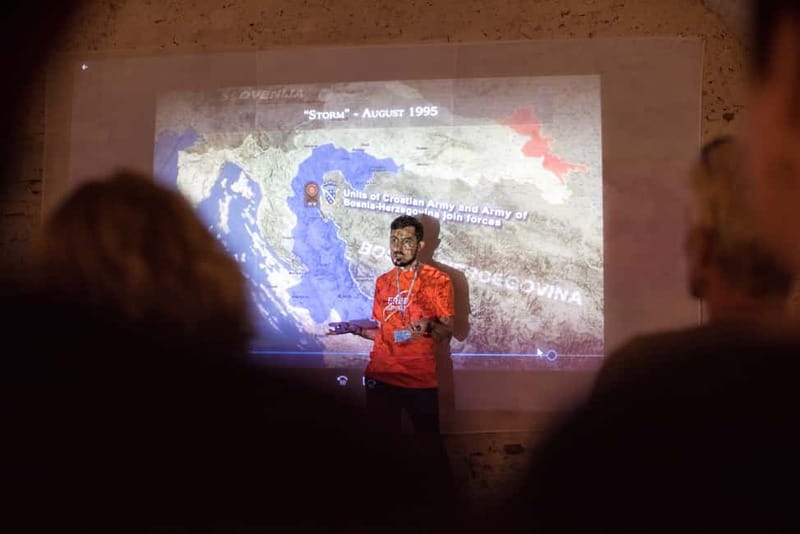
A multimedia presentation adds another layer. The video focuses on details of the Homeland War and gives the final stop a clear ending. It is a useful choice because the tour has already built the historical sequence. By this point, you have heard about communist Yugoslavia, the breakup of the state, and the war. The video helps gather those strands together.
Some people may find this ending heavy. That is not a flaw, but it is worth knowing. This is not a cheerful urban walk that happens to mention history. The shelter puts civilian danger at the center, and you may want quiet time afterward rather than another fast-paced attraction.
The basement is also one reason the $44 price can make sense. You are paying for access to places and interpretation that you would be unlikely to understand on your own. A basic walk around Zagreb can show you buildings. This experience explains what the city felt like during a period many locals still remember.
Guides who make difficult history accessible
The guide is the deciding factor on a tour like this. The subject includes political labels, shifting borders, ethnic identity, and war. A guide needs to explain the facts while keeping the group oriented.
Darko receives particular praise for his deep voice, use of maps and pictures, positive energy, and final video. Vid is described as funny, witty, and able to keep the subject engaging. Ivana is repeatedly praised for passion, personal stories, and a professional style. Diana is described as eloquent and well informed about Slavic history.
Those details tell you what to expect from the presentation. It is not meant to be a silent walk with occasional dates. The guides speak at length, invite questions, and use stories to help you remember the material.
The best praise focuses on balance as much as enthusiasm. One guide is specifically appreciated for presenting several sides of the story. That is valuable because the history of the former Yugoslavia remains politically and personally sensitive.
The tour is offered in English and Spanish. The available guide changes by departure, so you should not assume a particular person will lead your group. Still, the range of feedback suggests that Free Spirit Tours has several guides who are comfortable handling this difficult topic.
How much walking and how much history?
The tour lasts 2.5 hours and returns to Ban Jelačić Square. It is long enough to provide a proper historical framework, but short enough to fit into a day of sightseeing.
The route is divided between outdoor walking and indoor stops. You will visit several city locations, take photographs, enter the WWII tunnels, and spend time in the shelter basement. It is not described as a strenuous hike, but the activity is not suitable for wheelchair users or people with mobility impairments.
A family can join if children are accompanied by an adult. One account describes an eight-year-old taking part and retaining some of the material, though the child became restless toward the end. That is a fair warning. The guide may be lively, but two and a half hours of war history can be a lot for younger children.
The subject suits older children, teenagers, students, and adults who already have some interest in modern European history. If your main goal is food, architecture, or relaxed city photography, choose a lighter tour instead.
Avoid bringing luggage or large bags. Since the tour includes underground spaces and a basement, packing light will make the experience easier. Check the starting time when you book, since departures vary.
Is $44 a fair price?
At $44 per person, this is not the cheapest way to spend 2.5 hours in Zagreb. The value depends on what you want from a city tour.
If you only want an introduction to the main sights, a standard walking tour may offer more landmarks for less money. This experience covers a narrower subject and spends time indoors, away from Zagreb’s prettiest streets.
I think the price is fair for visitors who want recent history explained well. It includes a local guide, entry to the WWII tunnel, access to the basement shelter, and the Homeland War multimedia presentation. The personal stories, maps, photographs, and guided interpretation are the real purchase.
You also get a subject that is difficult to study casually while on holiday. A short online search can give you names and dates, but it cannot show how those events connect to Zagreb’s streets and shelters. If this period is central to your interest in Croatia, the tour offers solid value.
Free cancellation up to 24 hours before the activity and the option to reserve now and pay later reduce the risk of committing early. These policies are useful when your Zagreb plans are still changing.
Who should take this tour?
I would choose this tour if you want to understand modern Croatia beyond its medieval center and café culture. It is especially useful early in your stay, since the context can help you understand later visits around Zagreb and the wider country.
It also suits people with a personal interest in the former Yugoslavia, the Cold War period, independence movements, or civilian life during war. History students and visitors who have family connections to the region may find the personal accounts especially meaningful.
The tour may not suit you if you want a relaxed stroll, dislike enclosed spaces, or prefer to avoid war-related material. The shelter and video presentation make the subject direct, not merely academic.
Families can consider it, but use your judgment about age and attention span. Children must be with an adult, and the material may be intense for younger kids even if a lively guide keeps them involved.
Practical verdict: should you book it?
Book this tour if you want the story behind modern Croatia, not just Zagreb’s postcard sights. The WWII tunnels, authentic air-raid shelter, maps, photographs, and video give the history a strong physical setting, while guides such as Darko and Ivana are noted for making hard material clear and personal.
Skip it if you need a gentle first look at the city or have mobility limitations. For everyone else, $44 is a sensible spend when the goal is understanding how Zagreb lived through communism, the breakup of Yugoslavia, and the Homeland War.
FAQ
Where does the Zagreb Communism and Croatian Homeland War Tour start?
It starts in front of the horse statue at Ban Jelačić Square, Zagreb’s main square.
Where does the tour finish?
The activity ends back at Ban Jelačić Square, where it begins.
How long does the tour last?
The tour lasts 2.5 hours. Starting times vary, so check availability when booking.
What languages are available?
The tour is offered with a live guide in English or Spanish.
Does the tour visit WWII tunnels?
Yes. The tour includes a visit to the World War II underground tunnels, although the tunnels may not be available during events held there.
Does the tour enter a real air-raid shelter?
Yes. You visit an authentic basement that locals used as a shelter during air raids on Zagreb in the 1990s.
Is a Homeland War video included?
Yes. A Croatian Homeland War multimedia presentation is included, and the tour finishes with details of the war presented through video.
Can I bring luggage or a large bag?
No. Luggage and large bags are not allowed on the activity.
Can children join the tour?
Yes, but children must be accompanied by an adult. Unaccompanied minors are not allowed.
Is the tour suitable for wheelchair users?
No. The activity is not suitable for wheelchair users or people with mobility impairments.
Are pets allowed?
No. Pets are not allowed on the tour.
Can I cancel for a refund?
Yes. You can cancel up to 24 hours in advance for a full refund. The reserve now and pay later option also lets you hold a place without paying immediately.
Just added around Zagreb
- Toast to the Morning After: Zagreb Museum of Hangovers Visit★ 4.0 · 39 reviews
- From Split: Transfer to Zagreb with Stop at Plitvice Lakes★ 4.6 · 44 reviews
- Private Walking Tour of Zagreb★ 4.9 · 5 reviews
- Jump into Zagreb: Walking Tour with local guide★ 4.8 · 3 reviews
- From Zagreb to Plitvice Lakes and Rastoke – Private day tour★ 5.0 · 4 reviews
- From Zagreb: Varazdin Baroque Town & Trakoscan Castle★ 4.9 · 38 reviews
- From Zagreb: Plitvice Lakes & Rastoke Private Tour★ 5.0 · 9 reviews
- From Zagreb: Prehistoric and Medieval Croatia Tour★ 4.9 · 3 reviews
Zagreb Tours, compared.
Rastoke & Plitvice Lakes Guided Tour with Ticket
Read our review →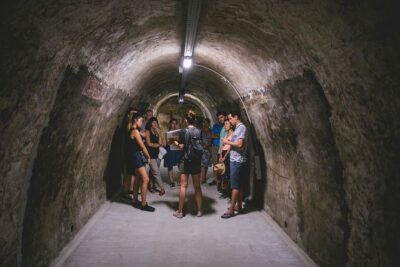
Plitvice Lakes with Ticket & Rastoke Guided Tour from Zagreb
Read our review →
Small Group Walking Tour City Center and WW2 Tunnels
Read our review →
Skip-the-Ticket-Line Museum of Broken Relationships
Read our review →
Plitvice and Rastoke day trip from Zagreb w/ticket (guar. dep.)
Read our review →Browse the lists this tour appears in