
Reviewed · OLD TOWN WALKING TOURS
Exclusive old Zagreb walking tour
Zagreb makes the most sense when you walk from its grand lower-city squares up into old Kaptol and Gradec. This evening route links the Cathedral, Dolac Market, Stone Gate, St Mark’s Square, and the Lotrščak viewpoint, giving you both the city’s story and its nighttime character.
I like the small-scale, personal approach, and I like that guide Domagoj connects old buildings with Croatian history and present-day life. The route also gives you useful bearings for later exploring, including food, drink, museums, transport, and the places where Zagreb’s younger crowd gathers.
The main limitation is time. Ninety minutes is enough for a strong introduction, but not enough to visit every landmark inside or spend long at each stop. The evening setting is atmospheric, yet some details may be harder to see after dark.
In This Review
- Key points to know before you book
- Why this route is a smart first look at Zagreb
- King Tomislav Square and Zagreb’s formal center
- Ban Jelačić Square and the city’s everyday center
- Zagreb Cathedral, Kaptol, and the religious heart of the city
- Dolac Market and Opatovina
- Gradec and Stone Gate
- St Mark’s Square and the political center
- Gradec Lookout, Strossmayer Walk, and Lotrščak Tower
- Following the funicular line to Ilica Street
- The guide’s approach and what you actually learn
- Price, timing, and who gets the best value
- Should you book the Exclusive Old Zagreb Walking Tour?
- FAQ
- How long is the Exclusive Old Zagreb Walking Tour?
- How much does the tour cost?
- Where does the tour begin?
- What time does the tour take place?
- What language is the tour offered in?
- Who is the guide?
- Is the tour wheelchair accessible?
- Can I cancel the booking?
Key points to know before you book
- A clear route through old Zagreb: Walk from King Tomislav Square through Kaptol, Dolac, Opatovina, Gradec, and the lower city.
- Domagoj leads in English: His style is relaxed, direct, and focused on history, culture, architecture, and daily life.
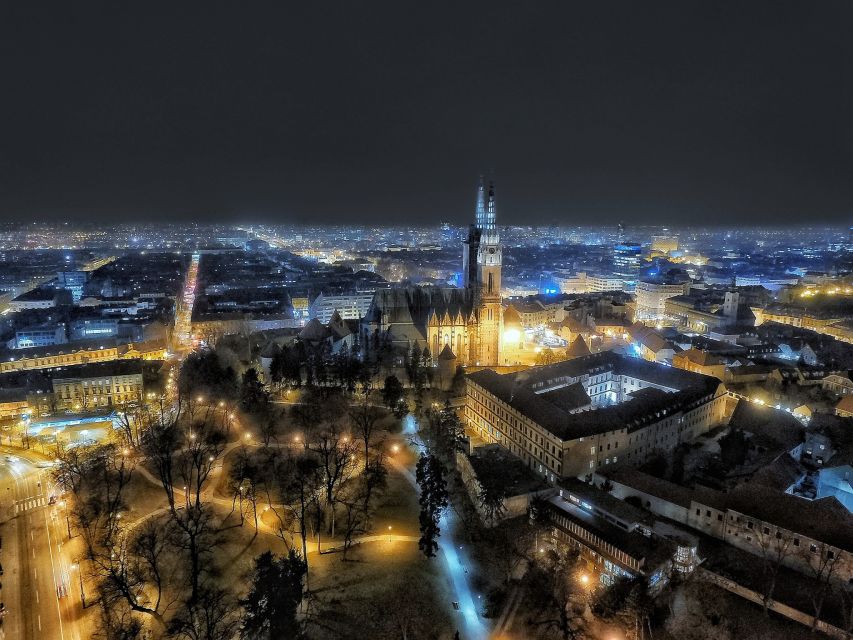
- Nighttime viewpoints are part of the plan: Strossmayer Walk and the viewpoint beneath Lotrščak Tower offer memorable city views.
- Good for getting your bearings: The route ends near Ilica Street, the Octagon, and Flower Square, useful areas for independent exploring.
- A 90-minute introduction for $35: The price is reasonable if you want a private-feeling orientation rather than a long museum-heavy tour.
- Flexible booking: You can cancel up to 24 hours before the tour for a full refund, and reserve now while paying later.
Why this route is a smart first look at Zagreb
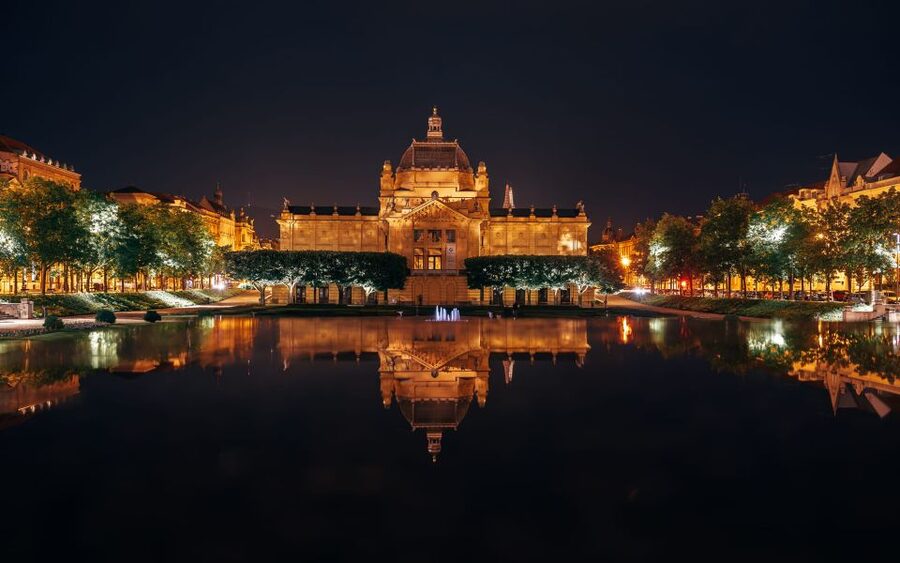
Zagreb is a city of two connected personalities. The lower city has broad squares, formal gardens, shopping streets, and grand Austro-Hungarian-era buildings. Above it, Kaptol and Gradec bring narrower streets, medieval gates, churches, old civic buildings, and a more intimate feel.
This tour follows that change in mood on foot. You begin at King Tomislav Square, move through the central squares, climb into the old city, then return toward Ilica Street and Flower Square. That sequence matters because you are not simply ticking off isolated sights. You are seeing how modern Zagreb grew from two older settlements, Kaptol and Gradec.
I would consider this a useful first or second activity in Zagreb. On your first evening, it can help you understand where the main areas sit. Later in your visit, it can fill in the political, religious, and cultural background behind buildings you have already passed.
The tour costs $35 per person and lasts 90 minutes. That is not the cheapest way to walk around a city, since many of the sights can be seen independently. The value comes from having Domagoj explain the connections, answer questions, and point out places you may otherwise pass without context.
More Old Town Walking Tours in Zagreb
- Zagreb: Small Group Walking Tour City Center and WW2 Tunnels
★ 4.9 · 895 reviews - Zagreb: City and WWII Tunnels Walking Tour
★ 4.9 · 845 reviews - Walking tour of Zagreb
★ 5.0 · 383 reviews
King Tomislav Square and Zagreb’s formal center
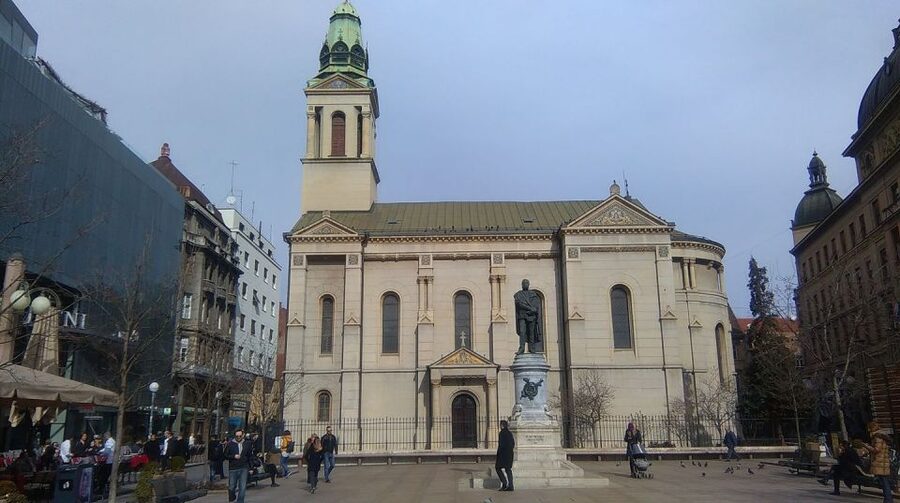
The meeting point is King Tomislav Square, one of the city’s major open spaces. From there, the walk continues to Nikola Zrinjski Square, part of the central green area often associated with Zagreb’s parks, public buildings, and city life.
Starting here gives the tour a calm opening before it moves toward the busier center. You get a sense of Zagreb’s lower city first, then gradually head toward the older districts.
This is also a practical meeting point. If you arrive early, you are already in a central part of Zagreb, close to the main sights and transport connections. The tour is scheduled for evening hours, so check the available departure time when booking.
Domagoj’s role is important at this stage. The tour is not presented as a silent walk from monument to monument. He explains local history, art, culture, and architecture, while also leaving room for questions. That makes the experience more useful than a route map alone.
Ban Jelačić Square and the city’s everyday center
From Nikola Zrinjski Square, you continue to Ban Jelačić Square, Zagreb’s main central square. This is a key point for understanding the city today, since many routes through central Zagreb pass through here.
The square gives you a clear change from the green, formal spaces near King Tomislav Square. Here, the city feels more concentrated, with people crossing through, meeting friends, and moving between the lower city and the old quarters.
A guide can make a big difference in a place like this. Without context, a large square can seem like a simple open area surrounded by buildings. With Domagoj, you hear how it fits into Zagreb’s history and current life.
This is one of the tour’s strongest features: it combines the major public spaces with smaller historic corners. You are not only looking at architecture. You are learning how the city uses these places now.
Zagreb Cathedral, Kaptol, and the religious heart of the city
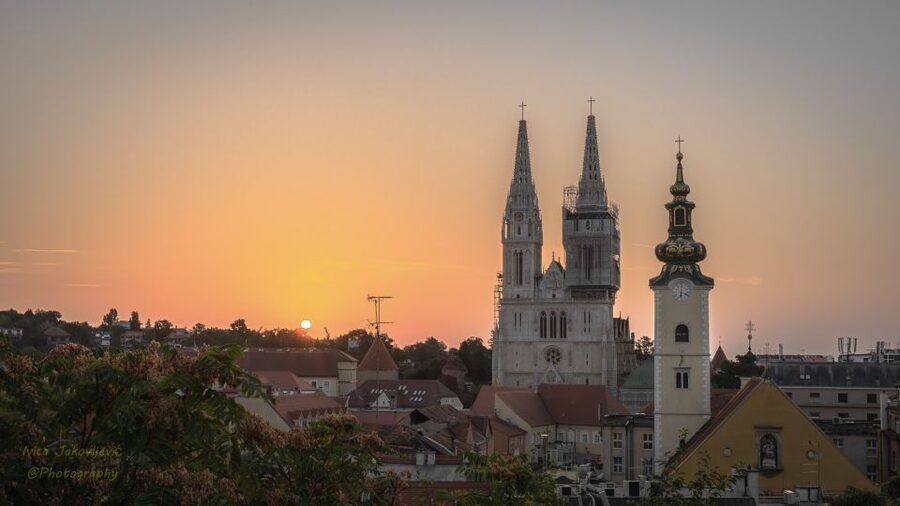
The route continues to Zagreb Cathedral and old Kaptol. Kaptol is a historic part of Zagreb within the Zagreb Archdiocese, and it developed alongside Gradec, the other old settlement on the hill.
The Cathedral is one of the city’s best-known landmarks. Its presence gives Kaptol a different mood from Ban Jelačić Square, with a stronger religious and historic identity. The tour helps place the Cathedral in the wider story of Zagreb rather than treating it as a stop for a quick photograph.
The available information does not promise an interior visit, so you should think of this as an exterior and neighborhood visit. That is worth knowing if you want a tour centered on entering churches or museums. The emphasis is on the setting, the building, and the role of Kaptol in the city’s development.
I like this part because it gives you a framework for Zagreb’s old divisions. Kaptol and Gradec are not just attractive old streets. They are the two historic parts from which present-day Zagreb grew.
Same stretch of coast, a completely different day out:
- From Zagreb: Plitvice & Rastoke Guided Day Trip with Ticket
★ 4.9 · 2,955 reviews - Zagreb: Rastoke & Plitvice Lakes Guided Tour with Ticket
★ 4.9 · 1,897 reviews - Communism & Croatian Homeland War Tour
★ 5.0 · 1,355 reviews - Best of Zagreb with the WW2 Tunnels
★ 5.0 · 973 reviews
Dolac Market and Opatovina
From Kaptol, you reach Dolac, Zagreb’s well-known open-air market. Markets often explain a city better than grand monuments do, and Dolac adds an everyday layer to the walk.
An evening tour will not offer the same market activity as a morning visit. Stalls and trading are part of the market’s daytime rhythm, so you may see a quieter version of Dolac after hours. Even so, the location remains important, and Domagoj can explain its place in Zagreb’s daily life.
The route then continues to Opatovina. This area helps bridge the space between Kaptol and Gradec, moving you from the market district toward the old upper town.
This section is especially useful if you plan to return during the day. You will know where Dolac is, how it connects to the upper town, and why it is worth adding to your own schedule. Domagoj also offers food and drink suggestions, making this a good moment to ask about local places to try after the tour.
Gradec and Stone Gate
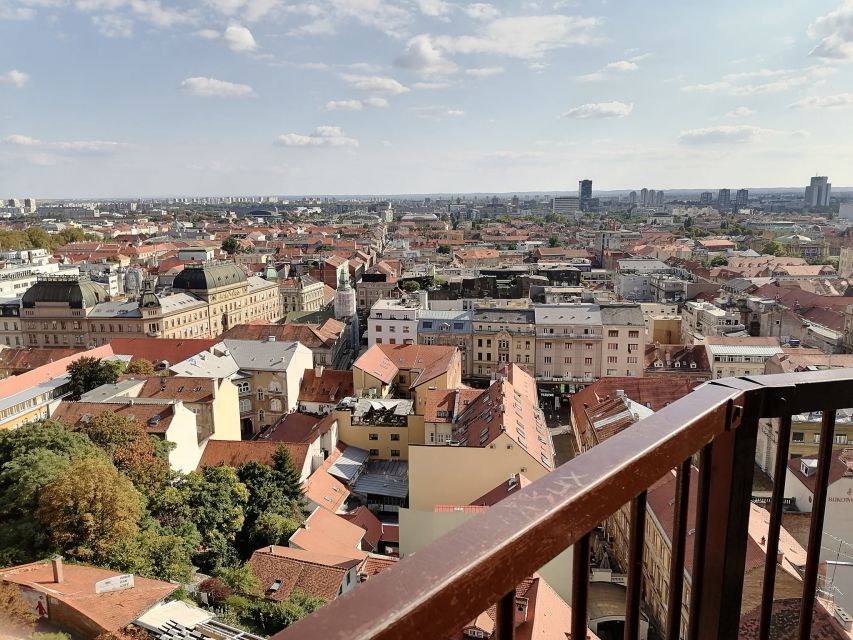
The walk climbs toward Gradec, the old part of Zagreb on the slope of Medvednica. Together with Kaptol, Gradec formed the historic base of the city.
One of the major stops here is Kamenita Vrata, or Stone Gate. It is a preserved gate and rectangular tower, and it is one of the most important surviving monuments of old Zagreb.
Stone Gate is not just a scenic passage. It represents the older defensive and civic structure of the upper town. The shape of the gate helps you picture how movement into the historic settlement was once controlled.
This is a compact stop, but it carries a lot of meaning. A guide can explain why the gate matters, how it relates to old Zagreb, and what to notice in its construction. You may also find the atmosphere here more hushed than in the central squares, especially during an evening walk.
The route is wheelchair accessible, which is a useful point for anyone planning around mobility needs. Still, the tour moves through historic districts, so it is sensible to ask the provider about the exact route if you have specific access requirements.
St Mark’s Square and the political center
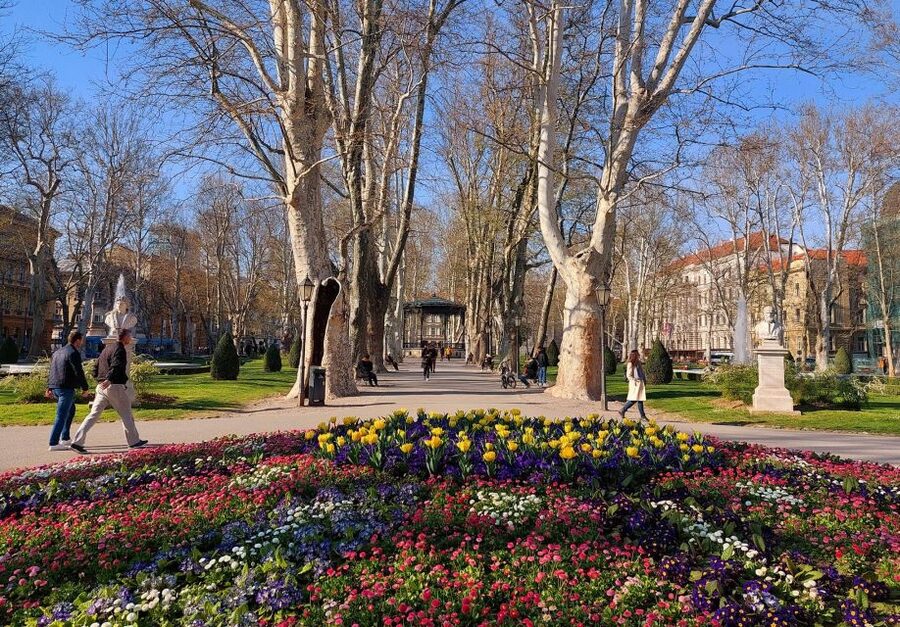
From Stone Gate, you continue into the old town and St Mark’s Square. This is one of the most important parts of the walk, since the square brings together several major civic and religious buildings.
You see the city council, the Parliament, the Museum of Broken Relationships, churches, monuments, and historic structures around the square. It is an unusually concentrated place for understanding how Zagreb’s political, cultural, and religious identities overlap.
The Museum of Broken Relationships adds a more modern and unusual note to the route. It is not simply another old building. Its subject gives the square a connection to contemporary Zagreb’s cultural life.
The tour does not include a museum visit, so you should not expect time to explore its exhibits. Instead, you get the location and the background, then you can decide if it deserves a separate visit.
St Mark’s Square is also the kind of place where a guide’s explanation adds real value. The buildings are visually striking, but their roles are not always obvious. Domagoj’s background in Croatian and Zagreb history helps connect the architecture to the country’s political story.
Gradec Lookout, Strossmayer Walk, and Lotrščak Tower
After St Mark’s Square, the route heads to the Gradec lookout and then along Strossmayer Walk. This is where the tour shifts from civic history to views and atmosphere.
The walk beneath ancient Lotrščak Tower leads to a Zagreb viewpoint, where you can take photographs of the city at night. Evening timing is particularly well suited to this part of the route. The changing light gives you a different view from the daytime scene around the upper town.
You should keep your expectations realistic. This is a city viewpoint, not a long countryside panorama, and the 90-minute schedule does not allow for an extended photo stop. But it is a welcome pause after the denser historical sections.
I especially like the way the route places the viewpoint late in the walk. You first learn what you are looking at, then get the chance to see the city from above. That makes the view more meaningful than arriving at a lookout without any sense of Zagreb’s layout.
Lotrščak Tower also adds a strong visual marker to the evening. The old tower, the walkway, and the city below create one of the tour’s most memorable combinations.
Following the funicular line to Ilica Street
From the upper town, you follow the line of Zagreb’s funicular downhill. The funicular is a recognizable part of the city, and its route helps show how Gradec connects with the lower streets.
The walk then reaches Ilica Street, described as the longest street in Zagreb. This is a useful transition because you leave the historic upper town and return to a major modern thoroughfare.
Ilica is not just an endpoint on a map. It helps you understand Zagreb as a working city with shopping, movement, and daily routines alongside its older monuments. If you plan to explore independently afterward, knowing this route can make the city easier to navigate.
The tour ends around the Octagon and Flower Square. These areas give you a lively finish, with Flower Square known as a place where Zagreb’s younger crowd meets at pubs in the evening.
That final stop is practical. You are left in an area where you can continue your night, look for food or drinks, or walk back toward the central squares. The guide’s recommendations can help you choose what to do next.
The guide’s approach and what you actually learn
The strongest repeated feature of this experience is Domagoj’s command of Croatian and Zagreb history. You hear about major events, local culture, architecture, current affairs, and ordinary life, rather than receiving only dates and building names.
The style is described as relaxed, polite, humorous, and honest. That matters on a walking tour because 90 minutes can feel rushed if the guide delivers a long lecture. A conversational approach gives you room to ask questions and steer the discussion toward subjects that interest you.
You can also expect practical suggestions for museums, transport, dining, drinks, and places to explore after the walk. These tips are especially useful if Zagreb is one stop on a larger Croatian trip and you have limited time in the city.
The personal scale is another advantage. The experience is presented as having a unique approach to visitors, and the available feedback includes praise for a relaxed walk without an overcrowded group. The exact group size is not stated, so I would not book expecting a guaranteed private tour. Still, the tone suggests an experience designed around conversation rather than a large crowd.
Price, timing, and who gets the best value
At $35 per person, this tour sits in the reasonable middle range for a guided city walk. You can visit most of the route without paying for admission, which means the fee mainly covers Domagoj’s time, explanations, local perspective, and route planning.
I think the price works best for three types of people:
- First-time visitors who want a clear introduction before exploring alone.
- Short-stay visitors who need Zagreb’s main historic areas explained efficiently.
- Curious walkers who care about politics, architecture, culture, and local recommendations.
It is less suitable if you want lengthy interior visits, a museum tour, or a slow photography walk. The route covers many places in 90 minutes, so you will keep moving.
The evening departure is a real part of the experience, not just a scheduling detail. You see the old town, lookout, and central meeting places as the city moves into nighttime. At the same time, some architectural details may be less visible than they would be in daylight.
You can cancel up to 24 hours in advance for a full refund, and the reserve-now, pay-later option gives you some flexibility while arranging your schedule. The tour is offered in English and is listed as wheelchair accessible.
Should you book the Exclusive Old Zagreb Walking Tour?
Book it if you want Zagreb explained as a connected city rather than a list of photo stops. The route covers the Cathedral, Kaptol, Dolac, Gradec, Stone Gate, St Mark’s Square, Lotrščak, Ilica, the Octagon, and Flower Square, while Domagoj adds history, current affairs, and practical advice.
I would choose it early in a Zagreb visit, especially if you want to learn where to return for food, museums, markets, and nightlife. The strongest reason to book is the guide’s personal knowledge and the tour’s broad reach in a short time.
Skip it if you prefer to explore entirely alone, need long stops at each sight, or mainly want indoor attractions. For most people spending at least an evening in Zagreb, though, $35 buys a useful orientation and a more informed look at the city’s old and modern sides.
FAQ
How long is the Exclusive Old Zagreb Walking Tour?
The tour lasts 90 minutes.
How much does the tour cost?
The listed price is $35 per person.
Where does the tour begin?
The meeting point is King Tomislav Square in Zagreb.
What time does the tour take place?
The tour meets during evening hours. Check the available start times when booking.
What language is the tour offered in?
The tour is conducted in English with a live guide.
Who is the guide?
The guide is Domagoj, the operator behind Domagoj Tours.
Is the tour wheelchair accessible?
Yes, the activity is listed as wheelchair accessible.
Can I cancel the booking?
Yes. You can cancel up to 24 hours in advance for a full refund. You can also reserve now and pay later.
More Walking Tours in Zagreb
- Zagreb Small Group Guided Walking Tour with WW2 Tunnels
★ 5.0 · 380 reviews - Zagreb: Restaurants, Food & Old Town Walking Tour
★ 5.0 · 191 reviews - Zagreb Unveiled: Private walking tour with a local guide
★ 5.0 · 185 reviews - Zagreb Walking Food Tour – Sightseeing – Dolac Market Visit
★ 5.0 · 38 reviews
Just added around Zagreb
- Toast to the Morning After: Zagreb Museum of Hangovers Visit★ 4.0 · 39 reviews
- From Split: Transfer to Zagreb with Stop at Plitvice Lakes★ 4.6 · 44 reviews
- Private Walking Tour of Zagreb★ 4.9 · 5 reviews
- Jump into Zagreb: Walking Tour with local guide★ 4.8 · 3 reviews
- From Zagreb: Varazdin Baroque Town & Trakoscan Castle★ 4.9 · 38 reviews
- From Zagreb to Plitvice Lakes and Rastoke – Private day tour★ 5.0 · 4 reviews
- From Zagreb: Plitvice Lakes & Rastoke Private Tour★ 5.0 · 9 reviews
- From Zagreb: Mrežnica kayaking & Rastoke village – day trip★ 4.9 · 27 reviews
Old Town Walking Tours, compared.



Walking Tour of Split and Diocletian’s Palace
Read our review →


Krka Waterfalls tour with Trogir Walking tour and Krka panoramic boat cruise
Read our review →
City Walls Early Morning or Sunset Walking Tour
Read our review →
Plitvice Lakes with Boat Ride and Zadar Old Town Tour
Read our review →Browse the lists this tour appears in