
Reviewed · OLD TOWN WALKING TOURS
SPLIT-PREMIUM Emperor’s Walking Tour for History Lovers + Museum
Diocletian’s Palace is not a fenced-off ruin. It is the working heart of Split, with cafés, shops, apartments, lanes, and laundry tucked into a Roman emperor’s retirement home built in 305 AD. This walking tour helps you read that layered jumble, from the grand Peristyle to the medieval streets that grew inside it.
I like the small maximum of 15 people, which gives guides such as Joško and Daniela room to answer questions and adjust their pace. I also like the mix of Roman, medieval, and modern Split, especially the chance to add the palace cellars for €10. The main consideration is that this is a serious history tour, not a costume show or a dedicated Game of Thrones tour, and the group version is for adults only.
In This Review
- Key points before you book
- Why Diocletian’s Palace is the right place to begin in Split
- A local guide makes the difference
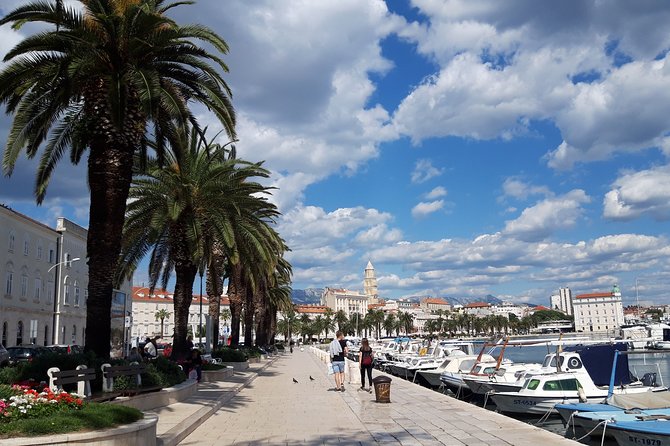
- Entering the palace through the Riva and waterfront
- The Peristyle, the palace’s grand central stage
- Vestibule and the emperor’s private residence
- The cellars and the optional museum visit
- Cathedral of Saint Domnius and the Temple of Jupiter
- Old Split’s medieval lanes and public squares
- Grgur Ninski and the Golden Gate
- What the two-hour format really gives you
- Price, group size, and who gets the best value
- Who should book this Split walking tour?
- Should you book the Emperor’s Walking Tour?
- FAQ
- How long does the Emperor’s Walking Tour last?
- Where does the tour start and finish?
- What is included in the price?
- How much does the cellar visit cost?
- Is this tour suitable for children?
- How many people can join the group?
- Does the tour include a Game of Thrones or costumed show?
- What happens if I need to cancel?
Key points before you book
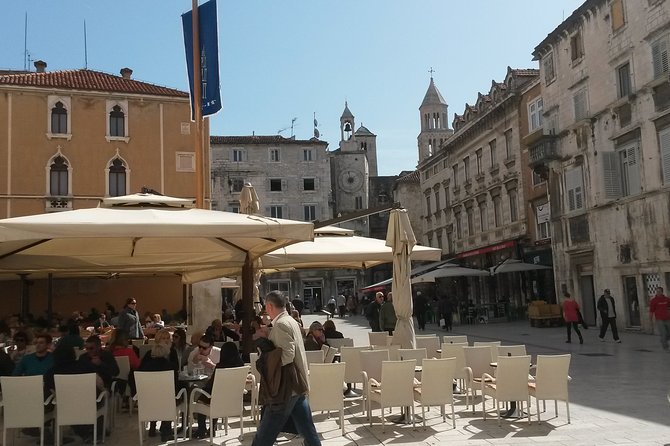
- The palace is still part of daily life: You explore a real city center, not a silent archaeological park.
- Local guides add context: Joško, Daniela, Joe, and Joseph are praised for clear explanations, humor, and personal knowledge of Split.
- Small groups matter: The tour allows no more than 15 people, with a minimum of four required to operate.
- The cellars cost extra: The Museum of Diocletian’s Cellars is not included and costs €10 per person.
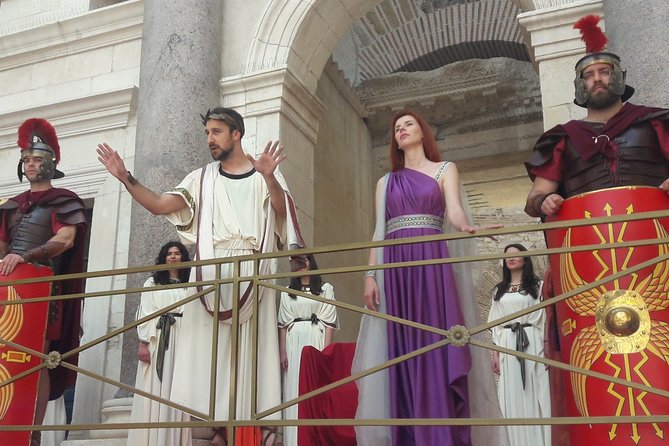
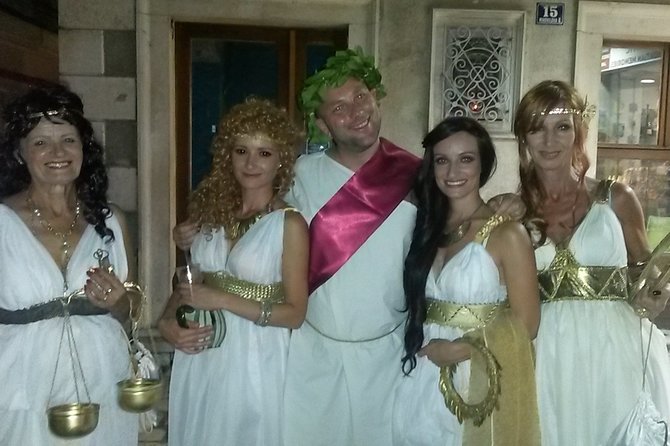
- Expect history, not theater: The tour does not include costumed performances or a similar show.
- Start early in hot weather: Split can be very hot in summer, and much of the route is outdoors on stone streets.
Why Diocletian’s Palace is the right place to begin in Split
The palace gives you Split in one compact, walkable package. Emperor Diocletian built it as a fortified residence and retirement retreat, but later generations reshaped it into a medieval town. That is why a Roman column may sit beside a café, and why a narrow passage can lead from an ancient courtyard into a lived-in neighborhood.
I find a guide especially useful here because the palace does not reveal its story at a glance. You need someone to point out the old entrances, explain the plan of the imperial residence, and show how later residents adapted the structure. The tour’s route does that while also taking you beyond the palace into Old Split.
The experience begins and ends at the Main Stage on the Riva promenade, at Obala Hrvatskog narodnog preporoda 22. That location is practical if you are staying near the waterfront or arriving from the cruise port. You are near public transportation, and the end point makes it easy to continue along the harbor or return to your hotel.
More Old Town Walking Tours in Split
- Split: Old Town and Diocletian Palace Walking Tour
★ 4.9 · 4,727 reviews - Walking Tour of Split and Diocletian’s Palace
★ 5.0 · 2,588 reviews - Krka Waterfalls tour with Trogir Walking tour and Krka panoramic boat cruise
★ 5.0 · 1,659 reviews
A local guide makes the difference
The strongest part of this experience is the guide’s role. Joško, Joe, Joseph, and Daniela are named by people who took the tour, and their styles come through clearly: strong command of Split’s past, a personal connection to the city, a good sense of humor, and a willingness to answer questions.
Joško is repeatedly praised for keeping the tour lively while covering a large amount of material. He has also helped with practical matters, including taking photographs, suggesting bakeries and restaurants, and helping explain a specific dietary need at a restaurant. Those gestures are not guaranteed parts of the tour, but they show the useful local advice you may receive around the formal history lesson.
Daniela is noted for her careful pacing and sensitivity to mobility needs. One group took longer than planned, and she gave extra time rather than rushing the walk. That is encouraging if someone in your party moves slowly, although you should still expect an urban walking tour over historic stone surfaces.
The tone is educational but not stiff. You can expect dates, architectural details, and the political story of Dalmatia, mixed with anecdotes and humor. One small criticism is worth keeping in mind: a guide can occasionally be difficult to hear in a noisy street setting. Staying close to the group helps.
Entering the palace through the Riva and waterfront
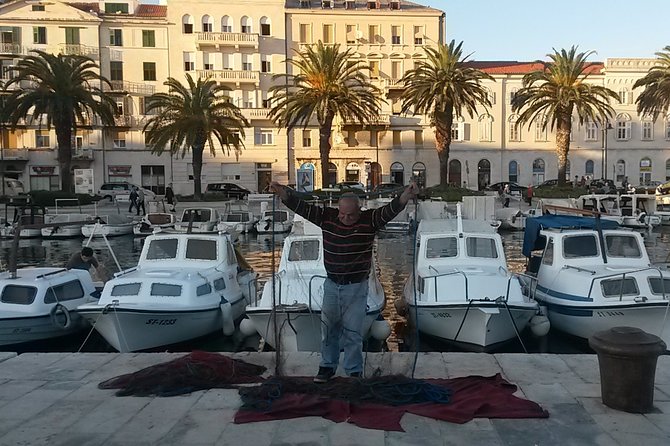
The Riva is Split’s waterfront promenade and the practical meeting point for this tour. It provides an easy landmark, but the actual story begins when you leave the modern harbor edge and enter the ancient palace zone.
This opening helps you understand Split’s geography. The palace was built right by the sea, with an imperial residence, defensive walls, ceremonial spaces, and service areas arranged within one fortified complex. You will not get a formal presentation of every surviving wall, but the guide connects the waterfront to the palace plan.
For cruise ship passengers, timing deserves attention. The tour lasts about two hours, but some departures may run closer to two and a half or even three hours when questions, photographs, or a slower pace are involved. If you have a ship departure, tell the guide at the start. Joško has accommodated tight schedules in the past, but you should not assume an overrun will suit your plans.
The Peristyle, the palace’s grand central stage
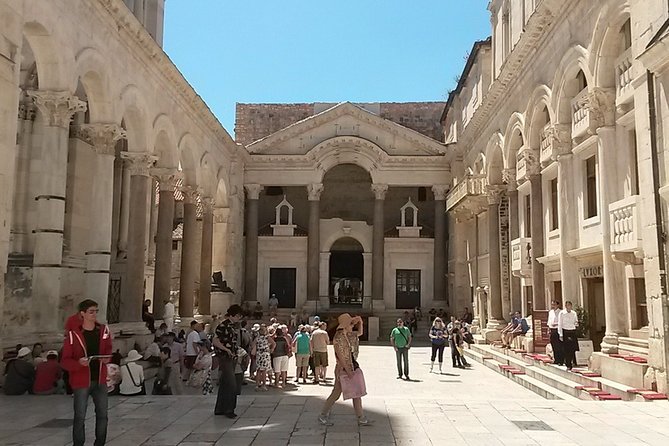
The Peristyle is the visual center of the tour. This former imperial square has a strong sense of ceremony, framed by ancient columns and the remains of Diocletian’s palace. It is the place where the scale of the project becomes easiest to grasp.
Your guide explains how the square related to the emperor’s private residence and public image. The Peristyle was not simply an open plaza. It was a stage for imperial authority, and the surrounding buildings helped separate formal court life from the practical work of running the palace.
The stop is listed as about five minutes, but the larger palace visit takes about 25 minutes. That distinction matters. You will see several linked spaces rather than spend the entire time standing in the square. In a crowded center, a small group is helpful because you can stay close enough to hear the explanation.
Same stretch of coast, a completely different day out:
- Split: Krka Waterfalls Trip with Boat Cruise and Swimming
★ 4.8 · 10,519 reviews - From Split: Krka Waterfalls, Food & Wine Tasting Tour
★ 5.0 · 9,326 reviews - Blue cave, Mamma Mia and Hvar, 5 islands speedboat tour
★ 5.0 · 7,150 reviews - From Split: Krka Waterfalls, Food & Wine Tasting Tour
★ 4.9 · 6,598 reviews
Vestibule and the emperor’s private residence
From the Peristyle, the route continues to the Vestibule, the main entrance toward the emperor’s private residence. Its shape and surviving stonework give you a sense of how visitors moved from the public ceremonial section into a more private zone.
This is one of those places where a guide earns the €30 price. Without explanation, it is easy to see only weathered masonry. With the plan of the palace in mind, you can imagine how the building functioned and how much of modern Split now occupies its original footprint.
Do not expect a reconstructed palace interior or a museum-like presentation at every stop. Much of the experience takes place in public streets and open spaces. Its value comes from connecting fragments into a clear story.
The cellars and the optional museum visit
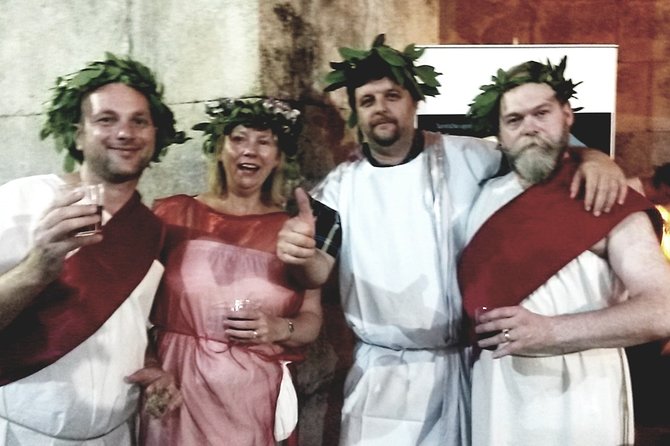
The Diocletian Palace Substructures are described as the best-preserved part of the palace. They show the lower level of the imperial complex and help explain the layout above. The cellar route is also one of the few paid parts of the experience.
Admission to the Museum of Diocletian’s Cellars is not included. You pay €10 per person if you enter. That extra charge is easy to overlook, so budget for it if the underground section is important to you.
The cellars are particularly useful for history fans because they make the original palace plan easier to understand. They are not just an add-on photo stop. The guide’s explanation can show how the lower spaces supported the residence above, while the surviving structure gives you a stronger sense of Roman construction.
The tour title includes a museum, but the included portion is primarily a guided walk. Jupiter’s Temple and the Cathedral are viewed from outside, and the cellars require separate admission. If you want a fuller interior visit, plan extra time and money after the tour.
Cathedral of Saint Domnius and the Temple of Jupiter

The Cathedral of Saint Domnius is seen from outside. That is still a remarkable stop because the cathedral occupies part of the Roman palace complex and reflects Split’s long shift from imperial residence to Christian city.
The tour also pauses outside the Temple of Jupiter, once dedicated to the chief Roman god. An optional interior visit may be possible, but the admission fee is not included. This is another point where you should separate the guided route from independent sightseeing afterward.
I like this arrangement because it keeps the base price low and lets you choose what deserves extra time. But it also means you should not book expecting a full cathedral or temple museum visit as part of the standard two-hour program.
Old Split’s medieval lanes and public squares
The walk through medieval Old Town shows what happened after the palace stopped functioning as an imperial home. People built, reused, and adapted the Roman structure, creating a city inside and around it.
Fruit’s Square, officially Trg Braće Radić, occupies the site of a former green market. You will see the statue of Marko Marulić, regarded as the father of Croatian literature. The square gives the tour a welcome change of mood: from imperial power and religious monuments to everyday civic life and Croatian culture.
Narodni Trg, or People’s Square, is the largest and liveliest piazza in Old Split. It helps you see how the city’s public life moved beyond the palace’s original ceremonial center. The route is not only about ancient Rome. It follows Split through several eras and explains how its residents used these spaces.
The City Clock adds a small but memorable detail. You see a 500-year-old 24-hour clock, a reminder that Split’s character is built from many historical layers rather than one neatly preserved period.
Grgur Ninski and the Golden Gate
The statue of Grgur Ninski introduces one of Croatia’s important historical figures. The guide uses the stop to connect Split’s monuments with national history, rather than treating the city as a collection of attractive stones.
The Golden Gate is the main and most striking entrance into Diocletian’s Palace. Its scale and defensive design give you a clear sense of how the palace presented itself from the landward side. It is also a useful place for photographs, though your guide’s main job is to explain its purpose and place in the palace plan.
A Game of Thrones connection may be visible around Split, but this tour is not designed around television locations. If that is your main interest, you will need to identify the locations yourself or choose a dedicated themed tour. Here, the focus is Roman, medieval, and Croatian history.
What the two-hour format really gives you
The route includes 13 stops, but several are brief orientation points of about five minutes. The main time is spent on Diocletian’s Palace and medieval Old Split, with shorter pauses at the cathedral, squares, gates, clock, statue, and temple.
That format works well for a first visit. You get a framework for the city without spending half a day in one building. Afterward, you can return to the cellars, cathedral, temple, or any square that caught your attention.
The tour can also become longer when the group has questions or mobility needs. That flexibility is a strength, but it makes the advertised two hours an estimate rather than a hard finish. Keep that in mind if you have a restaurant reservation or cruise departure immediately afterward.
Price, group size, and who gets the best value
At $30 per person, the tour is fairly priced for a licensed guide and a small-group introduction to Split’s central sights. You are paying for interpretation, route planning, and the ability to ask questions, not for a long list of included admission tickets.
The value is strongest if you love history, are new to Split, or want to understand the palace before exploring it on your own. It is also a good choice if you prefer a personal guide to a large group with 20 or more people. With a maximum of 15, the experience should feel more manageable, though the actual group size can vary.
The group tour requires at least four people and is for adults only. The private option is open to all ages. That makes the private format the better fit for a family with children, but the supplied information does not state its price or exact capacity, so check those details before booking.
Summer heat is another practical factor. One participant found the August conditions very hot, even after the sun came up, and another completed the tour in 38-degree weather. I would choose an early start, wear comfortable shoes, carry water, and avoid assuming that Split’s short distances will feel effortless on hot stone streets.
Free cancellation is allowed up to 24 hours before the start time. Cancellations or changes inside that window are not refunded, and poor weather or failure to reach the minimum number may lead to a new date or full refund.
Who should book this Split walking tour?
You should book it if you want a clear introduction to Diocletian’s Palace and prefer history explained by a local guide. The tour suits adults who enjoy architecture, Roman history, Croatian culture, and the way old buildings continue to serve modern city life.
It is also a strong pick for cruise passengers who can protect a little scheduling space and for visitors who want restaurant or bakery suggestions after the walk. The guides have shown a willingness to help with photographs, food questions, and route adjustments, though those extras are personal touches rather than guaranteed services.
Skip it if you mainly want a Game of Thrones tour, a costumed performance, or a long series of interior admissions included in the ticket. You may also prefer independent sightseeing if you dislike fixed group timing or do not want to pay the extra €10 for the cellars.
Should you book the Emperor’s Walking Tour?
For most adults visiting Split for the first time, yes. The tour gives you the essential palace spaces, the medieval center, the waterfront, and several smaller sights that are easy to miss. Its best feature is the guide’s ability to turn a confusing old town into a readable story.
Book early if your dates are fixed, since the experience is often reserved well ahead of time. Choose an early departure in summer, allow some flexibility after the two-hour estimate, and decide in advance if you want to add the €10 cellar visit.
At $30, this is a good buy for a history-focused introduction to Split, especially when you value a small group and a local voice. It is not the right tour for every interest, but for understanding why Diocletian’s Palace still feels like a city rather than a ruin, it makes a strong beginning.
FAQ
How long does the Emperor’s Walking Tour last?
The tour lasts approximately two hours. Some outings may run longer, especially if the group asks questions or needs a slower pace.
Where does the tour start and finish?
It starts at the Main Stage on the Riva promenade, at Obala Hrvatskog narodnog preporoda 22 in Split. The tour ends back at the same meeting point.
What is included in the price?
The price includes a licensed resident guide, a custom-designed route, and tour organization. It does not include gratuities or admission to the Museum of Diocletian’s Cellars.
How much does the cellar visit cost?
Admission to the Museum of Diocletian’s Cellars costs €10 per person and is not included in the tour price.
Is this tour suitable for children?
The group tour is for adults only and is not recommended for anyone under 18. The private tour is available for all ages.
How many people can join the group?
The group tour has a maximum of 15 people. At least four people are required for the group tour to operate.
Does the tour include a Game of Thrones or costumed show?
No. The tour does not include a costumed theater show or similar appearance. It focuses on the history of Split and Diocletian’s Palace rather than explaining television scenes.
What happens if I need to cancel?
You can receive a full refund if you cancel at least 24 hours before the start time. Cancellations or changes made less than 24 hours before the tour are not refunded. If bad weather or an insufficient number of bookings cancels the tour, you are offered another date or a full refund.
More Historical Tours in Split
- Walking Tour of Split with a ‘Magister’ of History
★ 5.0 · 1,122 reviews - Split Walking Tour with Professor of History
★ 5.0 · 926 reviews - Split: History and Heritage Walking Tour
★ 4.9 · 650 reviews - Split History and Gastro Small-Group Tour with Food and Drinks
★ 5.0 · 375 reviews
More Museums in Split
- Blue Lagoon & Underwater Museum from Split with Lunch & Drinks
★ 4.5 · 1,122 reviews - Split: Klis Fortress GOT and Olive Museum Entry Tickets
★ 4.6 · 283 reviews - Split: Olive museum Klis with Olive Oil Tasting
★ 4.9 · 51 reviews - Zagreb: Skip-the-Ticket-Line Museum of Broken Relationships
★ 4.5 · 847 reviews
Just added around Split
- Split Sunset Stand Up Paddle Tour★ 5.0 · 16 reviews
- Split: Sunset Guided Kayaking Tour★ 4.8 · 71 reviews
- Split&Sip: Educational wine tasting★ 4.9 · 52 reviews
- Stand Up Paddle Tour in Split★ 4.7 · 17 reviews
- Split: Guided Walking Tour in English★ 4.9 · 10 reviews
- Split – Walking in Khaleesi Footsteps in the City of Dragons★ 5.0 · 13 reviews
- Split Walking Tour with History Professor★ 5.0 · 23 reviews
- Split Walking Tour: History, Legends & Tales★ 5.0 · 9 reviews
Old Town Walking Tours, compared.

Walking Tour of Split and Diocletian’s Palace
Read our review →

Krka Waterfalls tour with Trogir Walking tour and Krka panoramic boat cruise
Read our review →
City Walls Early Morning or Sunset Walking Tour
Read our review →
Plitvice Lakes with Boat Ride and Zadar Old Town Tour
Read our review →Browse the lists this tour appears in