

Reviewed · OLD TOWN WALKING TOURS
Split Walking Tour: History, Legends & Tales
Split is easiest to understand when you see how an emperor’s retirement palace became a living city. This 90-minute walk takes you from the Riva into Diocletian’s Palace, through old lanes and public squares where ancient walls still frame everyday life.
I like the small-group setting, which gives you a better chance to ask about Split beyond the standard facts. I also like that Lucija, who was born and raised in Split, adds local knowledge about modern life as well as Emperor Diocletian. The main consideration is that entrance fees to cultural and religious sites are not included, and the tour stays outdoors if you only have the 90-minute route.
In This Review
- Key points at a glance
- Why begin with Diocletian’s Palace?
- Starting beside Split’s model
- The Riva: Split’s waterfront introduction
- Entering Diocletian’s Palace
- Vestibul: a compact space with a big role
- Peristil and the ceremonial heart
- The Golden Gate and the palace walls
- People’s Square and the city beyond Rome
- Fruit Square and everyday Split
- What the $28 price gives you
- What the guide adds
- Practical advice before you book
- Who will get the most from this walk?
- Should you book the Split Walking Tour?
- FAQ
- How long does the Split walking tour last?
- What language is the tour conducted in?
- Where does the tour begin?
- Where does the tour end?
- Are entrance tickets included?
- What should I bring, and is the tour wheelchair accessible?
Key points at a glance
- A palace that became a city: See how Diocletian’s imperial residence still functions as Split’s Old Town.
- A local guide named Lucija: Get history, legends, and answers about present-day life in Split.
- Seven central stops: Cover the Riva, Vestibul, Peristil, Golden Gate, People’s Square, and Fruit Square.
- A useful first morning activity: Build a clear map of the center before exploring on your own.
- A short, focused walk: The 1.5-hour length fits neatly into a busy Split schedule.
- Bring sensible footwear: Cobblestones, old lanes, and a walking route make comfortable shoes important.
Why begin with Diocletian’s Palace?
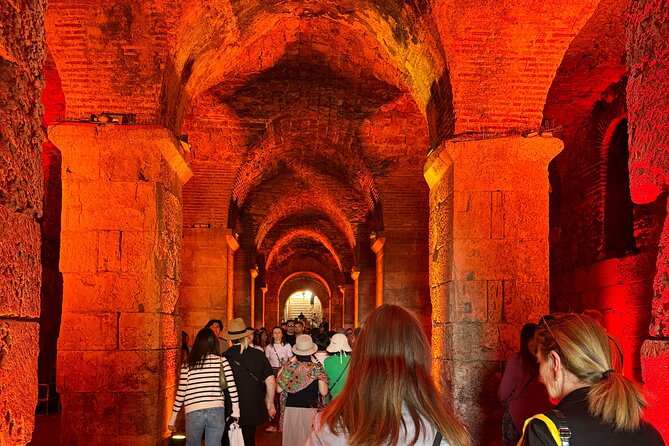
The best feature of this tour is its central idea: Split is not simply a collection of Roman ruins. It is a working city built inside and around the remains of Diocletian’s palace.
Emperor Diocletian chose Split as his luxurious residence more than 1,700 years ago. Over time, the palace changed purpose and shape. Its walls, gates, courtyards, and rooms became part of the town, so the route helps you see ancient architecture beside the modern life of Dalmatia.
That change is easier to grasp with a guide than from a map. On your own, you might walk past a Roman wall, a medieval lane, or a square without seeing how the pieces connect. Lucija’s job is to explain that connection, then add the stories and legends that give the old stones some personality.
I would book this walk early in a Split stay. You will get a basic sense of direction, learn which places deserve a second look, and have a chance to ask questions before spending the rest of your time exploring independently.
More Old Town Walking Tours in Split
- Split: Old Town and Diocletian Palace Walking Tour
★ 4.9 · 4,727 reviews - Walking Tour of Split and Diocletian’s Palace
★ 5.0 · 2,588 reviews - Krka Waterfalls tour with Trogir Walking tour and Krka panoramic boat cruise
★ 5.0 · 1,659 reviews
Starting beside Split’s model
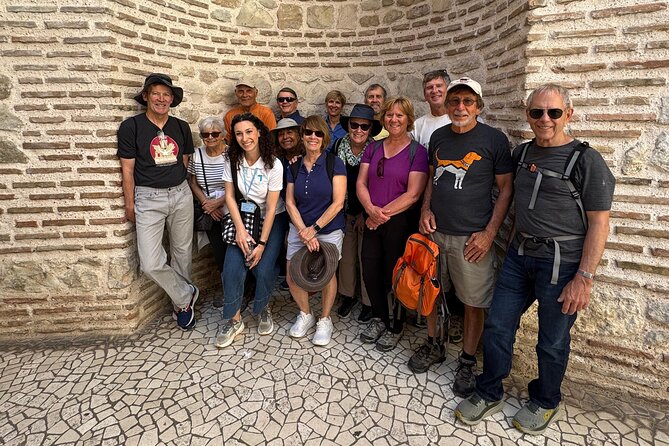
The meeting point is at Obala Hrvatskog narodnog preporoda 22, along the Riva. Your guide waits beside the model of Split with a Tour4You sign.
This is a useful starting place because the model gives you a simple visual introduction to the city. Before entering the Old Town, you can see how the palace sits within the modern center and how the waterfront relates to the historic core.
Allow enough time to find the model without rushing. The Riva is a natural reference point, but an unfamiliar city can make even a straightforward meeting spot confusing. Look for the guide holding the sign, rather than assuming the tour begins at a palace gate.
The walk returns to this same meeting point at the end. That makes the tour easy to fit between other plans, including a meal along the waterfront or an independent visit to a museum or church afterward.
The Riva: Split’s waterfront introduction
The Riva is the first guided stop. This waterfront promenade gives you a feel for modern Split before the route turns into the older streets.
The value here is not only the view. The Riva helps explain Split as a city that faces outward toward the sea while keeping its oldest center tightly packed behind the waterfront. From this point, the transition from present-day Dalmatia to the palace complex happens quickly.
Your guide can also place the city’s past in a local setting. The tour is not limited to dates and emperors. Lucija is described as someone who can answer questions about life in Split beyond the historical story, which is useful if you want more than a standard Roman-era explanation.
Because the Riva is open and easy to recognize, it is also a good place to get your bearings. I would note the meeting point, nearby streets, and the direction back toward the palace. You will likely return to this area several times during your stay.
Entering Diocletian’s Palace
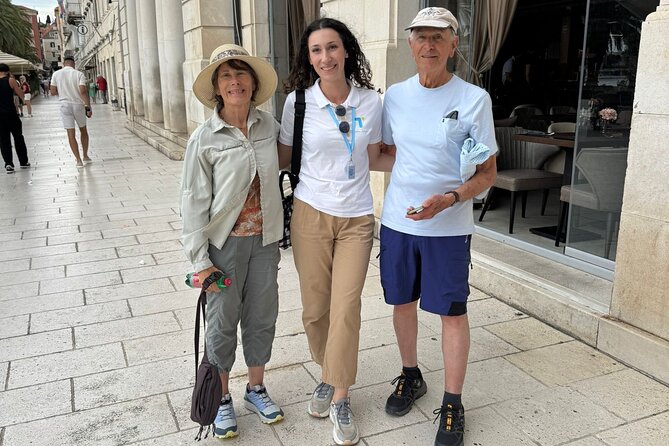
The palace is the core of the experience. Its walls and architecture have remained part of Split for more than 1,700 years, but this is not a preserved site separated from daily life.
You will walk through the Old Town and see how later generations adapted the imperial complex. The palace is best understood as a layered place. Roman planning provides the foundation, while later streets, buildings, shops, homes, and public spaces show how the site changed over time.
That layered story is one reason I would choose a guided walk instead of relying only on a guidebook. A guide can point out relationships between sections of the complex and explain why a passage, wall, or courtyard matters.
The route uses cobbled streets, so comfortable shoes are essential. The 90-minute duration is manageable for most people, but you should still expect steady walking rather than a series of seated talks. The tour is not suitable for wheelchair users, an important point for anyone who needs an accessible route.
Same stretch of coast, a completely different day out:
- Split: Krka Waterfalls Trip with Boat Cruise and Swimming
★ 4.8 · 10,519 reviews - From Split: Krka Waterfalls, Food & Wine Tasting Tour
★ 5.0 · 9,326 reviews - Blue cave, Mamma Mia and Hvar, 5 islands speedboat tour
★ 5.0 · 7,150 reviews - From Split: Krka Waterfalls, Food & Wine Tasting Tour
★ 4.9 · 6,598 reviews
Vestibul: a compact space with a big role
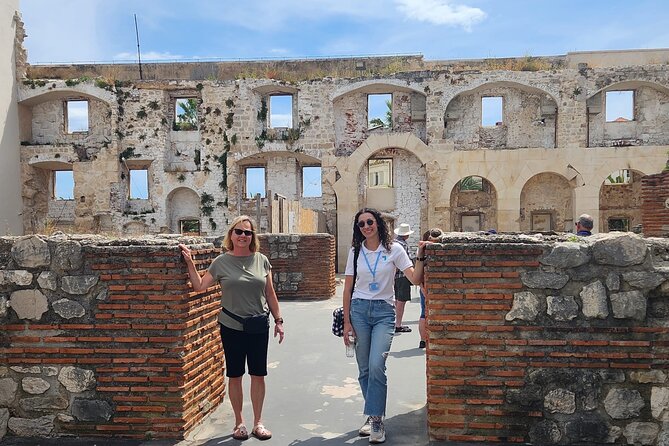
Vestibul is one of the stops inside the palace. Its name refers to an entrance area, and its position helps you understand how the palace was organized.
This is the kind of place where scale and design matter. A quick glance may not tell you how the space once worked, but a guide can connect it to the wider palace plan and to the movement between public and private areas.
I like having this stop on a short tour because it gives you a focused place to pause. Instead of trying to absorb the entire palace at once, you get one architectural detail that helps the larger plan make sense.
The tour does not include entrance tickets to cultural or religious sites. Your guide provides information so you can decide what to revisit later and pay for separately at your own pace. That keeps the walk simple and avoids building extra admission costs into the $28 price, but you should budget separately if you want to enter paid interiors.
Peristil and the ceremonial heart
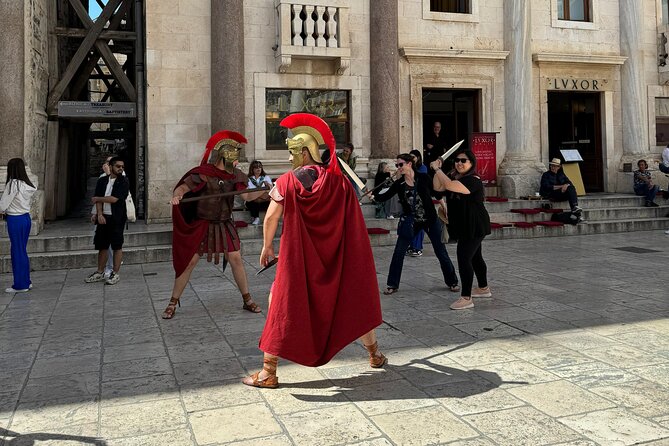
Peristil is another major palace stop and one of the places where the old imperial design is easiest to picture.
A guided explanation is particularly useful here because the space has both an architectural role and a storytelling role. You can learn how it fit into Diocletian’s palace and hear the legends tied to Split’s past.
This is also a good point to listen closely if you enjoy the way local stories sit alongside documented history. The tour promises both history and legends, so you get more than a strict timeline. Just keep in mind that legends are part of the city’s storytelling tradition, not necessarily verified events.
Peristil can be one of the most memorable parts of the walk because it brings together the palace’s age, its scale, and its continued place in the center of town. After this stop, you are better prepared to recognize the palace as a complete urban system rather than a few isolated monuments.
The Golden Gate and the palace walls

The Golden Gate is included as the route moves through Split’s historic center. It offers another way to understand the palace as a fortified complex with planned entrances.
The gate gives the history a practical shape. Instead of hearing only about an emperor’s residence, you can think about how people entered, left, and moved through the palace. The surrounding walls help you picture the original boundaries even as the modern city has grown around them.
I would pay attention to orientation here. A good explanation of the gates can help you make sense of the Old Town’s layout later, especially when you return without a guide.
This stop also shows why the tour works best near the beginning of your stay. Once you understand the basic structure, independent walks become less random. You can return to the Golden Gate, Peristil, or the palace lanes with a clearer idea of what you are seeing.
People’s Square and the city beyond Rome
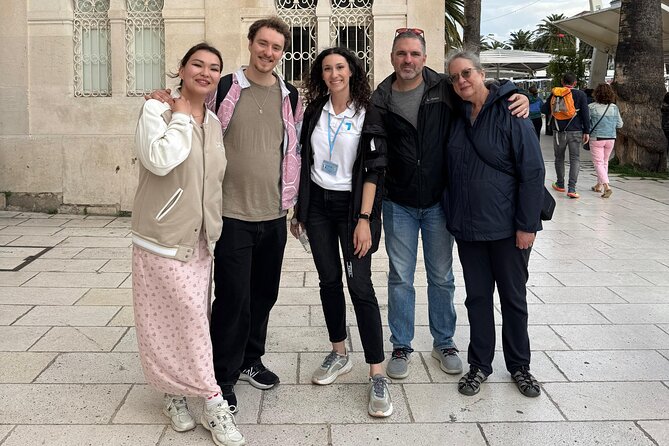
People’s Square takes you beyond the most obvious Roman remains. The route shows that Split’s story did not end when Diocletian’s palace was built.
This part of the walk helps connect the imperial past with the wider Old Town. Squares became places for public life, and the city continued to develop around the palace. You get a broader sense of Split as a town shaped by many periods rather than a single archaeological moment.
That balance is important. Some palace tours focus so heavily on Diocletian that the modern city feels like background scenery. Here, the guide also discusses more recent events and local life, according to the experience description. This gives the walk a more personal feel and helps you see the Old Town as somewhere people live, work, and meet.
If you want a strictly archaeological tour, this broader approach may feel less specialized. If you want to understand how Split became the city you are visiting, it is a strong part of the route.
Fruit Square and everyday Split
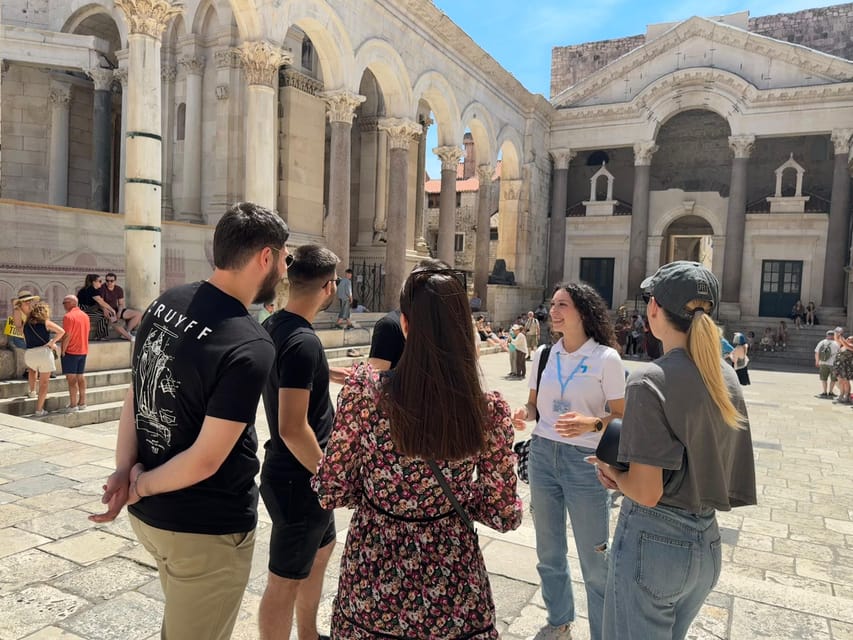
Fruit Square is the final historic stop before returning to the Riva. Its inclusion keeps the tour from ending with the palace alone.
The square offers another look at how public spaces organize the Old Town. By this stage, you have seen the waterfront, imperial buildings, gates, courtyards, and civic areas. Fruit Square helps complete the picture of Split as a connected center with different kinds of places close together.
I find this kind of ending useful because it leaves you with practical options. You can continue walking through the Old Town, choose a nearby place for food, or return to a palace site you want to examine more closely. The guide can also give you information for later visits to cultural and religious sites, though those admissions are not included.
The return to Obala Hrvatskog narodnog preporoda 22 keeps the route tidy. You do not need to work out where the tour finishes or arrange transport back to your starting area.
What the $28 price gives you
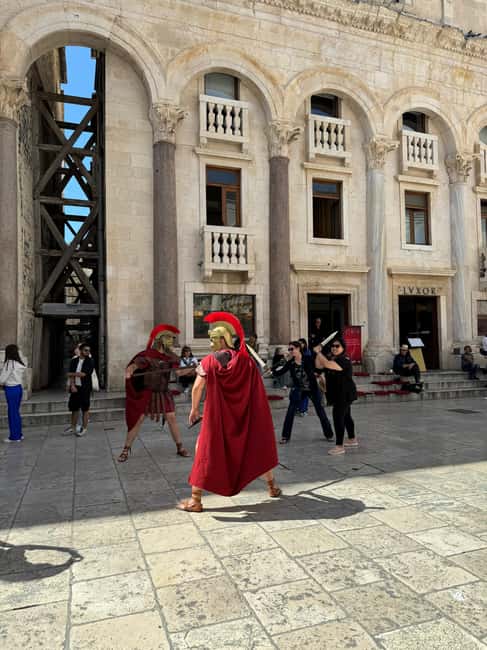
At $28 per person, this is not the cheapest way to walk around Split, but the price is reasonable if you want a clear introduction from a licensed guide.
You are paying for a 90-minute guided route through the city’s most important central areas. The value comes from the explanation, local context, and chance to ask questions. You are not paying for museum admission, transport, food, or a long excursion outside Split.
For a first visit, that can be good value. A short orientation walk may help you use the rest of your stay more effectively. You can decide which sites deserve an additional visit instead of paying to enter everything without knowing what interests you.
The cost is less attractive if you only want to photograph the main landmarks or prefer reading information on your phone. The tour is also fairly compact, so do not expect a full treatment of every corner of the palace. It gives you the framework. You then choose how far to pursue it.
What the guide adds
Lucija is the named guide associated with this experience, and the local angle is one of its strongest points. She was born and raised in Split, so you can ask about the city beyond emperors, walls, and dates.
That matters because local knowledge can fill the gaps between major stops. You may want to know how the Old Town functions today, how Split has changed, or what daily life feels like in a place built around such old buildings. The tour specifically includes recent local stories along with the older material.
The guide also speaks English, and the tour operates in English. If you have questions, a small group should make it easier to ask them than on a large coach-style excursion. The exact group size is not provided, so I would not assume an intimate private tour, but the experience is described as small-group.
The strongest praise attached to the experience focuses on Lucija’s kindness, clear explanations, and ability to answer questions about life in Split. That combination suits you if you want a human guide rather than a memorized list of monuments.
Practical advice before you book
Wear comfortable shoes. The route goes through cobbled streets and old lanes, and the tour involves walking for the full 1.5 hours.
Children must stay with an adult throughout the activity. The tour is suitable for most people, but it is not suitable for wheelchair users.
The walk depends on weather. If poor conditions cause cancellation, you can reschedule or receive a full refund. You can also cancel up to 24 hours before the tour for a full refund, and the reserve-now, pay-later option keeps your plans flexible.
I would choose an earlier available starting time if you can. The walk gives you a useful map of the center, and you can then revisit the places that caught your interest. Check availability for the actual departure times before booking, since the start time is not fixed in the information provided.
Who will get the most from this walk?
This tour suits a first-time visitor who wants a quick, organized introduction to Split. It is especially useful if you want the palace explained as part of a living city rather than treated as a stand-alone ruin.
It also fits people who enjoy local stories and conversation. Lucija’s connection to Split means you can ask about present-day life as well as the city’s past.
Families can join as long as children remain with an adult, and most visitors who can manage ordinary walking should find the length reasonable. People using wheelchairs should choose another experience because this route is not suitable for wheelchair users.
History specialists may want a longer or more focused tour. This experience aims at a broad, readable introduction, not an exhaustive study of Roman architecture or every paid interior in the palace.
Should you book the Split Walking Tour?
Book it if you are visiting Split for the first time and want to understand the city before exploring on your own. The combination of Diocletian’s Palace, the Riva, central squares, local legends, and Lucija’s personal connection to Split gives you a useful 90-minute foundation.
The $28 price makes sense when you value a licensed guide and plan to return to the sites that interest you. Skip it if you prefer independent wandering, need wheelchair access, or want entrance tickets included in the price.
For most first-time visitors, I would place this near the start of the trip. It is short, focused, and practical, with enough local character to make Split’s old stones feel connected to the city around them.
FAQ
How long does the Split walking tour last?
The tour lasts 1.5 hours.
What language is the tour conducted in?
The tour operates in English with a live English-speaking guide.
Where does the tour begin?
It begins at Obala Hrvatskog narodnog preporoda 22. The guide waits beside the model of Split with a Tour4You sign.
Where does the tour end?
The activity ends back at the original meeting point on Obala Hrvatskog narodnog preporoda 22.
Are entrance tickets included?
No. Entrance tickets to cultural and religious sites are not included. The guide provides information so you can visit those places later at your own pace.
What should I bring, and is the tour wheelchair accessible?
Bring comfortable shoes. The tour is not suitable for wheelchair users. Children must be accompanied by an adult throughout the activity.
More Walking Tours in Split
- Split & Diocletian’s Palace Walking Tour
★ 5.0 · 1,125 reviews - Split: Diocletian Palace & Old Town Guided Walking Tour
★ 4.7 · 882 reviews - From Split: Krka Waterfalls Cruise & Trogir Walking Tour
★ 4.7 · 681 reviews - Diocletian’s Palace and Old Town SMALL GROUP Walking Tour
★ 5.0 · 502 reviews
More Historical Tours in Split
- Walking Tour of Split with a ‘Magister’ of History
★ 5.0 · 1,122 reviews - Split Walking Tour with Professor of History
★ 5.0 · 926 reviews - Split: History and Heritage Walking Tour
★ 4.9 · 650 reviews - Split History and Gastro Small-Group Tour with Food and Drinks
★ 5.0 · 375 reviews
Just added around Split
- Split Sunset Stand Up Paddle Tour★ 5.0 · 16 reviews
- Split: Sunset Guided Kayaking Tour★ 4.8 · 71 reviews
- Split&Sip: Educational wine tasting★ 4.9 · 52 reviews
- Stand Up Paddle Tour in Split★ 4.7 · 17 reviews
- Split: Guided Walking Tour in English★ 4.9 · 10 reviews
- Split – Walking in Khaleesi Footsteps in the City of Dragons★ 5.0 · 13 reviews
- Split Walking Tour with History Professor★ 5.0 · 23 reviews
- Split: Transparent SUP night Glow tour★ 4.9 · 73 reviews
Old Town Walking Tours, compared.



Walking Tour of Split and Diocletian’s Palace
Read our review →


Krka Waterfalls tour with Trogir Walking tour and Krka panoramic boat cruise
Read our review →
City Walls Early Morning or Sunset Walking Tour
Read our review →
Plitvice Lakes with Boat Ride and Zadar Old Town Tour
Read our review →Browse the lists this tour appears in