

Reviewed · OLD TOWN WALKING TOURS
Split: Diocletian Palace & Old Town Guided Walking Tour
Diocletian’s Palace is not a fenced-off ruin. It is the center of Split, with homes, cafés, shops, churches, and everyday life built into the old Roman walls. This 50-minute walking tour gives you a quick way to understand that unusual mix before you wander off on your own.
I like the route for two reasons: it reaches the palace’s most important spaces without wasting time, and the local guides bring the history down to human size. Ina is often praised for clear storytelling and archaeological insight, while Natasa, Darko, and Tin are known for humor, patience, and practical tips.
The main drawback is the clock. The tour is short, and Split has far more to see than can fit into one hour. You will get a strong introduction, not a slow archaeological study, and busy streets or a large group can make it harder to hear every word.
In This Review
- Key Points About This Split Walking Tour
- Starting on Split’s Riva Promenade
- Entering a Palace That Became a Town
- The Peristyle: Split’s Main Roman Stage
- Four Gates, Four Ways Into the Palace
- St. Domnius and the Emperor’s Mausoleum
- Medieval Lanes, Town Hall, and Fruit Square
- How the Guides Shape the Experience
- What $17 Buys You
- Timing, Access, and Who Should Book
- My Verdict: A Smart First Look at Split
- FAQ
- Where does the Split walking tour begin?
- How long does the tour last?
- How much does the tour cost?
- Which languages are available?
- What sights are included?
- Is the Cathedral of St. Domnius included?
- Is the tour wheelchair accessible?
- What should I bring?
Key Points About This Split Walking Tour
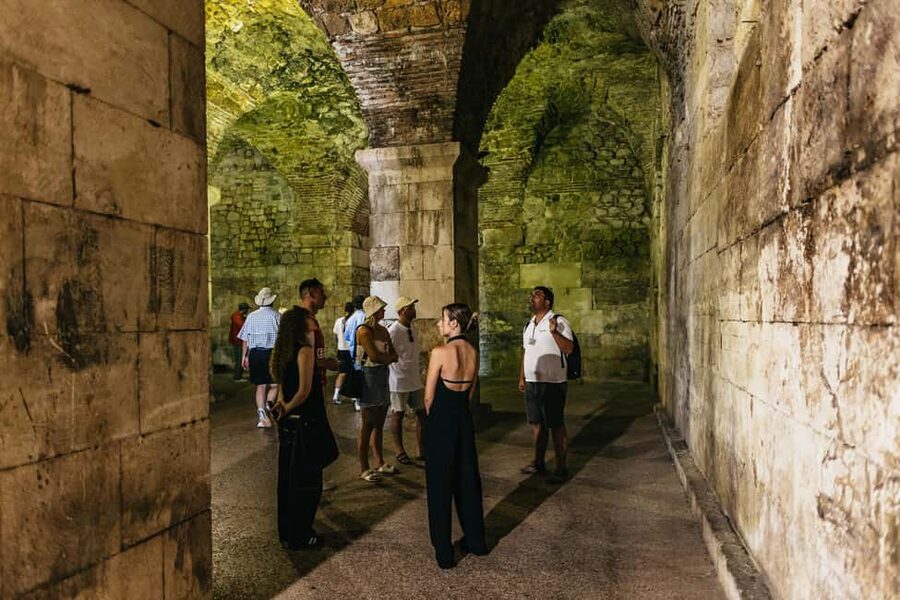
- Roman palace turned living city: Walk through a 4th-century imperial complex that still functions as Split’s Old Town.
- Four original gates: Pass through the Bronze, Silver, Golden, and Iron Gates, each tied to a different side of the palace.
- Peristyle and private spaces: See the grand central courtyard and areas connected with Emperor Diocletian’s private life.
- Short, useful introduction: The compact route works well at the start of a stay or during a brief visit from nearby islands.
- Strong guide-led experience: Ina, Natasa, Darko, and Tin are among the guides praised for clear explanations, humor, and patience with questions.
- Practical for many groups: Wheelchair access is offered, though cobblestones, uneven ground, and 15 to 30 steps remain part of the route.
Starting on Split’s Riva Promenade

Your meeting point is Apodos Travel Agency, near an open-top red bus. Look for the team in red or white shirts, then they will connect you with the walking guide. This detail matters because the Riva area can be busy, and the red bus is easier to spot than a small office sign.
The tour begins along the Riva, Split’s palm-lined waterfront. It is a smart starting place because the promenade gives you a clear sense of the city today before you step into its Roman core. Cafés and the Adriatic sit on one side, while the palace walls and Old Town open behind you.
You are not being driven between sights. The experience is entirely on foot, so comfortable shoes are essential. Bring water, a camera, sunglasses, and a hat on sunny days. On windy days, long sleeves are useful, particularly beside the open waterfront.
More Old Town Walking Tours in Split
- Split: Old Town and Diocletian Palace Walking Tour
★ 4.9 · 4,727 reviews - Walking Tour of Split and Diocletian’s Palace
★ 5.0 · 2,588 reviews - Krka Waterfalls tour with Trogir Walking tour and Krka panoramic boat cruise
★ 5.0 · 1,659 reviews
Entering a Palace That Became a Town
Emperor Diocletian built the palace in the 4th century AD as a retirement residence and imperial complex. The important point for you is that the building did not remain frozen in its Roman form. Over the centuries, later residents adapted its rooms, walls, courtyards, and passages.
That is why Split feels different from a standard ancient monument. You will see Roman foundations beside medieval buildings and later Venetian-era touches. Your guide explains how each period changed the place, helping you read the streets instead of simply walking past old stones.
The route includes the palace cellars, the Peristyle courtyard, and parts associated with the emperor’s private chambers. You also visit the private observatory mentioned in the tour details. These stops give the walk a useful structure: below-ground remains, a formal public space, and areas connected with imperial life.
The cellars are especially helpful for understanding the palace’s original plan. They show how the upper rooms were supported and preserve the shape of spaces that can be harder to recognize above ground. The atmosphere is cooler and darker than the streets, so this section also gives you a brief break from Split’s strong summer sun.
The Peristyle: Split’s Main Roman Stage
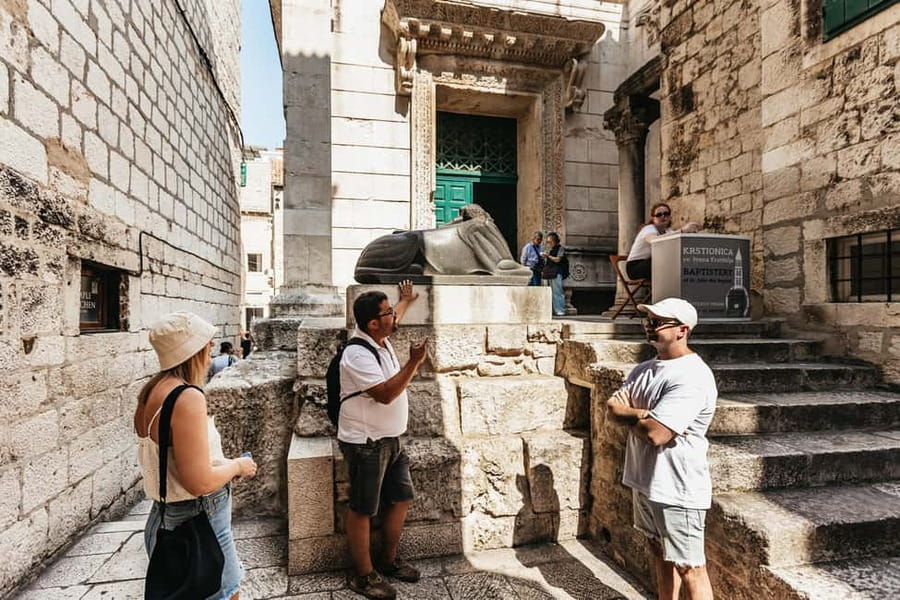
The Peristyle is the visual center of the tour. This formal courtyard was designed to impress, with monumental columns and a strong sense of ceremony. It is the place where Diocletian’s imperial power becomes easiest to picture.
Your guide’s interpretation matters here. Without context, the Peristyle can look like a handsome courtyard with scattered ancient features. With an explanation of how the space functioned, you can better understand its role in the palace and the way later buildings grew around it.
The courtyard is also one of the tour’s practical strengths. It is an open, memorable space where the guide can pause and explain the palace’s layout. In a short tour, a clear central reference point helps you keep track of the lanes and entrances that follow.
The tradeoff is that this is one of Split’s busiest areas. You may be sharing the courtyard with other groups and people using the Old Town as part of their normal day. That is part of the charm, but it can make a quiet look at the architecture difficult.
Four Gates, Four Ways Into the Palace
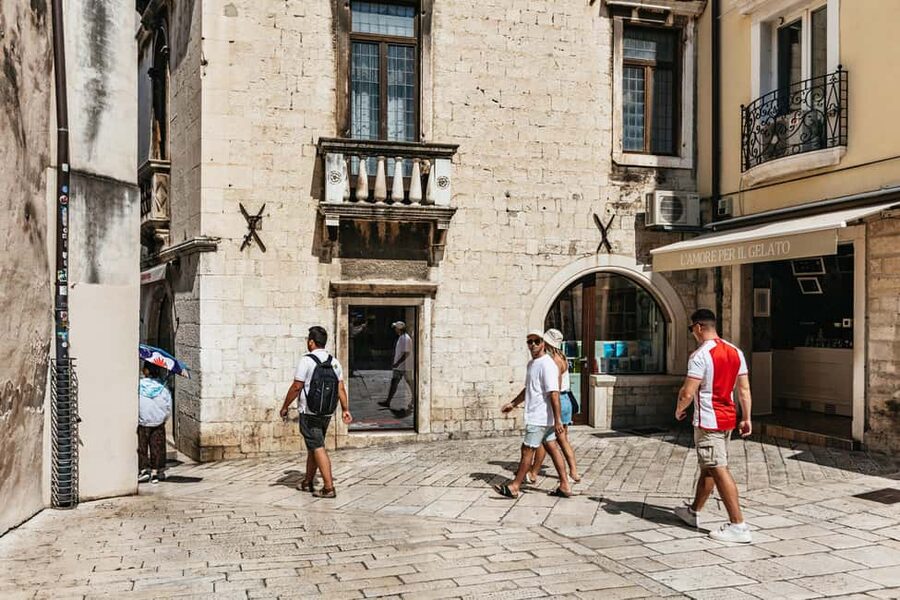
The walk takes you through the Bronze, Silver, Golden, and Iron Gates. These were the original entrances into the palace complex, and seeing all four helps you understand how the imperial residence was organized.
The names also give the route a useful rhythm. Instead of hearing one long history lecture, you move from gate to courtyard to street, with each entrance offering a different view of the palace walls and the city that formed around them.
The Golden Gate is particularly important in the palace’s main landward approach, while the Bronze Gate connects with the waterfront side. The tour details identify all four entrances as part of the experience, but they do not promise equal time at each one. Expect explanations and sightseeing stops rather than extended time at every gate.
The gates are also where the tour’s physical demands become clear. You will walk across uneven and cobblestone surfaces, with about 15 to 30 steps required to take part. The activity is listed as wheelchair accessible, and one guide, Natasa, has been praised for helping groups find routes with fewer steps. Still, anyone using a wheelchair or stroller should be prepared for historic surfaces and ask the guide for help at the meeting point.
Same stretch of coast, a completely different day out:
- Split: Krka Waterfalls Trip with Boat Cruise and Swimming
★ 4.8 · 10,519 reviews - From Split: Krka Waterfalls, Food & Wine Tasting Tour
★ 5.0 · 9,326 reviews - Blue cave, Mamma Mia and Hvar, 5 islands speedboat tour
★ 5.0 · 7,150 reviews - From Split: Krka Waterfalls, Food & Wine Tasting Tour
★ 4.9 · 6,598 reviews
St. Domnius and the Emperor’s Mausoleum
The Cathedral of St. Domnius, or Sv. Duje, occupies the former mausoleum of Diocletian. That change in use captures Split’s story in one building: a structure made for a Roman emperor became a Christian cathedral and remains an active part of the Old Town.
The cathedral is described as one of the world’s oldest, and the tour places it among the key sights along the route. You can expect an explanation of the building’s Roman origin and later religious role.
The bell tower is also mentioned, with panoramic views over Split and the harbor available by climbing it. The supplied tour details do not clearly say that a bell tower ticket is included in the $17 price, so treat the climb as a possible addition rather than assuming it is part of the guided walking time.
That distinction is useful. A 50-minute tour cannot allow much time for a separate tower climb, and stairs can change the pace for a group. If the view is a priority, ask at the start whether the tower visit is included, optional, or best saved for later.
Medieval Lanes, Town Hall, and Fruit Square
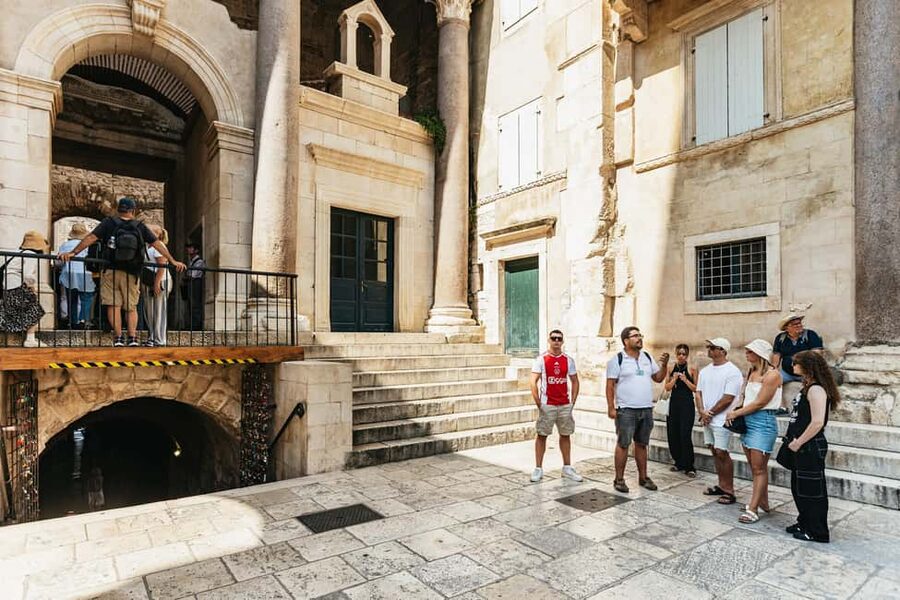
Once you leave the most obvious Roman spaces, the tour shows you how later Split developed inside and around the palace. The maze of Old Town lanes is not just a backdrop. It explains how a former imperial compound became a town where people live and work.
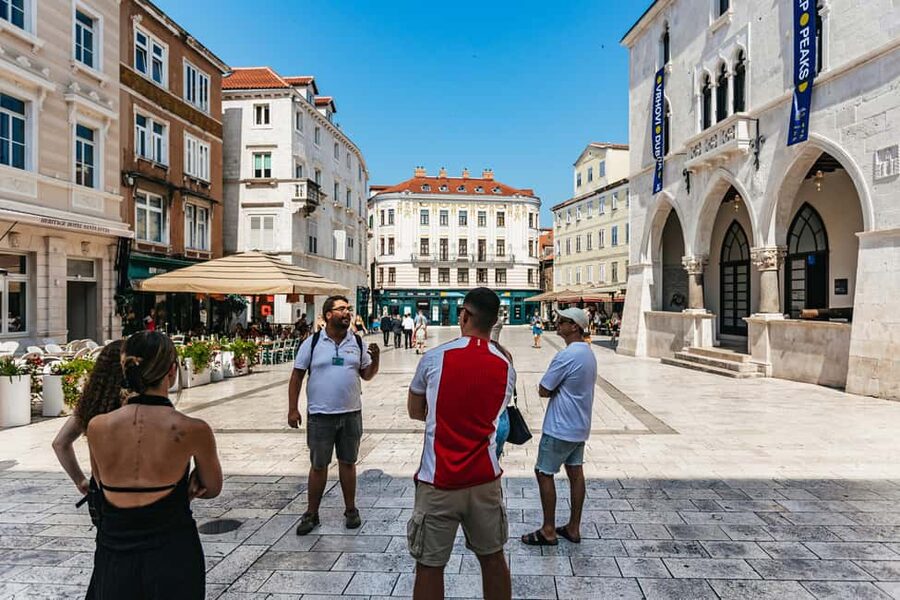
The 15th-century Town Hall adds a medieval layer to the route. It is an easy detail to miss if you explore without a guide, especially when cafés, shopfronts, and crowds compete for your attention. The guide’s job here is to point out the building and explain why it matters within the city’s later growth.
You also stroll through Fruit Square, a place associated with baroque monuments. This stop broadens the story beyond Rome. You see how Split’s public spaces changed in style and purpose long after Diocletian’s time.
I like this part of the walk because it keeps the palace from becoming a single-period history lesson. You are not simply seeing Roman columns. You are seeing Roman construction reused, medieval streets layered over old plans, and later architecture filling the gaps.
The route also offers small details about local businesses and traditional crafts. Darko has been praised for pointing out small shops connected with traditional food production and crafts. Those moments can be more useful than another date, giving you ideas for where to look after the tour ends.
How the Guides Shape the Experience
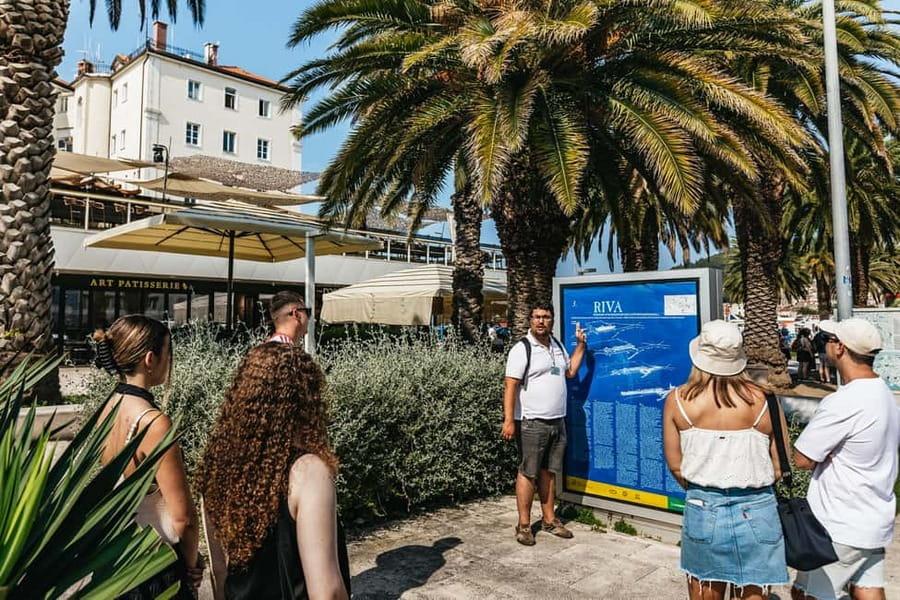
The guide is the heart of this activity. The route itself is compact, but the explanations determine whether you see a confusing pile of ruins or a city with a readable past.
Ina is the name that appears most often in the supplied feedback. Her strengths are clear explanations, archaeological knowledge, enthusiasm, and a willingness to stay after the walk for extra questions. She is also described as funny and good at keeping a group of about 15 people moving while making room for everyone to hear.
Natasa brings a similar mix of history and warmth. She is described as an art historian, passionate about Croatian history, and especially helpful with questions. She has also assisted groups with toddlers, strollers, and wheelchairs by choosing routes with fewer steps.
Darko is a good fit if you like history delivered with humor. He has been praised for explaining both the palace and modern life in Split, while Tin is noted for clear English, confident delivery, and keeping an eye on people at the back of the group.
Guide assignments can change, so you should not book on the assumption that one named guide will lead your departure. The useful pattern is that the team has several guides who focus on clear storytelling, questions, and practical suggestions for the rest of your time in Split.
One small concern is sound. One participant wished the guide had a microphone. If your hearing is limited, stay near the guide and position yourself inside the group rather than at the back. In busy lanes, this can make a real difference.
What $17 Buys You
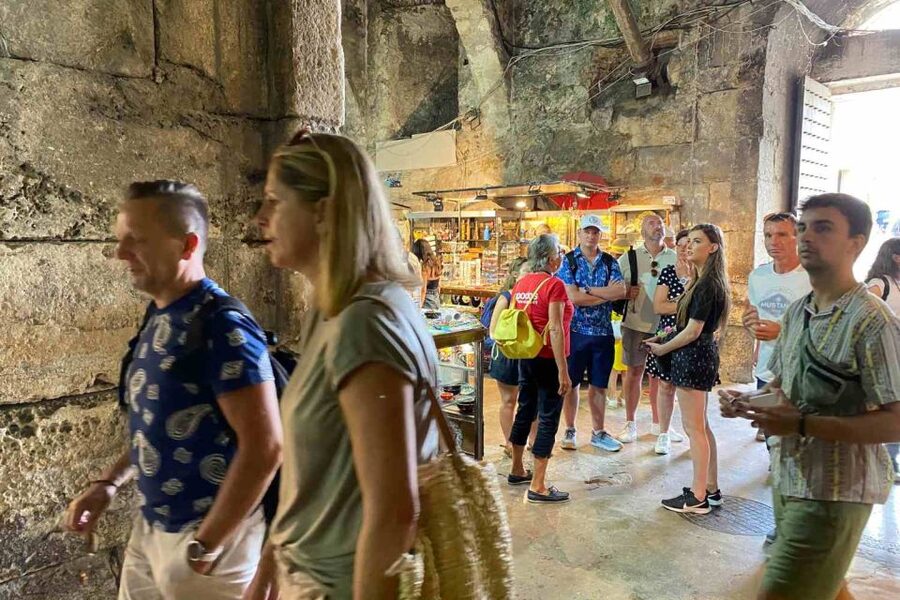
At $17 per person, this is a modestly priced introduction to Split’s most important historic area. You are paying for a local guide, a planned route, historical interpretation, and access to the Peristyle courtyard. You are not paying for meals, drinks, transport, souvenirs, or personal purchases.
The value is strongest if you are new to Split. A guide can explain why the palace is also the Old Town, point out the four gates, and connect Roman, medieval, and Venetian influences in less than an hour. That context can save you from walking past important buildings without understanding them.
The price is less compelling if you want a long, slow visit inside individual monuments. The tour is designed as an overview. You will need extra time afterward for the cathedral, bell tower, palace cellars, museums, shopping, or a second look at the Peristyle.
The wording also describes the experience as a free guided walking tour, while the listed price is $17. Since the paid activity details include a $17 charge, check the final booking terms carefully so you know exactly what your reservation covers.
Timing, Access, and Who Should Book
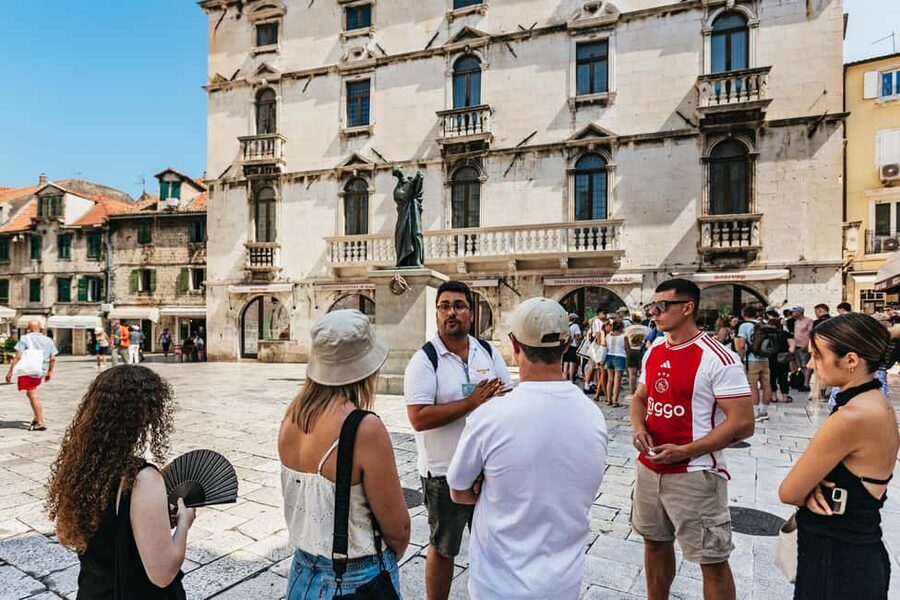
The stated duration is 50 minutes, while the route description lists about one hour for Diocletian’s Palace. Plan for a compact walk that may run close to an hour, rather than scheduling a tight connection immediately afterward.
This is a good first activity for a short stay. Several people found the length ideal in hot weather, and it works well if you want an overview before choosing where to return. It also suits visitors arriving from nearby islands, since you can learn the basics without giving up an entire afternoon.
Families with young children may appreciate the short format. The route is also listed as wheelchair accessible, but accessibility is not the same as smooth modern paving. Cobblestones, uneven ground, and steps remain part of the experience, so ask about the easiest route when you meet the team.
The tour is offered in English, Spanish, and Italian. It includes free cancellation up to 24 hours before departure and a reserve-now, pay-later option, which can help if your Split plans are still shifting.
My Verdict: A Smart First Look at Split
I would book this tour if you want a clear, affordable introduction to Diocletian’s Palace and the Old Town. The strongest reasons are the efficient route, the four gates, the Peristyle, the cathedral setting, and guides such as Ina, Natasa, Darko, and Tin who make the facts approachable.
I would skip it only if you already know the palace well or want a private, unhurried archaeological tour. For everyone else, $17 buys useful orientation and leaves you with enough time to explore Split on your own afterward.
Book it near the start of your stay, wear sturdy shoes, arrive looking for the red bus and red or white shirts, and stay close enough to hear the guide. Then use the rest of your day to return to the places that caught your attention.
FAQ
Where does the Split walking tour begin?
The meeting point is Apodos Travel Agency. Look for an open-top red bus and team members wearing red or white shirts.
How long does the tour last?
The activity is listed as 50 minutes. The itinerary describes the palace sightseeing portion as one hour, so allow roughly an hour.
How much does the tour cost?
The listed price is $17 per person.
Which languages are available?
The live tour guide is available in English, Spanish, and Italian.
What sights are included?
The tour covers Diocletian’s Palace and Split Old Town, including the Peristyle courtyard, palace cellars, the emperor’s private chambers and observatory, the Bronze, Silver, Golden, and Iron Gates, the 15th-century Town Hall, and Fruit Square.
Is the Cathedral of St. Domnius included?
The cathedral is part of the described sightseeing route. The bell tower climb is mentioned as an available activity, but the supplied details do not confirm that a bell tower ticket is included in the $17 price.
Is the tour wheelchair accessible?
Yes, the activity is listed as wheelchair accessible. You must still manage uneven cobblestones and about 15 to 30 steps, although guides may help find routes with fewer steps.
What should I bring?
Bring comfortable shoes, water, and a camera. Sunglasses and a hat are recommended on sunny days, while long sleeves can help on windy days.
More Walking Tours in Split
- Split & Diocletian’s Palace Walking Tour
★ 5.0 · 1,125 reviews - Walking Tour of Split with a ‘Magister’ of History
★ 5.0 · 1,122 reviews - Split Walking Tour with Professor of History
★ 5.0 · 926 reviews - From Split: Krka Waterfalls Cruise & Trogir Walking Tour
★ 4.7 · 681 reviews
Just added around Split
- Split Sunset Stand Up Paddle Tour★ 5.0 · 16 reviews
- Split: Sunset Guided Kayaking Tour★ 4.8 · 71 reviews
- Split&Sip: Educational wine tasting★ 4.9 · 52 reviews
- Stand Up Paddle Tour in Split★ 4.7 · 17 reviews
- Split: Guided Walking Tour in English★ 4.9 · 10 reviews
- Split Walking Tour with History Professor★ 5.0 · 23 reviews
- Split Walking Tour: History, Legends & Tales★ 5.0 · 9 reviews
- Split – Walking in Khaleesi Footsteps in the City of Dragons★ 5.0 · 13 reviews
Old Town Walking Tours, compared.

Walking Tour of Split and Diocletian’s Palace
Read our review →

Krka Waterfalls tour with Trogir Walking tour and Krka panoramic boat cruise
Read our review →
City Walls Early Morning or Sunset Walking Tour
Read our review →
Plitvice Lakes with Boat Ride and Zadar Old Town Tour
Read our review →Browse the lists this tour appears in