
Reviewed · OLD TOWN WALKING TOURS
Split: Walking tour of Split with a ‘Magister’ of History
The clever part of this Split tour is that it treats Diocletian’s Palace as a living city, not a freestanding ruin. You enter through the Bronze Gate, pass Roman cellars and ceremonial spaces, then walk through streets where medieval homes and modern Split occupy the same ancient footprint.
I like the 3D reconstructions, which show how the palace may have looked in Roman times. I also like Toni Šare’s teaching style: he asks for questions, explains what is known and uncertain, and links old events to Split today. The main drawback is that the tour does not enter paid museums or attractions, and the route is not suitable for wheelchair users.
In This Review
- Key points at a glance
- Why this is more than a standard palace walk
- Meeting Toni at the Riva and Bronze Gate
- The Bronze Gate and Diocletian’s Cellars
- Peristyle: the palace’s ceremonial center
- Vestibule, Triklinij, and the private palace
- Saint Domnius Cathedral and Jupiter’s Temple
- Silver Gate, Golden Gate, and Split beyond Rome
- Toni’s teaching style and the role of questions
- How the 3D reconstructions change the experience
- Price, pace, and practical value
- Who should book this Split history tour?
- Should you book it?
- FAQ
- Where does the tour begin?
- Where does the tour finish?
- How long does the walking tour last?
- What language is the tour conducted in?
- Who guides the tour?
- Are entrance tickets included?
- Are the 3D reconstructions included?
- What should I bring?
- Is the tour suitable for wheelchair users?
Key points at a glance
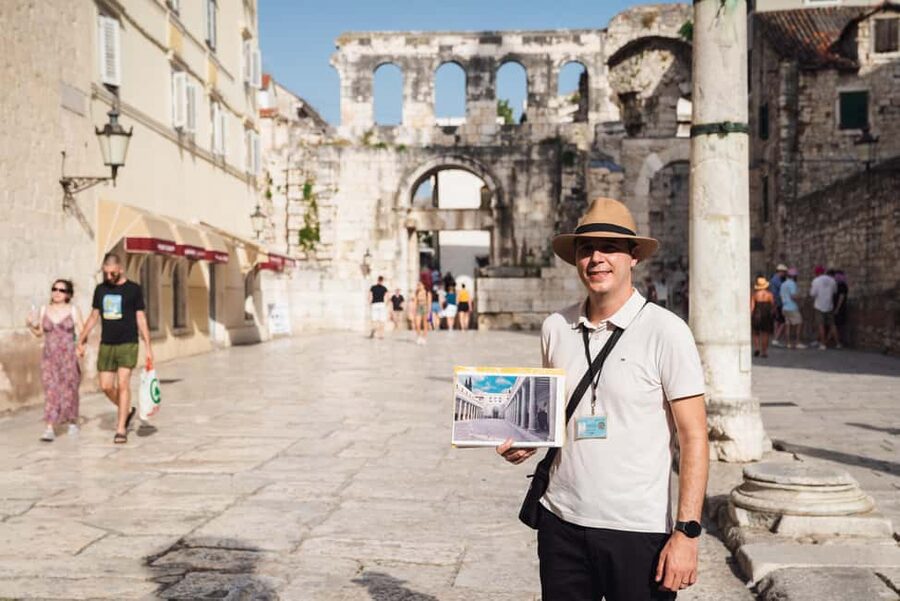
- Toni Šare’s local perspective: He was born in Split, has lived there all his life, and previously worked as a history teacher.
- Roman palace brought back to life: Printed 3D images help you picture the original buildings beneath the later layers.
- A true time journey: The route moves from Roman Split to medieval, Venetian, and modern chapters.
- Questions are part of the plan: This is a conversational tour rather than a fixed speech.
- A useful first-day walk: It gives you a clear map of the Old Town before you explore independently.
- Good value at $33: You receive 110 minutes with a specialist guide, but entrance fees and refreshments are extra.
Why this is more than a standard palace walk
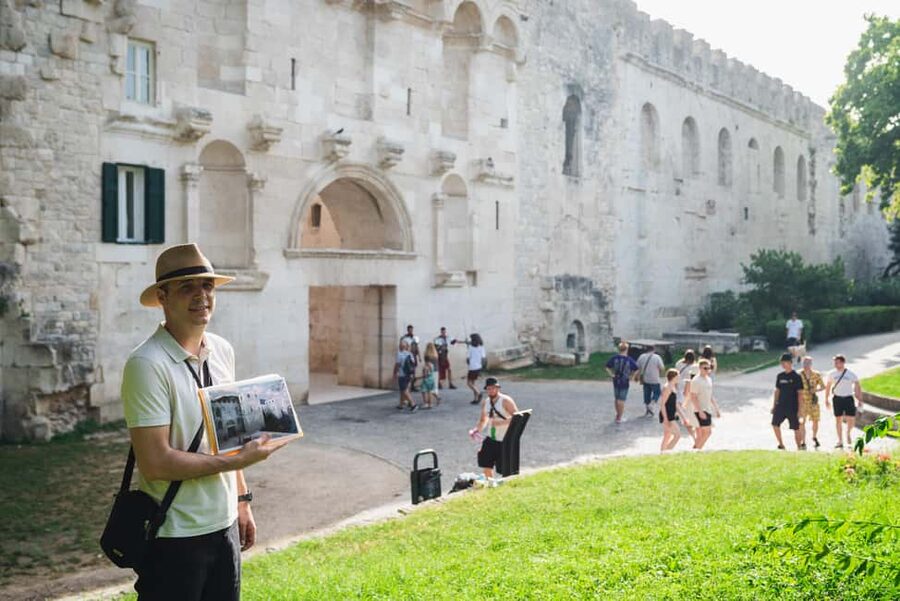
Most visitors first see Split as a handsome waterfront backed by a maze of stone lanes. The surprise is that the maze is largely the former residence of the Roman emperor Diocletian. The palace is not just an archaeological site sitting beside the city. It became the city.
That idea gives the tour its focus. Instead of treating each column or gate as a separate sight, Toni explains how the imperial complex changed purpose over the centuries. Roman ceremonial spaces became part of a medieval town. Old walls became the edges of homes and shops. The result is a layered place where ancient stone and daily life sit side by side.
Toni’s background matters here. He has a Master’s degree in history and a former teacher’s habit of organizing a large subject into a story you can follow. He is also a lifelong Split resident, so his perspective reaches beyond dates and rulers. You can ask about local customs, later Croatian history, or how earlier events still shape the city.
The tour is conducted in English and lasts 110 minutes. That is long enough to build a solid picture of Split without turning the walk into an all-day lecture. Still, the subject is substantial, and some stops receive only a few minutes. If you want detailed interior visits to every paid attraction, you will need to return on your own.
More Old Town Walking Tours in Split
- Split: Old Town and Diocletian Palace Walking Tour
★ 4.9 · 4,727 reviews - Walking Tour of Split and Diocletian’s Palace
★ 5.0 · 2,588 reviews - Krka Waterfalls tour with Trogir Walking tour and Krka panoramic boat cruise
★ 5.0 · 1,659 reviews
Meeting Toni at the Riva and Bronze Gate
The meeting point is at Obala Hrvatskog narodnog preporoda 22, beside the Riva promenade. Look for the Bronze Gate, also called the Brass Gate, which is the southern, seaside entrance to Diocletian’s Palace.
The simplest approach is to find the Riva first and walk along the waterfront toward the palace. This is a practical meeting point because it is easy to identify, but allow enough time to locate the correct gate. The Old Town has several entrances, and the palace walls can make the area feel less obvious than it appears on a map.
The tour begins with an introduction before passing through the Bronze Gate. This southern entrance leads toward the palace cellars and sets up the central question of the walk: how did a Roman imperial residence become the heart of Split?
If your schedule allows, I would choose the earliest available start. The narrow central areas can become crowded as the day goes on, and an early visit usually gives you more room to hear the guide and examine the details. One useful feature of Toni’s approach is his effort to find shade and quieter corners when possible, though this remains an outdoor walk in a busy historic center.
The Bronze Gate and Diocletian’s Cellars
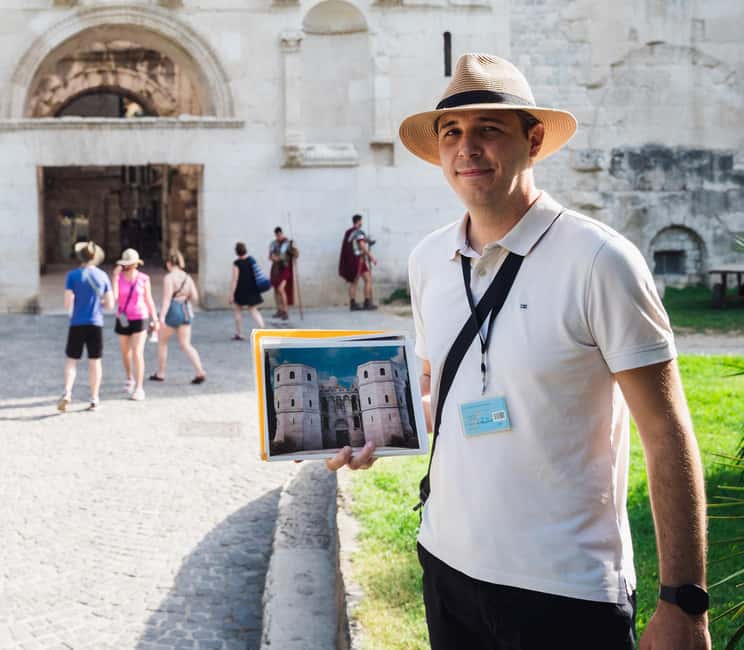
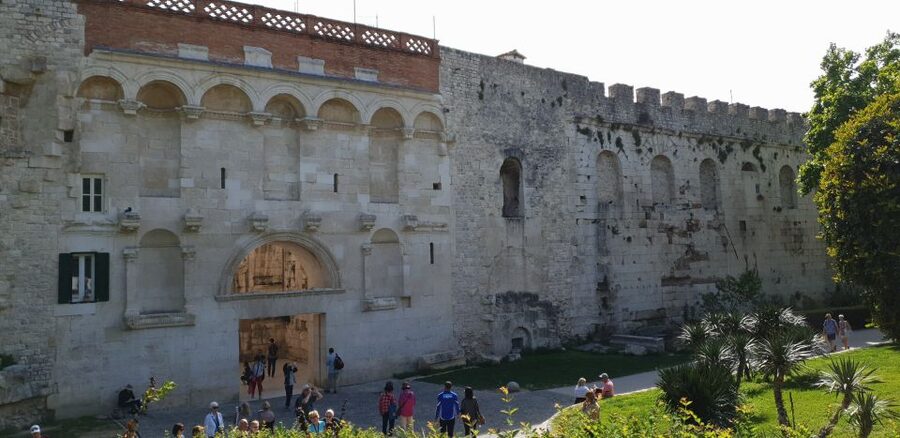
The Bronze Gate is a modest entrance compared with the grander gates on the palace’s other sides. Its position by the water tells you something important about the original complex: the palace had a direct relationship with the sea.
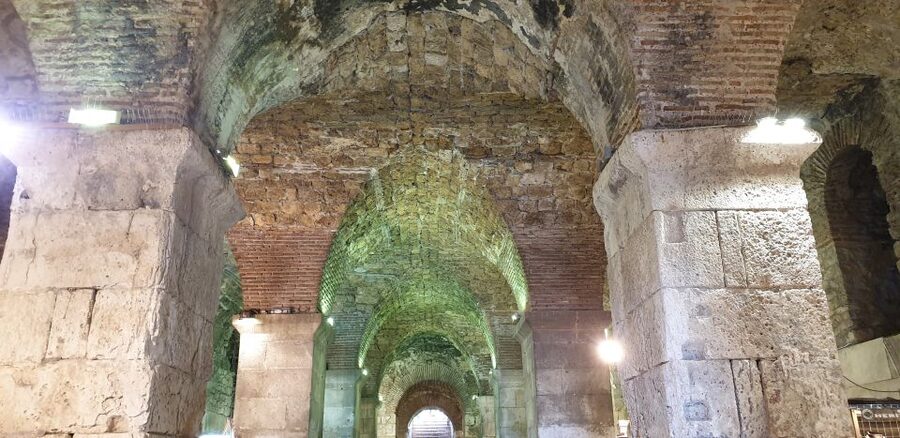
From here, Toni leads the group toward Diocletian’s Cellars. The route includes about ten minutes passing through or alongside this lower level, with a short guided pause at the beginning for questions.
The cellars are useful for understanding the palace’s layout. They reflect the shape of the rooms above, allowing you to picture how the imperial residence was arranged even when upper structures have changed. The lower halls also give you a sense of the palace as a working architectural system, not simply a collection of decorated monuments.
You do not need a separate admission ticket to enter Diocletian’s Palace itself. However, this tour does not include paid sites or museum admissions. That distinction matters. You will see and discuss the palace complex, but some interiors may require a separate ticket if you choose to return later.
Peristyle: the palace’s ceremonial center
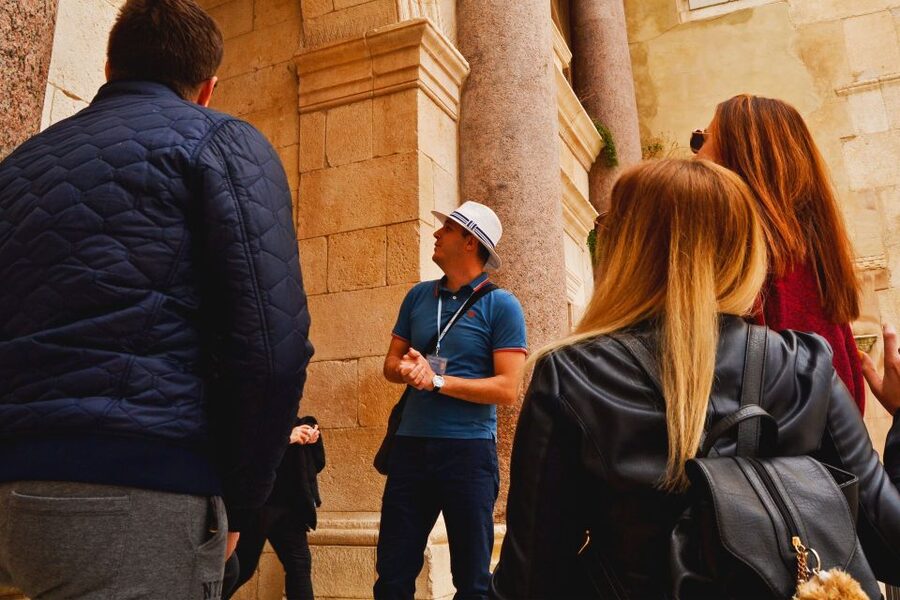
The Peristyle is the visual high point of the walk. This Roman square was designed for ceremony, and its surviving columns and surrounding buildings make it easier to understand the palace as an emperor’s formal residence.
Toni spends about ten minutes guiding the group here. He explains the square’s role and uses 3D reconstructions to show how the buildings may have appeared in their original Roman setting. These images are more than decoration. Ruins can be hard to read when roofs, statues, color, and walls are missing. A reconstruction gives your eye a proposed outline to compare with what remains.
The images are printed rather than presented through a large screen, so you will need to gather close enough to see them. That works well for a small group, but visibility may depend on where you are standing. Ask Toni to hold the images up if the square is crowded.
The Peristyle can also be one of the busiest parts of the palace. The open space is striking, but voices and foot traffic may compete with the explanation. This is another reason to consider an early start.
Same stretch of coast, a completely different day out:
- Split: Krka Waterfalls Trip with Boat Cruise and Swimming
★ 4.8 · 10,519 reviews - From Split: Krka Waterfalls, Food & Wine Tasting Tour
★ 5.0 · 9,326 reviews - Blue cave, Mamma Mia and Hvar, 5 islands speedboat tour
★ 5.0 · 7,150 reviews - From Split: Krka Waterfalls, Food & Wine Tasting Tour
★ 4.9 · 6,598 reviews
Vestibule, Triklinij, and the private palace
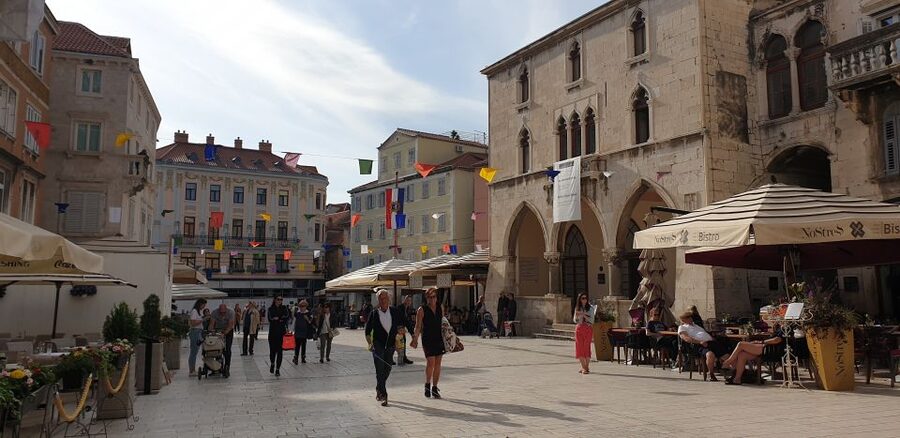
From the Peristyle, the tour continues to the Vestibule, a round entrance space linked to the emperor’s private quarters. The stop lasts about five minutes, enough for Toni to explain its purpose and show how the palace’s public and private areas connected.
You then see Triklinij, another brief stop of roughly five minutes. The value here is not only the individual room. Toni uses these spaces to explain the palace as a residence, with areas designed for ceremony, administration, and private life.
This is where the 3D material helps most. The surviving stonework can feel disconnected from its former use, especially when later construction has filled the gaps. Seeing a proposed image of the complete complex lets you imagine the relationship between rooms rather than looking at each remnant in isolation.
The pace is steady, not rushed. That suits people who want context, but it may feel slow if you only want quick photographs. The tour is built around explanation and questions, so it rewards attention more than rapid sightseeing.
Saint Domnius Cathedral and Jupiter’s Temple
The Cathedral of Saint Domnius is passed rather than entered. Its presence is a good example of Split’s layers: a building associated with Christian worship occupies part of the former Roman palace complex.
Jupiter’s Temple is also passed during the route. The temple is especially useful for understanding how Roman religious architecture fits into the palace plan, but the brief stop means you should not expect a full interior visit or a detailed museum-style treatment.
This part of the tour shows the limits as well as the strengths of the format. Toni can explain how the cathedral, temple, and palace relate to one another, but you will not have extended time inside each site. If one monument catches your attention, note it down and return later.
I like this arrangement because it gives you an orientation before you decide where to spend your own time. A guide can point out the significance of a place in minutes, while you save your detailed visit for the buildings that interest you most.
Silver Gate, Golden Gate, and Split beyond Rome
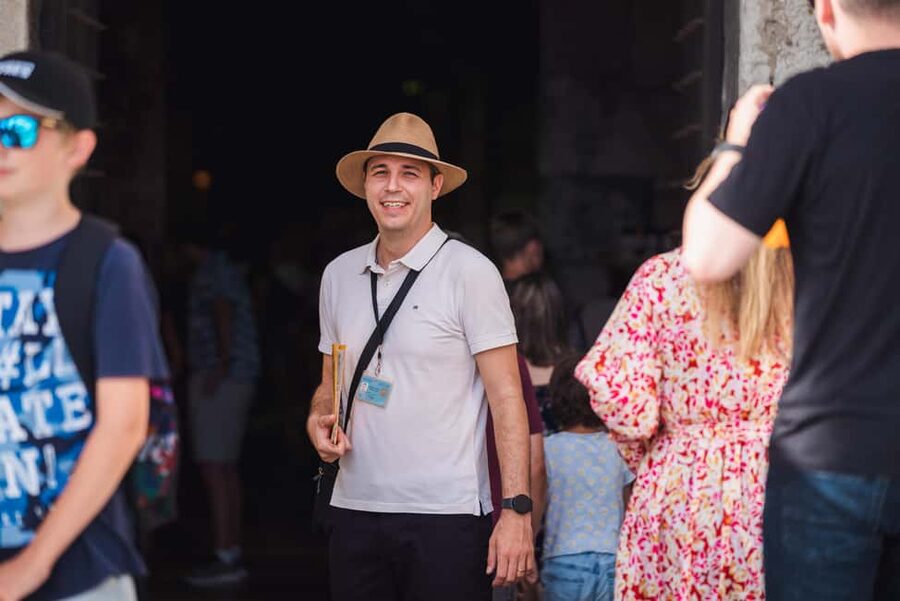
The Silver Gate receives a short guided stop before the route heads toward the Golden Gate. These entrances help you understand the palace as a fortified rectangle with different sides facing different parts of the surrounding world.
The Golden Gate is the endpoint and one of the most recognizable entrances in Split. Along the northern wall, you can see the statue of Bishop Gregory of Nin. The route passes this landmark on the way toward Piazza Square and the northern exit.
Gregory’s statue is a popular photo stop, but the tour gives it a wider setting. Rather than treating it as an isolated monument, Toni places it within the medieval and later story of the city. This shift from imperial Rome to the people and institutions that followed is one of the tour’s strongest features.
The final section also helps you see that Split is not only a Roman attraction. Medieval houses, Venetian influence, later changes, and modern life all occupy the same center. Toni’s teaching background appears in the way he connects these periods instead of stopping the story at the fall of the Roman Empire.
The walk finishes at the Golden Gate rather than returning to the Riva. That is convenient if you want to continue through the northern part of the Old Town, but you should remember that your return route is your responsibility. The endpoint is well placed for further wandering, though the information provided does not specify onward transport.
Toni’s teaching style and the role of questions
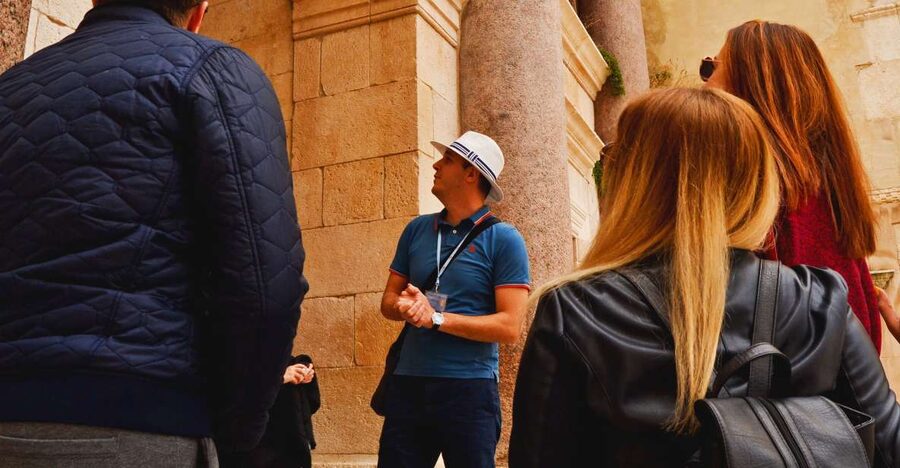
Toni’s strongest quality is his ability to make a large amount of history manageable. He is not limited to Roman dates. You can ask about medieval Split, Venetian rule, Croatia, or more recent events, and the tour is designed to leave room for those questions.
He also makes a point of separating fact from guesswork. That is valuable at ancient sites, where attractive stories often get repeated without much support. Toni’s approach is to explain what historians can establish and what remains uncertain.
The tone is serious but not stiff. He adds humor and personal observations, and his affection for Split comes through without turning the walk into a sales pitch for his hometown. The local connection is useful because he can explain the city as a place where people live, not just as an open-air monument.
The group size is not specified, so I would not assume a private or tiny tour. Still, the format encourages dialogue, and the guide’s practice of finding quieter spots helps. Stand close enough to see the reconstructions and hear clearly, especially in the Peristyle.
How the 3D reconstructions change the experience
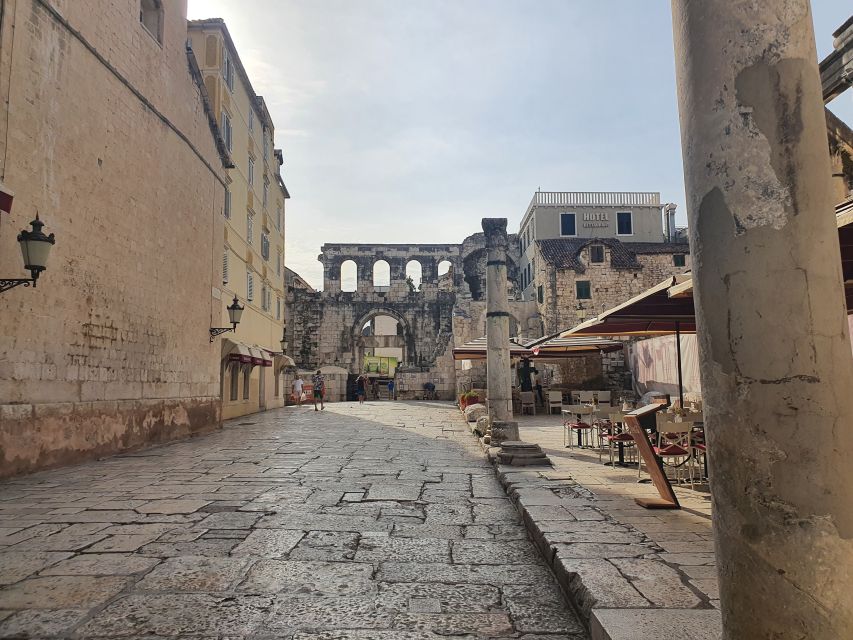
The visual reconstructions are the tour’s most distinctive feature. Ancient architecture is difficult to picture from fragments. A column base, a blank wall, or a surviving doorway tells you only part of the story.
Toni’s images show proposed views of key palace structures in their Roman form. You can compare the image with the remains in front of you, which turns the explanation into a visual exercise. This is particularly useful for children, first-time visitors, and anyone who finds architectural plans hard to follow.
The reconstructions are not proof that every detail looked exactly that way. They are interpretations, and Toni’s careful approach makes that distinction important. Use them as a tool for understanding scale, arrangement, and purpose, rather than as a claim that every missing surface is known.
For me, this is what separates the tour from a simple walk around the palace. You are not only told what a structure was. You are given a way to imagine how it functioned.
Price, pace, and practical value
At $33 per person, the tour costs more than a basic orientation walk, but the price reflects the specialist guide and the 110-minute format. You are paying for a history-focused experience with visual material, not for entry to a museum or monument.
I consider it good value if you want to understand Split before exploring on your own. The tour can prevent the common problem of looking at impressive stones without knowing why they matter. It also gives you a framework for deciding which sites deserve a separate visit.
The value is lower if you prefer to move quickly, take photographs without stopping, or visit paid interiors as part of the same booking. Entrance fees are not included, and neither are food or drinks.
Bring water. The tour takes place rain or shine, so check the forecast and dress for the conditions. Much of the route is on hard historic paving, and the activity is not suitable for wheelchair users. The stated age restriction also excludes people over 95.
Free cancellation is available up to 24 hours before the start for a full refund. You can also reserve and pay later, which is useful when a Croatian itinerary is still shifting.
Who should book this Split history tour?
I would recommend it to first-time visitors who want a clear introduction to the Old Town, families with older children, and anyone who prefers stories and explanations to a checklist of monuments. The tour also suits people who want to ask questions rather than listen to a fixed script.
History students and architecture fans should find plenty to enjoy, especially in the palace cellars, Peristyle, Vestibule, and former private areas. The 3D images add useful visual context, while Toni’s local background gives the walk a personal sense of place.
You may want another option if you need step-free access, dislike walking on uneven historic surfaces, or want every building entered. You should also avoid booking it as your only plan for the day if you expect a full museum tour. This is an outdoor introduction with selected guided stops.
Should you book it?
Book this tour if you want Diocletian’s Palace to make sense rather than simply look impressive. Toni Šare combines academic training, teaching experience, local knowledge, humor, and carefully prepared visual reconstructions. The result is a thoughtful 110-minute walk through Roman, medieval, Venetian, and modern Split.
Choose an early time if possible, bring water, and expect to return to the cathedral, temple, or paid cellar areas later if you want a longer look. At $33, it is a sound choice for an educational introduction, especially when the palace is your main reason for visiting Split.
FAQ
Where does the tour begin?
It begins at the Bronze Gate, also called the Brass Gate, at Obala Hrvatskog narodnog preporoda 22. This is the southern seaside entrance to Diocletian’s Palace beside the Riva promenade.
Where does the tour finish?
The tour finishes at the Golden Gate of Diocletian’s Palace.
How long does the walking tour last?
The tour lasts 110 minutes.
What language is the tour conducted in?
The live tour guide speaks English.
Who guides the tour?
The guide is Toni Šare, a Split-born historian and former teacher with a Master’s degree in history. Some tour information also refers to the guide as Tino, but Toni is the name used most often.
Are entrance tickets included?
No. The tour does not enter paid sites or museums. Entering the general area of Diocletian’s Palace does not require admission.
Are the 3D reconstructions included?
Yes. The guide provides 3D reconstructions of important palace sites as part of the tour.
What should I bring?
Bring drinks, since food and refreshments are not included.
Is the tour suitable for wheelchair users?
No. The activity is not suitable for wheelchair users. It also has a stated restriction for people over 95 years old.
More Walking Tours in Split
- Split & Diocletian’s Palace Walking Tour
★ 5.0 · 1,125 reviews - Split: Diocletian Palace & Old Town Guided Walking Tour
★ 4.7 · 882 reviews - From Split: Krka Waterfalls Cruise & Trogir Walking Tour
★ 4.7 · 681 reviews - Diocletian’s Palace and Old Town SMALL GROUP Walking Tour
★ 5.0 · 502 reviews
More Historical Tours in Split
- Walking Tour of Split with a ‘Magister’ of History
★ 5.0 · 1,122 reviews - Split Walking Tour with Professor of History
★ 5.0 · 926 reviews - Split: History and Heritage Walking Tour
★ 4.9 · 650 reviews - Split History and Gastro Small-Group Tour with Food and Drinks
★ 5.0 · 375 reviews
Just added around Split
- Split Sunset Stand Up Paddle Tour★ 5.0 · 16 reviews
- Split: Sunset Guided Kayaking Tour★ 4.8 · 71 reviews
- Split&Sip: Educational wine tasting★ 4.9 · 52 reviews
- Stand Up Paddle Tour in Split★ 4.7 · 17 reviews
- Split: Guided Walking Tour in English★ 4.9 · 10 reviews
- Split Walking Tour with History Professor★ 5.0 · 23 reviews
- Split Walking Tour: History, Legends & Tales★ 5.0 · 9 reviews
- Split – Walking in Khaleesi Footsteps in the City of Dragons★ 5.0 · 13 reviews
Old Town Walking Tours, compared.



Walking Tour of Split and Diocletian’s Palace
Read our review →


Krka Waterfalls tour with Trogir Walking tour and Krka panoramic boat cruise
Read our review →
City Walls Early Morning or Sunset Walking Tour
Read our review →
Plitvice Lakes with Boat Ride and Zadar Old Town Tour
Read our review →Browse the lists this tour appears in