
Reviewed · OLD TOWN WALKING TOURS
Split: Private Walking Tour for Families with kids (5-17y)
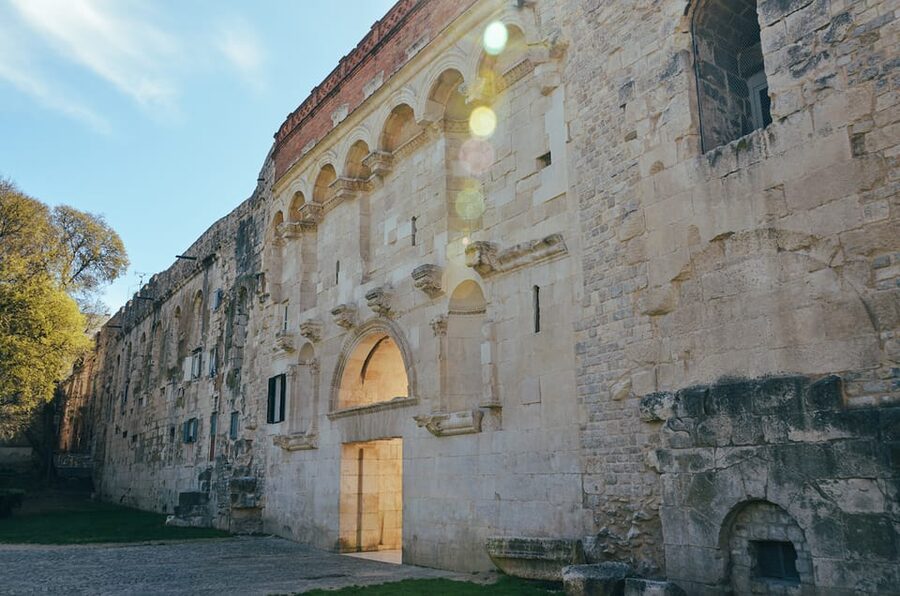
Diocletian’s Palace becomes a giant history game on this private Split tour. Your family follows clues through the Roman ruins, solves a riddle about the emperor and the cathedral, then ends with a well-earned tasting of local sweets and chocolate.
I like the private format, since the guide can keep the pace tied to your own children. I also like the way the tour joins real places with play, from the Peristyle to the missing coffin of Diocletian. The main consideration is the price: at $352 for up to six people, it offers better value for a full family group than for only one or two participants.
In This Review
- Key points
- Why this palace tour works for children
- The Peristyle and the emperor’s public stage
- Split Cathedral and the missing coffin mystery
- Puzzles, quiz questions, and the treasure hunt
- Guides Dana and Jen, and why the private format matters
- The sweet stop at the end
- What the tour teaches about Roman Split
- Who will get the most from this experience
- Price, flexibility, and practical value
- Should you book this family palace tour?
- FAQ
- Where does the tour take place?
- Is this a private tour?
- What ages is the experience designed for?
- What languages are available?
- What is included in the price?
- Are other food and drinks included?
- How much does the tour cost?
- Can I cancel and receive a refund?
Key points
- A treasure hunt inside a real Roman palace: Children learn by solving clues as they walk through Diocletian’s Palace.
- Designed for ages 5 to 17: The mix of puzzles, questions, sweets, and short history stories suits children and teens better than a standard lecture.
- The Peristyle gives the story a dramatic setting: Your guide explains how Diocletian presented himself to his people as the son of Jupiter.
- A mystery at Split Cathedral: Kids investigate what happened to Diocletian’s ornate coffin and identify the important saint connected with the cathedral.
- A private group of up to six: Your family gets the guide’s attention without sharing the activity with a larger crowd.
- A sweet finish: Chocolate and other treats from a local manufactory are included, while extra food and drinks are not.
Why this palace tour works for children
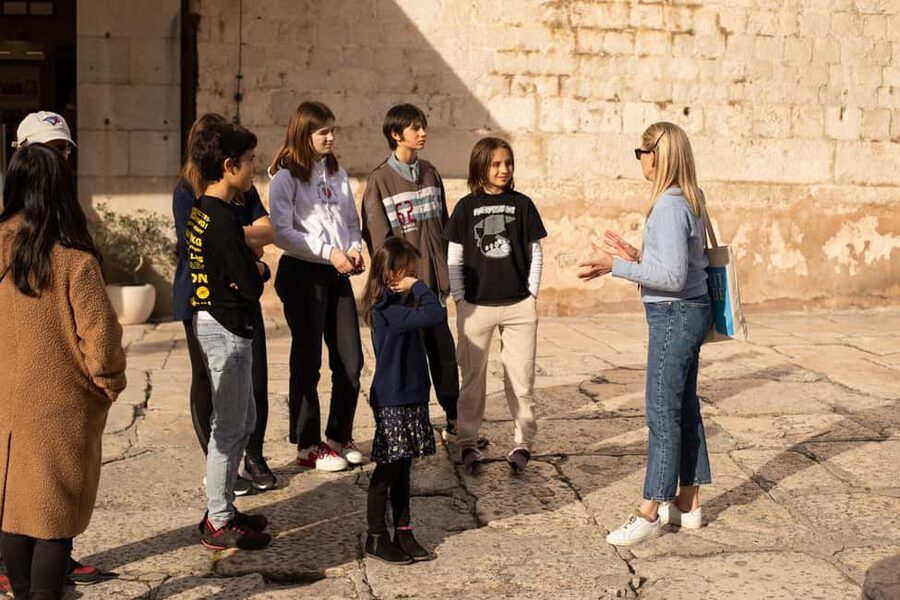
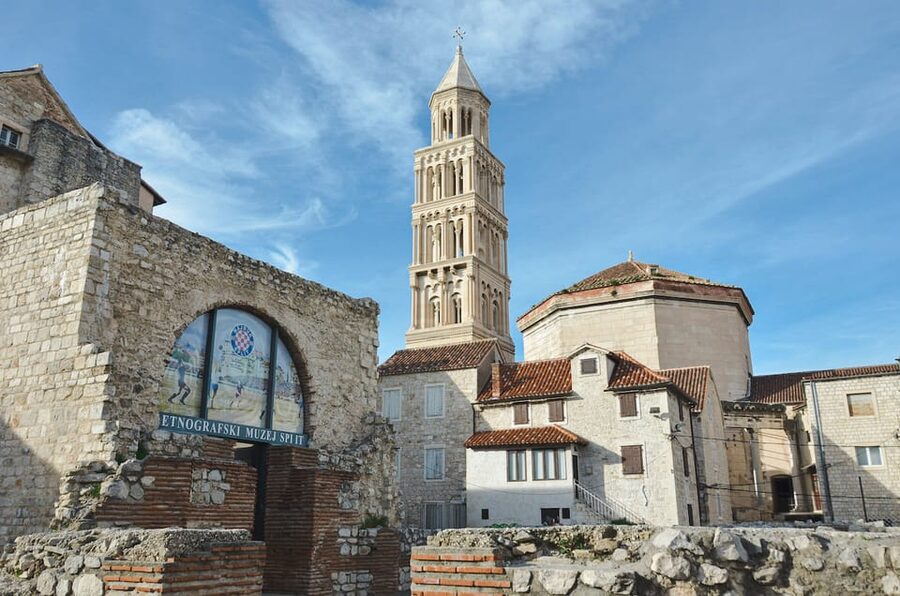
Diocletian’s Palace can be a difficult place for children to grasp at first. It is not a single, tidy museum with a clear entrance, exit, and row of labeled displays. It is a living part of Split, with ancient walls, passageways, shops, homes, a cathedral, and everyday city life mixed together.
That is exactly why a game helps. Instead of asking your child to remember dates, the guide gives the family a task. You look for clues, answer questions, and connect the places around you to the story of Emperor Diocletian.
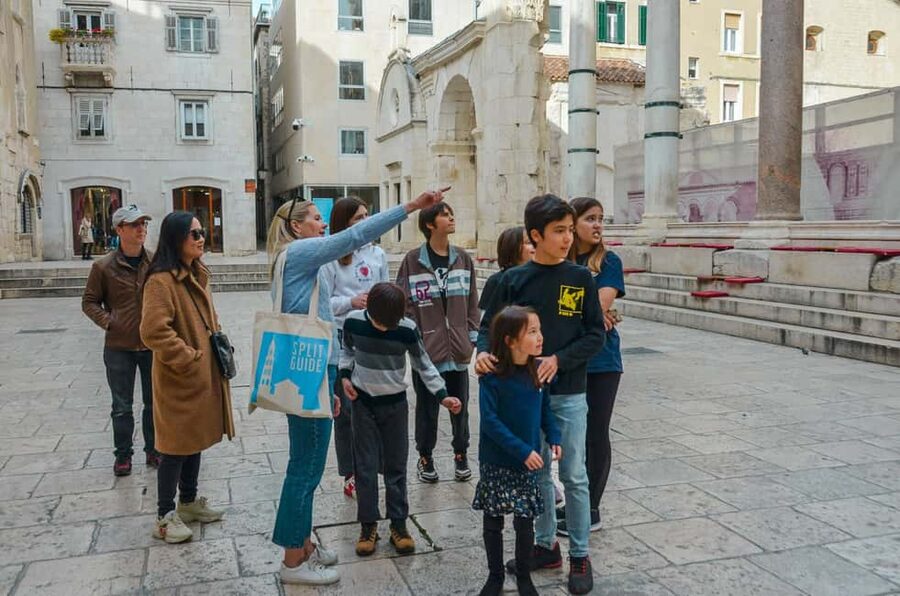
The Roman emperor is a particularly good character for this setting. He ruled with great ambition and presented himself as the son of Jupiter, the powerful Roman god. At the Peristyle, your guide shows where Diocletian appeared before his people and explains how they were expected to bow before him.
For a child, that is easier to picture than a long account of imperial government. You can stand in the same grand space and imagine the emperor making a carefully staged entrance. The history becomes a scene, not just a list of facts.
More Old Town Walking Tours in Split
- Split: Old Town and Diocletian Palace Walking Tour
★ 4.9 · 4,727 reviews - Walking Tour of Split and Diocletian’s Palace
★ 5.0 · 2,588 reviews - Krka Waterfalls tour with Trogir Walking tour and Krka panoramic boat cruise
★ 5.0 · 1,659 reviews
The Peristyle and the emperor’s public stage
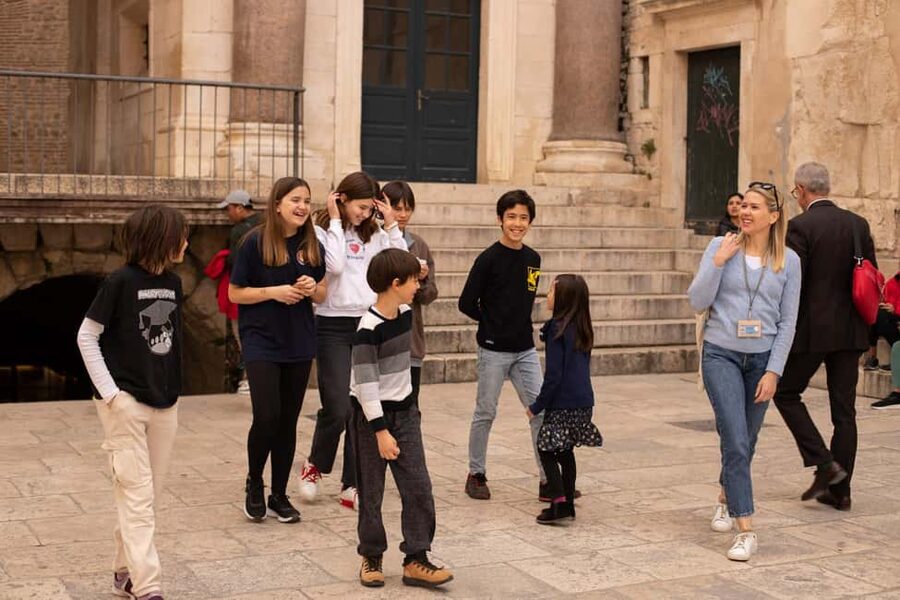
The Peristyle is one of the essential stops in the palace, and the tour uses it well. This open ceremonial court was the place where Diocletian presented himself to the people of Split. The setting helps children see how power worked in the Roman world.
The guide’s job here is not simply to point out columns and explain their age. You learn how Diocletian shaped his public image and why linking himself to Jupiter helped him remain above ordinary people. The question of who could approach the emperor, and how they had to behave, gives the stop a lively human angle.
I especially like this part for families with older children and teens. Younger kids may focus on the scale and appearance of the square, while teens can think about propaganda, power, and the way rulers build a public identity. The same stop can work at several levels.
The Peristyle is also a useful anchor for the rest of the walk. Once your family understands that the palace was both a residence and a place of imperial display, the other areas become easier to place. Your guide can keep returning to the central question: how did Diocletian and the people around him live here 1,700 years ago?
Split Cathedral and the missing coffin mystery
The cathedral adds a surprising twist to the Roman story. It once contained a lavish coffin belonging to Diocletian, but the coffin is now gone. The tour turns that fact into a question for the children: where did it go?
That mystery gives the group a reason to pay attention. Rather than receiving every answer at once, children can think through the clue and test what they know. The game element is simple, but it changes the mood from passive sightseeing to active discovery.
The cathedral also connects the palace to a later chapter of Split’s story. Your guide asks the children to identify the important saint still associated with the building. This creates a clear contrast between Diocletian, the Roman emperor, and the Christian figure honored at the cathedral.
That contrast matters because the palace did not remain frozen in Roman times. It continued to be used and adapted. The tour lets you see how one place can carry different meanings over many centuries, without turning the lesson into a formal classroom talk.
If your children enjoy mysteries, this may be one of the strongest sections of the walk. It gives them a puzzle with a real location, a famous historical figure, and a visible change in the building’s story.
Puzzles, quiz questions, and the treasure hunt
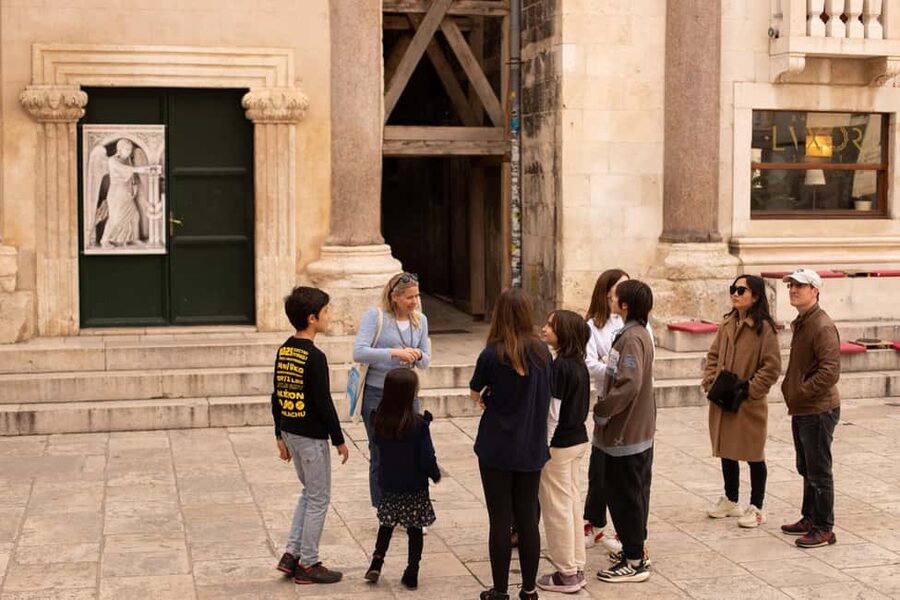
The included quiz and games are not just extras added to a sightseeing walk. They are the main tool that keeps children involved. The family solves riddles as the guide introduces the palace, the emperor, the cathedral, and Roman life.
The format is especially useful when children in the same group have different ages. A five-year-old may enjoy searching for clues and guessing answers, while a teenager may take the lead on the harder questions. The private setting allows the guide to adjust the challenge rather than leaving one child behind.
A private tour also makes it easier for siblings to participate in different ways. One child can answer a question, another can look for the next clue, and a third can keep track of the family’s progress. That shared task gives the walk a clear purpose.
The reviews point to this strength again and again. Children aged 7 and 9 were captivated by the activities, while a group with three children aged 7 to 12 stayed engaged throughout. Another family with young children called the experience especially well suited to them.
You should still keep expectations realistic. This is a guided walking tour, not a theme-park treasure hunt with elaborate props or prizes described in the tour details. The fun comes from the questions, the places, the guide’s storytelling, and the final sweet stop.
Same stretch of coast, a completely different day out:
- Split: Krka Waterfalls Trip with Boat Cruise and Swimming
★ 4.8 · 10,519 reviews - From Split: Krka Waterfalls, Food & Wine Tasting Tour
★ 5.0 · 9,326 reviews - Blue cave, Mamma Mia and Hvar, 5 islands speedboat tour
★ 5.0 · 7,150 reviews - From Split: Krka Waterfalls, Food & Wine Tasting Tour
★ 4.9 · 6,598 reviews
Guides Dana and Jen, and why the private format matters
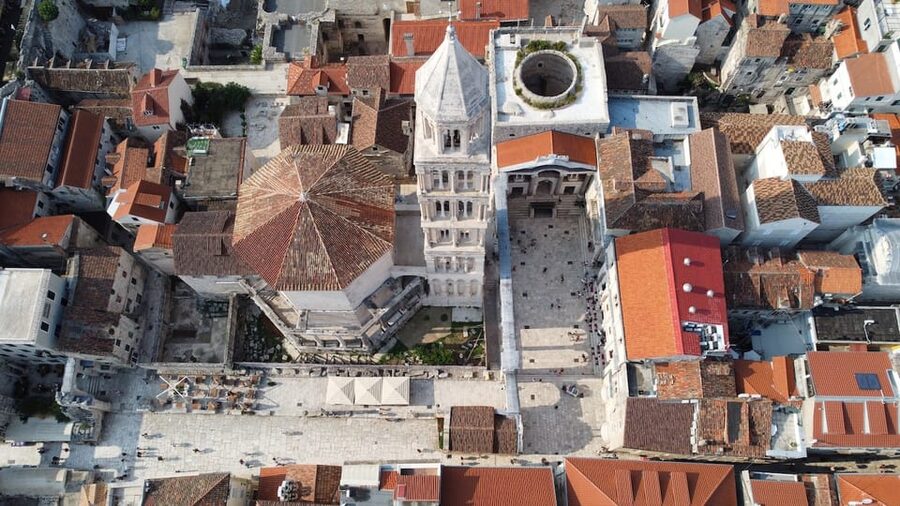
Specific guides named in the feedback include Dana and Jen. Dana led a family with two girls aged 7 and 9, and Jen guided three children between 7 and 12. Both were praised for keeping children interested while explaining the sights.
You cannot necessarily request one of those guides unless the provider confirms it, but their role shows what makes this format succeed. A family guide needs to do more than recite facts. The guide must notice when a child is losing focus, give the next clue at the right moment, and make room for both quick answers and wrong guesses.
The tour is offered in English, French, and German. That is useful for families who want children to follow the puzzles without struggling through every question in a second language.
The private group limit is six people. For a family of four, five, or six, the guide can speak directly to your children and shape the game around them. You do not need to worry about a large mixed group waiting while your child thinks, or about a young child interrupting a formal tour.
The tradeoff is cost. A total of $352 works out to about $59 per person for six people, or $88 per person for four. For two people, the per-person figure becomes much less attractive. The tour makes the most financial sense for a family group close to the six-person limit.
The sweet stop at the end
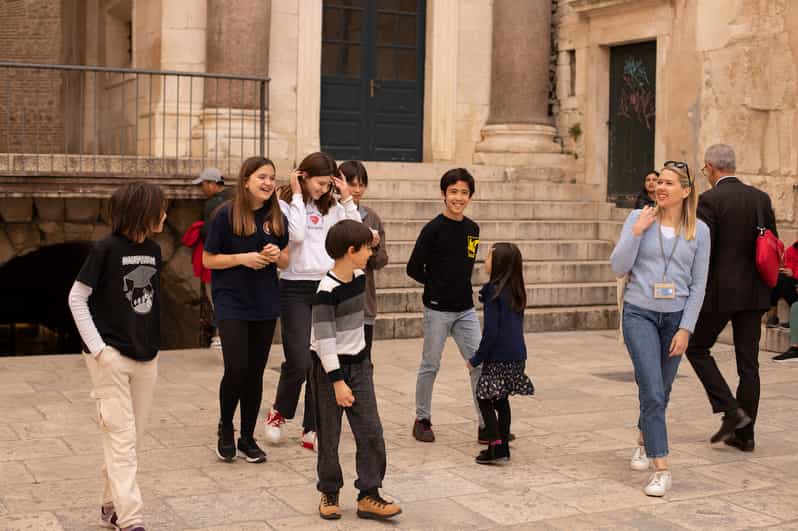
History takes effort, especially when younger children are walking through a large palace and concentrating on clues. The tour ends with sweets and chocolate from a local manufactory, giving the group a clear reward after the final puzzle.
This is more than a sugar break. It gives the walk a finish that children can remember and anticipate. The sweets also add a local food touch without turning the experience into a full meal or food tour.
The included tasting covers sweets and chocolate. Other food and drinks are not included, so plan separately if your family needs a meal or more substantial refreshment. The sweet stop should be treated as a tasting, not lunch.
Parents may also appreciate the timing of the reward. It comes after the family has explored the palace, learned about Diocletian, and worked through the questions. That gives the children a reason to stay involved instead of asking about treats halfway through the first stop.
What the tour teaches about Roman Split
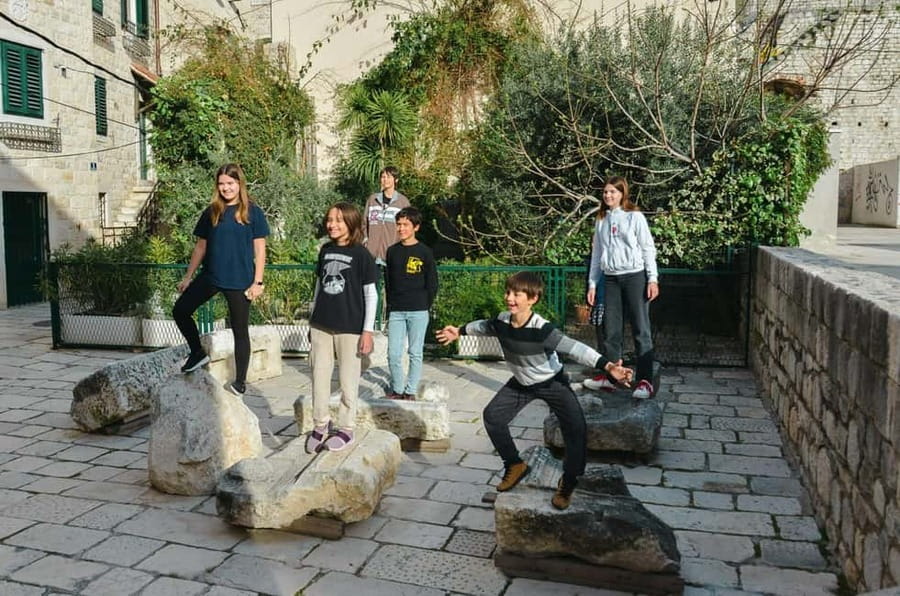
The tour focuses on life in and around Diocletian’s Palace 1,700 years ago. You hear about the emperor, his public appearances, Roman customs, and the way people lived during the Roman era.
The strongest teaching points are tied to physical places. At the Peristyle, power and ceremony take center stage. At the cathedral, the children confront the changes that came after Diocletian’s time. The palace itself shows how history can remain part of an active city rather than sitting apart from daily life.
This approach suits families who want some education without scheduling a formal museum lesson. The guide gives enough context to make the buildings meaningful, while the games stop the information from piling up in one long speech.
The material also gives you useful conversation starters after the tour. You can ask your child why an emperor would compare himself to a god, why a coffin might disappear, or how one Roman building could later become part of a cathedral. Those questions can keep the experience going beyond the final sweets.
Who will get the most from this experience
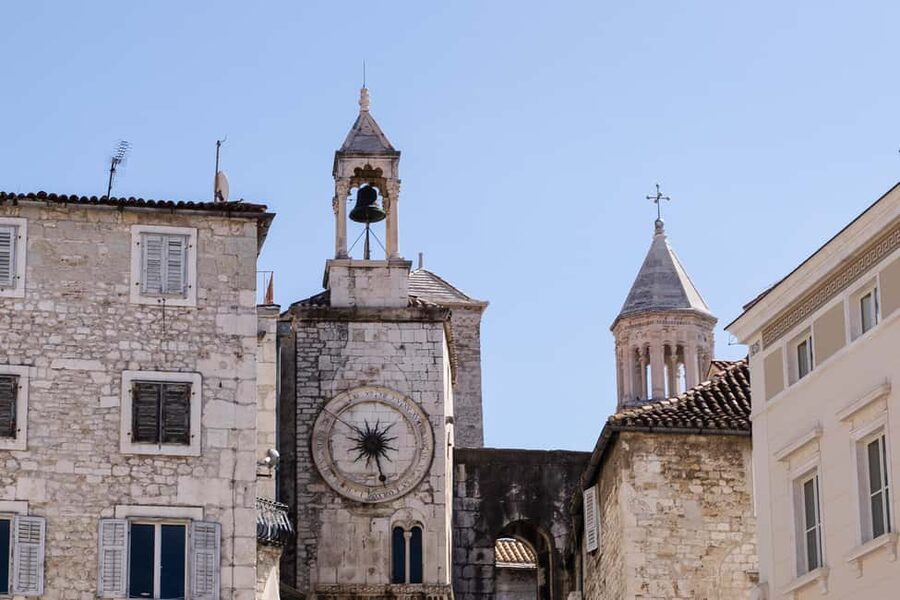
This tour is best for families with children from about 5 through 17, as the experience is specifically designed for that age range. The activities give younger children something concrete to do, while the historical questions offer older children more to consider.
It should work particularly well for siblings with a broad age gap. A young child can join the hunt, and an older child can help solve the more detailed riddles. The private format gives the guide room to involve both.
It is also a good choice if your family has already had enough standard sightseeing. A conventional palace tour can lose a child’s attention quickly. Here, the family moves with a goal, and the guide uses the setting as part of the game.
You may want a different experience if your main aim is a long, scholarly explanation of Roman architecture, or if your family does not enjoy games and sweets. The tour puts family participation ahead of exhaustive detail.
Price, flexibility, and practical value
The price is $352 per group of up to six. Because it is a group price rather than a per-person charge, the value improves as more family members join. For a full family of six, it is a private guided activity with games, a certified guide, and included sweets. For a smaller group, compare the total with other private tours in Split before booking.
You can reserve now and pay later, which helps if you are still arranging your Dalmatian plans. You can also cancel up to 24 hours in advance for a full refund. Those terms make the booking less risky than a prepaid activity with a strict cancellation rule.
The tour includes the guided walk, sweets and chocolate, plus the quiz and games. It does not include other food or drinks. Since the duration is not specified in the available details, check the current booking information before you plan a meal, nap, or another timed activity afterward.
The language choices are English, French, and German. Confirm the language you need when booking, especially if your children will be solving the clues themselves.
Should you book this family palace tour?
I would choose this experience if you want your children to remember Split’s palace as a place where they solved a mystery, not just a place where adults stopped to read signs. The Peristyle, the missing coffin, the saint at the cathedral, and the sweets give the walk a clear story arc.
Book it when you have four to six people and your children enjoy questions, small challenges, and active sightseeing. The $352 group price is easier to justify with a full family, and the private guide can keep the pace focused on your children.
Think twice if your group is very small, if you want a strictly academic tour, or if you need a full meal included. For most families with children aged 5 to 17, though, this is a smart way to make Diocletian’s Palace understandable, amusing, and worth the walking.
FAQ
Where does the tour take place?
The tour takes place in Split, in the Dalmatia region of Croatia, with the main focus on Diocletian’s Palace.
Is this a private tour?
Yes. The tour is private for your family and is offered for a group of up to six people.
What ages is the experience designed for?
The tour is designed for children and teens from 5 to 17 years old.
What languages are available?
The tour is available in English, French, and German.
What is included in the price?
The price includes a guided walking tour with a certified guide, sweets and chocolate, plus the quiz and games.
Are other food and drinks included?
No. Other food and drinks are not included.
How much does the tour cost?
The price is $352 per group of up to six people.
Can I cancel and receive a refund?
Yes. You can cancel up to 24 hours in advance for a full refund. You can also reserve and pay later, so no payment is required today.
More Walking Tours in Split
- Split & Diocletian’s Palace Walking Tour
★ 5.0 · 1,125 reviews - Walking Tour of Split with a ‘Magister’ of History
★ 5.0 · 1,122 reviews - Split Walking Tour with Professor of History
★ 5.0 · 926 reviews - Split: Diocletian Palace & Old Town Guided Walking Tour
★ 4.7 · 882 reviews
Just added around Split
- Split Sunset Stand Up Paddle Tour★ 5.0 · 16 reviews
- Split: Sunset Guided Kayaking Tour★ 4.8 · 71 reviews
- Split&Sip: Educational wine tasting★ 4.9 · 52 reviews
- Stand Up Paddle Tour in Split★ 4.7 · 17 reviews
- Split: Guided Walking Tour in English★ 4.9 · 10 reviews
- Split – Walking in Khaleesi Footsteps in the City of Dragons★ 5.0 · 13 reviews
- Split Walking Tour with History Professor★ 5.0 · 23 reviews
- Split Walking Tour: History, Legends & Tales★ 5.0 · 9 reviews
Old Town Walking Tours, compared.



Walking Tour of Split and Diocletian’s Palace
Read our review →


Krka Waterfalls tour with Trogir Walking tour and Krka panoramic boat cruise
Read our review →
City Walls Early Morning or Sunset Walking Tour
Read our review →
Plitvice Lakes with Boat Ride and Zadar Old Town Tour
Read our review →Browse the lists this tour appears in