
Reviewed · OLD TOWN WALKING TOURS
Split: Group or Private Walking Tour with Art Historian
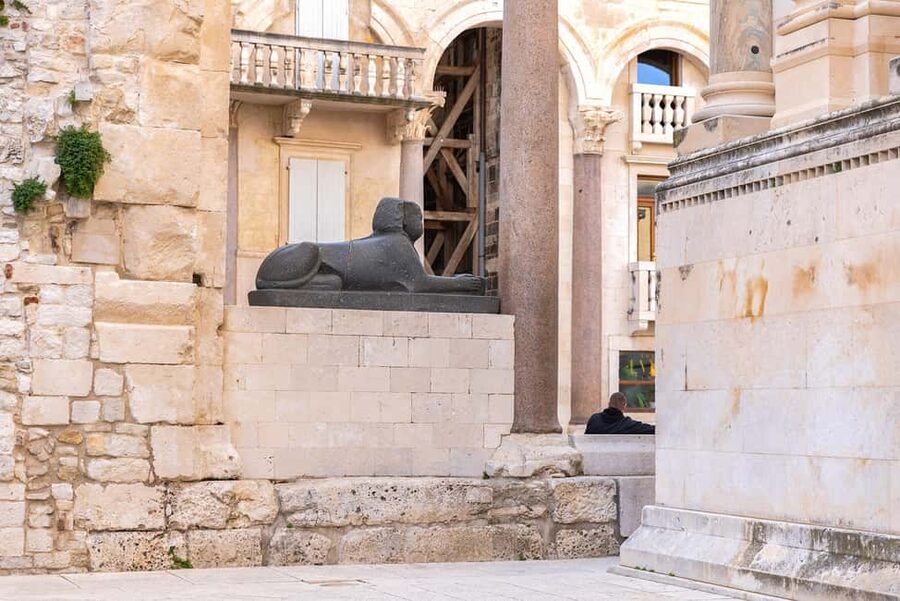
Split’s old center is not a museum behind glass. It is a living city built inside and around a Roman palace, with laundry above ancient walls, cafés in former courtyards, and streets that still follow the imperial plan. This tour with art historian Josipa helps you read those layers instead of simply ticking off monuments.
I like the route’s mix of big sights and small details, especially the Egyptian sphinxes, narrow Let Me Pass Street, and the final walk toward Varoš. I also like the chance to choose private or small-group touring, with Josipa adjusting the conversation to your interests. The main drawback is that the tour does not enter the paid interiors, and the route includes unavoidable steps.
- Roman Split in real city streets: Walk original Roman routes through a neighborhood still used by local residents.
- A guide with an art-history eye: Josipa explains how to spot changes in stone, building use, and design.
- Major sights plus quieter corners: The route includes Peristyle, the Golden Gate, the Riva, and less obvious stops.
- A useful two-hour introduction: You get your bearings before deciding which paid sites deserve more of your time.
- Private or small-group choices: Pick a more personal pace or an intimate shared tour.
- Varoš as the finale: The walk ends by showing how Roman structures were reused over many centuries.
In This Review
- Why Split makes sense with an art historian
- Starting at Strossmayer Park and Gregory of Nin
- Golden Gate, Saint Martin, and the Silver Gate
- Peristyle, Jupiter’s Temple, and the narrowest street
- Vestibul, Triklinij, and the palace beneath your feet
- The Riva, city model, and public squares
- Ending in Varoš and reading the city for yourself
- What the $32 price buys you
- Who will enjoy this walk, and who should think twice
- A few practical choices before booking
- Should you book the Split walking tour?
- FAQ
- How long does the Split walking tour last?
- Who leads the tour?
- Where does the tour start?
- How will I recognize the guide?
- Are the Cathedral, Temple of Jupiter, and Diocletian’s Cellars included?
- Is the tour suitable for wheelchair users?
- Can I cancel or pay later?
Why Split makes sense with an art historian

Diocletian’s Palace is easy to misunderstand. You may expect one grand Roman building, but the old center is a web of streets, walls, shops, homes, churches, and courtyards built into and around the palace. Josipa’s role is to show you how to separate the Roman plan from the medieval and modern additions.
That approach gives the tour more value than a quick monument checklist. You learn to notice the shape of a street, the reuse of a column, or the way a later building fits against an older wall. Josipa also has ties to ongoing archaeological fieldwork, so the explanations connect the visible city with the work still being done beneath it.
The tone is meant to be direct and free of staged tricks. You get historical stories, architectural clues, and local advice rather than costumes or forced entertainment. If you enjoy asking questions, the private option gives you the most room to steer the discussion. A small group still keeps the setting personal and conversational.
Starting at Strossmayer Park and Gregory of Nin
Meet at the fountain in Strossmayer Park, also called Djardin. The park sits just above the Golden Gate, close to the statue of Gregory of Nin, and it is a sensible starting point because you begin outside the palace walls before entering the dense old center.
Look for Josipa holding the yellow and blue Aspalathos Guided Tours sign. The meeting point can be easy to confuse with other parts of the center, so search your map for Strossmayer Park or Strossmayerova Fountain rather than relying on a vague address.
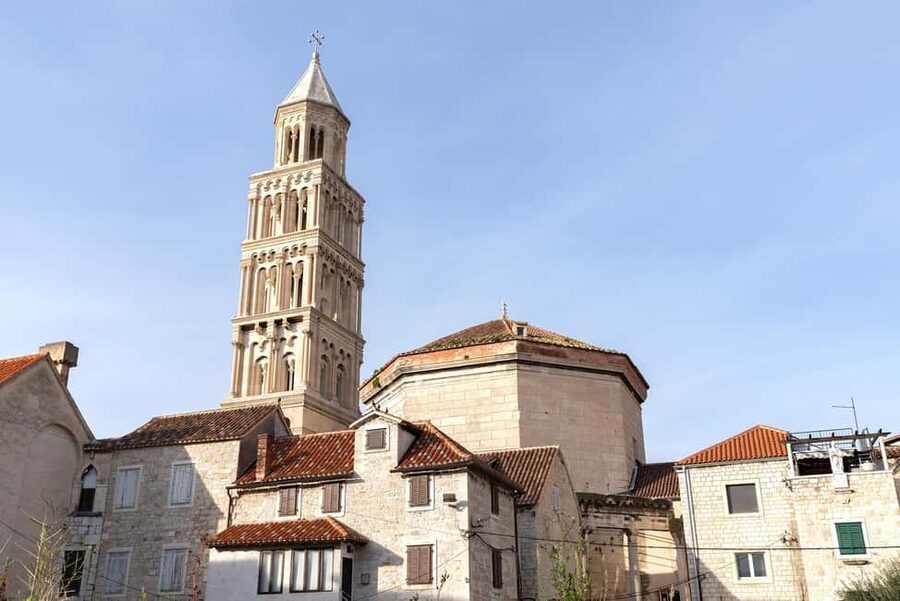
The first stop is Gregory of Nin, with about five minutes for an introduction. This statue is one of Split’s familiar landmarks, but the practical value here is orientation. You are close to the north side of the palace, and Josipa can begin explaining how the old entrances relate to the modern city.
Give yourself extra arrival time in summer. Traffic into Split can be heavy, and the stated maximum wait is 10 minutes before the group leaves. That is one reason I would not plan to arrive at the last moment, especially if you are coming from a cruise port or another part of town.
More Old Town Walking Tours in Split
- Split: Old Town and Diocletian Palace Walking Tour
★ 4.9 · 4,727 reviews - Walking Tour of Split and Diocletian’s Palace
★ 5.0 · 2,588 reviews - Krka Waterfalls tour with Trogir Walking tour and Krka panoramic boat cruise
★ 5.0 · 1,659 reviews
Golden Gate, Saint Martin, and the Silver Gate
The Golden Gate receives about 10 minutes of guided attention. It is one of the clearest places to understand the palace as a fortified Roman complex, with controlled entrances and a strong relationship between the walls and the streets beyond them.
From there, the route reaches Saint Martin, a short five-minute stop. This compact church is tucked into the old defensive structure, and it shows how later religious buildings found a place inside Roman architecture. It is the kind of stop that can disappear if you walk too quickly through the center.
The Silver Gate follows, with another five minutes. Seeing more than one gate matters because it lets you compare the palace’s entrances rather than treating the Golden Gate as an isolated monument. Josipa’s explanations are especially useful here because the city makes more sense once you understand its original lines of movement.
This part of the walk includes stone surfaces and steps. Wear shoes with a firm grip, and do not expect a smooth, modern pavement route.
Peristyle, Jupiter’s Temple, and the narrowest street
Peristyle is the visual center of the palace and gets around 10 minutes. This open court gives you a chance to see the Roman ceremonial scale of the complex, but the surrounding buildings also show how the space changed over time.
The next stop is Jupiter’s Temple, also covered for about 10 minutes. The tour passes the temple but does not include entry to it. That distinction matters if you want to see the interior. Josipa provides the story and practical suggestions, then you can return later and buy admission on your own.
Let Me Pass Street takes only five minutes, yet it may become one of the stops you remember best. Its name reflects the tightness of the passage, and it gives you a quick sense of how Split’s old center works at human scale. This is not just a series of grand ruins. It is a place where centuries of building have left very little space between home, street, and monument.
I like this sequence because it moves from imperial ceremony to religious reuse and then into the everyday texture of the old town. You keep changing scale, which helps prevent the history from becoming a string of dates.
Vestibul, Triklinij, and the palace beneath your feet
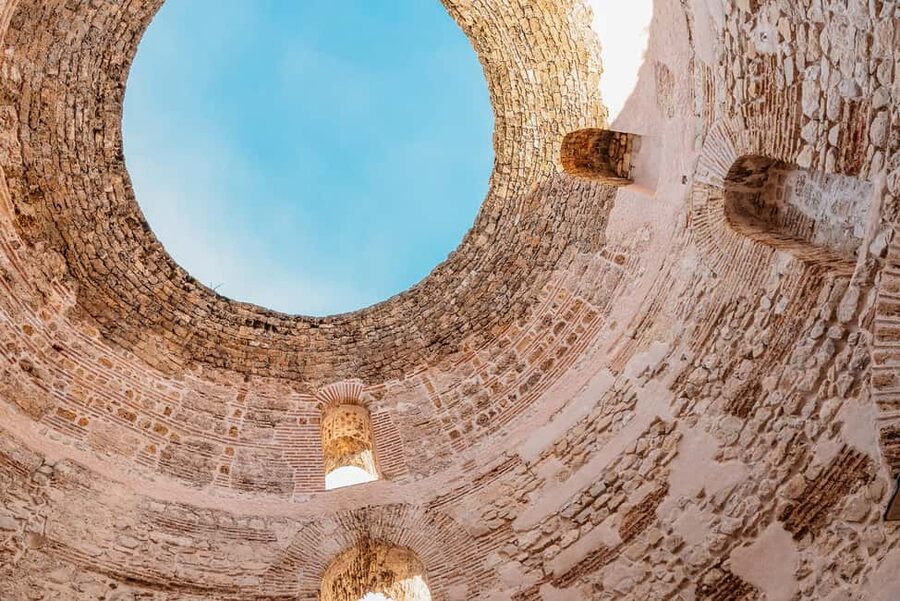
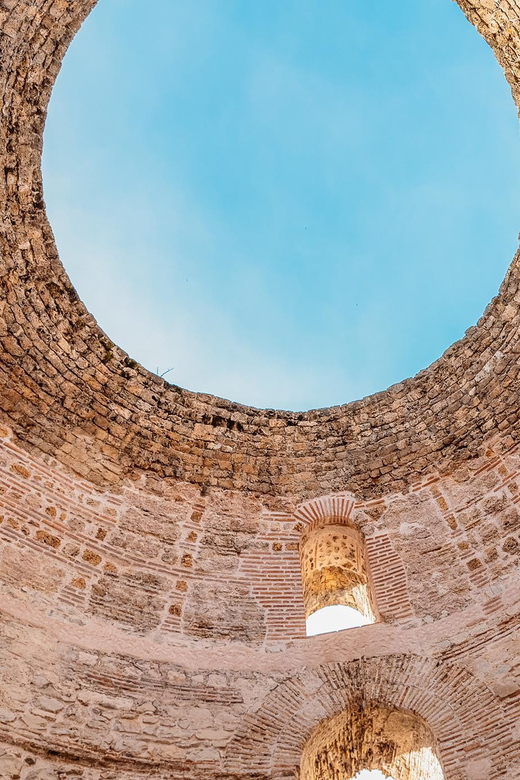
The Vestibul receives about 10 minutes and includes a photo stop. Its round form and strong acoustics make it one of the palace’s most memorable spaces from the outside, even when you are surrounded by present-day Split.
Triklinij gets a shorter five-minute explanation. Here, Josipa continues the work of showing how the palace functioned and how later generations understood and adapted its spaces. You are not simply told what a building was called. You are shown how to look for traces of its original purpose.
The walk then reaches Diocletian’s Cellars for about 10 minutes. The route passes the substructures but does not include paid entry. That may disappoint you if underground Roman architecture is your main reason for visiting Split, but the explanation still helps you decide if the cellars deserve a separate visit.
This is an important planning point. The two-hour walk gives you context for the paid sites, but it is not a substitute for entering them. If you want the full interior experience of the substructures, cathedral, or temple, budget extra time and admission after the tour.
Same stretch of coast, a completely different day out:
- Split: Krka Waterfalls Trip with Boat Cruise and Swimming
★ 4.8 · 10,519 reviews - From Split: Krka Waterfalls, Food & Wine Tasting Tour
★ 5.0 · 9,326 reviews - Blue cave, Mamma Mia and Hvar, 5 islands speedboat tour
★ 5.0 · 7,150 reviews - From Split: Krka Waterfalls, Food & Wine Tasting Tour
★ 4.9 · 6,598 reviews
The Riva, city model, and public squares
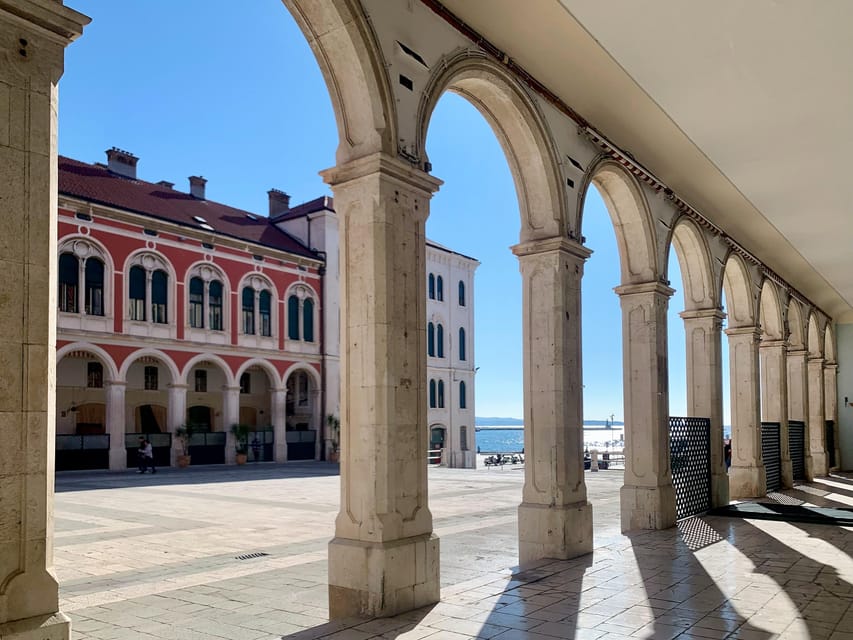
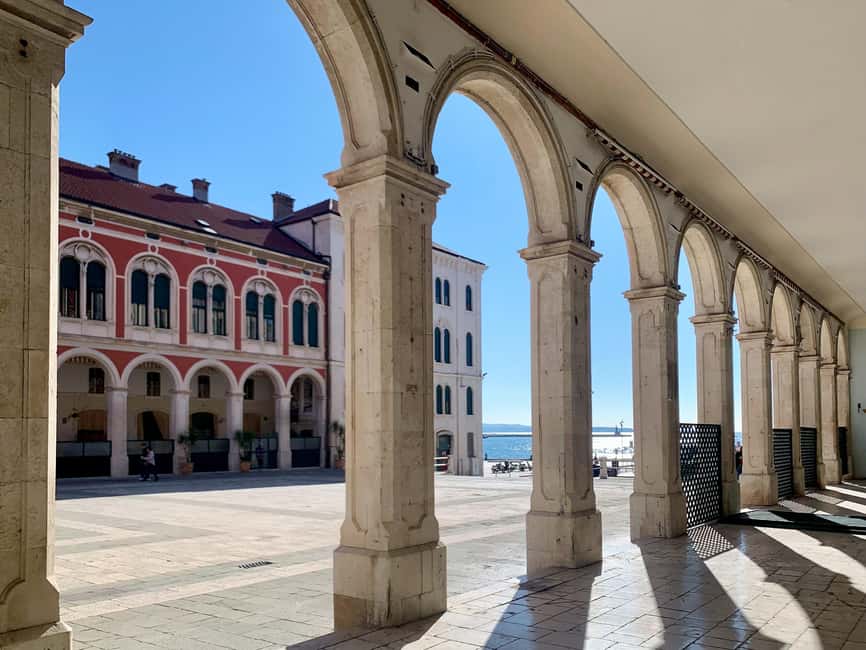
After the palace, the route opens onto the Riva waterfront for around 10 minutes. This is a useful change of pace after the narrow lanes. You get a clearer sense of how the old center meets the sea and how Split functions as a modern city as well as an archaeological site.
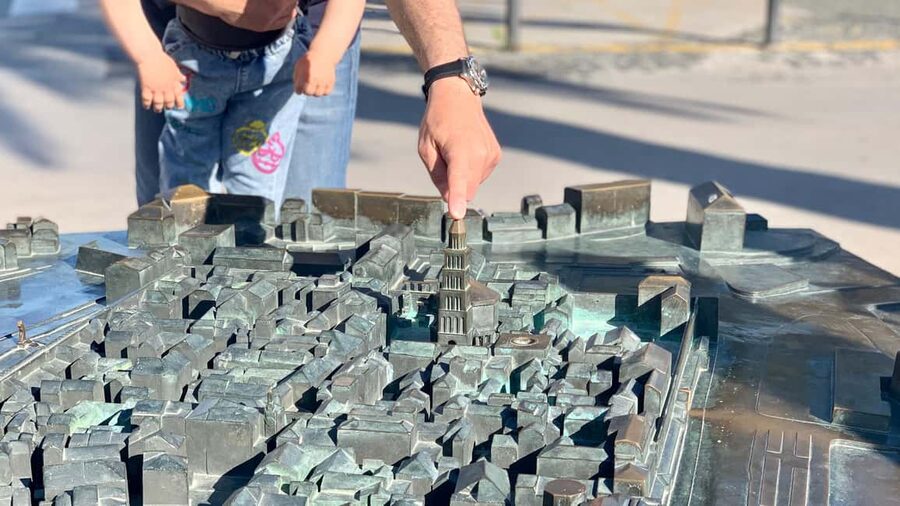
A model of Split follows, with about five minutes of explanation. A city model can seem like a minor stop, but it helps put the palace, walls, gates, waterfront, and later neighborhoods into one picture. After walking through tight spaces, you can finally see the plan at a glance.
Fruit Square receives five minutes. Its name points to the old market tradition, and the square helps you understand the commercial side of the center. The route then continues to People’s Square for about 10 minutes, another place where the old town’s civic life comes into view.
The fish market gets five minutes. This is not a Roman monument, and that is exactly its value. You see a working part of Split’s daily life rather than only the preserved past. The walk is strongest when it keeps these two sides together.
Republic Square is the final major stop, with about 10 minutes. From there, the activity has two listed drop-off points, Trg Šperun and Republic Square. The meeting information also describes the activity as ending back at the meeting point, so confirm the precise end point when you book if your next appointment depends on it.
Ending in Varoš and reading the city for yourself

The supplied route description places special emphasis on Varoš, one of Split’s oldest neighborhoods. This ending is a good choice because it moves away from the most photographed palace spaces and shows how the city continues into a long-established local quarter.
You will see preserved Roman-era architecture, described here as dating to the fourth century, alongside buildings that have been repurposed over the centuries. That combination is central to Split’s character. The old structures are not frozen in one period. They have been repaired, divided, adapted, and put to new uses.
The larger lesson is how to read change. A Roman wall may support a later building. A medieval lane may follow an older route. A former ceremonial area may become part of ordinary city life. Josipa’s aim is to help you notice these clues on your own after the tour ends.
That makes the experience useful beyond the two hours. You can revisit a street or square later and see details you would have walked past earlier.
What the $32 price buys you
At $32 per person, this is a fair price for a two-hour walk led by a licensed local guide, particularly if you choose the small-group format. You are paying for interpretation and route planning, not admission tickets. The value is strongest if you want an organized introduction before exploring the paid sites independently.
A private tour can make the price feel different, depending on the size of your party. You get a more personal conversation and a route that can respond to your background and interests. For a couple, family, or group with specific questions about art, architecture, or archaeology, that flexibility may be worth more than joining a larger walk.
The small-group option should suit you if you want to keep costs down while still having time to ask questions. The available information describes it as intimate and engaging, but it does not state a maximum group size, so ask for that detail if crowd size matters to you.
The strongest practical value is the local advice. Josipa can suggest the best time to visit Split and Croatia and explain how to approach the paid attractions after the tour. That can save you from spending your limited time wandering between sites without a plan.
Who will enjoy this walk, and who should think twice
I would choose this tour if you want history explained in plain language, enjoy looking closely at buildings, or prefer a guide who can adapt to questions. It also works well as a first activity in Split because the route covers the palace, the waterfront, the main squares, and Varoš in one sweep.
It suits visitors who want more than the standard highlights. The stops at Saint Martin, Let Me Pass Street, Triklinij, the city model, and the fish market add variety to the famous gates and Peristyle.
The tour is less suitable if you need step-free access. It is specifically not suitable for wheelchair users or people with mobility impairments, and the route includes unavoidable steps. It is also not suitable for hearing-impaired participants according to the activity information.
Plan for rain or sun, since the walk operates in both conditions. Bring comfortable walking shoes, and allow time to reach the meeting point. Split’s stone streets can be tiring, even on a short route.
The guide speaks English. One published French-language comment praises the old-town visit, but the listed tour language is English, so do not book expecting French interpretation.
A few practical choices before booking

The walk lasts two hours, with starting times shown through the availability calendar. I would choose an early slot if you want cooler conditions and more time afterward for the cathedral, temple, or cellars. A later start may work better if you arrive in Split that morning, but allow for summer traffic.
Paid sites are not included. You pass the Substructures, Cathedral, Temple of Jupiter, and other important places, hear their stories, and receive suggestions for visiting them later. Think of this tour as the map and explanation, then plan your own interior visits.
Cancellation is flexible up to 24 hours before the start for a full refund. You can also reserve now and pay later, which helps if your Croatian plans are still moving around.
Josipa’s manner is described as friendly, cheerful, and easy to approach. She is also praised for answering many questions and showing an efficient route through Split’s alleyways. Those details matter because a two-hour walking tour can feel rushed when the guide sticks rigidly to a script. Here, the stated goal is a live route shaped around the group’s interests.
Should you book the Split walking tour?
Book it if you want a focused introduction to Split that connects Roman remains with the living city around them. The combination of Josipa’s art-history training, archaeological ties, flexible explanations, and well-chosen route gives you more than a quick list of monuments.
Choose the private version if personal attention is your priority. Choose the small-group option for a lower-cost walk that still leaves room for conversation. Either way, plan a separate visit to the paid interiors, wear good shoes, and arrive early at Strossmayer Fountain.
Skip it if you require step-free access or want a tour built around entering every major site. For most able-bodied visitors who want to understand why Split’s center feels so unusual, this two-hour walk is a practical and worthwhile first look.
FAQ
How long does the Split walking tour last?
The tour lasts two hours. Starting times vary, so check availability when booking.
Who leads the tour?
The tour is led in English by Josipa, a licensed local guide and art historian who owns Aspalathos Guided Tours.
Where does the tour start?
Meet around the fountain in the center of Strossmayer Park, also called Djardin. Search for Strossmayer Park or Strossmayerova Fountain on your map.
How will I recognize the guide?
Josipa will be holding a yellow and blue sign marked Aspalathos Guided Tours.
Are the Cathedral, Temple of Jupiter, and Diocletian’s Cellars included?
No. The tour passes these sites and explains their importance, but paid entry is not included. Josipa provides suggestions for visiting them later on your own.
Is the tour suitable for wheelchair users?
No. The activity is not suitable for wheelchair users or people with mobility impairments because the route includes unavoidable steps.
Can I cancel or pay later?
You can cancel up to 24 hours in advance for a full refund. The reserve-now, pay-later option allows you to book without paying immediately.
More Walking Tours in Split
- Split & Diocletian’s Palace Walking Tour
★ 5.0 · 1,125 reviews - Walking Tour of Split with a ‘Magister’ of History
★ 5.0 · 1,122 reviews - Split Walking Tour with Professor of History
★ 5.0 · 926 reviews - Split: Diocletian Palace & Old Town Guided Walking Tour
★ 4.7 · 882 reviews
Just added around Split
- Split Sunset Stand Up Paddle Tour★ 5.0 · 16 reviews
- Split: Sunset Guided Kayaking Tour★ 4.8 · 71 reviews
- Split&Sip: Educational wine tasting★ 4.9 · 52 reviews
- Stand Up Paddle Tour in Split★ 4.7 · 17 reviews
- Split: Guided Walking Tour in English★ 4.9 · 10 reviews
- Split Walking Tour with History Professor★ 5.0 · 23 reviews
- Split Walking Tour: History, Legends & Tales★ 5.0 · 9 reviews
- Split – Walking in Khaleesi Footsteps in the City of Dragons★ 5.0 · 13 reviews
Old Town Walking Tours, compared.



Walking Tour of Split and Diocletian’s Palace
Read our review →


Krka Waterfalls tour with Trogir Walking tour and Krka panoramic boat cruise
Read our review →
City Walls Early Morning or Sunset Walking Tour
Read our review →
Plitvice Lakes with Boat Ride and Zadar Old Town Tour
Read our review →Browse the lists this tour appears in