
Reviewed · OLD TOWN WALKING TOURS
Pula: Historic Sites Guided Walking Tour
Pula’s best sights fit into a compact old-town walk, and this tour connects them with the stories that make the stones meaningful. You begin at the Roman Arena, climb to the Venetian castle for broad views, then work your way through the cathedral, Forum, Augustus Temple, mosaics, market, and ancient gates.
I like the 90-minute length, which gives you a useful first look without taking over your day. I also like the guide-led focus: Sini, also spelled Sinsije or Sinisha in some booking records, is praised for clear English, ancient history, humor, and welcoming answers to questions.
The main consideration is the walking itself. Uneven streets, the route uphill to the castle, and the activity’s stated unsuitability for people with mobility impairments may make this a poor fit if you need an accessible route. Entry tickets are not included, so check what you want to enter before booking.
In This Review
- Key points worth knowing
- Why this short Pula walk works
- Meeting at the Pula Arena
- Climbing to the Venetian castle
- The cathedral and the Roman Forum
- Augustus Temple and City Hall
- Roman mosaics and the Arch of Sergii
- Pula Market and Hercules Gate
- The guide makes the difference
- Is $20 good value?
- Who should book this tour?
- Practical booking details
- Should you book the Pula historic sites walk?
- FAQ
- Where does the Pula walking tour begin?
- How do I identify the guide?
- Where does the tour finish?
- How long does the tour last?
- What language is the tour conducted in?
- Is the Pula Arena entry ticket included?
- Does the tour include a visit to Pula Castle?
- Does the tour run in bad weather?
- Is video recording allowed?
- Is the tour suitable for people with mobility impairments?
- Can I cancel for a full refund?
- Do I have to pay when I reserve?
Key points worth knowing
- Roman Pula in one efficient loop: See the Arena, Forum, Augustus Temple, Arch of Sergii, Hercules Gate, and Roman mosaics in a single walk.
- The castle provides the high point: The Venetian fortress, built in the 17th century, adds views and a different chapter of Pula’s past.
- Sini brings strong local history skills: The guide is praised for clear English, humor, detailed answers, and an easy pace.
- The tour covers more than ancient ruins: You also visit the cathedral, City Hall, and Pula Market, founded in the early 1900s.
- Budget-friendly orientation: At $20 per person, this is useful for getting your bearings before exploring independently.
- Plan for outdoor conditions: The walk runs rain or shine, and video recording is not allowed.
Why this short Pula walk works
Pula can look simple on a map. The Arena sits near the center, the Forum lies farther downhill, and several Roman arches and walls appear along the way. But without context, the city’s layers can blur together. A guide helps you see how Roman, medieval, Venetian, and modern Pula occupy the same streets.
That is the real value here. You are not just checking off an amphitheater and a temple. You are following a route through the old center while someone explains what each building did, who used it, and how the city changed over time.
The tour has a helpful balance. Ancient Roman sights receive most of the attention, but the castle, cathedral, market, and City Hall keep the walk from becoming a parade of columns. You get a sense of Pula as a living town, not only an archaeological site.
At $20, the cost is modest for a private introduction to the city’s central monuments. You still need to pay separately for any entry tickets, so think of this as a guided orientation walk rather than an all-inclusive sightseeing pass.
More Old Town Walking Tours in Pula
- Pula: Historic Walking Tour with Local Guide & City Views
★ 4.8 · 143 reviews - Pula walking tour
★ 5.0 · 96 reviews - Pula Essentials Walking Tour
★ 4.8 · 64 reviews
Meeting at the Pula Arena
The starting point is in front of the Amphitheater entrance at Istarska ul. 50. Look for a guide wearing a blue card around the neck and holding an umbrella. That identifying detail matters because the Arena area can be busy, especially during the main sightseeing season.
Your guide begins with a short introduction to Pula Arena. This is a smart place to start. The amphitheater is the city’s most famous monument, and hearing the basic story before moving on gives you a frame for the rest of the walk.
Expect an overview rather than a long interior visit. Entry tickets are not included, and the activity is described as a walking tour of the historic sites. If you want to explore the Arena inside, treat that as a separate plan and confirm the current admission arrangements.
The Arena stop is especially useful if Pula is one of several Roman cities on your trip. A guide can point out what makes this monument important within Pula’s own story, rather than leaving you with only the familiar image of a Roman entertainment building.
Climbing to the Venetian castle
From the Arena, the route continues to Pula Castle. The fortress was built by the Venetians in the 17th century, so this stop shifts the focus from ancient Rome to a later period of military control and coastal defense.
That change of era is one of the walk’s strengths. Pula is not only Roman. The castle shows how the city remained important long after the Roman period, with later powers reshaping the town and its defenses.
The castle also provides panoramic views. This gives you a chance to pause, look back over the city, and understand the layout you will walk through next. One booking record describes the route as a leisurely pace, with the monuments close together. Even so, the climb and outdoor footing are worth taking seriously if stairs, slopes, or uneven paving are difficult for you.
The guide also explains the castle’s previous inhabitants and history. That makes this more than a viewpoint stop. You get a short lesson in how the fortress functioned and why the Venetians built it in this position.
The cathedral and the Roman Forum
After the castle, you continue to Pula Cathedral. The cathedral adds a religious layer to the tour, and its place within the historic center helps show how later communities used and reshaped areas that had been important in antiquity.
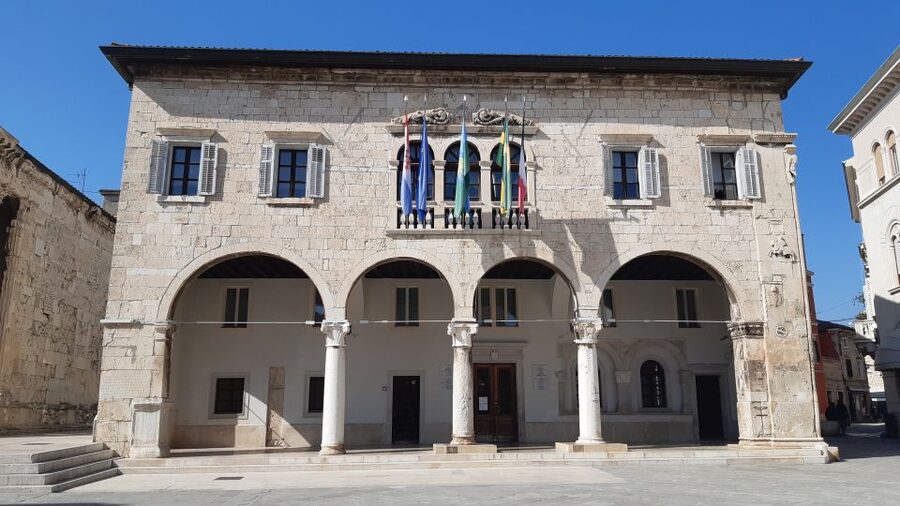
Next comes the Roman Forum, the heart of ancient public life in Pula. This is where the city’s Roman identity becomes easiest to read. The Forum links several major sights together, including the Augustus Temple and City Hall.
The contrast is striking. Ancient Roman structures sit beside later civic buildings, and the space still functions as part of the city rather than as an isolated ruin. I find this kind of stop more useful than seeing monuments one at a time because you can understand their relationship to each other.
Your guide’s commentary is important here. The physical remains are not always self-explanatory, particularly when later construction has altered the original setting. Clear explanations about architecture, public life, and changing use can turn a quick look into a memorable part of the walk.
Same stretch of coast, a completely different day out:
- Medulin -Kamenjak 5h boat trip with lunch & drinks on Sandra Boat
★ 5.0 · 1,621 reviews - Full-Day Boat Tour of the Medulin Archipelago from Medulin
★ 5.0 · 1,389 reviews - 3hours all inclusive Sunset&Dolphin Tour from Medulin on Sandra
★ 5.0 · 1,130 reviews - Dolphin Watching & Sunset Boat Tour With Dinner and Drinks
★ 5.0 · 1,075 reviews
Augustus Temple and City Hall
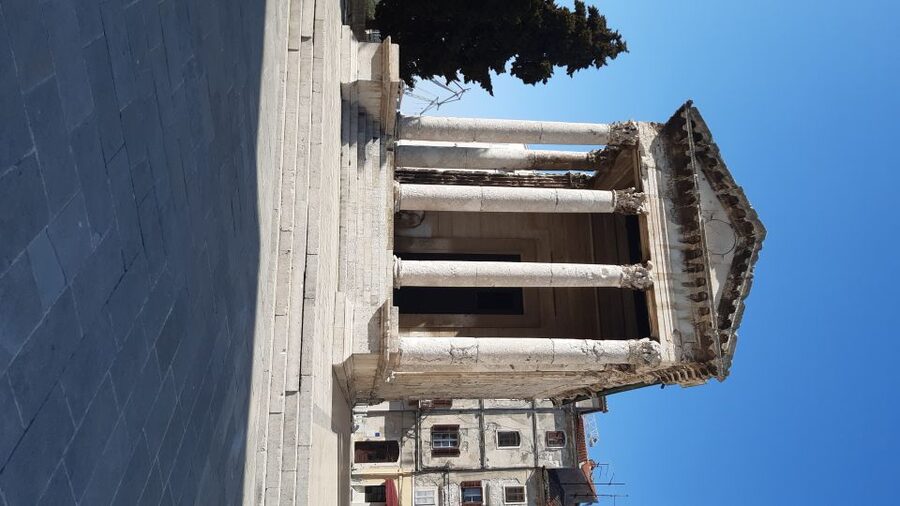
The Augustus Temple is one of the tour’s headline sights. At roughly 2,000 years old, it gives you a direct connection to Roman Pula in a small and approachable form. It is not simply a decorative columned building. Its position in the Forum helps you understand the religious and civic center of the ancient town.
City Hall provides a useful visual counterpoint. Here you see how the same public space continued to matter as Pula developed under later rulers and governments. The two buildings together make the Forum easier to read: one points back to Roman religious life, the other to the city’s later civic identity.
This is also a good place to ask questions. The guide is specifically described as encouraging questions, and several comments highlight the ability to explain ancient history in clear English. If you want more than dates, ask how the buildings were used or how Pula changed around them.
Because the tour is only 90 minutes, the time at each monument will be selective. You should not expect a full museum-style lecture at every stop. Instead, you get the essential story and can return later to the places that catch your interest.
Roman mosaics and the Arch of Sergii
The route includes Roman mosaics along the way. These smaller traces can be easy to miss when your eyes are fixed on large monuments, which is one reason a local guide adds value.
Mosaics bring Roman Pula down to street level. An amphitheater and temple show public power, but a mosaic hints at the homes, decoration, and daily life of the people who lived here. The guide’s job is to make sure these quieter remains do not disappear behind the city’s grand landmarks.
You also see the Arch of Sergii, a major Roman monument along the old-town route. It provides another reminder that Roman Pula was a functioning city with prominent families, streets, public buildings, and ceremonial spaces.
This portion of the walk is ideal for travelers who enjoy details. You may find that the most memorable moments are not always the largest structures, but the fragments and traces that explain how ordinary parts of the city connect to its ancient past.
Pula Market and Hercules Gate
The tour then moves through Pula Market, established in the early 1900s. This is a welcome change of pace after the Roman sites. The market helps you see the town as a place where people shop and work, not merely a backdrop for historic monuments.
The building and market setting also add a modern-era layer to the route. You move from imperial Rome to later city life, then continue toward the ancient Gate of Hercules. That sequence makes Pula’s long development easier to follow.
The Gate of Hercules is another compact but important Roman remnant. It is the sort of sight you might walk past without realizing its age or purpose. A guide can point it out, explain its role, and connect it with the wider Roman street plan.
The tour finishes at Twin Gate. Ending there gives you a practical next point for independent exploring. You can continue through the old center, return to a monument you want to see more closely, or use the walk’s route as a rough map for the rest of your time in Pula.
The guide makes the difference
The strongest praise for this experience centers on the guide. Sini is repeatedly described as friendly, funny, engaging, and strong on ancient history. One especially useful quality is the ability to answer questions rather than simply recite a prepared route.
The English-language presentation is another clear benefit. The guide is described as speaking excellent English and explaining Pula’s history and architecture in an accessible way. That matters when a tour covers several time periods in a short window.
The tone also seems well judged. Comments describe the walk as informative without becoming too heavy, and as well led at a comfortable pace. You get plenty of facts, but the experience is still a stroll through town rather than a formal classroom session.
Guide names appear as Sini, Sinsije, and Sinisha in the supplied booking material. If your confirmation uses one of these versions, do not worry about the difference. The important point is to look for the blue card and umbrella at the Arena meeting point.
Is $20 good value?
For $20 per person, I consider this a good-value introduction to central Pula. The route covers a lot: the Arena, castle, cathedral, Forum, Augustus Temple, City Hall, mosaics, Arch of Sergii, market, and Hercules Gate.
You are paying for interpretation and efficient routing, not transportation or admission. That is a sensible arrangement in Pula because the main old-town sights are close enough to connect on foot.
The value is strongest if this is your first time in the city. A 90-minute orientation can help you decide where to spend the rest of your day. It can also prevent you from missing smaller remains, such as the mosaics and Hercules Gate, that do not always announce themselves.
The value is less clear if you already know Pula well or want long interior visits. Since entry tickets are not included, budget separately for any monument or museum you plan to enter. This tour gives you the framework, while independent sightseeing supplies the extra time.
Who should book this tour?
I would choose this walk if you want a fast but substantial introduction to Pula’s old center. It suits first-time visitors, history fans, cruise or short-stay visitors, and anyone who likes having a local guide explain the city before exploring alone.
It also works well for people who prefer a manageable tour length. Ninety minutes is enough to cover the main sights but short enough to leave room for lunch, shopping, a return visit, or another activity.
You should think twice if you have a mobility impairment. The activity is specifically marked as unsuitable for people with mobility impairments, and the route includes a castle visit and old-town walking. Ask the provider about current conditions before booking if you have any uncertainty.
Plan for changing weather as well. The tour operates rain or shine. Wear shoes suited to town walking and bring protection from rain or sun, since much of the experience takes place outdoors.
Video recording is not allowed. You can still take in the buildings and views, but do not plan to document the tour on video.
Practical booking details
The tour is conducted in English by a live local guide and lasts 90 minutes. You meet in front of the Pula Amphitheater entrance at Istarska ul. 50 and finish at Twin Gate.
The blue card and umbrella identify the guide. Arrive with enough time to locate the meeting point, especially if you are approaching from another part of town.
The experience costs $20 per person. Entry tickets are not included. Free cancellation is available up to 24 hours before the start for a full refund, and the reserve-now, pay-later option allows you to hold a place without paying immediately.
Starting times vary, so check availability for your date. The tour runs in rain or shine, and the language offered is English.
Should you book the Pula historic sites walk?
Book it if you want the main story of Pula in one well-paced route, with a guide who can connect Roman remains to the Venetian castle, cathedral, market, and later civic buildings. The mix of major monuments and easy-to-miss details gives you more than a simple Arena visit.
At $20, it is particularly useful early in your stay. You can use the walk to get oriented, then return to the Augustus Temple, Arena, or another site that deserves more time.
Skip it if you need a fully accessible route, want extensive time inside each monument, or already have strong knowledge of Pula. For most first-time visitors who enjoy history and can manage old-town walking, this is a practical, fairly priced way to meet the city.
FAQ
Where does the Pula walking tour begin?
The tour begins in front of the entrance to the Pula Amphitheater at Istarska ul. 50.
How do I identify the guide?
Look for a guide wearing a blue card around the neck and holding an umbrella.
Where does the tour finish?
The tour finishes at Twin Gate.
How long does the tour last?
The guided walking tour lasts 90 minutes, or one and a half hours.
What language is the tour conducted in?
The live tour guide conducts the experience in English.
Is the Pula Arena entry ticket included?
No. Entry tickets are not included in the tour price.
Does the tour include a visit to Pula Castle?
Yes. The route continues to Pula Castle, a Venetian fortress built in the 17th century.
Does the tour run in bad weather?
Yes. The tour takes place rain or shine.
Is video recording allowed?
No. Video recording is not allowed during the activity.
Is the tour suitable for people with mobility impairments?
No. The activity is listed as unsuitable for people with mobility impairments.
Can I cancel for a full refund?
Yes. You can cancel up to 24 hours in advance for a full refund.
Do I have to pay when I reserve?
No. The reserve-now, pay-later option lets you book a place and pay later.
More Walking Tours in Pula
- Pula Essentials Walking Tour
★ 5.0 · 62 reviews - Pula Food Walking Tour
★ 4.5 · 22 reviews - Pula: Old Town Walking Tour for Foodies with Dinner and Wine
★ 4.6 · 18 reviews - Pula Food Walking Tour
★ 4.0 · 12 reviews
More Historical Tours in Pula
- Olive Oil Guided Tasting and History in Pula
★ 4.5 · 34 reviews - Pula Roman Heritage Walking Tour
★ 5.0 · 12 reviews - Dubrovnik Old Town History Walking Tour
★ 5.0 · 1,684 reviews - Walking Tour of Split with a ‘Magister’ of History
★ 5.0 · 1,122 reviews
Just added around Pula
- Kayaking to Island Saint Jerolim with snorkeling activitie★ 4.5 · 26 reviews
- Scuba Diving for Beginners in Pula★ 5.0 · 29 reviews
- Kamenjak Nature Park: Kayak Tour with Snorkeling & Cave Exploring★ 5.0 · 15 reviews
- 1.5-hour Clear Kayak Rentals: Explore Verudela Cave & Islands★ 5.0 · 39 reviews
- Pula: Your Custom Full-Day Private Sail – Explore Istria’s Gems★ 5.0 · 10 reviews
- Clear Kayak Glow Night Tour★ 5.0 · 69 reviews
- Southern Istria guided tour★ 5.0 · 3 reviews
- Pula Roman Heritage Walking Tour★ 5.0 · 12 reviews
Old Town Walking Tours, compared.

Walking Tour of Split and Diocletian’s Palace
Read our review →
Krka Waterfalls tour with Trogir Walking tour and Krka panoramic boat cruise
Read our review →
City Walls Early Morning or Sunset Walking Tour
Read our review →
Plitvice Lakes with Boat Ride and Zadar Old Town Tour
Read our review →Browse the lists this tour appears in