
Reviewed · HISTORICAL TOURS
Olive Oil Guided Tasting and History in Pula
Pula’s olive-oil experience starts with a useful surprise: you do not simply taste oil and nod politely. You first see how Romans in Istria made and exported it, then learn how to test oil with your nose, palate, and a little healthy suspicion. The final pairing, extra virgin olive oil with dessert, is the sort of odd-sounding idea that can make a food lesson memorable.
I like the clear comparison between high-quality Istrian oils and ordinary supermarket oil. I also like the small-group format, which allows room for questions about bitterness, pepperiness, defects, and polyphenols. The main drawback is that the museum is fairly small, and its layout may feel less polished or interactive than you expect from a dedicated attraction.
In This Review
- Key points
- A Pula food stop with something to teach you
- Inside the House of Istrian Olive Oil
- Roman production, export, and modern methods
- How the sensory tasting works
- The surprise dessert pairing
- What the reviews reveal about the visit
- Is $36.04 a fair price?
- Timing, group size, and practical details
- Who should book this Pula tasting?
- Should you book the House of Istrian Olive Oil?
- FAQ
- Where does the olive-oil experience begin and end?
- How long does the experience last?
- What is included in the tasting?
- Is the activity offered in English?
- How many people can join the group?
- Can I cancel for a full refund?
Key points
- Roman olive-oil history: See how olive oil was produced and exported in Istria during Roman times.
- Guided sensory tasting: Compare premium Istrian oils with a supermarket oil and identify positive and negative traits.
- Sweet final pairing: Try a surprise dessert matched with extra virgin olive oil.
- Food-focused local context: Learn how olive oil fits into Croatian and Istrian food culture.
- Short, manageable visit: Plan on about 1 to 1.5 hours at the House of Istrian Olive Oil.
- Convenient city location: Meet at Istarska ul. 30 in Pula, with public transportation nearby.
A Pula food stop with something to teach you
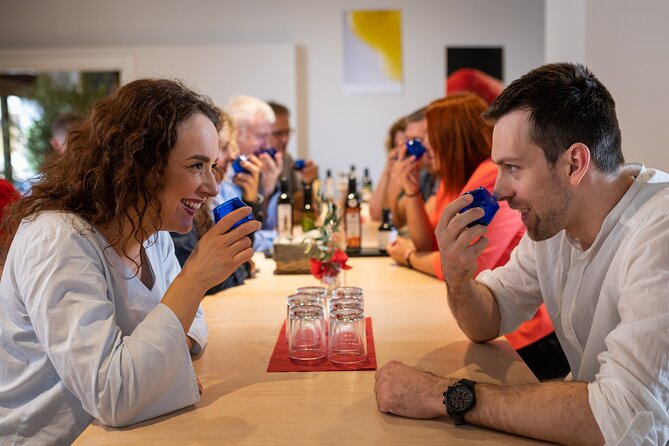
The House of Istrian Olive Oil offers a compact museum visit followed by a proper tasting session. That order matters. You get the background first, so the oil on your plate is not just a local product with a pretty label. You understand where it came from, how it was made, and why two oils can taste so different.
At $36.04 per person, this is not the cheapest way to spend 90 minutes in Pula. It is also more than a quick tasting at a market stall. The price includes the exhibition, films, guided sensory analysis, snacks, and the dessert pairing. If you care about food, the value comes from learning how to judge oil after you leave, not just from the amount you eat during the visit.
The experience is offered in English and accepts up to 20 people. That is still a small enough group for a personal food lesson, though the exact feel will depend on how many people attend. Since the tour is often booked about 23 days ahead, I would reserve early if it fits your Pula schedule.
A few more Pula trips to weigh up
- Istria: Guided Tour of Inner Istria with Food Tasting
★ 5.0 · 67 reviews - Pula: House of Istrian Olive Oil Museum and Guided Tasting
★ 4.9 · 35 reviews - Pula Food Walking Tour
★ 4.5 · 22 reviews
Inside the House of Istrian Olive Oil
The meeting point is Istarska ul. 30, 52100 Pula. The activity begins and ends there, so you do not need to arrange a second pickup or work out where the tasting finishes. The location is near public transportation, which helps if you are staying outside the center.
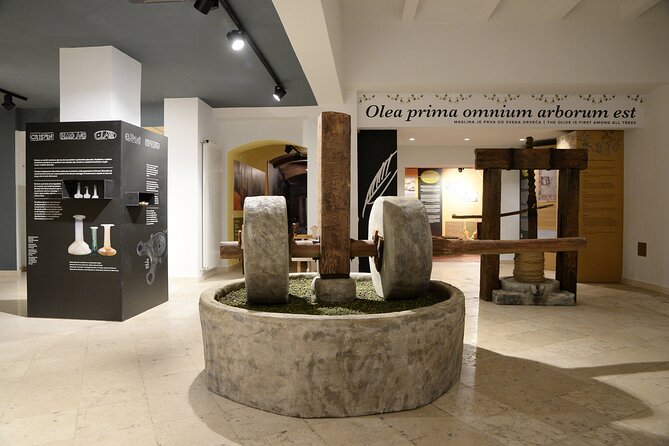
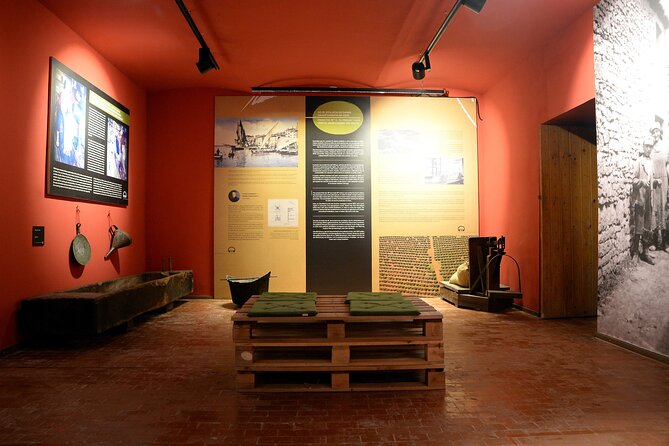
The first section is an exhibition about Istrian olive oil. You see how the Romans produced oil in the region and learn about its export routes. This gives the product a place in local history rather than treating it as a modern souvenir.
The exhibition is described in practical terms, not as a large museum tour. One review found the museum smaller than expected and the layout somewhat strange. Another found the museum informative but wished it were more interactive. I would set your expectations accordingly: this is a focused introduction, not a major archaeological museum.
That limitation may actually suit you if your time in Pula is tight. The visit does not ask you to spend half a day reading display panels. It gives you enough history to understand the tasting, then moves on to the part where the senses do the work.
Roman production, export, and modern methods
Two short films add another layer to the exhibition. One covers traditional processing, while the other explains how olive oil is made today. The contrast helps you see what has changed and what has not.
The Roman material is especially useful because olive oil was not merely a kitchen ingredient. It was a trade product, and Istria had a role in producing and sending it elsewhere. You will not leave with a full course in ancient economics, but you will have a better sense of why olive growing matters in the region.
The films also keep the historical section from relying only on objects and written displays. Still, this part is more informative than hands-on. If you want machines to operate, extensive demonstrations, or a large reconstruction, this may feel modest. If you want a concise explanation before tasting, it does the job.
How the sensory tasting works
The tasting room is where the experience earns its keep. Rather than treating olive oil as one generic flavor, the guide takes you through sensory analysis of high-quality Istrian oils. You learn to pay attention to aroma, taste, texture, bitterness, and the peppery sensation that can appear in good oil.
The comparison with supermarket oil is particularly helpful. Many people buy bottles labeled extra virgin without knowing what the label guarantees, or what it does not guarantee. Here, you compare a premium Istrian oil with an ordinary supermarket example and learn to notice the difference.
The lesson includes both positive and negative attributes. You may find that a good oil smells fresh and lively, while a flawed oil has an unpleasant or stale quality. The supplied information does not specify every defect you will taste, so I would not expect a fixed professional certification course. Think of it as a guided introduction that gives you a better vocabulary and sharper senses.
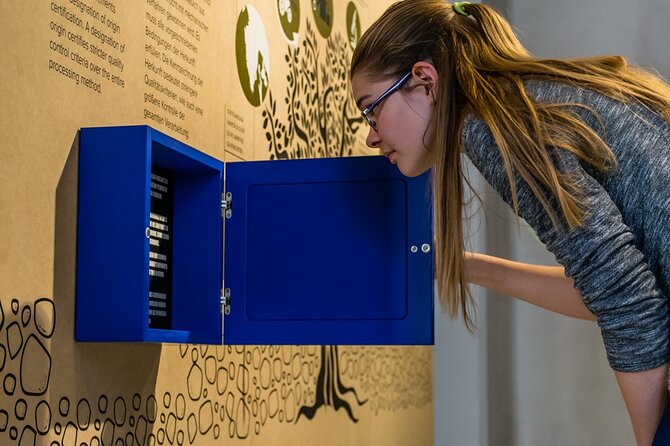
The guide also explains why polyphenols matter. These naturally occurring compounds are linked with some of the characteristics people value in olive oil, including bitterness and pungency, and they are discussed here in relation to health. The point is not simply that stronger oil is always better. You learn why certain sensations appear and how they can be part of a quality product.
This makes the tasting useful beyond Croatia. Once you return home, you can apply the same questions to a bottle in your kitchen. Does it smell fresh? Does it have pleasant bitterness? Does the flavor seem clean? Can you detect an unpleasant defect? You will not become an olive-oil expert in one sitting, but you will be less likely to buy based only on packaging.
Same stretch of coast, a completely different day out:
- Medulin -Kamenjak 5h boat trip with lunch & drinks on Sandra Boat
★ 5.0 · 1,621 reviews - Full-Day Boat Tour of the Medulin Archipelago from Medulin
★ 5.0 · 1,389 reviews - 3hours all inclusive Sunset&Dolphin Tour from Medulin on Sandra
★ 5.0 · 1,130 reviews - Dolphin Watching & Sunset Boat Tour With Dinner and Drinks
★ 5.0 · 1,075 reviews
The surprise dessert pairing
The final food moment is a sweet dessert paired with high-quality extra virgin olive oil. The exact dessert is a surprise, so you should not book this expecting a named pastry or a particular ingredient.
The pairing is a smart ending because it challenges the idea that olive oil belongs only with bread, salad, or savory dishes. A good oil can add fruitiness, pepper, smoothness, or a slight bitter edge to something sweet. The contrast gives you one more way to understand flavor balance.
Snacks are included as well, though no full snack menu is provided. This is a tasting and cultural lesson, not lunch. If you arrive hungry, keep your expectations sensible and plan another meal in Pula afterward.
The dessert also gives the guide a chance to show that tasting is not about memorizing technical words. It is about noticing what happens when ingredients meet. You can decide for yourself if the pairing works, which is more useful than being told that there is one correct answer.
What the reviews reveal about the visit
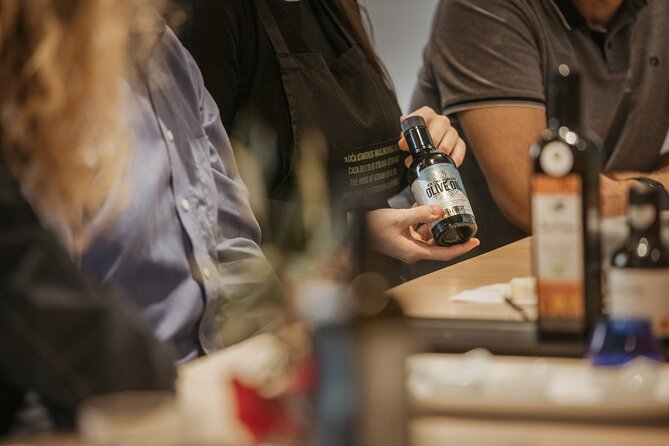
The strongest praise is aimed at the tasting guide and staff. The guide is described as excellent, well informed, and ready to answer questions. The place is also noted as clean, friendly, and easy to reach.
That combination matters. Olive oil tasting can become dry and technical if the person leading it only recites facts. Here, the session appears to work best when you ask questions and show curiosity. The stated duration is flexible, lasting about one to one and a half hours depending on your interests, so your participation can shape the pace.
The museum receives more mixed treatment. One person found it smaller than expected, while another thought it informative but not interactive enough. I would treat this as a clear planning note rather than a serious warning. Come for the combination of history and tasting, with the tasting as the main event.
The overall rating is 4.7 from 34 reviews, and 94 percent of people recommend it. That is a strong result, but the modest number of reviews means you should still read the format carefully. This is a specialized food activity. Its success depends on whether you enjoy learning through comparison and conversation.
Is $36.04 a fair price?

For a one-hour museum visit alone, $36.04 would feel high. For a guided history presentation, two short films, a structured olive-oil tasting, snacks, and a dessert pairing, the cost is easier to justify.
I see the best value in the practical lesson. You are not only sampling a regional product. You are learning how to recognize quality and faults, how polyphenols affect the discussion, and how oil can work in a sweet dish. Those skills travel home with you.
The price is less compelling if you mainly want a generous food spread or a long meal. The supplied details do not promise a full lunch, a farm visit, or a walk through olive groves. You are paying for a compact educational tasting in Pula.
For a couple who enjoys food culture, it can be a good way to add variety between ancient Roman sites and coastal sightseeing. For a family with young children, the tasting and lecture format may be less engaging, especially since the museum is not designed as a highly interactive attraction.
Timing, group size, and practical details
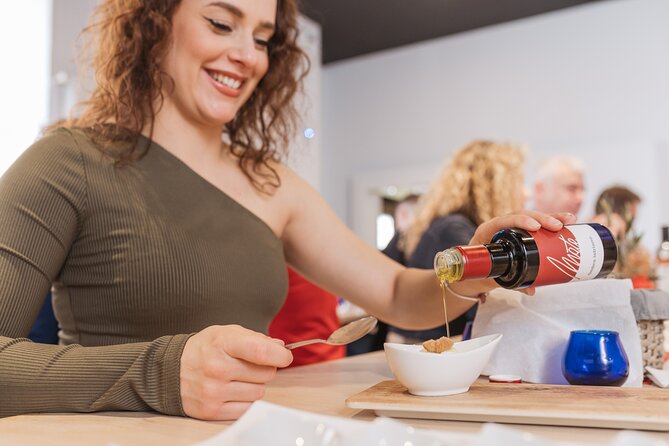
The scheduled opening period runs from March 30, 2022, through January 21, 2027, with opening hours Monday through Saturday from 10 a.m. to 6 p.m. The experience is not listed for Sundays, so check your selected date before building it into your plan.
A maximum of 20 participants keeps the activity from becoming a large bus tour. You may still share the tasting room with a full group, but the format should allow direct questions. Because the duration can depend on your interests, allow a little extra time rather than scheduling a major sight immediately afterward.
Mobile tickets make arrival simple. Confirmation is issued when you book. Service animals are allowed, and most people can participate. No special physical demands are described, but the experience takes place in a museum and tasting room, so anyone with specific access needs should confirm details before booking.
Free cancellation is available if you cancel at least 24 hours before the local start time. Cancellations or changes made inside that window are not refunded or accepted.
Who should book this Pula tasting?
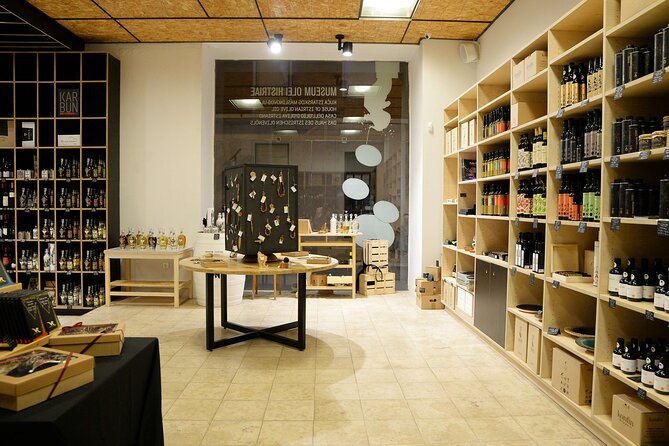
I would point this experience toward food-focused visitors, curious cooks, and anyone who wants more context for Istrian ingredients. It works well for someone who has already seen Pula’s Roman sights and wants a different side of the city.
It also suits you if you like guided comparisons. The supermarket oil gives the session a useful everyday reference, while the premium oils show what you might look for in a better bottle. You do not need previous tasting experience.
You may want to skip it if you expect a large museum, a farm tour, extensive food portions, or a highly interactive production demonstration. The exhibition is small, and the tasting is the central attraction. If you have only one free hour and dislike structured food lessons, Pula has other ways to fill your time.
For the best visit, arrive ready to smell and taste carefully. Ask about the positive and negative traits you notice. The more questions you bring, the more you are likely to get from the flexible timing.
Should you book the House of Istrian Olive Oil?
Book it if you want to understand what extra virgin olive oil should taste like, not simply bring home another bottle. The strongest parts are the clear supermarket comparison, the guide’s explanations, and the unusual dessert pairing.
Skip it if you want a large-scale museum or a full meal. The exhibition may feel small, and some of its presentation is more informative than interactive. For food lovers spending time in Pula, though, $36.04 buys a focused local lesson with useful takeaways and a pleasant taste of Istria.
FAQ
Where does the olive-oil experience begin and end?
It begins at the House of Istrian Olive Oil, Istarska ul. 30, 52100 Pula, Croatia. The activity ends back at the same meeting point.
How long does the experience last?
The visit takes about one to one and a half hours. The exact length can depend on your interests and questions.
What is included in the tasting?
Olive-oil tasting and snacks are included. The experience also includes a surprise dessert paired with high-quality extra virgin olive oil.
Is the activity offered in English?
Yes. The experience is offered in English.
How many people can join the group?
The maximum group size is 20 participants.
Can I cancel for a full refund?
Yes, if you cancel at least 24 hours before the experience’s local start time. Cancellations made less than 24 hours in advance are not refunded.
Just added around Pula
- 1-Hour Private E Foil Surfing Lessons in Istria★ 5.0 · 4 reviews
- Wine Tasting Experience at the organic winery in Šišan★ 3.5 · 13 reviews
- Transfer Pula – Poreč★ 5.0 · 5 reviews
- 3 Hours Private Wine and Sunset Tour★ 5.0 · 9 reviews
- Dolphin & Sunset tour with Brijuni panorama★ 5.0 · 119 reviews
- E-Bike swim & fortress tour Vodnjan★ 5.0 · 6 reviews
- Stop on Island & National Park Day Cruise with Lunch Drinks★ 5.0 · 10 reviews
- Waves & Watercolors: A Seaside Painting Workshop★ 5.0 · 21 reviews
Historical Tours, compared.

Walking Tour of Split with a ‘Magister’ of History
Read our review →
Split History and Gastro Small-Group Tour with Food and Drinks
Read our review →
PREMIUM Emperor’s Walking Tour for History Lovers + Museum
Read our review →Browse the lists this tour appears in