
Reviewed · OLD TOWN WALKING TOURS
Experience Split History Walking Tour With Local Historian
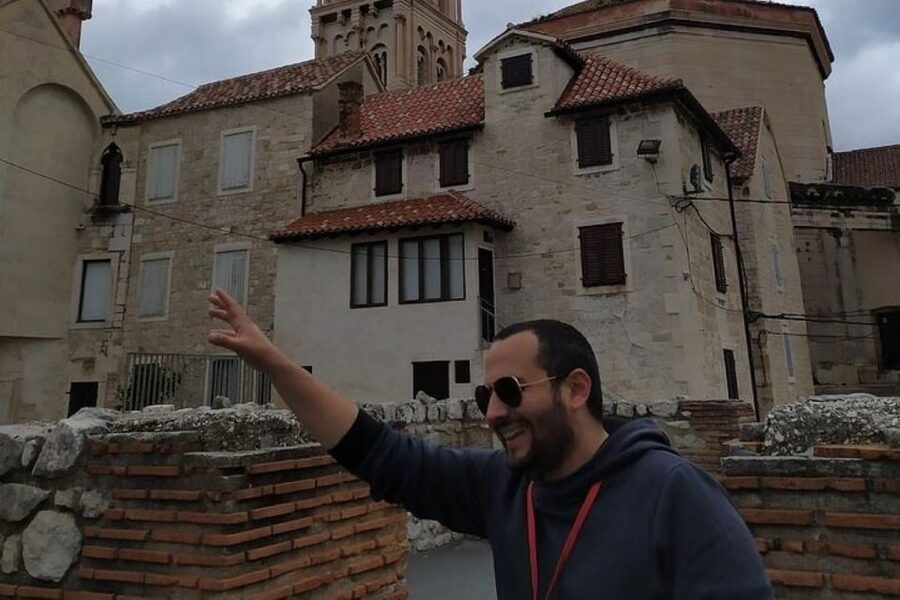
The best part of this Split walking tour is the way it treats Diocletian’s Palace as a living neighborhood, not a sealed Roman ruin. You enter through the Golden Gate, pass laundry, cafés, shops, homes, and ancient stone, and gradually see how Roman, medieval, and modern Split occupy the same compact space.
I like the small maximum of 12 people, which gives Boris, the local historian, room to answer questions and point out details you could easily miss. I also like the See, Hear and Feel approach, supported by 3D reconstruction images and pictures that help you imagine damaged or altered parts of the palace. The main consideration is the walking surface and access: this is not suitable for wheelchair users or people with mobility impairments, and comfortable shoes matter.
In This Review
- Key points about the Split history walk
- Why this two-hour route works so well in Split
- Starting at the Golden Gate with Gregory of Nin
- Peristil, the palace’s great central stage
- Jupiter’s Temple and the former imperial quarter
- Cathedral of Saint Domnius and the old mausoleum
- The Vestibule and the palace’s central cellars
- Riva connects Roman Split with modern daily life
- Fruit Square and People’s Square
- Small details, legends, and overlooked corners
- What the guide brings to the experience
- Who should book this Split walking tour?
- Is $37 good value?
- Should you book it?
- FAQ
- How long does the Experience Split History Walking Tour last?
- What is the price of the tour?
- Where does the tour start?
- Where does the tour finish?
- Which languages are available?
- Is the tour suitable for wheelchair users?
- What should I bring?
Key points about the Split history walk

- Diocletian’s Palace from the Golden Gate: Enter the palace through its northern gate and learn why this entrance mattered to the Roman emperor.
- Boris’s historical storytelling: The guide brings together Roman, medieval, modern, and everyday Croatian life rather than focusing on monuments alone.
- Peristil and the palace interior: See the main square, the former mausoleum, Jupiter’s Temple, the Vestibule, and the central cellars.
- Split beyond Roman history: Walk along Riva and visit Fruit Square and People’s Square to understand the city’s later development.
- Small-group format: With no more than 12 participants, the walk should feel more personal than a large city tour.
- Useful local advice: The tour includes food and neighborhood suggestions, including an ice cream recommendation that has proved particularly useful.
Why this two-hour route works so well in Split
Split can be confusing at first. The old center is not arranged like a museum with one entrance, one path, and clearly marked rooms. Ancient walls support later buildings, narrow lanes cut through former palace spaces, and busy squares sit where imperial ceremonies once took place.
That is why a local historian can add real value here. Boris explains not only what a stone or arch is, but how its purpose changed over time. You begin with Emperor Diocletian and the Roman palace, then move into the medieval city and present-day life. The result is a useful first look at Split before you explore the cathedral, cellars, restaurants, or waterfront on your own.
The tour lasts two hours and costs $37 per person. For that price, you are paying for a focused introduction led by a guide with a master’s degree in history, plus a small group and visual material. You do not receive food, drinks, or hotel transport, so this is best understood as a city orientation rather than a full-day outing.
The maximum of 12 participants is important. A five-person group, for example, can feel close to a private walk, while a full group still remains manageable in the tight palace lanes. You can ask questions without trying to catch a guide’s voice across a crowd.
More Old Town Walking Tours in Split
- Split: Old Town and Diocletian Palace Walking Tour
★ 4.9 · 4,727 reviews - Walking Tour of Split and Diocletian’s Palace
★ 5.0 · 2,588 reviews - Krka Waterfalls tour with Trogir Walking tour and Krka panoramic boat cruise
★ 5.0 · 1,659 reviews
Starting at the Golden Gate with Gregory of Nin
The meeting point is the Golden Gate, the northern entrance to Diocletian’s Palace. Look for the gate opposite the large statue of Gregory of Nin, which rises about eight meters and is one of Split’s most recognizable landmarks.
This is a smart starting point. The gate gives Boris a natural place to explain the basic shape and purpose of the palace before you enter. You learn about its name, its role, and the significance of approaching the palace through a formal Roman entrance.
Gregory of Nin belongs to a much later period, so the opening scene places two eras side by side. You begin with the Roman imperial world, then see how Split continued to develop after the palace lost its original purpose.
The initial stop takes about 15 minutes, followed by roughly eight minutes at the statue. Those opening explanations help you get your bearings before the route moves into smaller and darker spaces.
Peristil, the palace’s great central stage
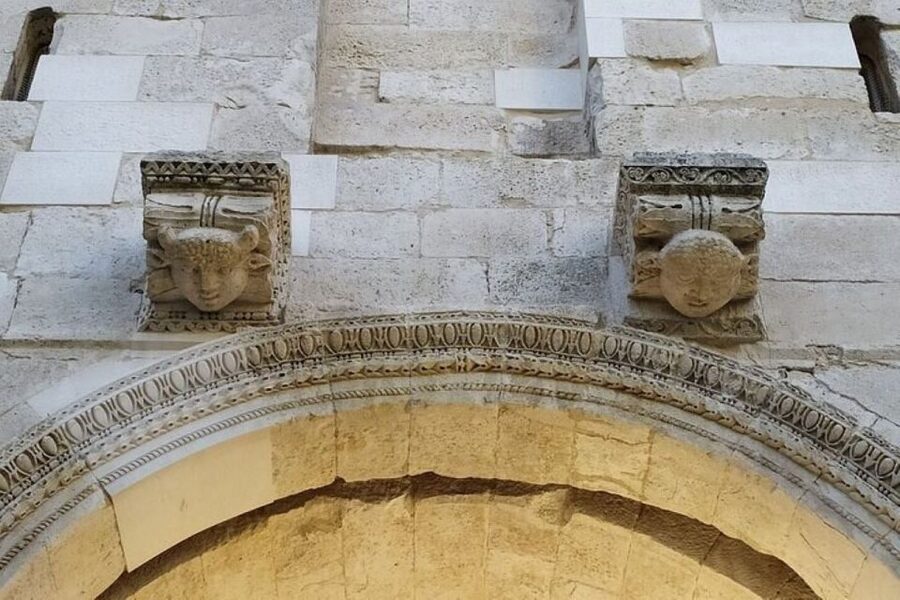
After entering the palace, the tour moves toward Peristil, the main palace square. This is the visual center of the route, framed by monumental stone and shaped by its original Roman purpose.
Boris explains how the square functioned and why it was important within Diocletian’s residence. The square also shows the layers that make Split so unusual. Roman columns and imperial architecture remain, but later religious and civic uses changed the way people experience the space.
You have about 15 minutes here, enough time to take in the setting and hear the key story without turning the stop into a long lecture. The 3D images and pictures are useful because they help you picture the palace as it may have appeared before centuries of changes.
Peristil is also the kind of place where timing and crowd levels affect the experience. The square is a popular part of Split, so listen closely and stay near the guide. The walk is designed for explanation, not simply for taking photographs.
Jupiter’s Temple and the former imperial quarter
The route continues to Jupiter’s Temple, with about 10 minutes devoted to its history and architecture. This stop helps explain the religious side of the palace and the Roman beliefs that shaped its design.
The tour does not treat the temple as an isolated monument. Instead, you hear how it fit into Diocletian’s residence and how later generations gave old Roman spaces new meanings. That broader context is one of the strongest reasons to choose a historian-led walk.
A short secret stop follows, then a very brief stop at another less obvious feature. The exact detail is not fully specified in the tour information, but these pauses are intended to draw attention to corners you might walk past alone. They add variety after the larger formal spaces.
Same stretch of coast, a completely different day out:
- Split: Krka Waterfalls Trip with Boat Cruise and Swimming
★ 4.8 · 10,519 reviews - From Split: Krka Waterfalls, Food & Wine Tasting Tour
★ 5.0 · 9,326 reviews - Blue cave, Mamma Mia and Hvar, 5 islands speedboat tour
★ 5.0 · 7,150 reviews - From Split: Krka Waterfalls, Food & Wine Tasting Tour
★ 4.9 · 6,598 reviews
Cathedral of Saint Domnius and the old mausoleum
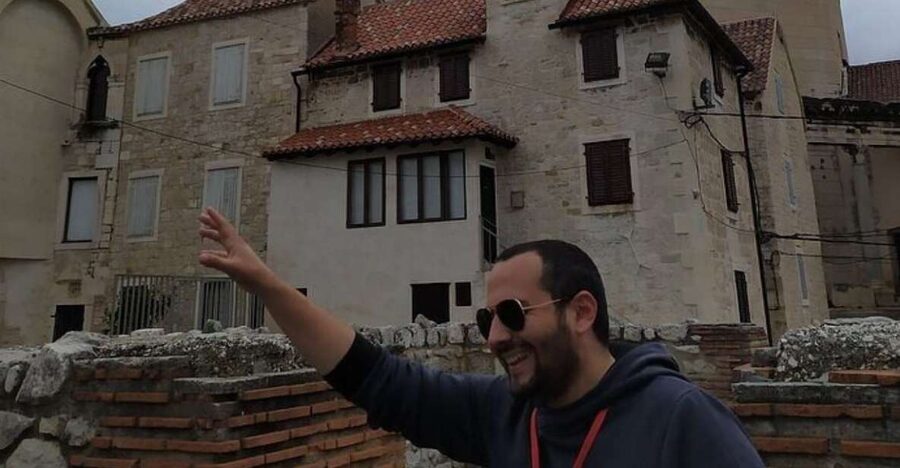
The Cathedral of Saint Domnius occupies the former mausoleum of Diocletian. It is one of the clearest examples of Split’s layered past: an imperial tomb became a Christian cathedral.
The stop lasts about 10 minutes, with Boris explaining the connection between the Roman structure and its later religious role. This is a valuable piece of context because the building cannot be understood properly by looking at only one period.
The tour gives you an introduction rather than a full cathedral visit. If you want to spend more time inside the cathedral or climb any available tower, you should plan that separately. The walk helps you understand why the structure matters before you return on your own.
The Vestibule and the palace’s central cellars
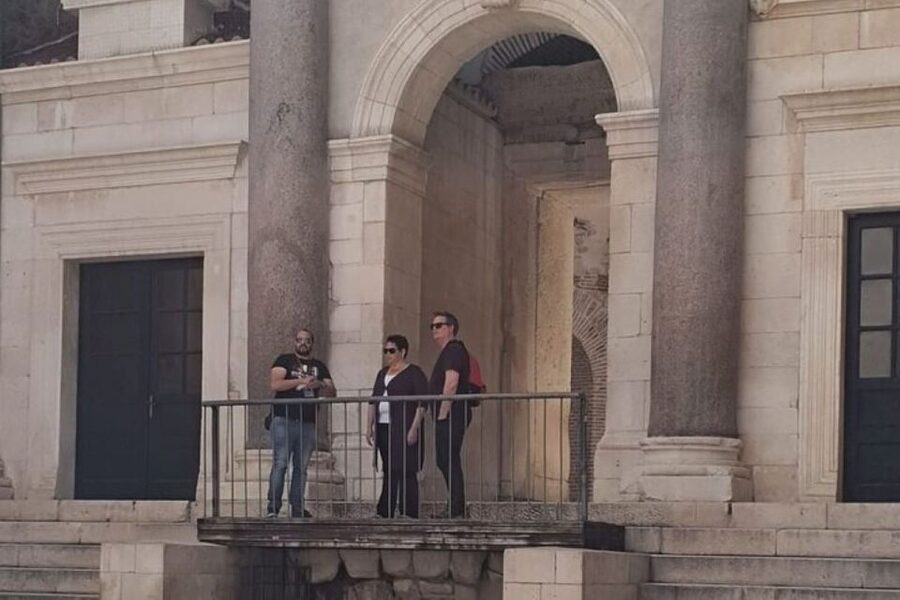
The Vestibule is another 10-minute stop. This round space once formed part of the palace’s ceremonial approach, and its shape gives you a feel for the ambition of the original design.
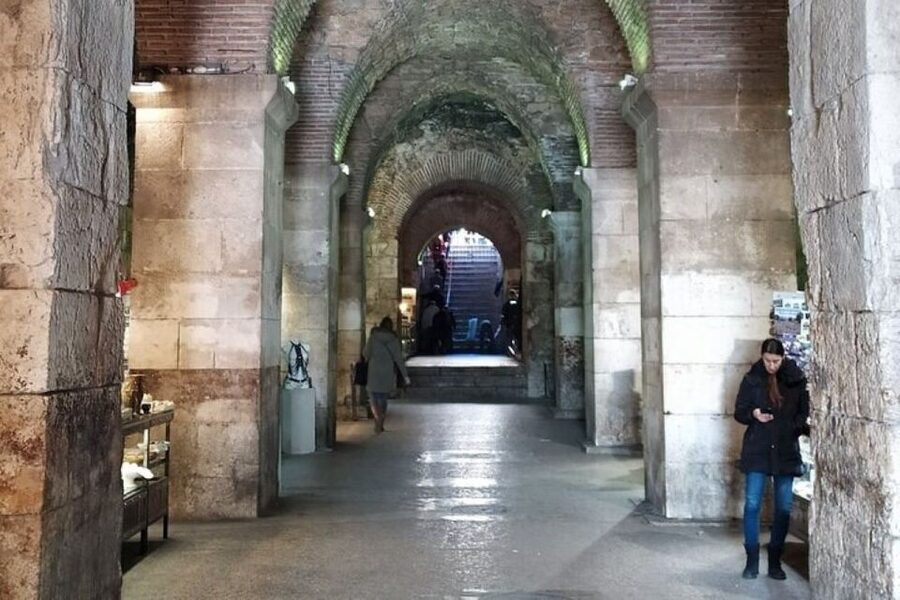
From there, the group reaches the central substructures, often called Diocletian’s Cellars. These underground spaces are among the most useful parts of the tour for understanding the palace’s layout. Their preserved forms reflect the rooms above, so what you see below can help explain spaces that have changed at street level.
The cellars also give you a different physical experience. Expect stone surfaces, enclosed areas, and a cooler, darker setting than the open squares. This is another reason to wear sturdy, comfortable shoes and bring water, especially in summer.
The cellars receive about 10 minutes in the route. That is enough for an overview, but you may want to return later if underground archaeology interests you. One of the most helpful suggestions from Boris is to revisit places such as the palace substructures and cathedral for a closer look after the walk.
Riva connects Roman Split with modern daily life
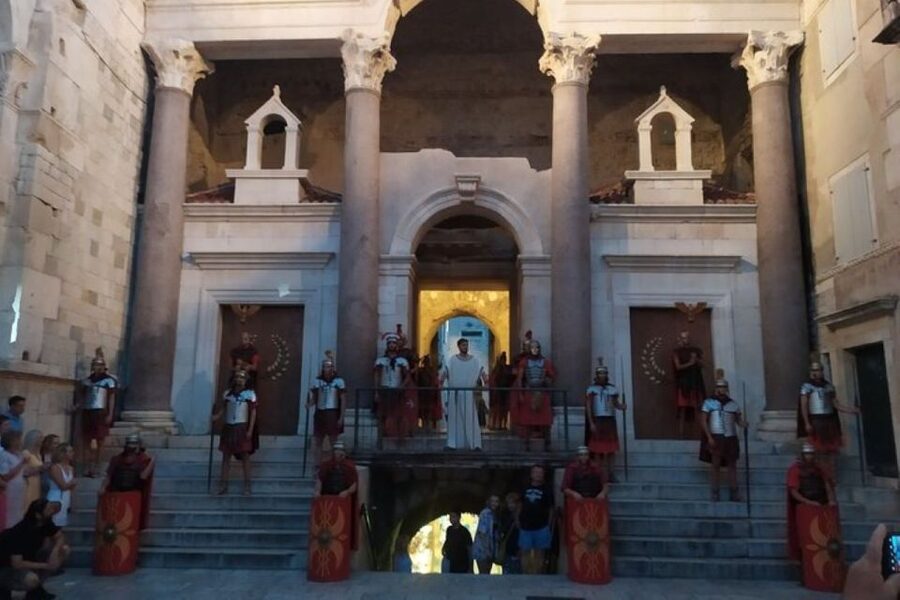
The route then reaches Riva, Split’s waterfront promenade. The stop is shorter, about five minutes, but its purpose is important.
Here Boris explains the link between the Roman and medieval parts of Split and introduces the local pomalo way of life. The word points toward a slower, less hurried approach to daily life, and it helps you read the promenade as more than a scenic place for photographs.
Riva is where the tour shifts from imperial architecture to everyday city life. You get a sense of how Split functions now, including local habits, community, and the rhythm of time spent outdoors. That balance keeps the experience from becoming a string of dates and building names.
You should not expect a long waterfront stop or a meal break. Food and drinks are not included, though Boris can offer practical suggestions for what to try afterward.
Fruit Square and People’s Square
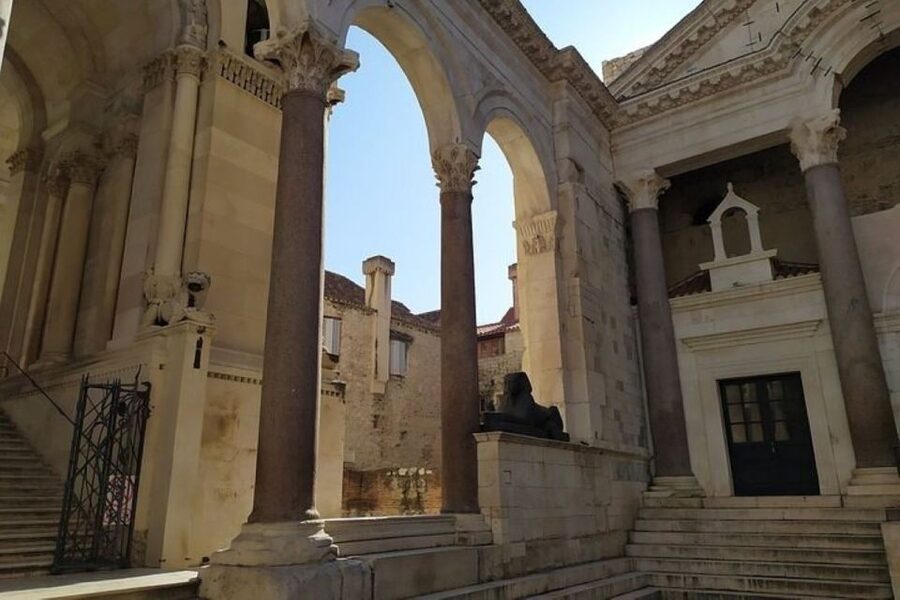
Fruit Square is the first of two medieval squares on the final part of the route. Its architecture and past events help show how Split expanded and changed after the Roman period.
The stop lasts about 10 minutes. Boris uses the square to explain details that are easy to miss when you are moving between shops and cafés. Look closely at the surrounding buildings and the way old structures have been adapted for later use.
People’s Square follows, with another 10-minute explanation. This gives you a second view of medieval and modern Split and helps complete the story begun inside the palace.
The tour finishes at Narodni trg, the local name for People’s Square. Ending here is practical because you are left in a central part of the old city, close to places you may want to explore, eat, or revisit.
Small details, legends, and overlooked corners
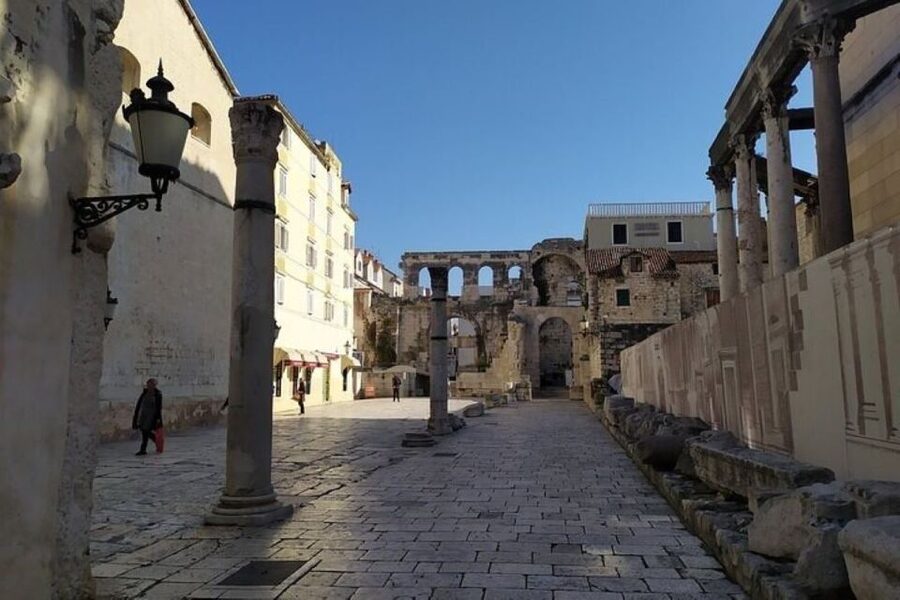
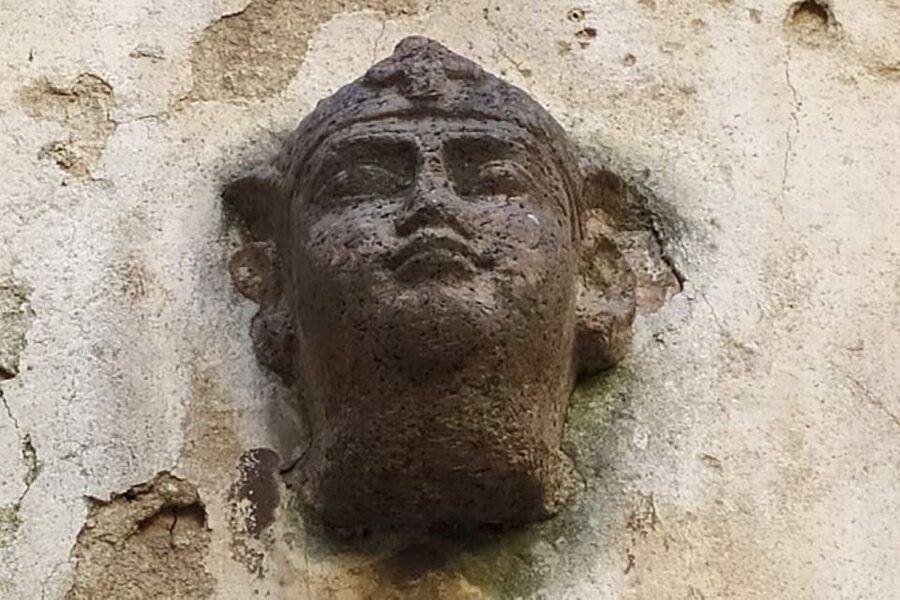
The most enjoyable parts of the walk may be the brief stops between major monuments. The route includes a very narrow church, a very narrow street, a lost sphinx head, and a secret garden.
These details add personality to Split. They also reward close attention. You may pass them without recognizing their importance if you are exploring alone, particularly when the old center is busy.
The tour mixes facts, legends, intriguing stories, and local customs. That combination suits Split, where the past is not confined to a single archaeological site. Still, if you prefer a strictly academic tour with little folklore, you should know that the storytelling includes legends and mysteries along with documented history.
Boris also uses a display book with 3D reconstructions and photographs. This is especially useful when an ancient building has been altered or when you need to picture the original Roman arrangement. You are not left to guess what a missing structure once looked like.
What the guide brings to the experience
Boris is the named guide associated with the tour, and his background is central to the experience. He is a licensed local guide and professional historian with a master’s degree in history.
The emphasis is not only on dates and rulers. Boris covers Croatian culture, religion, community, and ordinary local life. That wider range makes the tour useful for someone who wants to understand Split as a city, not just photograph Diocletian’s Palace.
He also leaves room for questions. This matters in a place where visitors often want to ask how Roman buildings became homes, churches, shops, or public spaces. The small group makes that exchange easier.
Practical advice is another benefit. Boris can point out places worth revisiting and suggest food stops. A recommendation for good ice cream has already proved useful, and suggestions such as returning to the cellars, cathedral, or a local ice cream shop can help you use the rest of your day well.
Who should book this Split walking tour?
I would recommend this tour to first-time visitors who want a clear introduction before exploring on their own. It is also a good match for people who enjoy history but want it connected to present-day life, local customs, and practical advice.
The route suits couples, families with older children, and small groups who prefer a personal walk over a large crowd. English and Croatian are available.
You should think twice if you have difficulty walking on uneven surfaces or cannot manage the palace’s confined spaces. The experience is specifically not suitable for people with mobility impairments or wheelchair users. Bring water and a hat or cap on sunny days, and wear shoes made for stone streets rather than fashion alone.
The pace is described as easy, but the tour still covers many places in two hours. You will get an overview of each stop rather than a long visit inside every monument. That is a strength if you want orientation, but a limitation if you want detailed study of the cathedral or cellars.
Is $37 good value?
At $37, this is reasonably priced for a two-hour private-feeling walk with a qualified local historian, especially when the group has only a few people. The price includes the guide and the 3D reconstruction material, but not food, drinks, or hotel pickup.
The value comes from interpretation. Diocletian’s Palace is free to walk through in many areas, but its layout and layers can be hard to understand without help. A guide shows you where to look, explains why a place matters, and gives you ideas for returning later.
The tour also offers free cancellation up to 24 hours ahead and a reserve-now, pay-later option. Those terms are useful when your Split schedule depends on ferry times or changing weather.
Should you book it?
Book this tour if you want a strong first look at Split’s Roman, medieval, and modern sides without spending half a day on a formal excursion. Boris’s history background, the small group, visual reconstructions, and useful local suggestions make it more than a basic walk past monuments.
Skip it if you need step-free access, want a long cathedral or cellar visit, or prefer to explore entirely at your own pace. For most able-bodied first-time visitors, $37 is fair value, and the route gives you a better sense of where to return after the guide says goodbye.
FAQ
How long does the Experience Split History Walking Tour last?
The tour lasts two hours.
What is the price of the tour?
The listed price is $37 per person.
Where does the tour start?
The meeting point is at the Golden Gate, the northern gate of Diocletian’s Palace, opposite the statue of Gregory of Nin.
Where does the tour finish?
The tour finishes at Narodni trg, also known as People’s Square.
Which languages are available?
The live guide is available in English and Croatian.
Is the tour suitable for wheelchair users?
No. The tour is not suitable for wheelchair users or people with mobility impairments.
What should I bring?
Comfortable shoes are recommended, along with water and a hat or cap on sunny days. Food and drinks are not included.
More Walking Tours in Split
- Split & Diocletian’s Palace Walking Tour
★ 5.0 · 1,125 reviews - Split: Diocletian Palace & Old Town Guided Walking Tour
★ 4.7 · 882 reviews - From Split: Krka Waterfalls Cruise & Trogir Walking Tour
★ 4.7 · 681 reviews - Diocletian’s Palace and Old Town SMALL GROUP Walking Tour
★ 5.0 · 502 reviews
More Historical Tours in Split
- Walking Tour of Split with a ‘Magister’ of History
★ 5.0 · 1,122 reviews - Split Walking Tour with Professor of History
★ 5.0 · 926 reviews - Split: History and Heritage Walking Tour
★ 4.9 · 650 reviews - Split History and Gastro Small-Group Tour with Food and Drinks
★ 5.0 · 375 reviews
Just added around Split
- Split Sunset Stand Up Paddle Tour★ 5.0 · 16 reviews
- Split: Sunset Guided Kayaking Tour★ 4.8 · 71 reviews
- Split&Sip: Educational wine tasting★ 4.9 · 52 reviews
- Stand Up Paddle Tour in Split★ 4.7 · 17 reviews
- Split: Guided Walking Tour in English★ 4.9 · 10 reviews
- Split Walking Tour with History Professor★ 5.0 · 23 reviews
- Split Walking Tour: History, Legends & Tales★ 5.0 · 9 reviews
- Split – Walking in Khaleesi Footsteps in the City of Dragons★ 5.0 · 13 reviews
Old Town Walking Tours, compared.



Walking Tour of Split and Diocletian’s Palace
Read our review →


Krka Waterfalls tour with Trogir Walking tour and Krka panoramic boat cruise
Read our review →
City Walls Early Morning or Sunset Walking Tour
Read our review →
Plitvice Lakes with Boat Ride and Zadar Old Town Tour
Read our review →Browse the lists this tour appears in