
Reviewed · ZAGREB TOURS
Discover Zagreb Tour
Zagreb reveals itself best on foot, and this two-hour route quickly moves from the city’s main square into the old market and Upper Town. You’ll hear why the cannon fires at Lotrščak Tower, learn the legend behind Stone Gate, and walk through Grič Tunnel, unless a special event closes it.
I like the local storytelling, especially the way guides such as Ivana connect old legends with modern Zagreb life. I also like the practical food advice at Dolac Market and the restaurant, café, bakery, and museum tips that can help shape the rest of your visit.
The main drawback is the pace. Two hours covers many landmarks, but it leaves little time for long stops or interior visits. The funicular is currently closed for extensive renovation, and the tour is not suitable for wheelchair users or people with mobility impairments.
In This Review
- Key points to know before booking
- Starting beside the Manduševac Fountain
- Zagreb Cathedral and the city’s religious center
- Dolac Market, where Zagreb eats
- Tkalčića Street and Krvavi Most
- Stone Gate and a living local tradition
- St. Mark’s Square, Croatia in one compact view
- Lotrščak Tower and Zagreb’s daily cannon
- The funicular and the route downhill
- Grič Tunnel, with an event-related exception
- What the guide adds to the walk
- Is $23 a fair price?
- Who should book this Zagreb walk?
- FAQ
- Where does the Discover Zagreb Tour begin?
- How long does the tour last?
- What language is the tour in?
- Is food included?
- Does the tour include a ride on Zagreb’s funicular?
- Is the tour accessible for wheelchair users?
- Should you book the Discover Zagreb Tour?
Key points to know before booking
- A strong first look at Zagreb: The route covers the Cathedral, Dolac Market, Upper Town, St. Mark’s Square, Lotrščak Tower, and Grič Tunnel.
- Stories matter here: You’ll hear local legends tied to Stone Gate, Zagreb’s name, the cannon, and the old city streets.
- Small groups can feel personal: Some departures have had only a few participants, and guides may tailor the walk to the group.
- Food advice is part of the value: Dolac introduces Croatian cooking, while guides may suggest restaurants, cafés, bakeries, and beer places.
- Expect stairs and uneven streets: The route is not designed for wheelchairs or people with limited mobility.
- Good value at $23: You get a licensed English-speaking guide and a useful orientation to central Zagreb in two hours.
Starting beside the Manduševac Fountain
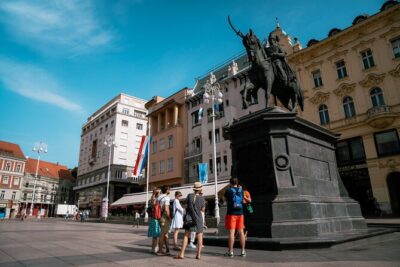
The tour begins beside the Manduševac Fountain on Ban Josip Jelačić Square. Look for a guide holding a Discover Zagreb Tour sign.
This is a smart meeting point because the square is the natural center of Zagreb. Starting here gives you an immediate sense of how the city works. It is not just a photo stop or a ceremonial plaza. It is a place where people meet, pass through, and begin walks into the older parts of town.
Your guide may begin with Zagreb’s origin stories and explain why the fountain matters. The city’s legends are a key part of this walk. You are not simply moving from monument to monument. You are learning how stories, symbols, and daily routines overlap in Zagreb.
The square also makes the tour easy to find. Still, arrive a few minutes early. A city-center meeting point can be busy, and the group needs to leave on time to cover the full route.
Other Zagreb days people book alongside this one:
- From Zagreb: Plitvice & Rastoke Guided Day Trip with Ticket
★ 4.9 · 2,955 reviews - Zagreb: Rastoke & Plitvice Lakes Guided Tour with Ticket
★ 4.9 · 1,897 reviews - Communism & Croatian Homeland War Tour
★ 5.0 · 1,355 reviews
Zagreb Cathedral and the city’s religious center
The first major stop is Zagreb Cathedral. The guide places the building within the city’s past and explains why it remains one of Zagreb’s most important landmarks.
The Cathedral is useful early in the walk because it gives you a reference point for the city’s development. You begin to see how Zagreb’s religious, civic, and market districts sit close together. The tour focuses on the story and setting rather than promising an extended interior visit, so treat this as an orientation stop.
Ask questions here if you are curious about Croatian traditions, Zagreb’s past, or the role of the Cathedral in city life. Guides such as Ivana are often praised for making room for questions and for explaining subjects in clear English.
Dolac Market, where Zagreb eats
From the Cathedral, the route continues to Dolac Market. This is one of the most useful stops for anyone staying in Zagreb for more than a day.
Dolac is the city’s key market, and the guide uses it to introduce Croatian cuisine. You can expect an explanation of the foods and shopping traditions connected with the market, though food and drinks are not included in the tour price. If you want to buy something, bring your own spending money and remember that the walk continues.
I especially like this stop because it turns a general history tour into a practical introduction to local life. A market tells you more about a place than a row of monuments can. It gives you a starting point for choosing what to eat later, and it can help you understand which dishes and ingredients belong to Croatia.
The guide may also recommend places for brunch, coffee, beer, dinner, or a quick bakery stop. Several guides have offered useful food suggestions, and Ivana has even helped with restaurant reservations. That kind of advice can be worth a good part of the $23 if you use it during the rest of your stay.
Tkalčića Street and Krvavi Most
Next, the walk moves through Ivana Street Tkalčića and Krvavi Most Street. These streets help you see Zagreb as a lived-in city rather than a collection of official sights.
Tkalčića is important for understanding the connection between the old neighborhoods. Your guide explains the area’s place in Zagreb’s development and points out how people still use these streets today. The value here is in the transitions: you are walking between districts and seeing how the city’s older layers fit together.
Krvavi Most brings another local name and another story. Zagreb’s historic streets often carry legends that remain familiar to local people. This is where a guide can add something a map cannot. You may remember the story long after you forget a date.
Because the tour is short, these streets are passing stops rather than places for a long pause. If you want to return for photographs, meals, or a slower look, note the route as you go.
Same stretch of coast, a completely different day out:
- Best of Zagreb with the WW2 Tunnels
★ 5.0 · 973 reviews - Plitvice Lakes with Ticket & Rastoke Guided Tour from Zagreb
★ 5.0 · 966 reviews - Zagreb: Small Group Walking Tour City Center and WW2 Tunnels
★ 4.9 · 895 reviews - Zagreb: Skip-the-Ticket-Line Museum of Broken Relationships
★ 4.5 · 847 reviews
Stone Gate and a living local tradition
The path then climbs toward Stone Gate. This is one of the most meaningful stops on the tour because it combines architecture, legend, and personal devotion.
You’ll hear the story behind the gate and why it remains important to many people. The guide explains its role not only as an old city entrance but also as a place with a continuing spiritual connection for locals.
This is a good example of the tour’s main strength. Zagreb’s past is presented through places that still matter today. You are not being asked to admire a monument from a distance. You are learning why people continue to treat it with respect.
The Upper Town streets can include stairs, slopes, and uneven surfaces. Wear proper walking shoes, as requested by the operator, and carry water. If you have trouble with hills or steps, this is an important point to consider before booking.
St. Mark’s Square, Croatia in one compact view
St. Mark’s Square follows Stone Gate. The guide explains why this can be called Croatia’s main square, giving you a quick lesson in the country’s civic and political life.
The square is a useful place to connect Zagreb with modern Croatia. You’ll hear about the buildings and institutions around it, along with the role the square has played in the nation’s public life. The tour does not treat politics as a separate lecture. Instead, it folds the subject into the story of the city.
One caution comes from the style of guiding. A past participant enjoyed the tour but felt that political discussion about the participant’s home country was unnecessary. That appears to be an isolated concern, but it is fair to say that personal conversations can vary by guide and group. Most of the feedback praises the guides’ clear explanations and friendly approach.
The stop is brief, so do not expect a full visit inside the surrounding buildings. The real benefit is context. After this explanation, the square means more than a pretty church roof and a government district.
Lotrščak Tower and Zagreb’s daily cannon
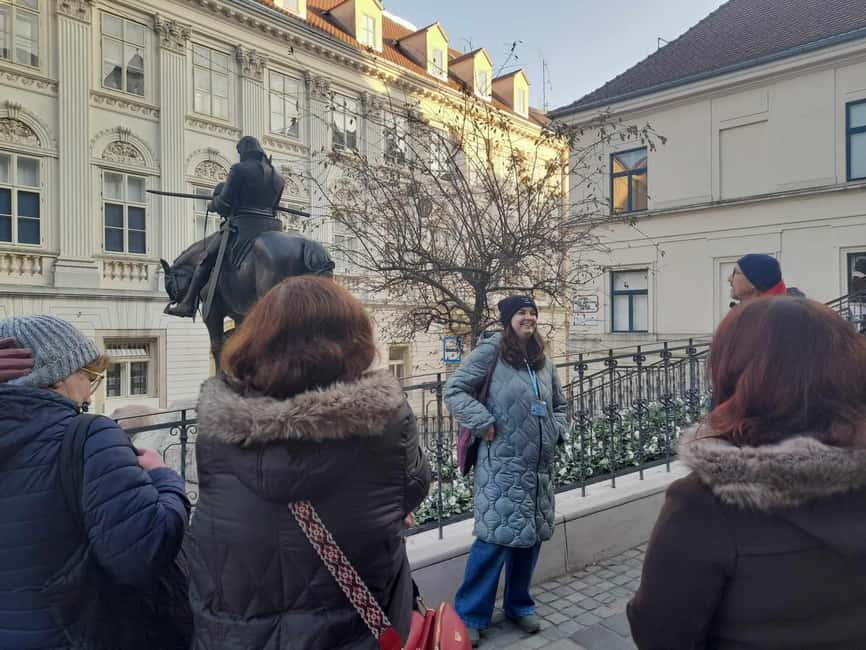
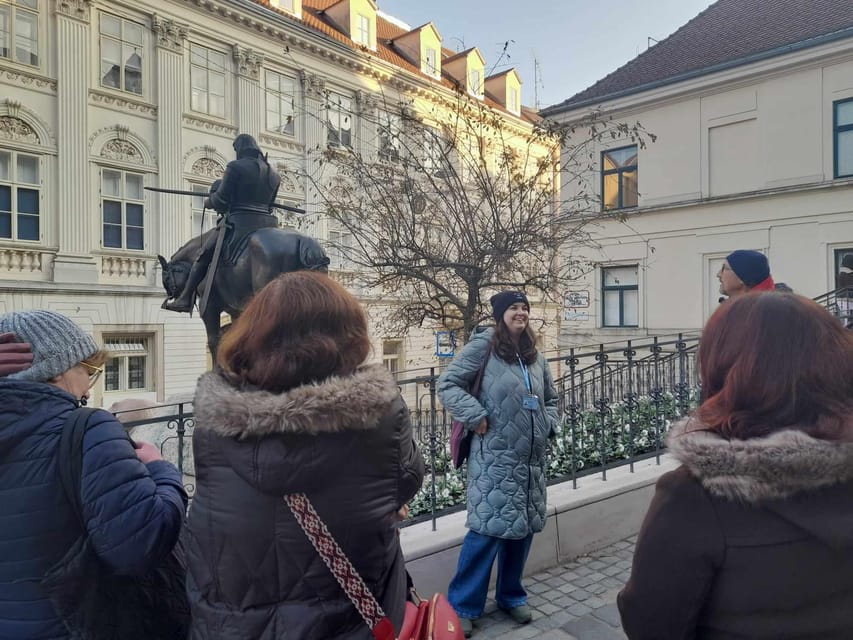
At Lotrščak Tower, you’ll learn why a cannon fires every day. This is one of the tour’s best small details because it links a historic defensive structure with a sound that still belongs to everyday Zagreb.
The cannon story gives the walk a memorable rhythm. Instead of hearing only about wars and rulers, you get a local custom that remains part of the city’s identity. Ask your guide about the timing if you want to understand how the tradition fits into the modern city.
Lotrščak also helps explain Zagreb’s Upper Town defenses and its position above the lower city. The tour gives you the reason behind the tower rather than asking you to simply photograph it.
Again, the visit is a guided exterior stop within a larger walking route. The schedule leaves little room for a long independent exploration, so return later if you want more time around the tower.
The funicular and the route downhill
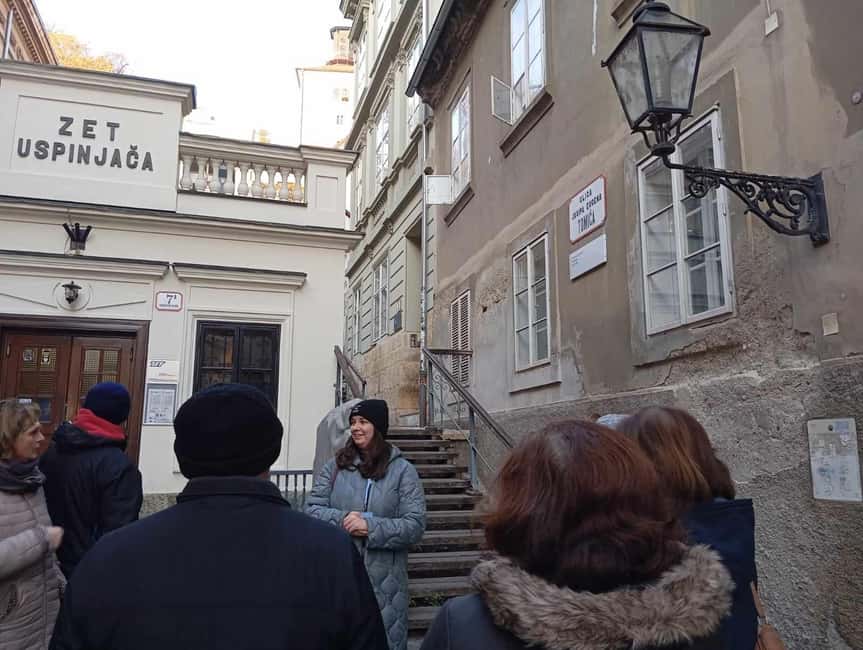
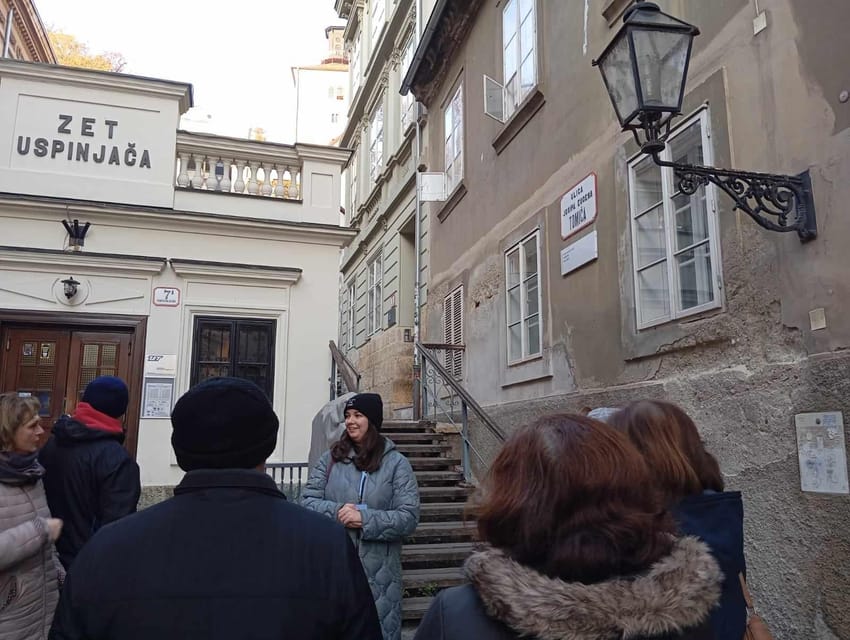
The tour continues to Uspinjača, Zagreb’s famous short funicular. The guide explains the story behind the railway and why it matters to the city.
There is one clear practical change: the funicular is not operating because of extensive renovation. You should not expect a ride. The stop is still useful because the guide can explain its history and place in Zagreb’s transport story, but anyone choosing the tour partly for the funicular should adjust expectations.
This is also another point where the walking route may challenge people with mobility problems. Since the funicular cannot currently provide the usual assistance between levels, the route depends on walking.
For most able walkers, the closure does not ruin the tour. It simply means you are learning about a Zagreb landmark rather than using it. Check the current situation if riding the funicular is a priority for your visit.
Grič Tunnel, with an event-related exception
Grič Tunnel is the final major sight before the walk returns to Ban Josip Jelačić Square. The tunnel adds a different side of Zagreb. After churches, markets, squares, and old streets, you enter a concealed passage connected with the city’s past.
The guide explains the tunnel and its place in Zagreb. It is a welcome change of setting, especially if you enjoy urban spaces that are easy to miss when exploring alone.
The tunnel is not included when a special event is taking place there. That condition matters. If Grič Tunnel is the feature that most interests you, check the date and be prepared for the route to change during event periods.
The tunnel stop also shows why this tour works better on foot than from a sightseeing bus. A bus can cover more ground, but it cannot enter narrow old streets or provide the same close look at Upper Town passages.
What the guide adds to the walk
The guide is the deciding factor here. The tour is built around explanation, not entry tickets or elaborate staging.
Ivana is the guide most often singled out in the supplied feedback. She is described as friendly, clear in English, and generous with extra advice. She has stayed beyond the planned end for some participants, helped a late arrival catch up, and offered suggestions for museums, cafés, bakeries, restaurants, and beer places.
Other guides have also made a strong impression. Antonia was praised for teaching a great deal in two hours, while a guide identified as Štiklec was appreciated for lively storytelling and a licitar heart souvenir. The exact guide may vary, so do not assume Ivana will lead every departure.
That licitar heart is a particularly nice local touch. It connects the tour to a Croatian craft tradition and gives you a small reminder of Zagreb. It is not listed as a guaranteed inclusion, so consider it a possible guide gesture rather than something to book for.
The best guides keep the walk conversational. You will hear history, architecture, culture, politics, legends, and present-day advice without being buried under dates. That approach suits you if you want a clear first understanding of Zagreb rather than an academic lecture.
Is $23 a fair price?
At $23 per person, this is a good-value introduction to central Zagreb. The price includes a licensed local guide and a route through the city’s key sights. It does not include food, drinks, entry fees, or a funicular ride.
The value is strongest if this is your first day in Zagreb. In two hours, you can learn how the Cathedral, Dolac, Upper Town, St. Mark’s Square, Lotrščak Tower, Uspinjača, and Grič Tunnel fit together. You also receive practical suggestions that can save time and help you choose where to eat afterward.
A bus tour might reduce the amount of walking, but it cannot reach every part of this route. The tour’s small-group feel can also make the price feel better than a large sightseeing circuit. Some departures have had only two or three people, creating an almost private experience.
Do not book it expecting a slow, detailed visit to every site. Think of it as a well-priced city orientation with local stories and useful follow-up advice.
Who should book this Zagreb walk?
I would recommend it to first-time visitors who want to get their bearings quickly. It is also a good fit for solo visitors who want a local point of contact, couples looking for a short introduction, and anyone who prefers streets and stories to a vehicle-based tour.
Food-focused visitors should pay attention to the Dolac stop and the restaurant recommendations. History fans will appreciate the links between the Cathedral, old neighborhoods, Stone Gate, St. Mark’s Square, and Lotrščak Tower.
You should think twice if you dislike hills, steps, uneven streets, or walking in poor weather. The tour has gone ahead in snow and rain, so dress for conditions. Comfortable shoes and water are essential.
The English-only format suits English speakers. Free cancellation is available up to 24 hours before the start, and you can reserve while paying later, which helps if your Zagreb schedule is still shifting.
FAQ
Where does the Discover Zagreb Tour begin?
The meeting point is next to the Manduševac Fountain on Ban Josip Jelačić Square. Your guide will hold a Discover Zagreb Tour sign.
How long does the tour last?
The walking tour lasts two hours. Starting times depend on availability.
What language is the tour in?
The tour is conducted in English by a live English-speaking local guide.
Is food included?
No. Food and drinks are not included, although the stop at Dolac Market introduces Croatian cuisine and the guide may offer restaurant and café recommendations.
Does the tour include a ride on Zagreb’s funicular?
No. The funicular is currently not operating because of extensive renovation. The guide still explains its history and role in Zagreb.
Is the tour accessible for wheelchair users?
No. The experience is not suitable for wheelchair users or people with mobility impairments. You should also expect walking through older streets, with possible steps and uneven surfaces.
Should you book the Discover Zagreb Tour?
Book it if you want a friendly, compact introduction to Zagreb that connects landmarks with local stories and useful food advice. At $23, it offers good value, especially when the group is small and the guide can adjust the conversation to your interests.
Skip it if you need a fully accessible route, want extensive time inside attractions, or mainly want to ride the funicular. For most first-time visitors who can comfortably walk for two hours, this is a practical way to begin your Zagreb stay.
Just added around Zagreb
- Toast to the Morning After: Zagreb Museum of Hangovers Visit★ 4.0 · 39 reviews
- From Split: Transfer to Zagreb with Stop at Plitvice Lakes★ 4.6 · 44 reviews
- Private Walking Tour of Zagreb★ 4.9 · 5 reviews
- Jump into Zagreb: Walking Tour with local guide★ 4.8 · 3 reviews
- From Zagreb to Plitvice Lakes and Rastoke – Private day tour★ 5.0 · 4 reviews
- From Zagreb: Varazdin Baroque Town & Trakoscan Castle★ 4.9 · 38 reviews
- From Zagreb: Plitvice Lakes & Rastoke Private Tour★ 5.0 · 9 reviews
- From Zagreb: Mrežnica kayaking & Rastoke village – day trip★ 4.9 · 27 reviews
Zagreb Tours, compared.
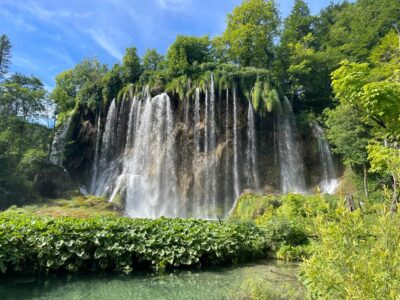
Rastoke & Plitvice Lakes Guided Tour with Ticket
Read our review →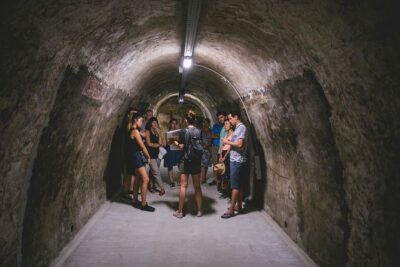
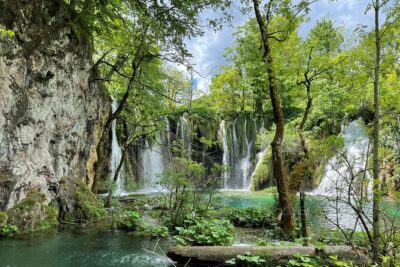
Plitvice Lakes with Ticket & Rastoke Guided Tour from Zagreb
Read our review →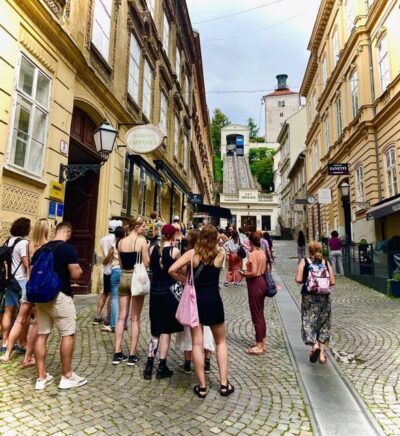
Small Group Walking Tour City Center and WW2 Tunnels
Read our review →
Skip-the-Ticket-Line Museum of Broken Relationships
Read our review →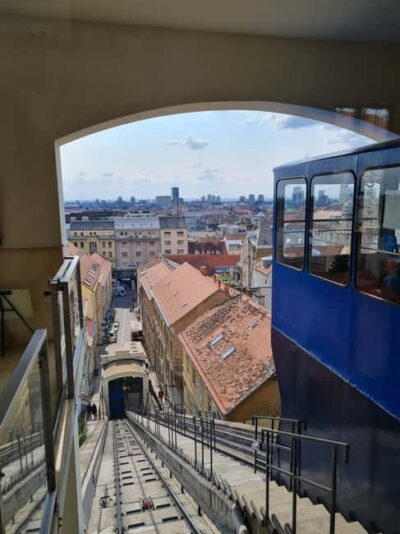
Plitvice and Rastoke day trip from Zagreb w/ticket (guar. dep.)
Read our review →Browse the lists this tour appears in