
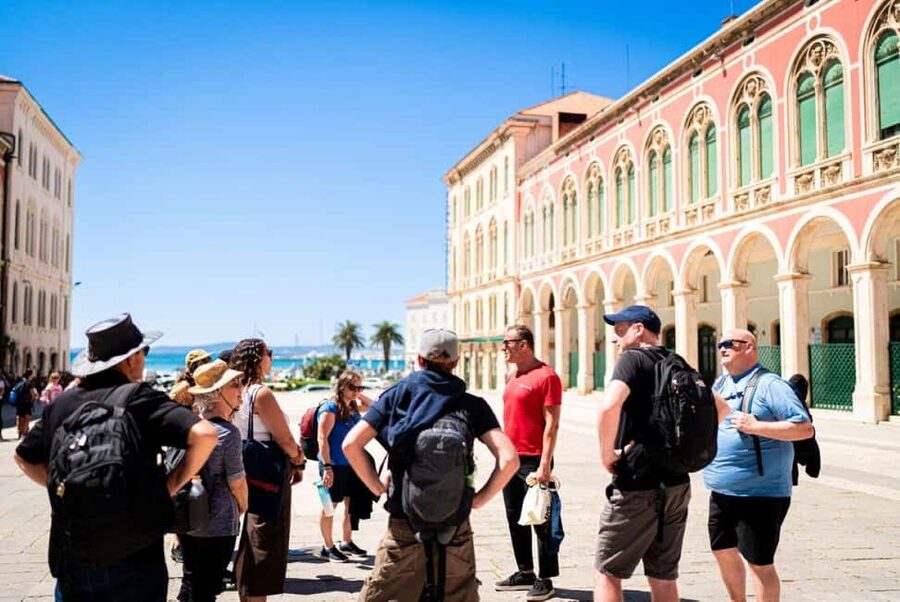
Reviewed · MARKETS
Split: Private Roman History & Market Tour
Split: Private Roman History & Market Tour
Split’s best stories are not locked behind museum glass. They are built into apartment walls, whispered around the Green Market, and folded into the lanes of Diocletian’s Palace, where modern residents still live among Roman columns. This private two-hour walk connects those layers with local food and everyday customs.
I like the Green Market stop, where you may taste fruit, vegetables, olive oil, rakija, cheese, or dry figs depending on the season. I also like the private format and the local perspective, with past guides such as Ted and Ivan praised for clear, well-paced storytelling. The main drawback is the price: at $280 per person, this is a costly two-hour tour unless you value personal attention and a tailored introduction to Split.
In This Review
- Key points to know
- Why Split’s Roman center feels lived in
- Starting at the Green Market
- Entering Diocletian’s Palace through the Golden Gates
- Peristil and the stories in the stone
- Gregory of Nin, Hajduk, and Split identity
- Finishing on the Riva promenade
- What the $280 price means
- Who will get the most from this walk
- Timing, pace, and practical details
- Should you book the Split private palace and market tour?
- FAQ
- Where does the tour begin?
- How long does the experience last?
- Is the tour private?
- What food is included?
- Are palace entrance fees included?
- Can children join the tour?
Key points to know
- Roman palace turned neighborhood: Walk through a UNESCO-listed complex that is still home to local residents.
- Seasonal Green Market tasting: Sample local produce and pantry staples while learning how Splićana shop.
- Stories beyond the standard Roman timeline: Hear about Illyrian-era customs, local rituals, Hajduk, and the golden toe of Gregory of Nin.
- Several key palace areas included: See Peristil, the Vestibule, the Golden Gates, and a private section of the palace.
- Private, English-language format: Your guide can keep the pace focused on your interests and questions.
- Carbon-neutral operation: The tour is run by a B Corp certified company with an environmental focus.
Why Split’s Roman center feels lived in

Split is unusual because the old town is not simply a preserved monument. The core of the city grew inside and around the palace built for Emperor Diocletian more than 1,700 years ago. Medieval additions, later homes, shops, cafés, and Roman stone all share the same tight space.
That mix is the point of this tour. You are not only looking at ruins. You are walking through a neighborhood where the palace still shapes daily life. Small groups are especially helpful here, since the lanes and courtyards can feel close and confusing, and a private guide can explain what you are seeing without stopping a large crowd every few minutes.
The tour begins at the start of the Riva promenade, near the iron map of the city. This is a useful meeting point because the Riva is easy to find and gives you a quick sense of Split’s waterfront setting before you move into the old town.
Your guide speaks English, and the company describes the experience as led by locals born and raised in Split. Previous guide names include Ted and Ivan, though you should expect the assigned guide to vary. The important thing is the local angle: this tour is designed to explain how Splićana, the people of Split, connect food, family customs, football, faith, and old stories to the city around them.
A few more Split trips to weigh up
- Split: Historical & Gastro Treasures Tour with Green Market
★ 4.9 · 144 reviews - Private Split: Visit Diocletian Palace & Taste Food at the Market
★ 5.0 · 33 reviews - Zagreb Walking Food Tour – Sightseeing – Dolac Market Visit
★ 5.0 · 38 reviews
Starting at the Green Market
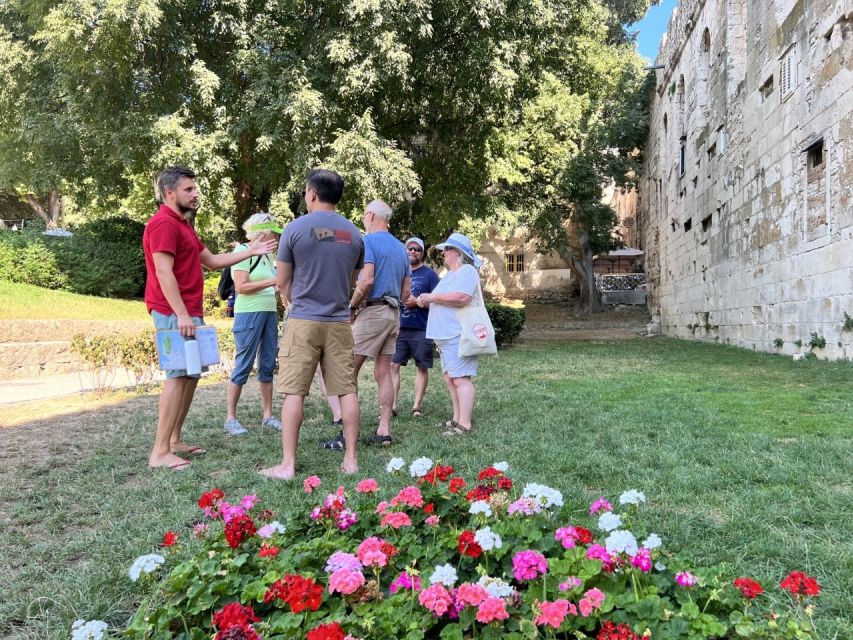
Food comes early, and that is a smart choice. The Green Market is not treated as a quick snack stop. It is a way to explain how locals buy food and why Dalmatian hospitality often begins with something to eat.
Depending on the season and what vendors have available, tastings can include fruit, vegetables, olive oil, rakija, cheese, and dry figs. You should not expect a full meal included in the tour. The food stop is a sampling experience, and additional food and drinks cost extra.
The market gives your guide room to explain local habits that a purely historical walk would miss. You can see the produce, listen to the sounds of everyday shopping, and learn which foods are associated with the Dalmatian table. The guide also explains the stories behind traditional ingredients rather than simply naming them.
I find this part especially useful at the start of a visit. It gives you practical clues for later meals and helps you understand why food is such a central part of local welcome. If you plan to eat lunch afterward, keep in mind that the tastings may take the edge off your appetite, but they will not replace a proper meal.
The exact tasting selection will vary with the season. That is a benefit, not a flaw, if you want a more local experience, but it means you should not book this expecting every listed item on every departure.
Entering Diocletian’s Palace through the Golden Gates
After the market, the walk turns toward the palace. Diocletian was one of Rome’s most interesting emperors, and his retirement home was far grander than a normal private residence. The complex functioned as a fortified palace, a place of worship, and a royal retreat.
The Golden Gates provide one of the clearest reminders that this was a serious imperial project. Your guide can help you read the palace as a planned Roman complex instead of a collection of disconnected stones. The experience works best when you pay attention to the way later buildings have been fitted into the original structure.
The tour includes the main square within the palace walls and a private section of the palace. It also includes the Vestibule, an impressive circular space that once formed part of the emperor’s approach to the residential area. These stops are included in the walking experience, while several other sites require separate admission.
You will not have entrance fees to the cathedral in the former imperial mausoleum, the palace underground, the Bell Tower, museums, or the Temple of Jupiter included. That distinction matters. If you want to explore those places, budget extra and allow more time beyond the scheduled two hours.
This tour is therefore best understood as an introduction to the palace and its living streets, not as an all-inclusive ticket to every attraction inside the walls.
Peristil and the stories in the stone
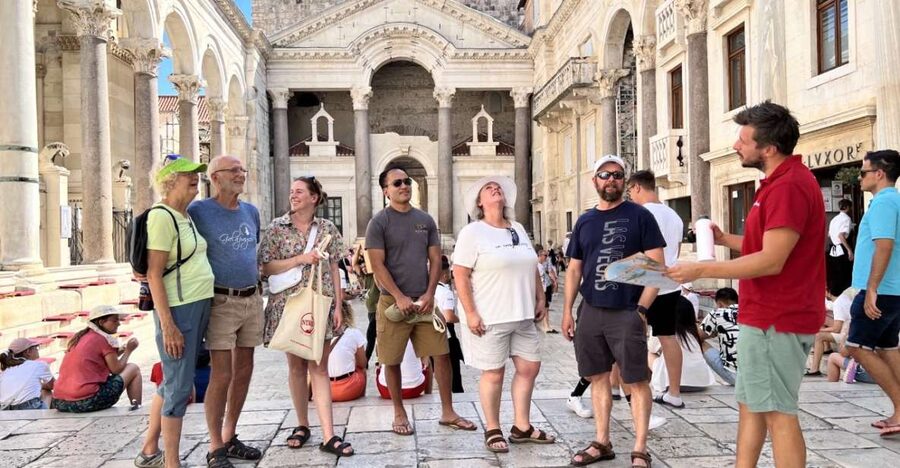
Peristil is the visual center of the palace. Here, the scale of Diocletian’s project becomes easier to grasp, with monumental Roman elements meeting the life of the modern city.
The guide uses the square to move past dates and names. You hear stories about Diocletian’s habits, including why he liked salad, and about the White Stone, a piece of stone connected with local ideas of good fortune. These details make the emperor easier to picture as a person with tastes and superstitions, not just a name from a textbook.
The tour also explores rituals that Dalmatians respect from Illyrian times. The available description does not promise a set list of ceremonies or a formal performance, so think of this as storytelling about customs and beliefs rather than a staged cultural event. That approach suits Split, where old practices often survive in ordinary behavior and family traditions.
A good guide will help you notice how the palace changed after the Roman period. Antique, medieval, and modern features sit close together, sometimes in the same wall. You may find that the most interesting details are not the grand columns but the clues showing how people adapted the structure over centuries.
Same stretch of coast, a completely different day out:
- Split: Krka Waterfalls Trip with Boat Cruise and Swimming
★ 4.8 · 10,519 reviews - From Split: Krka Waterfalls, Food & Wine Tasting Tour
★ 5.0 · 9,326 reviews - Blue cave, Mamma Mia and Hvar, 5 islands speedboat tour
★ 5.0 · 7,150 reviews - From Split: Krka Waterfalls, Food & Wine Tasting Tour
★ 4.9 · 6,598 reviews
Gregory of Nin, Hajduk, and Split identity
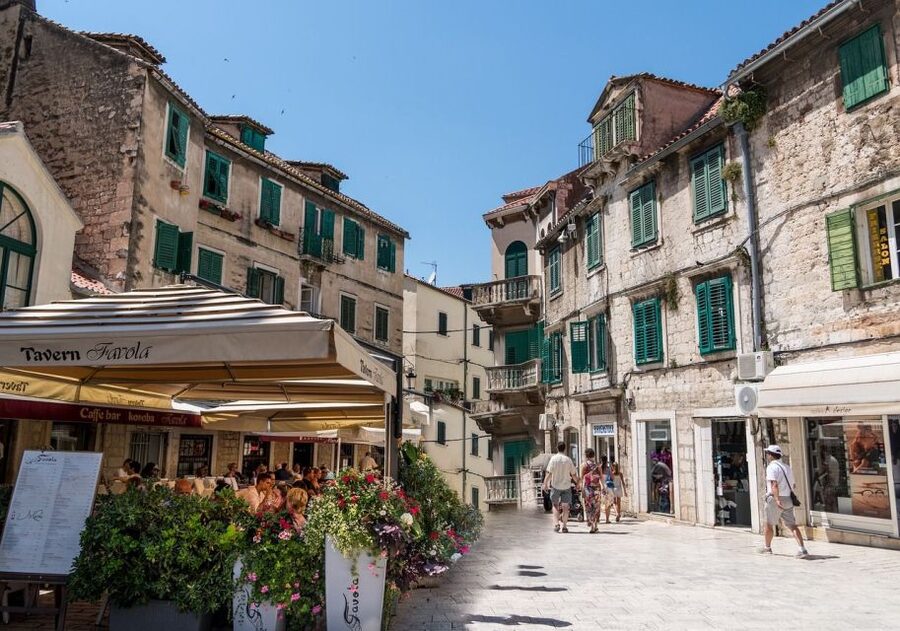
The city’s identity comes into sharper focus with stops and stories beyond the palace itself. At the statue of Gregory of Nin, or Grgur Ninski, you can make a wish by touching the statue’s golden toe. It is a small ritual, but it gives the walk a playful local custom that children and adults can enjoy.
The guide also explains Hajduk, the famous Split football club whose name appears throughout the city, from the suburbs to the old town. This is valuable context if you notice scarves, signs, or references to Hajduk during your stay. The club is part of the emotional life of Split, and a short explanation helps you read the city more accurately.
These moments keep the tour from becoming a narrow lesson in Roman architecture. You get a sense of how ancient buildings, religious figures, food traditions, football, and local pride all fit into the same city story.
For families, this variety is helpful. Children under six can join free of charge, provided you tell the operator in advance. The route includes history and food rather than a long indoor lecture, though young children still need to be comfortable walking for two hours through old-town streets.
Finishing on the Riva promenade
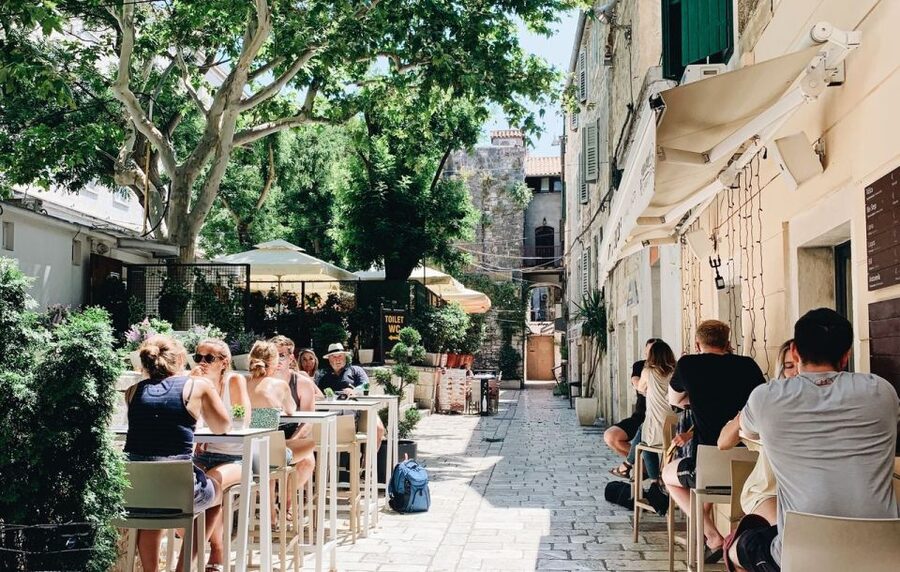
The walk ends on the Riva, Split’s waterfront promenade. This is a sensible finish because you leave the palace with the sea and the modern city in front of you rather than ending in a confusing side lane.
Your guide can point out favorite coffee shops and places for Dalmatian food and evening entertainment. These suggestions may be one of the most practical parts of the tour, especially if Split is your first stop in Croatia and you want help deciding where to spend the rest of the day.
The final food reference is fitting. Dalmatian culture places a great deal of weight on sharing meals, offering a drink, and showing hospitality through the table. The tour’s central idea, that the way to a Dalmatian’s heart is through the stomach, is lighthearted but useful. Food is not a decorative extra here. It is one of the clearest routes into local life.
What the $280 price means
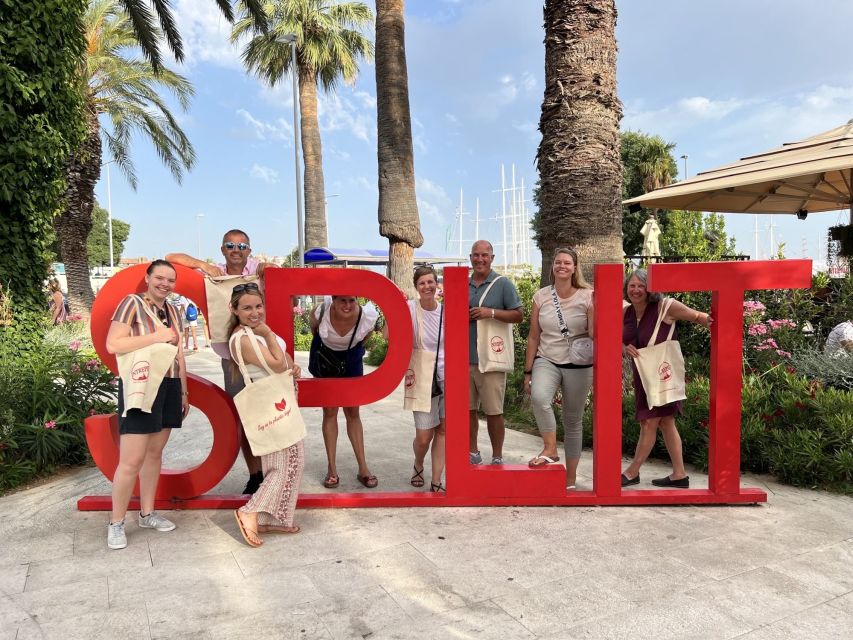
At $280 per person, this tour sits at the high end for a two-hour city walk. The price makes more sense if you are booking for a small private party and want direct access to a guide, rather than joining a large group at a lower rate.
The private format can be worth paying for if you have specific interests in Roman history, local customs, food, or architecture. You can ask questions as you go, adjust the pace, and spend more time on subjects that matter to you. That is a real advantage in Split, where the palace contains many overlapping stories.
The value is weaker if you mainly want a quick orientation or a checklist of major sights. Two hours passes quickly, and the tour does not include admission to the cathedral, underground areas, Bell Tower, museums, or Temple of Jupiter. You may prefer a less expensive group walk, then pay separately for the sites you want to enter.
Past feedback points to the guide quality as a major strength. Ted was praised for a well-paced and educational approach, while Ivan was singled out for strong local knowledge. Another guide, a woman praised for her excellent English, added plenty of anecdotes and finished with a particularly enjoyable drink stop. These names reflect earlier departures, not a guarantee of who will lead your tour, but they show the level of personal storytelling the company aims for.
Who will get the most from this walk
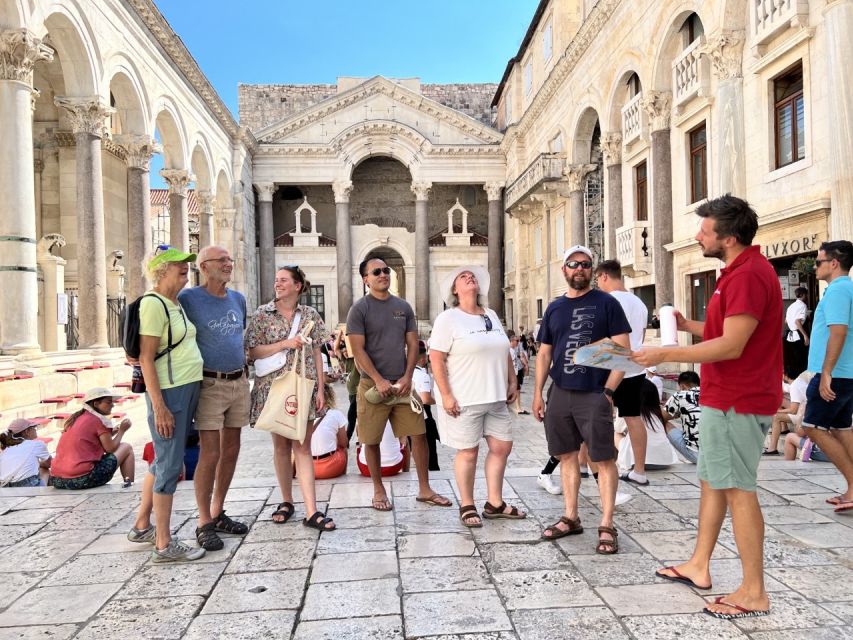
I would choose this tour for a first visit to Split, especially if you have only a short time in the city. The combination of the market and palace gives you both orientation and local context without requiring a full day.
It suits couples, families, and small private groups who want to keep the schedule flexible. Food lovers will appreciate the Green Market tastings, while history fans will enjoy the Roman setting and the stories about Diocletian’s private life.
The tour also works well for people who prefer human stories to long lists of dates. You will hear about local rituals, Hajduk, Gregory of Nin, food customs, and the way residents live inside the palace. That broader view helps you understand Split as a city, not just an archaeological site.
I would hesitate to recommend it to anyone focused on maximum sightseeing value per dollar. At two hours, it is short, and the high cost is hard to justify if you are comfortable exploring independently. It is also not the right choice if your main goal is to visit every major paid site inside the palace, since those admissions are separate.
Timing, pace, and practical details
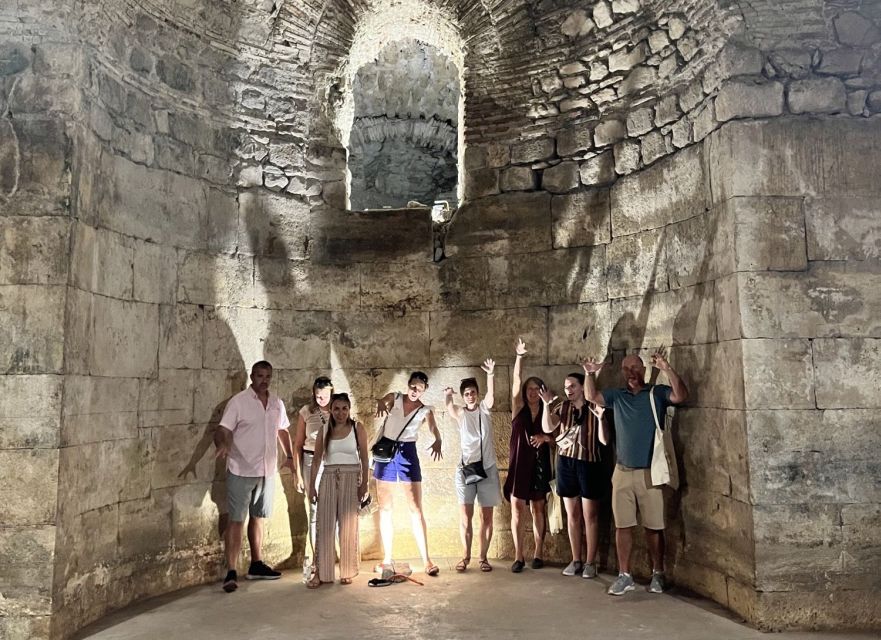
The tour lasts two hours, with starting times available according to the booking schedule. Since Split’s old town is compact but full of stone lanes and uneven historic spaces, comfortable walking shoes are sensible, even though the tour does not list a special equipment requirement.
The private format means your group is not combined with strangers. That can make a difference in the market, where a smaller party can listen more easily and move between stalls without blocking narrow paths.
The tour is offered in English. If you are bringing a child under six, that child may join free, but you need to notify the operator. The experience is described as child-friendly, though the amount of walking and the history content still make it best for children who enjoy exploring streets and trying small food samples.
Booking can be made with payment later, and cancellation is free up to 24 hours before the start for a full refund. Those terms are useful if your Split plans depend on a cruise schedule, changing weather, or uncertain arrival time.
The operator also describes the tour as carbon neutral and B Corp certified. That does not change the route or the sightseeing content, but it may matter to you if you prefer companies that track their environmental and social impact.
Should you book the Split private palace and market tour?
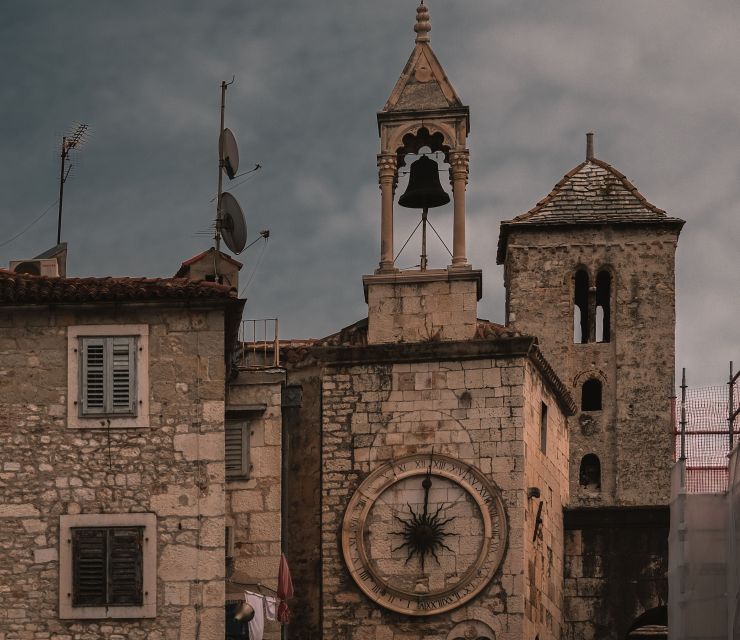
Book it if you want a polished first look at Split that combines Roman architecture with the food and customs of present-day Dalmatia. The strongest reasons are the private guide, the Green Market tastings, and the way the tour links Diocletian’s Palace to local identity.
Skip it if $280 per person feels too high for two hours, or if you want admission to the palace’s major paid attractions. In that case, a less expensive walking tour plus individual tickets may offer better value.
For everyone else, this is a focused and personable introduction. You leave the Riva knowing how the palace works, what to look for in the Green Market, why Hajduk matters, where to touch Gregory of Nin’s toe, and which parts of Split deserve more of your time.
FAQ
Where does the tour begin?
The meeting point is at the beginning of the Riva promenade, near the iron map of the city.
How long does the experience last?
The tour lasts two hours. Starting times depend on availability.
Is the tour private?
Yes. It is offered as a private group experience with a live English-speaking guide.
What food is included?
The Green Market stop includes tastings that may include fruit, vegetables, olive oil, rakija, cheese, or dry figs. The selection can vary by season, and additional food and drinks are not included.
Are palace entrance fees included?
The walking experience includes the main square within the palace walls, a private section of Diocletian’s Palace, the Vestibule, and the Golden Gates. Admission to the cathedral in the former mausoleum, palace underground, Bell Tower, museums, and Temple of Jupiter is not included.
Can children join the tour?
Yes. The tour is child-friendly, and children under six may join free of charge. You should inform the operator if you are bringing a child under six.
More Historical Tours in Split
- Walking Tour of Split with a ‘Magister’ of History
★ 5.0 · 1,122 reviews - Split Walking Tour with Professor of History
★ 5.0 · 926 reviews - Split: History and Heritage Walking Tour
★ 4.9 · 650 reviews - Split History and Gastro Small-Group Tour with Food and Drinks
★ 5.0 · 375 reviews
Just added around Split
- Split Sunset Stand Up Paddle Tour★ 5.0 · 16 reviews
- Split: Sunset Guided Kayaking Tour★ 4.8 · 71 reviews
- Split&Sip: Educational wine tasting★ 4.9 · 52 reviews
- Stand Up Paddle Tour in Split★ 4.7 · 17 reviews
- Split: Guided Walking Tour in English★ 4.9 · 10 reviews
- Split – Walking in Khaleesi Footsteps in the City of Dragons★ 5.0 · 13 reviews
- Split Walking Tour with History Professor★ 5.0 · 23 reviews
- Split Walking Tour: History, Legends & Tales★ 5.0 · 9 reviews
Markets, compared.
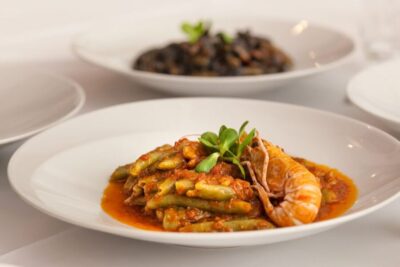
Historical & Gastro Treasures Tour with Green Market
Read our review →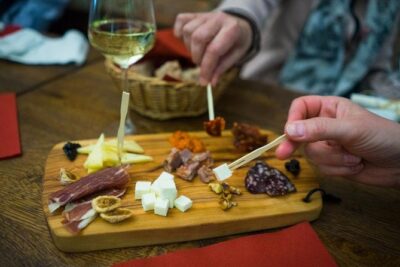
Zagreb Walking Food Tour – Sightseeing – Dolac Market Visit
Read our review →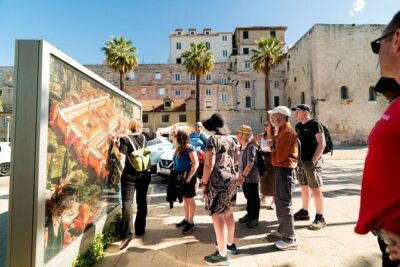
Private Split: Visit Diocletian Palace & Taste Food at the Market
Read our review →
Browse the lists this tour appears in