
Reviewed · MARKETS
Split: Historical & Gastro Treasures Tour with Green Market
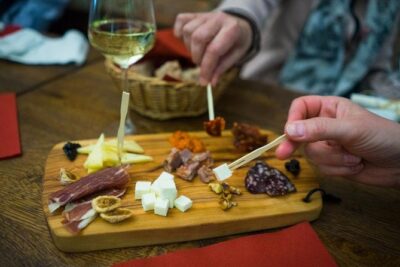
Split’s best introduction may begin with a plate of prosciutto and cheese rather than a monument. This three-hour walking tour links Dalmatian food and local life with the stones of Diocletian’s Palace, taking you from the Green Market to a traditional konoba meal.
I like the generous tasting portions and the way the food gives the history a practical purpose. I also like the range: market produce, peka bread, soparnik pie, seafood, pasta, black risotto, Croatian wine, grappa, and dessert all make an appearance.
The main thing to consider is the $135 price, especially if you do not drink wine or prefer a light lunch. You should arrive hungry. This is closer to a full meal with a guided city walk than to a few token samples.
In This Review
- Key points to know before you book
- Why this Split food tour works so well
- Starting at the Green Market with a Dalmatian brunch
- Walking through Diocletian’s Palace
- Settling into a konoba meal
- Finishing with dessert, gelato, or a local sweet
- What the guides add to the experience
- Is $135 a fair price?
- Morning or afternoon?
- Who should book this experience?
- Should you book the Split Historical and Gastro Treasures Tour?
- FAQ
- How long does the tour last?
- What food and drinks are included?
- Does the tour visit the Green Market?
- What sights in Diocletian’s Palace are covered?
- Is hotel pickup included?
- Can the tour accommodate food allergies or dietary restrictions?
Key points to know before you book
- The Green Market sets the tone: Your morning begins with prosciutto, cheese, peka bread, soparnik, and grappa among local produce stalls.
- Diocletian’s Palace comes with context: You visit Peristil Square, the Golden Gate, and medieval Venetian Pjaca while learning how the old center changed over time.
- The meal is substantial: Expect seafood, two traditional pasta dishes, black risotto, wine, and a final dessert or gelato.
- Guides make a major difference: Hani, Olga, Christina, Lucija, Vicky, Ana, and others have been praised for warmth, humor, food knowledge, and clear storytelling.
- The afternoon option changes the route: The Green Market does not operate in afternoon hours, so similar foods are served at a local tavern instead.
- Plan for an easy first day: The pace is relaxed, and the guide can help you understand what to eat and where to return later.
Why this Split food tour works so well
Split can feel like several cities stacked together. Roman walls hold up later homes, medieval squares open onto busy lanes, and daily shopping continues inside the old palace. This tour helps you read those layers while giving you something good to eat at each stage.
I like the basic idea because it avoids treating history and food as separate subjects. You learn about Split while tasting the products that still shape local meals. The Green Market is not simply a photo stop. It is a working place where food, habits, and conversation meet.
The tour is led in English by a licensed local guide. The guide names vary, but Hani, Olga, Christina, Lucija, Vicky, Ana, Ella, Doris, Darko, and Maria have all led this experience. The strongest pattern is clear: the guides explain history and cuisine in a relaxed, personal way, with plenty of room for questions.
The pace also suits a first day in Split. You walk, stop, eat, talk, and continue. It is not a rushed march from sight to sight. Several guides have been praised for making everyone at the table feel included, which matters if you are joining as a solo visitor or with a mixed-age group.
A few more Split trips to weigh up
- Private Split: Visit Diocletian Palace & Taste Food at the Market
★ 5.0 · 33 reviews - Split: Private Roman History & Market Tour
★ 5.0 · 9 reviews - Zagreb Walking Food Tour – Sightseeing – Dolac Market Visit
★ 5.0 · 38 reviews
Starting at the Green Market with a Dalmatian brunch
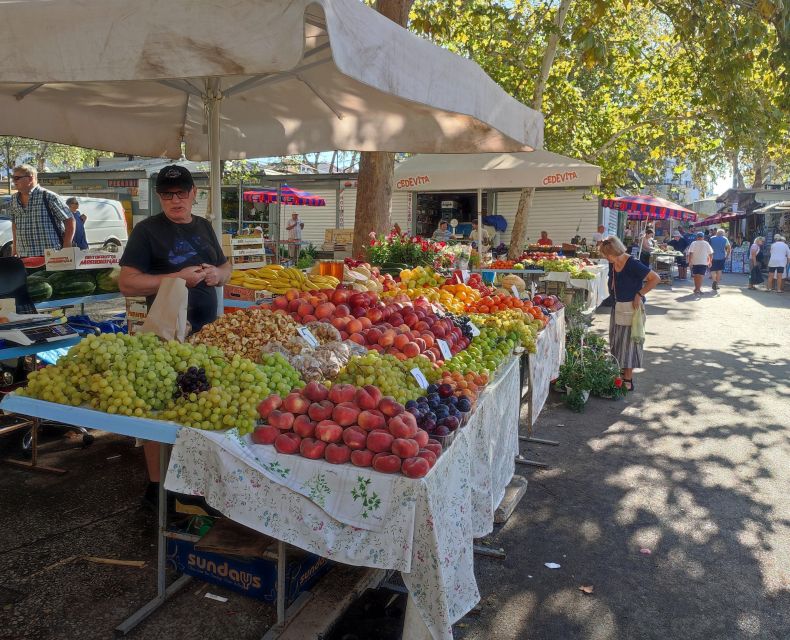
The morning version begins at the Green Market, with the meeting point listed at Hrvojeva 1 unless your booked option gives a different location. You meet your guide there and start with a Mediterranean-style brunch built around local specialties.
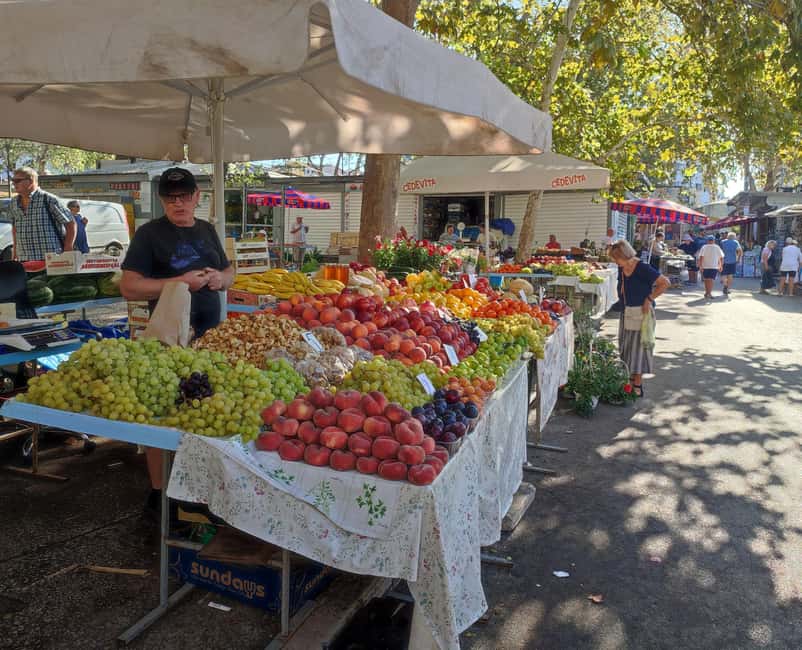
The opening spread includes prosciutto, cheese, traditional peka bread, soparnik pie, and grappa. These are not random nibbles. Together, they give you a useful introduction to Dalmatian eating: preserved meat, dairy, sturdy bread, savory pastry, and a small pour of local spirit.
The market is the most distinctive part of the morning route. You walk through stalls filled with local produce and learn what people in the area buy, cook, and recognize. It is a more grounded beginning than starting inside a formal restaurant.
I especially like this stop for people who are unsure what to order in Croatia. Your guide can explain the foods as you encounter them, so you are not left staring at an unfamiliar menu later. The food also creates easy conversation within the group.
Do not expect a tiny tasting designed to leave you ready for breakfast elsewhere. The portions are described as generous, and the full experience includes a later meal. Eat lightly before you arrive, or better yet, do not eat much at all.
The Green Market portion applies to the morning tour. If you choose an afternoon departure, the market is closed, so comparable foods are tasted in a local tavern. That keeps the food theme intact, but you lose the market’s everyday atmosphere.
Walking through Diocletian’s Palace
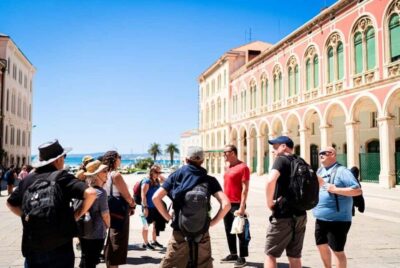
After the market, the route moves into Split’s old center and the UNESCO-listed Diocletian’s Palace. The palace is not an isolated ruin behind a fence. It is part of the living city, with homes, shops, restaurants, squares, and narrow passages built into and around its ancient structure.
The tour covers Peristil Square, the Golden Gate, and Pjaca, a medieval Venetian square. Each place gives you a different piece of Split’s past.
Peristil is the grand central space, where the scale of the Roman complex becomes easier to understand. The Golden Gate shows the power and ceremony built into the original palace entrances. Pjaca shifts the mood toward the later Venetian period and the medieval city.
I like having these sights placed between food stops. A guide can point out how the palace changed over the centuries, rather than presenting it as a frozen Roman monument. You also get a sense of how people use the old center today.
The history is presented in an informal style, according to the tour format and guide feedback. That is useful if you want more than dates but do not want a long academic lecture. Guides such as Olga, Christina, Hani, and Lucija have been singled out for making architecture and local customs easy to follow.
One unusual detail from the experience is the chance to hear some local music during the walk. The information does not promise a formal performance, so treat this as a possible part of the atmosphere rather than a scheduled concert.
The walking portion does require comfort on city streets and old paved surfaces. No transport is provided, and the tour begins and ends at the meeting point. Hotel pickup and drop-off are not included, so allow time to reach Hrvojeva 1.
Settling into a konoba meal
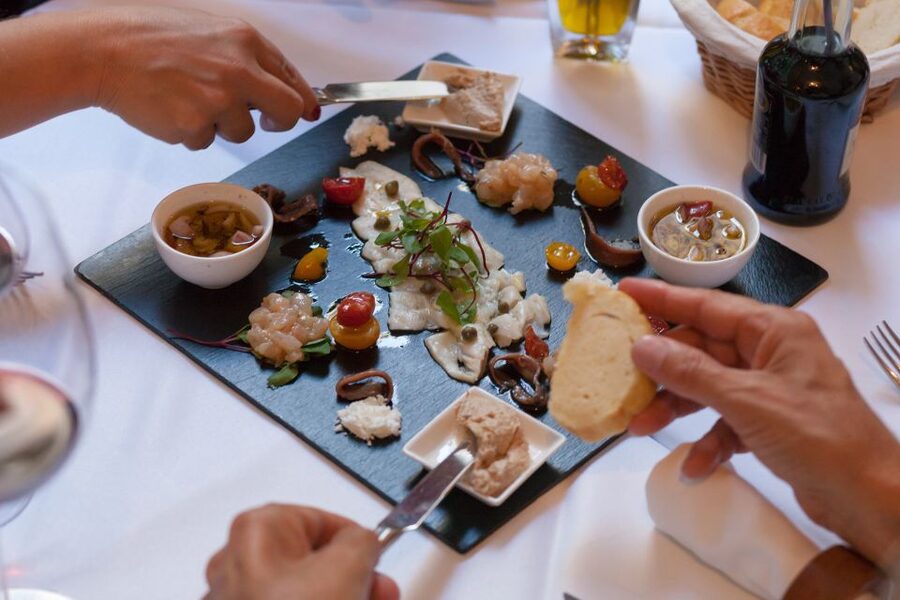
The next major stop is a konoba, the traditional tavern-style setting used for the main meal. The atmosphere is intended to feel local rather than polished for mass tourism. You sit down for a proper meal, not a quick plate passed around while the guide watches the clock.
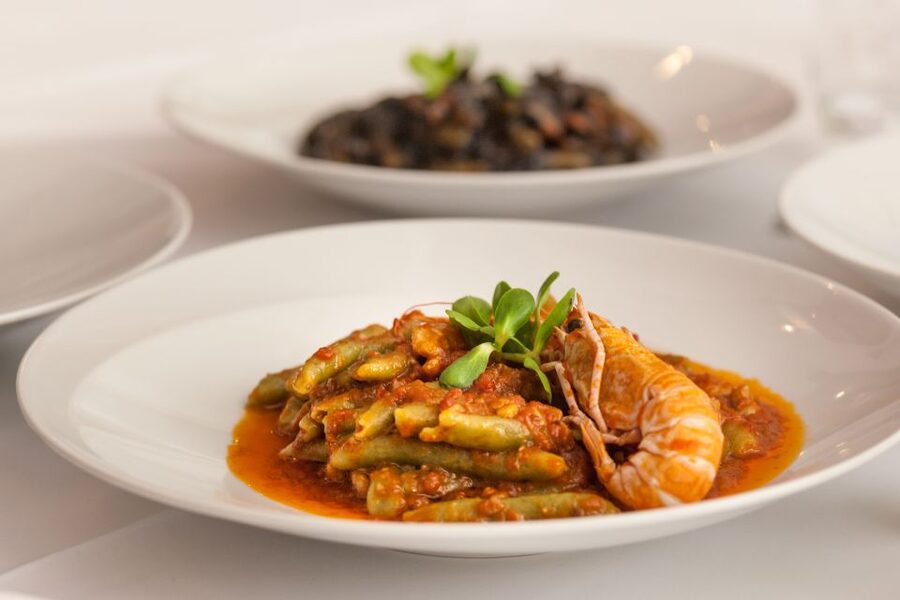
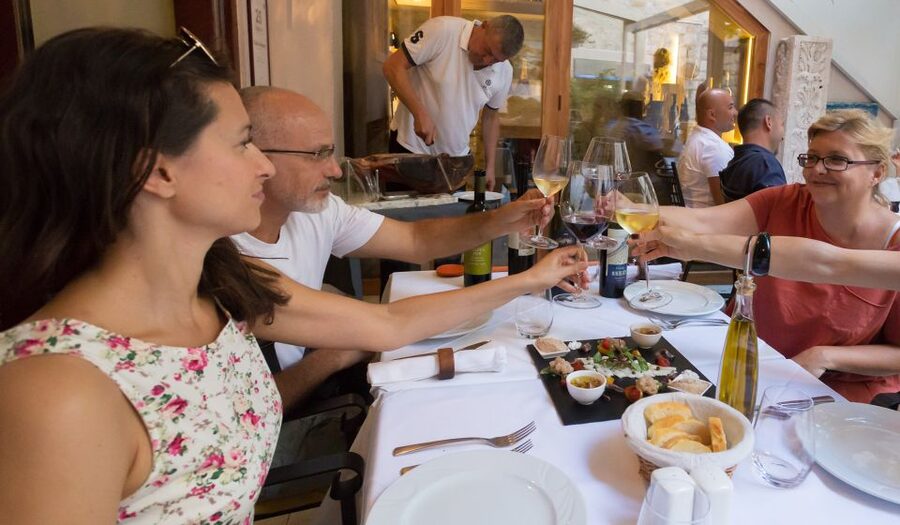
The first course is a traditional seafood starter served with white wine. The exact seafood can vary, but the experience includes local seafood as a central part of the meal. That makes sense in a coastal city where fish and shellfish are important to the local table.
The second course is especially generous. You receive two types of traditional pasta and famous black risotto, paired with local red wine from Brač island. Black risotto is made with cuttlefish or squid ink, giving it a dark color and a distinctive sea flavor. Several people were surprised by dishes such as cuttlefish risotto and octopus stew, which is one reason this tour works better than ordering only familiar foods.
The pasta gives you a gentler counterpoint to the seafood. It also helps turn the tasting into lunch. This is not a meal built around one expensive centerpiece. It is a broad sample of Croatian cooking, with enough variety to help you decide what you want to seek out later.
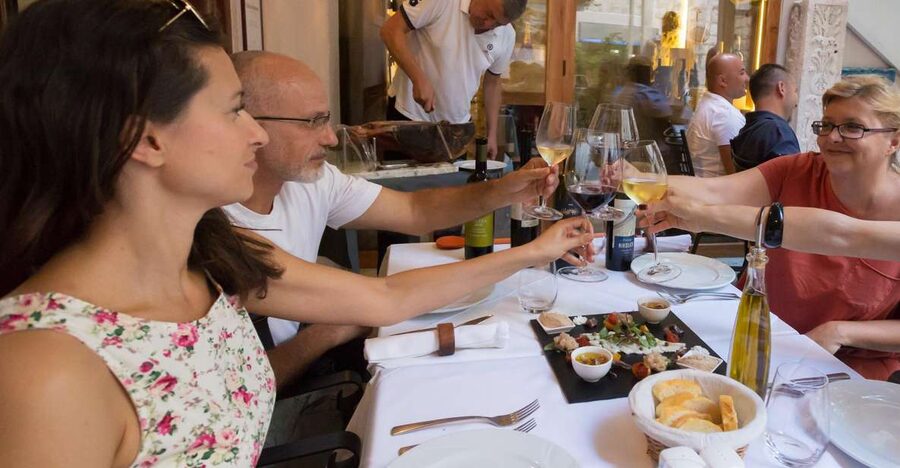
The wine pairings are part of the price, and the inclusion of both white and red wine makes the meal feel considered rather than incidental. If you enjoy wine, that adds real value. If you do not drink alcohol, the price may feel high because wine is a built-in part of the experience. You should mention dietary needs and restrictions when booking.
The tour does not specify one fixed restaurant or a single unchanging menu. That is normal for a food experience, but it means you should focus on the style of meal and the listed dishes rather than expecting a particular table or recipe every time.
Same stretch of coast, a completely different day out:
- Split: Krka Waterfalls Trip with Boat Cruise and Swimming
★ 4.8 · 10,519 reviews - From Split: Krka Waterfalls, Food & Wine Tasting Tour
★ 5.0 · 9,326 reviews - Blue cave, Mamma Mia and Hvar, 5 islands speedboat tour
★ 5.0 · 7,150 reviews - From Split: Krka Waterfalls, Food & Wine Tasting Tour
★ 4.9 · 6,598 reviews
Finishing with dessert, gelato, or a local sweet
The final food stop is deliberately lighter. Depending on the season, you finish with gelato or a traditional dessert. Spring, summer, and autumn may bring different choices.
This is a small point, but it is worth knowing because some people care more about trying a local dessert than having gelato. If you have a strong preference, ask the guide what is available that day. One option is not automatically better, but a traditional sweet may be more interesting if you already eat gelato regularly at home.
By this stage, you should be comfortably full. The tour is designed to end with a pleasant final taste, not another large plate. Since the walk ends back at the meeting point, you can continue exploring the old center on your own or return to a favorite place from the route.
What the guides add to the experience

The food matters, but the guide is the part that determines how much you take away. A good guide explains not just what you are eating, but why it belongs in Dalmatian cuisine and how it fits into local life.
Hani has been praised for combining humor, history, and food with an easy manner. Olga is noted for explaining tasting notes, preparation, and the changes Split has gone through over time. Christina is described as energetic, warm, and particularly good at making the group feel comfortable.
Lucija and Lucia have been praised for making people feel at ease while handling questions about food, culture, and history. Vicky has been noted for her understanding of wine, food, and Split’s way of life. Other guides, including Ana, Darko, Doris, Ella, Maria, and Christian, have also led highly rated tours.
You cannot choose a particular guide from the information provided, so do not book solely around one name. The useful point is that the experience depends on local explanation, not on a script you simply follow from one restaurant to another.
Several guides also adapt when food restrictions come up. Still, you must provide allergy and diet information in advance. Do not assume that a traditional dish is safe simply because it looks simple. Seafood, dairy, bread, and alcohol are all part of the planned tastings.
Is $135 a fair price?
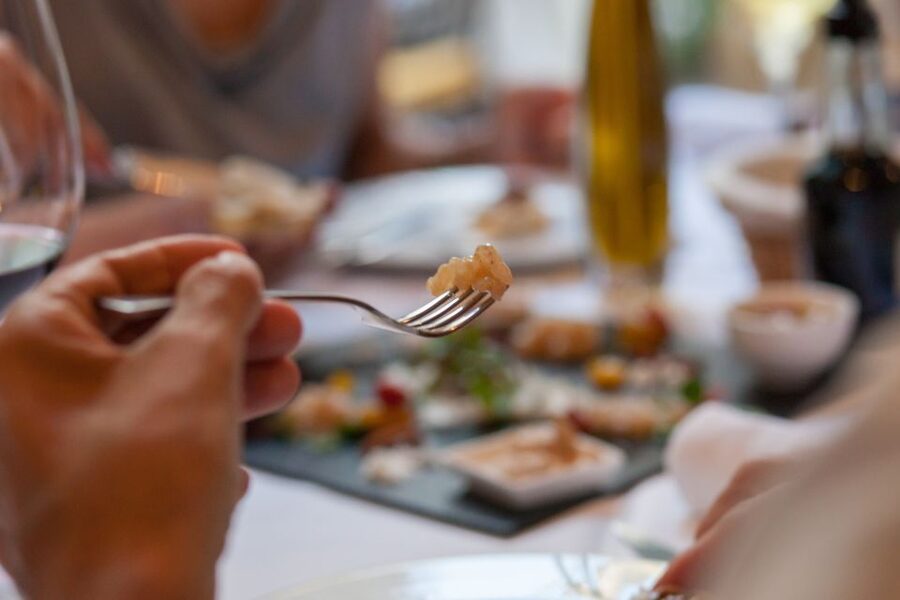
At $135 per person, this is not a budget walking tour. It is also not just a history tour with one snack. The price includes all food and wine, a licensed local guide, market tastings, a substantial tavern meal, and dessert over about three hours.
I see the value in the amount of food and the range of stops. If you paid separately for a seafood meal, pasta, black risotto, wine, market tastings, dessert, and a private-style guided introduction to Split, the total could add up quickly. The guide also saves you from guessing which specialties to order.
The value is strongest if you enjoy trying several dishes and want wine included. It is weaker if you are a light eater, do not drink alcohol, or mainly want to see the palace. In that case, a standard history walk followed by one restaurant meal may suit you better.
The tour also gives you useful restaurant guidance for the rest of your stay. You learn which foods appeal to you, how local dishes are prepared, and what to look for on menus. That practical knowledge can prevent a few mediocre meals later.
One price detail is easy to overlook: hotel pickup and drop-off are not included. You need to make your own way to the meeting point, and the activity ends there. Since the tour takes place in central Split, this is usually a planning issue rather than a major expense, but you should allow enough time to arrive promptly.
Morning or afternoon?
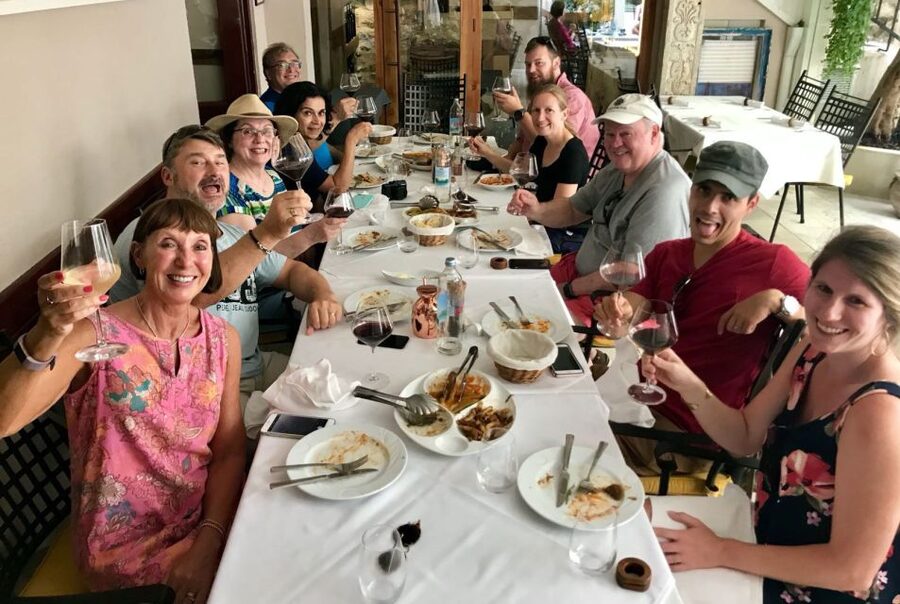
Choose the morning if the Green Market is important to you. That option gives you the fullest connection to daily life in Split, beginning among the produce stalls before moving into the palace and then to lunch.
Choose the afternoon if your schedule requires it or if you prefer a later meal. The food remains central, but the market portion changes because the market does not operate in the afternoon. Similar foods are tasted at a local tavern instead.
For a first day, I would favor the morning. You get your bearings, learn about local ingredients, and finish with a meal that can guide your choices for the rest of the trip. The afternoon version still makes sense for late arrivals or people who prefer a slower start.
The tour is conducted in English. The route combines walking, standing, market visits, and a seated meal, so wear comfortable shoes and leave room in your schedule afterward. The listed duration is three hours, but your appetite may need a little recovery time.
Who should book this experience?

This tour suits you if you want history with your lunch, prefer local specialties to generic sightseeing, and enjoy asking questions. It is also a good fit for couples, families with older children, and solo visitors who like the social side of a shared meal.
Food lovers will get the most from the variety. You can try soparnik, peka bread, local cheeses, seafood, pasta, black risotto, wine, grappa, and a seasonal sweet in one outing. You may encounter dishes you would not have ordered alone, such as octopus stew or cuttlefish risotto.
It is less suitable if you want a quiet private tour, dislike seafood, avoid alcohol, or prefer to control every course yourself. The format is social, and the menu is built around sampling local food rather than choosing from a full restaurant menu.
People with allergies or strict dietary rules should contact the operator before booking. Adjustments have been made for food restrictions, but the tour needs that information ahead of time.
Should you book the Split Historical and Gastro Treasures Tour?
Book it if you want a generous introduction to Split that combines the Green Market, Diocletian’s Palace, local history, and a serious amount of food. The guides bring warmth and humor, while the route gives you both famous sights and everyday food culture.
I would especially recommend it for your first or second day in Split. You will leave with a better sense of the old center, a list of foods to try again, and a clearer idea of how locals eat.
Skip it if $135 feels too steep for a meal and walk, or if you do not want wine and seafood. For everyone else, the combination of market tasting, palace history, tavern dishes, and local guidance makes this one of the more useful ways to get oriented in Split.
FAQ
How long does the tour last?
The tour lasts three hours.
What food and drinks are included?
The morning route includes prosciutto, cheese, peka bread, soparnik pie, grappa, a seafood starter, two types of traditional pasta, black risotto, white and red wine, and a final gelato or traditional dessert depending on the season.
Does the tour visit the Green Market?
Yes, the morning option visits Split’s Green Market. The afternoon option does not include the market because it is closed then, and similar foods are tasted at a local tavern instead.
What sights in Diocletian’s Palace are covered?
The tour includes Peristil Square, the Golden Gate, and Pjaca, a medieval Venetian square.
Is hotel pickup included?
No. Hotel pickup and drop-off are not included. The tour begins and ends at the designated meeting point, which may vary by booked option. Hrvojeva 1 is listed as the meeting location for one option.
Can the tour accommodate food allergies or dietary restrictions?
You should provide all allergy and dietary restriction information when booking. Adjustments have been made for some food restrictions, but the operator needs advance notice.
More Historical Tours in Split
- Walking Tour of Split with a ‘Magister’ of History
★ 5.0 · 1,122 reviews - Split Walking Tour with Professor of History
★ 5.0 · 926 reviews - Split: History and Heritage Walking Tour
★ 4.9 · 650 reviews - Split History and Gastro Small-Group Tour with Food and Drinks
★ 5.0 · 375 reviews
Just added around Split
- Split Sunset Stand Up Paddle Tour★ 5.0 · 16 reviews
- Split: Sunset Guided Kayaking Tour★ 4.8 · 71 reviews
- Split&Sip: Educational wine tasting★ 4.9 · 52 reviews
- Stand Up Paddle Tour in Split★ 4.7 · 17 reviews
- Split: Guided Walking Tour in English★ 4.9 · 10 reviews
- Split Walking Tour with History Professor★ 5.0 · 23 reviews
- Split Walking Tour: History, Legends & Tales★ 5.0 · 9 reviews
- Split – Walking in Khaleesi Footsteps in the City of Dragons★ 5.0 · 13 reviews
Markets, compared.
Zagreb Walking Food Tour – Sightseeing – Dolac Market Visit
Read our review →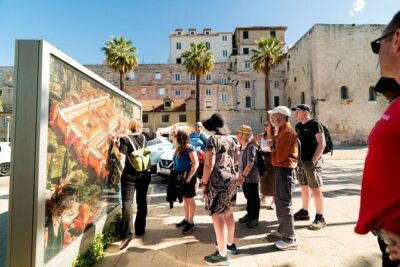
Private Split: Visit Diocletian Palace & Taste Food at the Market
Read our review →
Browse the lists this tour appears in