

Reviewed · HISTORICAL TOURS
Zadar: Hinterland Hidden Treasures, Nature, History, Tasting
Dalmatia’s best stories are not all on the coast. This half-day trip takes you inland from Zadar to a war memorial, a hilltop fortress, a family olive mill, and Kamenjak, where the Kornati Islands stretch across the horizon. The main event is the olive grove: you taste the oil properly, learn how it is made, and sit down to a generous local lunch with wine.
I like the mix of recent Croatian history and older fortress history. I also like that the food and tastings are not tacked on as an afterthought. They are the heart of the visit, with oil, wine, and regional dishes presented by a family that makes the products.
The one drawback is the schedule. You spend much of the 4.5 hours riding between stops, and the tour begins around midday, so it is not a full countryside day. Children under 12 cannot join, and the view at Kamenjak depends on weather.
In This Review
- Key points to know before booking
- Why this half-day trip works from Zadar
- The tank memorial and Croatia’s recent past
- Benkovac Castle and the inland frontier
- Walking through the family olive grove
- Inside the olive mill
- A traditional lunch beneath the trees
- Kamenjak above Lake Vrana
- Transport, timing, and group size
- Who will get the most from this experience
- Is $44 a fair price?
- Should you book the Dalmatian hinterland tour?
- FAQ
- Where does the tour start and finish?
- How long does the experience last?
- What language is the tour in?
- How many people can join the tour?
- Is lunch included?
- Can I buy olive oil or wine during the experience?
- Who cannot join the tour?
Key points to know before booking

- Taste oil with a purpose: You compare award-winning high-polyphenol oils with lesser oils and learn what quality tastes like.
- See production at the source: A walk through the grove and a visit to the family mill explain how olives become extra virgin oil.
- Put Dalmatia’s past in context: The tank memorial and Benkovac Castle cover both the recent war and centuries of frontier conflict.
- Expect a real meal: Seasonal local food is served under the olive trees and paired with a glass of red or white wine.
- Travel in a small group: The usual minibus holds up to eight people, though a larger air-conditioned coach may be used for groups of up to 16.
- Finish with a broad view: Kamenjak Nature Park rises above Lake Vrana and looks toward vineyards, olive groves, and the Kornati Islands.
Why this half-day trip works from Zadar
Zadar is an easy base for the coast, but it can be tempting to spend your entire stay among Roman stones, sea organs, and waterfront cafés. This outing gives you a look at the nearby interior without taking a full day away from the city.
The route reaches the Dalmatian countryside in a short time. You leave from the central bus station in Zadar, close to McDonald’s, and travel in an air-conditioned vehicle. The meeting point is practical rather than scenic, so arrive ready to leave promptly. The bus carries an olive oil advertising board at the side.
At $44 per person, the price is strong for what is included. You receive transportation, guided visits, castle access, oil instruction, several oil samples, local food, and a glass of wine. There is no separate charge for the meal or the main activities. The value is especially good if you would otherwise need a rental car and separate visits to the castle, mill, and viewpoint.
This is not a luxury food tour with a long tasting menu. It is a friendly countryside outing that combines transport, history, scenery, and lunch in one compact package. That makes it useful for anyone with only a few days in Zadar.
A few more Croatia trips to weigh up
- From Split: Krka Waterfalls, Food & Wine Tasting Tour
★ 5.0 · 9,326 reviews - From Split: Krka Waterfalls, Food & Wine Tasting Tour
★ 4.9 · 6,598 reviews - Split: Blue Lagoon and 3 Island Cruise with Food and Drinks
★ 4.8 · 1,969 reviews
The tank memorial and Croatia’s recent past
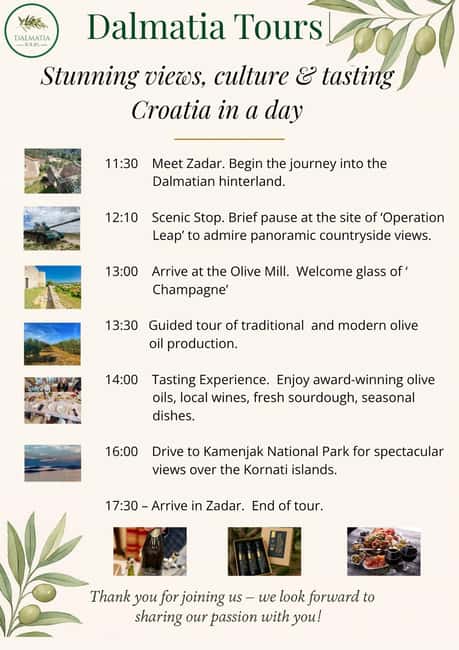
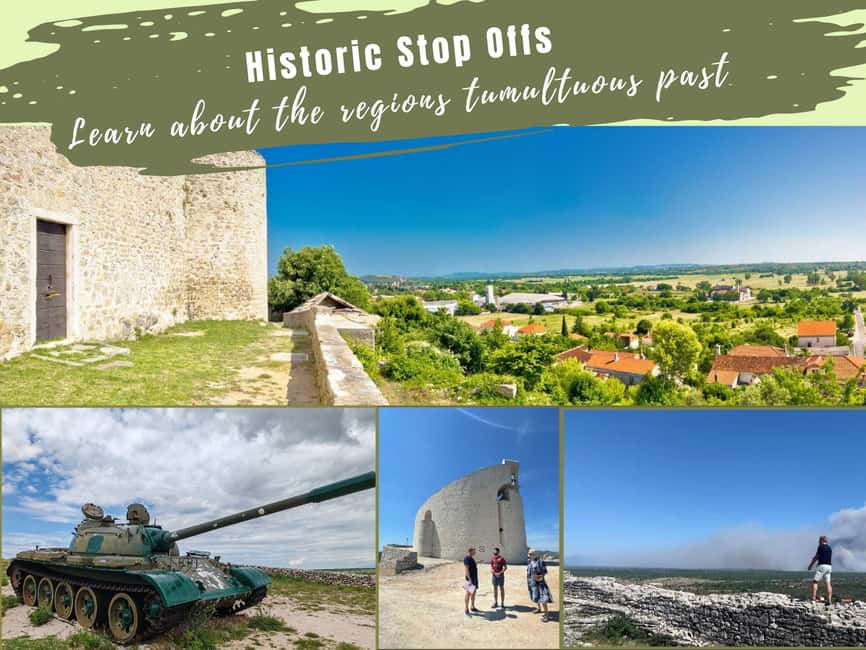
The first meaningful stop is a tank memorial connected with Operation Leap. You pause for about ten minutes, enough time for photographs and a short explanation of the conflict that helped shape modern Croatia.
This stop gives the day a serious opening. The coast can make Dalmatia feel timeless, but the region’s recent past is close at hand. The memorial helps explain why the inland area matters and why the road between coast and countryside has more than scenic value.
Do not expect a long museum visit or a large collection of displays. This is an outdoor memorial and a brief stop. Its strength is the guide’s storytelling and the chance to place the rest of the day in context. If you prefer tours that stay light and purely culinary, this part may feel more solemn than expected. I consider that a plus, since the food and wine later mean more when you understand something about the place producing them.
The ride from Zadar takes roughly 20 minutes before the first photo stop, followed by another short drive. Exact timing can vary, so keep your phone available for messages from the operator.
Benkovac Castle and the inland frontier

Benkovac Castle is the day’s clearest architectural stop. The 15th-century fortress sits on a hill and looks across the surrounding countryside. You have about 30 minutes here, with time for a guided explanation and some independent wandering.
The castle’s appeal is its position as much as its stone walls. This was a strategic zone between the Adriatic coast and the interior, and control of it shifted through long periods of conflict. The guide connects the fortress to the wider story of Dalmatia, including the rise and fall of empires in this border region.
You should expect a compact visit rather than a large restored complex filled with rooms and furnishings. The castle is best understood as a strong defensive site with wide views. Wear shoes suited to uneven stone surfaces, since historic fortresses rarely offer the smooth footing of a city pavement.
I like the way this stop breaks up the food portion of the afternoon. You are not simply driven to an olive farm, served lunch, and returned to Zadar. Benkovac gives the region a physical setting for its history, and it adds variety before the tasting.
Walking through the family olive grove
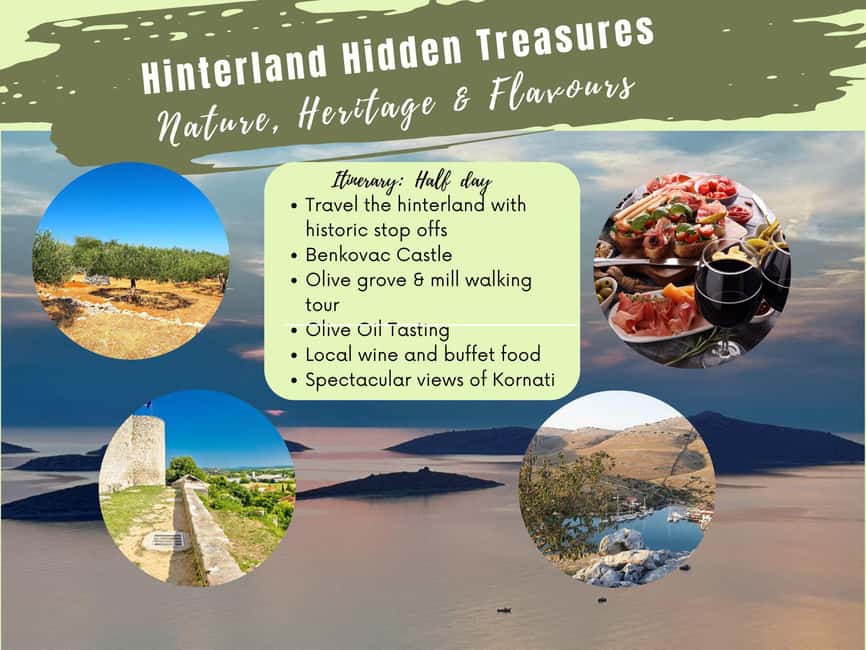
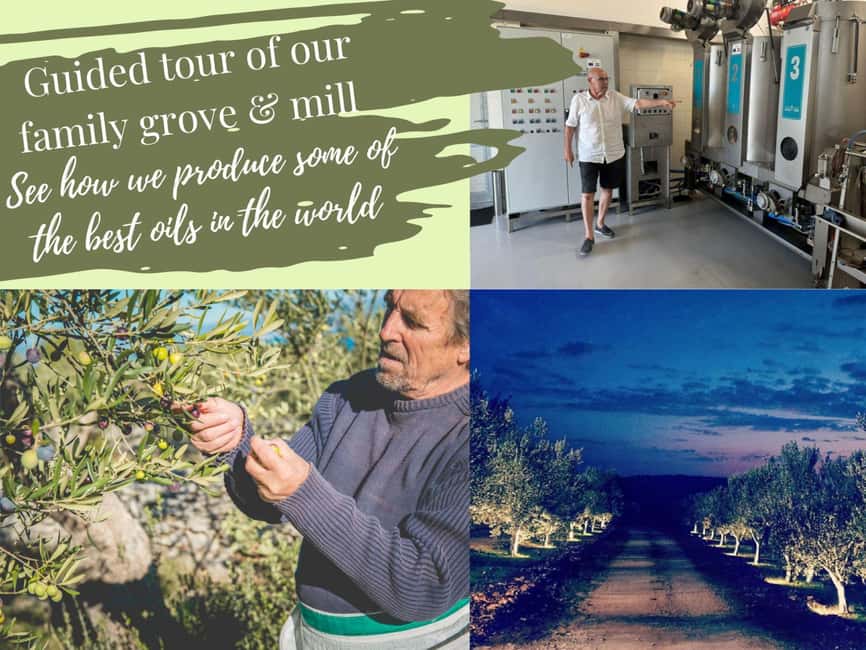
After Benkovac, the tour turns toward Lepuri and the family-owned olive grove and mill. The grove visit lasts about two hours and is the central part of the experience.
You begin with a glass of local sparkling wine, described as Dalmatia’s answer to champagne. It is a pleasant way to settle in, but the point of the visit quickly shifts to olive oil. The hosts explain how soil, climate, and family practice shape the final product.
The walk through the trees is gentle rather than strenuous. You learn how the olives are handled and why the timing and method of production matter. This is the sort of explanation that helps you shop later in Croatia. Instead of treating a dark bottle with a fancy label as proof of quality, you begin to pay attention to aroma, balance, freshness, and the character of the oil.
The experience also includes a health presentation about high-polyphenol oil. Polyphenols are natural compounds found in olives and other plants, and the hosts explain why they are valued in Mediterranean eating. The presentation is practical rather than academic, with the tasting giving you a direct way to connect the subject to flavor.
A useful point here is that the tour compares award-winning oils with lesser oils. That contrast matters. Sampling only excellent oil tells you what the producer wants you to admire. Comparing different qualities teaches you to notice flaws and differences for yourself.
Same stretch of coast, a completely different day out:
- Split: Krka Waterfalls Trip with Boat Cruise and Swimming
★ 4.8 · 10,519 reviews - Blue Cave Small-Group Boat Tour from Dubrovnik
★ 5.0 · 9,360 reviews - Full-Day Dubrovnik Elaphite Islands Cruise with Lunch and Drinks
★ 5.0 · 8,823 reviews - Blue cave, Mamma Mia and Hvar, 5 islands speedboat tour
★ 5.0 · 7,150 reviews
Inside the olive mill
At the mill, you see how modern cold-pressing methods work alongside family knowledge passed through generations. The visit does not merely present a bottle at the end of the process. It shows the place where production happens.
Cold pressing is an important part of the explanation because careful processing helps protect the oil’s aroma and quality. You do not need specialist knowledge to follow the presentation. The hosts guide you through the basics, then let the tasting do much of the teaching.
Take your time with this part. Smell before tasting, notice the balance, and pay attention to the finish. You may find peppery notes or a bitter edge in good extra virgin oil, sensations that can surprise anyone used to mild supermarket oil. The tasting tuition is one of the strongest reasons to choose this tour over a standard countryside drive.
You can buy oil or wine to take home. That option is useful, but there is no pressure built into the stated experience. If you plan to purchase oil, bring enough room in your luggage and remember that airport rules may affect how you carry liquids.
A traditional lunch beneath the trees
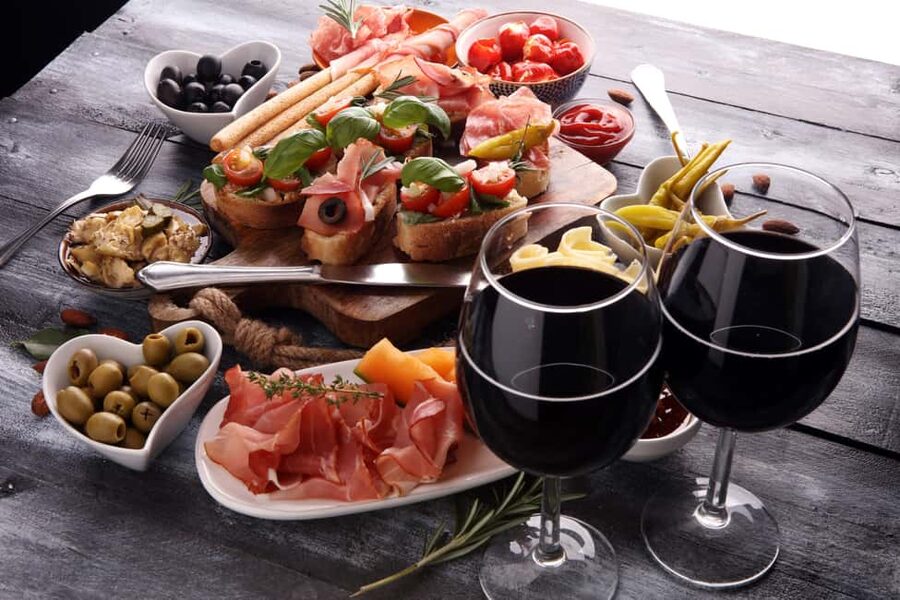
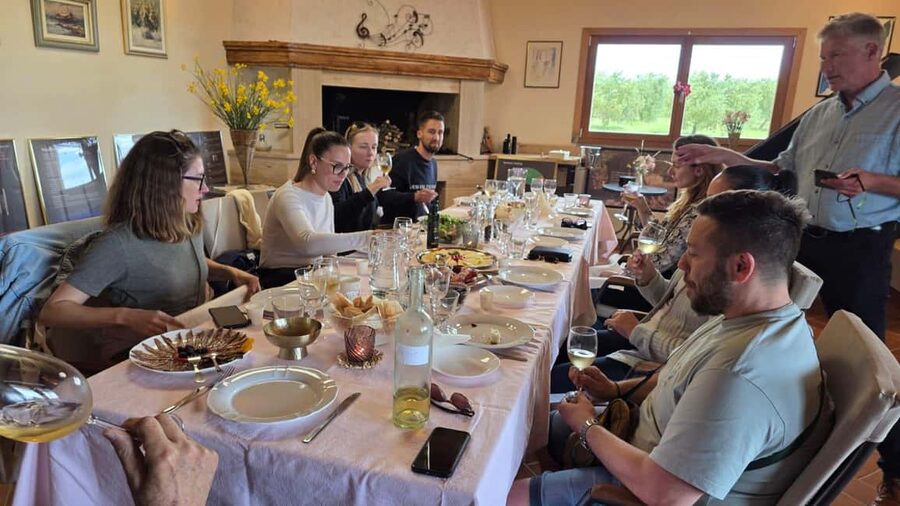
The tasting leads into a traditional Dalmatian lunch served under the olive trees. The food is seasonal and regional, drizzled with the family’s best oils. You choose a glass of local red or white wine to pair with the meal.
This is where the tour feels most personal. A family olive grove is a better setting for understanding Mediterranean food than a rushed tasting counter. The oil becomes part of the meal rather than a sample isolated on a spoon.
The exact dishes are not specified, so you should not book expecting a particular menu. You can expect local food prepared around regional products and paired with oil and wine. If you have dietary restrictions, ask in advance, since no special menu information is provided.
The meal also affects the value calculation. At $44, transportation and admission alone would make the price fair. Adding a proper lunch, wine, sparkling wine, and guided oil tasting makes it a particularly practical choice for people who want an afternoon meal built into their sightseeing.
The pace should be relaxed, but remember that the whole tour lasts only about 4.5 hours. This is a satisfying lunch stop, not an extended food workshop with several hours of free time.
Kamenjak above Lake Vrana
The final stop is Kamenjak Nature Park, a hilltop viewpoint above Lake Vrana. From here, you look across vineyards, olive groves, and the lake toward the Kornati Islands.
This is the visual payoff of the day. After hearing about soil, crops, and inland history, you see the setting that links them. The viewpoint helps you understand the relationship between the coast, the lake, the agricultural country, and the island-dotted Adriatic beyond.
The stop is described as a scenic finish, so bring a phone or camera. Clear weather will make a major difference. On a hazy day, the far islands may be less distinct, though the nearby countryside should still provide the main view.
Kamenjak is not the place for a long hike within this itinerary. The tour gives you a viewpoint stop, not an extended nature walk. That is worth knowing if you are looking for a more active national park outing. For this trip, the purpose is to pause, take photographs, and look back over the day’s route.
Transport, timing, and group size
The advertised duration is 4.5 hours, generally running from around noon or 12:30 until roughly 17:00. The exact starting time should be checked when booking, since the information gives both a midday pickup and a 12:30 to 17:00 schedule.
The route includes several short drives and a longer return journey. The listed travel portions include about 20 minutes at the start, short transfers around the memorial and Benkovac, and a longer final return toward Zadar. You will spend a fair amount of time in the vehicle, but the drives connect stops that are difficult to combine without your own transport.
Small groups are limited to eight in an air-conditioned minibus. An air-conditioned coach may be used for groups of up to 16, so check the vehicle arrangement if having the smallest possible group matters to you. A small group usually makes the oil discussion easier, especially when everyone needs to smell and taste the samples.
The live guiding is in English. The hosts are described as natural storytellers with extensive knowledge of local history, olive oil, and cuisine. The strongest praise in the supplied feedback focuses on the engaging commentary, the clear explanations, and the friendly hosting. No guide names are provided, so I would not expect a named host to be guaranteed.
Pickup and drop-off are at the same central bus station meeting point in Zadar. Pickup options from Vodice, Šibenik, or Murter are also noted, but confirm that arrangement before booking because the main meeting instructions focus on Zadar.
Who will get the most from this experience
I would choose this outing if you want several sides of Dalmatia in a single afternoon. It suits couples, friends, and solo visitors who enjoy food, regional history, and scenic drives more than demanding outdoor activity.
It is particularly good for you if:
- You want to learn how to judge olive oil, not simply taste it.
- You are curious about Croatia’s recent history as well as its medieval past.
- You would rather eat in a family grove than in a restaurant dining room.
- You are staying in Zadar without a car.
- You value a small group and English-language storytelling.
- You want a taste of the countryside but cannot spare a full day.
It may not suit you if you want a beach afternoon, a strenuous nature walk, or a long castle visit. The historic stops are brief, and the viewpoint is a short scenic stop rather than a full park excursion. Children under 12 are not accepted, babies under one are not accepted, and the stated upper age limit is 95.
The tour also may not be ideal for anyone who dislikes food-focused activities. Olive oil is not a minor theme here. It shapes the grove walk, mill visit, health presentation, tasting, and lunch.
Is $44 a fair price?
Yes, provided the included food and drink match what you are seeking. At $44, you are paying for a half-day outing with transport, a guide, historic access, sparkling wine, oil tastings, lunch, and a glass of local wine.
The best value comes from the combination. A castle tour alone would be shorter and less personal. A food tasting alone would not explain the region’s history or show you the grove and mill. A viewpoint trip alone would give you photographs but little context. This experience connects all three.
The main compromise is time. You do not get long at each historic stop, and the road transfers take a noticeable share of the afternoon. Still, that is a fair trade for seeing several destinations without arranging a car, directions, parking, and separate reservations.
Free cancellation up to 24 hours before departure and reserve-now, pay-later terms make the booking less rigid. Those policies are useful if your Zadar plans may shift, but you should still confirm the pickup time and vehicle before departure.
Should you book the Dalmatian hinterland tour?
Book it if you want an easy, well-priced afternoon that combines olive oil education, local food, and regional history. The grove and mill are the main reasons to go, while Benkovac Castle and Kamenjak prevent the day from feeling like a single-product tasting.
I would recommend it most strongly to adults who enjoy eating with a sense of place. You will leave with a better idea of how quality oil tastes, a fuller picture of inland Dalmatia, and a broad view toward the Kornati Islands.
Skip it if your priority is extensive hiking, a full castle exploration, or an unstructured afternoon. For everyone else, this is a smart way to get beyond Zadar’s waterfront without giving up an entire day.
FAQ
Where does the tour start and finish?
The tour starts and ends at the main central bus station in Zadar, in the parking area near McDonald’s. The vehicle has an olive oil advertising board on its side.
How long does the experience last?
The experience lasts about 4.5 hours. The stated schedule is around 12:30 to 17:00, while the pickup information also refers to a midday departure, so confirm the exact start time when checking availability.
What language is the tour in?
The live tour guide speaks English.
How many people can join the tour?
The usual small group has a maximum of eight people in an air-conditioned minibus. An air-conditioned coach may be used for groups of up to 16.
Is lunch included?
Yes. A traditional Dalmatian lunch with seasonal local food is included, along with a glass of local red or white wine. The food is served with the family’s olive oil.
Can I buy olive oil or wine during the experience?
Yes. You can purchase oil or wine to take home after the visit.
Who cannot join the tour?
The activity is not suitable for children under 12, babies under one year, or people over 95.
Just added around Croatia
- Postojna Cave & Predjama Castle – Shore Excursion from Rijeka★ 4.5 · 10 reviews
- Rovinj guided tour – personally ( german )★ 5.0 · 4 reviews
- Private Guided Sunset Dolphin Watching in Adriatic Sea★ 5.0 · 12 reviews
- Plitvice Lakes Day Tour from Rijeka, Simple & Safe★ 4.0 · 8 reviews
- Photo safari trough the Winnetou canyon★ 5.0 · 17 reviews
- Day trip to Poreč and Pula with lunch from Rovinj★ 5.0 · 15 reviews
- Istria Wine Tour from Rijeka and Opatija★ 5.0 · 11 reviews
- Private walking tour Opatija -Romantic spotlight of the Adriatic★ 5.0 · 12 reviews
Historical Tours, compared.


Walking Tour of Split with a ‘Magister’ of History
Read our review →
Split History and Gastro Small-Group Tour with Food and Drinks
Read our review →
PREMIUM Emperor’s Walking Tour for History Lovers + Museum
Read our review →Browse the lists this tour appears in