
Reviewed · HISTORICAL TOURS
Dubrovnik walking history tour
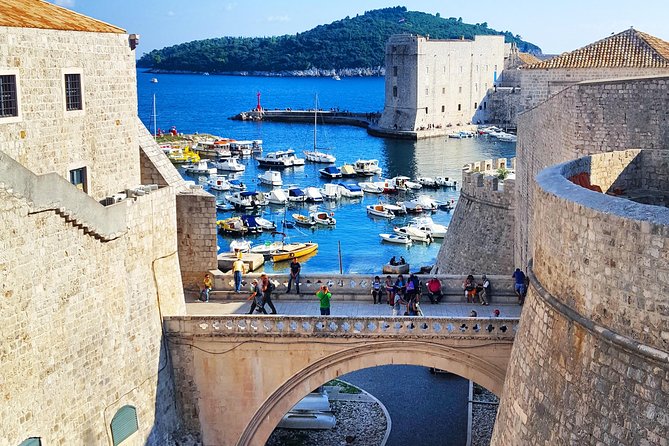
Dubrovnik’s past comes into focus one stone building at a time on this compact walk through the Old Town. From Pile Gate, you follow a licensed guide past palaces, fountains, churches, and monuments tied to the former Republic of Dubrovnik.
I like the clear 90-minute format and the way the route links major sights instead of leaving you to piece them together alone. I also like the personal touch brought by guides such as Ines, whose easy style and strong command of Dubrovnik and Croatian history have made her a memorable host for many guests.
The main drawback is simple: City Walls tickets cost extra, listed at €35 per person. The tour also has a maximum of 30 people, so it may feel less personal when fully booked.
In This Review
- Key points to know before booking
- Starting at Pile Gate, Dubrovnik’s grand front door
- Franciscan Monastery and the first Old Town stories
- Orlando’s Column and the meaning of freedom
- Onofrio’s Fountain and Dubrovnik’s 12-kilometre water system
- Sponza Palace and Dubrovnik’s working city
- Rector’s Palace and the city’s political machinery
- The Cathedral of the Assumption after the earthquake of 1667
- What the guides add to the experience
- Is $33.61 a fair price?
- Who should book this Dubrovnik walk?
- Should you book the Dubrovnik walking history tour?
- FAQ
- Where does the Dubrovnik walking history tour start?
- Where does the tour end?
- How long does the tour last?
- What language is the tour offered in?
- Is a guide included?
- Is admission to the City Walls included?
- Does the tour visit Onofrio’s Fountain?
- Which major sights are included?
- How many people can join the tour?
- Can I cancel for a full refund?
Key points to know before booking
- Start at Pile Gate: Meet at Art Go’den, Brsalje ul. 1, beside Dubrovnik’s main Old Town entrance.
- Follow the water story: Onofrio’s Fountain links the city to its 12-kilometre aqueduct, a remarkable feat for 15th-century Dubrovnik.
- See the political heart of the city: Sponza Palace and Rector’s Palace explain how Dubrovnik was governed and protected.
- Expect a strong guide-led experience: Ines is one named guide praised for her clear English, local knowledge, friendly manner, and personal stories.
- Plan for a 90-minute walk: The route covers major landmarks at a measured pace, with time for photos.
- Budget separately for the walls: Admission to the City Walls and other facilities is not included.
Starting at Pile Gate, Dubrovnik’s grand front door
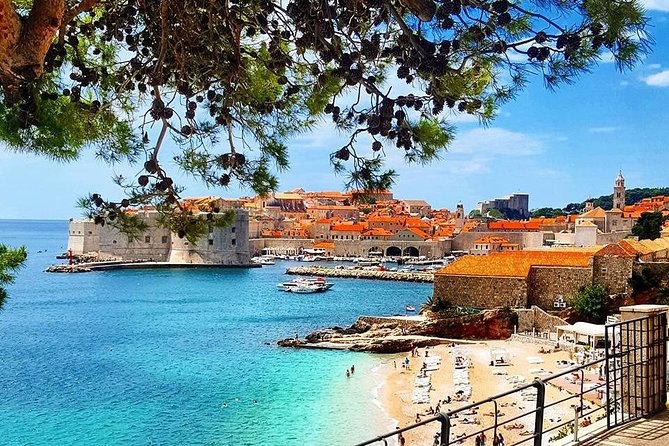
The walk begins at Art Go’den, Brsalje ul. 1, near Pile Gate. This is a useful place to start because Pile Gate is one of the clearest entry points into Dubrovnik’s Old Town, and the meeting location sits close to public transportation.
Your mobile ticket makes arrival straightforward. The experience is offered in English, and confirmation is provided when you book. The end point is the same as the starting point, which saves you from figuring out where to go after the walk.
Pile Gate is more than a meeting spot. It introduces Dubrovnik as a fortified city, with thick stone defenses and a controlled entrance into the historic center. The tour does not include a City Walls ticket, so you should not assume that meeting at Pile Gate gives you access to walk the walls.
That distinction matters. You will see and discuss some of Dubrovnik’s defensive story, but entry to the City Walls is a separate expense. The listed price is €35 per person, which can make the final cost noticeably higher if you want to add the wall walk.
A few more Dubrovnik trips to weigh up
- Dubrovnik Old Town History Walking Tour
★ 5.0 · 1,684 reviews - Game of Thrones & History of Dubrovnik Tour
★ 5.0 · 628 reviews - Dubrovnik: Old Town History Walking Tour
★ 4.9 · 474 reviews
Franciscan Monastery and the first Old Town stories
After entering the Old Town, the route includes the Franciscan Monastery. The supplied details do not specify how long the group remains here or which interior areas are entered, so think of this as a guided exterior and historic stop rather than a guaranteed extended museum visit.
This is one of the places where a guide adds real value. A first walk through Dubrovnik can feel like a procession of handsome stone facades. A good guide gives each building a role in the city’s story, helping you understand how religion, trade, public life, and defense worked together.
The most praised guides on this experience, especially Ines, are described as friendly and easygoing as well as well prepared. That combination matters. You get historical facts, but you can also ask for practical advice about the city and Croatia.
The walk is conducted at a comfortable pace. You should have time to take photographs without being hurried from one stop to the next, though a group of up to 30 people will naturally feel less intimate than a private tour.
Orlando’s Column and the meaning of freedom
The route continues to Orlando’s Column, a well-known monument connected with Dubrovnik’s freedom. This is a short but important stop because it places the city’s independence at the center of the Old Town experience.
Dubrovnik was not simply a port with attractive buildings. It developed its own political identity and guarded its freedom through diplomacy, trade, and careful relations with larger powers. Orlando’s Column gives your guide a visible point from which to explain that story.
This kind of context is one reason I prefer a guided first walk over simply following a map. A map can tell you where the column is. It does not automatically explain why a monument to freedom occupies such a prominent place in the city.
The tour’s strongest feature is its balance between large events and small details. The guides have been praised for combining formal history with local stories and personal observations. You are likely to get more than dates and architectural labels.
Onofrio’s Fountain and Dubrovnik’s 12-kilometre water system

Onofrio’s Fountain is one of the most useful stops on the route, both historically and physically. You can refresh yourself with water here while hearing how Dubrovnik developed a 12-kilometre aqueduct in the 15th century.
That aqueduct supplied the city with water, a basic need that was also a major engineering challenge. In a crowded fortified town, dependable water could be as important as walls and weapons. The fountain makes that practical side of medieval and Renaissance city life easy to understand.
I like this stop because it turns infrastructure into a story. You are not just looking at an old fountain. You are learning how Dubrovnik supported daily life inside its walls.
Bring suitable walking shoes and water of your own, especially during hot weather. The fountain provides a chance to drink, but the tour takes place outdoors and Dubrovnik’s stone streets can be tiring in strong sun. The one cancellation incident recorded for this experience involved extreme heat and a guide who became ill, a reminder that summer conditions deserve respect.
Same stretch of coast, a completely different day out:
- Blue Cave Small-Group Boat Tour from Dubrovnik
★ 5.0 · 9,360 reviews - Full-Day Dubrovnik Elaphite Islands Cruise with Lunch and Drinks
★ 5.0 · 8,823 reviews - Dubrovnik: Epic Game of Thrones Tour + Lokrum & Saver Option
★ 4.9 · 5,995 reviews - Dubrovnik: Elaphiti Islands Full-Day Cruise with Lunch
★ 5.0 · 5,938 reviews
Sponza Palace and Dubrovnik’s working city
Sponza Palace is identified as a key stop and is likely to be one of the most rewarding parts of the route for anyone interested in commerce and public life. The building helps show that Dubrovnik’s Old Town was not built only for ceremony. It was also a place of trade, administration, and daily work.
The details provided do not confirm whether the tour enters every building or includes interior admission. You should therefore treat Sponza Palace as a guided landmark stop unless your booking information says otherwise.
The value here comes from interpretation. With a guide, you can connect the palace to the wider system of streets, squares, and public buildings around it. A guide such as Ines can also help you notice details that are easy to miss when you are focused on getting the perfect photograph.
The tour description calls out Sponza Palace alongside Rector’s Palace and the cathedral, so the route is built around Dubrovnik’s main historic sights rather than obscure corners alone. That makes it a good introduction if this is your first time in the city.
Rector’s Palace and the city’s political machinery
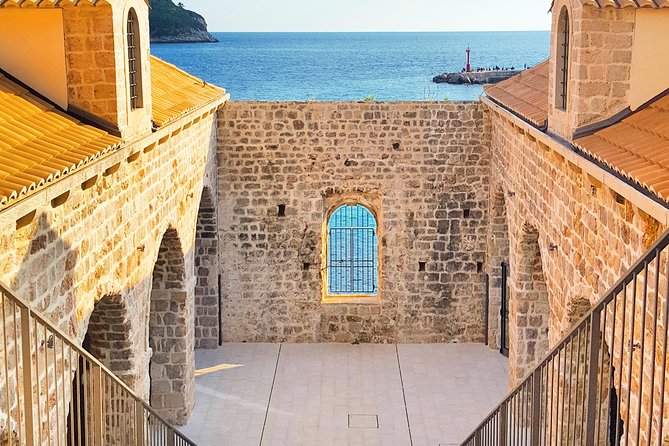
Rector’s Palace gives the walk a look at Dubrovnik’s government. The building represents the authority of the rector and the institutions that directed the republic.
This is where a short tour can help you make sense of Dubrovnik’s political character. The city had to manage its own affairs while dealing with outside pressures, and the palace provides a natural setting for that discussion.
You should expect the guide to explain the importance of the building and its place in the city rather than spend a long period inside. The experience is a walking tour, not a palace museum visit, and the overall duration is about an hour and a half.
That short duration is both a strength and a limit. I like it as a first orientation because you can cover the main sights without giving up half a day. If you want detailed interior visits, art collections, or a slower examination of every building, you will need separate time after the tour.
The Cathedral of the Assumption after the earthquake of 1667
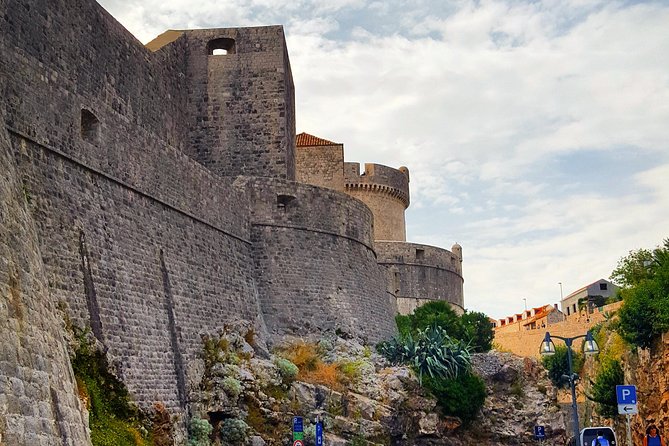
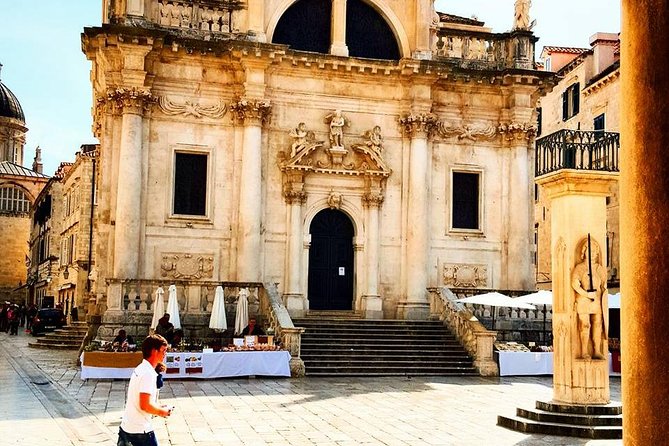
The Cathedral of the Assumption brings the route into religious architecture and disaster history. It is a baroque church built after the devastating earthquake of 1667, an event that reshaped much of Dubrovnik.
This detail gives the cathedral more weight than a simple photo stop. You can look at the building while considering how the city rebuilt itself after major damage. The guide can connect the church to the wider changes in Dubrovnik’s appearance and public life.
The tour description promises a visit to the cathedral, but it does not specify interior admission rules or how long the group stays inside. Dress and behave respectfully at a working religious site, and be prepared for access conditions to vary.
The cathedral is also a good example of the tour’s overall method. You see architecture, but you also get the event behind it. That mix of buildings and turning points is what makes a short Old Town walk useful.
What the guides add to the experience
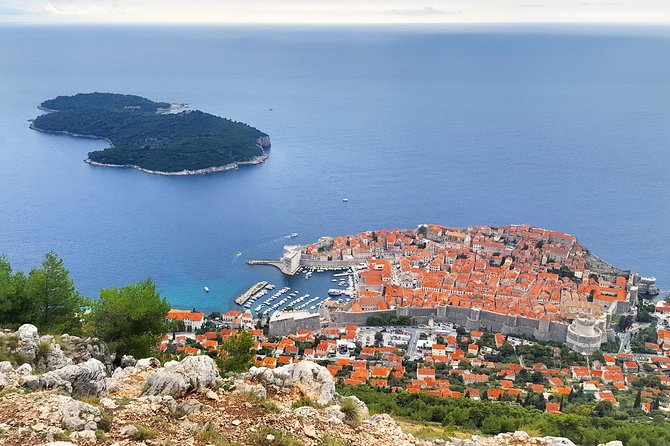
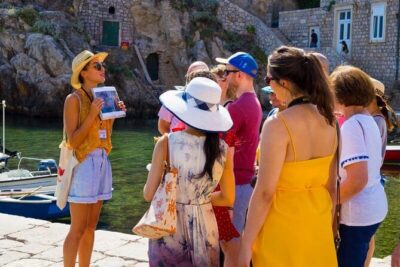
The guide is the main reason to book this experience instead of walking the same streets alone. The tour includes a licensed guide, and the strongest feedback centers on clear explanations, excellent English, friendly conversation, and a thoughtful pace.
Ines is the guide named most often in the supplied material. She has been described as easygoing, helpful, and able to discuss Dubrovnik, Croatia, and the former Yugoslavia with confidence. Her style appears to combine formal background with personal stories, which can make the material easier to remember.
You should keep in mind that guide assignments can change. The booking information does not promise Ines specifically, so book for the licensed English-language format rather than assuming she will lead every departure.
A group of up to 30 people is permitted. That is a reasonable size for a city walk, though you may need to stand close to hear clearly in busy streets. If you prefer one-to-one conversation or a very flexible route, a private tour would suit you better, but this experience is priced as a shared walk.
Is $33.61 a fair price?
At $33.61 per person, this is not the cheapest way to stroll through Dubrovnik, but the price is reasonable if you want a focused introduction led by a licensed guide.
You are paying for about 90 minutes of explanation, route planning, and historical context. You also avoid the common first-visit problem of seeing the Old Town’s landmarks without understanding how they fit together.
The value is strongest if you are new to Dubrovnik, have limited time, or want a useful foundation before exploring on your own. The price is less attractive if you already know the city well or plan to spend most of your time inside museums and monuments.
Add €35 per person if you want to walk the City Walls. Since that admission is not included, calculate the total before booking. The tour itself does not promise access to other paid facilities either.
The experience is booked an average of 48 days ahead, so popular dates may fill early. That does not guarantee every departure will sell out, but it is a useful sign to reserve ahead if your schedule is fixed.
Who should book this Dubrovnik walk?
I would recommend it to first-time visitors who want the main story without committing to a long day. It also suits cruise passengers or anyone with a tight schedule, provided the timing of the departure works with your plans.
You will get the most from it if you enjoy architecture, civic history, religious buildings, and stories about how a small republic organized itself. The route also works well for people who want a guide’s suggestions about Dubrovnik after the tour.
Families and older participants may appreciate the measured pace, though the activity is still a walking tour through a historic stone town. Most people can participate, and service animals are allowed. The information supplied does not give a specific route length, stair count, or wheelchair-access statement, so ask the provider if you have mobility concerns.
The tour is less suitable if you want the City Walls included, a private group, or extensive interior time at each monument. It is also not the right choice if you want a full-day treatment of Dubrovnik’s past.
Cancellation is free up to 24 hours before the local start time. Cancel later than that and the payment is not refunded, and changes within 24 hours are not accepted.
Should you book the Dubrovnik walking history tour?
Book it if you want a clear, friendly introduction to Dubrovnik’s Old Town, especially if a guide like Ines is available. The route covers the Franciscan Monastery, Orlando’s Column, Onofrio’s Fountain, Sponza Palace, Rector’s Palace, and the Cathedral of the Assumption in about 90 minutes.
The strongest reasons to choose it are the licensed English-language guide, the useful aqueduct story at Onofrio’s Fountain, and the careful pacing praised throughout the supplied feedback. Just budget separately for the City Walls and remember that a group of up to 30 may not feel intimate.
For a first look at Dubrovnik, the tour offers a practical balance of landmarks, local context, and manageable timing.
FAQ
Where does the Dubrovnik walking history tour start?
The tour starts at Art Go’den, Brsalje ul. 1, 20000 Dubrovnik, near Pile Gate.
Where does the tour end?
The activity ends back at the meeting point.
How long does the tour last?
The walking tour lasts approximately 1 hour and 30 minutes.
What language is the tour offered in?
The tour is offered in English.
Is a guide included?
Yes. A licensed tour guide is included.
Is admission to the City Walls included?
No. City Walls admission is not included and is listed at €35 per person.
Does the tour visit Onofrio’s Fountain?
Yes. The route includes Onofrio’s Fountain, where you can refresh with water while learning about Dubrovnik’s 12-kilometre aqueduct.
Which major sights are included?
The route includes the Franciscan Monastery, Orlando’s Column, Onofrio’s Fountain, Sponza Palace, Rector’s Palace, and the Cathedral of the Assumption.
How many people can join the tour?
The activity has a maximum group size of 30 people.
Can I cancel for a full refund?
Yes, if you cancel at least 24 hours before the experience’s start time. Cancellations made less than 24 hours before the start are not refunded.
Just added around Dubrovnik
- Full- Day Private Speedboat Tour in Dubrovnik on Elaphiti Islands★ 5.0 · 21 reviews
- Elaphiti Islands Private Dubrovnik Boat Unique Experience★ 5.0 · 10 reviews
- PRIVATE Wine Tour to Konavle country side★ 5.0 · 11 reviews
- Parasailing in Cavtat★ 5.0 · 62 reviews
- Wine tour peninsula Pelješac★ 5.0 · 3 reviews
- Wine Lover’s Tour of Peljesac Peninsula★ 5.0 · 150 reviews
- Welcome to Dubrovnik Walking Tour★ 5.0 · 36 reviews
- Dubrovnik at War 1991-1992 Private Walking Tour★ 5.0 · 4 reviews
Historical Tours, compared.


Walking Tour of Split with a ‘Magister’ of History
Read our review →

Split History and Gastro Small-Group Tour with Food and Drinks
Read our review →
PREMIUM Emperor’s Walking Tour for History Lovers + Museum
Read our review →Browse the lists this tour appears in