
Reviewed · FOOD & TASTING TOURS
Split: Private Food Tasting Tour
Split’s best food stories begin at the market, not on a restaurant menu. This two-hour private walk takes you from the Golden Gate to the Green Market, Fish Market, chocolate shop, and oldest pastry shop in the city, with small tastes along the way.
I like the mix of everyday market life and old Dalmatian snacks, especially Soparnik, prosciutto with homemade bread, salted anchovies, and almonds in sugar. I also like the way the guides connect each bite to local custom. The main consideration is that this is a tasting walk, not a full sit-down meal, and any broader wine experience may be a separate activity.
In This Review
- Key points at a glance
- Starting at Split’s Golden Gate
- The Green Market: Split’s daily pantry
- The Fish Market and the taste of the Adriatic
- Soparnik, prosciutto, and the old Dalmatian table
- A chocolate shop with an unusual claim
- Ending at Split’s oldest pastry shop
- Why the guide matters more than the checklist
- Private group value at $176
- Walking, timing, and practical planning
- Who should book this Split food walk?
- Should you book it?
- FAQ
- Where does the Split food tasting tour start?
- How long does the food tour last?
- What food and drinks are included?
- Is the tour private?
- Is hotel pickup included?
- Is the tour suitable for children or wheelchair users?
Key points at a glance
- Market-first route: Begin at the Green Market and Fish Market, where food is part of daily life rather than just a display for visitors.
- Traditional Dalmatian bites: Try Soparnik, prosciutto, cheese, anchovies, olive oil, almonds in sugar, local wine, and other small samples.
- Four distinctive food stops: The route includes the markets, a local chocolate shop with a Guinness World Record, and Split’s oldest pastry shop.
- Private format: The $176 price covers a group of up to two, making the cost $88 per person when two people share it.
- Strong guide element: Guides including Marta, Antonio, Antonia, Jakov, and Darko have led this experience at different times.
- Easy city walking: The route lasts two hours and involves limited walking, but it is not suitable for wheelchair users.
Starting at Split’s Golden Gate
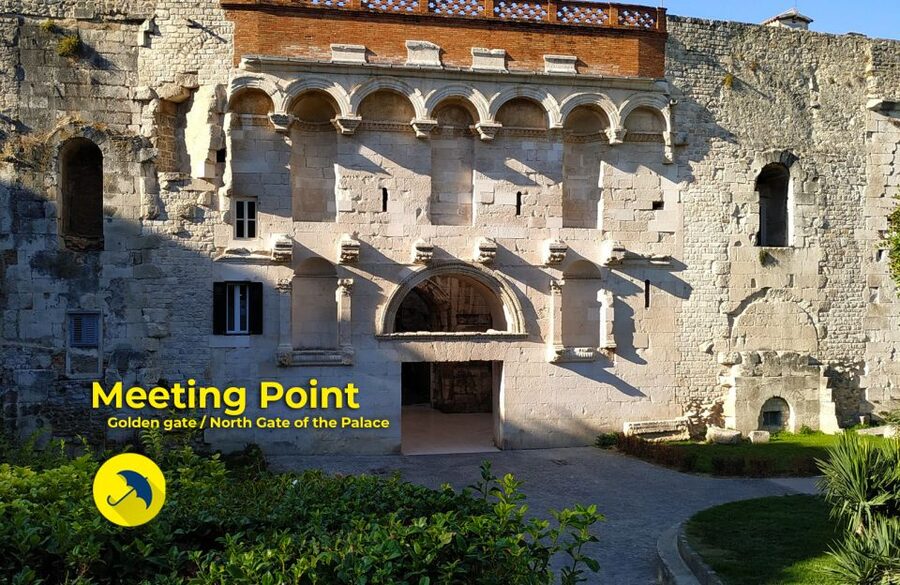
Meet beneath the bronze statue of Gregory of Nin, down the stairs from the Golden Gate of Diocletian’s Palace. Look for the guide with a blue umbrella. This is a useful meeting point because it puts you right inside Split’s old center, close to the palace walls and the city’s main food streets.
The tour returns to the Golden Gate after two hours, so you do not need to arrange transport between stops. Hotel pickup is not included. Plan to arrive a little early, since the meeting point is a landmark rather than a hotel lobby and the guide may be easier to spot once you are in the correct spot.
Starting near the palace also gives the guide a chance to place food in its setting. You are not simply handed a plate of Croatian samples. You begin in the old heart of Split and then follow the food trail toward places locals use for shopping and sweets.
More Food & Tasting Tours in Split
- Split Food Tour: Discover Split One Bite At A Time
★ 5.0 · 433 reviews - Split: Food Tasting Walking Tour
★ 4.8 · 75 reviews - Culinary Experience – Cooking Class & Walking Tour Split
★ 5.0 · 42 reviews
The Green Market: Split’s daily pantry
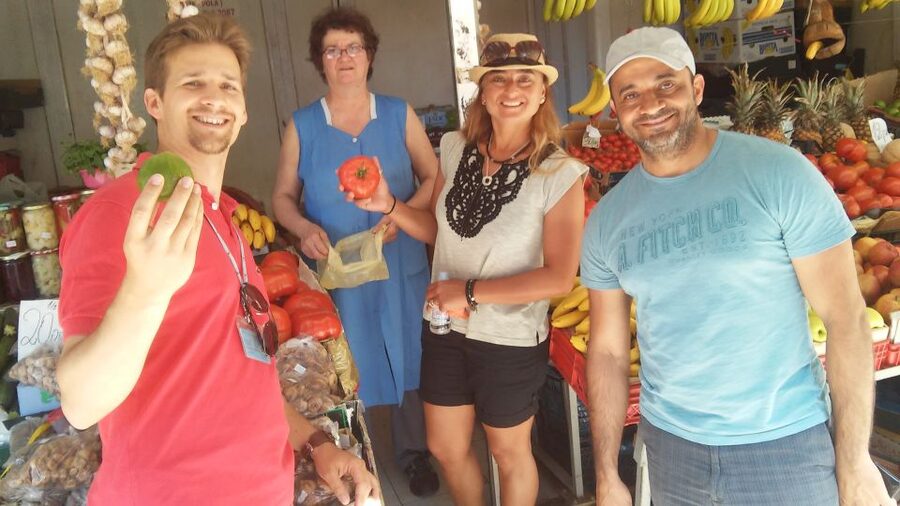
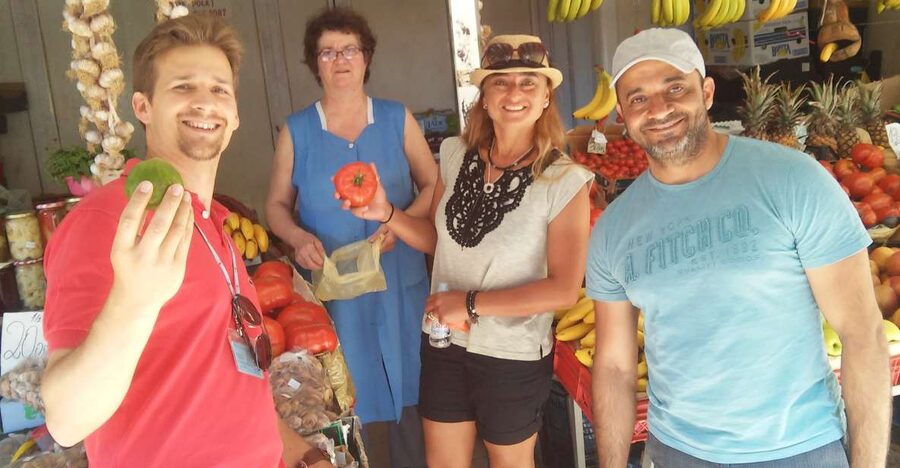
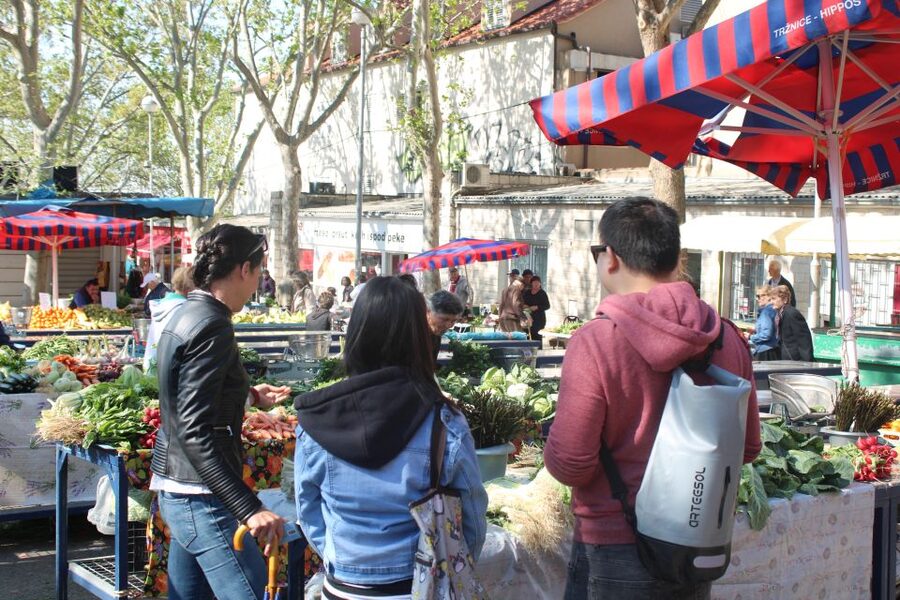
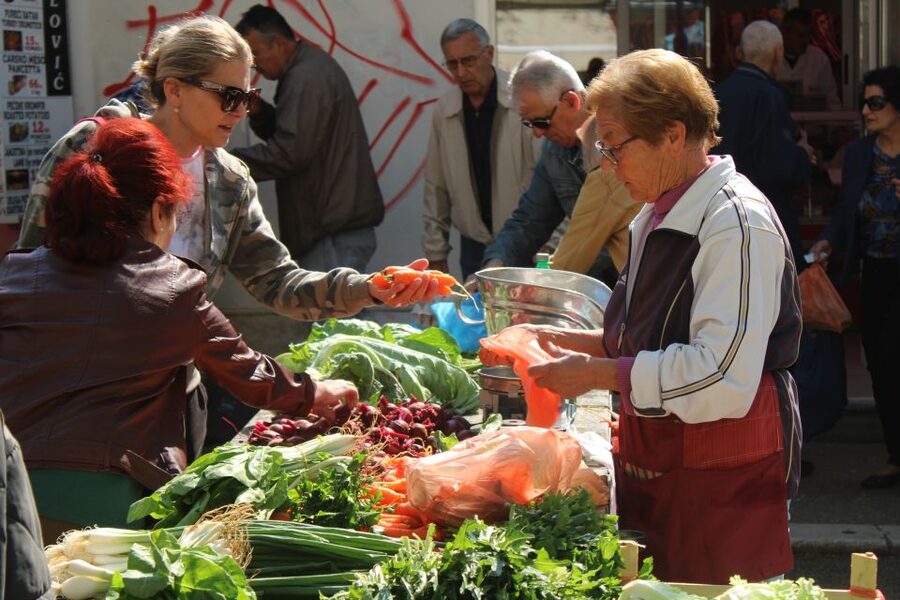
The Green Market is one of the most useful stops on the route. It is where you get a sense of the ingredients behind Dalmatian cooking: produce, nuts, olive oil, and other market goods. The exact selection can change with the season, so you should expect the market to feel more like a working food stop than a fixed museum exhibit.
This part matters because Dalmatian food is often simple on paper. Bread, cheese, cured meat, olive oil, and vegetables can sound plain until you understand the quality of the ingredients and how they fit into local meals. A guide can explain those connections in a way a restaurant menu usually cannot.
The market is also a good place to ask questions. If you are curious about olive oil, almonds in sugar, or how people use local produce at home, ask as you go. The guides have been praised for explaining food origins and customs clearly, with Marta and Antonio singled out in different tours for their friendly, engaging style.
One practical note: the food is served as samples, not as a shopping trip. You may see many things you want to buy, but the focus is tasting and explanation. If you want time to shop for gifts or ingredients, save that for after the tour.
The Fish Market and the taste of the Adriatic
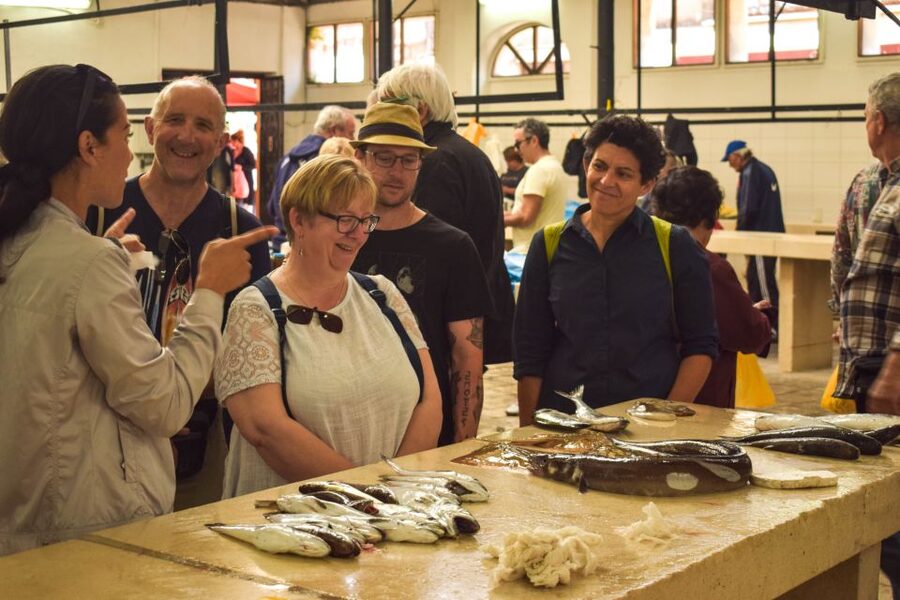
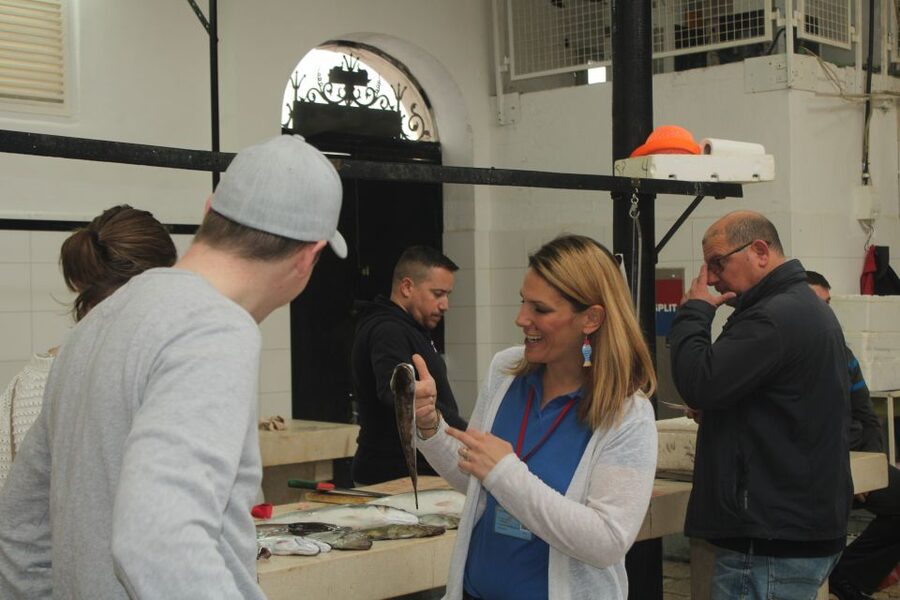
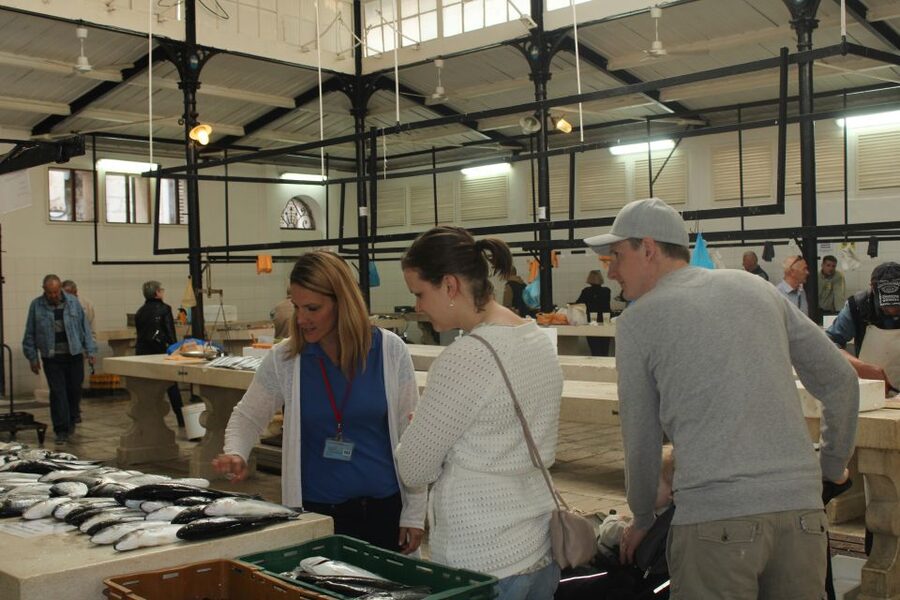
The Fish Market adds a different side of Split’s food culture. Here, the point is not just to see fish on ice. It is to understand how seafood fits into Dalmatian cooking and why fresh, local ingredients matter so much to the region.
The tour includes salted anchovies among its traditional tastes. They are a small but useful lesson in the local preference for strong, preserved flavors. Along with olive oil, bread, and cheese, anchovies show how a few well-chosen ingredients can make a satisfying snack without heavy sauces or elaborate preparation.
Past versions of related food experiences led to discussions about selecting fish and preparing it in a traditional way. The current details for this two-hour activity promise tasting rather than a fish-buying lunch or cooking class, so you should not book it expecting a full seafood meal. That distinction is important. This is a compact introduction to food culture, not an extended market-to-table workshop.
The Fish Market can also be one of the more crowded parts of the route, especially when cruise ships are in port. An earlier start may help. One tour began an hour earlier to avoid the cruise crowds, which was appreciated. Starting times vary, so check availability and ask about an early departure if your schedule allows.
Soparnik, prosciutto, and the old Dalmatian table
The heart of the tasting is the traditional snack selection. Soparnik is one of the most interesting items because it represents a dish with a long place in Dalmatian cooking. It is a savory pie made with greens and pastry, and it gives you something more substantial than a quick nibble.
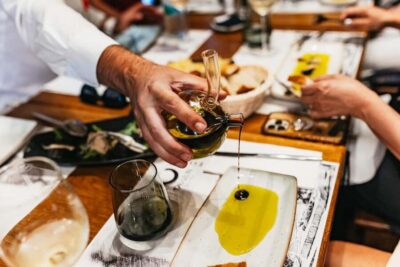
You can also expect Dalmatian prosciutto with homemade bread, cheese, salted anchovies, almonds in sugar, olive oil, and local wine. These samples cover several sides of the region’s food habits: cured meat, dairy, seafood, bakery food, preserved flavors, nuts, and wine.
I like this range because it gives you a better idea of Split than a single restaurant dish would. The samples are small, but together they form a food vocabulary. After the tour, you will have a clearer idea what to order, what to buy at the market, and which flavors you want to try again.
The portion size sounds designed for tasting rather than filling up. One account described the amount as just right, while another praised the number of samples. In practical terms, eat a light breakfast or lunch beforehand, but do not arrive after a large meal. You want room for several savory bites and sweets without expecting a full lunch.
The wine portion deserves a little care in your planning. Local wine is listed among the tastings, but a longer wine-tasting experience offered by the same provider appears to be separate and may take place later. Do not assume this food walk includes a full winery visit or a broad flight of wines. The food tour itself is the safe choice if your priority is snacks and city food stops.
Same stretch of coast, a completely different day out:
- Split: Krka Waterfalls Trip with Boat Cruise and Swimming
★ 4.8 · 10,519 reviews - From Split: Krka Waterfalls, Food & Wine Tasting Tour
★ 5.0 · 9,326 reviews - Blue cave, Mamma Mia and Hvar, 5 islands speedboat tour
★ 5.0 · 7,150 reviews - From Split: Krka Waterfalls, Food & Wine Tasting Tour
★ 4.9 · 6,598 reviews
A chocolate shop with an unusual claim
The local chocolate shop is a fun change of pace. It is noted for holding a Guinness World Record, which gives this stop an unusual hook and breaks up the market-focused portion of the walk.
The available details do not specify the exact record or the full chocolate selection, so I would not book this expecting a particular confection. Think of it as a short sweet stop with a distinctive local story. It also helps show that Split’s food identity is not limited to traditional savory dishes.
This is a good moment to ask the guide what is made locally and what is simply sold in the shop. Food tours are most useful when you learn how a place eats today as well as what it ate in the past. Guides such as Antonia and Marta have been praised for making those explanations lively rather than turning the walk into a formal lecture.
Ending at Split’s oldest pastry shop
The final sweet stop follows a sensible rule: finish with dessert. You visit the city’s oldest pastry shop and taste some of the pastries and sweets Split has to offer.
This ending works well for two reasons. First, it gives the tasting a clear rhythm, moving from market ingredients to savory snacks and then to pastry. Second, it leaves you with an easy idea for a later stop. If you find a sweet you like, you can return on your own.
The pastry shop is not presented as a long meal or baking lesson. It is a tasting stop, and the exact sweets may vary. That is normal for a short food walk. The value comes from the setting, the story, and the chance to sample several categories of local food in one morning or afternoon.
Why the guide matters more than the checklist
The strongest part of this experience is likely to be the person leading it. Food samples are easy to copy, but the background and local connections depend on the guide.
Marta has been praised for combining Split’s culture, food, and stories, and for answering questions with warmth. Antonio has been noted for explaining the history behind the food and for making the stops enjoyable. Antonia has been described as thorough, with generous samples and clear explanations of food and drink.
Jakov has also led the tour, bringing a strong interest in history and cooking. Darko was praised for his grasp of local food and drink. The guide assigned to you can vary, so you should not book on the promise of one particular person unless the provider confirms it.
The best guides make a snack feel like a clue. Soparnik becomes more than pastry with greens. Prosciutto and bread become a lesson in preservation and local habits. The market becomes a place where you can read the city through what people buy.
Private group value at $176
The listed price is $176 for a private group of up to two. For two people, that works out to $88 each. For a couple or two friends who want a personal pace, that can be reasonable, especially if you value direct access to the guide and do not want to join a larger group.
The value is less clear for a solo visitor, since the same group price applies. You are paying for a private experience rather than a cheap snack crawl. The tour makes the most sense when you want orientation, food advice, and cultural context in one compact outing.
The private format may also help if one person in your group has strong food preferences or lots of questions. At two hours, the tour is short enough to fit on a first day in Split, before another activity or dinner reservation.
There are limits. You are not paying for hotel pickup, a cooking class, a full lunch, or a separate winery excursion. If your main goal is to eat a large meal, compare this with a longer food or cooking experience. If your goal is to understand what to eat in Split and taste several traditional items without giving up half a day, the price is easier to justify.
Walking, timing, and practical planning
The route covers several central food stops but is not described as a long walk. One account specifically praised the coverage without too much walking. You should still expect normal city movement, stairs near the Golden Gate, and market surfaces that may not be perfectly smooth.
The tour is not suitable for wheelchair users. Children must be accompanied by an adult, and unaccompanied minors are not allowed. The minimum drinking age is 18, which matters because local wine is part of the tasting selection.
English is the tour language, and the guide is licensed. The group type is private, so you do not have to share the walk with strangers. Confirmation is provided at booking, and you can cancel up to 24 hours before the activity for a full refund. Reserve now and pay later is available, which is useful when your Split schedule is still changing.
For the best experience, I would choose an early start if possible. The markets are central to the route, and an earlier time can reduce the effect of cruise ship crowds. Wear comfortable shoes, arrive hungry but not starving, and keep your afternoon open if you are considering a separate wine activity.
Who should book this Split food walk?
I would choose this tour for a first visit to Split, especially if you want a quick introduction before choosing restaurants and market foods on your own. It also suits couples who prefer a private guide and people who enjoy stories as much as samples.
It is a good fit for curious eaters who want traditional Dalmatian snacks rather than a standard restaurant meal. The combination of Soparnik, prosciutto, anchovies, cheese, sweets, olive oil, and local wine gives you a broad first look at the region’s table.
I would be more cautious if you need a wheelchair-accessible route, want a full lunch, or expect a serious wine tasting. The food tour includes local wine, but the longer wine and olive oil experience appears to be a separate booking, with its own timing and stops.
Should you book it?
Book it if you want a compact food orientation to Split, a private English-speaking guide, and several traditional tastes in two hours. The markets, Guinness World Record chocolate shop, and oldest pastry shop give the route more character than a simple list of restaurant samples.
The price is easiest to defend for two people sharing the private booking. Go in expecting generous samples and useful food stories, not a full meal or cooking class. If that sounds right, this is a smart way to get your bearings and learn what to seek out during the rest of your time in Dalmatia.
FAQ
Where does the Split food tasting tour start?
It starts at the Golden Gate of Diocletian’s Palace, down the stairs from the bronze statue of Gregory of Nin. Look for a guide carrying a blue umbrella.
How long does the food tour last?
The tour lasts two hours. Starting times vary, so check availability when booking.
What food and drinks are included?
Tastings include prosciutto, cheese, almonds in sugar, Soparnik, salted anchovies, local wines, olive oil, and other traditional snacks. The route also visits a chocolate shop and a pastry shop.
Is the tour private?
Yes. It is a private group experience, with the listed price covering a group of up to two people.
Is hotel pickup included?
No. Hotel pickup is not included. You meet the guide at the Golden Gate and return there after the tour.
Is the tour suitable for children or wheelchair users?
Children must be accompanied by an adult, and unaccompanied minors are not allowed. The tour is not suitable for wheelchair users. The minimum drinking age is 18.
More Food in Split
- Split History and Gastro Small-Group Tour with Food and Drinks
★ 5.0 · 375 reviews - Split: Blue Lagoon, Shipwreck and Šolta with Food and Drinks
★ 4.5 · 248 reviews - Private Split: Visit Diocletian Palace & Taste Food at the Market
★ 5.0 · 33 reviews - Food Tour in Split ( Small Group)
★ 4.8 · 15 reviews
More Food & Drink in Split
- Split: Blue Lagoon and 3 Island Cruise with Food and Drinks
★ 4.8 · 1,969 reviews - Krka National Park Tour with tour Guide & Wine tasting from Split & Trogir
★ 5.0 · 1,625 reviews - Split/Trogir: Krka National Park Day Trip with Wine Tasting
★ 4.7 · 925 reviews - Full-Day Catamaran Cruise to Hvar & Pakleni Islands with Food and free Drinks
★ 5.0 · 670 reviews
Just added around Split
- Split Sunset Stand Up Paddle Tour★ 5.0 · 16 reviews
- Split: Sunset Guided Kayaking Tour★ 4.8 · 71 reviews
- Split&Sip: Educational wine tasting★ 4.9 · 52 reviews
- Stand Up Paddle Tour in Split★ 4.7 · 17 reviews
- Split: Guided Walking Tour in English★ 4.9 · 10 reviews
- Split Walking Tour: History, Legends & Tales★ 5.0 · 9 reviews
- Split – Walking in Khaleesi Footsteps in the City of Dragons★ 5.0 · 13 reviews
- Split Walking Tour with History Professor★ 5.0 · 23 reviews
Food & Tasting Tours, compared.
Split Food Tour: Discover Split One Bite At A Time
Read our review →
Dubrovnik Old Town Food Tour: Small-Group Experience
Read our review →
Pelješac Full-Day Wine and Food Tour from Dubrovnik
Read our review →Browse the lists this tour appears in