
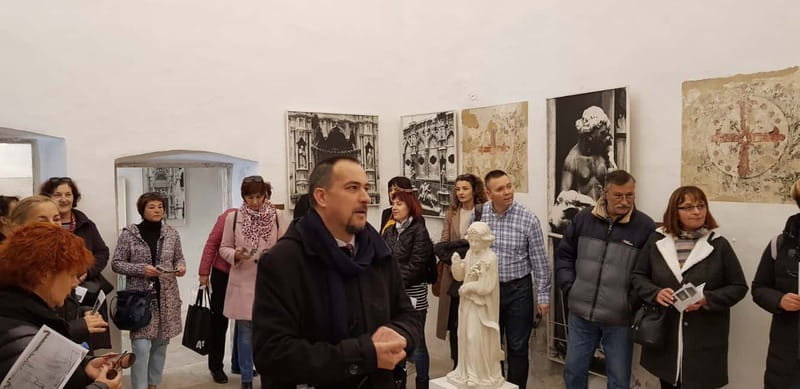
Reviewed · OLD TOWN WALKING TOURS
Šibenik: Medieval Night Walking Tour
Šibenik’s old center changes character after sunset. Its narrow lanes, stairways, covered passages, and stone arches were not built for bright evening lighting, so a night walk gives you a much better feel for the medieval town than a quick daytime circuit. Guide Dario Mikulandra leads you into the city’s stories, from the Cathedral of St. James to the old cistern and a cave beside St. Lawrence Monastery.
I like the tour’s small-scale focus on local details, especially the pillar of shame, the first public lighting lamp from 1895, and the places where medieval townspeople collected water. I also like the timing: one hour is long enough to add character to your evening without taking over your day.
The main drawback is the short length. At $49 per person, this is not a broad city tour, and there are no church or museum entries at night. You are paying for a guided walk and storytelling, so it suits you best if you care more about atmosphere and context than ticking off interiors.
In This Review
- Key points to know before you book
- Why Šibenik works especially well at night
- Starting at the Cathedral of St. James
- The Four Wells and Šibenik’s water problem
- The oldest street and the stairways of the old town
- St. Lawrence Monastery and the old-town cave
- Medieval rules, fairs, and the pillar of shame
- The cathedral bells, December 17, and public light
- Churches, chapels, and the first Šibenik doctor
- What makes Dario’s guiding effective
- Who will get the most from this one-hour walk
- Is $49 a fair price?
- Practical details for a smooth evening
- Should you book the Šibenik Medieval Night Walking Tour?
- FAQ
- How long does the Šibenik Medieval Night Walking Tour last?
- Where does the tour meet?
- Where does the tour end?
- Which languages are available?
- Are church and museum entrance fees included?
- Can I cancel the booking?
Key points to know before you book

- Šibenik after dark: Walk streets more than 600 years old, including narrow lanes and steep stairways.
- Dario Mikulandra: A trained guide and member of a medieval brotherhood leads the walk in English, Croatian, or Serbo-Croatian.
- Cathedral of St. James: Hear how light shaped the cathedral’s design and what its construction meant to Šibenik.
- Four Wells cistern: See the medieval water system and learn how water was collected inside the city.
- Unusual old-town corners: Visit a cave beside St. Lawrence Monastery, the oldest street, and the site of the pillar of shame.
- A practical one-hour tour: The walk returns to the cathedral meeting point and fits neatly into an evening in town.
Why Šibenik works especially well at night
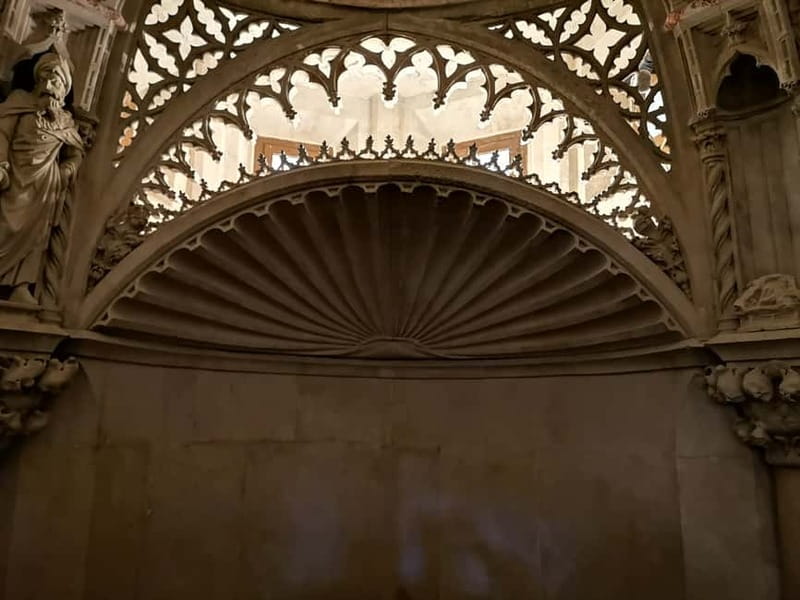
Many Dalmatian towns are best known for waterfront views and sunny stone lanes. Šibenik offers those, but its old center has another side: a maze of passages built before modern street lighting, with stairs and tight corners that can feel almost theatrical after dark.
I like the fact that this experience uses darkness as part of the subject. You are not simply walking around after dinner while someone recites dates. The guide explains how people moved through the town, prayed in darkened monasteries, escaped from a medieval fair, and dealt with water shortages and disease.
That setting also helps you notice the city’s scale. Šibenik hides more than 30 churches, and the walk brings you through a concentration of religious and civic sites without trying to cover every one. You get a sense of how tightly life was packed inside the old town.
The tour lasts one hour. That makes it easy to pair with dinner, an earlier cathedral visit, or a longer independent walk the next morning. It also means the guide has to keep moving. If you want a long stop at every building or a detailed architectural lecture, this will feel brisk.
More Old Town Walking Tours in Sibenik
- Sibenik: Guided Evening Walking Tour
★ 4.9 · 62 reviews - The Best of Sibenik Private Walking Tour
★ 5.0 · 13 reviews - Sibenik: Guided Walking Tour
★ 5.0 · 8 reviews
Starting at the Cathedral of St. James
The meeting point is important. Go to the main entrance portal of the cathedral, facing west. This is not the cathedral door with the lions. The correct entrance is opposite the statue of sculptor Juraj Dalmatinac.
From here, the guide introduces the cathedral and the story of its construction. You will hear why light mattered in the design and what building the cathedral represented to the people of Šibenik. The focus is not only on the finished stonework, but also on the city’s ambition and religious life.
The Cathedral of St. James is one of the great sights of Šibenik, so this opening gives the rest of the walk a clear anchor. You can return in daylight to inspect its exterior details more closely. One previous visitor found the cathedral worth revisiting the following morning, and that is good advice because nighttime is better for mood while daylight is better for examining the stone.
The tour does not include church or museum entrance fees. At night, this is mainly an exterior and street-level experience. If entering the cathedral is a priority, plan a separate visit.
The Four Wells and Šibenik’s water problem
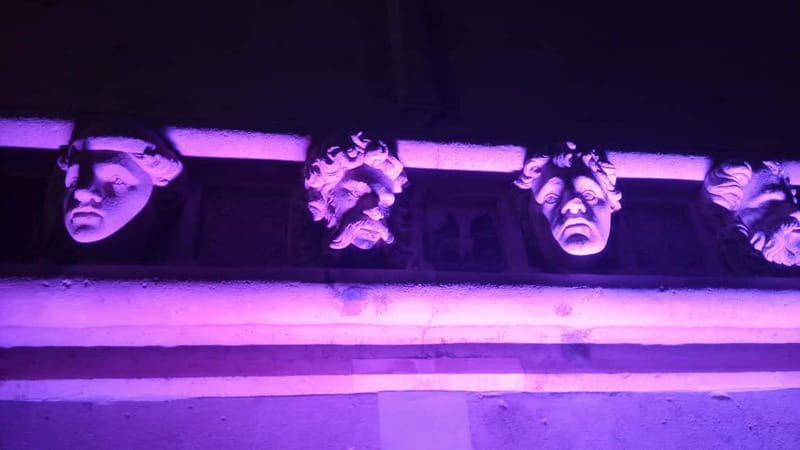
The medieval cistern of Four Wells is one of the most useful stops because it connects architecture with daily survival. The guide explains what the cistern looked like inside and how people collected water.
In a medieval town, water was not a minor convenience. A cistern helped the city function through dry periods and supported homes, religious buildings, and public life. Seeing the structure gives you something concrete to hold on to when the tour moves into broader stories about the town.
This is also the kind of stop that is easy to miss on your own. From the street, an old opening or stone structure may not look special. With a guide explaining its purpose, you can read it as part of Šibenik’s basic infrastructure rather than just another historic feature.
The cistern visit is a good example of the tour’s value. You are not paying only for a walk through attractive streets. You are paying for the explanations that make ordinary-looking places meaningful.
The oldest street and the stairways of the old town
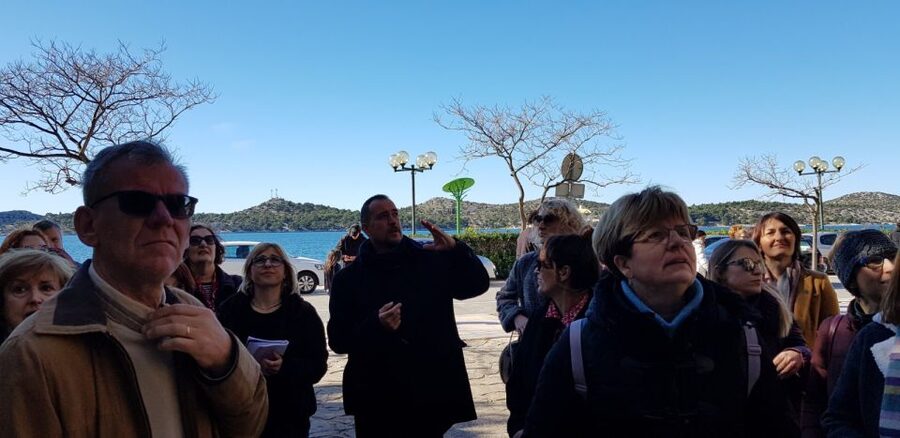
The walk continues through the oldest street in Šibenik and along narrow lanes shaped by the medieval city plan. You will also tackle many stairs. Comfortable shoes are sensible, even for a one-hour outing.
The streets help explain how houses were built inside the old core. The guide discusses why homes took the forms they did and how buildings fitted into limited space. The old town was not planned around cars, broad sidewalks, or easy access. It grew through foot traffic, close-packed homes, churches, passages, and defensive needs.
That makes the route interesting, but it also creates a practical limitation. The walk is not ideal for anyone who finds uneven stone streets or repeated stairs difficult. The information provided does not describe a step-free route, so ask before booking if mobility is a concern.
I like this part because the city becomes something you can read with your feet. A stairway is not just a climb. A covered passage is not just a photogenic corner. Together, they show how people moved through Šibenik centuries ago.
Same stretch of coast, a completely different day out:
- Vodice: Krka Waterfalls National Park Boat Tour
★ 4.6 · 250 reviews - Split: Krka National Park Full-Day Tour with Wine Tasting
★ 4.9 · 142 reviews - Krka Waterfalls National Park Boat Tour from Vodice
★ 4.5 · 43 reviews - National Park Krka by speed boat
★ 4.5 · 42 reviews
St. Lawrence Monastery and the old-town cave
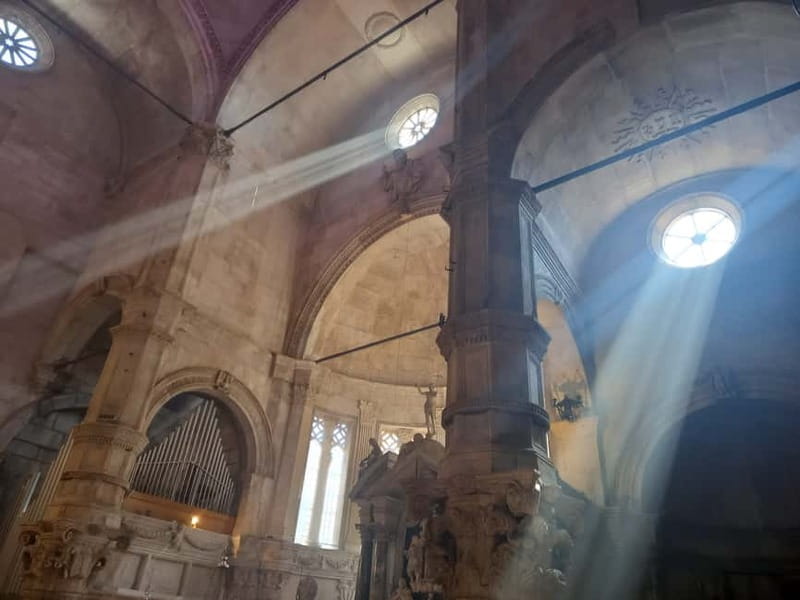
One of the tour’s more unexpected stops is a cave next to the Monastery of St. Lawrence. It is a striking detail in a town better known for stone churches and sea views, and it gives the walk a sense of discovery without requiring a long trip outside the center.
The monastery also connects to the tour’s stories about prayer and civic life. You will hear how nuns prayed for the city in darkened monasteries, a detail that brings the town’s religious world closer to everyday experience.
The cave and monastery are especially useful stops for families and younger children. The route is not simply a sequence of dates and architectural labels. There are physical places to look at, odd corners to remember, and stories about people behaving under pressure, fear, faith, and temptation.
The precise access conditions for the cave are not specified, so do not assume it is a large open attraction or a fully lit interior. Treat it as a brief historical stop within the walking route.
Medieval rules, fairs, and the pillar of shame
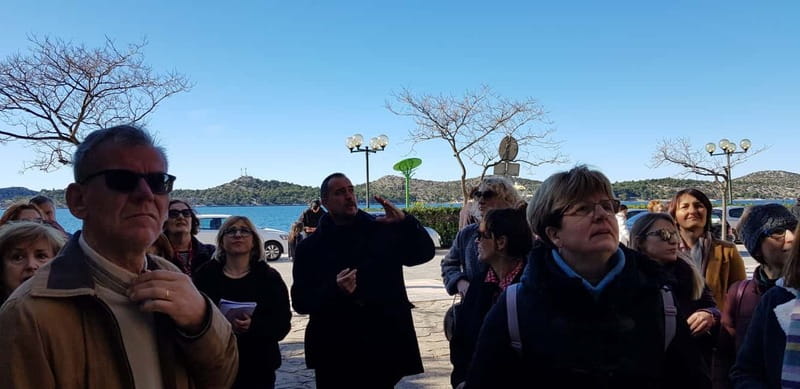
The guide points out where Šibenik’s pillar of shame once stood. That stop opens a window onto public punishment and the rules that governed medieval life.
You will also hear where cheaters escaped from the medieval fair. Details like this give the tour some humor and human scale. Medieval people were not simply church builders and plague victims. They traded, cheated, fled, argued, prayed, and tried to avoid public disgrace.
This is one of the reasons I would choose a specialist night walk over a generic orientation tour. The route includes places connected to behavior and local custom, not just the most famous façades. You learn how the city worked socially, not only when its buildings were built.
The guide also explains why there are no weddings in Šibenik during May. The supplied information does not give the reason in advance, which is a good example of the kind of local question to save for the walk. It is more enjoyable to hear the explanation in place than to receive every answer before you arrive.
The cathedral bells, December 17, and public light
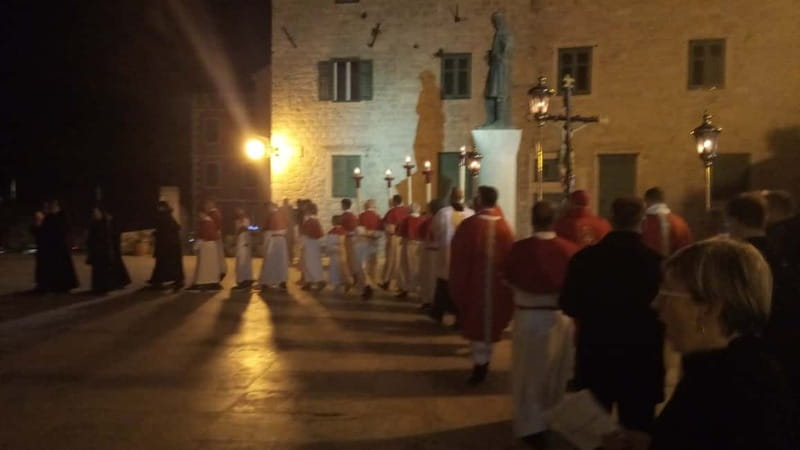
The tour includes several stories that connect time, sound, and light. You will hear how midnight on December 17 was greeted and why all 72 bells of the city rang.
That detail helps you picture Šibenik as a town whose public life was heard as much as seen. Bells marked religious occasions and organized the day. In a dark city, sound carried information across the lanes.
You will also see the first public lighting lamp from 1895. It is a small but telling marker of change. The medieval streets were built for darkness, while the lamp represents a newer city adapting to modern public life.
I like the contrast between these two ideas. The tour begins in a world shaped by limited light, candlelight, and bells, then points to the arrival of public lighting. In a short route, you get a sense of how Šibenik moved from medieval habits toward the modern city.
Churches, chapels, and the first Šibenik doctor
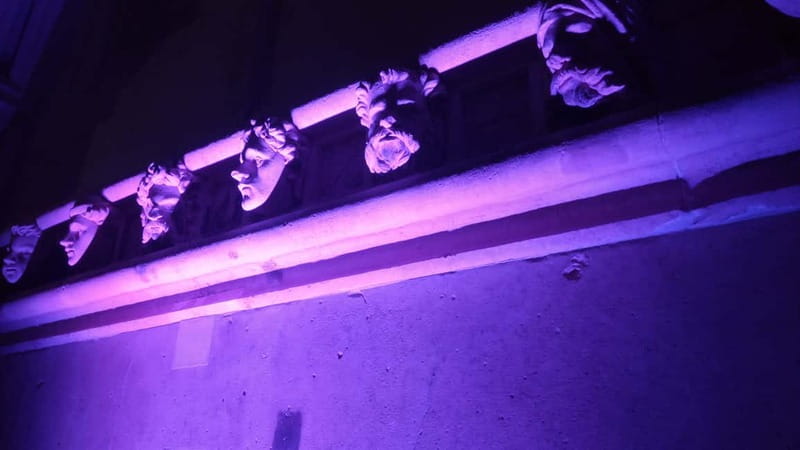
The walk includes the Church of St. John and its reliefs. It also visits the chapel of Šibenik’s first doctor, dating to 1419. These are not simply extra stops added to lengthen the route.
The chapel points to the city’s medical past and to the role of individual professionals in a small medieval community. It is a reminder that Šibenik’s story includes health, illness, and practical care as well as worship and trade.
The guide also discusses the plague that nearly destroyed the city in 1649. That subject adds weight to the lighter stories about fairs and wedding customs. Disease shaped cities in direct ways, affecting population, work, religion, and fear.
You should not expect a full course in Dalmatian medical history during a one-hour walk. Instead, these stops give you several sharp glimpses into how people lived. If a particular church or chapel catches your attention, note its location and return in daylight.
What makes Dario’s guiding effective
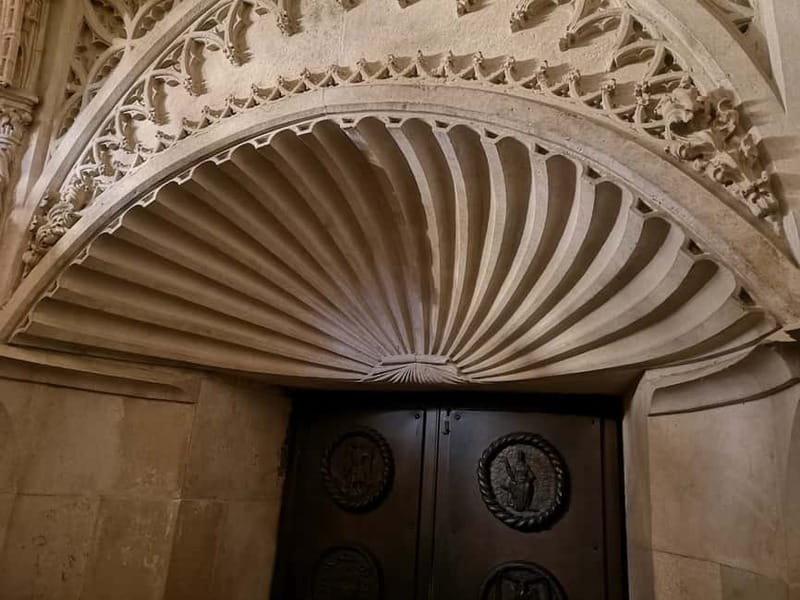
Dario Mikulandra is the named guide for this experience, and his approach is central to its value. He leads in English, Croatian, or Serbo-Croatian and is described as passionate, engaging, and well informed about Šibenik and the surrounding area.
His English is reported to be strong, and his humor helps keep the material from becoming too solemn. That matters on a night walk covering plague, punishment, religious devotion, and medieval hardship. The tone appears lively rather than formal.
He also handles questions, which is useful because the route raises topics that invite conversation. You can ask about the cathedral, local customs, the city’s surrounding area, or the meaning of a particular feature.
Maps and brochures are provided in your language. Use them as a memory aid after the tour. The best plan is to mark the places you want to revisit in daylight, especially the cathedral, St. Lawrence Monastery gardens, and the city museum.
Who will get the most from this one-hour walk
I would choose this tour if you have just arrived in Šibenik and want the old center to make sense before exploring it alone. The route gives you a useful framework for a second walk, and it helps you spot details that might otherwise pass unnoticed.
It also suits families. A family with two young children enjoyed the mix of history and physical places, and I can see why. The cave, stairs, cistern, bells, and pillar of shame offer more variety than a standard lecture.
History fans will appreciate the concentration of subjects. You get medieval construction, water supply, religion, public punishment, medicine, plague, local customs, and the arrival of public lighting in a compact route.
You may want something else if you prefer entering major monuments, taking photographs in daylight, or walking at a very slow pace. The tour does not include admissions, and one hour leaves little room for long interior visits.
Is $49 a fair price?
At $49 per person, this is a premium price for a one-hour walk. The value depends on how much you want interpretation rather than transport or admission tickets.
There is no coach, meal, museum ticket, or cathedral entry included. You are paying for a specialist guide, a carefully chosen route, maps, brochures, and access to local stories that are difficult to assemble on your own.
For a solo visitor or couple, the price may feel high beside a free self-guided stroll. For a family or small group, it can make more sense if the guide keeps everyone interested and helps you use the rest of your time well.
Free cancellation up to 24 hours before the start and the reserve-now, pay-later option reduce the risk of booking. If the price fits your budget, I would book it early in your stay, then use the guide’s suggestions for your next day in Šibenik.
Practical details for a smooth evening
Meet at the cathedral’s main west-facing entrance portal, opposite the statue of Juraj Dalmatinac. Do not wait by the cathedral doors with the lions.
The walk ends back at the same meeting point. Hotel pickup may be arranged if needed, with the guide waiting at the hotel reception, but confirm this when booking rather than assuming it is automatic.
Starting times vary, so check availability for your date. The tour is offered in English, Croatian, and Serbo-Croatian.
Wear shoes suited to old stone streets and stairs. Since this is an evening walk through narrow passages and darker areas, bring enough light to watch your footing without turning the walk into a bright sightseeing march.
Should you book the Šibenik Medieval Night Walking Tour?
Book it if you want Šibenik to feel like a lived-in medieval town rather than a collection of attractive buildings. Dario’s route covers the cathedral, Four Wells cistern, oldest street, St. Lawrence Monastery, the old-town cave, churches, chapels, public punishment, plague, bells, and early street lighting in just one hour.
I especially recommend it for first-time visitors, families, and anyone who enjoys local stories with a little humor. Skip it if you need extensive interior access or find $49 steep for a short walk.
For the right audience, the darkness is the point. You finish with a clearer sense of how Šibenik’s people found water, worshipped, worked, broke rules, survived disease, and moved through streets built long before electric light.
FAQ
How long does the Šibenik Medieval Night Walking Tour last?
The tour lasts one hour. Starting times vary, so check availability for your chosen date.
Where does the tour meet?
Meet at the main entrance portal of the Cathedral of St. James, facing west. It is opposite the statue of sculptor Juraj Dalmatinac, not the cathedral doors with the lions.
Where does the tour end?
The walk ends back at the cathedral meeting point.
Which languages are available?
The live guide leads the tour in English, Croatian, or Serbo-Croatian.
Are church and museum entrance fees included?
There are no church or museum entrance fees included because this is a night walking tour. The experience includes the guided walk, maps, and brochures in your language.
Can I cancel the booking?
You can cancel up to 24 hours in advance for a full refund. You can also reserve now and pay later.
More Evening Experiences in Sibenik
- Split: Illuminated Evening Guided Kayaking Tour
★ 4.8 · 1,622 reviews - Dubrovnik: Sea Kayaking&Snorkelling Guided Day/Sunset Tours
★ 4.8 · 1,554 reviews - Dubrovnik: City Walls Early Morning or Sunset Walking Tour
★ 4.8 · 1,523 reviews - 3hours all inclusive Sunset&Dolphin Tour from Medulin on Sandra
★ 5.0 · 1,130 reviews
More Walking Tours in Sibenik
- From Sibenik: Private Walking Sibenik Sightseeing Tour
★ 4.9 · 15 reviews - Šibenik walking tour in one hour!
★ 5.0 · 6 reviews - Dubrovnik: Old Town Walking Tour
★ 4.8 · 5,174 reviews - Split: Old Town and Diocletian Palace Walking Tour
★ 4.9 · 4,727 reviews
Just added around Sibenik
- The beauty of the Middle Ages-Šibenik★ 4.7 · 7 reviews
- Šibenik walking tour in one hour!★ 5.0 · 6 reviews
- Sibenik: Full-Day Kornati National Park Boat Tour★ 5.0 · 19 reviews
- RIVIERA TOUR FROM ŠIBENIK, ZLARIN, PRVIĆ AND TIJAT★ 4.6 · 14 reviews
- From Sibenik: Private Walking Sibenik Sightseeing Tour★ 4.9 · 15 reviews
- Private Krka Waterfalls Tour from Split with stop in Trogir★ 5.0 · 5 reviews
- Panorama & Wine tour – Eco City Tour Šibenik★ 5.0 · 4 reviews
- Panorama Tour – Eco City Tour Šibenik★ 4.8 · 31 reviews
Old Town Walking Tours, compared.
Walking Tour of Split and Diocletian’s Palace
Read our review →
Krka Waterfalls tour with Trogir Walking tour and Krka panoramic boat cruise
Read our review →
City Walls Early Morning or Sunset Walking Tour
Read our review →
Plitvice Lakes with Boat Ride and Zadar Old Town Tour
Read our review →Browse the lists this tour appears in