
Reviewed · WALKING TOURS
From Sibenik: Private Walking Sibenik Sightseeing Tour
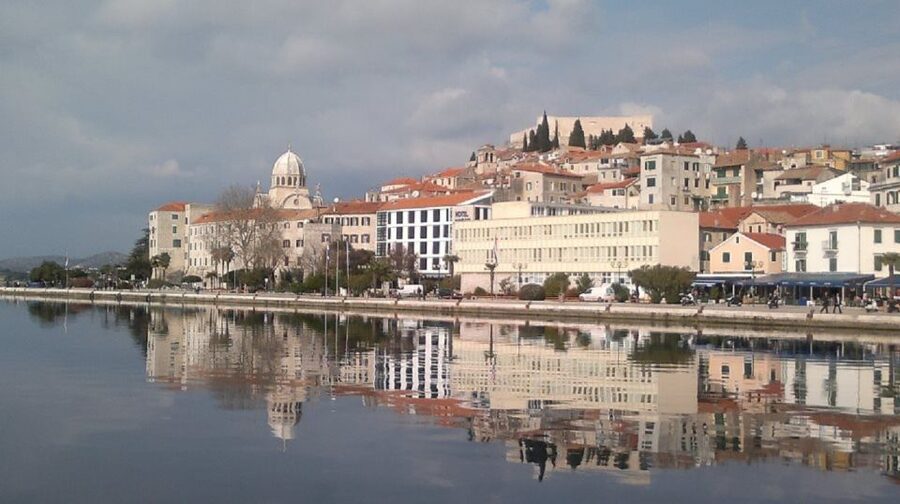
Šibenik’s greatest attraction is not one single monument. It is the way stone streets, staircases, churches, and old walls fit together above one of the Adriatic’s most sheltered harbors. This private walk gives you a local guide to explain why the city feels older and more distinctive than its modest size suggests.
I like the focus on St. James Cathedral, a daring Renaissance building made entirely of stone, and I like the small questions built into the route: why the main square is not in the city, why one church has four bells, and why another changed its patron saint. Irena, the guide named in the feedback, is praised for warm storytelling, strong German and English, humor, shade breaks in the summer, and useful restaurant advice.
The main consideration is timing. The advertised walk lasts 90 minutes, which is enough for a lively introduction but not enough for a slow inspection of every church and alley. One booking was scheduled for two hours and finished after one hour and 40 minutes, so confirm the expected duration if you want a longer outing.
In This Review
- Key points to know before booking
- Why Šibenik works so well on foot
- Meeting at the waterfront and entering the old town
- St. James Cathedral and a bold stone structure
- Churches that reveal the city’s local character
- Four Wells and the practical side of medieval Šibenik
- The square that is not in the city
- Croatian National Theater and an early electric glow
- The city walls, stairways, and Mediterranean atmosphere
- What Irena adds to the walk
- Is $188 good value for a private group?
- Who should book this Šibenik walk?
- Should you book it?
- FAQ
- How long does the Šibenik walking tour last?
- What is the price of the private tour?
- Which languages does the guide speak?
- Is the tour private?
- What sights are included in the walk?
- What should I wear or bring?
- Are meals and drinks included?
Key points to know before booking
- St. James Cathedral is the centerpiece: See a rare Renaissance church built entirely from stone slabs and ribs, without binding material.
- The route reaches beyond the postcard sights: Expect churches, Four Wells, the Croatian National Theater, squares, stairways, and traces of the old walls.
- Irena brings a personal touch: She leads in Croatian, English, or German and is noted for warmth, humor, family awareness, and practical local tips.
- You get a private group: The $188 price covers a group of up to 20, so it offers better value for a family or larger party than for one or two people.
- Plan for uneven walking: Šibenik’s old town has narrow winding lanes and many staircases, making comfortable shoes essential.
- Dress for church visits: Shoulders and knees must be covered when entering religious sites.
Why Šibenik works so well on foot
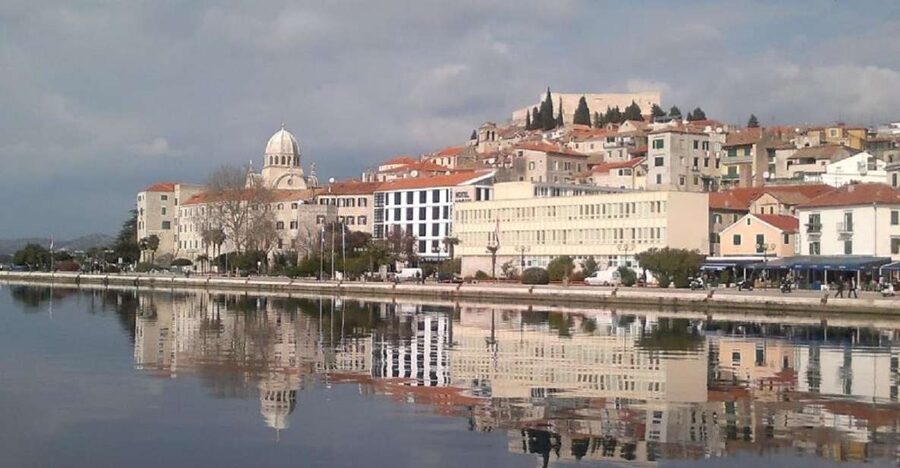
Šibenik is the oldest native Croatian city on the Adriatic. Its position in a protected natural harbor helped shape its role and its character. You can sense the logic of the place as you walk: the old town rises in stone above the waterfront, with lanes that bend, climb, and open into small squares.
I like cities that reveal themselves slowly, and Šibenik does exactly that. A broad avenue rarely gives you the full picture here. Instead, you pass through a tight lane, climb a staircase, and suddenly reach a church front, a public square, or a view toward the harbor.
The old town also gives the walk a clear sense of time. Some corners feel close to the 15th or 16th century, not because the city has been turned into a museum, but because its stone houses and street plan still shape daily movement. A guide helps you connect those physical details with the people who built, defended, worshiped in, and lived among them.
This is not a sightseeing tour built around long drives or a list of distant stops. You spend the full experience walking through the historic center. That keeps the pace personal, but it also means you should be ready for steps, hard paving, and warm sun in summer.
A few more Sibenik trips to weigh up
- Sibenik: Guided Evening Walking Tour
★ 4.9 · 62 reviews - Šibenik: Medieval Night Walking Tour
★ 5.0 · 19 reviews - The Best of Sibenik Private Walking Tour
★ 5.0 · 13 reviews
Meeting at the waterfront and entering the old town
The proposed meeting point is a parking lot on the waterfront, beside a gas station. That is practical if you are arriving by car, but it is not the sort of grand historic meeting spot you might expect in an old European city. Look for the exact directions provided with your booking, especially if you are meeting a guide during a busy port day.
From the waterfront, the walk leads toward the historic center and its compact lanes. You will quickly notice the difference between modern Šibenik and the older city above it. The historic area is made for walking, with narrow passages and frequent stairs rather than broad, level streets.
Your guide’s role matters here. Without context, a stone wall is simply a stone wall. With Irena, you can learn how the city’s churches, public works, rulers, and neighborhoods fit together. Her approach is described as both informative and easygoing, more like walking with a local friend than following a scripted lecture.
That personal format is especially useful for families. Irena has been praised for including a young child in the conversation, and a private group lets you pause briefly, ask questions, or adjust the pace without worrying about a larger party.
St. James Cathedral and a bold stone structure
St. James Cathedral, also called the Cathedral of St. Jacob, is the clear high point of the walk. Construction took about a century, which tells you something about the scale of the undertaking and the patience required to finish it.
The building is unusual because it was made entirely of stone. Its structure uses stone slabs and ribs without binding material, an audacious method that makes the cathedral important not only in Croatia but across European architecture.
Look closely at the design rather than rushing past it. The trefoil front facade gives the church an unusual profile, while the overall structure depends on a careful balance of curves, slabs, and supporting elements. The effect is both sturdy and refined.
A guide can turn this stop from a quick photograph into a lesson in building methods, civic pride, and faith. The cathedral reflects generations of Šibenik residents who financed, supported, and waited for the work to be completed. That long construction period is part of the story, not a footnote.
The cathedral also gives you a useful way to understand Šibenik. This was not simply a collection of homes around a harbor. Its people invested in a building that announced the importance of their city. I would allow extra time here if you enjoy architecture, since the 90-minute schedule may keep the explanation moving.
Churches that reveal the city’s local character
The walk visits several churches, but the value comes from the specific stories attached to them. St. Francis Church, for example, is presented as different from the other churches in the city. That kind of comparison is more useful than a string of dates because it gives you a reason to look carefully at the building.
The Church of the Assumption of the Blessed Virgin Mary brings another set of questions. You will learn who uses it and who built its interesting bell tower. The guide also offers a memory trick for recalling the artist’s name, a small detail that can make the information stick after the tour ends.
St. John the Baptist Church had special importance during the Middle Ages and later changed its patron saint. That change gives you a glimpse of how religious practice and local identity can shift over time. It also reminds you that old buildings are not frozen in one period. They continue to be used, renamed, repaired, and understood in new ways.
St. Krsevan is identified as the oldest church in town. Its age gives the stop weight, but the more useful question is why it survived and what role it played in the old city. This is where a local explanation can add more than a plaque.
Saint Barbara’s Church has four bells, and the tour explains why. You will also learn when those bells ring. It is a modest detail, but it connects the church to the sound and rhythm of city life rather than treating it as an isolated monument.
Remember that shoulders and knees must be covered when entering religious venues. Even on a hot day, carry a light layer or wear clothing that meets the requirement. You may see the exteriors regardless, but suitable clothing lets you enter without an awkward interruption.
Same stretch of coast, a completely different day out:
- Vodice: Krka Waterfalls National Park Boat Tour
★ 4.6 · 250 reviews - Split: Krka National Park Full-Day Tour with Wine Tasting
★ 4.9 · 142 reviews - Krka Waterfalls National Park Boat Tour from Vodice
★ 4.5 · 43 reviews - National Park Krka by speed boat
★ 4.5 · 42 reviews
Four Wells and the practical side of medieval Šibenik
The public cistern called Four Wells was built during the Middle Ages. Its presence shows the practical problems behind the beauty of the old town. Water supply was not an invisible service delivered through modern pipes. It required public infrastructure, planning, and shared access.
I like this stop because it balances the grand cathedral and decorated churches. Šibenik’s story is not only about rulers and religious buildings. It is also about the basic systems that allowed people to live on a steep, stone-built site.
The guide explains why the cistern was needed and adds other details about the town. Those smaller facts often help you read the streets differently after the tour. A staircase becomes part of a larger urban system. A square becomes a place where people gathered, not just a convenient place to stop for a photograph.
The square that is not in the city
One of the tour’s more unusual puzzles concerns Šibenik’s main city square and why it is not in the city. The wording is intentionally curious, and the answer gives you a chance to think about how boundaries and public spaces developed.
This is the kind of local question that makes a private walk worthwhile. A standard guidebook may tell you the name of a square, but a local guide can explain the oddity behind it and connect it to the city’s changing shape.
You will also hear about King Petar Kresimir and why he matters to Šibenik and its people. That story places the city within the wider development of Croatian identity. The tour does not treat the past as a parade of unfamiliar names. It links one important ruler to the place you are standing in.
Croatian National Theater and an early electric glow
The Croatian National Theater in Šibenik adds a different mood to the walk. When it was built, it was described as the largest and most beautiful theater in southern Europe. In 1896, it received electric lighting, reportedly making it one of the first theaters in the world to do so.
That detail is easy to remember because it changes the way you picture the city. Šibenik is not only medieval lanes and old stone churches. It also had an appetite for modern public life, performance, and new technology.
The theater stop helps keep the tour from becoming too narrowly focused on the distant past. You see how the city moved from medieval public works to modern cultural ambition. I would not expect a theater performance or an interior tour as part of this walking experience, but the exterior and its story add welcome variety.
The city walls, stairways, and Mediterranean atmosphere
The remains of the city walls help explain Šibenik’s defensive past and its compact layout. You can see how protection, terrain, and limited space shaped the old center. The lanes are not arranged for modern traffic, and that is part of their appeal.
You will walk through winding streets toward attractive squares, with stone houses and staircases creating a strong Mediterranean feel. The route is scenic, but it is not effortless. The paving can be hard underfoot, and the steps may slow anyone with limited mobility.
Bring comfortable shoes, as requested for the activity. Also carry water, especially in the warmer months. One guide, Irena, has been attentive to the sun and has stopped in shaded places to explain the sights. That is a practical habit, but you should still dress for a warm outdoor walk.
The compact setting makes a 90-minute tour possible, though you should not expect a leisurely look at every detail. If you stop often for photographs or ask many questions, the guide may need to keep the route moving. That is not a flaw, but it is worth understanding before you book.
What Irena adds to the walk
The guide can make or break a city walk, and Irena’s style is a strong reason to consider this one. She leads in Croatian, English, and German. Her German has been described as excellent, and her English tours are noted for clear explanations, humor, warmth, and strong local feeling.
She also knows how to make the tour useful beyond the monuments. You can ask about current life in Šibenik, restaurants, or places to eat after the walk. A recommended lunch spot received a positive mention, but remember that meals are not included in the tour price.
The private format lets you ask direct questions. If you want more detail about architecture, you can focus there. If you are traveling with children, you can ask for shorter explanations or a more flexible pace. For a group of 20, that personal attention may be harder to maintain, so clarify the group size when booking if that matters to you.
The advertised guide languages are Croatian, English, and German. No other language is listed, so do not assume a different language is available without asking.
Is $188 good value for a private group?
The price is $188 per group, with up to 20 people included. For one or two people, that is a serious cost for a 90-minute walk. For a family, reunion, or larger private party, the calculation looks much better because the price does not rise per person within the stated limit.
The value comes from the guide’s local interpretation, not from included extras. Guide services and taxes are included. Meals, drinks, and gratuity are not included, and you will need to arrange any lunch or refreshments yourself.
Compared with a self-guided walk, you are paying for the stories behind the odd details: the square that is not in the city, the Four Wells cistern, the church with four bells, and the reasons certain churches matter. If you enjoy architecture and local history, those explanations can justify the cost.
If you are traveling alone or as a couple on a tight budget, a shared city walk may be better value, if one is available for your dates. If privacy, flexible questions, and a personal guide matter more, this tour makes more sense.
The booking terms are friendly to changing plans. You can reserve now and pay later, and cancellation up to 24 hours in advance brings a full refund. Starting times depend on availability, so check the schedule before building the rest of your day around it.
Who should book this Šibenik walk?
I would choose this tour if you want a strong introduction to Šibenik before exploring on your own. It suits architecture fans, first-time visitors, families, and anyone who prefers stories over silent sightseeing.
It is also a good fit if you are arriving by car, since the proposed meeting place is at the waterfront parking lot. The 90-minute length works well before lunch, after arrival, or as a compact orientation at the start of a stay.
You may want something else if you dislike stairs, have difficulty walking on uneven stone, or want long interior visits at every church. The tour is also less appealing if you only want free time for photographs. Its purpose is explanation and conversation, not simply a route between viewpoints.
Should you book it?
Book this private Šibenik tour if you want the old town to make sense, not just look attractive. The cathedral alone is worth seeing, but the smaller stories about churches, water, bells, theaters, rulers, and city boundaries give the walk its real character.
The best value comes with a group large enough to share the $188 fee. Wear suitable clothing for church visits, use comfortable shoes, and confirm the timing if you want more than the advertised 90 minutes. For a personal, story-led introduction to Šibenik, especially with Irena in English or German, this is a solid choice.
FAQ
How long does the Šibenik walking tour last?
The advertised duration is 90 minutes. Starting times depend on availability.
What is the price of the private tour?
The price is $188 per group for up to 20 people.
Which languages does the guide speak?
The available guide languages are Croatian, English, and German.
Is the tour private?
Yes. It is offered for a private group.
What sights are included in the walk?
The route includes Šibenik’s narrow old-town streets, St. James Cathedral, historic churches, the Croatian National Theater, Four Wells, attractive squares, and remains of the city walls.
What should I wear or bring?
Bring comfortable shoes because the old town has many staircases and stone streets. Shoulders and knees must be covered when entering religious venues.
Are meals and drinks included?
No. Meals and drinks are not included, and gratuity is optional.
Just added around Sibenik
- The beauty of the Middle Ages-Šibenik★ 4.7 · 7 reviews
- Šibenik walking tour in one hour!★ 5.0 · 6 reviews
- Sibenik: Full-Day Kornati National Park Boat Tour★ 5.0 · 19 reviews
- RIVIERA TOUR FROM ŠIBENIK, ZLARIN, PRVIĆ AND TIJAT★ 4.6 · 14 reviews
- Private Krka Waterfalls Tour from Split with stop in Trogir★ 5.0 · 5 reviews
- Panorama & Wine tour – Eco City Tour Šibenik★ 5.0 · 4 reviews
- Panorama Tour – Eco City Tour Šibenik★ 4.8 · 31 reviews
- Sibenik: Stunning views, History & Tasting – Croatia in day★ 4.9 · 9 reviews
Walking Tours, compared.



Walking Tour of Split and Diocletian’s Palace
Read our review →


Krka Waterfalls tour with Trogir Walking tour and Krka panoramic boat cruise
Read our review →
City Walls Early Morning or Sunset Walking Tour
Read our review →
Browse the lists this tour appears in