
Reviewed · COOKING CLASSES
Half-Day Cooking Workshop Gastronomy in Korcula
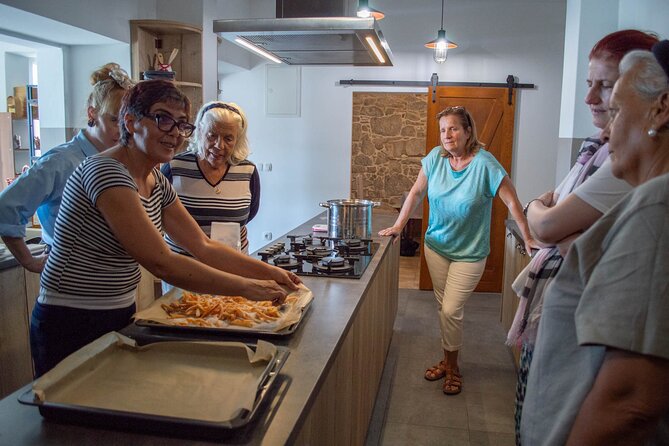
The best part of this Korčula experience is that you do not simply watch someone cook. Sanja and Anastasia put you to work, from rubbing toppings onto bruschetta to shaping Žrnovski makaruni and making Lumblija, Blato’s traditional cake. Then you sit down to eat what you made with local wine.
I like the small group, capped at 12, and the warm family setting in Sanja’s home. I also like the food’s strong sense of place: garden tomatoes, local olive oil, handmade pasta, and a cake with a 200-year-old recipe. The main consideration is the location. Blato is about 50 minutes from Korčula by bus, so you need to allow extra time for the trip and arrange your own way to the meeting point.
In This Review
- Key points to know before booking
- Why this class is worth the trip to Blato
- Starting with bruschetta and homemade treats
- Rolling Žrnovski makaruni by hand
- Making Lumblija, Blato’s old celebration cake
- Eating in the house with local wine
- What the four-hour schedule feels like
- Price, group size, and overall value
- The main drawbacks to keep in mind
- Who should book this Korčula cooking class?
- Should you book the Blato workshop?
- FAQ
- Where does the cooking workshop begin?
- How long does the experience last?
- What food will I prepare?
- Is wine included?
- Can children join the class?
- How many people can join?
Key points to know before booking
- Blato gives the class a real local setting: Meet at the bus station in central Blato, then travel a short distance to Sanja’s home.
- Sanja and Anastasia teach by doing: You help prepare every course rather than sitting through a cooking demonstration.
- The menu is distinctly Korčulan: Make bruschetta, Žrnovski makaruni with meat or tomato sauce, and Lumblija cake.
- Family groups are welcome: Children have been included at every stage, and the class can work with special diet requirements if arranged.
- The meal is part of the experience: Your cooking ends with a shared meal, homemade drinks, and local wine from small producers.
- The price reflects more than lunch: At $95.31 per person, you are paying for instruction, ingredients, transport from the Blato meeting point, and a four-hour cultural activity.
Why this class is worth the trip to Blato
Korčula Town gets most of the island’s attention, but Blato offers a different kind of afternoon. This inland town is the setting for a cooking class built around home recipes, family methods, and produce from the garden. You are not being rushed through a tourist restaurant kitchen. You are spending time in a working home kitchen with people who make these foods regularly.
That matters because Croatian cooking is often less about exact measurements and more about judgment. The instructors teach you to feel the dough, adjust the sauce, and use whatever produce is best that day. The recipes are traditional, but the class is not stiff or museum-like. You get a practical look at how food is made in a Korčulan household.
The journey adds some planning, but it also keeps the experience from feeling like a standard town-center activity. From Korčula, Blato is roughly a 50-minute bus ride. You meet at the bus station in Blato, where you can also leave a car, and Sanja can take you from there to the house. One account describes the drive from the station as about five minutes.
If you arrive by car, pay attention to parking rules. Parking near the bus station may require a fee, with the paid slip displayed on your dashboard. The meeting point is listed as 1. Ul. 22, 20271 Blato, and the operator can meet you at the central bus station.
A few more Korcula trips to weigh up
- Truffle hunting & cooking tour
★ 5.0 · 257 reviews - Traditional Cooking Class in Dubrovnik Countryside
★ 5.0 · 168 reviews - Split Cooking Class
★ 5.0 · 142 reviews
Starting with bruschetta and homemade treats
The cooking begins with an easy, useful dish: bruschetta. These grilled bread bites are topped according to the fresh ingredients available and your preferences. The choices may include vegetable, meat, or fish toppings.
This opening course works well because it gets everyone involved quickly. You can begin chopping, spreading, grilling, and tasting without waiting for a long explanation. The class has also included a Croatian-style hummus, which gives the familiar bread course a local twist. Homemade juices, candied lemon and orange peel, and small snacks may appear while you work.
The ingredients are an important part of the setting. Fresh tomatoes, basil, lemons, and other produce have come from Sanja’s garden. You can taste the difference between food built around what is available nearby and a menu designed months ahead for a restaurant kitchen.
For anyone with dietary needs, contact the operator before the class. Sanja has worked with special diet requirements, but the available substitutions depend on the menu and the ingredients on hand. It is best to discuss this before you arrive rather than assume every dish can be changed at the last minute.
Rolling Žrnovski makaruni by hand
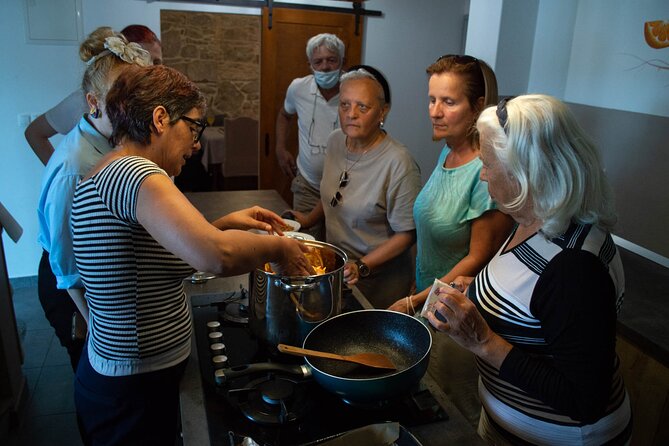
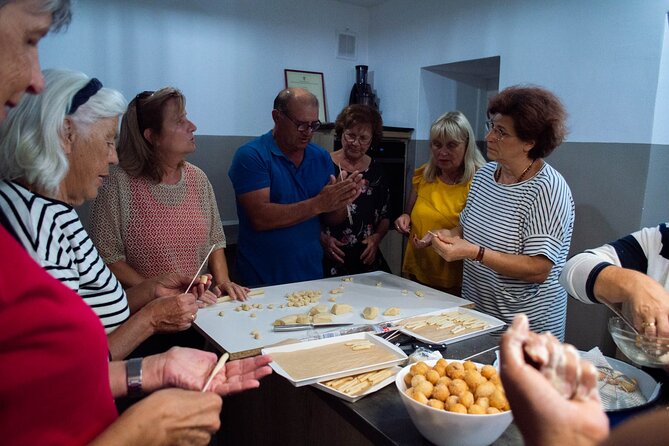
The main course is Žrnovski makaruni, a traditional Korčula pasta. The name refers to Žrnovo, a village near Korčula Town, and the pasta is shaped by hand before being served with a meat or tomato sauce.
This is the heart of the workshop. You do not just taste the pasta after someone else has made it. You learn the method, handle the dough, and shape the pieces yourself. The process takes patience, and your first few pieces may not look like the ones made by an experienced cook. That is part of the fun.
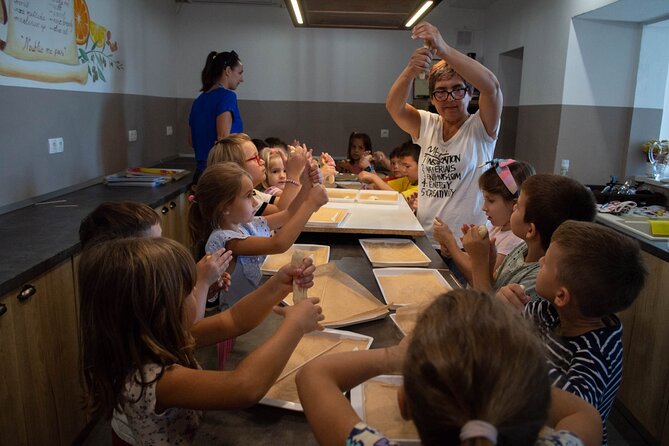
Sanja and Anastasia guide the group through the rolling and shaping, adjusting their help to suit children and adults. Families have found that children can take part at each stage, and older children in particular may enjoy the hands-on work more than a sightseeing stop.
The class has a relaxed rhythm. There is time for mistakes, laughter, and another try. You may also learn why a homemade pasta shape matters, how sauce clings to it, and how Croatian cooks judge texture without relying on a strict timer for every step.
The pasta is not a token sample. There has been enough made in Sanja’s kitchen to supply hotels in Dubrovnik and Split, including hundreds of kilograms in a year. You are working with someone who makes this food at a serious scale, yet the lesson remains personal and patient.
After cooking, the pasta is served with sauce. If your group includes hungry children or teenagers, you may be glad to know extra pasta has been prepared during the meal when needed. The final serving is generous in spirit, even if the exact portion depends on the group and the day.
Making Lumblija, Blato’s old celebration cake
Dessert is Lumblija, a traditional cake associated with the Blato area. The recipe is about 200 years old, and its story reaches back to the period of Napoleon’s occupation of Korčula.
That history gives the final course more weight than a simple sweet ending. You learn about a local recipe that has stayed connected to the town, then help make the food rather than only hearing about it. The cake is one of the clearest reasons to choose this workshop over a general pasta class.
Sanja is also among the few cooks in Croatia permitted to sell Lumblija cakes for official use. The cakes have been bought as gifts for diplomatic events, which gives you a sense of how seriously this local specialty is treated.
The dessert may take more time and care than a quick home cookie. That is useful for you as a cook, since the class is not designed only to produce fast results. You leave with a recipe and a better understanding of how a regional dish carries family and local identity.
Same stretch of coast, a completely different day out:
- Korcula Buggy (Official) Safari Tour -Local Food & Wine Tasting-
★ 5.0 · 228 reviews - Bits of History – Half day kayak Tour with Wine delight
★ 5.0 · 178 reviews - Multi Adventure Experience – Rafting with elements of canyoning
★ 5.0 · 162 reviews - Half-Day Boat Tour Korcula Archipelago
★ 5.0 · 105 reviews
Eating in the house with local wine
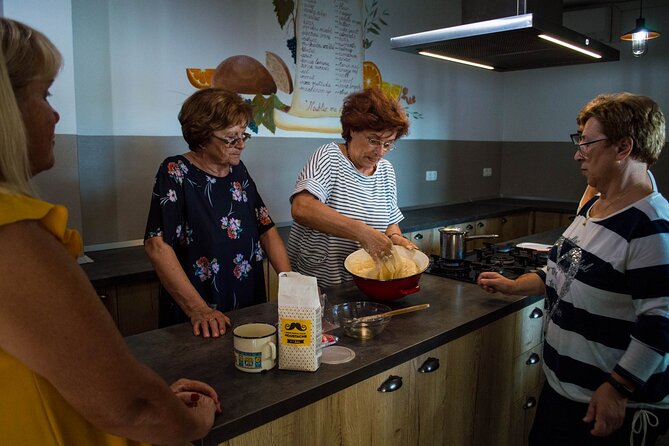
The cooking ends where it should: at the table. You eat the bruschetta, pasta, and Lumblija you helped prepare, with local wine from small Korčulan producers.
This shared meal is a major part of the value. A cooking workshop can feel expensive if it ends the moment the last pan comes off the stove. Here, you get time to enjoy the result and talk with Sanja and her family. The meal has been followed by a relaxed balcony conversation, and the setting overlooks Blato from the hills.
The atmosphere is informal and family-like, but you should understand what that means. This is not a formal restaurant tasting with a polished service routine. The appeal is the chance to sit in a private home, eat food made together, and ask questions while the hosts are still nearby.
Local wine is included with the meal. Homemade juices and small treats may also be served during the cooking. The exact wines and extra snacks can vary, since the workshop works with local ingredients and small producers rather than a fixed international beverage list.
What the four-hour schedule feels like
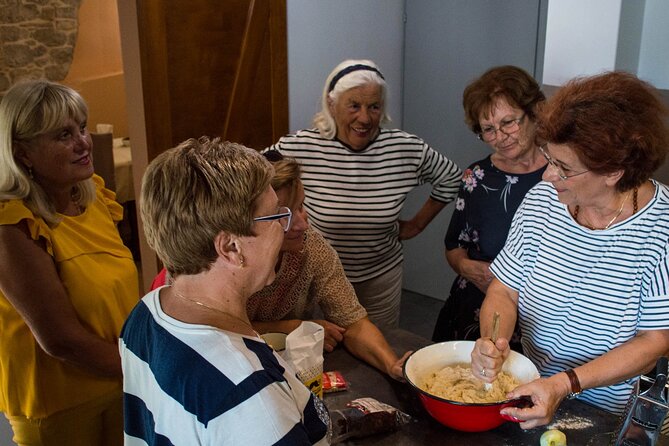
The activity lasts about four hours. The precise rhythm can shift because cooking is not a conveyor belt, especially when a group includes children or people new to pasta making.
A typical visit includes:
- Meeting in central Blato at the bus station
- A short drive to Sanja’s home
- An introduction with homemade drinks and snacks
- Preparation of the bruschetta
- Pasta making and sauce preparation
- Lumblija preparation
- Eating the finished meal with local wine
- Conversation before returning to the meeting point
One account placed the end of the cooking class around 3 p.m., leaving nearly two hours to walk around Blato afterward. Do not treat that time as part of the guaranteed workshop schedule, but it is a useful idea if your transport plans allow it.
After the class, you might visit the Blato 1902 d.d. tasting room for wine or browse the town’s shops. You should check opening hours separately, since those stops are not part of the cooking workshop itself.
Price, group size, and overall value
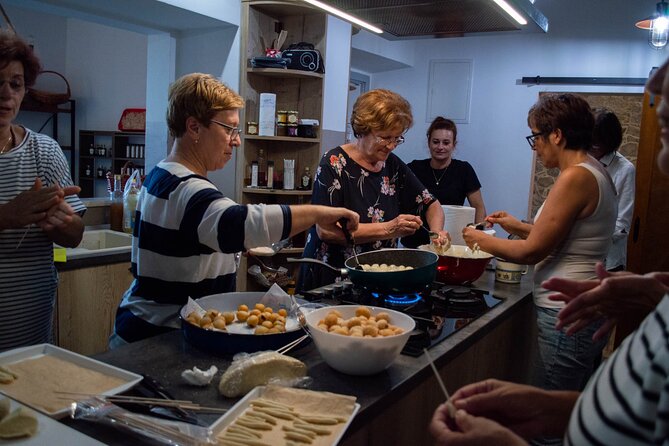
The price is $95.31 per person. That is not a bargain lunch, but it is a fair price if you want instruction, a full meal, drinks, ingredients, and a local host in one half-day activity.
The small maximum of 12 people is important. A larger class would make hand-shaped pasta less personal and make it harder for Sanja and Anastasia to help each person. A group of 12 is still large enough for a social meal, but it is not an intimate private lesson for one couple.
You should compare this with the cost of a good meal in Korčula, then add the value of the teaching and transport from the Blato meeting point. The real question is not simply how much lunch costs. It is whether you want four hours of making, eating, and learning about Korčulan food.
For a family, the price can be easier to justify because children are active participants rather than spectators. A child who loves cooking may remember shaping pasta more clearly than another afternoon at the beach. Birthday touches can also be arranged through the host, as a cake from a local baker has been provided for a birthday celebration.
For a couple or solo visitor, the value depends on your interest in food and local life. If you only want to sample island dishes, a restaurant will be simpler. If you want to understand how those dishes are made and take the method home, this workshop offers much more.
The main drawbacks to keep in mind
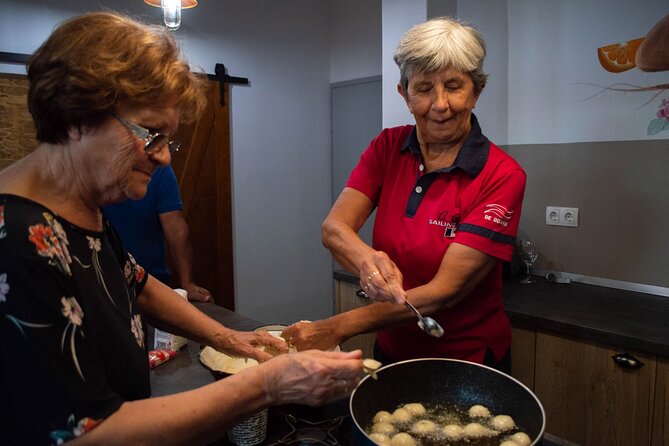
The biggest drawback is getting to Blato. The class is not in Korčula Town, and the bus ride takes time. You need to coordinate your transport carefully, especially if you are relying on public buses or have another tour booked the same day.
The experience is also non-refundable and cannot be changed after booking. If you need flexible plans, this policy matters. The workshop may be canceled if the minimum number is not reached, in which case you are offered another date or experience, or a full refund.
The menu is partly shaped by fresh produce and personal preferences. That is a strength for authenticity, but it means you should not expect every detail to match a restaurant menu or a fixed recipe card. Bruschetta toppings may change, and the main sauce may be meat or tomato.
Finally, this is a hands-on class, not a passive food tour. You will be standing, handling ingredients, and taking part in the work. That makes the experience rewarding, but it may not suit someone looking for a short tasting with no cooking.
Who should book this Korčula cooking class?
I would choose this for families, food-focused couples, and anyone who wants a closer look at everyday island cooking. It is especially suitable if you enjoy learning a dish you can try again at home, since handmade pasta and Lumblija give you clear takeaways.
It is also a good pick for a birthday or a small group celebration. Children have been welcomed into the process, and the host has made a birthday cake arrangement feel personal rather than generic.
You may want to skip it if your Korčula visit is very short, your schedule cannot spare most of a day, or you dislike traveling away from the coast for an activity. The beach and Korčula Town are easier choices when time is tight.
Should you book the Blato workshop?
Book it if you want more than a meal. You will make three traditional dishes, work with Sanja and Anastasia, eat in a home setting, and spend time with food tied closely to Blato and Korčula.
The strongest reasons to go are the handmade Žrnovski makaruni, the old Lumblija recipe, the garden ingredients, and the chance to include children in real kitchen work. Plan the bus or car journey carefully, allow the full four hours, and remember that the booking is not flexible.
For a visitor willing to trade some beach time for a personal food experience, the trip to Blato is justified. For a visitor seeking convenience above all else, stay in Korčula Town and choose a restaurant instead.
FAQ
Where does the cooking workshop begin?
The meeting point is 1. Ul. 22, 20271 Blato, Croatia. Pickup can take place in central Blato at the bus station, where you can also leave a car.
How long does the experience last?
The workshop lasts approximately four hours and ends back at the meeting point.
What food will I prepare?
The sample menu includes bruschetta, Žrnovski makaruni with meat or tomato sauce, and Lumblija, a traditional cake with a recipe dating back about 200 years.
Is wine included?
Local wine from small producers is served with the meal. Homemade juices and snacks may also be available during the cooking.
Can children join the class?
Yes. Children have been included in every stage of the cooking, and the experience has worked well for family groups.
How many people can join?
The activity accepts a maximum of 12 participants. Confirmation is sent within 48 hours of booking, subject to availability.
More Half-Day in Korcula
- From Korcula Town: Local Wine & Sightseeing Half-Day Tour
★ 4.5 · 62 reviews - Lumbarda: Half-Day Kayaking and History with Wine delight
★ 5.0 · 49 reviews - Half-Day Bike Tour in Lumbarda with Wine Tasting
★ 5.0 · 31 reviews - Zrmanja River: Half-Day Guided Kayaking Tour Near Zadar
★ 4.8 · 1,817 reviews
Just added around Korcula
- Korčula for Early Risers and Coffee Lovers Private Walking Tour★ 4.5 · 3 reviews
- Island Stupe / Moro Beach Transfer★ 4.0 · 5 reviews
- Boat discovery: private one-day Korčula adventure★ 5.0 · 9 reviews
- Island Badija – Yellow Taxi Cat★ 3.5 · 6 reviews
- Explore Korčula, Lumbarda, and Hidden Adriatic Gems★ 5.0 · 20 reviews
- Croatia Islands Private Hike & E -Bike Tour on Korcula Island★ 5.0 · 6 reviews
- Korcula 3 Islands Tour – Badija – Vrnik – Stupe (shared tour)★ 4.5 · 39 reviews
- Private Korcula wine tour and tasting★ 5.0 · 18 reviews
Cooking Classes, compared.
Traditional Cooking Class in Dubrovnik Countryside
Read our review →
Traditional Dalmatian Cooking Class from Dubrovnik
Read our review →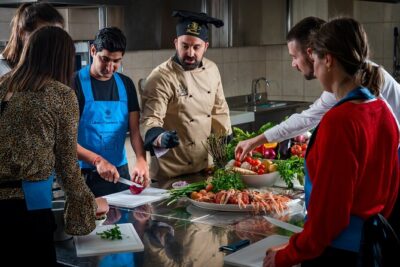
Culinary Experience – Cooking Class & Walking Tour Split
Read our review →
Authentic Garden to Table Cooking Class in Dubrovnik Countryside
Read our review →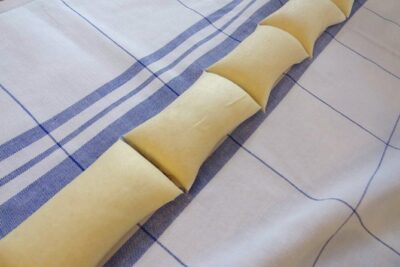
Browse the lists this tour appears in