
Reviewed · WALKING TOURS
Sunset Wall Walk: 75-Minute Guided Tour & Free Exploration
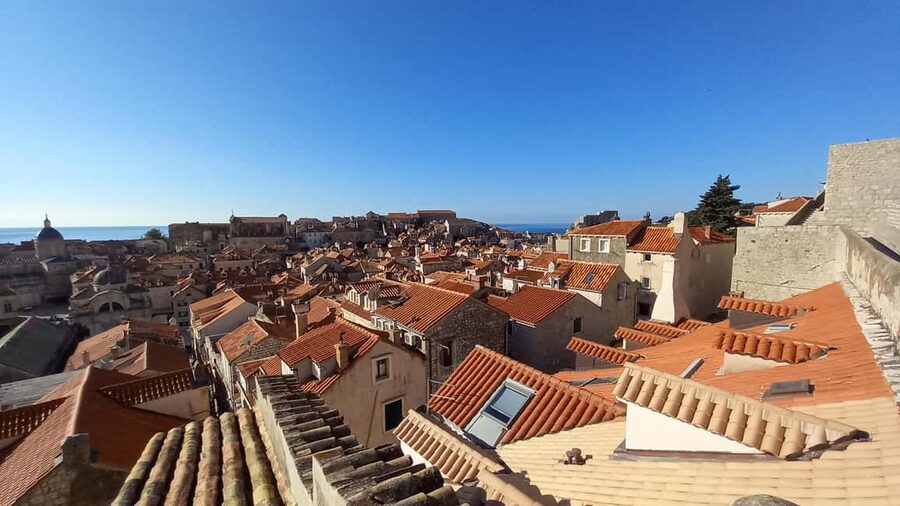
Dubrovnik’s wall walk gets a smart makeover here: you spend the first half with a local guide, then leave the group behind to explore the southern ramparts at your own speed. That means useful context before you wander, plus freedom to stop for photos, a drink, or a long look across the Adriatic.
I like the eight-person maximum, which keeps the history talk personal rather than shouty. I also like the eastern entrance near Ploče Gate, where you face fewer stairs and crowds than at the main entrance. The main catch is cost: the $32 tour fee does not include the wall ticket, which costs €40 from March through October.
In This Review
- Quick take on the Sunset Wall Walk
- Why this hybrid wall tour works
- Meeting at Ploče Gate and entering the walls
- The northern ramparts: nine stops with a purpose
- Revelin and the eastern approach
- Dominican Monastery and Museum
- St. Jacob Tower
- Saint Katarina Tower
- Saint Barbara Tower
- Minceta Fortress
- Upper Corner Tower Foundry Museum
- Dubrovnik Old Town Basketball Court
- St. Francis Tower
- Saying goodbye to the guide halfway around
- Views, stairs, and the physical reality of the walk
- How much time should you allow?
- What makes the small group valuable
- Price, ticket costs, and overall value
- Who should book the Sunset Wall Walk?
- Final verdict: book it if freedom matters
- FAQ
- How long does the Sunset Wall Walk last?
- Is the wall entrance ticket included?
- How much does the wall ticket cost?
- Where does the tour meet?
- Where does the activity end?
- How many people can join the group?
- What language is the tour in?
- Is the tour suitable for people with mobility impairments?
- What should I bring?
Quick take on the Sunset Wall Walk
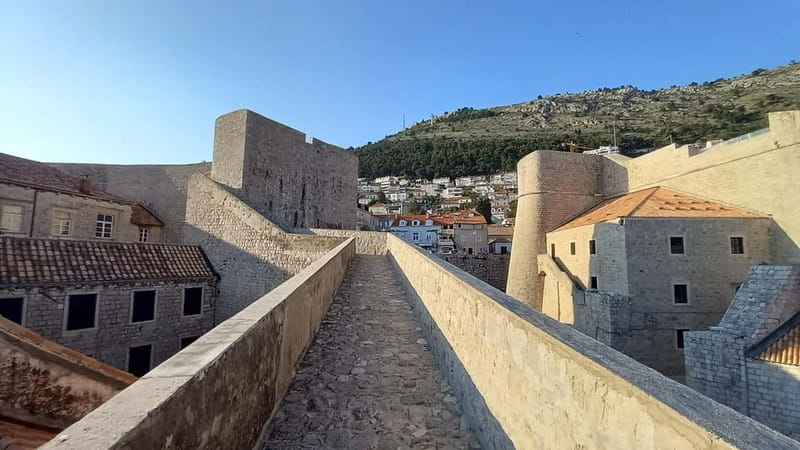
- The northern half comes with nine planned stops, covering fortifications, warfare, diplomacy, daily life, and the 1991 attacks on Dubrovnik.
- The southern half is yours to explore, so you can pause for pictures or refreshments without holding up a group.
- Groups are capped at eight people per guide, a useful size for questions and clear explanations.
- Marko is a possible guide, and his local connection is unusually strong: he lives within the Old Town walls.
- The tour lasts 75 minutes, but you receive enough time to complete the full wall circuit afterward.
- You must buy the wall entrance ticket separately, and the many stairs make this unsuitable for anyone with mobility limits, vertigo, or low fitness.
Why this hybrid wall tour works
A standard guided tour gives you facts but can leave you marching to someone else’s pace. A self-guided walk gives you freedom but often leaves you staring at towers without knowing why they matter. This format splits the difference.
The northern section is the teaching portion. Your guide explains how Dubrovnik built and defended its walls, who threatened the city, how cannons and medieval warfare shaped the fortifications, and how the small republic used diplomacy to survive between major powers such as Venice and the Ottoman Empire.
Then, at roughly the halfway point, the group ends. You continue around the southern walls alone, carrying the basic story with you. I find that order especially useful. Once you understand the city’s defensive logic, the towers and sea views make more sense.
The tour is in English and is led by a licensed Croatian Ministry of Tourism guide who is also from Dubrovnik. Marko, who led several of the available departures, is a particularly local source because he still lives inside the walls. He is also known for keeping the talk lively with short quizzes, a nice touch when you are climbing stairs in the heat.
A few more Dubrovnik trips to weigh up
- Dubrovnik: Old Town Walking Tour
★ 4.8 · 5,174 reviews - Dubrovnik Discovery Old Town Walking Tour
★ 5.0 · 4,458 reviews - Dubrovnik: Game of Thrones Walking Tour
★ 5.0 · 1,732 reviews
Meeting at Ploče Gate and entering the walls
The meeting point is on the square in front of Fort Revelin, overlooking the old harbor near Ploče Gate. Look for the guide beside the cannon in the corner of the square, holding a red and white flag.
This eastern entrance is a practical choice. The main entrance can be crowded, while the Ploče-side access has fewer stairs and fewer people. You still have climbing ahead, but you begin in a calmer place.
The wall ticket is not part of the tour fee. You pay $32 for the guide, then buy the entrance ticket separately. From March 1 through October 31, the wall ticket is €40 per person. From November 1 through February 29, it drops to €15.
That makes the total price quite different by season. In summer, this is not a cheap activity. In winter, the combined cost is much easier to justify. The Dubrovnik Pass is also recommended as a way to enter the walls and city museums, with the one-day pass priced at the same level as the wall admission according to the tour information. You can buy tickets separately by card at the location shown by your guide.
The northern ramparts: nine stops with a purpose
The exact pauses can vary slightly with walking speed, but the guided section follows a clear route through the northern half of the walls. Here is what each named stop adds.
Revelin and the eastern approach
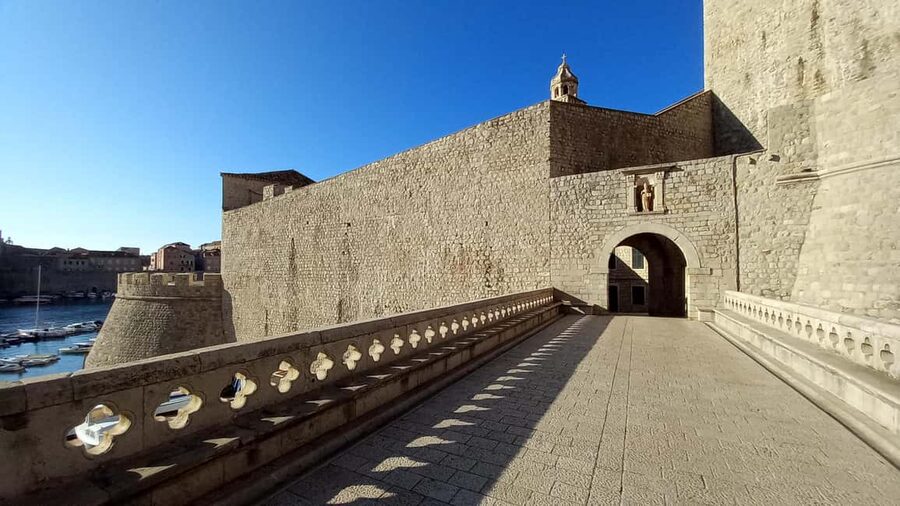
Fort Revelin guards the eastern side of Dubrovnik and helps explain why Ploče Gate was such an important entry point. This is mainly a photo stop before the main wall walk, but it gives you a first look at the city’s military design.
The fort’s position near the old harbor is no accident. From here, Dubrovnik could watch movement by land and sea. Take a moment to identify the contrast between the thick defensive stone and the busy Old Town streets below.
Same stretch of coast, a completely different day out:
- Blue Cave Small-Group Boat Tour from Dubrovnik
★ 5.0 · 9,360 reviews - Full-Day Dubrovnik Elaphite Islands Cruise with Lunch and Drinks
★ 5.0 · 8,823 reviews - Dubrovnik: Epic Game of Thrones Tour + Lokrum & Saver Option
★ 4.9 · 5,995 reviews - Dubrovnik: Elaphiti Islands Full-Day Cruise with Lunch
★ 5.0 · 5,938 reviews
Dominican Monastery and Museum
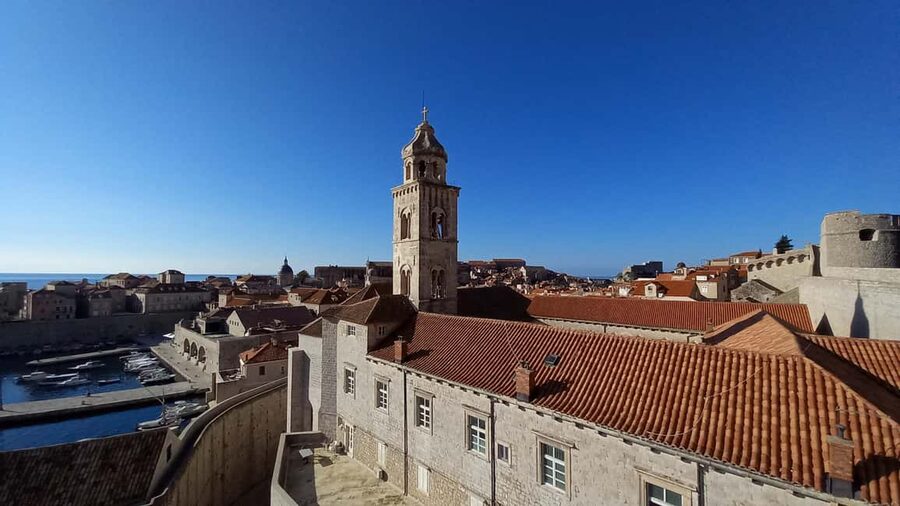
The Dominican complex sits close to the eastern walls and offers a useful view into the religious and civic life of medieval Dubrovnik. This is a short sightseeing and photo stop, not an extended museum visit.
You should not expect to tour every interior here as part of the 75-minute activity. The value comes from seeing how religious buildings fit into the fortified city rather than sitting apart from it.
St. Jacob Tower
St. Jacob Tower is one of the defensive points that makes the wall feel like a working military system rather than a pretty promenade. Your guide discusses the towers, their role in defense, and the methods used to protect the republic.
The stops are short, usually around ten minutes at the longer points. That keeps the tour moving, though anyone who wants detailed photography at every tower may prefer to save some pictures for the self-guided half.
Saint Katarina Tower
At Saint Katarina Tower, the talk turns to the practical business of defending Dubrovnik. Towers gave defenders height, protected vulnerable sections, and helped organize lines of fire along the walls.
You will also hear about cannons and the threats facing the city. The explanation matters because it changes the way you read the masonry. These were not built just for grand views. They were built to make attack difficult.
Saint Barbara Tower
Saint Barbara Tower is another stop for understanding the wall’s connected defenses. The guide links the individual towers into a larger plan, explaining how the fortifications worked together.
This is also a good place to ask questions. With no more than eight people per guide, you have a better chance of being heard than on a large group circuit.
Minceta Fortress
Minceta Fortress is the heavyweight of the northern wall. Its broad, imposing form is one of the clearest reminders that Dubrovnik expected serious military trouble.
Your guide covers its defensive purpose and the city’s wider political story. Dubrovnik survived not only through stone walls but also through careful diplomacy. The republic had to deal with Venice, the Ottoman Empire, and other powerful neighbors without losing its independence.
That political context is one of the strongest reasons to take the guided half. Without it, Minceta can look impressive but remain just another photogenic tower.
Upper Corner Tower Foundry Museum
The Upper Corner Tower and Foundry Museum connects the fortifications with the production of weapons and military equipment. It gives the walk a more practical edge: defenses require tools, supplies, and skilled work, not just towers.
The stop is brief, so treat it as an introduction rather than a full museum visit. If your entrance ticket includes access to city museums through the Dubrovnik Pass, ask your guide about returning later and allowing more time.
Dubrovnik Old Town Basketball Court
This stop offers a glimpse of present-day life inside the walls. A basketball court tucked into the Old Town is an amusing reminder that Dubrovnik is not only a historic setting for sightseeing. People still live, work, and play here.
The guide also talks about everyday life inside the walls and how many residents remain today. That human detail keeps the tour from becoming a list of battles and dates.
St. Francis Tower
St. Francis Tower is the final named point in the guided northern section. By now, the walk has covered military planning, medieval warfare, diplomacy, modern conflict, and ordinary life.
The guide also discusses the 1991 attacks on Dubrovnik and the most recent war in Croatia. This is important context. The walls are medieval, but their story did not end centuries ago. They remained part of the city’s identity during a very modern conflict.
Saying goodbye to the guide halfway around
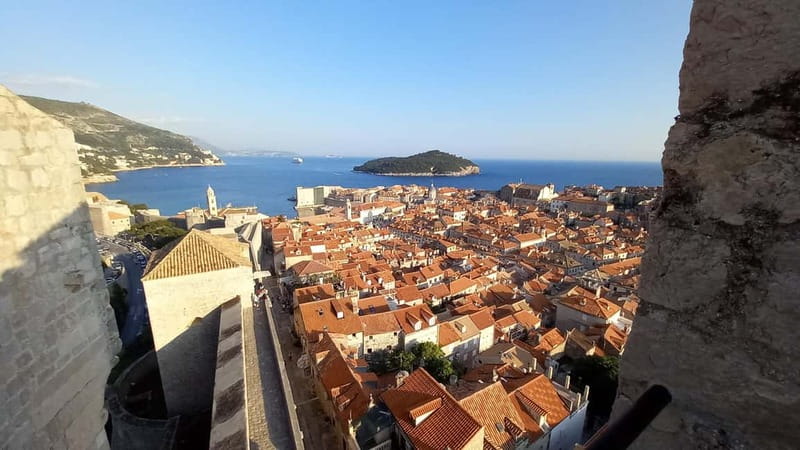
At the midpoint, you part from your guide and continue toward the southern stretch alone. This is the cleverest part of the design. You have already received the background, so you can now pay attention to the physical setting rather than trying to keep pace with a speaker.
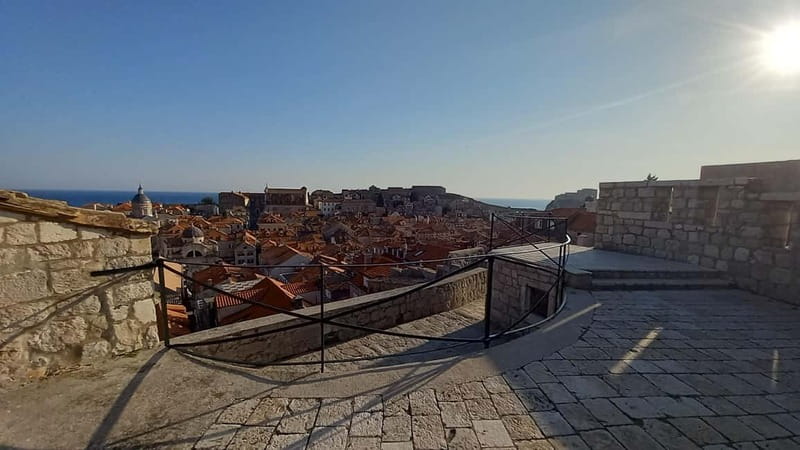
The southern walls are presented as free time. Stop for a drink at one of the bars, take as many pictures as you want, or simply pause when the sea view opens up. You do not need to worry about making a group wait.
The freedom also helps if your interests are uneven. You might spend extra time on architecture, while someone else cares more about the horizon or Old Town rooftops. No one has to compromise after the guided section ends.
Do keep an eye on your footing. Parts of the southern route have narrow walkways, and the walls are a medieval military structure, not a modern trail. There are high sections, steep stairs, and places where the edge can feel exposed.
Views, stairs, and the physical reality of the walk
You should arrive in comfortable shoes, with water, sunscreen, sunglasses, a sun hat, and light, comfortable clothing. The Dalmatian sun can be strong, and much of the appeal comes from being outside on elevated stone walkways.
From the entrance to the halfway point, the tour covers five sets of stairs going up and down. Some are steep. The self-guided southern half also includes narrow sections, so you need steady footing and a reasonable level of fitness.
This is not suitable for children under 12, pregnant people, wheelchair users, people with mobility impairments, people afraid of heights, or anyone with vertigo. The activity is also listed as unsuitable for people over 80, babies under one year, and people with a low level of fitness.
Those limits are not minor fine print. If stairs or heights make you uneasy, the freedom of the second half will not solve the basic problem. You will still need to complete the wall circuit on foot.
How much time should you allow?
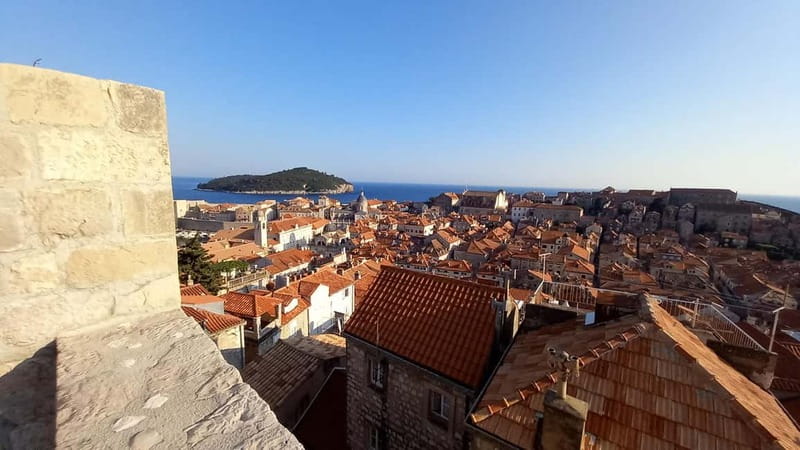
The guided portion lasts 75 minutes, with the northern stops taking roughly five to ten minutes each. You then have enough time to complete the rest of the walls and make a full circle.
The total outing will therefore take longer than 75 minutes if you use the self-guided section properly. Build in extra time for photographs, views, and a possible drink. The activity ends back at the meeting point, but you should not treat the advertised duration as the full time required to enjoy the complete circuit.
Starting times vary, so check availability when booking. Earlier or later departures can change the light and heat, but no fixed start time is provided. Whatever time you choose, bring water and sun protection.
What makes the small group valuable
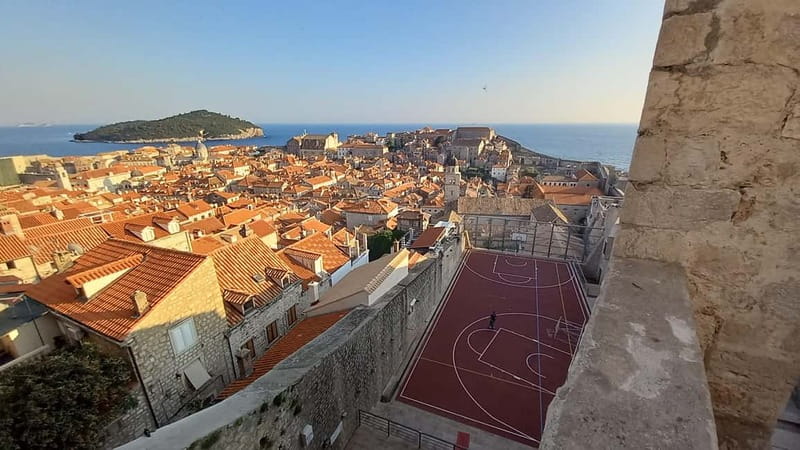
Eight people per guide is a useful ceiling for a wall walk. The route is narrow in places, and a large crowd would make stopping awkward. A small group also gives you a better shot at asking about details that catch your eye.
The guide’s role is not just to recite dates. You hear how the city defended itself, how diplomacy helped it remain independent, and how people lived within the walls. Marko’s quizzes add a little energy and help you remember the information while managing the climb.
The small-group format does not mean the route is private. Other people will be on the walls, especially during the high season. It simply keeps your own group compact and easier to follow.
Price, ticket costs, and overall value
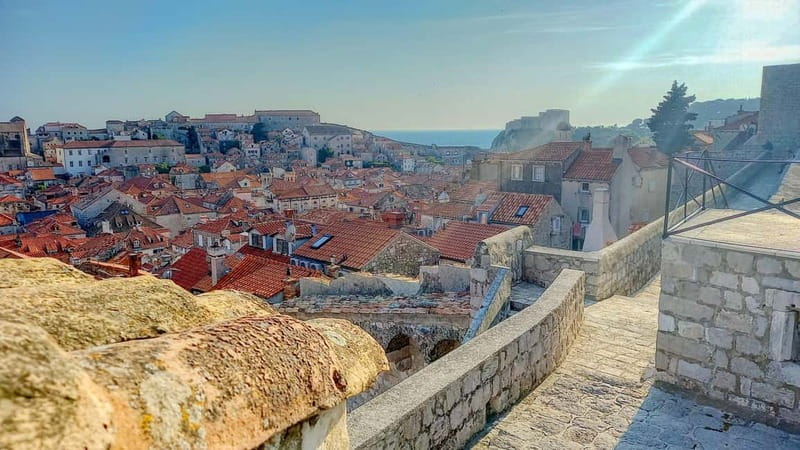
At $32 per person, the guiding fee is reasonable for a licensed local guide and a group limited to eight. The separate entrance charge is the part that requires careful budgeting.
During the main season, the €40 wall ticket makes this a substantial outing. You are paying for access to one of Dubrovnik’s major sights plus the guided service, not for a low-cost walking tour. If you already plan to visit several city museums, the Dubrovnik Pass may make better financial sense because it includes the walls and museums for the stated one-day pass price.
From November through February, the €15 wall ticket changes the value calculation. The walk becomes much easier to recommend for anyone who wants historical context but still wants time alone for photographs.
Free cancellation up to 24 hours before the activity and reserve-now, pay-later booking add flexibility. They do not reduce the entrance fee, so check both costs before committing.
Who should book the Sunset Wall Walk?
I would choose this for an active visitor who wants more than a photo walk but does not want to spend the entire circuit attached to a guide. It works particularly well if you like history in manageable portions and want independent time afterward.
It is also a good choice for a first visit to Dubrovnik. The northern talk gives you the city’s basic political and military story, while the southern half gives you room to form your own impressions.
I would skip it if you want a relaxed, flat stroll, a fully private guide, or a tour that includes admission. I would also skip it if steep steps and exposed heights are a serious concern.
Final verdict: book it if freedom matters
Book the Sunset Wall Walk if you want the best parts of a guided tour without spending the whole outing in formation. The local perspective, compact group, nine northern stops, and self-guided southern half make the format genuinely useful.
Before booking, calculate the full cost with the €40 summer entrance ticket and be honest about the stairs. If you are fit enough for the climb and value both historical explanation and unhurried sea views, this is a strong way to see Dubrovnik’s walls.
FAQ
How long does the Sunset Wall Walk last?
The guided activity lasts 75 minutes. Afterward, you continue around the southern section on your own, with enough time to complete the full circuit.
Is the wall entrance ticket included?
No. The $32 tour price does not include admission to Dubrovnik’s walls. You must purchase the entrance ticket separately.
How much does the wall ticket cost?
The ticket costs €40 per person from March 1 through October 31, and €15 per person from November 1 through February 29.
Where does the tour meet?
Meet your guide on the square in front of Fort Revelin, near Ploče Gate and the eastern entrance to the Old Town. The guide waits beside the cannon in the corner of the square and carries a red and white flag.
Where does the activity end?
The activity ends back at the meeting point.
How many people can join the group?
The group is limited to a maximum of eight participants per guide.
What language is the tour in?
The live tour is conducted in English.
Is the tour suitable for people with mobility impairments?
No. The route includes many stairs, steep sections, and narrow walkways. It is not suitable for wheelchair users or people with mobility impairments.
What should I bring?
Bring comfortable shoes, water, sunglasses, a sun hat, sunscreen, and comfortable clothing. Consider the heat and the exposed position of the walls when preparing for the walk.
Just added around Dubrovnik
- Full- Day Private Speedboat Tour in Dubrovnik on Elaphiti Islands★ 5.0 · 21 reviews
- Elaphiti Islands Private Dubrovnik Boat Unique Experience★ 5.0 · 10 reviews
- PRIVATE Wine Tour to Konavle country side★ 5.0 · 11 reviews
- Parasailing in Cavtat★ 5.0 · 62 reviews
- Wine tour peninsula Pelješac★ 5.0 · 3 reviews
- Wine Lover’s Tour of Peljesac Peninsula★ 5.0 · 150 reviews
- Welcome to Dubrovnik Walking Tour★ 5.0 · 36 reviews
- City Walls of Dubrovnik★ 5.0 · 70 reviews
Walking Tours, compared.



Walking Tour of Split and Diocletian’s Palace
Read our review →


Krka Waterfalls tour with Trogir Walking tour and Krka panoramic boat cruise
Read our review →
City Walls Early Morning or Sunset Walking Tour
Read our review →
Browse the lists this tour appears in