Reviewed · SPLIT TOURS
Split by Private Electric Rickshaw – Palace & Hidden Gems
Split’s best surprise is how much ground this little electric rickshaw covers. In one outing, you can move from the palm-lined Riva and Roman gates to Marjan’s pine roads, rocky overlooks, and beaches that are a long walk from the old center.
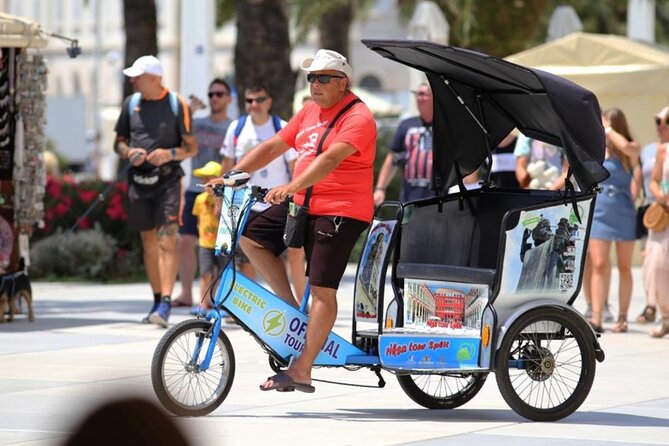
I like the private format, since your guide can adjust the pace and stop for photos, and I like the quiet electric vehicle, which reaches places that regular cars cannot. Guides including Toma, Rosa, Mario, Marco, and Mounass have earned repeated praise for friendly local insight.
The main consideration is the small capacity: one rickshaw holds two adults and one child. Larger parties need more than one vehicle, and the short 30-minute option cannot provide the same broad look at Split as the full 2-hour-30-minute route.
In This Review
- Key points before you book
- Why a Split rickshaw tour works so well
- From the Riva to Prokurative Square
- The 1,700-year-old palace circuit
- Matejuška and Split’s working waterfront
- Sustipan and the first wide sea views
- Marjan Forest Park by electric vehicle
- Bene Beach and the included drink
- Choosing between 30 minutes and 2 hours 30 minutes
- What the guides add to the ride
- Practical limits to keep in mind
- Is this Split tour worth booking?
- FAQ
- Where does the Split electric rickshaw tour begin?
- Where does the tour end?
- How many people fit in one rickshaw?
- Is the tour private?
- What is included on the largest tour?
- What happens if the weather is bad?
Key points before you book
- Roman Split and seaside Marjan in one ride: Cover Diocletian’s Palace, the Riva, old fishing docks, forest roads, viewpoints, and beaches without spending the day on foot.
- Three route choices: Pick a brief city introduction, a longer city-and-coast outing, or the largest tour with Marjan Forest Park and Bene Beach.
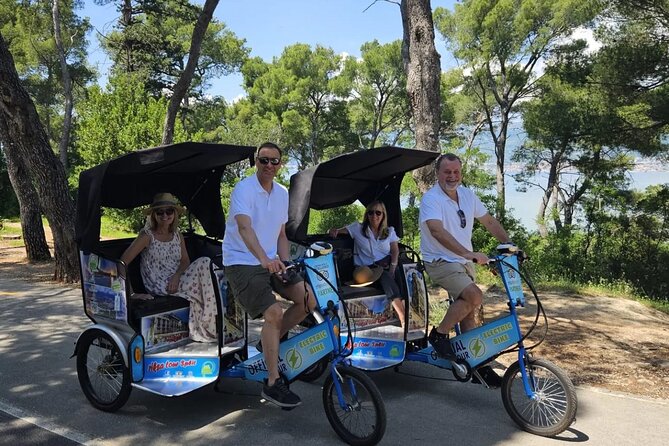
- Private vehicle for your group: Only your party rides in each rickshaw, with a maximum of two adults and one child per vehicle.
- Useful for cruise stops: Pickup is available directly outside Split’s cruise terminal, and the tour returns to the starting point.
- A guide-led view of Split: English-speaking guides explain Roman landmarks, local customs, beaches, and present-day city life.
- A drink on the longest tour: The largest option includes a refreshing drink at Va Bene Café by the sea.
Why a Split rickshaw tour works so well
Split’s center is compact, but the best overview is not. You can walk across the old town in a few hours, yet Marjan Forest Park, Sustipan, Kašjuni Beach, and Bene Beach extend well beyond the usual palace-and-promenade circuit.
The electric rickshaw solves that problem without turning the outing into a sealed vehicle tour. You sit close to the street, feel the air, and can easily look up at walls, towers, palm trees, and hillside views. It is also emission-free, a useful touch in a historic city where narrow lanes and heavy summer traffic can make ordinary transport awkward.
I would think of this experience as two tours in one. The first is a moving introduction to central Split. The second reaches the western coast and Marjan, where the city feels calmer and more local.
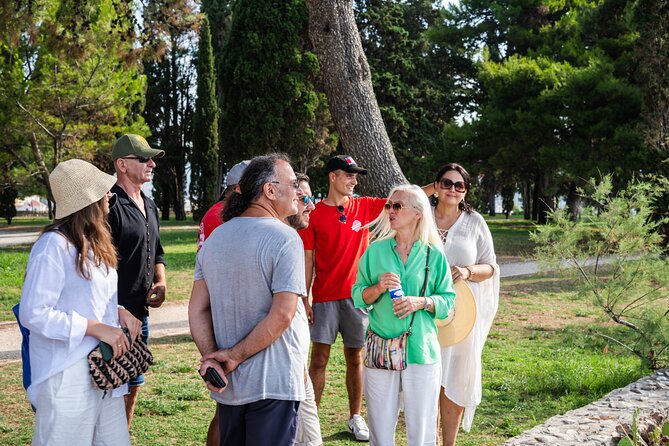
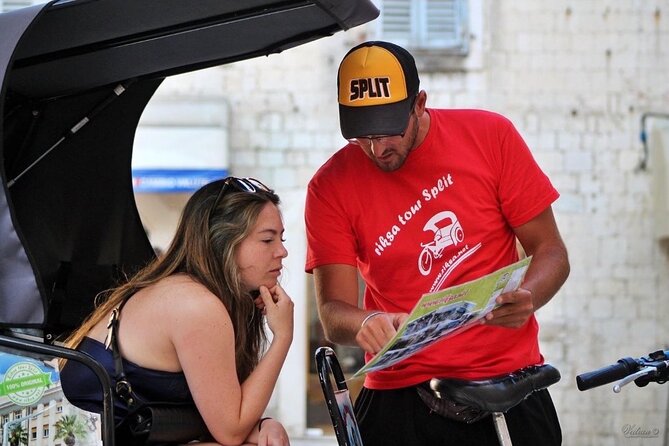
The tour is offered in English, and the private setup gives you room to ask questions. Guides such as Toma and Mounass have been praised for clear explanations and an easy, patient manner. Rosa, Mario, Marco, Tin, Tomas, Ella, Roza, and Manuela have also led highly rated outings, though you should not assume you can select a particular guide at booking.
A few more Split trips to weigh up
- SPLIT-PRIVATE Walking Tour of Diocletian’s Palace & Old Town
★ 5.0 · 467 reviews - Private Krka Waterfalls tour with 30min Boat Cruse
★ 4.0 · 458 reviews - Private Blue cave, Mamma Mia and Hvar, 5 islands tour from Split
★ 5.0 · 387 reviews
From the Riva to Prokurative Square
The ride begins at Trajektna Luka Split, near the port and Bačvice area. Cruise passengers can be collected directly in front of the cruise terminal, which removes one annoying task from a short port visit.
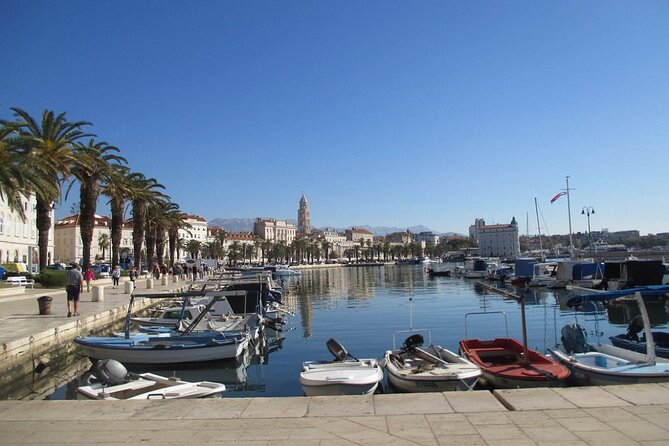
The first city views usually include the Riva, Split’s broad seafront promenade. Palm trees, cafés, old buildings, and the Adriatic give you an immediate sense of the city’s daily rhythm. This is not just a photo stop. The Riva is where Split meets itself, with people pausing for coffee, strolling beside the water, or gathering for evening drinks.
Nearby Prokurative Square offers a sharp change in mood. Its arches and Venetian-style buildings frame an open space only steps from the waterfront. Your driver can explain how this part of town differs from the older Roman core, and you will have an easy chance to take photos without the tight lanes found farther inside the palace.
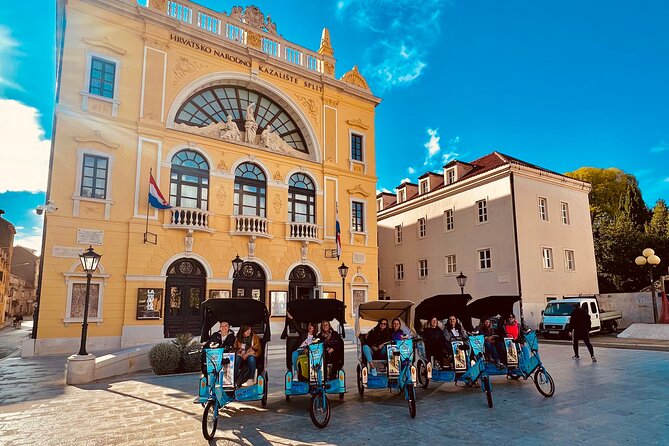
The Croatian National Theater adds a cultural note. Founded in 1893, it has an elegant neoclassical facade and remains a marker of Split’s performing arts scene. These stops are brief, generally around five minutes each, so think of them as orientation points rather than extended visits.
The 1,700-year-old palace circuit
Diocletian’s Palace is the heart of Split, but the name can mislead you. This is not an isolated monument with a clear boundary and a quiet courtyard. The Roman palace has become part of the modern city, with homes, shops, restaurants, lanes, and squares occupying the ancient structure.
A rickshaw is especially handy here. It lets you see the palace from several sides while avoiding a long walk over uneven stone. The main palace stop lasts about 20 minutes on the listed route, with attention to the Golden Gate, Silver Gate, Bronze Gate, and underground cellars.
The Golden Gate is on the north side and was once decorated with gold. Its carved details give you a good look at the Roman design behind Split’s old center. At the nearby statue of Grgur Ninski, rub the bishop’s large bronze toe for luck. The statue was made by Ivan Meštrović in 1929, and this small local ritual is one of those quick, memorable details that can make a city tour feel personal.
The eastern Silver Gate is another original fourth-century entrance. The silver decoration is gone, but the structure and carved reliefs remain. On the southern side, the Bronze Gate once connected the sea with the palace’s basement level. Its practical purpose, allowing servants and supplies to enter quickly, gives you a more ordinary view of imperial life.
Diocletian’s Cellars reveal the engineering below street level. The underground rooms were used for storage and living purposes, and their preserved layout helps explain how the palace was built above them. The published timing lists only one minute at the cellars, so treat this as a quick look or orientation stop, not a full archaeological visit.
Matejuška and Split’s working waterfront
Matejuška Fishermen’s Port sits at the western edge of the old center. Its small boats and long connection to local fishing provide a useful counterpoint to the grand Roman monuments.
I like this stop because it shows Split as a coastal town, not simply an ancient site. You can photograph the boats with the palace and Riva behind them, and your guide may connect the harbor to the city’s present-day life. The listed stop is about five minutes, enough for a look and a few pictures.
From here, the experience begins to change. The streets grow less tied to the palace, and the route can head toward Zvončac Park and Sustipan. These areas offer more space, trees, and open Adriatic views.
Same stretch of coast, a completely different day out:
- Split: Krka Waterfalls Trip with Boat Cruise and Swimming
★ 4.8 · 10,519 reviews - From Split: Krka Waterfalls, Food & Wine Tasting Tour
★ 5.0 · 9,326 reviews - Blue cave, Mamma Mia and Hvar, 5 islands speedboat tour
★ 5.0 · 7,150 reviews - From Split: Krka Waterfalls, Food & Wine Tasting Tour
★ 4.9 · 6,598 reviews
Sustipan and the first wide sea views
Sustipan is a peaceful promontory with views toward the sea and nearby islands. It was once home to a monastery and also served a defensive purpose. Ancient stone walls and fortification remains provide a small but worthwhile historical layer.
The 15-minute stop gives you more breathing room than the quick city pauses. You can walk a little, look across the water, and take a break from the busy old center. Zvončac Park may also appear along this section, offering paths, benches, greenery, and a quieter setting close to town.
The Museum of Croatian Archaeological Monuments is another possible point of interest in this part of Split. Its collection includes old sculptures, pottery, and other archaeological objects from Croatia. The rickshaw tour does not list a separate admission visit, so you should not expect a museum tour inside. The value here is knowing where it is and seeing another part of Split’s cultural map.
Marjan Forest Park by electric vehicle
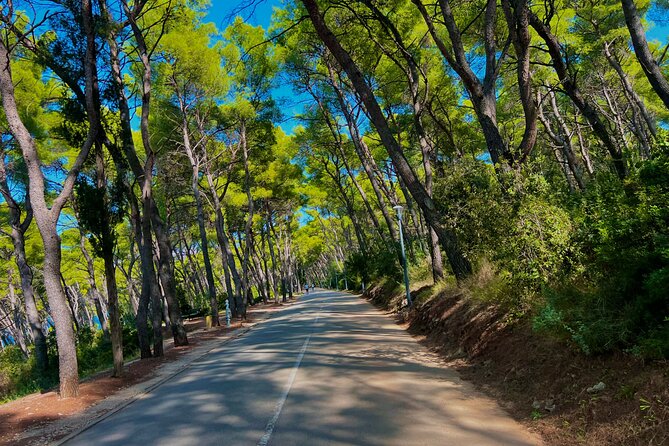
Marjan Forest Park is the reason to choose the longest version. The park covers 178 hectares, with pine woods, Mediterranean plants, rocky edges, trails, and views over the Adriatic. Cars are not allowed on the park roads used by the tour, while bikes and rickshaws can pass, making this small vehicle a practical way to reach more of the area.
The tour includes admission to Marjan Forest Park, and the listed visit lasts about 45 minutes. That is enough to get a real sense of the park rather than simply passing a gate. You may see St. Nicholas Church, a 13th-century landmark, along with paths and overlooks that would take considerably more time to reach on foot.
The route also passes the Meštrović Gallery, housed in a villa built by sculptor Ivan Meštrović. It contains his sculptures, drawings, and architectural work, with gardens and sea views. The stop is listed at only one minute, so the rickshaw is giving you an outside orientation rather than a gallery admission visit.
At Obojena Svjetlost Beach, the clear turquoise water and golden shore make a fine photo stop. Kašjuni Beach, below Marjan Hill, has a mix of pebbles and sand, pine trees, and calm coastal scenery. Tito’s Villa, also known as Dalmacija Villas, adds a historical glance at a former seaside residence linked to Josip Broz Tito.
These stops are brief, usually around five minutes. Bring realistic expectations. You will see and photograph several places, but you will not have time to swim, tour every building, or settle in at each beach.
Bene Beach and the included drink
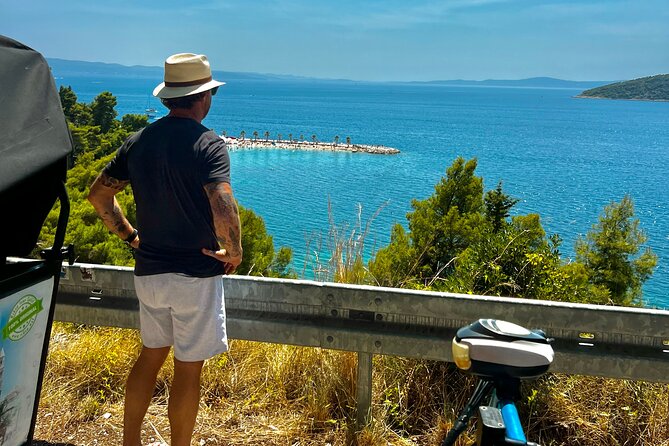
The largest tour continues to Bene Beach, a pebbly shore surrounded by pine trees. Its shallow, calm water makes it suitable for families and casual swimmers, though the supplied details do not promise a swimming break.
The tour includes admission to Bene Beach and a free refreshing drink at Va Bene Café by the sea. This is one of the most useful features of the long outing. After moving through the city and park, a drink beside the water gives the ride a natural pause.
The included beverage is specific to the largest Split tour, so check which route you are booking. Other tour versions may show beaches and waterfront cafés without including the same drink.
On the way through Marjan, you can also catch a view of Poljud Stadium. Its unusual structure and position beside the green park make it an interesting visual stop, especially if you have an interest in Split’s sporting life.
Choosing between 30 minutes and 2 hours 30 minutes
The wide duration range matters more than the headline price. At $48.39 per person, the short option is not the best value if you want to see both the Roman center and Marjan. It makes more sense for a quick orientation, a hot day, limited mobility, or a cruise stop with very little spare time.
The longer tour gives you far more for the money. You get the palace, the Riva, Matejuška, Sustipan, Marjan, beaches, viewpoints, and the included drink. Since transportation is private, you are also paying for a guide and a vehicle reserved for your group, not just a seat on a large coach.
For a family or couple, that can be a fair price. A group of six adults would need multiple rickshaws because each vehicle holds no more than two adults and one child. Several rickshaws can operate together, but you should account for that when calculating the total cost.
Cruise passengers get particularly good value from the longer route. Walking from the terminal through the palace and then reaching Marjan on your own would require more time, more route planning, and plenty of energy. The rickshaw lets you see the wider city before returning to the same meeting point.
What the guides add to the ride
The vehicle is fun, but the guide determines how useful the experience becomes. The strongest pattern in the available feedback is praise for friendly, clear, personal guiding.
Toma is repeatedly singled out for local knowledge, patience, and his ability to explain both the palace and Marjan. Mounass has been praised for good communication, flexibility with an early port arrival, and a calm style that does not overload you with facts. Rosa is described as enthusiastic and personable, while Mario is noted for showing personal favorite places and taking photos.
Those details matter because Split can feel confusing at first. Roman walls, medieval additions, modern apartments, and busy cafés sit close together. A good guide helps you understand what you are looking at instead of leaving you with a string of attractive but disconnected stops.
You should also feel free to ask for photo pauses or a slower pace. The private format has allowed guides to adjust stops and requests. That does not mean every request can be met, especially with traffic or weather, but you are not locked into the rhythm of a large group.
Practical limits to keep in mind
This is an outdoor experience and requires good weather. If poor weather cancels the ride, you are offered another date or a full refund. You can cancel for a full refund up to 24 hours before the start time, but changes or cancellations inside that window are not accepted.
The rickshaw is open to the surroundings, which is part of its charm but also means you are exposed to sun, wind, and rain. Wear comfortable clothing and bring sun protection during warm months. You may also want water, even though the largest tour includes a drink later.
Service animals are allowed, the meeting point is near public transportation, and most people can participate. One person with a disability described the tour as a helpful way to see the area with a flexible guide, but the supplied information does not provide detailed vehicle accessibility specifications. Contact the operator before booking if you need a particular boarding arrangement.
Because the experience often sells out and is booked well ahead, reserving early is sensible, especially for a cruise date or a preferred departure time.
Is this Split tour worth booking?
Book it if you want a quick but broad introduction to Split, especially if you are visiting from a cruise ship, traveling with children, coping with heat, or trying to limit long walks. The longer route is the clear choice if you want Marjan Forest Park, Sustipan, the beaches, and the Bene Café drink.
Choose something else if your main goal is a slow interior visit to Diocletian’s Cellars, the Meštrović Gallery, or a full beach afternoon. The stops are often short, and the ride is designed to show you many places rather than give you extended time at one.
For most first-time visitors, I would choose the largest option and use it to get your bearings. Afterward, you can return on foot to the palace, a beach, or the Riva that caught your eye. That combination gives you both the broad view and the slower Split experience.
FAQ
Where does the Split electric rickshaw tour begin?
The meeting point is Trajektna Luka Split, 21000, in the Bačvice area. If you arrive by cruise ship, pickup is available directly in front of the cruise terminal.
Where does the tour end?
The activity returns to the starting point at Trajektna Luka Split.
How many people fit in one rickshaw?
Each rickshaw can hold a maximum of two adults and one child. Larger groups need more than one vehicle.
Is the tour private?
Yes. Only your group participates in your private tour or activity.
What is included on the largest tour?
The largest tour includes the electric rickshaw, a driver-guide, private transportation, entry to Marjan Forest Park, entry to Bene Beach, and a free refreshing drink at Va Bene Café by the sea.
What happens if the weather is bad?
The experience requires good weather. If it is canceled because of poor conditions, you can choose another date or receive a full refund. Free cancellation is available up to 24 hours before the start time.
Just added around Split
- Split Sunset Stand Up Paddle Tour★ 5.0 · 16 reviews
- Split: Sunset Guided Kayaking Tour★ 4.8 · 71 reviews
- Split&Sip: Educational wine tasting★ 4.9 · 52 reviews
- Stand Up Paddle Tour in Split★ 4.7 · 17 reviews
- Split: Guided Walking Tour in English★ 4.9 · 10 reviews
- Split – Walking in Khaleesi Footsteps in the City of Dragons★ 5.0 · 13 reviews
- Split Walking Tour with History Professor★ 5.0 · 23 reviews
- Split Walking Tour: History, Legends & Tales★ 5.0 · 9 reviews
Split Tours, compared.
Krka Waterfalls Trip with Boat Cruise and Swimming
Read our review →
Blue cave, Mamma Mia and Hvar, 5 islands speedboat tour
Read our review →
Blue Cave, Mamma Mia, Hvar and 5 Island Tour
Read our review →
Blue Lagoon & 3 Islands Cruise with Lunch from Split
Read our review →
Blue Lagoon Boat Party with DJs, Shots & After Party
Read our review →