
Reviewed · OLD TOWN WALKING TOURS
Rovinj: Guided Walking Tour
Rovinj’s most curious story is hiding under your feet: the old channel and bridge that once separated the town from the mainland. This 90-minute walk connects that lost waterway with trade, city walls, the former Jewish Ghetto, and the hilltop Church of St. Euphemia. You get more than a quick photo tour.
I like the local angle, especially the practical tips on coffee, cakes, gelato, beaches, and restaurants. I also like the way guide Goran mixes city history with recent Croatian life, using humor and clear explanations rather than reciting dates. The main drawback is the footing: half the route crosses cobblestones, and the climb to the church can be difficult for people with limited mobility.
In This Review
- Key points at a glance
- Starting at the market, not the postcard view
- Valdibora Square and Rovinj’s lost channel
- Carera Street and the money behind the facades
- The waterfront, with time for an Aperol Spritz
- Cobblestones, the former Jewish Ghetto, and the stables
- Following the walls to St. Euphemia
- What the local advice adds to the tour
- Is $32 a fair price for 90 minutes?
- Who will enjoy this Rovinj walk?
- Booking details that affect your plans
- Should you book it?
- FAQ
- How long does the Rovinj guided walking tour last?
- How much does the tour cost?
- Where is the meeting point?
- Where does the tour finish?
- Which languages are available?
- Is food or drink included?
- Can I cancel for a refund?
- Can I reserve now and pay later?
- Is the walk suitable for people with mobility impairments?
Key points at a glance
- The missing bridge at Bridge Square: Learn where Rovinj’s old channel ran and how the town changed from an island settlement.
- A local guide with personality: Goran leads the walk with stories, humor, and advice about places to eat and drink.
- Trade shaped the town: Carera Street reveals how olive oil, fish, and wine brought wealth to 18th-century Rovinj.
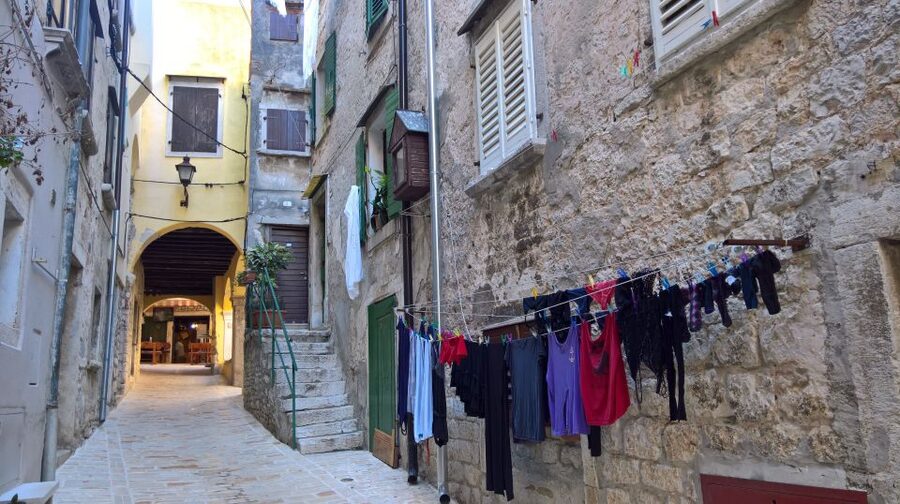
- Old-town details beyond the postcard: See the former Jewish Ghetto, stables area, ancient walls, and tight lanes near the Arch of the Bearded.
- A strong finish at St. Euphemia: End above the town with wide views over Rovinj and the Adriatic, especially appealing near sunset.
- Useful first-day orientation: Find the market, waterfront, coffee spots, beaches, sweets, and local food options before exploring on your own.
Starting at the market, not the postcard view
The meeting point is in front of a large rectangular whitewashed World War II memorial on Pietra Ive Street, just off the local farmers’ market. It is near the ATM operated by Auro Domus and in the lower town, so allow enough time to identify the memorial rather than simply searching for a church or waterfront landmark.
Starting here makes sense. You begin in a working part of Rovinj, close to where locals buy fruit and vegetables, instead of jumping straight into the most photographed lanes. That gives the tour a useful rhythm: first understand how the town functions today, then follow its older layers uphill.
I would arrive a little early. The meeting point is described clearly, but a market area can feel confusing if you are watching the clock. You also may want to look around before the walk begins, since the guide can help you understand where local produce is sold and how the lower town connects to the historic center.
The tour is led by a local licensed guide who was born in Rovinj. Goran is the named guide most often associated with this experience, and his style comes through as animated, funny, and easy to follow. He speaks English, Italian, Portuguese, French, and Croatian, so check the available departure language when you book.
More old town walking tours in Rovinj:
- Private walking tour Opatija -Romantic spotlight of the Adriatic
★ 5.0 · 12 reviews - Romantic Rovinj – a private walking tour
★ 5.0 · 8 reviews - Dubrovnik: Old Town Walking Tour
★ 4.8 · 5,174 reviews
Valdibora Square and Rovinj’s lost channel
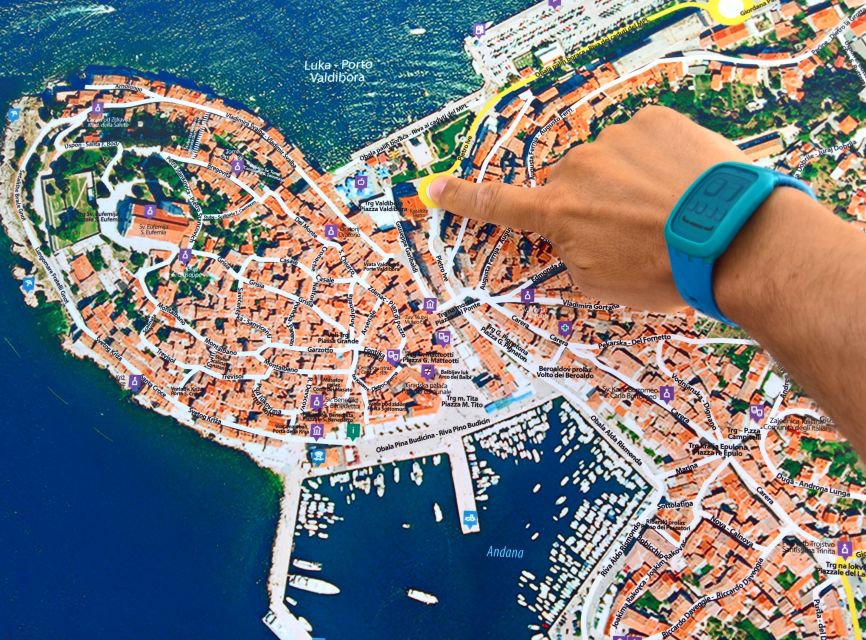
The first major stop is Valdibora Square, the area people approaching from the north would have seen first. Here, the guide explains where the channel once ran and where the connecting bridge used to be.
This is the kind of stop that changes how you read the rest of the town. Modern Rovinj looks like a peninsula, but its older story is tied to an island settlement. The channel was filled in about 1,000 years ago, joining the settlement more closely to the mainland and changing the way people entered and moved around the town.
The tour specifically addresses why there are no bridges at Bridge Square. That question is easy to miss when you are taking photographs, yet it gives the city a memorable point of reference. Instead of seeing a plain square, you begin to picture the waterway that once cut through it.
The short stop here lasts about 15 minutes. That is enough time for a clear explanation without turning the opening into a classroom lecture. I especially like this early historical focus because it gives you a framework for the narrow streets ahead. You are not just walking through an attractive old town. You are following the shape of a place that changed from island to connected city.
Carera Street and the money behind the facades
From Valdibora Square, the route continues along Carera Street. This street helps explain the wealth that built and maintained Rovinj in the 18th century.
The trade goods were practical ones: olive oil, fish, and wine. Their importance becomes easier to understand when you look at the street as part of a port town rather than as a shopping lane. The guide connects commerce with the buildings, streets, and urban growth you see around you.
This section takes about 15 minutes. It is a good example of why a local guide can add value to a walk through a compact old town. A guidebook may list the street and its age, but the tour links the street to the daily work and trade that helped shape Rovinj.
I would pay attention to the difference between the lower town and the old center here. The walk is not limited to a single postcard view. It moves through areas that help you understand how people arrived, worked, traded, and lived before Rovinj became a major holiday destination.
The waterfront, with time for an Aperol Spritz
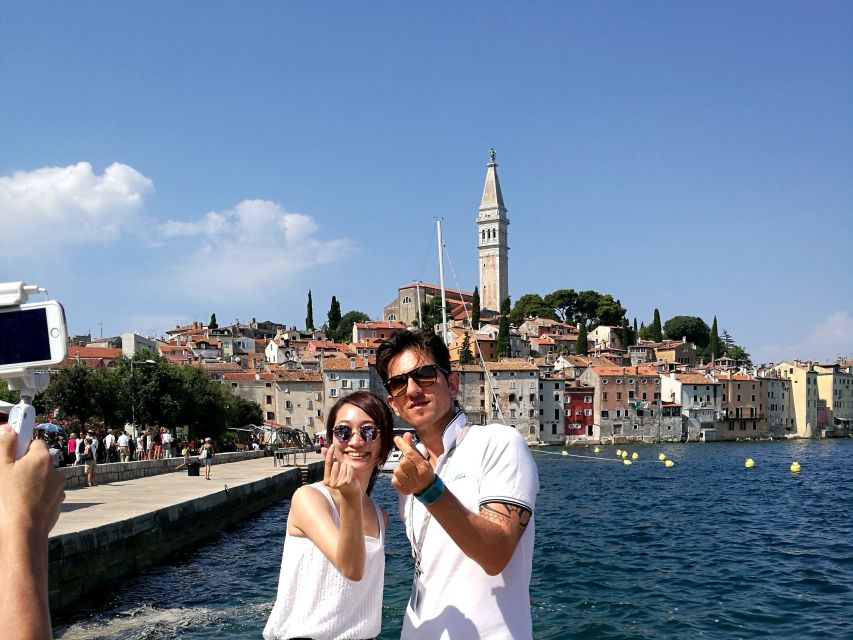
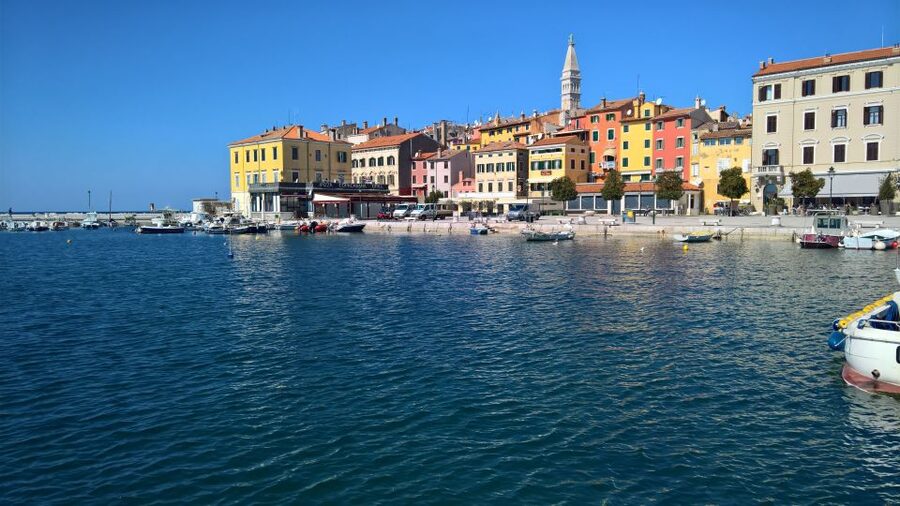
The waterfront is the next natural pause. It is a scenic place to look back toward Rovinj and see the town rising from the Adriatic.
The stop lasts about 10 minutes, which is long enough to take photographs and listen to the guide without losing the walk’s pace. The setting also offers a useful reminder that Rovinj’s identity is tied to the sea. The water is not just background scenery. It is part of the town’s past and its appeal today.
This is the point where an Aperol Spritz may sound especially sensible, although drinks are not included in the price. Personal food and drink costs are your responsibility, so think of the waterfront suggestion as a tip, not part of the tour package.
I like that the route includes practical enjoyment rather than treating sightseeing as a race between monuments. Goran’s recommendations cover coffee, restaurants, gelato, cakes, and beaches. You can use the tour to decide where to return later, when you have time to sit down and enjoy the town at your own speed.
A few more Rovinj trips to weigh up
- Split: Old Town and Diocletian Palace Walking Tour
★ 4.9 · 4,727 reviews - Dubrovnik Discovery Old Town Walking Tour
★ 5.0 · 4,458 reviews - Walking Tour of Split and Diocletian’s Palace
★ 5.0 · 2,588 reviews - Dubrovnik: Game of Thrones Walking Tour
★ 5.0 · 1,732 reviews
Cobblestones, the former Jewish Ghetto, and the stables
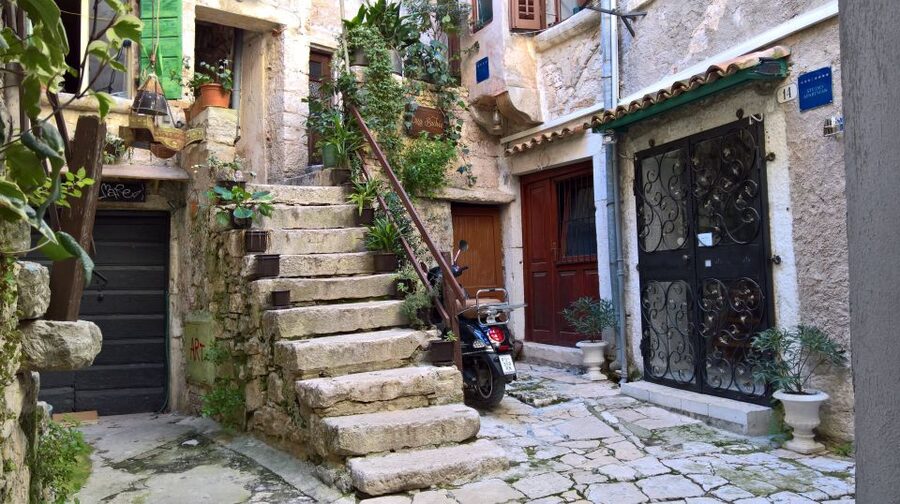
The route then turns into the maze of cobbled streets near the former Jewish Ghetto and the old stables area. This is one of the more atmospheric parts of the walk, but it is also where the physical demands become clear.
The area lies just off the Arch of the Bearded, a distinctive point on the route. The guide uses the lanes and walls to explain parts of Rovinj that are easy to overlook if you stay on the broad waterfront. The former Jewish Ghetto adds another layer to the town’s past, while the stables area helps you picture how tightly packed urban life once was.
This portion takes about 20 minutes. Expect uneven stones and narrow streets. Comfortable shoes matter more here than smart holiday footwear, and you should be ready for a slower pace when the ground is irregular.
The route’s compact setting is a strength. You cover several connected areas without spending time on transport. The tradeoff is that the old center is not designed like a modern pedestrian plaza. The cobbles are part of the character, but they can be tiring or awkward for anyone with mobility problems.
Following the walls to St. Euphemia
The final 30 minutes lead along the ancient city walls and uphill to the Church of St. Euphemia. The climb is described as fairly easy, but it is still a climb, and the cobblestones continue to matter.
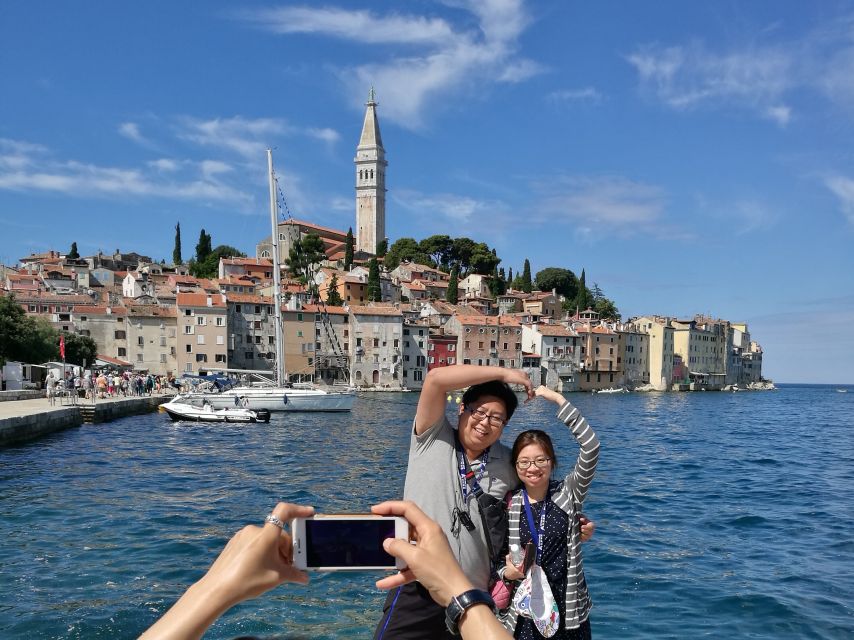
St. Euphemia is an excellent finishing point because it gives the walk a clear visual payoff. From the hilltop, you can look over Rovinj with the blue Adriatic behind it. The church watches over the city, and the high position makes the town’s unusual shape easier to grasp.
The tour ends here rather than returning to the market. That matters when planning your day. You finish in the historic upper town, so you can continue exploring nearby or stay for the view. The church is also presented as one of the best places for an Adriatic sunset.
I would consider booking a late departure if sunset is your main goal, but only after checking the available start times. A morning walk may be better if you want cooler conditions and a clear orientation before sightseeing. Either way, remember that the walk finishes uphill, not back at the original meeting place.
What the local advice adds to the tour
The strongest practical feature is the advice you get for the rest of your stay. By the end, you should know where locals buy fruit and vegetables, where to look for good coffee, and where to find cakes and gelato.
You also get suggestions for restaurants and traditional foods. These recommendations cannot guarantee that every place will suit your taste, but they are useful because they come during a walk through the streets themselves. You can ask follow-up questions, explain what you like to eat, and make a plan while the places are still in front of you.
The beach advice is another helpful touch. Rovinj has more to offer than old walls and church views, and knowing which areas are considered good for swimming can save you from choosing a spot at random. The tour does not include beach transport or a beach visit, so treat this as orientation for your own later plans.
Goran’s strongest quality is his delivery. He has been described as funny, animated, clear in English, and able to explain both Rovinj and wider Croatian history without making the walk dull. That matters on a 90-minute tour. Facts are useful only when you can remember them after the guide has moved on.
Is $32 a fair price for 90 minutes?
At $32 per person, this is not the cheapest way to walk around Rovinj, since you can explore the streets without a guide. The value comes from the structure, the local perspective, and the time saved working out what you are looking at.
I think the price is reasonable if you are visiting Rovinj for the first time or have only a short stay. You cover the former channel, Carera Street, the waterfront, the former Jewish Ghetto, the stables area, the walls, and St. Euphemia in one organized route. You also leave with food, coffee, gelato, and beach suggestions that can shape the rest of your visit.
The value is less clear if you prefer to wander silently, stop often, or spend a long time inside individual buildings. This is a walking orientation, not a museum tour. The supplied details do not list interior visits or entrance tickets, and personal drinks and food cost extra.
The small group size is not specified, so you should not book expecting a private walk. Still, the guide’s approach is built around questions and conversation, and the recorded experiences describe groups as small on at least one occasion. Ask questions as you go. That is where a local guide earns the fee.
Who will enjoy this Rovinj walk?
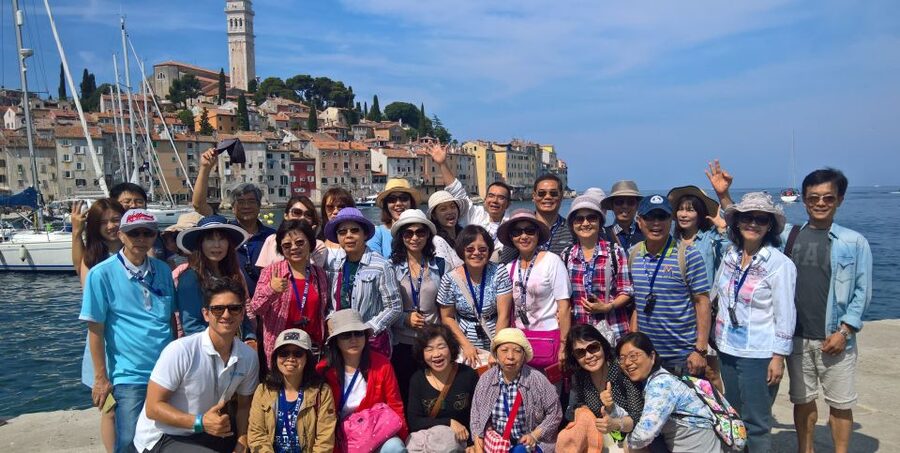
I would recommend it to first-time visitors, couples, solo travelers, and anyone who wants a quick sense of place before choosing restaurants and beaches. It also suits people who enjoy history but want it explained through streets, trade, and local life rather than delivered as a list of dates.
The walk is a good fit for travelers who appreciate a guide with humor. Goran’s style is engaging and conversational, with room for questions. If you want a quiet, self-guided stroll, you may find the commentary more than you need.
You should also be comfortable walking on cobblestones and uphill. The tour is not suitable for people with mobility impairments, and the route can be challenging if uneven ground or slopes are a problem. Wear shoes with a firm grip, carry water, and avoid bringing more than you want to carry for 90 minutes.
The languages available are English, Italian, Portuguese, French, and Croatian. The guide is local and licensed, which is useful when you want both a clear explanation and a personal connection to the town.
Booking details that affect your plans
The walk lasts 90 minutes, with the route divided into stops of about 15, 15, 10, 20, and 30 minutes. That final 30-minute section is the longest because it covers the walls and the climb to St. Euphemia.
You can cancel up to 24 hours before the start for a full refund. The reserve-now, pay-later option lets you hold a place without paying immediately, which is useful when your Istrian schedule may change.
Check the starting time before booking. The tour may work best early in the day during hot weather, while a later departure could suit you if you want to finish near sunset. The exact timing depends on availability.
The starting point is near the farmers’ market, while the endpoint is the Church of St. Euphemia. Plan your next stop from the church rather than assuming you will return to the lower town with the guide.
Should you book it?
Book this tour if you want Rovinj explained by someone from Rovinj, not just a list of sights. The vanished channel, trade on Carera Street, old Jewish Ghetto, city walls, and hilltop church form a strong route, and the food and beach tips make the walk useful beyond its 90 minutes.
Skip it if you dislike guided commentary, need step-free access, or want a slow visit focused on interiors. For most first visits, though, $32 buys a practical introduction, a better sense of the city’s shape, and a head start on finding the places you will want to revisit.
FAQ
How long does the Rovinj guided walking tour last?
The tour lasts 90 minutes.
How much does the tour cost?
The price is $32 per person.
Where is the meeting point?
Meet the guide in front of the large whitewashed World War II memorial on Pietra Ive Street, just off the local farmers’ market. The nearby listed landmark is the Auro Domus ATM.
Where does the tour finish?
The tour finishes at the Church of St. Euphemia.
Which languages are available?
The tour is available in English, Italian, Portuguese, French, and Croatian.
Is food or drink included?
No. Personal expenses, including food and drinks, are not included.
Can I cancel for a refund?
Yes. You can cancel up to 24 hours in advance for a full refund.
Can I reserve now and pay later?
Yes. The reserve-now, pay-later option allows you to book without paying immediately.
Is the walk suitable for people with mobility impairments?
No. Half of the route crosses cobblestones, and the walk up to the church can be challenging for people with limited mobility.
Just added around Rovinj
- Postojna Cave & Predjama Castle – Shore Excursion from Rijeka★ 4.5 · 10 reviews
- Rovinj guided tour – personally ( german )★ 5.0 · 4 reviews
- Private Guided Sunset Dolphin Watching in Adriatic Sea★ 5.0 · 12 reviews
- Plitvice Lakes Day Tour from Rijeka, Simple & Safe★ 4.0 · 8 reviews
- Photo safari trough the Winnetou canyon★ 5.0 · 17 reviews
- Day trip to Poreč and Pula with lunch from Rovinj★ 5.0 · 15 reviews
- Istria Wine Tour from Rijeka and Opatija★ 5.0 · 11 reviews
- Private walking tour Opatija -Romantic spotlight of the Adriatic★ 5.0 · 12 reviews
Old Town Walking Tours, compared.



Walking Tour of Split and Diocletian’s Palace
Read our review →


Krka Waterfalls tour with Trogir Walking tour and Krka panoramic boat cruise
Read our review →
City Walls Early Morning or Sunset Walking Tour
Read our review →
Plitvice Lakes with Boat Ride and Zadar Old Town Tour
Read our review →Browse the lists this tour appears in