
Reviewed · OLD TOWN WALKING TOURS
Private Walking Tour in Dubrovnik with Guide
Dubrovnik’s old town makes far more sense when you connect its churches, fountains, market, and grand public buildings in one walk. This private tour takes you from the Amerling Fountain through the historic center, with local guide Kim explaining how the city was shaped by religion, diplomacy, water, trade, and careful city laws.
I like the private format, since your group of up to six can keep the pace personal. I also like the way the route mixes famous sights with small details, such as the two Onofrio fountains and the role of Gunduliceva Poljana Market. The main consideration is time: 90 minutes gives you a sharp introduction, not a slow, inside-every-building tour.
In This Review
- Key points at a glance
- Starting at the Amerling Fountain
- Saint Blaise gives Dubrovnik its local character
- Stradun explains how the city was planned
- Rector’s Palace and the city’s diplomatic style
- The Onofrio fountains and Dubrovnik’s water supply
- The Orthodox Church and a broader view of Dubrovnik
- The Cathedral and the layers beneath it
- Gunduliceva Poljana Market for local flavor
- What the private format means for your day
- Why Kim’s local perspective matters
- Timing, weather, and practical planning
- Who should book this Dubrovnik walk
- Should you book it?
- FAQ
- How long is the private walking tour?
- How many people can join the private tour?
- What language is the tour offered in?
- Who is the guide?
- Where does the tour begin?
- Where does the tour end?
- Is transportation included?
- Are entrance tickets included?
- When is the tour available?
- Can I cancel for a full refund?
- What happens if bad weather cancels the tour?
Key points at a glance
- Kim leads a private English-language walk for only your group, with a maximum of six people.
- The 90-minute route covers seven Old Town sights, including Stradun, Rector’s Palace, the Cathedral, and the market.
- The tour begins and ends at the Amerling Fountain, with no private transport included.
- You hear local stories as well as formal history, including Saint Blaise’s legends and the effects of war on local people.
- The route includes free-admission stops, so the $132.17 group price mainly pays for the guide’s time and local interpretation.
- The tour runs daily from 9 a.m. to 8 p.m. between March 15 and October 31, 2026, weather permitting.
Starting at the Amerling Fountain
Your meeting point is the Amerling Fountain on Ul. Svetog Đurđa, at the edge of Dubrovnik’s old town. The tour finishes at this same point, which makes the route simple to plan around a morning, afternoon, or evening in the city.
The walk lasts about 1 hour and 30 minutes. That is a useful length if you want a first look at Dubrovnik without giving up half a day. It also works well near the start of your stay, since the route helps you understand where the main streets and landmarks fit together.
You will be walking on historic streets and stopping at public squares. Wear shoes that feel secure on stone paving, and think about the weather before you book. The tour requires good weather, and a poor-weather cancellation brings the choice of another date or a full refund.
Since private transportation is not included, you need to reach the Amerling Fountain on your own. The meeting point is near public transportation, and the tour ends where it begins, so there is no need to arrange a pickup at the far side of the city.
More Old Town Walking Tours in Dubrovnik
- Dubrovnik: Old Town Walking Tour
★ 4.8 · 5,174 reviews - Dubrovnik Discovery Old Town Walking Tour
★ 5.0 · 4,458 reviews - Dubrovnik: Game of Thrones Walking Tour
★ 5.0 · 1,732 reviews
Saint Blaise gives Dubrovnik its local character
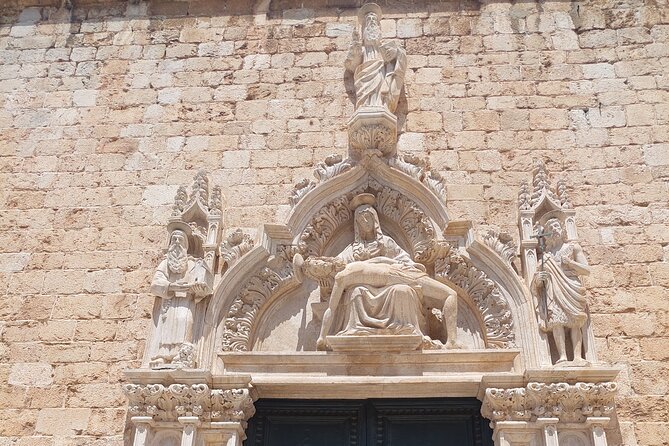
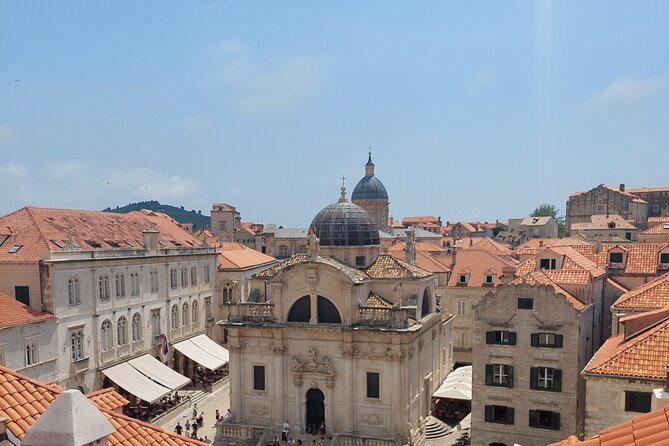
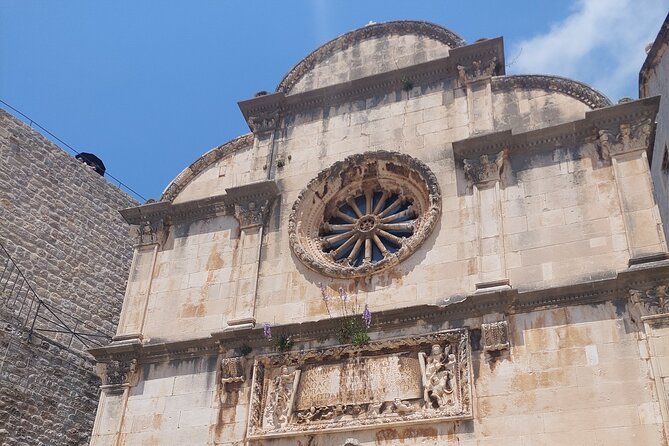
The first stop is the Church of Saint Blaise, devoted to Dubrovnik’s patron saint. The visit is scheduled for about 10 minutes, but the subject reaches beyond the building itself.
Kim explains Saint Blaise’s legends and why he matters so much to Dubrovnik. This is a smart opening because it introduces the city through a figure tied to local identity, not just through dates and architecture. You begin to see the old town as a place with its own traditions and protective symbols.
The church is also a useful reminder that Dubrovnik’s religious buildings were part of public life. You are not simply looking at a pretty facade. You are hearing why this particular saint became central to the city.
Admission is free at this stop. The schedule is brief, so expect an explanation from outside or a concise look rather than a long church visit with time to study every detail. If religious art is a major interest, you may want extra time on your own after the tour.
Stradun explains how the city was planned
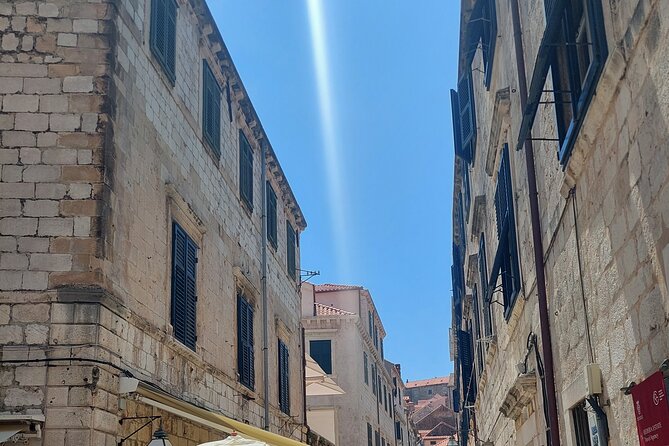
Stradun is Dubrovnik’s main street and one of the clearest places to understand the structure of the old town. The tour allows about 15 minutes here, the longest single stop on the route.
Kim covers the street’s formation, layout, and the laws that shaped it. That focus is valuable because Stradun can look straightforward at first: one broad stone street lined with historic buildings. The story behind its design reveals a city that cared about order, movement, and civic rules.
This is one of the strongest parts of the walk for first-time visitors. Once you know why the street looks and functions as it does, the rest of the old town becomes easier to read. You can also use the explanation as a starting point for your own wandering after the tour.
The drawback is that 15 minutes passes quickly on a street with so much to notice. You may want to return later to examine the buildings, walk the full length again, or pause at a cafe. The guided portion gives you the framework, while your own later visit supplies the slower pace.
Rector’s Palace and the city’s diplomatic style
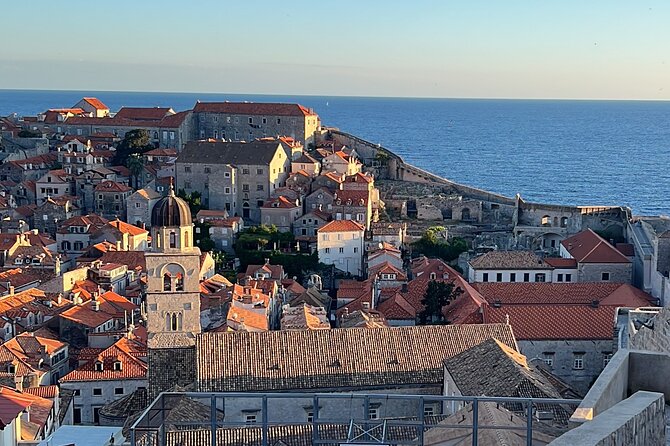
At Rector’s Palace, the focus shifts from streets and saints to government. You hear about Dubrovnik’s politics, diplomacy, and long effort to preserve peace.
This stop is especially useful because the palace represents the city as a self-governing republic. The guide’s emphasis on diplomacy helps explain how Dubrovnik operated as a small maritime power that had to manage relations carefully. You get a sense of public decisions, negotiation, and the importance of keeping stability.
The scheduled time is about 10 minutes. That is enough for a clear introduction, but not enough for a full museum visit or a detailed look at every room. Admission to the stop is listed as free, but the tour information does not promise an extended interior visit. Treat this as a guided landmark explanation rather than a substitute for a separate palace visit.
For me, this is the kind of context that makes a walking tour worth paying for. You can see the building on your own, but it is harder to understand why it mattered without someone connecting it to the city’s political life.
Same stretch of coast, a completely different day out:
- Blue Cave Small-Group Boat Tour from Dubrovnik
★ 5.0 · 9,360 reviews - Full-Day Dubrovnik Elaphite Islands Cruise with Lunch and Drinks
★ 5.0 · 8,823 reviews - Dubrovnik: Epic Game of Thrones Tour + Lokrum & Saver Option
★ 4.9 · 5,995 reviews - Dubrovnik: Elaphiti Islands Full-Day Cruise with Lunch
★ 5.0 · 5,938 reviews
The Onofrio fountains and Dubrovnik’s water supply
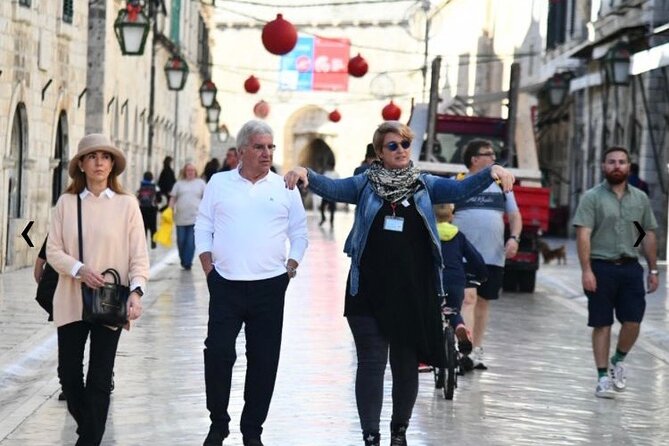
The Little Onofrio Fountain comes next, with about 10 minutes devoted to it. You see the smaller fountain as well as the main Onofrio Fountain, and Kim explains who Onofrio was and why he was important to the Republic of Dubrovnik.
This is a fine example of the tour’s practical side. A fountain can look like a minor feature when you pass it alone. Once you learn its connection to the city’s water system and public life, it becomes a clue to how Dubrovnik functioned.
The stop also gives the walk a pleasing change of scale. You move from a large street and a major government building to a smaller piece of urban infrastructure. That mix keeps the route from becoming a simple parade of famous monuments.
Both fountains are free to see. Since the itinerary combines them within one short stop, listen closely for the connection between the small and large versions. If you only have time to take a quick photograph, you may miss the reason this feature matters.
The Orthodox Church and a broader view of Dubrovnik
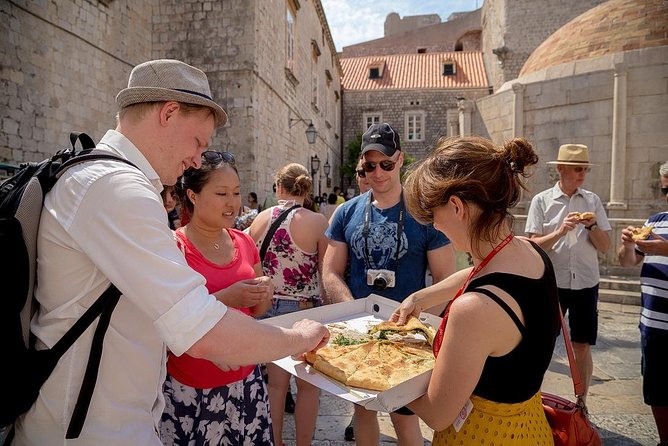
The Orthodox Church of the Annunciation is another 10-minute stop. Here, the subject is religion in Dubrovnik and the different communities that have lived in the city.
This is an important part of the route because it widens the story beyond one dominant religious tradition. After beginning with Saint Blaise and then visiting the Cathedral later, the Orthodox church gives you a chance to consider the city’s varied inhabitants and religious life.
Kim’s local perspective is useful here. One of the strongest themes in the available feedback is her ability to discuss local people, restaurants, and the way wars affected residents. That suggests you should feel free to ask a direct question if you want to connect the buildings with everyday life.
The tour does not list an admission charge for this stop. It also does not promise a long interior visit, so expect a concise explanation of the church and its place in Dubrovnik rather than a formal service or extended visit.
The Cathedral and the layers beneath it

The Cathedral of the Assumption of the Virgin Mary is described as important for both archaeological and religious reasons. The stop lasts about 10 minutes.
This is a chance to consider Dubrovnik across several periods rather than as one perfectly preserved picture. The cathedral’s value is not only its religious role. Its archaeological importance points to earlier layers beneath or around the present building, giving you a sense that the old town has been rebuilt and reshaped over time.
The short stop works well if you want an overview of the city’s sacred landmarks. It is less suitable if you want a detailed study of religious art, archaeology, or the cathedral interior. You should ask Kim what can be seen during your visit, since the supplied details do not specify interior access.
The cathedral also balances the earlier church stops. Saint Blaise introduces the city’s patron saint, the Orthodox church broadens the religious picture, and the cathedral brings the route back to one of Dubrovnik’s major religious and archaeological sites.
Gunduliceva Poljana Market for local flavor
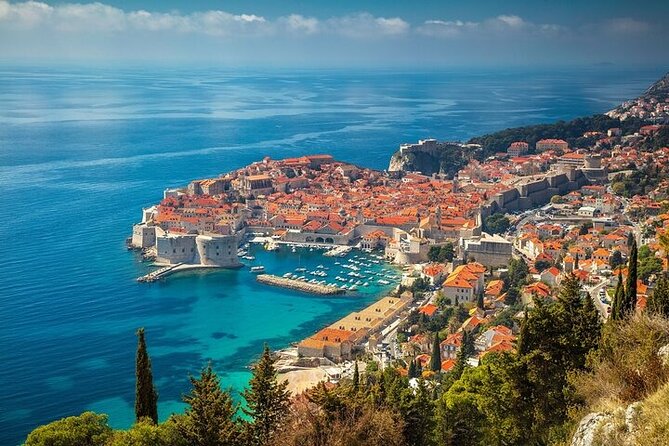
The final listed stop is Gunduliceva Poljana Market, where you can see local products, fruit, oil, and herbs. The visit lasts about 10 minutes.
This is a welcome ending because it brings the walk down from palaces and churches to ordinary commerce. A market helps you notice what people buy, sell, and use. It also gives you a practical place to identify local products rather than simply hearing about the past.
The stop is useful if you want ideas for edible souvenirs or ingredients to look for later. The information does not promise tastings or purchases included in the tour, so budget separately if you want to buy fruit, oil, herbs, or other products.
Because this is the last stop, you may want to ask Kim for suggestions about places to eat or shops worth visiting. Her local advice is one of the details that has drawn especially warm praise, along with her help explaining restaurants and the effect of wartime events on local people. Just remember that recommendations are guidance, not part of the formal tour inclusions.
What the private format means for your day
The tour costs $132.17 per group of up to six people. If you fill all six places, the cost works out to about $22 per person. For two people, the per-person price is much higher, but you are paying for a private guide rather than joining a large group.
That price makes the most sense for a family, a group of friends, or anyone who values questions and a flexible conversation. You are not paying admission to a set of attractions, since the listed stops have free admission. You are paying for Kim’s time, route planning, explanations, and local point of view.
A private walk is also a good fit if your group has mixed interests. One person can ask about architecture, another about local life, and another about the city’s political past. The tour is short enough that nobody should feel trapped in a full-day program.
The tradeoff is limited depth. Seven stops in 90 minutes means roughly 10 to 15 minutes at each place, with walking time between them. You will get a well-shaped introduction, but you should not expect long museum visits, private transportation, or a full exploration of every building.
Why Kim’s local perspective matters
Kim is the named guide, and the strongest praise centers on her timing, friendliness, clear explanations, and local knowledge. You can expect an English-language tour led by someone who presents Dubrovnik through both its monuments and its people.
The available feedback also points to subjects beyond standard sightseeing. Kim has discussed local restaurants, the lives of residents, and how wars affected the people of Dubrovnik. Those details can help keep the tour grounded. You are not only moving from one stone building to the next. You are being encouraged to think about the city as a lived-in place.
Her approach seems particularly well suited to families and small groups. A parent and child, for example, can ask different kinds of questions without holding up a large party. The group size limit of six supports that kind of exchange.
Still, the tour data does not promise a special focus on food, war history, architecture, or religion. Those subjects appear in the route and guide feedback, but the core product is a general private walking tour. If you want one narrow subject in great depth, ask about it when you meet.
Timing, weather, and practical planning
The experience is offered from March 15 through October 31, 2026, every day from 9 a.m. to 8 p.m. That broad daily window gives you useful choice, especially if you have other plans in Dubrovnik.
A morning start may suit you if you want to use the rest of the day for independent sightseeing. An afternoon or early evening start can work if you arrive later, but the tour still depends on daylight and weather conditions. The information does not specify a preferred time, so choose the slot that fits your schedule and check the forecast.
Confirmation is normally provided at booking. If you book within five hours of the start time, confirmation is sent as soon as possible and depends on availability. That makes advance planning sensible, especially since the experience is booked an average of 51 days ahead.
You can cancel for a full refund up to 24 hours before the start time. Changes or cancellations inside that 24-hour window are not accepted for a refund. Service animals are allowed, and most people can participate, but the tour is still a walking activity, so consider your own comfort with a 90-minute Old Town route.
Who should book this Dubrovnik walk
I would choose this tour if you want a compact introduction to Dubrovnik’s central sights and prefer a private guide to a large group. It is a strong option for first-time visitors, families, couples, and small groups who want to ask questions along the way.
It also suits you if you enjoy connections between different parts of a city. The route links a patron saint, a planned main street, a political center, a water system, religious communities, archaeology, and a local market. That is a lot of ground in a short time.
I would look elsewhere if you want a full-day experience, private transport, extensive interior visits, or a specialist tour focused only on art, food, or war history. You should also leave extra time before or after the walk if you want to shop, eat, or explore the cathedral and palace at a slower pace.
Should you book it?
Book this private walk if you want to get your bearings quickly and understand why Dubrovnik’s Old Town is arranged as it is. Kim’s local stories, the small group size, and the mix of major landmarks with less obvious details give the 90-minute route real value.
The price is easiest to justify with four to six people. With only two, it becomes a more expensive introduction, though the private attention may still suit you. Go in expecting a lively overview rather than a long museum tour, wear sensible shoes, and keep the rest of your day open for a second look at the places that catch your interest.
FAQ
How long is the private walking tour?
The tour lasts approximately 1 hour and 30 minutes.
How many people can join the private tour?
The private tour is for one group of up to six people.
What language is the tour offered in?
The tour is offered in English.
Who is the guide?
The guide is Kim.
Where does the tour begin?
The tour begins at the Amerling Fountain, Ul. Svetog Đurđa, 20000 Dubrovnik, Croatia.
Where does the tour end?
The activity ends back at the Amerling Fountain, the same place where it begins.
Is transportation included?
No. Private transportation is not included.
Are entrance tickets included?
The listed stops show free admission. The tour includes a licensed tour guide, but no separate paid admission is specified.
When is the tour available?
It is available Monday through Sunday from 9 a.m. to 8 p.m., from March 15 through October 31, 2026.
Can I cancel for a full refund?
Yes. You can cancel at least 24 hours before the start time for a full refund. Cancellations or changes made less than 24 hours before the start time are not refunded or accepted.
What happens if bad weather cancels the tour?
If poor weather causes cancellation, you will be offered another date or a full refund.
More Walking Tours in Dubrovnik
- Dubrovnik Old Town History Walking Tour
★ 5.0 · 1,684 reviews - Dubrovnik: City Walls Early Morning or Sunset Walking Tour
★ 4.8 · 1,523 reviews - Dubrovnik: Ancient City Walls & Wars Walking Tour
★ 5.0 · 1,270 reviews - Dubrovnik: Game of Thrones Walking Tour
★ 4.9 · 981 reviews
Just added around Dubrovnik
- Elaphiti Islands Private Dubrovnik Boat Unique Experience★ 5.0 · 10 reviews
- Full- Day Private Speedboat Tour in Dubrovnik on Elaphiti Islands★ 5.0 · 21 reviews
- PRIVATE Wine Tour to Konavle country side★ 5.0 · 11 reviews
- Parasailing in Cavtat★ 5.0 · 62 reviews
- Wine tour peninsula Pelješac★ 5.0 · 3 reviews
- Wine Lover’s Tour of Peljesac Peninsula★ 5.0 · 150 reviews
- Welcome to Dubrovnik Walking Tour★ 5.0 · 36 reviews
- Dubrovnik at War 1991-1992 Private Walking Tour★ 5.0 · 4 reviews
Old Town Walking Tours, compared.



Walking Tour of Split and Diocletian’s Palace
Read our review →


Krka Waterfalls tour with Trogir Walking tour and Krka panoramic boat cruise
Read our review →
City Walls Early Morning or Sunset Walking Tour
Read our review →
Plitvice Lakes with Boat Ride and Zadar Old Town Tour
Read our review →Browse the lists this tour appears in