
Reviewed · OLD TOWN WALKING TOURS
Private Split Walking tour with LOCAL guide
Split’s old center is not a museum behind ropes. It is a living city built inside a Roman emperor’s palace. This private walk takes you through Peristyle Square, the Temple of Jupiter, the Vestibule, Saint Domnius Cathedral, the Golden Gate, and the Riva, with room to shape the day around what interests you most.
I like the private format, especially for families or groups with mixed interests. I also like having a local guide, since Split’s Roman walls, medieval buildings, cafés, and modern homes can be confusing without someone to explain what you are seeing. One small concern is the advertised 12-hour length. That gives you welcome flexibility, but it is far longer than most people need for a basic old-town walk.
In This Review
- Key points to know
- Starting at Peristyle Square inside the Roman palace
- The Temple of Jupiter and the palace’s sacred side
- The Vestibule and a glimpse of imperial life
- Saint Domnius Cathedral, once Diocletian’s mausoleum
- Walking the Riva and seeing Split at street level
- The Golden Gate and the palace entrances
- Marjan Hill or a slower finish in town
- What the $176 group price really means
- Who will get the most from this Split walk
- Guide languages, meeting point, and flexibility
- Booking flexibility and final practical advice
- Should you book this private Split tour?
- FAQ
- Where does the tour begin?
- How long is the experience?
- How many people can join the private tour?
- Which languages are available?
- Is the tour wheelchair accessible?
- Can I cancel or pay later?
Key points to know
- Diocletian’s Palace is the main event: Walk through a Roman palace that still functions as Split’s city center.
- Your group sets the pace: The private format works well if you want more history, more photography time, or fewer stops.
- Several major sights are packed together: Peristyle Square, the Temple of Jupiter, the Vestibule, the cathedral, and Golden Gate all fit naturally into one route.
- The cathedral began as Diocletian’s mausoleum: Its change from imperial tomb to Christian church gives the tour a striking historical twist.
- The final hours are flexible: Choose Marjan Hill and sea views, or spend time with local shops, cafés, and lunch suggestions.
- Languages and access are practical strengths: Guiding is available in English, French, and German, and the tour is listed as wheelchair accessible.
Starting at Peristyle Square inside the Roman palace

Peristyle Square is the right place to begin. It is the ceremonial heart of Diocletian’s Palace, framed by tall stone columns and surrounded by the dense streets of modern Split. Your guide can help you understand the odd but wonderful fact at the center of the experience: the palace is not simply an ancient ruin. People live, work, eat, and shop within it.
That setting makes this more useful than a quick photo stop. You can look at the Roman stonework, then turn toward a café or a narrow lane and see how the old structure still shapes daily life. A local guide adds the missing links, explaining how the palace was planned and how later generations adapted it.
I would pay close attention here to the scale and arrangement of the square. It was designed to impress visitors approaching the emperor’s private world. The columns, open court, and surrounding entrances make more sense once you know that this was a formal stage for imperial power.
The private format helps at the start. You can ask your guide to explain Roman architecture in plain terms, focus on Diocletian himself, or keep the introduction short and get moving. With up to 10 people in your group, you avoid the feel of a large procession, though 10 is still enough that you will want to stay close in narrow lanes.
More old town walking tours in Croatia:
- Dubrovnik: Old Town Walking Tour
★ 4.8 · 5,174 reviews - Split: Old Town and Diocletian Palace Walking Tour
★ 4.9 · 4,727 reviews - Dubrovnik Discovery Old Town Walking Tour
★ 5.0 · 4,458 reviews
The Temple of Jupiter and the palace’s sacred side

The Temple of Jupiter gives the walk a useful change of pace. It began as a pagan Roman temple and now houses Saint John’s Baptistry. That single building shows how Split changed religions and purposes over time without losing its older structure.
Inside, your guide can place the temple in the wider Roman setting. The point is not only to see an ancient doorway or a preserved room. You are learning how Roman public and private life were tied to worship, imperial authority, and ceremony.
The description of this tour names the Temple of Jupiter more than once, so expect it to be an important part of the palace story. That repetition may be useful if you want a fuller explanation, but it also means the exact order of the stops can vary. Ask your guide at the beginning how much time will be spent inside each site.
This is one place where your interests matter. If you enjoy architecture, you may want to study the proportions and surviving details. If religious history is your main interest, ask how the space changed from pagan use to Christian use. A private guide can adjust the emphasis rather than giving every group the same speech.
The Vestibule and a glimpse of imperial life
The Vestibule is a circular entrance hall leading toward the emperor’s private quarters. It is one of those places that can look simple at first, especially when you are surrounded by the palace’s more dramatic columns and gates. Its value becomes clearer when you understand its role as a transition between public ceremony and private space.
I like this stop because it helps you picture movement through the palace. The emperor did not simply walk from one room to another. The approach itself was designed to control access and create a sense of grandeur.
Your guide will explain how the Vestibule fitted into the palace plan and what it suggests about Diocletian’s lifestyle. Do not expect a furnished imperial apartment. The building has been changed over many centuries, and the experience depends on reading the surviving form rather than seeing a complete Roman interior.
For photography, the circular shape and opening above make this a worthwhile pause. Still, the space can feel less obvious without explanation. This is exactly the sort of stop where a local guide earns the fee by telling you what to notice.
Saint Domnius Cathedral, once Diocletian’s mausoleum

The Cathedral of Saint Domnius adds a surprising layer to the palace. The building began as Diocletian’s mausoleum and later became a Christian cathedral. The emperor’s tomb was therefore transformed into a place of Christian worship, a sharp symbol of how Split’s religious identity changed.
Your guide will explain the cathedral’s role in the city’s religious story. You can look at it not only as a church, but also as part of the original Roman palace plan. That connection makes the stop more meaningful than visiting a cathedral on its own.
A climb of the bell tower is available if you want panoramic views over Split and the Adriatic coast. The view is a strong reason to consider adding it, especially if you want to understand the city’s position between the historic center and the sea.
The climb is optional, so this part can work for mixed groups. One person can stay at ground level while another goes up. Since the available information does not specify the number of steps, entrance arrangements, or extra cost, ask your guide before deciding. Anyone with limited mobility should also confirm how much of the tower can be visited.
A few more Croatia trips to weigh up
- Walking Tour of Split and Diocletian’s Palace
★ 5.0 · 2,588 reviews - Dubrovnik: Game of Thrones Walking Tour
★ 5.0 · 1,732 reviews - Dubrovnik Old Town History Walking Tour
★ 5.0 · 1,684 reviews - Krka Waterfalls tour with Trogir Walking tour and Krka panoramic boat cruise
★ 5.0 · 1,659 reviews
Walking the Riva and seeing Split at street level

The Riva is Split’s waterfront promenade and a natural break from stone courtyards. Here, the Adriatic becomes part of the experience. You can watch the activity along the water, take a breather, and see how the city uses its public space.
This stop gives the tour balance. The palace explains the old city, while the Riva shows how Split feels now. You are not spending the whole day looking upward at Roman columns or listening to dates. You have time to notice the waterfront, the cafés, and the rhythm of local life.
The Riva is also a good point to tell your guide what you want from the rest of the day. You might prefer more architecture, a slower lunch, shopping, or the climb to Marjan Hill. Since the tour is private, you have more control than you would on a fixed group walk.
Do not expect the Riva to be a quiet historical site. It is a social part of the city, and the atmosphere changes with the time of day. That is part of its appeal, but it may not suit you if you want uninterrupted sightseeing.
The Golden Gate and the palace entrances

The Golden Gate was the main entrance to Diocletian’s Palace. Your guide will point out its bronze doors and explain why this gateway mattered. It was not just a practical opening in the wall. It presented the palace to people arriving from outside and helped define the emperor’s protected world.
This is a useful stop for understanding the palace as a complete fortified residence rather than a collection of separate ruins. The gate, walls, ceremonial court, temple, mausoleum, and private quarters were connected parts of one grand project.
The Golden Gate is also a good place to consider how much the city has changed. Ancient stonework meets modern streets, foot traffic, and everyday businesses. That mixture is one of Split’s strongest qualities, though it can make the old center feel visually busy.
Your guide can help you find the details that are easy to miss, including the door design and the relationship between the entrance and the palace interior. If you care about photographs, ask for a moment to frame the gate before moving on.
Marjan Hill or a slower finish in town

The final portion is flexible. You can head to Marjan Hill for wide views over Split and the Adriatic, or stay in town to visit shops and cafés. This choice matters because the two options offer very different endings.
Marjan Hill is the better choice if you want scenery after the close streets of the palace. The view gives you a broader sense of Split and its coastal setting. It also provides a change from historical interpretation to open-air sightseeing.
The alternative is more relaxed and practical. Your guide can suggest a place for lunch or point you toward local shops and further sightseeing. This may suit you better if your group has children, tired walkers, shoppers, or people who prefer conversation over another viewpoint.
The advertised duration is 12 hours, so this flexible ending may be intended to turn the walk into a full-day experience. I would clarify the planned schedule before booking. A 12-hour private day can be excellent value if you want a long, unhurried visit with lunch and extra stops. It may feel excessive if you only want the main palace sights.
What the $176 group price really means

At $176 for a private group of up to 10, the price works out to $17.60 per person if the group is full. For two people, it is $88 per person, so the value depends heavily on your group size and how much time you use.
For a family or group of friends, the price is easier to justify. You receive a guide dedicated to your party, the ability to ask questions freely, and the option to adjust the pace. A private tour can also save energy because you do not need to wait for a large group at every corner.
For a couple, the cost is higher than joining a shared walk. The tradeoff is privacy and flexibility. If you want only a short introduction to Diocletian’s Palace, a 12-hour private booking may be more than you need. If you want a full day with the palace, cathedral, waterfront, Marjan Hill, and lunch advice, the longer format becomes more reasonable.
The guide is the only listed inclusion, so budget separately for any cathedral or bell tower admission, food, and other personal expenses if they apply. The available details do not confirm which entrance fees are included. Ask before you commit to optional stops.
Who will get the most from this Split walk

I would choose this experience for a group that wants history explained in person rather than read from plaques. It is especially suited to families, multigenerational groups, and friends who want to keep the day flexible.
It also makes sense for first-time visitors who want a clear introduction to Split. The route covers the main historic sights without isolating them from modern city life. You get Roman architecture, Christian history, a waterfront walk, and a possible viewpoint in one package.
The tour may be less suitable if you dislike long walking days or prefer a tightly timed schedule. The 12-hour duration suggests a generous full-day format, but it does not mean you must spend every minute walking. Confirm the expected pace and the amount of free time.
The experience is listed as wheelchair accessible, which is an important advantage. Still, the old palace includes historic stone surfaces and narrow passages, and the bell tower may involve steps. Ask your guide to confirm which parts of the route are accessible for your particular needs.
Guide languages, meeting point, and flexibility

You can meet your guide at a location you choose, which is useful if you are staying near the old town, arriving at a hotel, or coordinating a group. The tour begins at Peristyle Square, but the pickup option lets you arrange the meeting point with the provider.
Guiding is available in English, French, and German. Make sure the requested language is confirmed at booking, especially if your group needs more than one language.
The private group format is the key practical feature. You can ask for more detail at the Temple of Jupiter, spend longer at the cathedral, skip a stop that does not interest you, or choose Marjan Hill instead of shopping. The exact flexibility should be discussed with the guide at the start of the day.
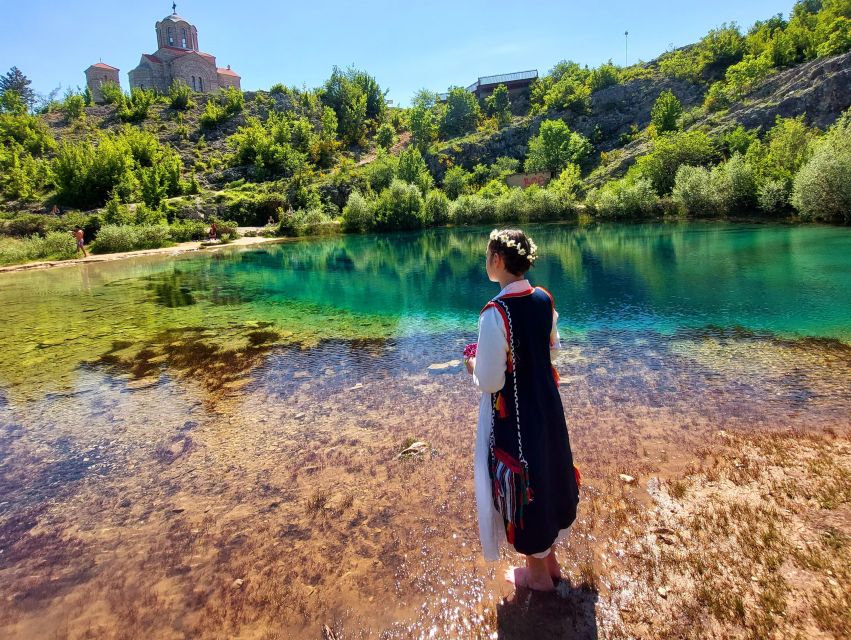
Two short pieces of available feedback mention a guide named Daniela. One praises a personable experience involving food and meeting a grandmother, while another refers to the Eye of the Earth. Those details do not match the Split route described here, so I would not assume that Daniela will lead this particular tour or that those activities are included. Treat the comments as limited evidence of a warm guiding style, not as promises about this walk.
Booking flexibility and final practical advice
You can cancel up to 24 hours before the tour for a full refund, and you can reserve now and pay later. Those terms help if your Split plans depend on weather or changing arrival times.
Before booking, ask four simple questions: How long will the actual walking portion last? Are cathedral and bell tower fees included? Can the group choose Marjan Hill or the shops at the end? Where exactly will the guide meet you?
Wear comfortable shoes and bring water, especially if you plan to use the full day. The route combines open waterfront space, stone streets, enclosed Roman rooms, and a possible hill walk, so a little planning will make the day easier.
Should you book this private Split tour?
Book it if you are traveling with a group, want a personal guide, and like the idea of turning Split’s old center into a full-day experience. The strongest value comes from sharing the $176 price among several people and using the flexible ending for Marjan Hill, lunch, or more sightseeing.
Think twice if you only want a quick palace overview or if your group prefers independent wandering. In that case, the 12-hour structure may be longer and costlier than necessary.
For the right group, this is a practical way to connect the Roman palace with the living city around it. You get the essential historic sights, a waterfront pause, optional views, and enough flexibility to make the day feel like your own.
FAQ
Where does the tour begin?
The tour begins at Peristyle Square, the central courtyard of Diocletian’s Palace. Customers can also choose where to meet their guide.
How long is the experience?
The stated duration is 12 hours. Starting times depend on availability.
How many people can join the private tour?
The price covers a private group of up to 10 people.
Which languages are available?
The live guide is available in English, French, and German.
Is the tour wheelchair accessible?
Yes, the activity is listed as wheelchair accessible. You should confirm access to specific areas, such as the bell tower, before visiting.
Can I cancel or pay later?
You can cancel up to 24 hours in advance for a full refund. You can also reserve now and pay later.
Just added around Croatia
- Postojna Cave & Predjama Castle – Shore Excursion from Rijeka★ 4.5 · 10 reviews
- Rovinj guided tour – personally ( german )★ 5.0 · 4 reviews
- Private Guided Sunset Dolphin Watching in Adriatic Sea★ 5.0 · 12 reviews
- Plitvice Lakes Day Tour from Rijeka, Simple & Safe★ 4.0 · 8 reviews
- Photo safari trough the Winnetou canyon★ 5.0 · 17 reviews
- Day trip to Poreč and Pula with lunch from Rovinj★ 5.0 · 15 reviews
- Istria Wine Tour from Rijeka and Opatija★ 5.0 · 11 reviews
- Private walking tour Opatija -Romantic spotlight of the Adriatic★ 5.0 · 12 reviews
Old Town Walking Tours, compared.



Walking Tour of Split and Diocletian’s Palace
Read our review →


Krka Waterfalls tour with Trogir Walking tour and Krka panoramic boat cruise
Read our review →
City Walls Early Morning or Sunset Walking Tour
Read our review →
Plitvice Lakes with Boat Ride and Zadar Old Town Tour
Read our review →Browse the lists this tour appears in