
Reviewed · OLD TOWN WALKING TOURS
Dubrovnik: Walls and Wars Walking Tour
Dubrovnik’s walls are far more than a pretty walkway above the Adriatic. They explain how a small republic survived between larger powers, and this two-hour guided circuit connects the stonework to diplomacy, trade, earthquakes, and the 1991 Homeland War. I especially like the clear political story and the chance to see the Old Town from both inside and outside its defenses.
I also like the headsets, which help when the group stretches along the narrow wall, and the guides’ personal touch. Davor, Goran, Andreja, Darko, and others are praised for humor, local insight, and thoughtful answers. The catch is important: the €40 adult wall ticket is extra, and the route involves roughly 1,000 to 1,150 steps with little shade.
In This Review
- Key points to know before you book
- Why Dubrovnik’s walls explain the whole city
- Walking the two-hour wall route
- Revelin Fortress and Dubrovnik’s eastern defenses
- Minceta Tower and the strength of the walls
- Lovrijenac Fortress and the western approach
- From medieval defenses to the 1991 Homeland War
- The views from the port to the Old Town
- What the €29 price really covers
- Guide style and group comfort
- Who should take this walk?
- Practical timing and meeting details
- Should you book the Dubrovnik Walls and Wars Walking Tour?
- FAQ
- How long does the Dubrovnik Walls and Wars Walking Tour last?
- Is the Dubrovnik City Walls entrance ticket included?
- Where does the tour meet?
- Where does the tour end?
- What language is the tour in?
- Is the walk suitable for people with mobility concerns?
- What should I bring?
Key points to know before you book
- The €29 tour price does not include entry: Budget an additional €40 per adult or €15 for children aged 7 to 18.
- The walls provide the real history lesson: You’ll connect Revelin Fortress, Minceta Tower, Lovrijenac Fortress, and the Old Town’s defenses to Dubrovnik’s survival.
- Expect a serious climb: Stairs, height, heat, wind, and narrow passages make this unsuitable for people with mobility, heart, respiratory, or balance concerns.
- Local guides add recent memory: Guides such as Davor and Goran have shared personal perspectives on Croatia’s 1991 war.
- The 6 pm departure can be a smart choice: It may be cooler and less crowded, though availability depends on the date.
- Headsets are supplied: Stay reasonably close to the guide, since reception can become frustrating when a large group spreads out.
Why Dubrovnik’s walls explain the whole city
Begin at Dubrovnik Walks, beside the Pile local bus stop at Brsalje 8. Look for the representatives with orange umbrellas. This is the last local bus stop before the Old Town, so the meeting point is easy to reach, but arrive with the address in hand because the area can be busy.
From there, the guide takes you toward the fortifications and sets up the story. Dubrovnik was a prosperous port, but its wealth made it a target. Its leaders relied on negotiation and careful diplomacy, while the walls gave that diplomacy a solid line of defense.
That pairing is what makes this tour useful. If you walk the walls alone, you’ll see thick stone, towers, rooftops, and sea views. With a guide, you learn why the walls were shaped as they were, which approaches were dangerous, and how the republic protected its people and trade despite its small size.
The tour also puts Dubrovnik into a wider European story. The city’s political survival depended on knowing when to negotiate, when to fortify, and how to guard the harbor. You begin to see the Old Town not simply as a beautiful medieval setting, but as a working port and a carefully defended community.
More Old Town Walking Tours in Dubrovnik
- Dubrovnik: Old Town Walking Tour
★ 4.8 · 5,174 reviews - Dubrovnik Discovery Old Town Walking Tour
★ 5.0 · 4,458 reviews - Dubrovnik: Game of Thrones Walking Tour
★ 5.0 · 1,732 reviews
Walking the two-hour wall route
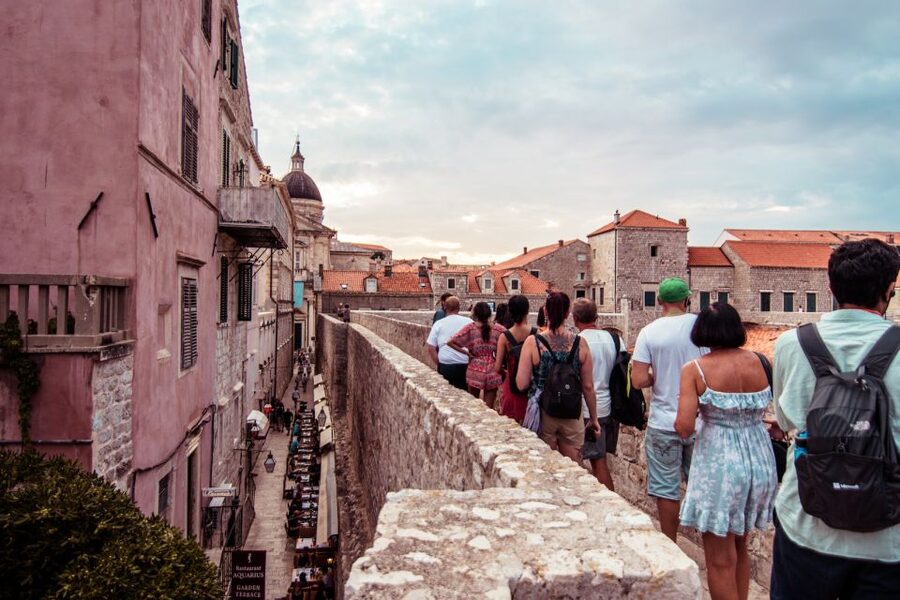
The main part of the experience lasts about two hours and combines steady walking, photo stops, explanations, and sightseeing. Your guide leads the group along the city walls, pausing at points where the views or defensive structures make the story easier to understand.
The route is long and narrow. That creates an excellent sense of the fortifications, but it also means the group can stretch out. The headsets are a real help here. You can keep looking at the view while hearing the guide, rather than crowding around every stop.
Stay close enough to keep a good signal. If you fall far behind, the audio can cut out, especially when the group is large. You will not be lost on the walls, and it is possible to catch up, but doing so means rushing past views and other people.
The route is not a gentle stroll. One guide estimated around 1,150 steps, and several sections require repeated stair climbing. Even people who are comfortable walking should take the weather seriously. In summer, the stone reflects heat and there is very little shade. On other days, wind can make the walls feel exposed, particularly near the outer edges.
Wear comfortable shoes with a secure grip. Bring water, a hat, and a credit card for the entry ticket or other purchases. The supplied information also advises against bringing baby strollers, and video recording is not allowed.
Revelin Fortress and Dubrovnik’s eastern defenses
Revelin Fortress helps show how Dubrovnik adapted its defenses as threats changed. Its position near the eastern approach and harbor made it important to the protection of the city and its trade.
Here, the guide can connect the fortress to the wider defensive system rather than treating it as a single monument. Dubrovnik’s protection depended on layers: walls, towers, gates, harbor defenses, and the political choices made by the republic’s leaders.
This is one of the better parts of the tour for visitors who want more than dates and names. You see how the city’s layout answered practical problems. The guide explains why a small coastal republic needed to think constantly about powerful neighbors and possible attacks.
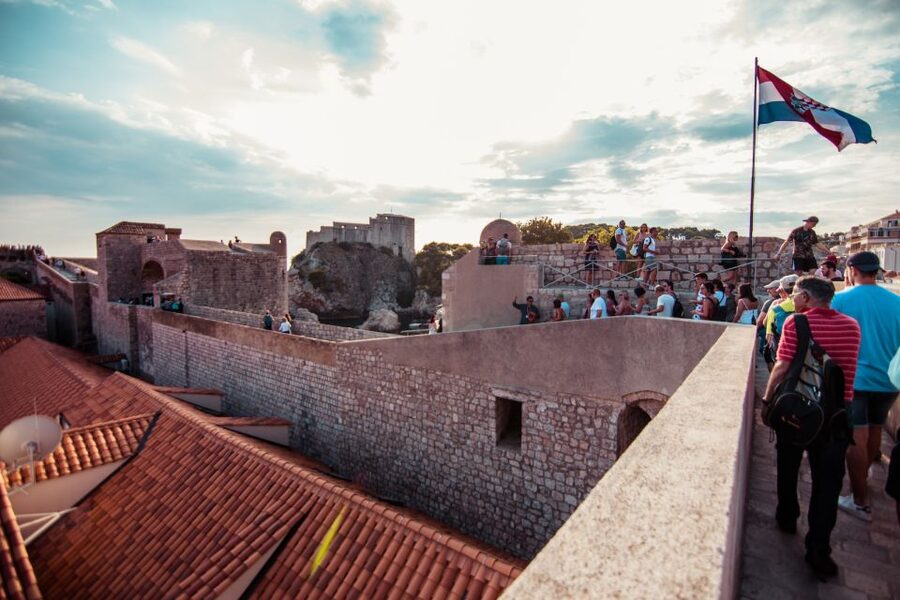
The fortress is also a useful viewing point. From the walls, you can look across the Old Town and toward the port, then compare the tightly packed city inside with the open sea outside. That contrast makes Dubrovnik’s defensive position easy to grasp.
Minceta Tower and the strength of the walls
Minceta Tower is one of Dubrovnik’s most striking defensive structures. Its height and heavy stonework show the importance of guarding the landward side of the city.
The tower is not just a photo stop. It gives the guide a chance to explain the strategic thinking behind Dubrovnik’s fortifications. A city could not rely on a single barrier. It needed high points for observation, strong towers for defense, and walls that made an attack difficult and costly.
You will likely want to pause for photographs here, but keep listening. The best value of the tower is the link between what you are seeing and the political story of the republic. The stonework represents money, labor, and long-term planning by a city that understood the price of losing its independence.
The views are a major part of the appeal. You see terracotta roofs, sections of the Old Town, the port, and the coast from angles that are impossible at street level. On a clear day, the wall walk gives you the broad visual picture first, then leads you back into the tight streets below.
Same stretch of coast, a completely different day out:
- Blue Cave Small-Group Boat Tour from Dubrovnik
★ 5.0 · 9,360 reviews - Full-Day Dubrovnik Elaphite Islands Cruise with Lunch and Drinks
★ 5.0 · 8,823 reviews - Dubrovnik: Epic Game of Thrones Tour + Lokrum & Saver Option
★ 4.9 · 5,995 reviews - Dubrovnik: Elaphiti Islands Full-Day Cruise with Lunch
★ 5.0 · 5,938 reviews
Lovrijenac Fortress and the western approach
Lovrijenac Fortress is another key piece of Dubrovnik’s defense. Positioned outside the main walls, it protected the western approach and helped guard the city from threats arriving by land or sea.
The fortress adds an important wrinkle to the story. Dubrovnik’s defense was not limited to the wall ring around the Old Town. Separate fortifications extended the city’s reach and helped protect vulnerable approaches.
The exact pacing and stopping points can vary with the group and conditions, so you should not expect a long independent visit inside every structure named during the tour. The main focus is the city wall walk and the defensive system as a whole.
Still, the guide’s explanation helps you read the city more intelligently afterward. When you later pass Lovrijenac or see it from the walls, you understand why that isolated position mattered. That is the difference between collecting photographs and actually seeing how Dubrovnik worked.
From medieval defenses to the 1991 Homeland War

The tour does not stop in the medieval period. A strong part of the experience is the discussion of Croatia’s modern war and the shelling of Dubrovnik during the Homeland War.
This section gives the fortifications a more personal meaning. The walls are old, but the city’s experience of danger is not ancient. Guides who grew up in or near Dubrovnik have sometimes shared memories connected to the war. Davor and Goran are particularly noted for bringing personal perspective to this part of the story, while Andreja has been praised for explaining the Homeland War with care and answering questions openly.
The tone is important. The subject is serious, but the guide’s job is to make it understandable rather than overwhelming. The best guides balance facts, local memory, and room for questions. You can expect a history lesson that includes both the long political story and the effect of conflict on ordinary people.
For me, this modern section makes the tour more worthwhile than a basic wall walk. It reminds you that Dubrovnik is not only a preserved medieval city. It is also a living place whose residents faced very recent upheaval.
The views from the port to the Old Town
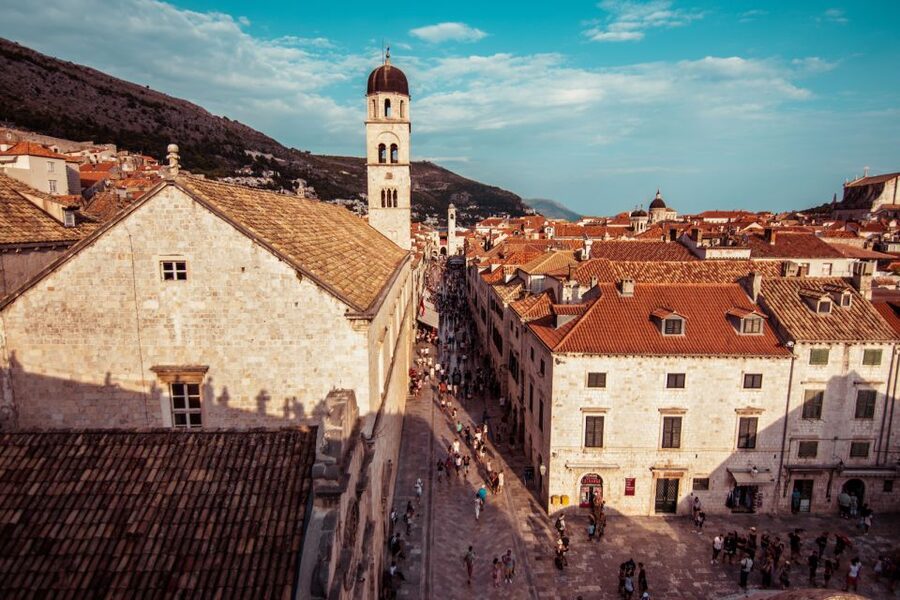
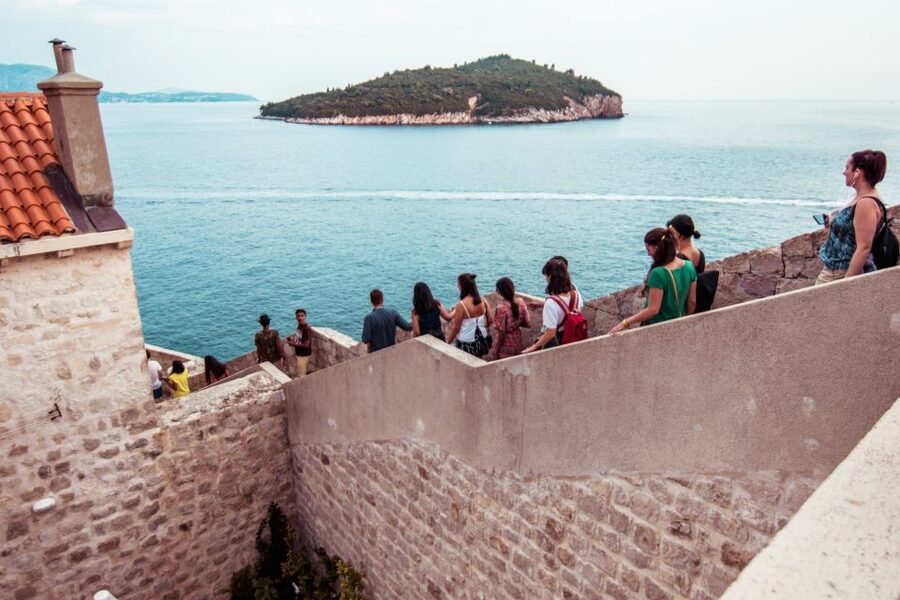
The wall walk offers a changing set of views rather than one single panorama. Look inward for the dense roofs and lanes of the Old Town. Look outward for the port, coastline, and open water. The guide helps you understand why the harbor was central to Dubrovnik’s wealth and why its protection mattered so much.
The height gives you a useful overview. From street level, the Old Town can feel like a maze of polished stone and narrow passages. From the walls, you see its shape, its towers, its gates, and its relationship to the sea.
You will have photo opportunities throughout the walk, but conditions affect how enjoyable they are. Wind can be strong, and the narrow path may make it hard to stop for long. In hot weather, the lack of shade is the bigger issue. A 6 pm tour can be a good tactic because the day may be cooler and the busiest crowds may have eased.
Do not assume evening means cool. One summer departure still felt hot, and guides had to find shady spots for short explanations. The best preparation is simple: carry water, wear a hat, and avoid arriving already tired from a full day in the sun.
What the €29 price really covers

The advertised price is $29 per person, but the mandatory wall entrance ticket is separate. The supplied price is €40 per adult and €15 per child aged 7 to 18, so the total cost for an adult is much higher than the tour fee alone suggests.
That extra ticket is the main value question. The walls are expensive to enter, and you should compare the combined cost with your sightseeing budget. The same wall ticket may also provide access to other heritage attractions in Dubrovnik, and you can buy it at the entrance, in advance, or use the Dubrovnik Pass.
The tour fee includes the English-speaking guide, the guided wall walk, and headset devices. It does not include food, drinks, transportation, or the entry ticket. For a site this large, the guide adds practical value by keeping the group moving and turning the fortifications into a readable story.
I would not choose this tour simply because it is the cheapest wall option. I would choose it because the wall ticket is costly and a guide helps you get more meaning from the time you spend up there. Walking alone gives you control over your pace, but you may miss why Revelin, Minceta, Lovrijenac, and the harbor defenses mattered.
One price-related warning is worth making clear. Make sure you understand the separate ticket before booking. This has been a source of surprise for some people arriving at the meeting point.
Guide style and group comfort
The guide is central to this experience. Davor, Goran, Andreja, Darko, Mara, Alex, Branko, and other local guides have led departures, so your exact guide will depend on the date and schedule.
The strongest qualities to look for are clear explanations, humor, and willingness to answer questions. Goran is often praised for making the long stair climb feel manageable, while Davor is noted for combining local experience with a lively presentation. Andreja has been especially attentive to rest breaks and individual needs.
The headsets improve the experience, particularly on a narrow wall where people naturally spread out. Still, they are not a substitute for staying with the group. If reception becomes weak, move closer rather than trying to follow from far behind.
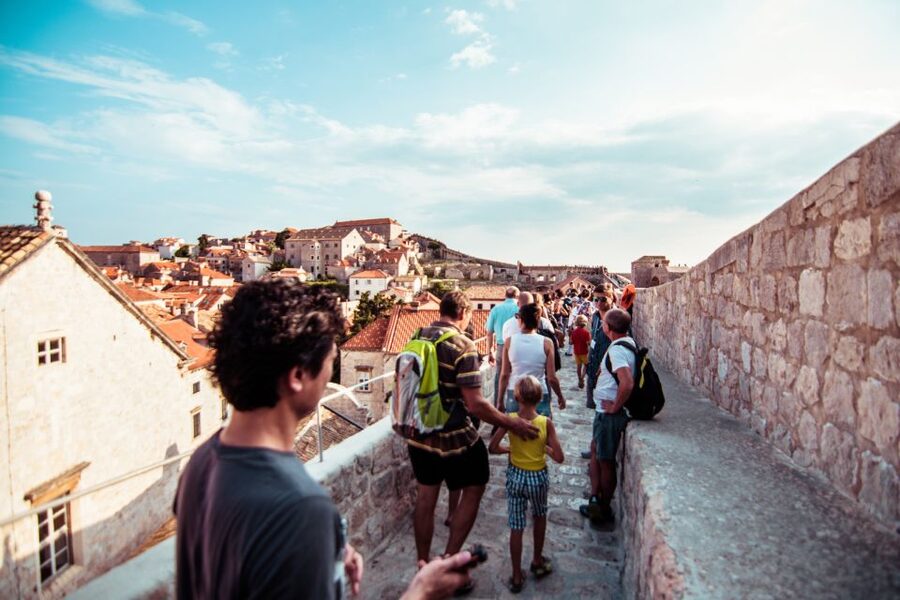
Group size can affect comfort. A larger group may become strung out, and the wall’s narrow sections leave little room to pass. On the other hand, a group setting gives the guide a lively range of questions and keeps the tour moving at a set pace.
Who should take this walk?
I would recommend it to you if you enjoy history, architecture, military strategy, and local stories. It also suits first-time visitors who want a clear introduction to Dubrovnik before exploring the Old Town on their own.
You should be comfortable with sustained walking and many stairs. The tour is not suitable for wheelchair users, people with mobility impairments, those with vertigo or a fear of heights, pregnant women, or people with heart or respiratory problems. It is also not recommended for people with a low level of fitness or those over 80 years old.
That list is not a minor formality. The walls are exposed, and the route may feel demanding in heat or wind. If you have doubts about your ability to manage the climb, ask the operator before booking. One person who could not manage the steep walls was moved to an Old Town tour instead, but you should not count on that alternative.
Families with older children may enjoy the history and views, but children aged 7 to 18 still need their own reduced-price entry ticket. Baby strollers are not allowed.
Practical timing and meeting details
Choose your time with the weather in mind. Morning can be useful for avoiding the strongest heat, while a 6 pm departure may offer cooler conditions and fewer people. Check the available start times for your date rather than assuming a particular departure will run.
Meet at Dubrovnik Walks, Brsalje 8, by the Pile local bus stop. The orange umbrellas are the key marker. The tour ends near the Old Town port, which is a useful location for continuing your evening, though you will need to arrange your own way onward.
Free cancellation is available up to 24 hours before the tour for a full refund. You can also reserve now and pay later, which helps if your Dubrovnik schedule depends on weather or a cruise timetable.
Should you book the Dubrovnik Walls and Wars Walking Tour?
Book it if you want the city walls to make sense, not just look beautiful. The best reasons are the local guides, the clear links between fortresses and political survival, the modern war story, and the headset system that helps on the narrow route.
Skip it if the separate €40 adult ticket changes your budget calculation, or if stairs, heights, heat, and limited shade are likely to make the walk unpleasant. You can still enjoy Dubrovnik from street level, but the wall views are a major part of the city experience.
My practical choice would be an early or 6 pm departure, sturdy shoes, water, and a hat. If your fitness is good and you want an informed introduction to Dubrovnik’s defenses, this tour makes the costly wall entry more useful and helps explain why the Old Town received UNESCO World Heritage status in 1979.
FAQ
How long does the Dubrovnik Walls and Wars Walking Tour last?
The tour lasts two hours, including the guided walk along Dubrovnik’s city walls, sightseeing, and photo stops.
Is the Dubrovnik City Walls entrance ticket included?
No. The mandatory entry ticket is separate. The supplied price is €40 per adult and €15 per child aged 7 to 18.
Where does the tour meet?
The meeting point is Dubrovnik Walks at Brsalje 8, beside the Pile local bus stop. Look for representatives holding orange umbrellas.
Where does the tour end?
The tour ends near the Old Town port in Dubrovnik.
What language is the tour in?
The live tour guide speaks English.
Is the walk suitable for people with mobility concerns?
No. The route includes many stairs and is not suitable for wheelchair users or people with mobility impairments. It is also not recommended for people with vertigo, a fear of heights, heart problems, respiratory issues, low fitness, or pregnancy.
What should I bring?
Bring comfortable shoes, a hat, water, and a credit card. Baby strollers and video recording are not allowed.
More Walking Tours in Dubrovnik
- Dubrovnik Old Town History Walking Tour
★ 5.0 · 1,684 reviews - Dubrovnik: City Walls Early Morning or Sunset Walking Tour
★ 4.8 · 1,523 reviews - Dubrovnik: Ancient City Walls & Wars Walking Tour
★ 5.0 · 1,270 reviews - Dubrovnik: Game of Thrones Walking Tour
★ 4.9 · 981 reviews
Just added around Dubrovnik
- Full- Day Private Speedboat Tour in Dubrovnik on Elaphiti Islands★ 5.0 · 21 reviews
- Elaphiti Islands Private Dubrovnik Boat Unique Experience★ 5.0 · 10 reviews
- PRIVATE Wine Tour to Konavle country side★ 5.0 · 11 reviews
- Parasailing in Cavtat★ 5.0 · 62 reviews
- Wine tour peninsula Pelješac★ 5.0 · 3 reviews
- Wine Lover’s Tour of Peljesac Peninsula★ 5.0 · 150 reviews
- Welcome to Dubrovnik Walking Tour★ 5.0 · 36 reviews
- Walls Of Dubrovnik: Small-Group Walking Tour With A Local★ 5.0 · 67 reviews
Old Town Walking Tours, compared.


Walking Tour of Split and Diocletian’s Palace
Read our review →

Krka Waterfalls tour with Trogir Walking tour and Krka panoramic boat cruise
Read our review →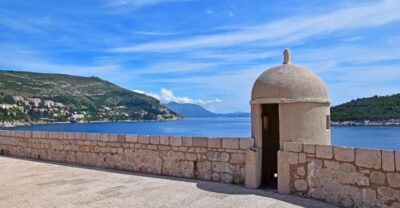
City Walls Early Morning or Sunset Walking Tour
Read our review →
Plitvice Lakes with Boat Ride and Zadar Old Town Tour
Read our review →Browse the lists this tour appears in