
Reviewed · OLD TOWN WALKING TOURS
Dubrovnik Old Town: Small-Group Walking Tour With A Local
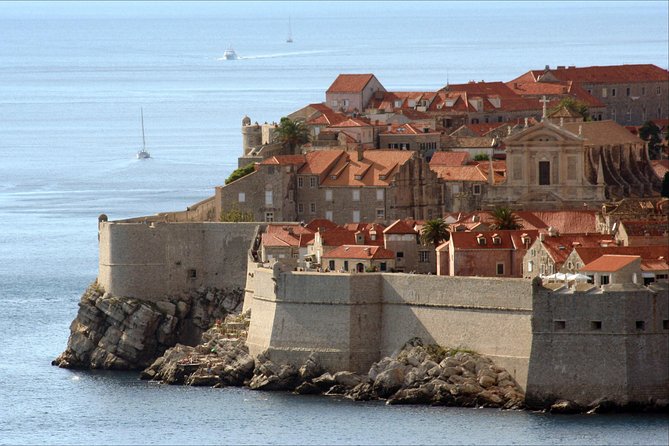
Dubrovnik’s Old Town is compact, handsome, and packed with stories. This small-group walking tour gives you a clear route from Ploče Gate to Pile Gate, with a local guide explaining everything from the medieval republic to the nose on a famous statue.
I like the maximum of eight people, which makes it easier to hear, ask questions, and keep a sensible pace. I also like the personal touches: guides such as Marko use trivia and friendly competition to keep the history lively, while local knowledge brings daily life and old customs into the walk.
The main consideration is that this is an overview, not a museum tour. You’ll see many major buildings from the outside, but entrance fees are not included and the group does not go inside churches or museums that require admission.
In This Review
- Key points to know before you book
- Why the small group matters in Dubrovnik
- Starting at Ploče Gate and the harbor
- Churches, legends, and the old republic
- Rector’s Palace and the politics of Dubrovnik
- Sponza Palace, the bell tower, and Saint Blaise
- Dubrovnik’s Jewish community and the polished Stradun
- Quiet corners near Saint Roch and Onofrio’s Fountain
- Franciscan pharmacy and the end of the republic
- How the guiding style brings history to life
- Price, pace, and what the $34.59 covers
- Best time and best type of visitor
- Should you book this Dubrovnik walking tour?
- FAQ
- How long does the Dubrovnik Old Town walking tour last?
- How many people can join the tour?
- Where does the tour begin?
- Where does the tour end?
- Are entrance fees included?
- What happens if the weather is poor?
Key points to know before you book
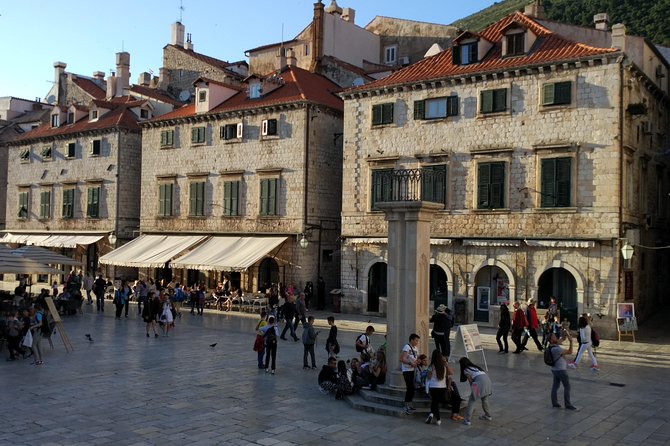
- A route across the entire Old Town: Begin at Ploče Gate and finish near the large Onofrio Fountain by Pile Gate.
- A genuinely small group: The tour is limited to eight people, with some departures potentially much smaller.
- Local storytelling: Guides including Marko, Marco, Markus, and Lucy use history, legends, questions, and personal insight.
- Major sights without admission fees: You see the Cathedral, Rector’s Palace, Sponza Palace, Stradun, and more from public areas.
- A useful first look at Dubrovnik: The ninety-minute to two-hour route helps you get oriented before exploring on your own.
- Good value at $34.59: The price covers a licensed professional guide, but not tickets to paid attractions.
Why the small group matters in Dubrovnik
Dubrovnik’s Old Town can feel crowded, especially around Stradun, the main street. A large tour group can turn a historic walk into a slow search for the guide’s umbrella. Here, the cap of eight gives the experience a more personal shape.
You can hear the guide without straining, and questions are easier to fit into the walk. A smaller group also helps when the guide points out details tucked beside the main route, such as old graffiti near the Church of St. Roch or symbols connected with Saint Blaise.
The small size may vary by departure. One group could include only three people, while another could reach the full eight. That is useful to know because the experience can feel close to a private walk, but you should still expect to share the guide’s attention.
The guides bring different personalities. Marko is repeatedly singled out for an easy pace, strong local knowledge, and a playful quiz that awards points along the way. Markus is described as having grown up in the Old Town and using an entertaining, almost classroom-like style. Lucy is noted for combining centuries of history with present-day culture. The exact guide is not guaranteed, but the format clearly depends on a local person who can make the city feel lived in rather than merely labeled.
More Old Town Walking Tours in Dubrovnik
- Dubrovnik: Old Town Walking Tour
★ 4.8 · 5,174 reviews - Dubrovnik Discovery Old Town Walking Tour
★ 5.0 · 4,458 reviews - Dubrovnik: Game of Thrones Walking Tour
★ 5.0 · 1,732 reviews
Starting at Ploče Gate and the harbor
The walk begins at Harbour Viewpoint on Svetog Dominika Street, by Ploče Gate, the eastern entrance to the Old Town. This is a sensible starting point because the guide can introduce Dubrovnik before you get swept into its busiest streets.
Expect a short explanation of how Dubrovnik began and why its position mattered. The city was once the independent Republic of Ragusa, a small maritime state that used trade, diplomacy, and careful political judgment to protect its interests.
From Ploče Gate, the route looks at the Dominican Monastery, identified as the oldest still-active monastery in Dubrovnik. The stop is brief, and admission is not included, so think of it as an exterior introduction rather than a visit to the monastery itself.
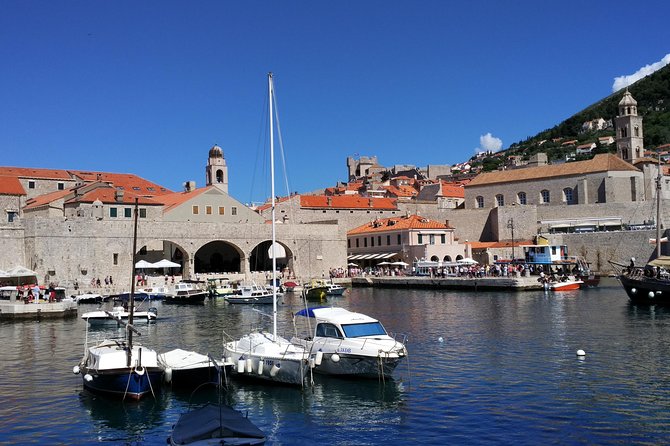
The nearby City Harbor adds another useful piece. This was once the center of trade, and wooden galleons were built here. The guide connects the stones around you with Dubrovnik’s seafaring past, giving you a better sense of how the republic earned its place on the Adriatic.
Churches, legends, and the old republic
The Cathedral of the Assumption of the Virgin Mary is one of the route’s major architectural stops. Its baroque design provides a visual change from the plain stone streets, and the guide explains why people sometimes speak of one cathedral, or perhaps three, when discussing the site’s past.
You will hear stories and legends here, but the tour does not include admission to the cathedral. That distinction matters if you want to study the interior or see its art. You can return later on your own, using the walk as an introduction.
The Church of St. Ignatius of Loyola brings the Jesuits into the story. Your guide explains when this influential Catholic order came to Dubrovnik and discusses a famous Jesuit from the city whose name is linked to a crater on the Moon.
At the Monument of Poet Ivan Gundulić, the focus shifts to literature and public life. Gundulić was the best-known poet of the old Dubrovnik Republic, and the surrounding market square helps show how the city’s civic life unfolded in public spaces.
These stops work well together. Dubrovnik was not only a fortified port. It was also a place of religion, writing, trade, political debate, and ceremony. A guide can connect those subjects in a way that a list of buildings cannot.
Rector’s Palace and the politics of Dubrovnik
Rector’s Palace is one of the most important stops because it represents the governing power of the old republic. The rector was the leading political figure, but Dubrovnik’s political system was built around limits, rules, and careful control of authority.
The guide uses the palace to discuss aristocracy, political wisdom, and some stranger details from the building’s past. This is the kind of stop where storytelling matters. The exterior gives you the setting, but the guide supplies the human drama.
Admission to Rector’s Palace is not included. If you plan to visit inside, set aside extra time and money. The walking tour is still useful even without entry because it tells you why the building mattered before you decide if the interior deserves a separate visit.
Nearby, the statue of Marin Držić offers one of the walk’s more memorable details. Držić was Dubrovnik’s best-known Renaissance playwright, and people touch his golden nose. The guide explains why, turning a small statue into a quick lesson in local custom.
I like this sort of detail because it gives you something to notice later. You are not only looking at grand palaces. You are also learning which small objects, gestures, and legends matter to people in the city.
Same stretch of coast, a completely different day out:
- Blue Cave Small-Group Boat Tour from Dubrovnik
★ 5.0 · 9,360 reviews - Full-Day Dubrovnik Elaphite Islands Cruise with Lunch and Drinks
★ 5.0 · 8,823 reviews - Dubrovnik: Epic Game of Thrones Tour + Lokrum & Saver Option
★ 4.9 · 5,995 reviews - Dubrovnik: Elaphiti Islands Full-Day Cruise with Lunch
★ 5.0 · 5,938 reviews
Sponza Palace, the bell tower, and Saint Blaise
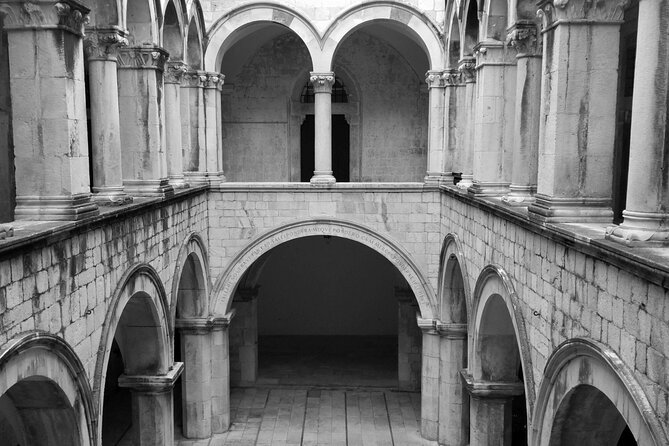
Sponza Palace once served as the customs house of the Dubrovnik Republic. Today it holds the historical archives, so the building links the city’s trading past with its record of the past.
The guide also shares Latin proverbs connected with Sponza. That detail helps explain the tone of old Dubrovnik, a place where commerce, law, education, and public reputation all mattered.
The Bell Tower gets a short stop, but its small footprint on the itinerary does not mean it is unimportant. Your guide explains what makes the tower special. Since the stop is brief, you should think of it as a quick orientation point rather than a long architectural lecture.
The Church of Saint Blaise introduces Dubrovnik’s patron saint. You will see images of Saint Blaise in many parts of the city, and the guide separates the legend from the historical story. This gives you a useful visual key for the rest of your stay.
The Orlando Column continues the theme of public symbols. The guide tells the story of the brave knight Orlando and explains how he became a symbol of the old Dubrovnik Republic. These monuments are easier to understand once you know how Dubrovnik used saints, heroes, writers, and civic buildings to express its identity.
Dubrovnik’s Jewish community and the polished Stradun
The Dubrovnik Synagogue provides one of the more serious stops on the route. The guide discusses the Jewish community from its early days through periods of hardship and into the present.
This part adds needed breadth to the tour. It reminds you that Dubrovnik’s story includes communities and traditions beyond the dominant political and Catholic narrative. Admission to the synagogue is not included, so plan another visit if you want to go inside.
The group then reaches Stradun, the smooth, gleaming main street of the Old Town. This is Dubrovnik’s best-known public space and an easy place to understand the city’s scale. The street is attractive, but it can also be the busiest part of the route, so a small group is especially helpful here.
Stradun is not just a pretty walkway. It is the Old Town’s main spine, connecting important squares, churches, palaces, and gates. Once you know that, you can use it to find your way during the rest of your visit.
Quiet corners near Saint Roch and Onofrio’s Fountain

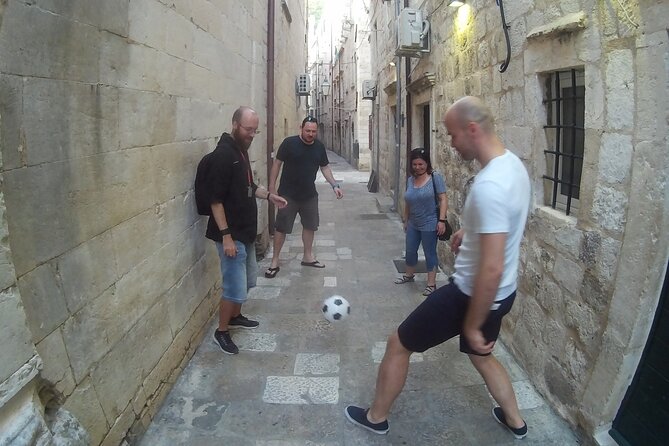
The Church of St. Roch is tucked away from the main street. The guide points out old graffiti on its side wall and explains that children played football in front of the church in the sixteenth century.
That is a fine example of the tour’s best approach. Instead of only presenting grand dates and famous buildings, the guide shows how ordinary people used the city. Old graffiti and children’s games make the past easier to picture.
The walk continues to Onofrian Fountain, built in the fifteenth century as the terminus of Dubrovnik’s old aqueduct. The fountain was part of the city’s water system, a practical achievement that helped support life inside the walls.
The fountain is also where the tour ends, near Pile Gate. This finish is convenient because Pile Gate is one of the main western entrances and a useful reference point for further exploration.
Franciscan pharmacy and the end of the republic
The Franciscan Church and Monastery bring the tour back to religion, science, and social service. The guide discusses the pharmacy’s long continuity of operation, described as the third oldest in Europe by that measure, and explains how the Franciscans contributed to Dubrovnik society.
Admission is not included, so the stop is mainly an outside explanation unless you return separately. Still, it gives you a reason to consider the monastery beyond its facade.
At Pile Gate, the guide closes with the end of the Dubrovnik Republic. That final note gives the route a clear historical arc. You begin with the city’s origins and political importance, then finish by considering how the republic came to an end.
The full walk takes about one hour and thirty minutes to two hours. The many short stops may sound rushed on paper, but most are orientation points rather than full visits. The longer pauses at Rector’s Palace and the synagogue allow more room for explanation, while the shorter stops keep the route moving.
How the guiding style brings history to life
The strongest feature here is not simply the number of buildings. It is the way the guides keep you paying attention.
Marko is known for adding trivia questions and a friendly competition. Guests earn points by noticing details or answering questions, which turns the walk into an active game rather than a one-way speech. One guide encouraged the group to look for Saint Blaise statues and carvings, a simple challenge that sharpened everyone’s eyes.
That style can work well for families and teenagers, who may not want two hours of dates and dynasties. It also helps adults remember the material. A curious detail about a playwright’s golden nose or a Jesuit linked to a Moon crater often stays with you longer than a list of rulers.
The tone is not all jokes. The guides also cover difficult periods, political change, religious life, and the Jewish community’s hardships. The appeal is the mix: serious information, local customs, personal insight, and occasional humor.
The English-language format is another practical point. The tour is offered in English, and the guide names and styles may vary. The supplied experiences include Marko, Marco, Markus, Lucy, and Lucia, so you should not book expecting one specific person unless the operator confirms it.
Price, pace, and what the $34.59 covers
At $34.59 per person, this is priced as an affordable introduction rather than an all-inclusive sightseeing pass. You are paying for a licensed professional guide and a carefully organized route through the Old Town.
The value is strongest if you are visiting Dubrovnik for the first time. In roughly two hours, you see the city’s major landmarks, learn the basic story of the republic, and collect practical ideas for places to revisit. A private guide would usually cost more, while a much larger group can be harder to follow.
The price does not include entry to the Dominican Monastery, Cathedral, Rector’s Palace, Sponza Palace, synagogue, or Franciscan monastery. The walk does not visit churches or museums that require tickets. Treat this as a guided exterior tour, then choose one or two interiors for a separate visit.
The pace is described as easy, and the route can suit most people. Still, this is a walking tour through an old stone city, so anyone with mobility concerns should consider personal comfort. A guide has adjusted the pace for a participant with minor mobility issues, but that does not remove the need to judge your own needs.
The meeting point is by Harbour Viewpoint at Ploče Gate. The end point is near the large Onofrio Fountain by Pile Gate. The tour is close to public transportation, service animals are allowed, and confirmation is provided when you book.
Best time and best type of visitor
This tour suits a first morning or first afternoon in Dubrovnik. You get the layout before exploring alone, and you can return to the Cathedral, Rector’s Palace, synagogue, or Franciscan monastery with a better idea of what you are seeing.
It is also a good fit for anyone who wants history without a formal lecture. The questions, small contests, legends, and local details make the material easier to follow.
You should choose it if you value:
- A guide who can answer questions in a small setting
- A broad introduction to Dubrovnik in under two hours
- Local stories alongside major historical events
- A relaxed route that includes the city’s main public sights
- A tour that does not require you to buy museum tickets in advance
You may prefer a different experience if your main goal is extended time inside museums or churches. This tour points you toward those places, but it does not replace a dedicated interior visit.
Book ahead if your schedule is fixed. The activity is often reserved well in advance, with an average booking lead time of about 50 days. Free cancellation is available up to 24 hours before the start time. A late cancellation is not refunded, and poor weather or failure to meet the minimum group size can lead to a new date, another experience, or a full refund.
Should you book this Dubrovnik walking tour?
I would book this if you want a friendly, focused introduction to the Old Town and prefer a small group to a crowd. The route covers an impressive range: gates, monasteries, churches, a harbor, palaces, statues, a synagogue, Stradun, a fountain, and the political story of the republic.
The best reason to choose it is the guiding style. Marko and the other local guides use questions, humor, and personal knowledge to make details stick. You finish with more than a checklist of sights. You understand why the harbor mattered, why Saint Blaise appears everywhere, why people touch Marin Držić’s nose, and how Dubrovnik’s political system worked.
Skip it if you want long interior visits or a specialized tour devoted to one subject. For most first-time visitors, though, $34.59 is a fair price for two hours of orientation, local context, and a manageable walk from Ploče Gate to Pile Gate.
FAQ
How long does the Dubrovnik Old Town walking tour last?
The tour lasts approximately one hour and thirty minutes to two hours.
How many people can join the tour?
The group has a maximum of eight travelers.
Where does the tour begin?
It begins at Harbour Viewpoint, on Ul. Svetog Dominika by Ploče Gate, the eastern entrance to Dubrovnik’s Old Town.
Where does the tour end?
The tour ends near Onofrio’s Large Fountain by Pile Gate, the western entrance to the Old Town.
Are entrance fees included?
No. Entrance fees are not included, and the tour does not visit churches or museums that require paid admission.
What happens if the weather is poor?
The experience requires good weather. If it is canceled because of poor weather, you will be offered a different date or a full refund.
More Walking Tours in Dubrovnik
- Dubrovnik Old Town History Walking Tour
★ 5.0 · 1,684 reviews - Dubrovnik: City Walls Early Morning or Sunset Walking Tour
★ 4.8 · 1,523 reviews - Dubrovnik: Ancient City Walls & Wars Walking Tour
★ 5.0 · 1,270 reviews - Dubrovnik: Game of Thrones Walking Tour
★ 4.9 · 981 reviews
Just added around Dubrovnik
- Full- Day Private Speedboat Tour in Dubrovnik on Elaphiti Islands★ 5.0 · 21 reviews
- Elaphiti Islands Private Dubrovnik Boat Unique Experience★ 5.0 · 10 reviews
- PRIVATE Wine Tour to Konavle country side★ 5.0 · 11 reviews
- Parasailing in Cavtat★ 5.0 · 62 reviews
- Wine tour peninsula Pelješac★ 5.0 · 3 reviews
- Wine Lover’s Tour of Peljesac Peninsula★ 5.0 · 150 reviews
- Welcome to Dubrovnik Walking Tour★ 5.0 · 36 reviews
- City Walls of Dubrovnik★ 5.0 · 70 reviews
Old Town Walking Tours, compared.



Walking Tour of Split and Diocletian’s Palace
Read our review →


Krka Waterfalls tour with Trogir Walking tour and Krka panoramic boat cruise
Read our review →
City Walls Early Morning or Sunset Walking Tour
Read our review →
Plitvice Lakes with Boat Ride and Zadar Old Town Tour
Read our review →Browse the lists this tour appears in