
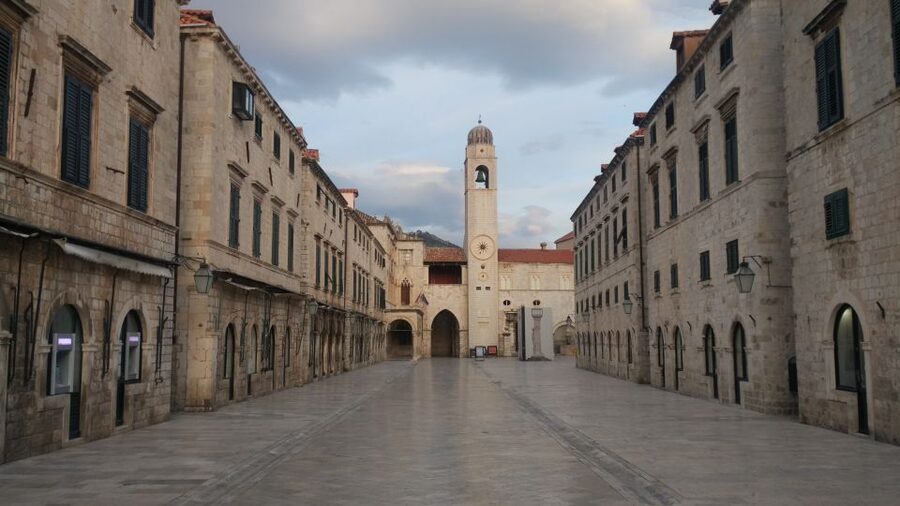
Reviewed · OLD TOWN WALKING TOURS
Dubrovnik: Insider 90-Minute Walking Tour With a Local
Dubrovnik’s past comes alive best when you connect its grand buildings to ordinary city life. This 90-minute walk does that with a born-and-raised local guide, taking you from the Ploče Gate and Old Harbor through churches, palaces, markets, and streets where Dubrovnik residents still live.
I like the small group of eight or fewer, which gives you a fair chance to ask questions. I also like the practical local angle: guides such as Marko, Bruno, and Lucy have shared restaurant tips, stories about recent Dubrovnik, and even details about the Homeland War. The one drawback is the short length. You will see many sights, but the five-minute stops leave little time for indoor visits or a slow look at each building.
In This Review
- Key points at a glance
- Why this short Dubrovnik walk works
- Meeting by Revelin Fort and Ploče Gate
- Ploče Gate, the Dominican Monastery, and the Old Port
- Dubrovnik Cathedral and the city’s earthquakes
- Gundulić Square and a taste of local life
- Saint Ignatius Church and the upper streets
- Rector’s Palace and the cats of Ragusa
- Sponza Palace, Saint Blaise, and Onofrio’s Fountain
- What the 90-minute pace feels like
- Is $32 a fair price?
- Who should take this tour?
- Should you book the Dubrovnik local walking tour?
- FAQ
- How long is the Dubrovnik walking tour?
- How many people can join the tour?
- Where is the meeting point?
- What language is the tour in?
- Which sights are included?
- Does the tour include museum admission?
- Can I cancel or pay later?
Key points at a glance
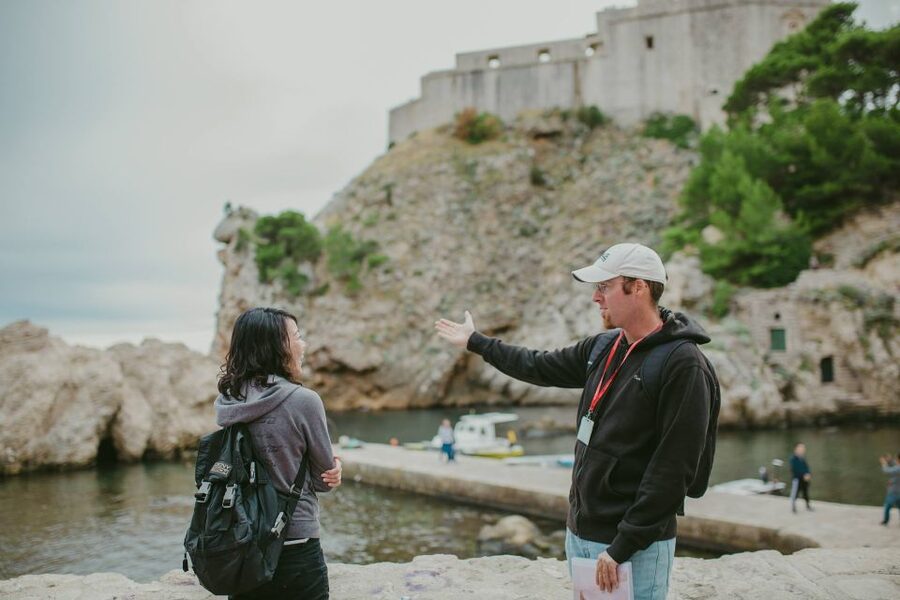
- A local starting point: Meet by the cannon near Revelin Fort, just inside Ploče Gate, where your guide holds a red-and-white flag.
- Fourteen Old Town sights: The route covers the Old Harbor, Cathedral, Rector’s Palace, Sponza Palace, Saint Blaise’s Church, and Large Onofrio’s Fountain.
- Small-group setting: With no more than eight participants, questions and conversation are easier than on a large coach-style walk.
- History with a human touch: Learn about the Republic of Ragusa, maritime trade, earthquakes, Saint Blaise, and modern Dubrovnik.
- Interactive details: Look for Saint Blaise statues, try a little Croatian pronunciation, and guess how many churches sit inside the walls.
- Useful after-tour advice: Your guide can point you toward places for lunch, dinner, snacks, and drinks.
Why this short Dubrovnik walk works
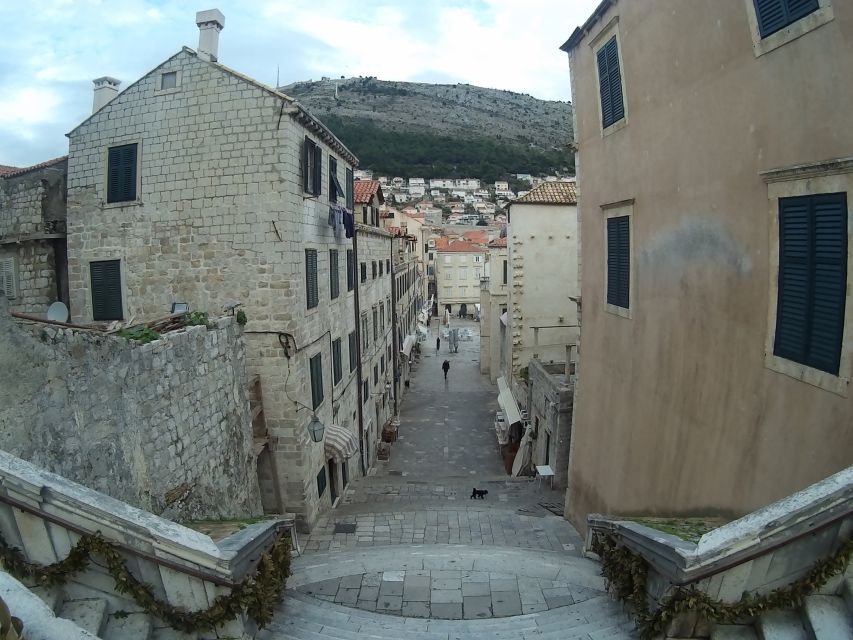
Dubrovnik can feel like a stage set when you first enter it. Pale stone streets, polished facades, church domes, and thick walls draw your eye in every direction. The challenge is knowing what you are looking at and why it matters.
That is where this walk earns its keep. Instead of treating the Old Town as a string of pretty buildings, the guide links architecture to the old Republic of Ragusa, the city-state that traded between the East and West. You get a basic map of Dubrovnik’s political, religious, and commercial life before you wander off on your own.
The format is brisk. Fourteen listed stops are built into 90 minutes, with roughly five minutes at many points. That means you should expect an orientation walk rather than a detailed museum tour. I would use it early in a Dubrovnik stay, then return to the places that caught your attention.
The guides bring different personalities. Marko has been praised for making complex political and architectural subjects easy to follow. Bruno is described as friendly and well informed about both the old city and newer local developments. Lucy, also called Lucija, has handled questions about the city’s past and the Homeland War with patience. Your exact guide is not guaranteed, so expect a personal local perspective rather than a single fixed script.
More Old Town Walking Tours in Dubrovnik
- Dubrovnik: Old Town Walking Tour
★ 4.8 · 5,174 reviews - Dubrovnik Discovery Old Town Walking Tour
★ 5.0 · 4,458 reviews - Dubrovnik: Game of Thrones Walking Tour
★ 5.0 · 1,732 reviews
Meeting by Revelin Fort and Ploče Gate
The meeting point is in the corner of the square in front of Revelin Fort, just inside Ploče Gate, the Old Town’s eastern entrance. Look for the guide beside the cannon, holding a red-and-white flag.
This is a useful meeting place because Ploče Gate immediately shows you how Dubrovnik controlled access to the city. Have your ticket details ready and arrive with comfortable shoes. The walk is on old stone streets, and Dubrovnik’s polished paving can be hard on feet after a full day of sightseeing.
The route is also described as beginning near a harbor viewpoint, then moving through Ploče Gate and into the Old Town. Do not expect a bus or other transport. This is a continuous walking experience, with the main value coming from the guide’s commentary as the scenery changes around you.
Ploče Gate, the Dominican Monastery, and the Old Port
Your first stretch places Dubrovnik’s defenses and religion side by side. Ploče Gate was an important eastern entrance, while the Dominican Monastery reflects the religious institutions that shaped life inside the walls.
The Dominican Monastery and Museum receive a short guided look rather than a long interior visit. That distinction matters. If you want a full museum experience, you should plan separate time for it, but the quick stop helps you understand how the Old Town’s churches and monasteries fit into its wider design.
The Old Port is one of the strongest early stops. Your guide explains its role in the old Republic of Ragusa, when Dubrovnik depended on ships, trade, and careful diplomacy. The city prospered near major powers such as Venice and the Ottoman Empire, not because it was the largest state in the region, but because it understood the value of commerce and negotiation.
I like this part because it gives the stone streets an economic purpose. You are not just looking at a photogenic harbor. You are standing near the place where goods, sailors, political interests, and money once met.
Dubrovnik Cathedral and the city’s earthquakes
The Cathedral of the Assumption of the Virgin Mary introduces another theme: Dubrovnik has repeatedly had to rebuild. The cathedral’s Baroque form reflects reconstruction after destructive earthquakes, including the major earthquake that damaged much of the city.
A five-minute explanation cannot cover every work of art or architectural detail, but it can make the building easier to read. Look for the contrast between the cathedral’s formal design and the narrow streets around it. Your guide also connects the site to Saint Blaise, Dubrovnik’s patron saint.
The Saint Blaise theme continues as a playful thread through the walk. You may be asked to spot statues of the saint around town and take part in a simple group guessing game. That small activity helps you notice details you might otherwise pass without seeing.
You will also be asked to guess how many churches are inside the Old Town. The point is less about winning than about showing how strongly religion shaped the city’s daily layout. If you prefer a quiet lecture, the interactive approach may feel a little light. If you enjoy learning by looking and answering, it adds welcome energy.
Same stretch of coast, a completely different day out:
- Blue Cave Small-Group Boat Tour from Dubrovnik
★ 5.0 · 9,360 reviews - Full-Day Dubrovnik Elaphite Islands Cruise with Lunch and Drinks
★ 5.0 · 8,823 reviews - Dubrovnik: Epic Game of Thrones Tour + Lokrum & Saver Option
★ 4.9 · 5,995 reviews - Dubrovnik: Elaphiti Islands Full-Day Cruise with Lunch
★ 5.0 · 5,938 reviews
Gundulić Square and a taste of local life
Gundulić Square shifts the mood from monumental buildings to daily commerce. The square is known for its market stalls, local produce, and souvenirs, giving you a chance to see a more ordinary side of the Old Town.
The guide introduces Ivan Gundulić, one of Dubrovnik’s best-known poets and playwrights. You may also try pronouncing a few Croatian words. This is not a language lesson, but it is a friendly way to get beyond the postcard version of the city.
The market is also a practical stop. You can ask about food, drinks, and what to look for later in your visit. The guides specifically offer recommendations for lunch, dinner, snacks, and drinks, which adds real value to a short orientation tour.
After the square, the walk uses some less familiar streets. These lanes still carry local life, rather than serving only as a path between famous sights. Do not expect a secret part of Dubrovnik entirely free of other people, especially in busy periods, but the change of route gives you a better sense of how residents move through the city.
Saint Ignatius Church and the upper streets
The route includes the Church of Saint Ignatius, often known simply as the Jesuit church. The stop adds another layer to Dubrovnik’s religious and architectural story, following the earlier cathedral and Dominican monastery.
The church is especially useful as a contrast in style and setting. You move from the civic and commercial center toward a more elevated section of the Old Town, where the streets feel different and the architecture tells another part of the city’s story.
Because the stop is short, think of it as a guided introduction rather than a full examination of the church. If you want to linger over art, steps, or interior details, note the location and return later. The tour’s job here is to help you recognize the site and understand its place in the Old Town.
Rector’s Palace and the cats of Ragusa
Rector’s Palace was the seat of government for the Republic of Ragusa. Aristocrats met there to handle political matters, so this is one of the clearest places to connect Dubrovnik’s elegant architecture with the machinery of government.
The guide explains how the palace functioned in the old city-state. That political context is important because Dubrovnik’s success depended on more than ships and walls. The republic needed officials, rules, diplomacy, and a public image strong enough to protect its interests.
There is also a lighter local detail. Cats are a familiar sight around the palace and elsewhere in the Old Town, and the guide may point out the relaxed, well-fed residents that occupy the stone corners. It is a small touch, but it keeps the history from becoming too solemn.
If you want to visit the palace museum in detail, allow separate time. The walk gives you the outside context and a short explanation. It does not replace a slow museum visit.
Sponza Palace, Saint Blaise, and Onofrio’s Fountain
Sponza Palace is another major architectural stop. Its former role links commerce, administration, and the city’s ability to protect important records and business activity. Together with Rector’s Palace, it helps you see that Dubrovnik’s grand buildings were working parts of a republic, not simply decorative landmarks.
The Church of Saint Blaise brings the city’s patron saint back to the center of the story. Watch for the way Saint Blaise appears in statues and public spaces. The repeated image gives Dubrovnik a clear civic identity, and the guide’s spotting game makes that identity easier to notice.
The route ends at Large Onofrio’s Fountain, one of the Old Town’s best-known water monuments. Its presence lets the guide explain another basic concern of city life: bringing and managing water inside fortified walls.
Ending here makes sense. You finish with a practical piece of urban infrastructure rather than another palace or church. After 90 minutes, you should have a workable mental map of the city’s gates, harbor, religious buildings, political centers, market, and water supply.
What the 90-minute pace feels like
Ninety minutes is long enough to get your bearings but short enough to fit into a busy Dubrovnik day. I would choose it if you have just arrived, are visiting from a cruise, or want a clear introduction before exploring on your own.
The pace is not designed for long photo sessions. You will stop often, but each pause is brief, and the group keeps moving. That is useful in hot weather or during a crowded day, though it may frustrate you if you want to study every facade.
The small group helps. A maximum of eight people gives the guide room to answer questions and adjust the conversation. It also makes the walk feel more like a shared outing than a formal procession, especially when the guide adds personal stories about current Dubrovnik.
One caution: the information may feel more like a series of lively facts to some people than one long, carefully connected narrative. One assessment found the guide enthusiastic but wished for stronger links between the landmarks. If you prefer a detailed academic account, you may want a longer specialist tour. If you want an approachable overview, the format is likely a better fit.
Is $32 a fair price?
At $32 per person, this is not the cheapest way to walk around Dubrovnik, since the streets themselves cost nothing. You are paying for a licensed English-speaking guide, a compact route, local recommendations, and the chance to ask questions in a very small group.
The value is strongest when you are new to the city. A good explanation of the Republic of Ragusa can save you from seeing the Old Town as one attractive but confusing block of stone. The restaurant advice can also be useful, especially if you want help choosing where to eat after the tour.
The value is weaker if you already know Dubrovnik’s main sights or plan to spend hours inside its museums. In that case, you may prefer to explore independently and buy a museum ticket that matches your interests.
The price also buys flexibility. You can reserve now and pay later, and cancellation is free up to 24 hours before the start time. Check the available departure times when booking, since the exact schedule is not fixed in the information provided.
Who should take this tour?
I would recommend this walk to first-time visitors who want a fast, friendly introduction. It suits couples, families with older children, and solo visitors who like asking questions without joining a large group.
It is also a good choice if you want modern local context, not only medieval and early-modern facts. Lucy’s discussion of the Homeland War and the guides’ comments on newer local developments show that the experience can reach beyond the old republic.
You may want something else if you need extensive interior access, a slow photography tour, or a highly detailed account of every architectural period. The route covers many sites, but the time at each is limited.
Should you book the Dubrovnik local walking tour?
Book it if you want the Old Town to make sense quickly, especially on your first day. The small group, local guides, strong focus on Ragusa, and practical food advice give the $32 price a reasonable case.
Skip it if you already have a firm grasp of Dubrovnik or prefer to set your own pace. For most first-time visitors, though, 90 minutes with a local guide is a sensible way to start, then revisit the Cathedral, Rector’s Palace, Sponza Palace, or any church that deserves more time.
FAQ
How long is the Dubrovnik walking tour?
The tour lasts 90 minutes.
How many people can join the tour?
The group is limited to a maximum of eight participants.
Where is the meeting point?
Meet in the corner of the square in front of Revelin Fort, just inside Ploče Gate, the eastern entrance to Dubrovnik’s Old Town. Your guide will wait by the cannon with a red-and-white flag.
What language is the tour in?
The tour is conducted in English by a professional licensed English-speaking guide.
Which sights are included?
The route includes Ploče Gate, the Dominican Monastery and Museum, Old Port, Dubrovnik Cathedral, Saint Ignatius Church, Gundulić Square, Rector’s Palace, Sponza Palace, Saint Blaise’s Church, and Large Onofrio’s Fountain, along with additional guided stops.
Does the tour include museum admission?
The provided details include a professional licensed guide but do not state that museum admission is included. The Dominican Monastery and Museum is visited as part of the route, but you should check admission details when booking.
Can I cancel or pay later?
You can cancel up to 24 hours in advance for a full refund. The reservation option also allows you to book now and pay later.
More Walking Tours in Dubrovnik
- Dubrovnik Old Town History Walking Tour
★ 5.0 · 1,684 reviews - Dubrovnik: City Walls Early Morning or Sunset Walking Tour
★ 4.8 · 1,523 reviews - Dubrovnik: Ancient City Walls & Wars Walking Tour
★ 5.0 · 1,270 reviews - Dubrovnik: Game of Thrones Walking Tour
★ 4.9 · 981 reviews
Just added around Dubrovnik
- Elaphiti Islands Private Dubrovnik Boat Unique Experience★ 5.0 · 10 reviews
- Full- Day Private Speedboat Tour in Dubrovnik on Elaphiti Islands★ 5.0 · 21 reviews
- PRIVATE Wine Tour to Konavle country side★ 5.0 · 11 reviews
- Parasailing in Cavtat★ 5.0 · 62 reviews
- Wine tour peninsula Pelješac★ 5.0 · 3 reviews
- Wine Lover’s Tour of Peljesac Peninsula★ 5.0 · 150 reviews
- Welcome to Dubrovnik Walking Tour★ 5.0 · 36 reviews
- Dubrovnik at War 1991-1992 Private Walking Tour★ 5.0 · 4 reviews
Old Town Walking Tours, compared.



Walking Tour of Split and Diocletian’s Palace
Read our review →


Krka Waterfalls tour with Trogir Walking tour and Krka panoramic boat cruise
Read our review →
City Walls Early Morning or Sunset Walking Tour
Read our review →
Plitvice Lakes with Boat Ride and Zadar Old Town Tour
Read our review →Browse the lists this tour appears in