
Reviewed · WALKING TOURS
A walk through life in communist Yugoslavia
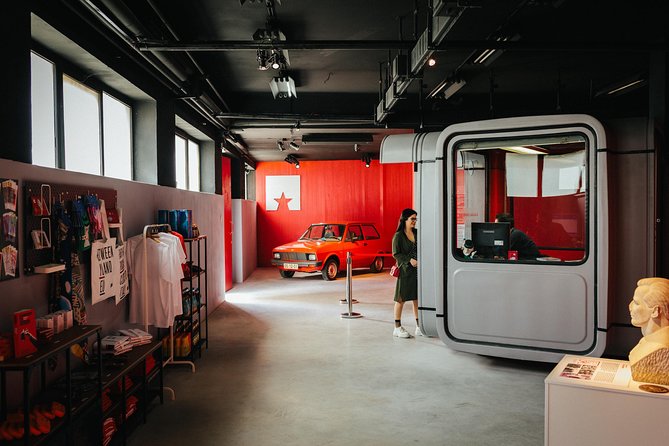
Communist Yugoslavia can feel like a blank space between wartime history and modern Croatia. The Red History Museum fills that gap with room sets, everyday objects, music, design, and stories of life under the Communist Party. It is less a formal gallery than a walk through a time capsule.
I like the way the museum makes big political ideas tangible, especially through ordinary household items and its look at the secret police. I also like its compact size, which gives you a focused visit rather than a long march through endless display cases. The main consideration is the $211 price, which is steep for a museum visit, especially since no guide or transportation is included.
In This Review
- Key points
- Inside the Red History Museum on Svetog Križa Street
- Room sets that turn politics into daily life
- Art, design, music, and the Non-Aligned world
- The secret police and the pressure of a totalitarian society
- A compact tour with a useful historical gap
- How the 50 to 95 minutes work for your day
- Is $211 a fair price?
- Who will get the most from this museum?
- Booking, timing, and cancellation
- Should you book the Red History Museum?
- FAQ
- Where is the Red History Museum located?
- How long does the museum visit take?
- What does admission include?
- Is transportation included?
- Is there a tour guide?
- What can I see inside the museum?
- Does the museum cover the full history of communist Yugoslavia?
- Is the experience suitable for most people?
- How many people can join the activity?
- Can I cancel for a refund?
Key points
- A 300-square-meter museum built around interactive exhibits and recreated rooms.
- Real 20th-century objects show how politics reached into ordinary daily life.
- Communist Yugoslavia in context, from the country’s political system to its Non-Aligned position.
- Secret agencies, music, art, and design add texture beyond dates and political leaders.
- About 90 minutes inside, though the stated visit range runs from 50 minutes to 1 hour 35 minutes.
- Prepaid mobile admission lets you arrive on your chosen day without buying a ticket at the counter.
Inside the Red History Museum on Svetog Križa Street
The museum sits at Ul. Svetog Križa 3 in Dubrovnik. Your visit begins and ends at the museum, and the experience is designed for independent exploration rather than a guided walking tour.
That matters because you set the pace. You can move quickly through familiar material or stop longer when an object, room, song, or political idea catches your attention. The museum uses both older objects and newer technology across a 300-square-meter space, so the visit is compact but varied.
You should plan for roughly an hour and a half. The official timing allows anywhere from 50 minutes to 1 hour 35 minutes, which gives you useful flexibility on a busy Dubrovnik day. If you have only a short gap between sightseeing stops, you can probably see the main displays in less time. If you read carefully and listen to the material available, allow the full 90 minutes.
The museum is newly opened and presents a very different side of Croatian history from the stone walls, churches, and Adriatic views that draw most people to Dubrovnik. It offers a look at the recent past, when the city and the wider region belonged to Yugoslavia.
A few more Dubrovnik trips to weigh up
- Dubrovnik: Old Town Walking Tour
★ 4.8 · 5,174 reviews - Dubrovnik Discovery Old Town Walking Tour
★ 5.0 · 4,458 reviews - Dubrovnik: Game of Thrones Walking Tour
★ 5.0 · 1,732 reviews
Room sets that turn politics into daily life
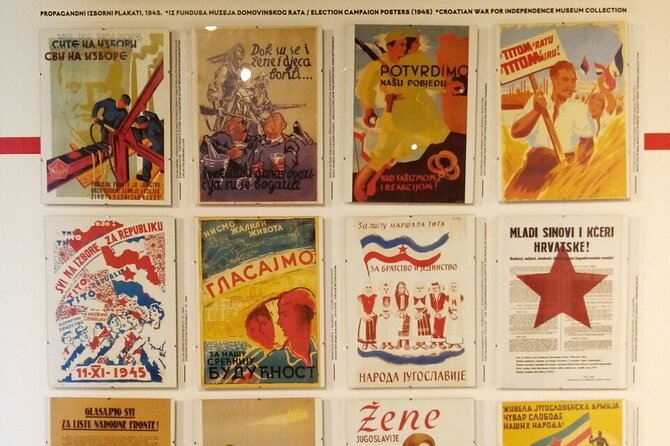
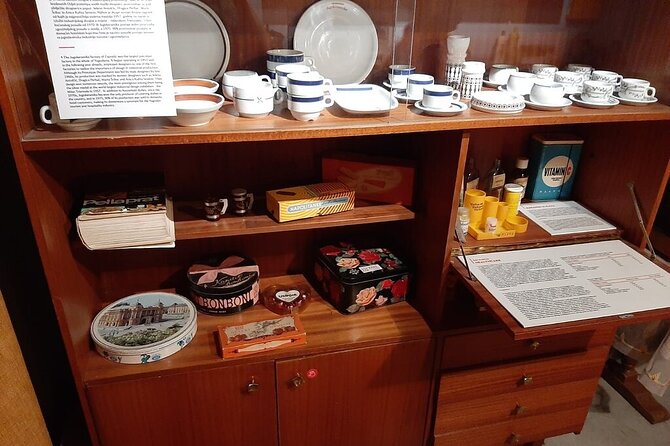
The strongest part of the visit is the use of room sets. Instead of asking you to picture daily life from labels alone, the museum places you among objects and surroundings linked to ordinary homes and public life.
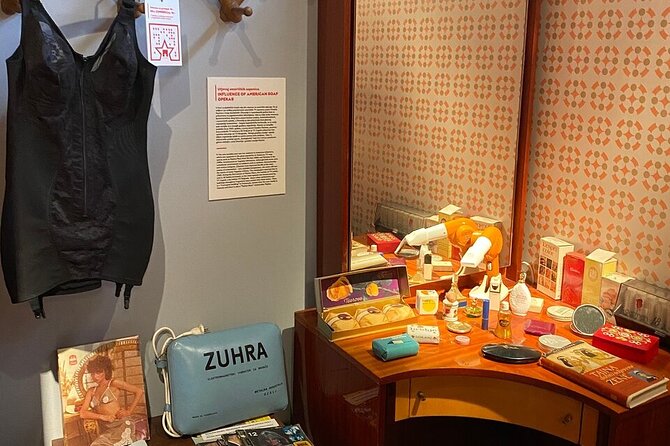
This approach gives political history a human scale. A discussion of one-party rule can sound distant. A familiar household object, a piece of furniture, or an item linked to work and leisure makes the system easier to understand. You begin to see how government, media, design, consumer goods, and family life could all overlap.
The exhibits also help explain the difference between official ideals and personal experience. Communist Yugoslavia was not presented simply as a string of political dates. The museum looks at how people lived under the watch of the Communist Party, including the rules, expectations, and signals that shaped public behavior.
I would take time with the displays of everyday objects. They may seem less dramatic than secret police material, but they often tell you more about normal life. This is where the museum works best as a time capsule.
Art, design, music, and the Non-Aligned world
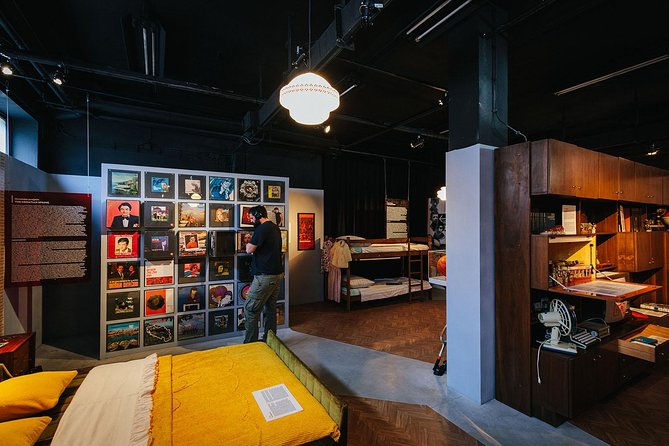
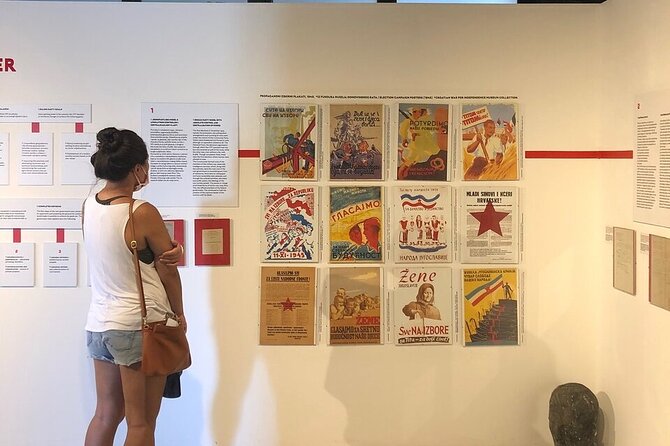
The museum does not limit itself to government offices and political slogans. It also covers art, design, and the music of the period. That broader approach helps you understand communist Yugoslavia as a society with its own style and popular culture, not merely as a political system.
The musical element adds atmosphere and gives the period a human voice. You can hear some of the era’s greatest hits while moving through the displays. That may be especially useful if you know little about the period, since music can reveal moods and tastes that a political timeline cannot.
The museum also addresses Yugoslavia’s position in the Non-Aligned movement. This is an important part of the country’s story, and one that can be missed if you think only in terms of a simple East versus West divide.
You will not leave with every detail of Yugoslav foreign policy, but the exhibit gives you a useful sense that Yugoslavia followed its own path. That context helps explain why the country’s history does not fit neatly into the standard story of Cold War Europe.
The secret police and the pressure of a totalitarian society
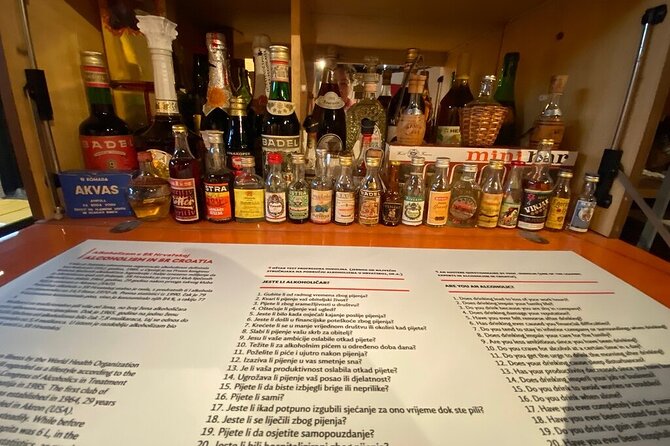
The subject of secret agencies brings a darker edge to the visit. The museum looks at the secret police and the wider reach of a totalitarian society, showing that political control was not limited to speeches or official buildings.
This section is valuable because it prevents the museum from becoming a nostalgic display of old objects. The music, room sets, and design may create a sense of ordinary life, but the political system also watched, directed, and restricted people.
I would not expect a long academic treatment of every agency or political event. The museum is small, and its strength is the way it combines short explanations with physical displays. Still, the secret police material adds essential balance.
That balance is one reason I would recommend the museum to anyone unfamiliar with communist rule in this part of Europe. You get both sides of the picture: the recognizable routines of daily life and the pressure that existed behind them.
Same stretch of coast, a completely different day out:
- Blue Cave Small-Group Boat Tour from Dubrovnik
★ 5.0 · 9,360 reviews - Full-Day Dubrovnik Elaphite Islands Cruise with Lunch and Drinks
★ 5.0 · 8,823 reviews - Dubrovnik: Epic Game of Thrones Tour + Lokrum & Saver Option
★ 4.9 · 5,995 reviews - Dubrovnik: Elaphiti Islands Full-Day Cruise with Lunch
★ 5.0 · 5,938 reviews
A compact tour with a useful historical gap
Many Dubrovnik visits focus on medieval walls, maritime power, churches, and the 1990s war. Those subjects matter, but they can leave the decades of communist Yugoslavia underexplained.
The Red History Museum gives you a way to connect the city’s past to the Croatia you see today. It does not try to cover all of Yugoslav history in a university-sized collection. Instead, it offers a readable introduction to the period and shows how the system affected people living in the region.
You may already know a little about Yugoslavia, or you may be starting from zero. The displays work for both kinds of visitors. If the subject is new to you, the museum supplies basic context. If you have studied the period, you may appreciate the objects, design, and personal angle.
One limitation is the treatment of the system’s final years. The museum addresses the country’s history from beginning to end, but the transition and breakdown of the system may not receive as much attention as you hope. If the breakup of Yugoslavia is your main interest, you may find the closing years less fully developed than the earlier presentation of daily life and communist society.
That is not a reason to skip the museum. It is simply a reason to set your expectations. Think of this as a focused introduction to life under the regime, not a complete account of every event leading to the country’s end.
How the 50 to 95 minutes work for your day
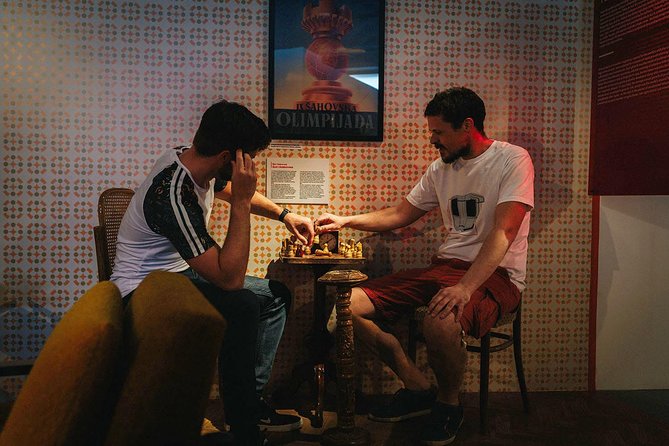
The published duration ranges from 50 minutes to 1 hour 35 minutes, while the planned museum visit is about 1 hour 30 minutes. In practice, your timing will depend on how closely you read each display and how much time you spend with the interactive material.
For a quick visit, you can concentrate on the room sets, the political sections, and the most distinctive artifacts. For a slower visit, give yourself time to notice how the exhibits connect politics with art, design, music, and home life.
The museum is a good fit for a day when you want a break from outdoor sightseeing. Dubrovnik can be hot, crowded, and demanding under the sun. A small indoor museum gives you a change of pace without taking half a day.
Because the visit ends where it begins, you do not need to arrange a separate return transfer. The museum is near public transportation, and the activity includes a mobile ticket. You should have your confirmation ready when you arrive.
The maximum group size is listed as 200 people. That is a large possible capacity for a small museum, so the feel of your visit may depend on how many people arrive at the same time. The admission is designed for independent access, not a private small-group tour.
Is $211 a fair price?
At $211, this is an expensive admission if you are paying only for entry to a small museum. The price deserves careful thought, especially because the package does not include transportation, a personal guide, or a separate city tour.
The value depends on what you want from your Dubrovnik visit. If you are strongly interested in Yugoslavia, communist Europe, or modern Croatian history, the museum may fill an important gap in your understanding. You are paying for a specialized experience that is difficult to find in a typical old-town sightseeing route.
If you are simply looking for an inexpensive indoor activity, the price is harder to justify. The museum is compact, and your visit may take less than the full 90 minutes. A prepaid ticket does give you certainty for your chosen day and avoids buying admission at the ticket counter, but that convenience alone does not make a high price feel modest.
Before booking, check exactly how many people the $211 covers and compare the cost with the current direct admission price. The information provided identifies the experience price but does not explain whether that amount is for one person, a package, or a larger booking. That detail matters greatly to the value calculation.
Who will get the most from this museum?
I would recommend the Red History Museum to you if you want more than postcard Dubrovnik. It is particularly useful if you know little about Croatia’s communist period and want a clear, tangible introduction.
It also suits:
- History-minded visitors who want to understand the decades before modern Croatia.
- Families with older children who respond better to objects and room sets than long lectures.
- Visitors interested in Cold War politics, secret agencies, art, design, and popular music.
- Anyone seeking a short indoor activity near public transportation.
- People who want context for the region before studying the breakup of Yugoslavia in greater detail.
You may be less satisfied if you want a large museum, a long guided explanation, or a detailed account of the final years of Yugoslavia. The experience is interactive and compact, but it is not a full-day historical survey.
Service animals are allowed, and most people can participate. The supplied information does not provide detailed accessibility notes about the rooms or displays, so contact the museum directly if you need specific mobility information.
Booking, timing, and cancellation
Your confirmation arrives at booking, and the mobile ticket is intended to secure entry on your selected day. The meeting point is Red History Museum, Ul. Svetog Križa 3, 20000 Dubrovnik, Croatia.
Free cancellation is available if you cancel at least 24 hours before the experience’s local start time. Cancellations within 24 hours are not refunded, and changes inside that period are not accepted.
I would book the museum for a day when you can give it at least an hour, rather than squeezing it between two fixed appointments. The displays are small in number but broad in subject, and rushing would reduce the value of the visit.
Should you book the Red History Museum?
Book it if you want a clear, object-based look at communist Yugoslavia and are willing to pay a premium for a specialized museum experience. The room sets, genuine 20th-century objects, music, political material, and secret police sections give you far more useful context than a quick paragraph in a guidebook.
Think twice if the $211 price is for a single admission, or if your main goal is a detailed explanation of Yugoslavia’s collapse. The museum’s strongest material concerns daily life and the workings of the communist system, while the final years may feel less fully covered.
For the right visitor, this is one of Dubrovnik’s most useful history stops. It gives you a better sense of the recent past that shaped Croatia, without asking you to spend an entire day indoors.
FAQ
Where is the Red History Museum located?
The museum is at Ul. Svetog Križa 3, 20000 Dubrovnik, Croatia.
How long does the museum visit take?
The visit is planned for about 1 hour 30 minutes. The stated duration range is approximately 50 minutes to 1 hour 35 minutes.
What does admission include?
Admission to the Red History Museum is included. The experience provides a mobile ticket and prepaid entry for your selected day.
Is transportation included?
No transportation is listed as included. The museum is near public transportation, and the activity begins and ends at the museum.
Is there a tour guide?
No guide is identified as part of the experience. The museum is presented as an interactive, independent visit.
What can I see inside the museum?
You can see room sets, genuine 20th-century artifacts, and displays about everyday life, art, design, politics, secret agencies, music, and Yugoslavia’s Non-Aligned position.
Does the museum cover the full history of communist Yugoslavia?
The museum presents the country’s communist history from beginning to end. The final years and the way the system broke down may receive less attention than other parts of the exhibit.
Is the experience suitable for most people?
Yes. The information states that most people can participate. Service animals are also allowed.
How many people can join the activity?
The maximum listed group size is 200 people.
Can I cancel for a refund?
Yes, if you cancel at least 24 hours before the experience’s start time. Cancellations made less than 24 hours before the start time are not refunded.
Just added around Dubrovnik
- Full- Day Private Speedboat Tour in Dubrovnik on Elaphiti Islands★ 5.0 · 21 reviews
- Elaphiti Islands Private Dubrovnik Boat Unique Experience★ 5.0 · 10 reviews
- PRIVATE Wine Tour to Konavle country side★ 5.0 · 11 reviews
- Parasailing in Cavtat★ 5.0 · 62 reviews
- Wine tour peninsula Pelješac★ 5.0 · 3 reviews
- Wine Lover’s Tour of Peljesac Peninsula★ 5.0 · 150 reviews
- Welcome to Dubrovnik Walking Tour★ 5.0 · 36 reviews
- Dubrovnik at War 1991-1992 Private Walking Tour★ 5.0 · 4 reviews
Walking Tours, compared.

Walking Tour of Split and Diocletian’s Palace
Read our review →

Krka Waterfalls tour with Trogir Walking tour and Krka panoramic boat cruise
Read our review →
City Walls Early Morning or Sunset Walking Tour
Read our review →
Browse the lists this tour appears in