
Reviewed · OLD TOWN WALKING TOURS
1.5-Hour Walking Tour of Dubrovnik’s Old Town
Dubrovnik’s Old Town is easy to admire and surprisingly easy to misunderstand. Its polished limestone lanes, gates, churches, palaces, and walls form a compact history lesson, but you need someone to explain what you are seeing. This walk gives you that framework in 90 focused minutes, starting at the city’s main western entrance.
I like the route for two clear reasons. First, it covers the major sights without wasting time on transport. Second, the local guide adds the small details that a guidebook cannot easily provide, from the water system behind Onofrio’s Fountain to the stories tied to Dubrovnik’s Golden Age. Guides such as Elvia, Sara, Lydia, and others have been praised for being warm, clear, and willing to answer questions.
The main consideration is timing. Ninety minutes is enough for a strong introduction, but not enough to enter every building or explore every lane at leisure. Entrance fees are not included, and the meeting point outside Pile Gate can be busy, so arrive early and look carefully for the guide.
In This Review
- Key points at a glance
- Why this short walk works in Dubrovnik
- Meeting at Pile Gate and Amerling Fountain
- Onofrio’s Fountain and the water that reached the city
- The Franciscan Monastery and its quiet cloister
- Sponza Palace and Dubrovnik’s Golden Age
- Orlando’s Column, the Bell Tower, and public Dubrovnik
- Rector’s Palace and the business of government
- St. Blaise’s Church and the city’s patron saint
- What the 90-minute schedule means for you
- Is $30 good value?
- Who should book this Old Town walk?
- Should you book the Dubrovnik walking tour?
- FAQ
- Where does the tour meet?
- How long does the walking tour last?
- What language is the tour conducted in?
- Which Dubrovnik sights are included in the route?
- Are entrance fees included?
- Does the tour include hotel transportation?
- What should I bring?
Key points at a glance
- Start at Pile Gate: Meet at 10:30 at the Amerling Fountain, outside the walls and beside the Dubravka 1836 restaurant and bar.
- See Dubrovnik’s essential sights: The route includes Onofrio’s Fountain, the Franciscan Monastery, Sponza Palace, Orlando’s Column, the City Bell Tower, Rector’s Palace, and St. Blaise’s Church.
- Get local historical context: Your English-speaking guide explains the buildings, public spaces, art, and daily life behind the stone façades.
- Expect a compact walking introduction: The tour lasts 90 minutes, making it useful on a first morning in Dubrovnik.
- Plan for your own follow-up visits: Food, drinks, hotel transfers, and entrance fees are not included.
- Bring sun protection: Sunglasses, a sun hat, and sunscreen are sensible, especially during the brighter part of the day.
Why this short walk works in Dubrovnik
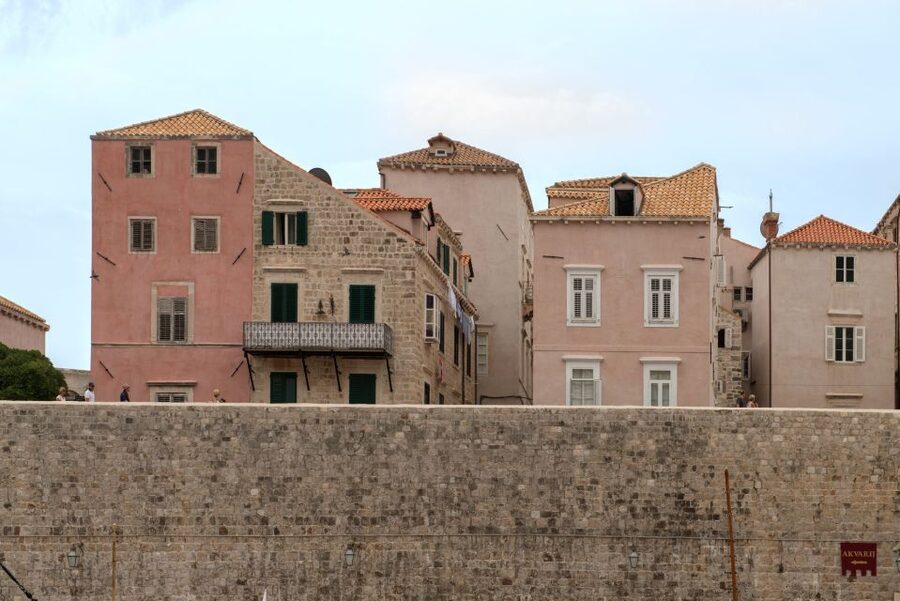
Dubrovnik’s Old Town is small enough to cross on foot, yet its history is layered at every turn. Medieval defenses, Renaissance civic buildings, churches, monasteries, fountains, and carved details sit close together. Without context, you may see a handsome square. With context, you begin to understand how the city was governed, supplied with water, defended, and shaped by its artists and religious institutions.
That is the real value of this experience. It is not designed as a long, specialized lecture. It gives you a map in your head and a story to follow. Afterward, you can return to the places that caught your attention, visit any open interiors independently, or simply wander the side streets with more purpose.
I especially like using a tour like this at the start of a Dubrovnik stay. The guide points out the main sights first, then you can spend the rest of your time deciding which ones deserve a closer look. One guide also helped orient the group to places worth visiting later and offered suggestions about current activities, which is useful when your stay is short.
The tour is conducted in English. Past guides have included Elvia, Sara, and Lydia, and the strongest comments emphasize their ability to explain the city clearly while keeping the walk friendly and relaxed. The guide assigned to your date may be different, so treat those names as examples of the local staff rather than a guarantee.
More Old Town Walking Tours in Dubrovnik
- Dubrovnik: Old Town Walking Tour
★ 4.8 · 5,174 reviews - Dubrovnik Discovery Old Town Walking Tour
★ 5.0 · 4,458 reviews - Dubrovnik: Game of Thrones Walking Tour
★ 5.0 · 1,732 reviews
Meeting at Pile Gate and Amerling Fountain
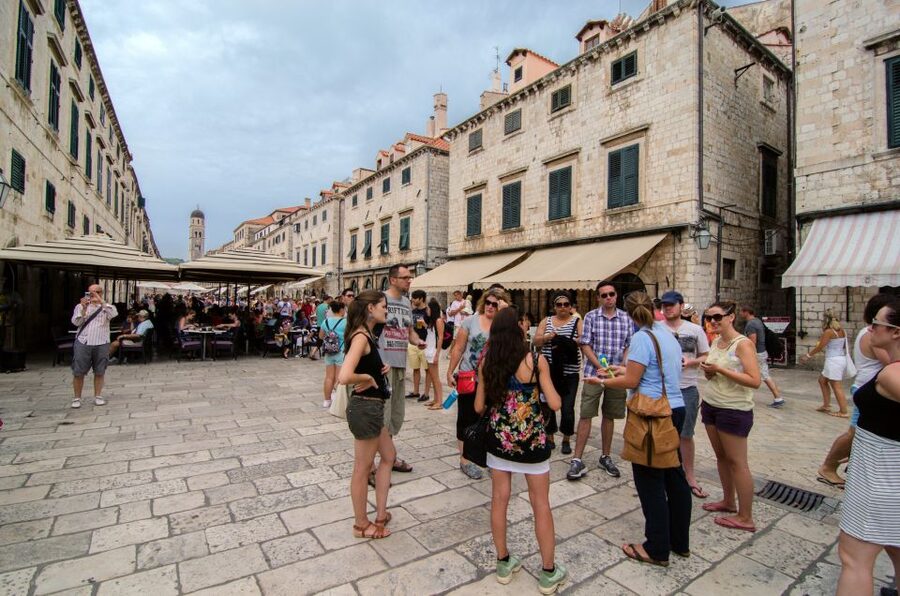
Your meeting point is Pile Square, outside Dubrovnik’s Old Town walls, by the Amerling Fountain in front of the Dubravka 1836 restaurant and bar. The scheduled meeting time is 10:30.
This location makes sense. Pile Gate is the principal western entrance and a natural place to begin a tour of the walled city. It also means you are not trying to find your guide inside a maze of narrow streets.
Give yourself extra time. The meeting instructions specify the Amerling Fountain, not simply Pile Gate, and one past participant had trouble locating the guide. Look for the guide near the fountain and restaurant area, and keep the booking details handy. A large meeting area can feel confusing when other tours are gathering nearby.
The walk begins outside the walls before moving through the gate. That gives you a useful first view of Dubrovnik’s defensive setting. You start with the transition from the open square into the close-packed streets of the Old Town, rather than appearing in the middle of the route with no sense of direction.
Onofrio’s Fountain and the water that reached the city
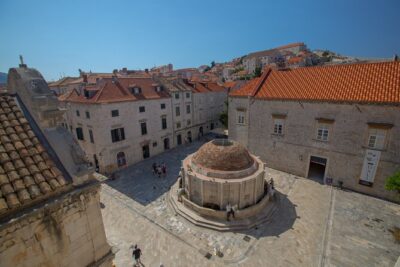
Just inside the Pile Gate entrance, the tour pauses at Onofrio’s Fountain. The circular fountain is one of the Old Town’s best-known landmarks, but the most interesting part is the system behind it.
The fountain was connected by aqueduct to a spring about 7.5 miles, or 12 kilometers, outside the city. That detail turns a decorative monument into evidence of serious planning. A walled town needs more than strong gates. It needs a dependable water supply, and this aqueduct helped bring fresh water into Dubrovnik.
This is a good early stop because it introduces a practical side of the city. You are not only looking at grand palaces and churches. You are also learning how the town functioned. Listen for the explanation of how water shaped city life, especially if you enjoy the engineering and everyday details behind famous monuments.
The fountain is in a public area, so this stop is primarily about seeing and understanding it. The tour does not include a separate entrance to a site here.
The Franciscan Monastery and its quiet cloister
The next major stop is the Franciscan Monastery, one of the Old Town’s important religious and artistic sites. Its 14th-century cloister offers a marked change from the exposed public spaces around Pile Gate.
The cloister is known for its graceful structure and calm interior setting. You will also hear about the restored sculpture of the Pieta, an important work connected with the monastery. Together, the building and sculpture show how religion, art, and civic identity were closely linked in Dubrovnik.
This is one of the places where a guide adds real value. A church or monastery can seem like another beautiful stone building when you are walking quickly through town. The explanation gives you a reason to pause and notice the workmanship, the layout, and the art rather than treating the stop as a photo opportunity.
Keep in mind that entrance fees are not included in the tour price. The route takes you to the monastery, but any paid interior visit is separate. Ask your guide what you can see during the walk and what you may wish to return to later.
Same stretch of coast, a completely different day out:
- Blue Cave Small-Group Boat Tour from Dubrovnik
★ 5.0 · 9,360 reviews - Full-Day Dubrovnik Elaphite Islands Cruise with Lunch and Drinks
★ 5.0 · 8,823 reviews - Dubrovnik: Epic Game of Thrones Tour + Lokrum & Saver Option
★ 4.9 · 5,995 reviews - Dubrovnik: Elaphiti Islands Full-Day Cruise with Lunch
★ 5.0 · 5,938 reviews
Sponza Palace and Dubrovnik’s Golden Age
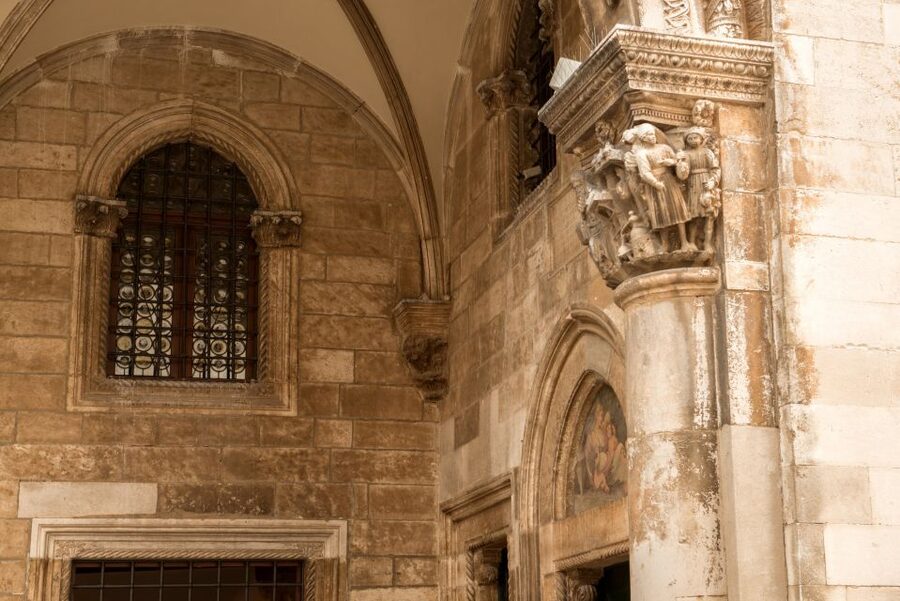
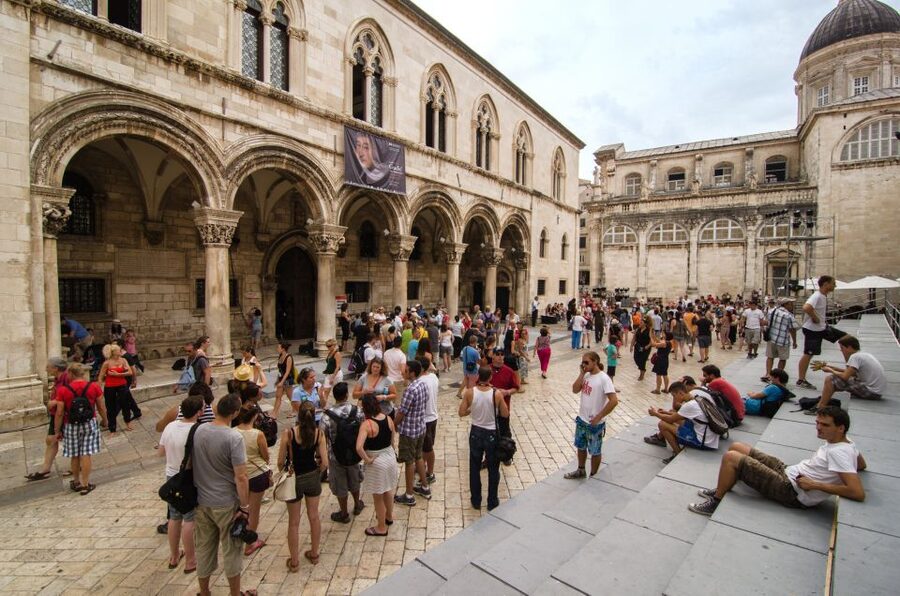
Sponza Palace is the Renaissance highlight of the route. Its façade and courtyard reflect the period when Dubrovnik was an important maritime republic with money, trade, diplomacy, and a strong civic identity.
The building is especially useful for understanding the difference between Dubrovnik as a fortified town and Dubrovnik as a working city. Behind the elegant exterior were the activities that helped the republic operate. Your guide can place the palace within the city’s Golden Age and explain why this building matters among the Old Town’s many historic façades.
I like this stop because it shows that Dubrovnik’s appeal is not limited to medieval atmosphere. The city also has a Renaissance character, visible in its architecture and public institutions. The tour’s emphasis on art and buildings from this period helps you read the streets with more care.
Sponza Palace is a stop for exterior interpretation unless you arrange any separate admission. The 90-minute format does not promise an extended indoor visit, so plan to come back if the palace becomes one of your priorities.
Orlando’s Column, the Bell Tower, and public Dubrovnik
The route continues through the civic center of the Old Town, including Orlando’s Column and the City Bell Tower. These landmarks belong to the public face of Dubrovnik, where political authority, trade, announcements, and ceremony met.
Orlando’s Column is more than a stone figure in a square. It represents a famous medieval knight and has long been linked with the city’s independence and civic identity. The guide’s explanation helps you understand why a single column could carry such weight in a public space.
The City Bell Tower gives you another way to think about the old republic. A bell was practical, calling people to attention and marking the rhythm of public life. It was also a visible sign of the city’s organized government and communal structure.
These stops are close enough together to fit comfortably into a short walk, but the spaces can feel crowded at popular times. Your guide helps you focus on the important details instead of trying to decide what matters while people move around you.
If you enjoy taking photographs, pause briefly, then listen. The most useful part of these landmarks is often the story attached to them, not just the view through your camera.
Rector’s Palace and the business of government
Rector’s Palace is among Dubrovnik’s essential sights. It was tied to the office of the rector, the senior civic official who represented the republic’s government. The building’s appearance reflects the city’s changing fortunes and artistic influences.
A guide can make this stop more meaningful by explaining how the rector’s role worked and how the palace fitted into the city’s political system. Dubrovnik’s history is not only a sequence of wars and rulers. It is also a story of institutions, negotiation, trade, and careful civic control.
The palace is another place where you may want to return after the walk. The tour provides an introduction, but the entrance fee is not included. If you want a detailed look at the interiors and collections, allow extra time and budget for a separate visit.
For first-time visitors, this stop helps organize the rest of the Old Town. Once you know where the political center was, the churches, fountains, streets, and palaces around it make more sense.
St. Blaise’s Church and the city’s patron saint
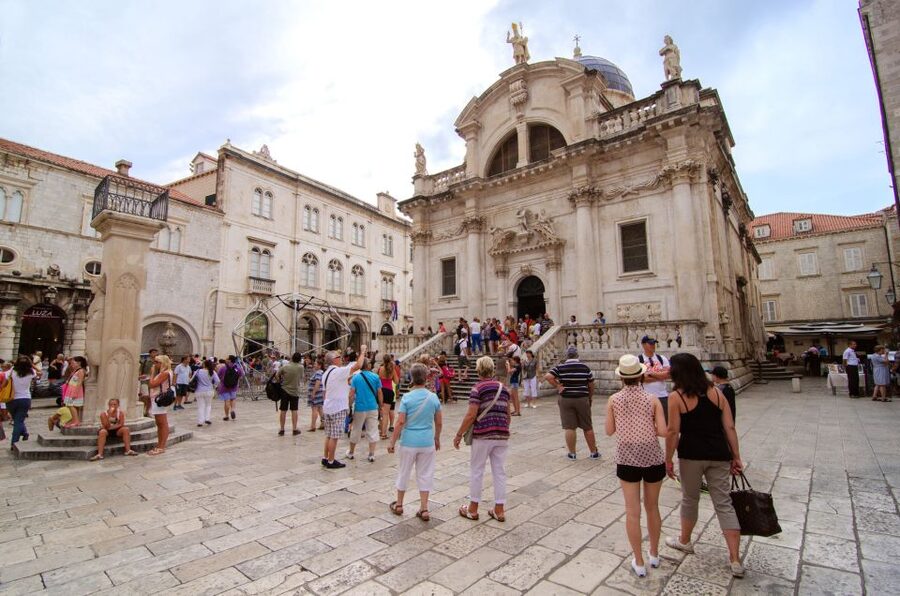
The Church of St. Blaise is the final major highlight named on the route. Dedicated to Dubrovnik’s patron saint, it is one of the city’s most recognizable religious landmarks.
The church adds another layer to the walk. The Franciscan Monastery introduces religious life and art, while St. Blaise’s Church connects faith with the identity of the entire city. Your guide can explain why St. Blaise matters to Dubrovnik and how the church fits into the public spaces around it.
This is a useful ending because it brings together several themes from the tour: art, civic pride, religion, and the city’s long effort to preserve its identity. By this point, you have seen the main types of buildings that define the Old Town, from waterworks and monasteries to palaces, monuments, and churches.
As with the other major sites, the experience is primarily a guided walk. Any entrance admission is your responsibility.
What the 90-minute schedule means for you
Ninety minutes is a sensible length for a first look at Dubrovnik. It is long enough to cover the key landmarks and short enough to fit before lunch, an afternoon activity, or a separate visit to the city walls.
Do not expect a slow architectural study of every building. The guide needs to keep moving through the Old Town, and some stops will be brief. If you ask many questions, the walk may run longer. One past booking lasted almost two hours because the guide continued explaining the city beyond the planned time, but you should regard that as a pleasant possibility, not part of the guaranteed schedule.
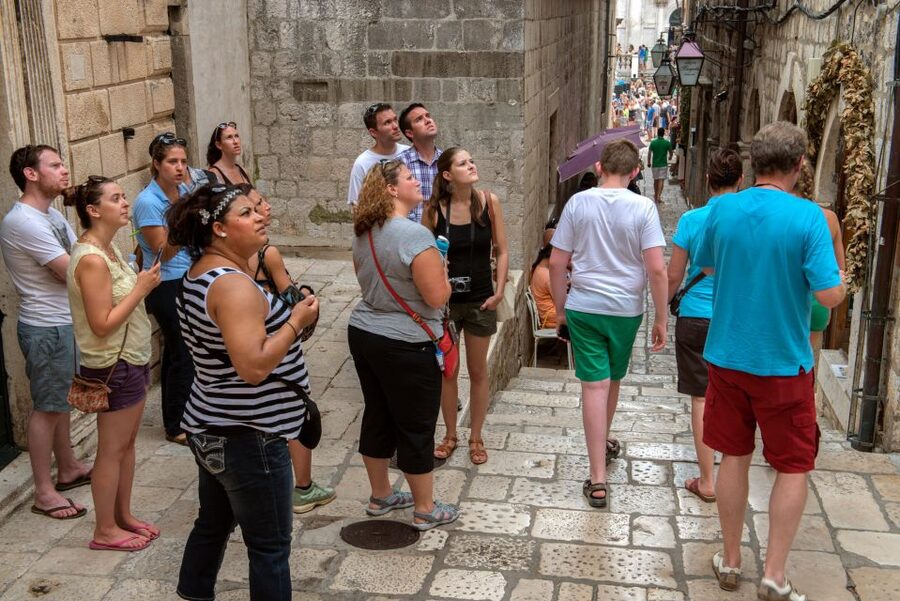
The route is on foot through narrow streets and public squares. Wear shoes that feel secure on stone paving, and carry water if you need it. The official advice is to bring sunglasses, a sun hat, and sunscreen. That matters in Dubrovnik, where much of the route is exposed to strong daylight and shaded stretches may be limited.
There is no hotel pickup or drop-off. You make your own way to Pile Square, which is simple if you are already near the Old Town but requires planning if you are staying farther away.
Is $30 good value?
At $30 per person, this tour offers fair value if you want a local introduction rather than a self-guided walk. You are paying for the guide’s explanations, route planning, and ability to connect the sights. You are not paying for food, drinks, transfers, or admission to the buildings.
The value is strongest for a first visit. You can spend the rest of your day returning to Sponza Palace, the Franciscan Monastery, Rector’s Palace, or any other site that interests you. The guide also helps you avoid spending your first hour simply trying to work out where the major landmarks are.
A self-guided walk costs less, of course. But it requires preparation, and it may leave you with a list of names rather than an understanding of how the city fits together. If you prefer to read at your own pace, stop for photographs, and explore independently from the start, the paid walk may feel less necessary.
The 4.6 rating from 37 reviews supports the tour’s strong reputation, with particular praise for clear explanations, friendly guides, excellent English, and flexibility. The one practical criticism was difficulty finding the guide at the meeting point, so that is the issue I would take most seriously.
Who should book this Old Town walk?
I would recommend it to first-time visitors, cruise passengers with limited time, couples, families with older children, and anyone who wants the main story before exploring alone. It also suits people who enjoy asking questions and want recommendations for the rest of their stay.
It is a good fit if you want to see the landmarks without committing to a half-day program. The guide keeps the focus on the heart of the walled city, and the route includes the sights most people want to recognize.
You may prefer another approach if you want extensive time inside each monument, a private custom route, or a detailed specialist tour devoted to art, architecture, or military history. This is a broad introduction, not a deep examination of one subject.
Book it early in your stay if possible. That way, the walk can shape your independent sightseeing afterward. You can also ask the guide about places you want to revisit while the layout is still fresh in your mind.
Should you book the Dubrovnik walking tour?
Book it if you want a friendly, efficient introduction to Dubrovnik’s Old Town and value explanation over simply checking off sights. The route covers the city’s main historical landmarks, and the best guide reports point to engaging local staff who answer questions and sometimes extend the walk beyond 90 minutes.
Skip it if you already know the Old Town well or plan to spend your time inside museums and palaces on your own. For most first-time visitors, though, $30 is a reasonable price for getting your bearings at Pile Gate, understanding what you are looking at, and starting the rest of your Dubrovnik visit with a clearer sense of place.
FAQ
Where does the tour meet?
Meet at 10:30 at Pile Square, outside Dubrovnik’s Old Town walls, by the Amerling Fountain in front of the Dubravka 1836 restaurant and bar.
How long does the walking tour last?
The scheduled tour lasts 90 minutes. A past guide continued for almost two hours, but the advertised duration is 1.5 hours.
What language is the tour conducted in?
The tour is conducted in English with a live English-speaking guide.
Which Dubrovnik sights are included in the route?
The route includes Onofrio’s Fountain, the Franciscan Monastery, Sponza Palace, Orlando’s Column, the City Bell Tower, Rector’s Palace, and the Church of St. Blaise.
Are entrance fees included?
No. Entrance fees are not included in the tour price.
Does the tour include hotel transportation?
No. Hotel pickup and drop-off are not included. You are responsible for reaching the meeting point at Pile Square.
What should I bring?
Bring sunglasses, a sun hat, and sunscreen. Food and drinks are not included unless specifically stated.
More Walking Tours in Dubrovnik
- Dubrovnik Old Town History Walking Tour
★ 5.0 · 1,684 reviews - Dubrovnik: City Walls Early Morning or Sunset Walking Tour
★ 4.8 · 1,523 reviews - Dubrovnik: Ancient City Walls & Wars Walking Tour
★ 5.0 · 1,270 reviews - Dubrovnik: Game of Thrones Walking Tour
★ 4.9 · 981 reviews
Just added around Dubrovnik
- Elaphiti Islands Private Dubrovnik Boat Unique Experience★ 5.0 · 10 reviews
- Full- Day Private Speedboat Tour in Dubrovnik on Elaphiti Islands★ 5.0 · 21 reviews
- PRIVATE Wine Tour to Konavle country side★ 5.0 · 11 reviews
- Parasailing in Cavtat★ 5.0 · 62 reviews
- Wine tour peninsula Pelješac★ 5.0 · 3 reviews
- Wine Lover’s Tour of Peljesac Peninsula★ 5.0 · 150 reviews
- Welcome to Dubrovnik Walking Tour★ 5.0 · 36 reviews
- Dubrovnik at War 1991-1992 Private Walking Tour★ 5.0 · 4 reviews
Old Town Walking Tours, compared.

Walking Tour of Split and Diocletian’s Palace
Read our review →

Krka Waterfalls tour with Trogir Walking tour and Krka panoramic boat cruise
Read our review →
City Walls Early Morning or Sunset Walking Tour
Read our review →
Plitvice Lakes with Boat Ride and Zadar Old Town Tour
Read our review →Browse the lists this tour appears in