Reviewed · TICKETS
Pula: Arena Entrance Ticket
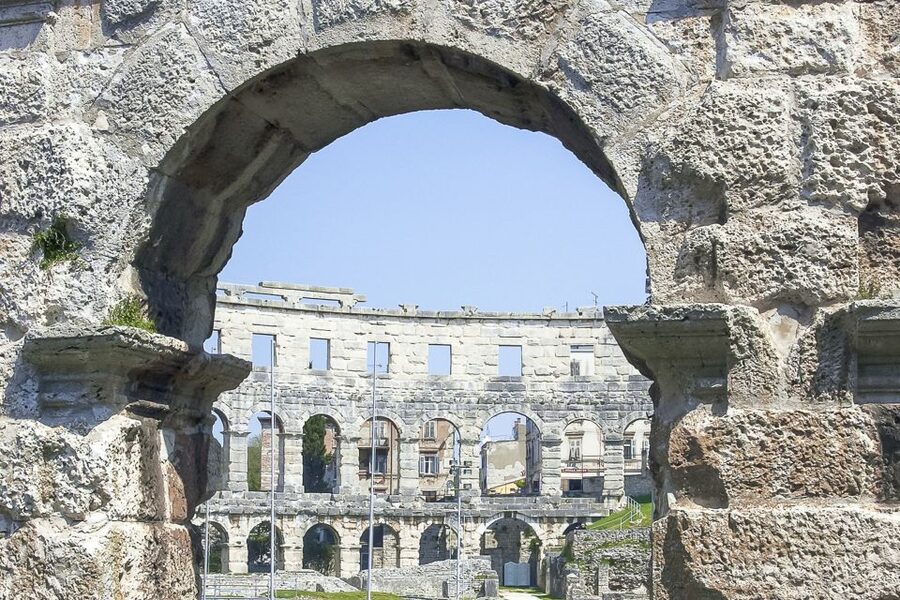
Pula Arena is not a pile of broken Roman stones. It is a huge, remarkably complete amphitheater where you can still walk through the galleries, look down into the arena, and picture gladiators and animal hunts taking place below. I especially like the freedom to explore at your own pace and the surprisingly good underground exhibition on ancient olive oil and wine production.
The prepaid ticket is useful when the entrance line is long, and an early visit can leave you with a quieter hour inside this 2,000-year-old monument. The main drawback is that online entry may still require a quick stop at the ticket desk to scan your QR code and receive a receipt. Also, the ticket is entry only, not a guided tour.
In This Review
- Key points to know before you go
- Entering Pula Arena with a prepaid ticket
- The outer walls give you a free preview
- Walking the galleries and arena floor
- The underground exhibition adds real substance
- QR codes, audio options, and how to guide yourself
- How long to stay inside
- The best time for photos and quiet
- Who will get the most from this ticket
- Is the $11 ticket worth booking?
- FAQ
- Where do I redeem the Pula Arena ticket?
- How long is the ticket valid?
- Is an audio guide included?
- What can I see in the underground area?
- Is Pula Arena wheelchair accessible?
- Can I cancel the booking?
Key points to know before you go
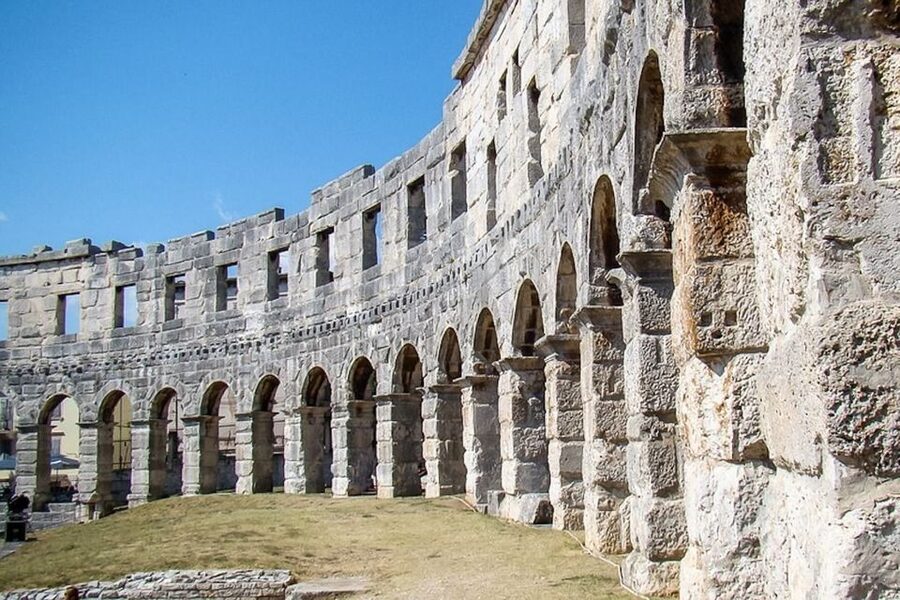
- Pula’s Roman amphitheater: Walk inside the city’s best-known ancient monument, with access to the seating areas, arena, and galleries.
- Underground olive and wine exhibition: See reproductions of mills, presses, sedimentation tanks, amphorae, and other production equipment.
- Self-guided visit: QR codes around the site provide information, but an audio guide is not included and may not always be available.
- Early morning advantage: Arriving around 8:00 or 9:30 can mean cooler temperatures, fewer people, and easier photographs.
- Practical access: Most of the site is wheelchair accessible, except for the lower gallery in the basement.
- Good short stop: Plan on roughly one to two hours, depending on how much information you read and how long you spend taking in the structure.
Entering Pula Arena with a prepaid ticket
Your meeting point is simple: go to the main entrance of Pula Arena and redeem your ticket there. The attraction is in Pula, in Istria County, and you do not need a separate transfer or meeting with a guide.
The ticket costs about $11 per person and is valid for one day. That price is reasonable if you want to walk through the monument rather than only see its exterior. You can view much of the Arena from outside, so the paid ticket is mainly about getting inside the galleries, standing on the arena side of the structure, and visiting the underground display.
The online ticket can save time, but do not assume it always means walking straight past every person in line. At busy times, you may still need to use the ticket office so staff can scan the mobile QR code and issue a receipt. That process is usually brief, but it has caused confusion for people expecting a completely separate skip-the-line entrance.
I would arrive early if your schedule allows. An 8:00 arrival has been especially quiet, while around 9:30 can still be pleasantly calm before larger groups arrive. In summer, an early start also helps you avoid the strongest heat.
The booking terms are flexible. You can cancel up to 24 hours before the visit for a full refund, and the reserve-now, pay-later option lets you hold a place without paying immediately. Check the available starting times before booking, since the ticket is valid for one day but not necessarily at every hour.
A few more Croatia trips to weigh up
- Zadar: Plitvice Lakes Guided Day Tour with Tickets
★ 4.9 · 3,148 reviews - From Zagreb: Plitvice & Rastoke Guided Day Trip with Ticket
★ 4.9 · 2,955 reviews - From Split: Plitvice Lakes Guided Tour with Entry Tickets
★ 4.9 · 2,468 reviews
The outer walls give you a free preview
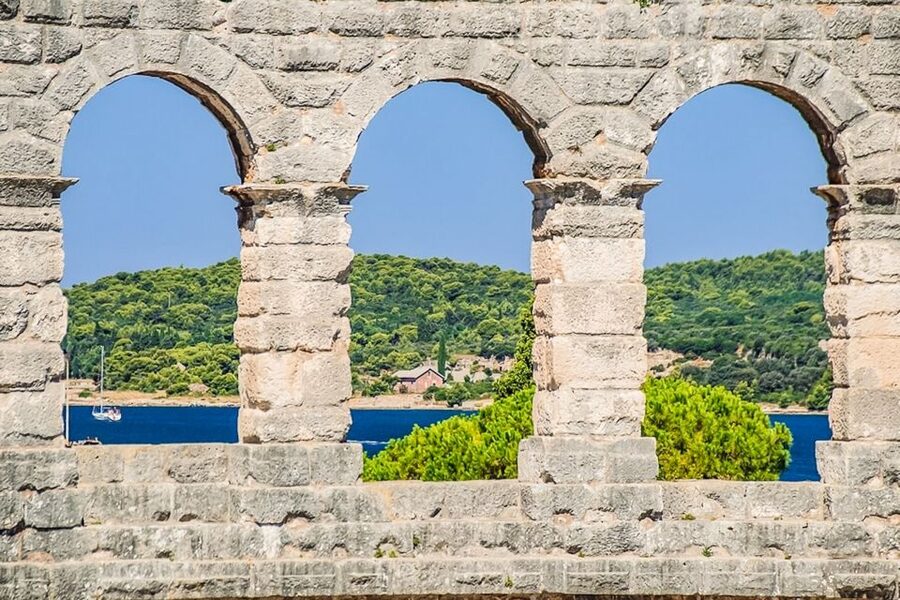
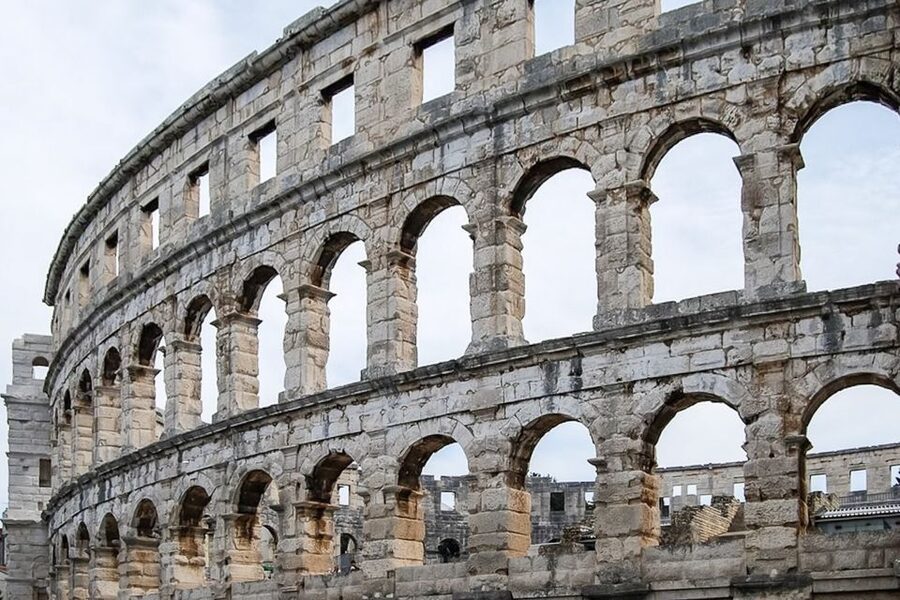
Before paying, take a few minutes to walk around the outside of the Arena. Its pale stone walls are visible from public areas, and this gives you a sense of the building’s size before you enter.
That free view also explains an important value question. If you only want a photograph of the exterior, you may decide that the ticket is unnecessary. The monument is impressive from the street, and the waterfront setting adds to the view.
Inside, though, the scale changes. You can see the thickness of the structure, move through its passageways, and look across the central arena from within the building. The outside view shows you the shell. The ticket lets you feel how the amphitheater worked as a place for crowds, performers, and spectacle.
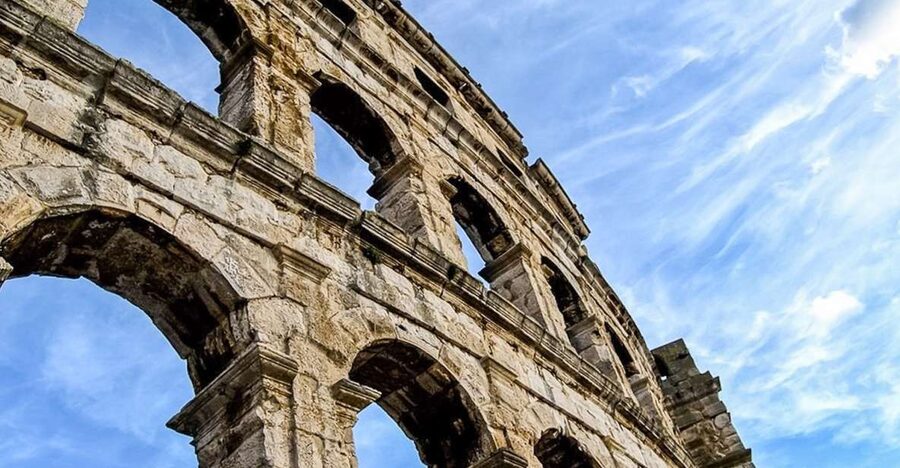
Give yourself time to look upward and sideways, not only toward the center. The repeated arches, stone seating areas, and open sky make the visit more about structure than a single famous viewpoint. This is a place where the building itself is the main exhibit.
Walking the galleries and arena floor
Once inside, you are free to roam without a fixed route or group schedule. That makes the visit easy for families and independent sightseers. You can stop for photos, read the information points, or simply sit and take in the view.
The Arena’s most powerful moment is often the first look across the central floor. You are standing where public contests once took place, including gladiatorial combat and animal hunts. The setting is not dressed up as a theme park. Its effect comes from the old stone, the open air, and the knowledge that this was a working entertainment venue in ancient Pula.
You can also look toward the seating areas and imagine the crowd gathered around the action. The monument is large enough to feel grand, but it remains easy to understand. You do not need a long guided explanation to see the basic arrangement: spectators above, the arena below, and service areas tucked beneath the structure.
The open design means sun and heat matter. In July and August, a sunny midday visit can be intense, with limited shade in exposed parts of the site. Bring water, wear a hat, and keep your headphones handy if you plan to use QR-linked information.
The visit is generally manageable with children because there is room to walk around and plenty to look at. The arena setting can also help younger visitors connect with the idea of gladiators more clearly than a museum case might. Still, the site offers limited hands-on interpretation, so families may want to explain the basics as they go.
The underground exhibition adds real substance
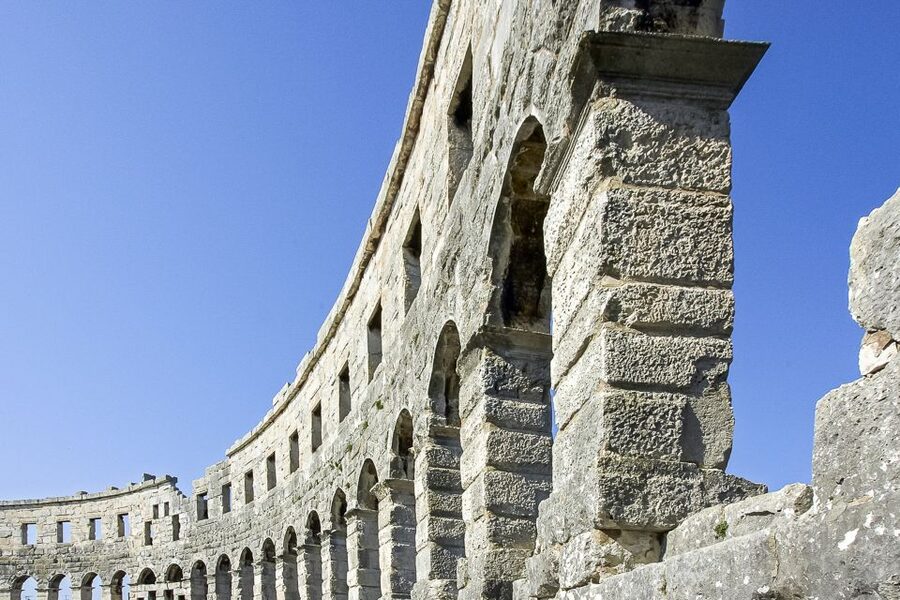
Do not skip the basement area. The permanent exhibition, Istrian Olive and Viticulture in Antiquity, shifts attention away from combat and toward everyday production in ancient Istria.
Here you can see reproductions of equipment used to produce olive oil and wine, including mills, presses, and sedimentation tanks. Amphorae show how oil and wine were packaged and transported. These objects provide a useful counterpoint to the Arena’s dramatic story.
That matters because Roman sites can easily become a parade of emperors, soldiers, and gladiators. The underground display gives you a glimpse of work, trade, food, and regional products. It helps connect the monument to the wider life of Istria, not only to the events held in the arena.
The underground section is also a welcome change of pace on a hot day. You move from bright stone and open sky into a more enclosed exhibition space. Allow extra time here if ancient technology interests you. A quick walk through takes only a few minutes, but the equipment rewards closer attention.
Access is the main limitation. The whole site is wheelchair accessible except for the lower gallery in the basement. If you use a wheelchair or have difficulty with stairs, you can still see most of the Arena, but you should not expect complete access to the lowest underground section.
Same stretch of coast, a completely different day out:
- Split: Krka Waterfalls Trip with Boat Cruise and Swimming
★ 4.8 · 10,519 reviews - Blue Cave Small-Group Boat Tour from Dubrovnik
★ 5.0 · 9,360 reviews - From Split: Krka Waterfalls, Food & Wine Tasting Tour
★ 5.0 · 9,326 reviews - Full-Day Dubrovnik Elaphite Islands Cruise with Lunch and Drinks
★ 5.0 · 8,823 reviews
QR codes, audio options, and how to guide yourself
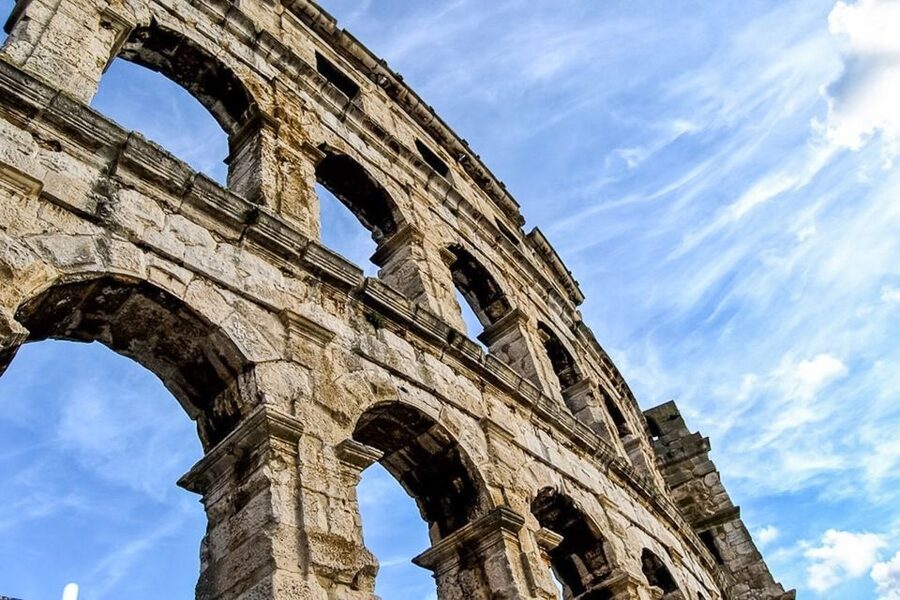
This is an independent visit, not a live tour. QR codes around the Arena link to information, and several people have found the self-guided material useful. You can scan the points with your phone and move from one explanation to the next.
Bring headphones, especially if you want to listen to material on your own device. The ticket does not include an audio guide. Availability of a separate audio service has varied, and it has not always worked or been offered, particularly outside the busiest season.
That inconsistency is worth taking seriously. If you expect a polished spoken tour in English, this ticket may disappoint. Some information points are clear and helpful, while others may provide less detail than you want. You may need to use the written material, scan the QR codes, or do a little reading on your own.
I see this as a strength for independent visitors and a weakness for anyone who wants a full historical narrative. You control the pace and can skip details that do not interest you. But if you want the ancient events explained in depth, entry alone will not provide the same support as a dedicated guide.
The lack of a fixed route is also both good and bad. You can wander freely, but there is no promise of a clearly marked sequence through every part of the monument. Take a moment at the entrance to get your bearings, then use the information points as prompts rather than expecting a complete museum-style trail.
How long to stay inside
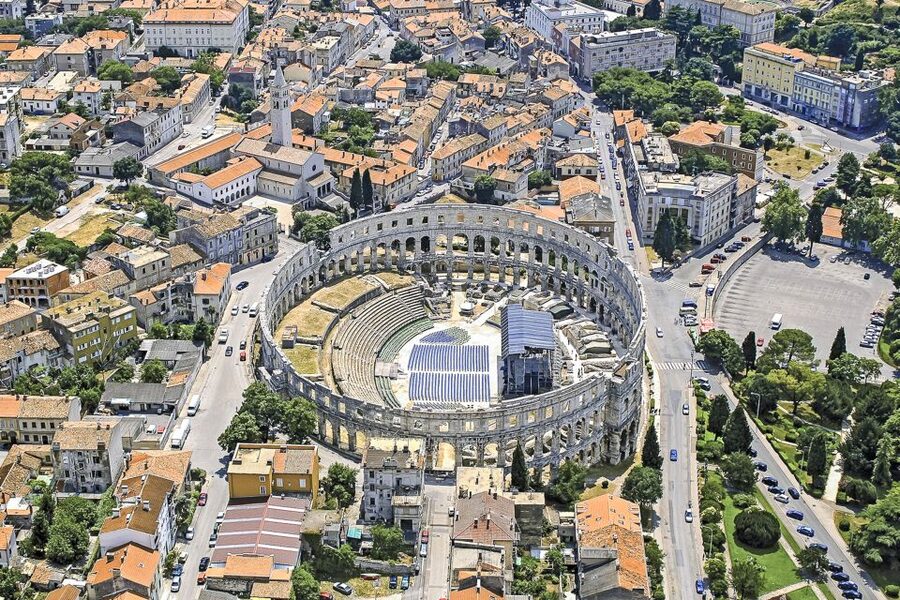
Most people should allow one to two hours. An hour is enough for the main structure, a few photos, and the underground display. Two hours gives you time to scan the QR codes, examine the equipment, and linger in the seating areas.
The exact length depends on your interest. History fans may want to read every explanation and study the building from several angles. Families with young children may find that an hour is the right amount of time. The ticket is valid for one day, but this is not an attraction that requires a full day by itself.
You might also hear or experience preparations for an event. Pula Arena is used for concerts, festivals, recreational activities, and summer recreations of gladiatorial tournaments. Stage construction can create noise or block a small part of your view, so check what is happening if the event calendar matters to you.
On the other hand, event preparations can add an unexpected detail. The acoustics are striking, and sound checks for a concert can make the building feel like a living venue rather than a silent ruin. That is an interesting bonus, though it may not suit you if you want a perfectly quiet visit.
The best time for photos and quiet
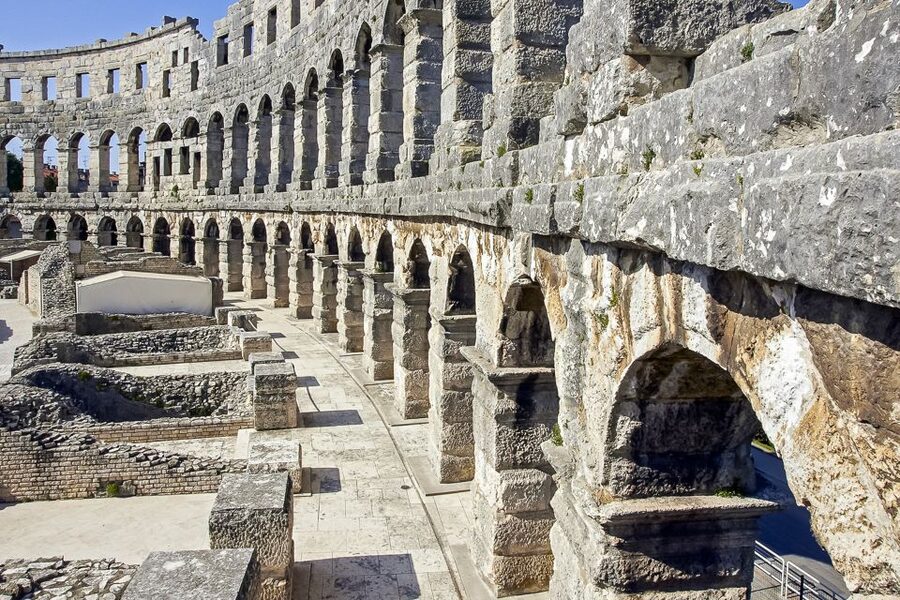
Morning is the safest choice for comfort and atmosphere. An early visit can give you a largely empty arena for the first half hour, along with softer light and cooler stone.
Later in the day, the site may still be manageable, especially outside the peak summer period, but larger groups can change the experience. If you want photographs without many people in the frame, arrive before the main groups.
Rain does not ruin the monument, but it can make the stone and walkways less pleasant. On a rainy day, the QR-code information and underground exhibition become more important because you may spend less time lingering outdoors. Parking has been described as easy and close by, though the ticket itself does not include parking.
The Arena is near other Pula sights, so it works well as part of a walking day. You can pair it with the Temple of Augustus, the fortress, the streets of the old town, and the town’s other Roman remains. The paid visit is then one part of a broader look at Pula rather than a stand-alone attraction.
Who will get the most from this ticket
I recommend this ticket most strongly if you care about Roman architecture, ancient entertainment, or the practical details of how historic buildings were used. The Arena is also a good choice if you need a break from the beaches and want a compact cultural stop in the city.
Families can enjoy the open space and the gladiator setting, but you may need to provide extra explanation if the audio material is unavailable. Independent visitors will appreciate being able to move at their own speed.
The ticket is less compelling if you only want an exterior photograph or if you expect a long guided lesson included in the price. Since much of the outer structure can be seen for free and the paid visit lasts around one to two hours, budget-conscious visitors should decide how much the inside experience matters.
For me, the strongest argument is not simply age. It is the feeling of scale and use. The Arena is old, but it is also legible. You can understand where people sat, where the action happened, and how the underground spaces supported the spectacle. The olive and wine exhibition widens that picture and makes the ticket feel more worthwhile.
Is the $11 ticket worth booking?

Book it if you want to enter one of Pula’s defining sights, walk through a well-preserved Roman amphitheater, and see the underground exhibition. At roughly $11, it is fair value for a one to two-hour visit, especially when you arrive early and use the included entry to explore carefully.
Buy online if you want to prepare ahead and possibly avoid a longer ticket-buying line, but allow for QR-code redemption at the entrance. Do not pay expecting a live guide, a guaranteed audio device, or a completely separate skip-the-line lane.
My practical choice would be an early morning booking, headphones in your bag, water in hand, and enough time afterward to explore central Pula. If you are already in town and have any interest in ancient sites, the inside view is worth the modest fee. If you only want a quick picture, the exterior may be enough.
FAQ
Where do I redeem the Pula Arena ticket?
Redeem your ticket at the main entrance of Pula Arena in Pula, Istria County.
How long is the ticket valid?
The ticket is valid for one day. Check availability for the available starting times when booking.
Is an audio guide included?
No. The ticket includes entrance only. QR codes provide self-guided information, and you should bring headphones if you plan to use audio material on your phone.
What can I see in the underground area?
You can visit the permanent exhibition titled Istrian Olive and Viticulture in Antiquity. It includes reproductions of mills, presses, sedimentation tanks, amphorae, and other tools linked to ancient oil and wine production.
Is Pula Arena wheelchair accessible?
Most of the site is wheelchair accessible. The lower gallery in the basement is the exception.
Can I cancel the booking?
Yes. You can cancel up to 24 hours in advance for a full refund. A reserve-now, pay-later option is also available.
Just added around Croatia
- Postojna Cave & Predjama Castle – Shore Excursion from Rijeka★ 4.5 · 10 reviews
- Rovinj guided tour – personally ( german )★ 5.0 · 4 reviews
- Private Guided Sunset Dolphin Watching in Adriatic Sea★ 5.0 · 12 reviews
- Plitvice Lakes Day Tour from Rijeka, Simple & Safe★ 4.0 · 8 reviews
- Photo safari trough the Winnetou canyon★ 5.0 · 17 reviews
- Day trip to Poreč and Pula with lunch from Rovinj★ 5.0 · 15 reviews
- Istria Wine Tour from Rijeka and Opatija★ 5.0 · 11 reviews
- Private walking tour Opatija -Romantic spotlight of the Adriatic★ 5.0 · 12 reviews
Tickets, compared.


Plitvice Lakes Guided Tour with Entry Tickets
Read our review →
Rastoke & Plitvice Lakes Guided Tour with Ticket
Read our review →
Plitvice Lakes with Ticket & Rastoke Guided Tour from Zagreb
Read our review →
Skip-the-Ticket-Line Museum of Broken Relationships
Read our review →

Plitvice and Rastoke day trip from Zagreb w/ticket (guar. dep.)
Read our review →