
Reviewed · CITY TOURS
Dubrovnik Old City Private Tour
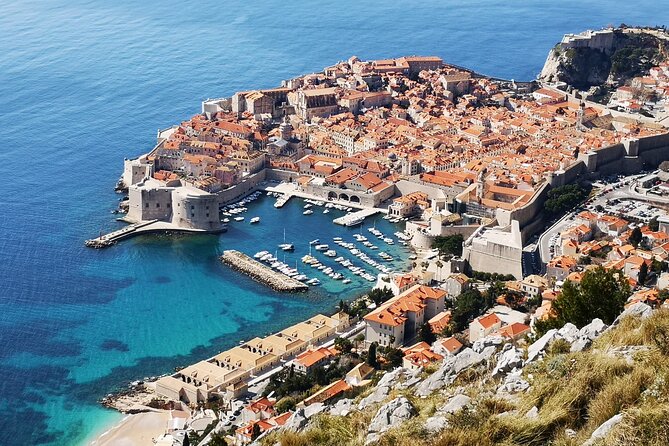
Dubrovnik’s story is best understood on foot, and this private tour gives you a guide focused only on your group. In about two and a half hours, you move from Pile Gate and Kolorina Bay through the Old City to Luža Square, hearing about the medieval republic, local life, and the 1991 siege.
I like the personal format, especially for families or anyone who wants to ask questions without holding up a large group. I also like the mix of famous sights and quieter corners, including the Franciscan monastery, Jesuit steps, old granary, and harbor fortifications. The one drawback is the price: at $133.03 per person, it makes the most sense for a small group that values private guiding.
In This Review
- Key points to know before booking
- Why a private Dubrovnik walk can be worth the price
- Starting at Nautika and Kolorina Bay
- Pile Gate and the first look at the walls
- The Franciscan Monastery and its old pharmacy
- Stradun, Onofrio’s Fountain, and the city’s main axis
- Jesuit steps, Gundulić Square, and quieter lanes
- The Cathedral and Treasury of the Republic
- Rector’s Palace and the old republic
- Harbor defenses, Lazareti, and Ploče Gate
- Luža Square and the final cluster of landmarks
- The guide makes the biggest difference
- Timing, comfort, and practical value
- Who should book this Dubrovnik tour
- Should you book it?
- FAQ
- How long does the Dubrovnik Old City Private Tour last?
- Where does the tour start and end?
- Is this a private tour?
- What museum admissions are included?
- Is the city-walls entrance included?
- What happens if bad weather cancels the tour?
Key points to know before booking
- A private route through the full Old City: Only your group takes part, so the guide can adjust the pace and answer your questions.
- A strong history focus: The story runs from ancient Dubrovnik through the Republic of Ragusa and the 1990s conflict.
- Two museum admissions included: Usually these are the Franciscan or Dominican museum and the Cathedral Treasury, though substitutions can occur.
- Several guides receive especially warm praise: Vlaho, Antun, Tea, Paula, and Paolo are noted for clear English, local insight, humor, and flexibility.
- The tour ends near St. Blaise’s Church: You finish at Luža Square, right at the eastern end of Stradun.
- Expect steps and uneven walking: The pace can be adapted, but Dubrovnik’s Old City is not flat.
Why a private Dubrovnik walk can be worth the price
Dubrovnik is compact, but it is not simple. A short walk can cross centuries of politics, trade, religion, war, and daily life. Without context, you may see attractive stone streets and churches. With a good guide, you understand why the city was built as it was and how it survived repeated threats.
This experience is designed for a private group, not a mixed crowd. That matters in Dubrovnik, where narrow lanes and packed squares can make it hard to hear. You can stop for a question, ask for a slower pace, or spend more time on the parts that interest you.
The price is high compared with a standard group walk, but the calculation changes if you are sharing it with family or friends. A group discount is available, and the private format lets you use the full two and a half hours efficiently. If you want only a quick orientation, a cheaper group tour may be enough. If you want a local conversation and a history lesson shaped around your interests, this is a stronger buy.
The tour is offered in English and is generally suitable for most participants. Still, take the terrain seriously. Dubrovnik has stairs, slopes, polished stone, and narrow streets. The guide can slow the pace, as one guide did for an older couple, but this is still a walking tour in a hill-sided medieval city.
A few more Dubrovnik trips to weigh up
- Mostar and Kravice Waterfalls Tour from Dubrovnik (Semi-Private)
★ 5.0 · 3,125 reviews - Dubrovnik: Blue & Green Caves Private Boat Tour with Drinks
★ 4.7 · 814 reviews - Dubrovnik Private Speedboat Tour to Elaphite Islands with Drinks
★ 5.0 · 660 reviews
Starting at Nautika and Kolorina Bay
The meeting point is outside Nautika on Brsalje Street, near the western approach to the Old City. This is a practical start because you are close to Pile Gate, the main western entrance, and the guide can begin with a clear orientation before leading you into the historic center.
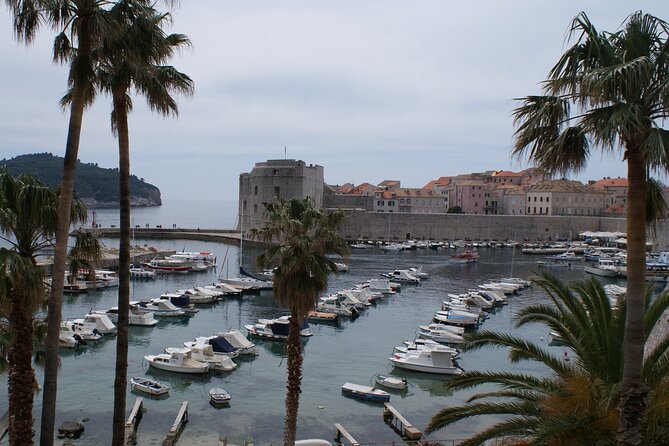
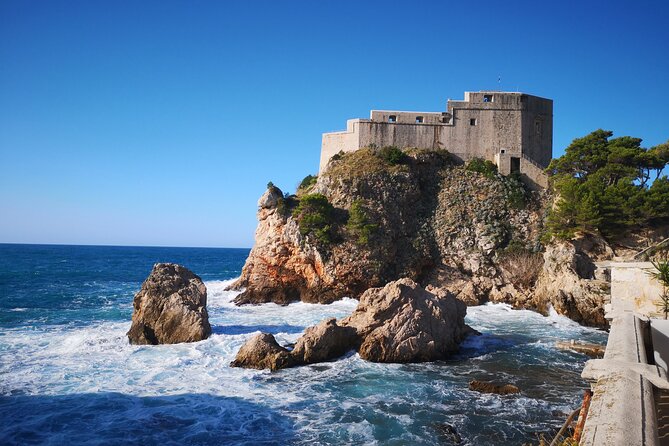
The first stop is Kolorina Bay, with views toward St. Lawrence Fortress and the Pile area. This opening gives you useful geographic context. You can see how the fortress guarded the harbor approach and why Dubrovnik’s western entrance needed strong defenses.
The stop is brief, but it helps you read the city before entering it. If you arrive early, confirm the exact meeting point and allow time to reach the area, especially if you are coming from a cruise transfer or another part of town.
Pile Gate and the first look at the walls
Pile Gate is Dubrovnik’s classic entrance, with its layers of defense and passageways. Your guide explains the western gate and points toward the Old City walls and Minčeta Tower, one of the city’s most recognizable defensive structures.
This is also where the tour begins to connect architecture with survival. Dubrovnik was a maritime republic that had to protect its independence through diplomacy, trade, and carefully built defenses. The walls were not decoration. They shaped daily movement and helped protect the city from attack.
The visit here lasts about ten minutes, so do not expect a wall walk. That is an important distinction. A separate city-walls ticket is not listed as part of this experience. You see and discuss the fortifications from the route rather than walking the entire circuit above the city.
The Franciscan Monastery and its old pharmacy
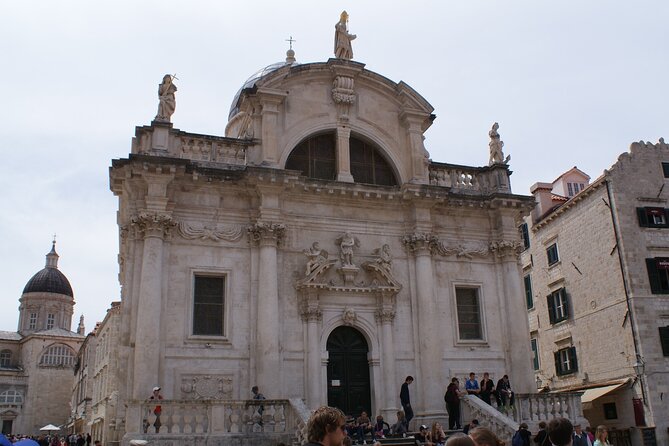
The Franciscan Church and Monastery is one of the tour’s strongest interior stops. The complex includes a museum and an old pharmacy, giving you something beyond the usual street-level views.
The pharmacy is particularly useful for understanding how Dubrovnik served its own residents long before modern tourism shaped the city. Inside, the guide can connect religious life, medicine, and the practical organization of the medieval town.
Admission to one of the included museums is covered, though the exact museum can change according to the date, season, opening hours, or timing. The Franciscan or Dominican Monastery Museum and the Cathedral Treasury are generally used for the two admissions. If a museum is closed, the entrance funds are refunded.
That qualification is worth noting. You should not book this tour solely for one specific interior. The route remains worthwhile if a substitution is needed, but the indoor portion can vary.
Same stretch of coast, a completely different day out:
- Blue Cave Small-Group Boat Tour from Dubrovnik
★ 5.0 · 9,360 reviews - Full-Day Dubrovnik Elaphite Islands Cruise with Lunch and Drinks
★ 5.0 · 8,823 reviews - Dubrovnik: Epic Game of Thrones Tour + Lokrum & Saver Option
★ 4.9 · 5,995 reviews - Dubrovnik: Elaphiti Islands Full-Day Cruise with Lunch
★ 5.0 · 5,938 reviews
Stradun, Onofrio’s Fountain, and the city’s main axis
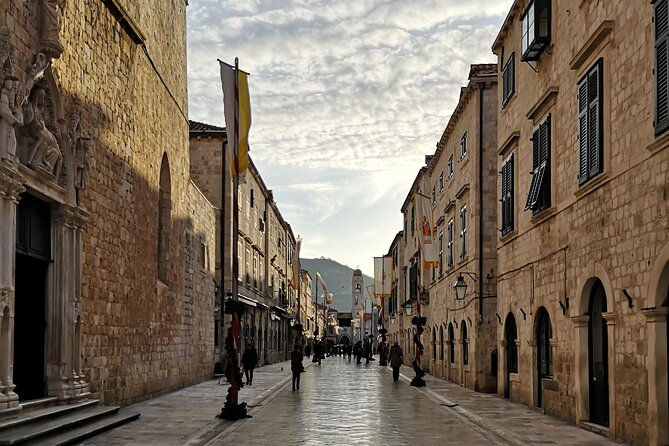
Stradun, also called Placa, is Dubrovnik’s main street and the visual spine of the Old City. It runs between Pile Gate and Luža Square, linking major churches, palaces, fountains, and side streets.
You will see the large Onofrio’s Fountain and the Church of the Holy Saviour. The fountain is more than a photo stop. It reflects the importance of water management in a fortified city, where reliable water was vital during both ordinary life and periods of siege.
I like having a guide explain Stradun rather than simply walking along it. The broad stone street is easy to admire, but the side lanes tell a fuller story. A private guide can point out how the city’s straight main route gives way to steep, narrow streets built for shade, defense, and limited space.
Jesuit steps, Gundulić Square, and quieter lanes
The route then turns into less obvious parts of the Old City. You visit the Church of St. Ignatius of Loyola, the Jesuit stairway, the Great Granary, and the Square of Ivan Gundulić.
This section gives the tour a welcome change of pace. You are not just ticking off postcard sights. You are seeing how Dubrovnik’s public spaces and religious buildings fit into a dense urban plan.
The Jesuit stairway is also a reminder that Dubrovnik walking tours involve real physical effort. The route is not described as difficult, but the steps can be tiring in hot weather or for anyone with limited mobility. Wear shoes with a firm grip and carry water, since food and drinks are not included.
Some guides are especially good at adding personal detail here. Vlaho is described as having grown up in the Old City, while other guides, including Antun and Paula, have been praised for connecting local stories with the larger history of Croatia. Those personal accounts can make a short street feel less like a monument and more like a lived-in neighborhood.
The Cathedral and Treasury of the Republic
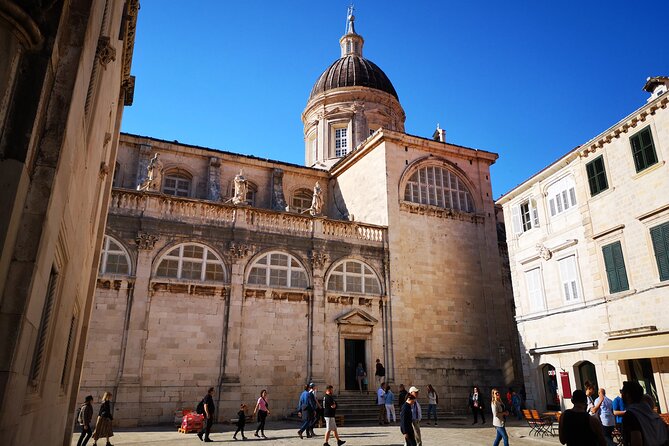
The Cathedral of the Assumption of the Virgin Mary is another major interior stop. The attached Treasury of the Republic offers a closer look at the religious and civic wealth of old Dubrovnik.
The cathedral visit helps explain the city’s Catholic identity, while the Treasury shows how sacred objects and public power were closely linked. This is one of the places where a guide’s explanation adds real value, since the objects and rooms can otherwise seem detached from the political story.
Admission is normally part of the tour’s two museum entries. As with the Franciscan visit, opening schedules and seasonal conditions can change which museum is used. If the Treasury is unavailable, the provider says funds for closed museums will be refunded.
The listed time is about twenty minutes. That is enough for an introduction, not a long museum study. If you are passionate about art or church interiors, you may want to return later on your own.
Rector’s Palace and the old republic
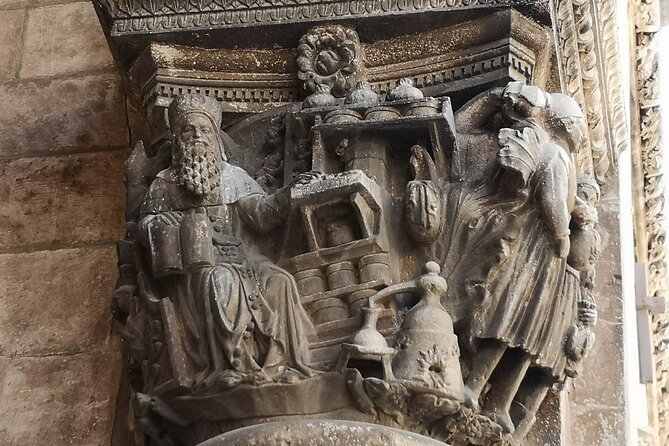
Rector’s Palace was the seat of government for the Republic of Dubrovnik. It is one of the most important stops because it links the buildings around you to the political system that made Dubrovnik unusual.
The rector was a senior official, but the office came with limits and rules. The palace represents a republic run through councils, diplomacy, commerce, and strict civic control. Your guide uses the building to explain how Dubrovnik balanced local authority, foreign pressure, and the need to keep trade moving.
The scheduled stop is only about ten minutes, so this is an outside explanation rather than a full palace visit. If you want to tour the interior in detail, plan separate time. Still, the stop works well in the larger route because it gives the Old City’s grand facades a political meaning.
Harbor defenses, Lazareti, and Ploče Gate
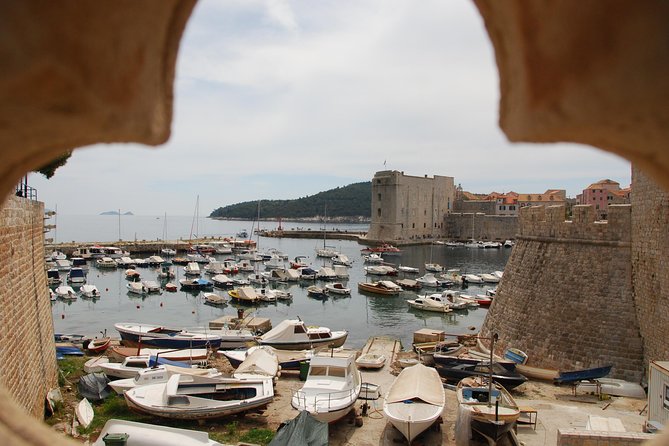
The walk continues toward the city harbor, where the story turns to maritime trade and defense. You see St. John’s Fortress, the Lazareti quarantine complex, St. Luke’s fortifications, Revelin Fortress, East Gate Ploče, and the Dominican Monastery.
This is one of the most useful parts of the route for understanding Dubrovnik as a working port. Lazareti points to the city’s efforts to control disease without shutting down trade. The harbor fortresses show how carefully the entrance was protected.
The eastern section can also feel more layered than the central street. You are moving between defensive walls, religious buildings, gates, and the waterfront, with a guide explaining how each part served a purpose.
The tour also covers the 1990s conflict and the 1991 siege of Dubrovnik. This recent history matters. It prevents the city from becoming a frozen medieval picture and reminds you that the Old City was not merely a monument during the war. Guides with local or family connections to the conflict may offer a particularly direct account, though the depth of that discussion will depend on your guide and your questions.
Luža Square and the final cluster of landmarks
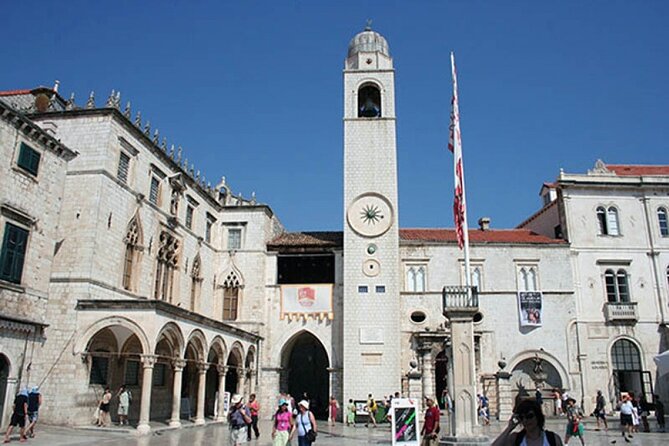
The tour ends at Luža Square, near the Church of St. Blaise and the eastern end of Stradun. This is a convenient finish because several key buildings are gathered here: Sponza Palace, the Clock Tower, Small Onofrio’s Fountain, City Hall, and St. Blaise’s Church.
Sponza Palace is especially useful as a closing point because it reflects Dubrovnik’s commercial and administrative life. The Clock Tower and fountains help you read the square as the city’s public center, while St. Blaise’s Church brings the route back to religion and local identity.
Ending here gives you a good base for the rest of your day. You can continue toward the harbor, explore nearby lanes, stop for food, or return to a building that caught your attention. Several guides also offer suggestions for local shops and places to eat. Those recommendations are not part of the formal inclusions, but they can be a useful bonus when you ask for them.
The guide makes the biggest difference
The experience is sold through the route, but the guide will determine its character. The strongest accounts point to guides who combine clear historical explanation with local stories and an easy manner.
Vlaho is repeatedly singled out for his passion for Dubrovnik, strong English, personal connection to the Old City, and ability to mix history with humor. Antun is praised for a calm, thorough approach and for handling groups that include teenagers. Tea is noted for making the route clear and enjoyable, while Paula is described as funny, informative, and especially good at explaining the 1991 siege.
Paolo is also praised for local suggestions as well as his historical explanations. These names help you know what to request when booking, but a specific guide may not always be available. The provider is My Dubrovnik Tours, and the experience is private, so communication about guide preference, timing, and pace is worthwhile.
The best guides do not just recite dates. They answer questions, point out details you might miss, and adjust the amount of history to your group. That flexibility is one of the main reasons to choose private guiding here.
Timing, comfort, and practical value
The advertised duration is about two hours and thirty minutes, though the walking can run longer depending on the group and pace. One group spent about three hours and found the extra time enjoyable. Do not schedule a tight connection immediately afterward.
The route is outdoors for much of the time, with two museum admissions usually included. Weather, crowds, events, or other unusual conditions can change the order or route. Good weather is required, and a cancellation for poor weather comes with the choice of another date or a full refund.
There is no food or drink included, and personal purchases are your responsibility. Gratuity is also not included. Bring water, use sun protection in hot weather, and wear comfortable shoes.
Free cancellation is available up to 24 hours before the start time. Changes or cancellations inside that window are not refunded, based on local time.
Who should book this Dubrovnik tour
I would choose this tour for a couple, family, or group of friends who want a private introduction before exploring on their own. It suits history-minded visitors, first-time guests, families with older children, and anyone who prefers conversation over a scripted group walk.
It is also a good choice if you want the recent history included. Many short Old City tours focus only on Venetian-style buildings, medieval politics, and famous filming locations. This route reaches from ancient times through the Republic of Dubrovnik and into the 1990s conflict, giving you a wider frame.
You may want another option if your main goal is walking the full city walls, spending a long time inside the Cathedral Treasury, or seeing only Game of Thrones filming sites. This tour may point out filming connections, but its main purpose is the history and culture of Dubrovnik.
Should you book it?
Book it if you value a private guide, want a broad historical introduction, and can share the cost with a small group. The 4.9 rating from 94 reviews and 98 percent recommendation rate fit the experience’s strongest features: personal attention, clear English, local stories, flexible pacing, and guides such as Vlaho, Antun, Tea, Paula, and Paolo.
The price is the main question. For one person or a very small party, $133.03 per person is a serious expense. For a family or group that wants one guide and an efficient first look at Dubrovnik, it can be good value.
My practical advice is to book this early, since it is commonly reserved well ahead of time, then ask about the guide, museum plan, and walking pace. If those details fit your group, this is a useful way to understand Dubrovnik before the city’s streets, walls, and churches start to blur into one beautiful stone maze.
FAQ
How long does the Dubrovnik Old City Private Tour last?
The tour lasts approximately two hours and thirty minutes. Depending on the group and pace, it may take closer to three hours.
Where does the tour start and end?
It starts at Nautika, Brsalje ul. 3, near Pile Gate. It ends at Luža Square near the Church of St. Blaise, at the eastern end of Stradun.
Is this a private tour?
Yes. Only your group participates in the activity.
What museum admissions are included?
Two museum entrance fees are included. In general, these are the Franciscan or Dominican Monastery Museum and the Cathedral Treasury, but the exact locations may change by date, season, or opening schedule.
Is the city-walls entrance included?
The supplied inclusions do not list a city-walls entrance. The tour discusses the Old City walls and fortifications, but a separate wall-walk ticket is not specified as included.
What happens if bad weather cancels the tour?
Because good weather is required, a cancellation caused by poor weather gives you the choice of a different date or a full refund.
Just added around Dubrovnik
- Full- Day Private Speedboat Tour in Dubrovnik on Elaphiti Islands★ 5.0 · 21 reviews
- Elaphiti Islands Private Dubrovnik Boat Unique Experience★ 5.0 · 10 reviews
- Wine tour peninsula Pelješac★ 5.0 · 3 reviews
- PRIVATE Wine Tour to Konavle country side★ 5.0 · 11 reviews
- Parasailing in Cavtat★ 5.0 · 62 reviews
- Wine Lover’s Tour of Peljesac Peninsula★ 5.0 · 150 reviews
- Welcome to Dubrovnik Walking Tour★ 5.0 · 36 reviews
- Dubrovnik at War 1991-1992 Private Walking Tour★ 5.0 · 4 reviews
City Tours, compared.

City Walls Early Morning or Sunset Walking Tour
Read our review →
Dubrovnik Combo: Old Town & Ancient City Walls
Read our review →
Small Group Walking Tour City Center and WW2 Tunnels
Read our review →

Hop On Hop Off Panoramic bus – Zagreb City Tour
Read our review →
Browse the lists this tour appears in