
Reviewed · 2-HOUR EXPERIENCES
Walls of Dubrovnik: Small-Group 2-Hour Tour With a Local
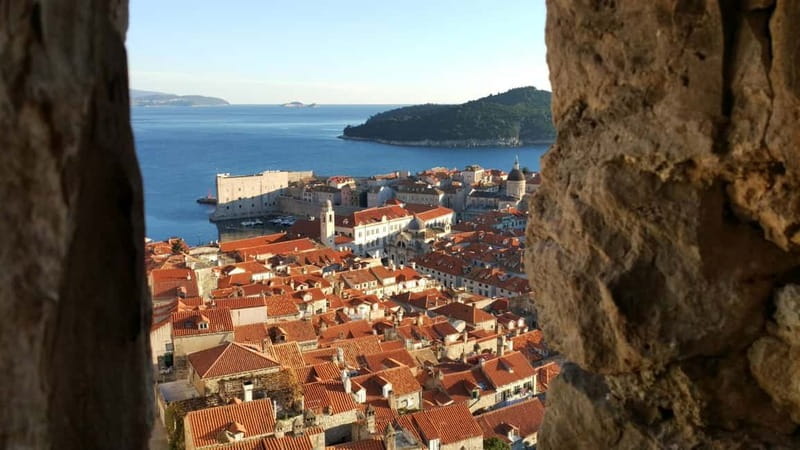
Dubrovnik’s city walls make the city’s past easy to read. From the top, you can see the Old Harbor, Stradun, Fort Lovrijenac, Fort Bokar, and the open Adriatic while your guide explains how this small republic guarded itself between Venice and the Ottoman Empire. Marko’s lively storytelling is a real strength, especially if you enjoy military history rather than a simple photo walk.
I like two things here: the group is capped at eight, so you can ask questions without shouting across a crowd, and the route covers the whole wall circuit rather than stopping at one viewpoint. The main catch is the physical work. More than 700 stairs make this a poor choice for anyone with low fitness, mobility limits, or a fear of heights, and the entrance ticket costs extra.
In This Review
- Key points at a glance
- Why Dubrovnik’s walls are worth your time
- Meeting by Fort Revelin and the Old Harbor
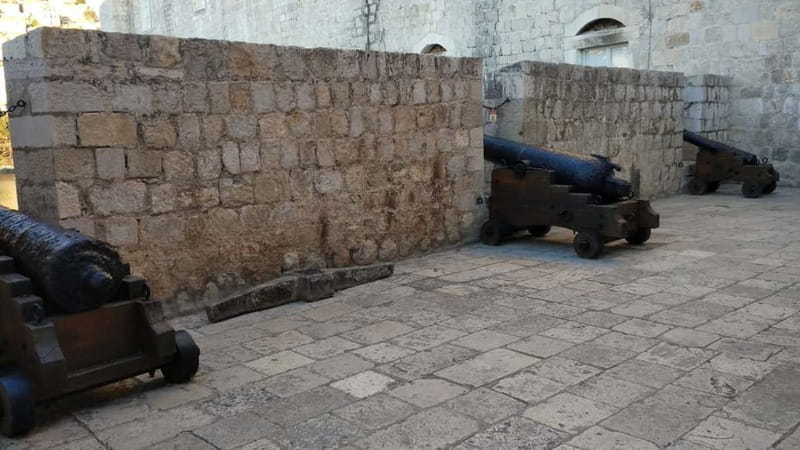
- The northern walls and medieval siege weapons
- Minčeta Fortress and the highest views
- The Stradun viewpoint and the western defenses
- The southern walls, Fort St John, and the Old Port
- What the guide adds to the experience
- Price, admission, and practical value
- Who should book this wall walk?
- My verdict: a strong choice for history and views
- FAQ
- How long does the Dubrovnik walls tour last?
- What is the price of the tour?
- How much does wall admission cost?
- Can I use the Dubrovnik Pass?
- Where does the tour begin?
- Where does the tour end?
- How large is the group?
- What language is the tour in?
- Is the tour suitable for people with limited mobility?
Key points at a glance
- The complete wall circuit: Walk the northern, western, and southern sections, finishing near the Old Port.
- A military focus: Hear about siege weapons, gun foundries, cannons, diplomacy, and the defenses around each major gate.
- Minčeta Fortress viewpoint: Reach Dubrovnik’s highest fortification for broad views over the Old Town.
- A genuinely small group: Up to eight people per guide makes it easier to follow the explanation and ask questions.
- A local perspective: Guides such as Marko connect the city’s past with what it is like to live inside the walls today.
- A demanding walk: Expect more than 700 stairs, no lift or escalator, and sections exposed to height and sun.
Why Dubrovnik’s walls are worth your time
A walk along Dubrovnik’s walls is not just a circuit above red roofs. It is a lesson in how a small maritime republic stayed alive among larger powers. The stonework, towers, harbor, and forts all had jobs to do, and this tour links those pieces together.
Without a guide, you can certainly enjoy the views. You might also miss why the eastern approach was so important, how cannons changed the wall design, or why Dubrovnik often preferred diplomacy to open battle. The two-hour route gives you that missing context while keeping you moving.
I especially like the way the tour combines broad city views with specific military details. You are not asked to stand in one place for a long lecture. Instead, the story changes as the view changes, from the Old Harbor and Fort Revelin to Minčeta Fortress, the Pile Gate defenses, and the Old Port.
The group limit matters here. The walls can feel exposed and busy, and a large group would make the guide harder to hear. With no more than eight people, you have a better chance to pause for a question, hear the explanation clearly, and keep the walking pace comfortable for the group.
A few more Dubrovnik trips to weigh up
- Dubrovnik: 3h Morning or 2h Afternoon Kayaking & Snorkeling
★ 5.0 · 162 reviews - Dubrovnik 2-Hour Uncertified Divers Introductory Dive
★ 4.7 · 118 reviews - Private Transfer from Dubrovnik to Split with 2 hours for sightseeing
★ 5.0 · 50 reviews
Meeting by Fort Revelin and the Old Harbor
The tour begins at Harbour Viewpoint, in the square in front of Fort Revelin near the Ploče Gate. Look for a guide standing by the cannon and holding a red and white flag. That detail is useful because the meeting area is near one of Dubrovnik’s busiest historic entrances.
From there, you make the short approach to the walls and begin with views over the Old Harbor. This is a smart opening because the harbor explains much of Dubrovnik’s purpose. The city was not protected simply for its buildings. Its ships, trade, and position on the Adriatic made the harbor worth defending.
Your guide explains the harbor’s role in the Dubrovnik Republic’s seafaring and commercial life. You also hear why enemy ships and land forces made the eastern side a concern. The first minutes set up the main idea of the tour: every wall, tower, and fortress had a strategic reason.
Fort Revelin guarded the eastern approach to the Old Town for centuries. As you look at its position, you can better understand how the gate, harbor, and outer defenses worked together. This part is especially useful if you have entered Dubrovnik through the Ploče Gate and want to understand the setting rather than simply pass through it.
The northern walls and medieval siege weapons
The route continues along the northern stretch of the walls. Here, the subject shifts to medieval warfare. You learn about bows and arrows, stone boulders, and the siege methods used against fortified towns.
These details help you picture the walls as working defenses, not just a scenic walkway. A high wall was only useful if defenders could see approaching forces, move along the battlements, and strike from protected positions. The guide explains how the defenses were built and used, including the practical problems faced by attackers.
Several short walking sections appear in the route description, generally around five minutes each. That suggests a steady pattern of walking, stopping, explaining, and moving again. You should still expect an active two-hour outing, but the frequent pauses give you chances to catch your breath and look around.
At a strategic tower, the story turns toward Dubrovnik’s relationship with the Ottoman Empire. The lesson is not only about war. Dubrovnik survived in part by managing difficult political relationships, using negotiation when direct conflict would have been disastrous. I find this one of the most useful parts of the tour because it shows the republic as a careful political player, not merely a city hiding behind stone.
Minčeta Fortress and the highest views
Minčeta Fortress is the tour’s major high point, both literally and visually. From here, you get broad views over Dubrovnik and the surrounding sea. The warm morning light can make this an especially pleasant stop, although the exposed position also means you should take sun and heat seriously.
The guide discusses the work of the Italian architect Michelozzi and the fortress’s development as part of Dubrovnik’s defenses. You also hear about the old gun foundry and the large number of cannons once used to protect the city.
That explanation gives Minčeta more meaning than its famous outline alone. You begin to see how older medieval defenses were adapted as artillery became more important. Thick walls and tall towers had to deal with changing weapons, and the fortress reflects that long process.
This is also one of the best places for photographs. You can look across the roofs of the Old Town, toward the sea, and back along the defensive line. The views are a major reason to take the tour, but the guide’s explanation tells you what you are looking at.
The stairs are the serious issue here. More than 700 stairs are part of the full route, with no elevator or escalator. If stairs tire you quickly, the high points may feel like work rather than a pleasure. Wear secure shoes and be realistic about your fitness before booking.
Same stretch of coast, a completely different day out:
- Blue Cave Small-Group Boat Tour from Dubrovnik
★ 5.0 · 9,360 reviews - Full-Day Dubrovnik Elaphite Islands Cruise with Lunch and Drinks
★ 5.0 · 8,823 reviews - Dubrovnik: Epic Game of Thrones Tour + Lokrum & Saver Option
★ 4.9 · 5,995 reviews - Dubrovnik: Elaphiti Islands Full-Day Cruise with Lunch
★ 5.0 · 5,938 reviews
The Stradun viewpoint and the western defenses
As you continue around the walls, you reach a strong photo position overlooking Stradun, Dubrovnik’s main street. From above, the broad stone thoroughfare looks very different from street level. You can see how it organizes the Old Town and how tightly the buildings sit behind the outer defenses.
This is a useful pause in the tour because it connects the military route with everyday city life. You are not looking only at towers and battlements. You are also seeing the streets, roofs, and public spaces that the walls were built to protect.
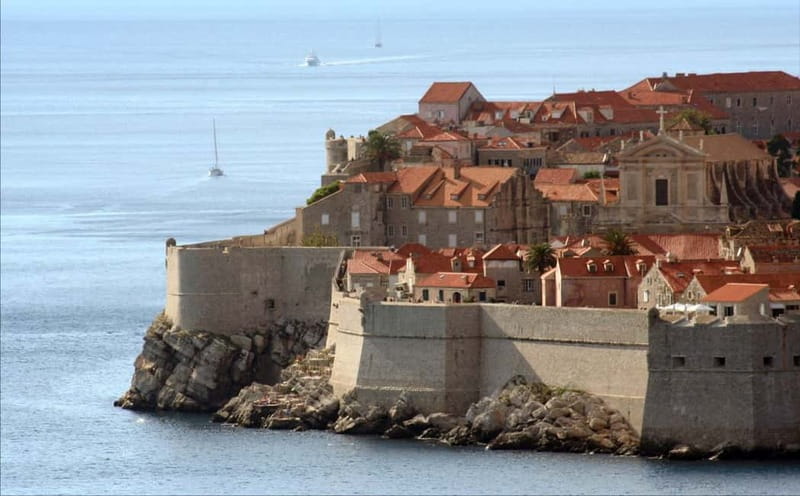
The western section brings Fort Lovrijenac and Fort Bokar into the story. Both helped defend the Pile Gate, one of the Old Town’s key entrances. From the wall, your guide explains how these forts supported the city’s defenses from different positions.
One striking detail concerns Lovrijenac. Some sections of its walls reach about 12 meters thick. That number makes the fortress’s purpose clear. This was not decorative architecture. It was a serious defensive position placed outside the main wall line.
The route’s elevated position can be uncomfortable if you are afraid of heights. There are also stretches where shade may be limited. The supplied information does not promise a particular time of day beyond the available starting times, so check the schedule and think about heat before choosing a departure.
The southern walls, Fort St John, and the Old Port
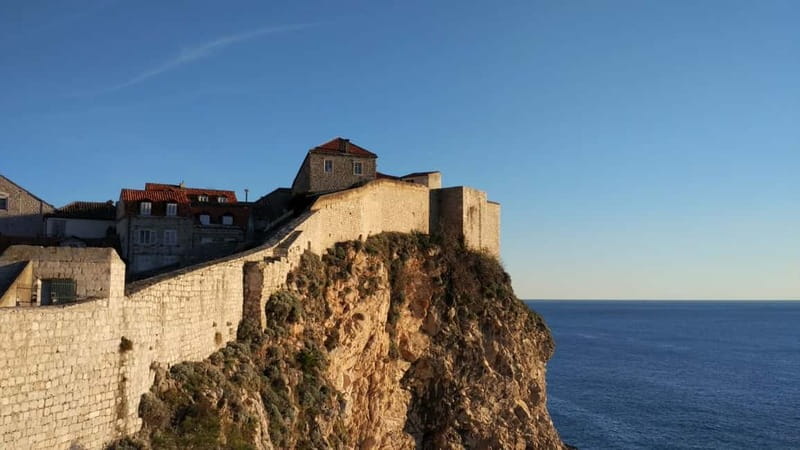
The southern stretch reveals some of the oldest and youngest parts of the medieval walls. That contrast gives the tour a helpful sense of time. Dubrovnik’s fortifications were not built once and left alone. They changed as threats, weapons, and political conditions changed.
This section also covers Dubrovnik’s long connection and rivalry with Venice. Both were major maritime powers, and control of the Adriatic shaped the politics of the region. The guide places that rivalry beside Dubrovnik’s dealings with the Ottoman Empire, showing how the republic had to balance several powerful neighbors.
The route then reaches Fort St John and the Old Port. Fort St John guarded the harbor and formed part of the city’s sea defenses. Seeing it after beginning at the harbor gives the walk a satisfying physical shape. You have followed the wall around the city and returned to the water, where Dubrovnik’s trade and naval concerns began.
The official end is back at the original meeting point. That makes planning easy. You do not need to arrange transport from a distant neighborhood, and you can continue into the Old Town afterward.
What the guide adds to the experience
The strongest guide feedback centers on Marko, a local Dubrovnik guide with a military focus. His style is described as engaging, witty, and energetic. He uses questions during the walk to keep people involved, rather than delivering two hours of uninterrupted speaking.
That approach can be valuable for families and mixed-age groups. One account specifically describes Marko keeping a 10-year-old engaged for the full two hours. The official rules say the tour is not suitable for children under 12, so families should follow the stated age guidance when booking, but older children who enjoy stories and history may find the question-based format easier to follow.
Marko’s local connection also adds something beyond dates and architectural terms. He can speak about what it is like to live inside the walls, giving the old city a present-day human angle. You are still taking a military history tour, but the subject does not remain trapped in the medieval period.
A guide can also adjust the explanation to your questions. If you want more detail about artillery, Venetian rivalry, the Ottoman Empire, or the layout of the Old Town, the small group gives you a reasonable chance to ask. Guide assignment can vary, so Marko is not guaranteed, but he is one of the named guides associated with this experience.
Price, admission, and practical value
The tour costs $36 per person, but that does not include entry to Dubrovnik’s city walls. For most of the year, the regular wall ticket is 40 euros. In January, February, November, and December, it is 20 euros. Students with a valid ISIC card and people under 18 pay 15 euros.
The Dubrovnik Pass can improve the value. It includes wall entry, lets you skip the line, and is specifically recommended for this tour. If you already plan to use the pass for other city sights, the guided walk becomes a stronger deal because you are paying mainly for the local explanation and the small group.
If you do not have the pass, add the wall admission to the tour price before comparing it with other activities. The guide fee is reasonable for two hours with a maximum of eight people, but the total cost is not simply $36. You can buy the single wall ticket at the entrance by cash or card.
The tour offers free cancellation up to 24 hours before the start and a reserve-now, pay-later option. Those terms help if your Dubrovnik plans depend on weather, cruise timing, or a changing schedule. Starting times vary, so check availability rather than assuming a fixed departure.
Who should book this wall walk?
I would choose this tour if you want more than photographs and prefer a clear story built around defense, politics, and architecture. It suits first-time visitors who want the full wall circuit explained in a compact format, and it works well for people who enjoy asking questions.
It is also a good fit if you want to understand the Old Town from above before exploring it at street level. The views of Stradun, the harbor, and the Adriatic give you useful orientation, while Fort Revelin, Minčeta, Lovrijenac, Bokar, and Fort St John provide memorable landmarks.
I would hesitate if your main goal is an easy scenic stroll. The 700-plus stairs require moderate fitness, and there is no lift or escalator. The experience is not suitable for wheelchair users, people with mobility impairments, babies under one year, or people afraid of heights. Children under 12 are also not accepted.
Take water, wear shoes with a firm grip, and consider how you handle sun, stairs, and exposed edges. Those are not minor details here. They will shape how much you enjoy the tour.
My verdict: a strong choice for history and views
Book this tour if you want Dubrovnik’s walls to make sense, not just look impressive. The full circuit, small group, local perspective, and military focus give the walk more substance than a self-guided lap.
The extra wall ticket and demanding stair count keep it from being a universal choice. But if you are comfortable with the climb, the experience offers strong value: two hours of major viewpoints, key fortifications, and a connected explanation of how Dubrovnik protected its independence.
Marko’s lively style appears to be a particular strength when he leads, especially for anyone who likes history presented with humor and questions. Since guides can vary, book for the structure and subject matter first, then enjoy the added bonus if Marko is your guide.
FAQ
How long does the Dubrovnik walls tour last?
The tour lasts two hours. Starting times vary, so you need to check availability when selecting a date.
What is the price of the tour?
The tour costs $36 per person. The entrance ticket for Dubrovnik’s city walls is not included.
How much does wall admission cost?
The regular wall ticket costs 40 euros for most of the year. In January, February, November, and December, it costs 20 euros. Students with a valid ISIC card and people under 18 pay 15 euros.
Can I use the Dubrovnik Pass?
Yes. The Dubrovnik Pass provides free entry to the walls and allows you to skip the line. It is recommended for this experience.
Where does the tour begin?
Meet at Harbour Viewpoint, in the square in front of Fort Revelin near the Ploče Gate. Look for the guide by the cannon, holding a red and white flag.
Where does the tour end?
The activity ends back at the original meeting point.
How large is the group?
The group is limited to eight participants per guide.
What language is the tour in?
The tour is conducted in English by a professional licensed English-speaking guide.
Is the tour suitable for people with limited mobility?
No. The route includes more than 700 stairs, has no elevator or escalator, and requires moderate fitness. It is not suitable for wheelchair users or people with mobility impairments.
Just added around Dubrovnik
- Full- Day Private Speedboat Tour in Dubrovnik on Elaphiti Islands★ 5.0 · 21 reviews
- Elaphiti Islands Private Dubrovnik Boat Unique Experience★ 5.0 · 10 reviews
- PRIVATE Wine Tour to Konavle country side★ 5.0 · 11 reviews
- Parasailing in Cavtat★ 5.0 · 62 reviews
- Wine tour peninsula Pelješac★ 5.0 · 3 reviews
- Wine Lover’s Tour of Peljesac Peninsula★ 5.0 · 150 reviews
- Welcome to Dubrovnik Walking Tour★ 5.0 · 36 reviews
- City Walls of Dubrovnik★ 5.0 · 70 reviews
2-Hour Experiences, compared.

2-Hour Cetina River Boat Tour and Nature Park Visit
Read our review →
3h Morning or 2h Afternoon Kayaking & Snorkeling
Read our review →
Dubrovnik 2-Hour Uncertified Divers Introductory Dive
Read our review →
Private Transfer from Split to Dubrovnik with 2 hours for sightseeing
Read our review →
Private Transfer from Dubrovnik to Split with 2 hours for sightseeing
Read our review →


Browse the lists this tour appears in