Reviewed · PRIVATE
Dubrovnik to Tirana; Semi – Private Tour with Tour Leader & Car
The most striking thing about this eight-day Balkan crossing is how much it packs into one route. You begin among Dubrovnik’s medieval walls and finish with Albanian byrek, market stalls, and grape raki in Tirana, passing through Bosnia and Herzegovina, Montenegro, Kosovo, and Albania along the way.
I like the small maximum of 10 people, which gives the tour a more personal feel than a large coach trip. I also like the mix of grand sights and ordinary life: Ottoman houses, war-era reminders, vineyards, artisan workshops, food markets, and a family-run farm. The tradeoff is clear: this is a busy road trip, and several days include border crossings plus multiple stops.
In This Review
- At a glance: the details that matter
- Dubrovnik to Mostar: an easy start with a border crossing
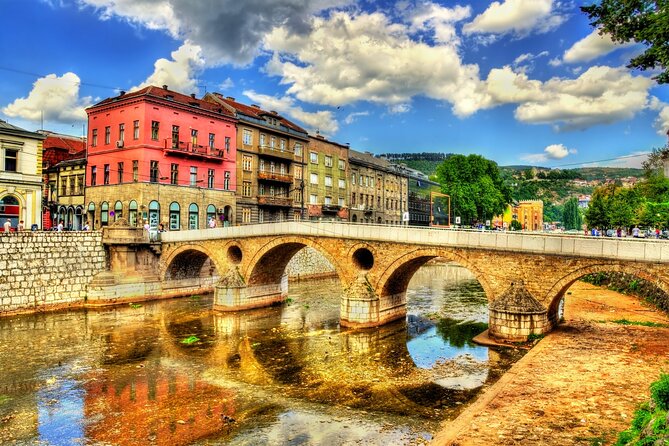
- Sarajevo in two layers: empire, war, and coffee
- Blagaj and Kotor: springs, stone lanes, and free time
- Budva, Sveti Stefan, and Shkoder’s Venetian side
- Mrizi i Zanave and Prizren: food, crafts, and religious tolerance
- Gjakova, Deçan, and Rahovec’s vineyard country
- Kruja’s bazaar and Albania’s national story
- Tirana’s markets and a proper food finish
- What the price includes, and where the value sits
- Who should book this Balkan route?
- Final verdict
- FAQ
- Where does the tour start and end?
- How many people can join the tour?
- Is hotel pickup included in Dubrovnik?
- What accommodation is included?
- Are meals included?
- How physically demanding is the tour?
At a glance: the details that matter
- Four countries in eight days: The route links Croatia, Bosnia and Herzegovina, Montenegro, Kosovo, and Albania.
- No more than 10 people: Small-group travel should make it easier to ask questions and keep the pace manageable.
- A serious history route: See Stari Most, Sarajevo’s Latin Bridge, Kotor’s old town, Deçan Monastery, and Kruja Castle.
- Strong local food stops: Try Ottoman-style coffee in Sarajevo, regional farm food near Lezhë, and a full food experience in Tirana.
- Three-star lodging with breakfast: Seven breakfasts and shared double, twin, triple, or quadruple room pricing are included.
- A one-way journey: Pickup begins in Dubrovnik at 7:00 am, and the tour ends in Tirana, so you do not waste time returning to your starting point.
Dubrovnik to Mostar: an easy start with a border crossing
Your morning begins at 7:00 am with pickup from your hotel in Dubrovnik Town. Cars cannot reach every part of the old town, so you may need to walk to the nearest accessible pickup point. A local driver takes you to the border, where you meet the tour leader who accompanies you for the main journey.
That handoff is worth understanding before you book. It means the first part is a transfer rather than a full guided sightseeing session, but it also gets you out of Dubrovnik quickly and onto the cross-border route.
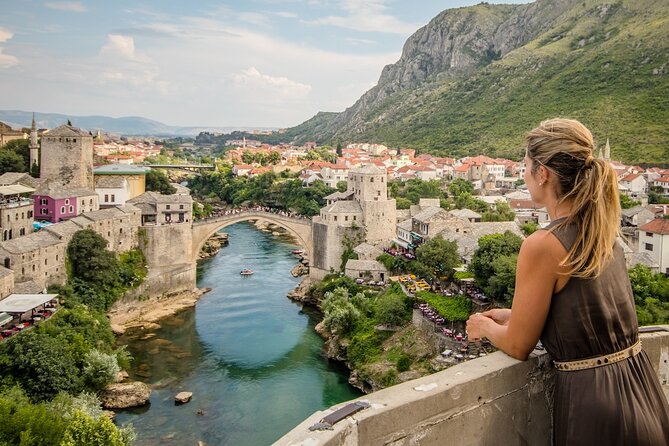
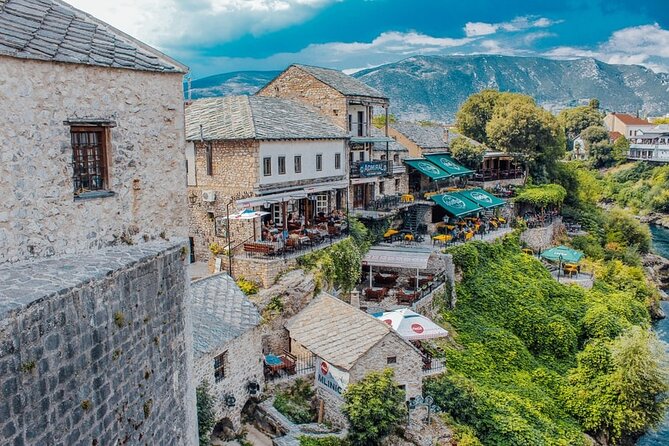
Mostar is the first major stop, and it is a good opening chapter. The famous Stari Most, rebuilt in its historic form and listed by UNESCO, arches over the Neretva River. The surrounding Old Bazaar has stone lanes, small shops, mosques, and the feel of a town shaped by Ottoman and Mediterranean influences.
You get about two hours here, enough for a guided orientation and some independent wandering. Look for the many reminders to Don’t Forget, a reference to Mostar’s difficult past. The old and new parts of town sit close together, so you can see the contrast without a long transfer.
At Bišćevića Kuća, you step inside a preserved 17th-century Ottoman home. This is a more intimate stop than the bridge. The half-hour visit helps explain how a wealthy household once lived, with the riverside setting adding to the appeal.
The first day is not long on free time, but it gives you two very different views of Mostar: the public drama of the bridge and the private world of an Ottoman residence.
A few more Dubrovnik trips to weigh up
- Mostar and Kravice Waterfalls Tour from Dubrovnik (Semi-Private)
★ 5.0 · 3,125 reviews - Dubrovnik: Blue & Green Caves Private Boat Tour with Drinks
★ 4.7 · 814 reviews - Dubrovnik Private Speedboat Tour to Elaphite Islands with Drinks
★ 5.0 · 660 reviews
Sarajevo in two layers: empire, war, and coffee
Day two takes you from Mostar to Sarajevo. The city is best understood in sections. The tour moves through the Ottoman quarter and the Austria-Hungarian area, where markets, religious buildings, and European-style streets show how several cultures came together in one compact city.
The walking portion includes uneven ground and visits to war-damaged areas. Bullet holes and cannon marks remain visible in parts of the city. This is not polished sightseeing, and that is exactly why the stop has weight. You are not only hearing about the Yugoslav War as a distant event. You can see its marks on the streets.
Sarajevo’s religious mix is another major strength. Mosques, churches, and synagogues help explain why the city is often described as a European Jerusalem. The tour also reaches back further, covering the city’s beginnings and the medieval Bosnian kingdom.
At Latin Bridge, your guide explains the assassination of Archduke Franz Ferdinand and the chain of events that helped trigger World War I. The bridge itself is modest, but the story is enormous. This is one of those places where a guide adds real value because the setting alone does not tell you why it matters.
You also receive an Ottoman-style coffee or tea at Caffe Divan. It is a small inclusion, but a useful one. Sarajevo coffee is not just a quick caffeine stop. Sitting down gives you a pause after the walking and a chance to watch city life for a moment.
The one-hour coffee stop may feel generous to someone who wants to cover more sights. I would treat it as breathing room, especially since the whole trip involves many early starts and road miles.
Blagaj and Kotor: springs, stone lanes, and free time
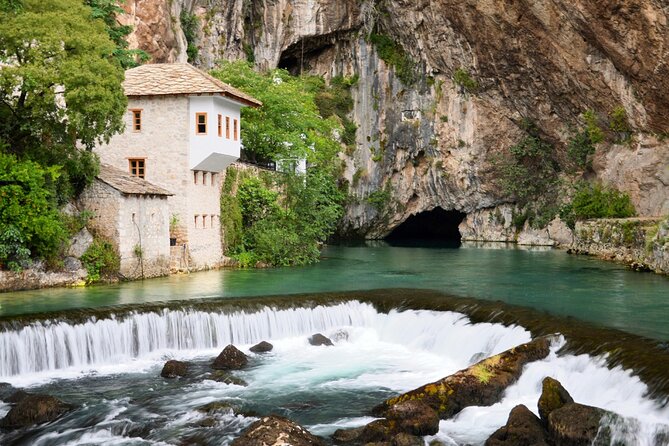
On day three, you return briefly toward Mostar to visit Blagaj. The town sits below a cliff beside the spring of the Buna River. Its Ottoman character and dramatic natural setting make it a different experience from urban Mostar.
You have about an hour, so this is a scenic pause rather than a full exploration. The blue water at the river source and the cliffside setting are the main reasons to come. After that, the road continues toward Montenegro.
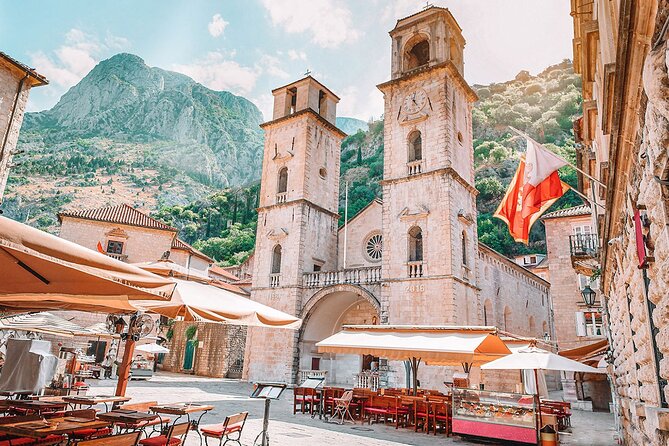
Kotor is one of the trip’s major highlights. The UNESCO-listed old town is enclosed by stone walls and filled with narrow, crooked lanes. The confusing street plan was useful in the past because it could frustrate would-be attackers. Today, it gives the town a maze-like quality that rewards slow walking.
You visit St. Luke’s Church, a place valued locally as a symbol of unity. You then have afternoon time to explore independently. That free time matters. Kotor is more enjoyable when you can stop for a pastry, browse a side lane, or sit in a square without being hurried from one landmark to the next.
The schedule allows about two hours of guided touring, but the wording suggests additional personal time afterward. Ask your tour leader how much time is available on your departure date, especially if you want to walk beyond the central old town.
Budva, Sveti Stefan, and Shkoder’s Venetian side
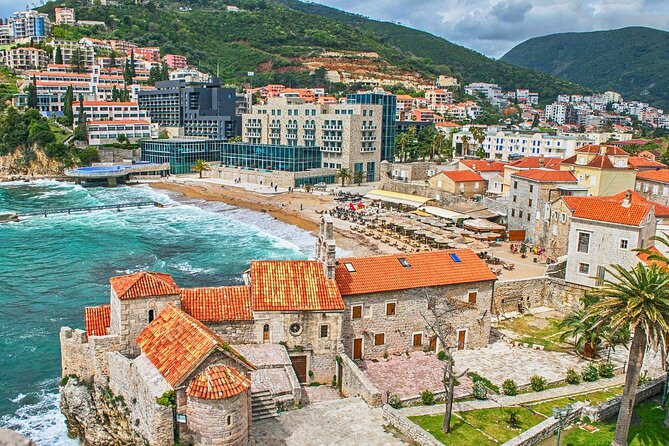
Day four begins in Budva, Montenegro’s popular coastal resort. The town has two faces. New Budva has modern buildings, shops, restaurants, and bars, while Old Budva contains the historic core and its small churches.
The sightseeing time is short, around 30 minutes for Budva and another 30 minutes at St. Ivan Church. This works as a sampler, not a full beach or resort visit. If you want long time by the sea, this itinerary will feel too fast.
The stop near Sveti Stefan is mainly for photographs. The former fishing village now operates as an exclusive residential resort, and the island is not open for general visits. You can still see its distinctive stone buildings from the coast, but keep your expectations in check. This is a viewpoint stop, not an island tour.
After crossing into Albania, you reach Shkoder. The city has a long record of habitation and gives its name to the largest lake in the Balkans. At Rozafa Castle, the reward is the broad view toward the lake and the rivers flowing toward the Adriatic.
Shkoder’s Venetian connections appear in its architecture and in the city’s mask-making tradition. The Venetian Art Mask Factory offers a welcome change of pace. You can watch handmade papier-mâché masks being painted and decorated, from classic carnival designs to newer artistic ideas.
This workshop is especially useful if you like meeting local makers rather than only photographing old buildings. It also gives you a clear souvenir option, although purchases are at your own expense.
Same stretch of coast, a completely different day out:
- Blue Cave Small-Group Boat Tour from Dubrovnik
★ 5.0 · 9,360 reviews - Full-Day Dubrovnik Elaphite Islands Cruise with Lunch and Drinks
★ 5.0 · 8,823 reviews - Dubrovnik: Epic Game of Thrones Tour + Lokrum & Saver Option
★ 4.9 · 5,995 reviews - Dubrovnik: Elaphiti Islands Full-Day Cruise with Lunch
★ 5.0 · 5,938 reviews
Mrizi i Zanave and Prizren: food, crafts, and religious tolerance
Day five begins at Mrizi i Zanave, an agritourism farm known for regional food and preserved local products. You tour the property and hear how the family adapted old communist-era buildings for storage and food production.
The farm’s social side is important. Its work has created jobs for more than 400 people in nearby communities. You have time for lunch or for buying fresh products, but lunch is not included, so budget separately for it.
I would not skip this stop simply because it is not a famous monument. It shows how rural Albania is using local ingredients, old buildings, and family business to create a working food economy. That kind of visit often tells you more about present-day Albania than another church or fortress.
In the afternoon, the route continues to Prizren in Kosovo. The town’s river, old bridges, Ottoman-era buildings, and religious sites make it one of the most attractive urban stops on the trip. It also has a strong artisan tradition, especially filigree work in precious metals.
At Sinan Pasha Mosque, look closely at the arabesque colors and patterns. The visit lasts about 30 minutes, so modest clothing and respectful behavior are sensible. Kalaja Fortress sits above town and provides a wide view over Prizren.
You have free time after the fortress. Use it to walk beside the river, look at the old houses, or seek out local crafts. Prizren is also home to Dokufest each August, while Rahovec’s wine festival takes place in September, but those events are seasonal and are not part of the standard tour.
Gjakova, Deçan, and Rahovec’s vineyard country
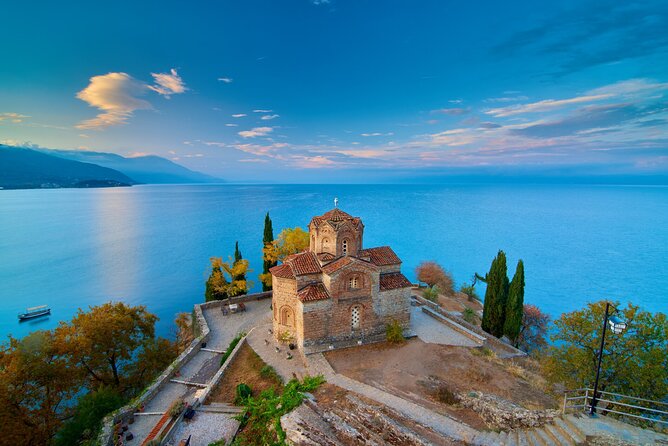
Day six brings a different side of Kosovo. Gjakova’s bazaar has been destroyed and rebuilt several times, including during the Kosovo War. Today, the restored market is a place to browse traditional crafts, eat, and watch artisans at work.
You get about an hour here. That is enough for a look around, but not a long shopping session. If handmade work interests you, stay focused, since the schedule moves on.
The Monastery of Deçan provides a quieter stop. Orthodox monks still live there and produce food such as cheese. The monastery is listed by UNESCO for its 14th-century frescoes, which portray daily life as well as religious scenes connected with the Byzantine painting tradition.
The visit has an extra practical point: religious sites can have entry rules or temporary closures, and the overall schedule may change because of weather, strikes, holidays, renovations, or other conditions outside the company’s control. Your tour leader will need to handle those changes as they arise.
The final stop is Rahovec Valley, one of the region’s main wine areas. Grapes have been grown here since Illyrian times, and vineyards cover the soft hills at elevations of roughly 350 to 520 meters. You do not receive a wine tasting as part of the listed inclusions, but the countryside adds useful context to Kosovo’s food and drink traditions.
Kruja’s bazaar and Albania’s national story
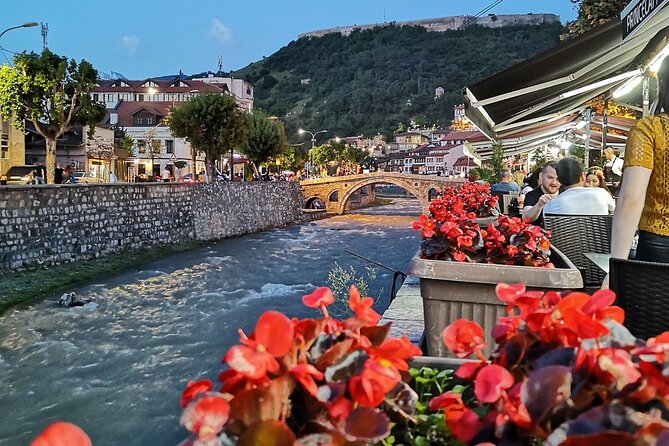
Day seven takes you to Kruja, a mountain city closely linked with Albanian resistance to Ottoman expansion in the 15th century. The old bazaar is one of the best places on the route for souvenirs, with carpets, jewelry, and handmade goods.
The narrow lanes and wooden buildings make the bazaar pleasant to explore, but bargaining is part of the experience. If you see something you truly want, ask about the price and quality rather than buying in a hurry.
Kruja Castle sits on a rocky hill. The tour leader guides you through the fortress and points out less obvious paths once used to leave the castle when enemies surrounded it. This is a good example of why a local escort helps: the most interesting details may be tucked away from the main entrance.
You have free time for lunch, shopping, and further exploration. Lunch is not included, so plan to pay directly. The hilltop setting also means this day includes walking and some uneven surfaces, consistent with the tour’s moderate fitness requirement.
Tirana’s markets and a proper food finish
The last day is devoted to Tirana and ends with food rather than another formal monument. A local companion leads the experience through markets and neighborhoods, beginning with byrek, the flaky Albanian pastry filled with ingredients such as cheese, meat, or spinach.
At Tregu Çam, you can browse clothing, kitchen goods, produce, and other everyday items. Bargaining may be part of shopping here, and the point is less about checking off sights than seeing how people buy, sell, and eat in the capital.
Pazari i Ri brings more local flavors and a traditional Albanian meal prepared with regional specialties. Grape raki is also included. Drinks and snacks are generally excluded from the tour, but the listed Tirana food experience includes its planned tastings and meal.
The food portion lasts several hours, which is a smart ending after a week of monuments and road travel. You finish with ordinary city life, useful local dishes, and a better sense of Albania today.
What the price includes, and where the value sits
At $3,433.11 per person, this is a costly trip. The price is based on double, twin, triple, or quadruple occupancy in three-star hotels, so solo guests should check how the room arrangement affects the final amount.
The package includes transport, a professional tour leader, road costs, fuel, tourist taxes, hotel pickup in Dubrovnik Town, seven breakfasts, and the Sarajevo coffee or tea. The Tirana food tour is also included. You still pay for lunches, dinners, drinks, snacks, souvenirs, and personal expenses.
The value comes from the logistics. You are crossing several borders, using one continuous route, and visiting places that can be awkward to connect independently. A group of no more than 10 also costs more than a basic bus tour, but it should offer a calmer experience and better access to the guide.
I would compare the cost with the price of arranging eight days of private transport, hotels, border connections, and local sightseeing on your own. If you want full control over hotel quality, meal choices, and time in each city, this package may feel restrictive. If you want the hard work handled for you, the price is easier to justify.
The company has used guides named Ana, Taulant, Sirma, Nelly, and Gezim on other Balkan programs. The supplied details do not promise a particular person for this departure, so do not book on the assumption that one of those guides will lead your group.
Who should book this Balkan route?
I would choose this tour if you want a broad first look at the western Balkans and prefer moving between countries without organizing every transfer yourself. It suits people who enjoy history, religious architecture, food, small workshops, and scenic old towns more than long beach stays.
You should be comfortable with early starts, road time, border crossings, walking on uneven ground, and a schedule that sometimes gives a famous place only 30 minutes. The maximum group size is reassuring, but this remains a packed itinerary.
Past company programs have included strong organization and careful support when plans changed, including help during a health problem. That is useful background, but the day-to-day quality will still depend on your assigned tour leader and the conditions during your departure.
The experience is non-refundable and cannot be changed after booking. Read that rule carefully before paying.
Final verdict
Book this if you want a well-connected, history-heavy route from Croatia to Albania, with Kosovo included and local food woven into the schedule. The best parts are Mostar, Sarajevo, Kotor, Prizren, Kruja, the Mrizi i Zanave farm, and the final Tirana food tour.
Skip it if you need slow mornings, upscale hotels, guaranteed access to every attraction, or several days at the coast. For the right kind of explorer, this is an efficient way to see a complicated and rewarding part of Europe in one continuous journey.
FAQ
Where does the tour start and end?
The tour starts in Dubrovnik, Croatia, with pickup at 7:00 am from your hotel or the nearest accessible point in Dubrovnik Town. It ends in Tirana, Albania.
How many people can join the tour?
The maximum group size is 10 people.
Is hotel pickup included in Dubrovnik?
Yes. Pickup is offered in Dubrovnik Town, although cars cannot enter some parts of the town. You may need to meet the driver at the nearest accessible point.
What accommodation is included?
The package includes three-star hotel accommodation with breakfast. Prices are calculated on double, twin, triple, or quadruple room occupancy.
Are meals included?
Seven breakfasts are included, along with one Ottoman-style coffee or tea in Sarajevo and the food tour in Tirana. Lunches, dinners, drinks, snacks, and personal purchases are not included.
How physically demanding is the tour?
A moderate level of physical fitness is recommended. Some walking takes place on uneven terrain, including during parts of the Sarajevo visit and at historic sites.
Just added around Dubrovnik
- Full- Day Private Speedboat Tour in Dubrovnik on Elaphiti Islands★ 5.0 · 21 reviews
- Elaphiti Islands Private Dubrovnik Boat Unique Experience★ 5.0 · 10 reviews
- PRIVATE Wine Tour to Konavle country side★ 5.0 · 11 reviews
- Parasailing in Cavtat★ 5.0 · 62 reviews
- Wine tour peninsula Pelješac★ 5.0 · 3 reviews
- Wine Lover’s Tour of Peljesac Peninsula★ 5.0 · 150 reviews
- Welcome to Dubrovnik Walking Tour★ 5.0 · 36 reviews
- Walls Of Dubrovnik: Small-Group Walking Tour With A Local★ 5.0 · 67 reviews
Private, compared.
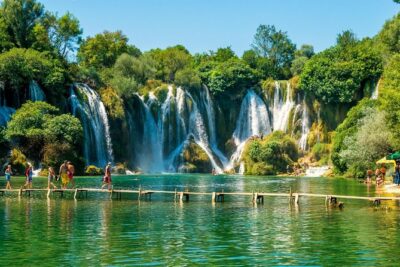
Mostar and Kravice Waterfalls Tour from Dubrovnik (Semi-Private)
Read our review →
Blue & Green Caves Private Boat Tour with Drinks
Read our review →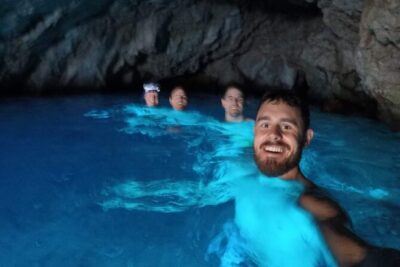
Dubrovnik Private Speedboat Tour to Elaphite Islands with Drinks
Read our review →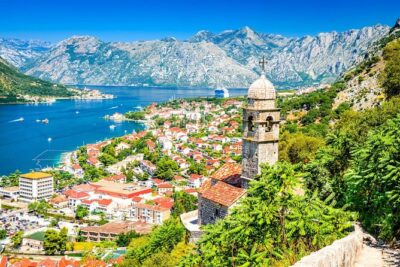
Private Tour: Montenegro Day Trip from Dubrovnik
Read our review →
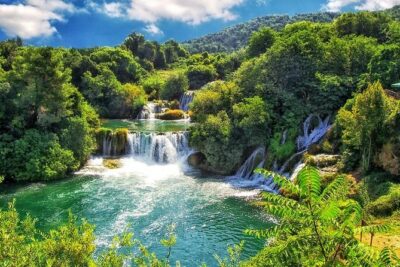
Private Krka Waterfalls tour with 30min Boat Cruse
Read our review →