Reviewed · TOURS
DISCOVERING THE UNKNOWN Extended WW2&UNDERGROUND tour
The most unusual part of this Rijeka tour is not a museum display. It is the chance to walk through the actual wartime defenses outside the city, including the 1,000-meter underground fortress Katarina B. You ride through the hills, stop at old strategic points, then enter a cold concrete world where the Battle of Rijeka becomes easier to picture.
I like the mix of military history and river views, and I like the small-group format, limited to eight people, which gives the guides room to explain things and answer questions. The main caution is that the fortresses are raw, dark, and damp rather than polished attractions. Expect stairs, uneven ground, rusted metal, insects, and temperatures of 14 to 16°C.
In This Review
- Key points to know before booking
- Why Rijeka’s fortresses tell a different story
- The drive along the Louisiana and Petroleum roads
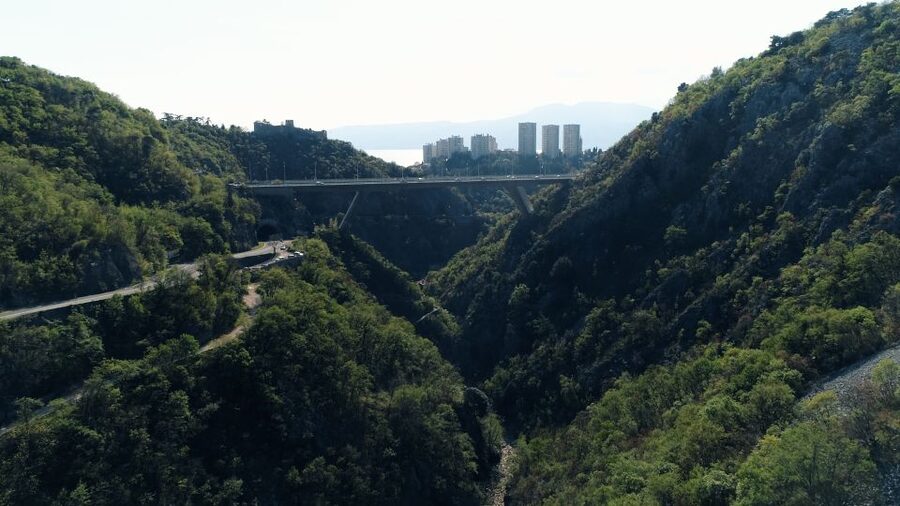
- Banska Vrata and Pašac Bridge
- Walking the fortifications above ground
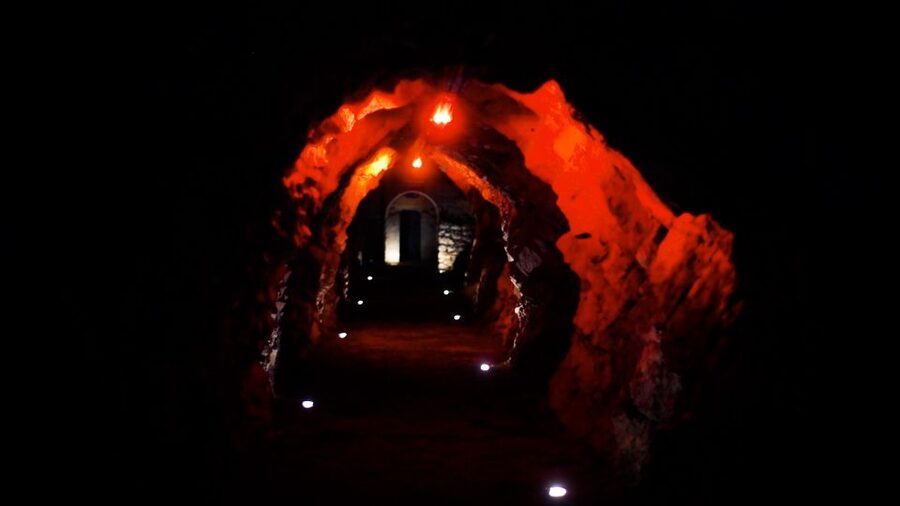
- Inside the 1,000-meter Katarina B fortress
- The unfinished San Giovanni finale
- How much value do you get for $76?
- Who will enjoy this tour most
- Practical advice for a smoother visit
- Should you book the extended tour?
- FAQ
- Where does the tour start and finish?
- How long does the experience last?
- What language is the tour conducted in?
- How large is the group?
- What should I wear and bring?
- Is the tour suitable for everyone?
Key points to know before booking
- Katarina B is the main event: Walk about 1,000 meters through an underground WWII fortress with a helmet and headlamp.
- The tour begins on the road: A small van takes you from central Rijeka to Banska Vrata, Pašac Bridge, and other military sites.
- Views are part of the reward: Look down toward the Rječina River Canyon, old mills, and the city from the fortress walls.
- The ending has atmosphere: San Giovanni’s unfinished underground entrance includes sound effects, a short film, and a glass of wine.
- Guides add personality: English-speaking guides including Sara, Josep, Ela, and David have led the tour.
- Come prepared for rough conditions: Wear hiking shoes or sturdy sneakers, bring a warm layer, and skip this if you have claustrophobia or seizure disorders.
Why Rijeka’s fortresses tell a different story
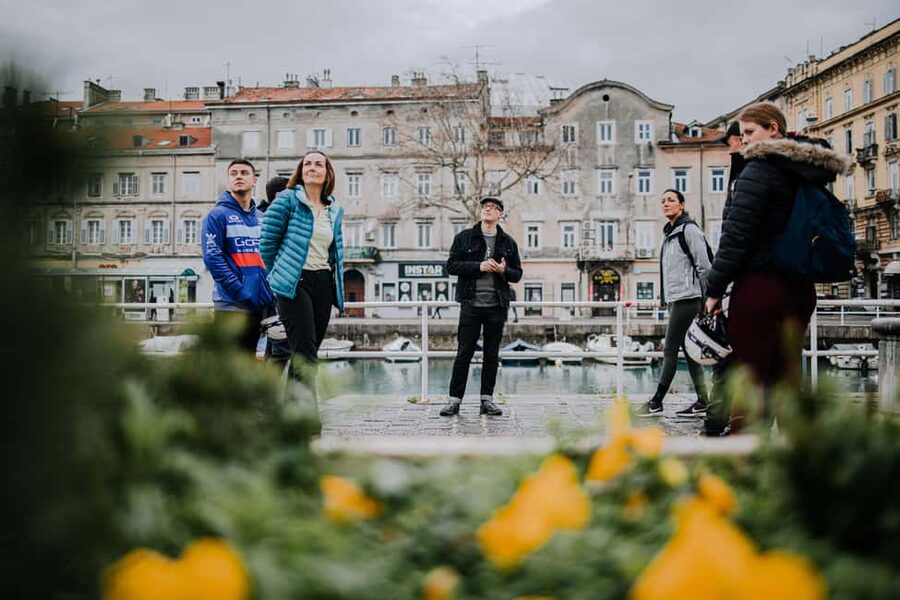
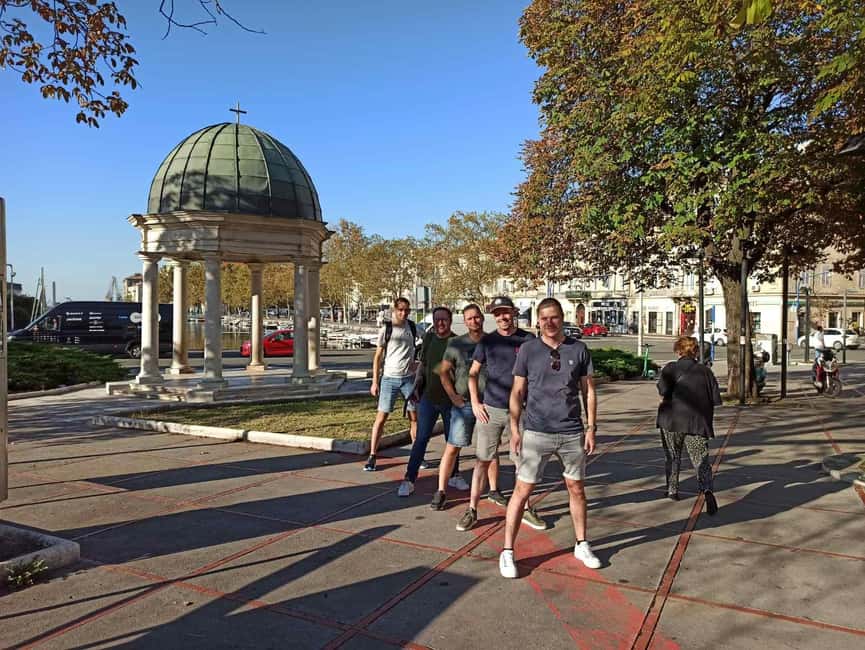
Rijeka is often approached as a port city with Austro-Hungarian buildings, a lively center, and the Kvarner coast nearby. This experience takes you away from the usual streets and into the defensive system built during the 1930s, when borders in this part of Europe were tense and heavily guarded.
The fortresses were designed as part of a connected military defense. Their locations were chosen for control, visibility, and protection of routes into the city. You are not simply looking at an old bunker from outside. You move between above-ground positions, roads, bridges, and underground passages to see how the pieces worked together.
That setting gives the history more weight. A battle map can explain troop movements, but a narrow tunnel, a high ridge, and a view over the Rječina River can show why those places mattered. I find that especially useful if you want more than a standard city tour.
The route also shows a side of Rijeka that is easy to miss. The city’s old mills and river canyon sit below the military sites, so the outing shifts between wartime structures and open views. It is part history lesson, part short countryside excursion.
Other Croatia days people book alongside this one:
- Split: Krka Waterfalls Trip with Boat Cruise and Swimming
★ 4.8 · 10,519 reviews - Blue Cave Small-Group Boat Tour from Dubrovnik
★ 5.0 · 9,360 reviews - From Split: Krka Waterfalls, Food & Wine Tasting Tour
★ 5.0 · 9,326 reviews
The drive along the Louisiana and Petroleum roads
The tour starts and ends in central Rijeka, with organized van transport included. That matters because the forts are outside the usual walking circuit, and reaching several locations independently would take more planning.
The van follows the Louisiana and Petroleum roads, both tied to the movement of people and goods through the region. You get a sense of how Rijeka connects to the inland hills, rather than seeing the city only from its waterfront.
This part of the trip is not packed with formal attractions. At times, you are simply riding through attractive countryside on the way to the next stop. One person found that the amount of driving made the experience feel less dramatic than expected, so you should book this for the fortifications and history first, with scenery as a welcome extra.
The transport is air-conditioned, which is useful in warmer weather. It also saves you from arriving at the underground sections already tired from a long uphill walk. The small group, capped at eight, should make the van ride more personal than a large coach excursion.
Banska Vrata and Pašac Bridge
The early stops help explain the military geography before you enter the tunnels. Banska Vrata and Pašac Bridge are not filler stops. They are strategic points along the approach to Rijeka, and the guide uses them to connect the roads, crossings, and defensive positions.
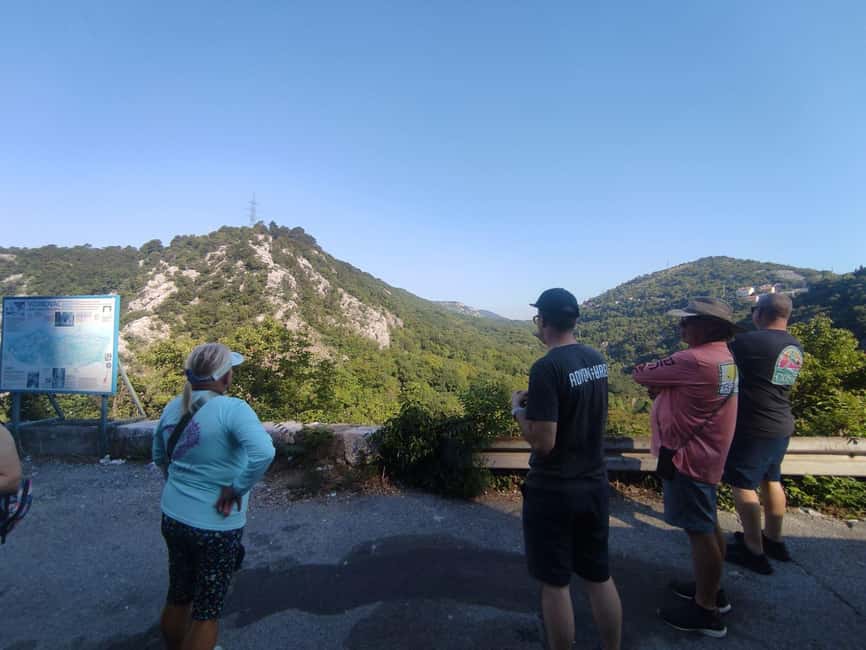
At Banska Vrata, listen for the explanation of how movement through the area could be controlled. At Pašac Bridge, the setting helps you understand the importance of crossings over the Rječina. The stops are also a chance to step out, stretch your legs, and take in views that you would not get from the city center.
Guides such as Sara, Josep, Ela, and David have received praise for being friendly, clear, and willing to discuss more than the basic script. Josep, in particular, has been described as keeping the conversation light while still explaining the war and the surrounding area in detail. That balance helps during a tour with serious subject matter.
You may also receive suggestions for nearby walks, hikes, food, or other places to visit. These tips are useful if you are spending several days around Rijeka and want to continue exploring beyond the organized route.
Walking the fortifications above ground
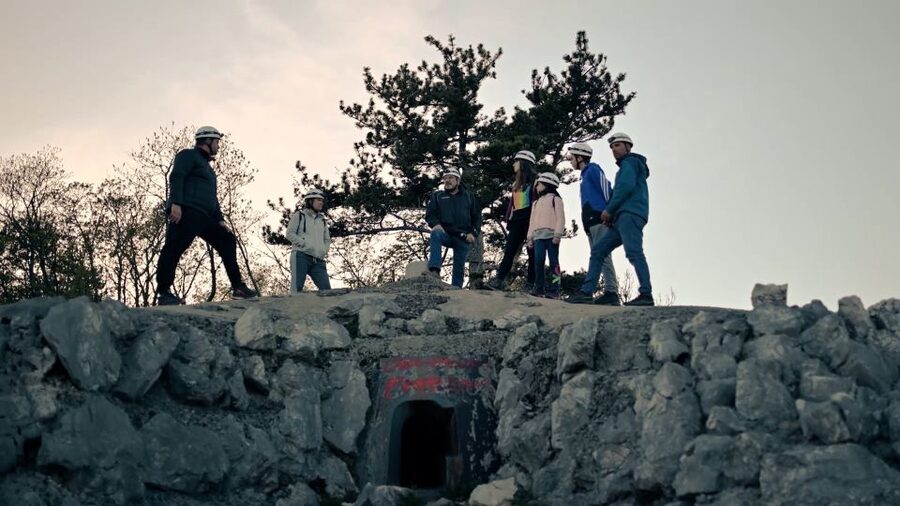
The walking section follows an easy hiking trail, but easy does not mean completely effortless. You will go up and down stairs and walk around rough military structures. Sturdy sneakers may be enough for some people, but hiking shoes are the safer choice, especially if the ground is wet or uneven.
Several above-ground parts of the fortresses appear along the route. They give you a better sense of the scale of the defense system before the main underground visit. You can inspect concrete positions, walk along fortress walls, and look across the Rječina River Canyon.
The views are a strong part of the experience. From above, the old mills and river sit below the military sites, creating a sharp contrast between working industrial history and wartime construction. If you enjoy photography, these stops may be as appealing as the tunnels, particularly because they show Rijeka from an unusual angle.
Still, keep your expectations realistic. These are abandoned or unfinished military spaces, not restored castles. You may see plain concrete, dirt, rusted fittings, and little in the way of surviving wartime objects. One disappointed participant expected a more spectacular display and found the first bunker to be mostly a dirty concrete corridor.
That criticism is fair. The value comes from being in the place and hearing its story, not from a large collection of artifacts.
Same stretch of coast, a completely different day out:
- Full-Day Dubrovnik Elaphite Islands Cruise with Lunch and Drinks
★ 5.0 · 8,823 reviews - Blue cave, Mamma Mia and Hvar, 5 islands speedboat tour
★ 5.0 · 7,150 reviews - From Split: Krka Waterfalls, Food & Wine Tasting Tour
★ 4.9 · 6,598 reviews - Split/Trogir: Blue Cave, Mamma Mia, Hvar and 5 Island Tour
★ 4.6 · 6,320 reviews
Inside the 1,000-meter Katarina B fortress

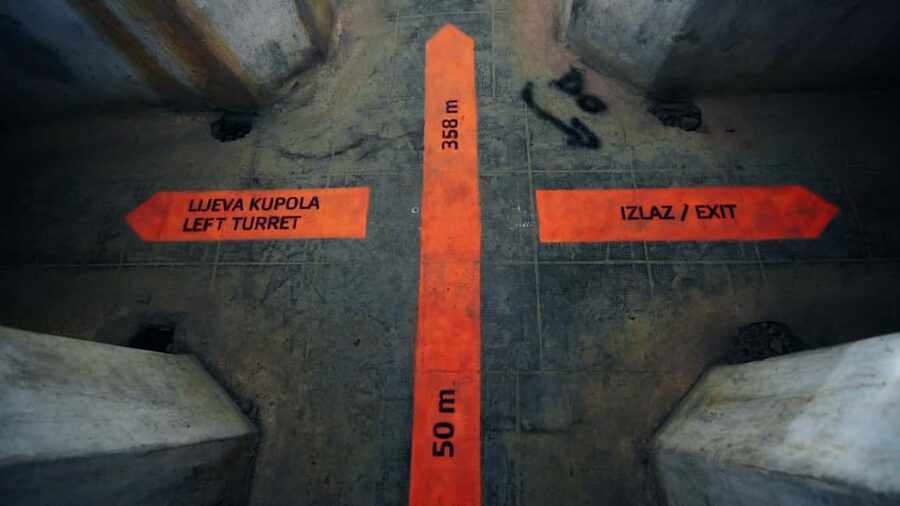
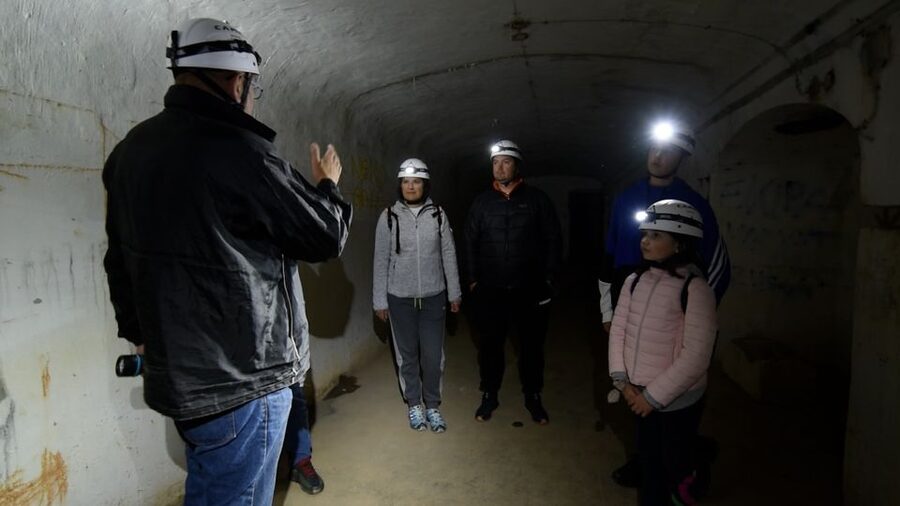
Katarina B is the central reason to choose the extended tour instead of a normal sightseeing outing. You put on a helmet and use a headlamp before walking into the underground fortress. The route is about 1,000 meters long, so this is more than a quick peek through a bunker doorway.
The underground temperature stays around 14 to 16°C. Bring a warmer layer even if Rijeka is hot above ground. One participant found a sweater unnecessary, but the supplied guidance recommends warmer clothing, and I would follow that advice because comfort underground depends on the day and your personal tolerance for cold.
The tunnel is not presented as a pristine attraction. You may encounter damp surfaces, loose-looking or rusty metal parts, insects, and low-light conditions. A review described insects flying near the face, which is a useful warning for anyone who dislikes enclosed natural spaces.
The route includes stairs and some up-and-down movement. It was described as manageable rather than especially strenuous, but you should still move carefully and keep your hands free when possible. Wear closed shoes with a firm sole, and do not choose this tour if claustrophobia would make a long tunnel stressful.
The fortress matters because it places you inside the defensive architecture itself. You can see how thick concrete, narrow passages, and concealed positions shaped movement. The Battle of Rijeka, fought during the liberation of the city in World War II, becomes less abstract when the guide explains it within these spaces.
The tour does not promise dramatic battlefield remains, and you should not expect a collection of weapons or uniforms. Its strength is the setting, the route, and the guide’s explanation.
The unfinished San Giovanni finale
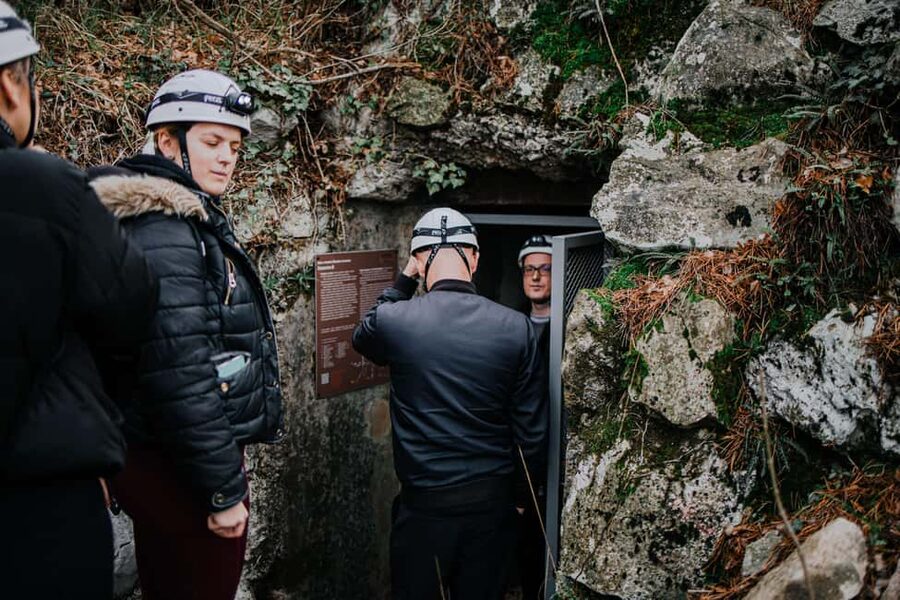
After the main route, the tour returns to the entrance hall of the unfinished underground fortress San Giovanni. This gives the experience a second underground setting, but the mood changes from walking and explanation to a short presentation.
Audio and video effects recreate the sound of an attack. That can be striking inside a raw bunker, where the enclosed space adds force to the sound. It is also an aspect to consider if you are sensitive to simulated battle noise.
A short film follows, focusing on Rijeka’s restoration after World War II. The film broadens the story beyond forts and combat. You see the city not only as a military target, but also as a place that had to repair itself and continue living after the fighting ended.
The ending includes a glass of wine and time to socialize. I like this choice because it lets the tour finish quietly after the darker material. The wine is served in an unfinished military setting, which is memorable without pretending the bunker has been turned into a luxury venue.
How much value do you get for $76?
At $76 per person, this is not the cheapest way to spend three hours in Rijeka. The price includes van transport, an English-speaking professional guide, entrance to the underground forts, helmets, headlamps, insurance, the sound and video presentation, and wine tasting.
I think the price makes sense if you value access and context. The forts are outside the center, and the transport links several places that would be awkward to combine on your own. You also get a guide who can explain the battle, the roads, the fortifications, and the city’s postwar recovery in one connected experience.
The value is weaker if you want dramatic ruins, preserved military equipment, or a highly visual museum. Much of what you see is concrete, stone, forest, and dark passageways. If the subject does not interest you, the drive and first bunker may feel underwhelming.
The extended tour is best compared with the shorter Basic WW2 and Underground option. Choose this longer version if you want the extra stops, views, and full route. If three hours of military history sounds like too much, the basic option may be a better fit.
Who will enjoy this tour most
I would recommend it to adults and older children who enjoy history, unusual places, and walking outdoors. The minimum age is 10, and the tour is not suitable for people over 70 according to the activity rules.
Families should read the age guidance carefully. One booking included children aged 12, 9, and 7 and reported a very good time, but the stated minimum is 10, so do not assume younger children will be accepted.
This is also a good choice if you have already seen Rijeka’s central sights and want something different. You will leave the city streets, ride into the surrounding area, and see how the river corridor and hills shaped the city’s defenses.
I would not book it for someone with claustrophobia, a seizure disorder, or a strong dislike of insects and rough spaces. The operator specifically warns that the underground facilities are entered at your own risk and does not recommend the tour for people who suffer from epileptic seizures or claustrophobia.
Practical advice for a smoother visit
Wear hiking shoes or sturdy sneakers. The combination of stairs, uneven trails, old concrete, and metal remains calls for more support than sandals.
Bring a warm layer for the underground sections. Fourteen to 16°C may sound mild, but a long walk through cool tunnels can feel chilly, especially after spending time outdoors in the sun.
Keep your expectations focused on atmosphere and explanation. You will not necessarily see obvious battle debris or a polished exhibition. The first bunker may look plain, while Katarina B provides the more substantial underground experience.
Ask questions as you go. The small group gives you a better chance to speak with the guide, and the guides have been praised for both historical detail and friendly conversation. English is the tour language.
The experience lasts three hours, so it fits neatly into a day of sightseeing. Free cancellation is available up to 24 hours before the start, and you can reserve now and pay later, which gives you some flexibility when your Rijeka plans are still shifting.
Should you book the extended tour?
Book it if you want Rijeka’s wartime past explained at the places where it happened, rather than in a city museum. The underground walk through Katarina B, the views from the fortress walls, and the quiet wine in San Giovanni make this a distinctive half-day outing.
Skip it if you want restored interiors, major battlefield artifacts, or constant action. Some sections are plain, dirty, and unfinished, and the drive through the hills takes up part of the three hours.
For the right person, $76 is fair because it covers transport, equipment, access, guiding, and a carefully connected route. I would choose the extended version for a history-minded visitor who wants to see Rijeka from its defensive hills down to the Rječina River, while someone with only a passing interest in WWII may be happier with the shorter option.
FAQ
Where does the tour start and finish?
The tour starts and ends in Rijeka city center. Organized van transport is provided for the route to the fortresses and other historical stops.
How long does the experience last?
The tour lasts three hours. Starting times depend on availability.
What language is the tour conducted in?
The live guided tour is conducted in English.
How large is the group?
The tour is limited to eight participants, making it a small-group experience.
What should I wear and bring?
Bring warmer clothing because the underground facilities stay around 14 to 16°C. Wear hiking shoes or sturdy sneakers for the stairs, trails, and uneven surfaces.
Is the tour suitable for everyone?
Children under 10 and people over 70 are not accepted according to the activity information. The tour is also not recommended for people with claustrophobia or epileptic seizures.
Just added around Croatia
- Postojna Cave & Predjama Castle – Shore Excursion from Rijeka★ 4.5 · 10 reviews
- Rovinj guided tour – personally ( german )★ 5.0 · 4 reviews
- Private Guided Sunset Dolphin Watching in Adriatic Sea★ 5.0 · 12 reviews
- Plitvice Lakes Day Tour from Rijeka, Simple & Safe★ 4.0 · 8 reviews
- Photo safari trough the Winnetou canyon★ 5.0 · 17 reviews
- Day trip to Poreč and Pula with lunch from Rovinj★ 5.0 · 15 reviews
- Istria Wine Tour from Rijeka and Opatija★ 5.0 · 11 reviews
- Private walking tour Opatija -Romantic spotlight of the Adriatic★ 5.0 · 12 reviews
Tours, compared.
Blue Cave Small-Group Boat Tour from Dubrovnik
Read our review →
Blue cave, Mamma Mia and Hvar, 5 islands speedboat tour
Read our review →
Blue Cave, Mamma Mia, Hvar and 5 Island Tour
Read our review →
Epic Game of Thrones Tour + Lokrum & Saver Option
Read our review →