
Reviewed · HVAR TOURS
Back to the Roots – Ancient Island Interactive Experience
The most interesting part of this Hvar experience is that you do not simply look at old tools behind glass. In a 150-year-old family home in Vrisnik, you can grind wheat, work with a fisherman’s net, press grapes, salt fish, and see how daily chores once depended on fire and hand power.
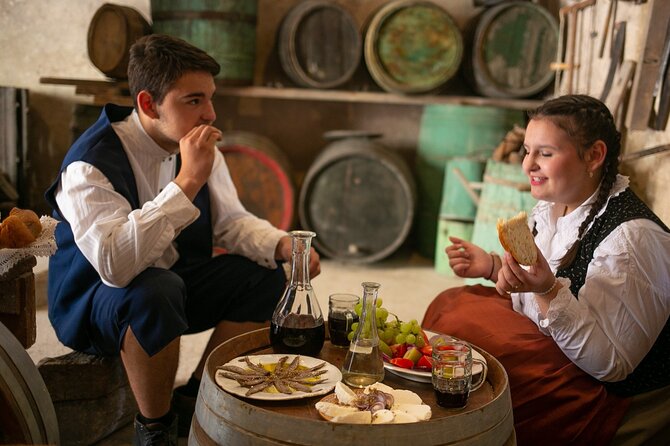
I like the direct, hands-on format, and I like the warm family welcome from hosts including Jaksa, Lana, Magdalena, and Jacob. The food also has a clear purpose: bread, olive oil, sardines, vegetables, and cookies help you understand how island families ate, worked, and used what they had.
The main consideration is the price, $155.33 per person for about 75 minutes. That is a serious cost for a short activity, so it makes the most sense if you value a private, personal encounter more than a standard sightseeing stop.
In This Review
- Key points to know before you book
- Entering Terra Arhaica in Vrisnik
- Grinding wheat and learning the work behind bread
- The fireplace, peka, and old kitchen routine
- Pressing grapes and understanding island preservation
- Fisherman’s nets, tools, and small repairs
- A farmer’s and fisherman’s meal in small courses
- Why the family hosts make the difference
- Is 75 minutes enough?
- Who will get the most from this experience?
- Price, privacy, and cancellation
- Should you book Terra Arhaica?
- FAQ
- Where does the Back to the Roots experience take place?
- How long does the experience last?
- What language is the experience offered in?
- Is this a private tour?
- What food can I expect to taste?
- Can I cancel for a full refund?
Key points to know before you book
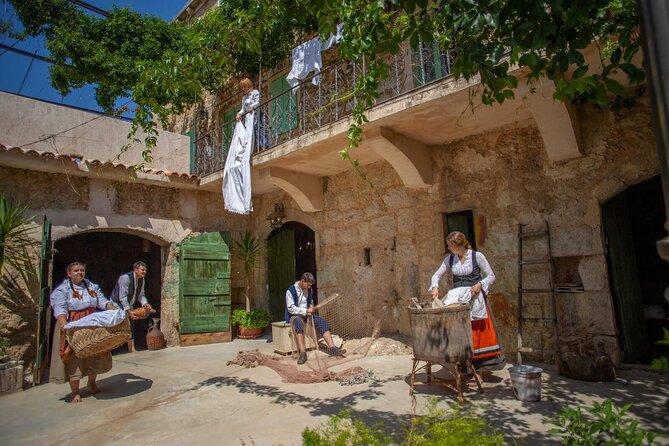
- A real family home in Vrisnik: You explore a historic house tied to the family’s parents, grandparents, and earlier generations.
- Hands-on old crafts: Grind wheat, handle winemaking tools, mend a net, salt fish, weave a small item, and try a cooper’s craft.
- Food is part of the lesson: Warm bread, olive oil, garden vegetables, sardines, a farmer’s and fisherman’s lunch, and paprenjok cookies connect the activities to island life.
- Private for your group: Only your party takes part, which allows more time for questions and participation.
- A short but full visit: The experience lasts about 1 hour and 15 minutes, ending where it begins.
- Best for curious eaters and families: Children can take part in the practical jobs, while adults get a clearer sense of how demanding ordinary life once was.
Entering Terra Arhaica in Vrisnik
Vrisnik gives this experience a different feel from a quick stop in Hvar Town. The meeting point is listed at 5M32+9F Vrisnik, Croatia, and the activity returns there at the end. You will want to check the exact meeting details after booking, since the location is given by a map code rather than a conventional street address.
The setting is a family home that has been presented as it might have functioned in earlier generations. The house is about 150 years old, and the family connection is central. You are not being shown a collection assembled from unrelated places. You are being introduced to tools, rooms, recipes, and customs linked to the people who lived there.
The hosts welcome you in traditional clothing and begin with the story of the home. That personal introduction matters. Old objects can seem dull when you do not know what they did. Here, a mill, a net-making tool, a wine implement, or a kitchen item gets a job and a story.
I especially like that the visit does not pretend rural life was easy. Grinding flour, preparing food over a wood fire, tending vines, preserving fish, and repairing equipment took time and strength. Even making a simple cup of coffee once involved far more work than most modern visitors expect.
Other Hvar days people book alongside this one:
- Blue Cave & Vis Island speedboat tour from Hvar
★ 5.0 · 890 reviews - From Hvar: Vis Island and Blue Cave Speedboat Tour
★ 4.8 · 773 reviews - Blue Cave and Pakleni Islands group Tour from Hvar
★ 5.0 · 490 reviews
Grinding wheat and learning the work behind bread
One of the clearest activities is grinding your own wheat. This is a small task, but it quickly turns an everyday food into something physical. You get a better sense of the labor behind flour before the dough ever reached a fireplace.
The bread is then part of the tasting. You can scoop olive oil from a stone vessel and try it with fresh, warm bread. This combination is simple, but it shows the value of local staples: grain, olive trees, heat, and time.
The experience explains how ancestors made bread under the peka. The peka is a traditional covered cooking method associated with slow cooking beneath hot embers. Here, it is not just a cooking term on a menu. It helps you see why the fireplace was the center of the home.
The supplied details do not promise that every part of a full bread-making process will be completed by you from start to finish. Expect a demonstration and practical participation, with the grinding activity clearly included. If baking is your main reason for booking, ask the operator what will be prepared during your date.
The fireplace, peka, and old kitchen routine
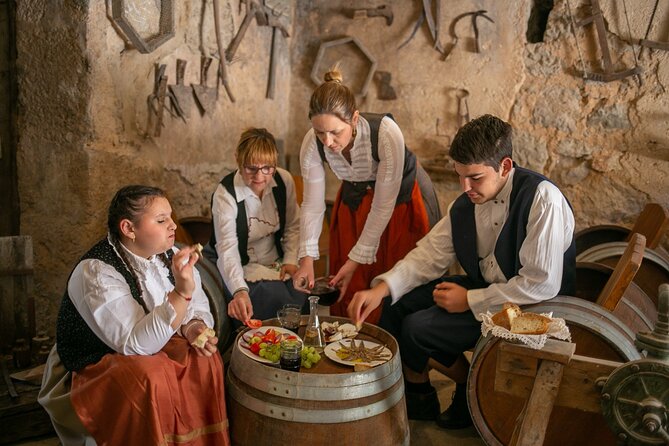
The old kitchen is one of the strongest parts of the visit. You are shown what a typical morning routine looked like more than a century ago, including the role of the fireplace and the tools needed before cooking could begin.
This is useful context for the meal that follows. Food cooked over wood and embers is not presented as a fancy restaurant trick. It was a daily method shaped by what the household had available.
You also learn how clothes were ironed with embers. That detail may sound minor, but it captures the practical ingenuity of a home without modern appliances. The same is true of drying figs, preserving fish, and using simple tools for repeated household jobs.
For me, these chores give the experience its strongest educational value. Famous sights often tell you who built a place or when a ruler lived there. This visit asks a more grounded question: how did ordinary people get through a normal day?
Pressing grapes and understanding island preservation
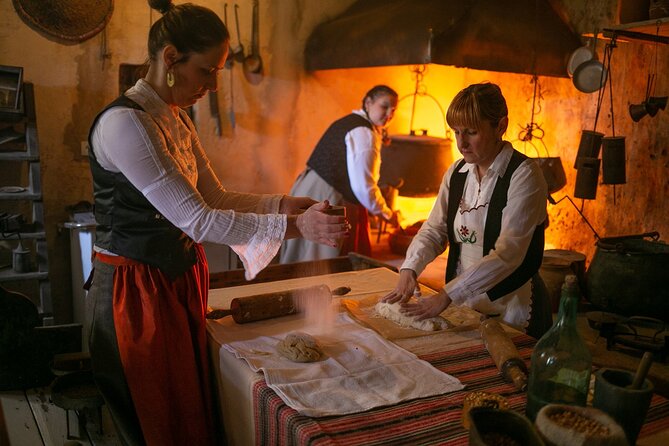
Grape pressing is another hands-on activity. You learn how grapes were pressed and how juice was turned into wine. The winemaking tools help connect Hvar’s agricultural traditions with the work involved in storing food and drink for later use.
Some descriptions of the visit also include wine and grappa tasting. The main activity details focus on pressing grapes and making wine, so you should think of this as a traditional food and household experience rather than a dedicated winery tour.
The same practical approach appears in the fish preparation. You learn how to salt your own fish, then combine salted sardines with fresh tomatoes and zucchini picked from the garden. This is a useful pairing because it brings together preservation and fresh produce in one dish.
The garden element also keeps the food from feeling abstract. You do not just hear that island families relied on vegetables. You handle ingredients connected to the meal. The result is a better understanding of seasonal cooking, even within a short visit.
Same stretch of coast, a completely different day out:
- From Hvar: Blue and Green Cave Day Tour
★ 4.3 · 479 reviews - Boat Tour at Delfina Hvar
★ 5.0 · 243 reviews - Blue cave group tour with swimming and snorkelling from Hvar
★ 5.0 · 227 reviews - BLUE CAVE & 5 islands tour from Hvar
★ 4.5 · 224 reviews
Fisherman’s nets, tools, and small repairs
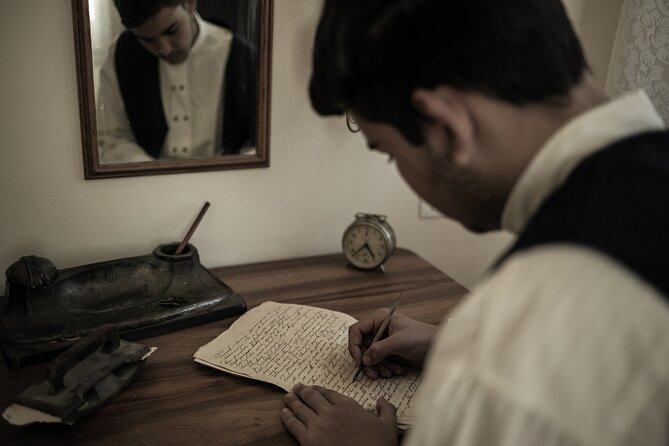
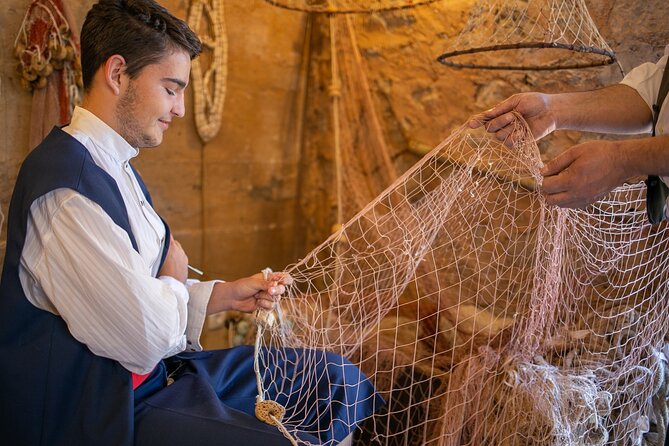
The fishing section focuses on how to mend a fisherman’s net and become familiar with the tools. This is a good example of the experience’s wider message: island life required people to maintain what they owned.
A torn net was not simply thrown away and replaced. It had to be repaired. The same attitude applied to barrels, clothing, cooking tools, and household equipment.
You may also try a moment of the cooper’s craft. Cooperage involves making and repairing wooden barrels and other vessels. The details provided do not specify how long you work with each craft, so expect a short introduction rather than a full trade course.
You can also learn how to weave a scarf or bracelet. This adds a gentler, more tactile activity to the heavier jobs of grinding, pressing, and net repair. It should work well for families, since different ages can take part in different tasks.
A farmer’s and fisherman’s meal in small courses
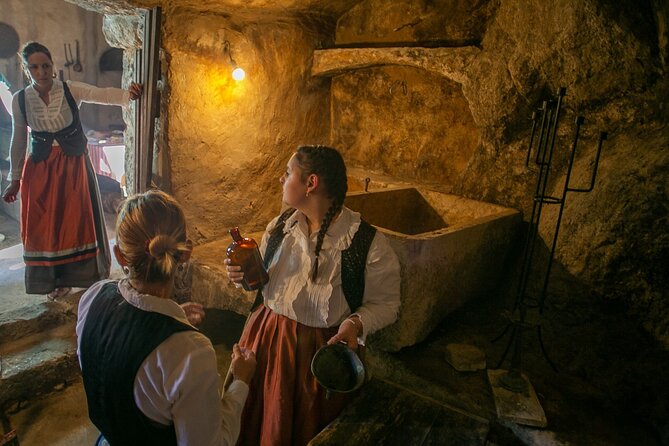
Food is not an afterthought here. The meal brings the demonstrations together and gives you a reason to notice how each ingredient was produced or preserved.
The listed tastes include warm bread with olive oil, salted sardines with tomatoes and zucchini, a combination of a farmer’s and fisherman’s lunch, and a traditional paprenjok cookie. Paprenjok is a Croatian spiced cookie, and part of the fun is learning about its secret recipe.
The meal may also include several traditional cookies and the chance to shape or decorate your own cookie using older methods. Accounts of the experience also describe starters, a main course, desserts, and after-dinner drinks on some visits. One traditional main dish, once made with small birds, is now prepared with chicken.
Because menus can change, I would not treat every reported dish as guaranteed for every booking. The core promise is a traditional tasting linked to the activities, with bread, olive oil, fish, garden produce, lunch, and paprenjok specifically highlighted.
That distinction is helpful when judging the price. If you are looking only for lunch, $155.33 is expensive. If you want food plus a private demonstration, family storytelling, and active participation in old household skills, the value is easier to understand.
Why the family hosts make the difference
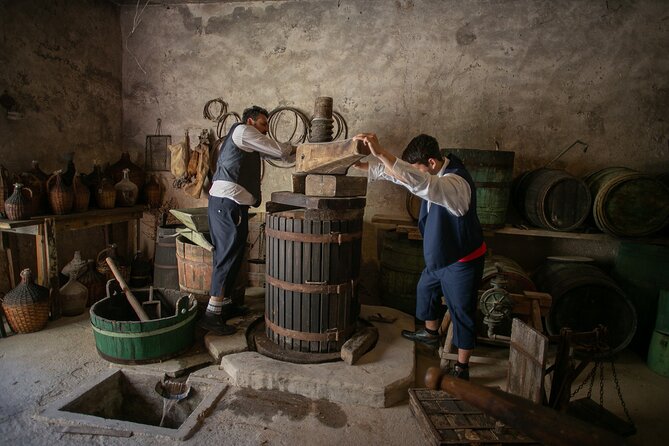
The hosts are a major part of the experience. The family welcomes you into the home, explains the objects, and presents the work in traditional clothing. Names connected with the experience include Jaksa, Lana, Magdalena, and Jacob.
Their role is not simply to recite dates. They explain how their parents, grandparents, and earlier family members lived in the same place. That link gives the house a sense of continuity without turning it into a formal museum.
I like this approach because it leaves room for ordinary details. You learn about the labor of making flour, preparing coffee, cooking over fire, fixing nets, and preserving food. These details tell you more about daily life than a long list of historical names.
The private format is also important. Only your group participates, so you should have more freedom to ask questions and spend a little longer with the activities that interest you. It also means you will not be watching a large crowd cycle through a demonstration.
Is 75 minutes enough?
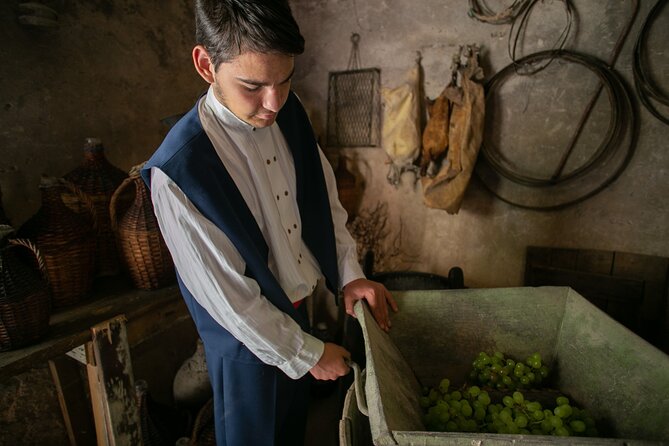
The scheduled duration is about 1 hour and 15 minutes. That is enough time for a focused introduction to the home, several demonstrations, hands-on tasks, and food tasting, but it is not a full afternoon workshop.
You should arrive ready for a compact sequence rather than a slow, open-ended visit. There is a lot to cover: bread, wheat, the peka, wine, fishing, salted fish, vegetables, figs, weaving, cooperage, ironing, and cookies.
The short length can be an advantage if you are fitting Vrisnik into a larger Hvar day. It works as a focused cultural stop rather than a commitment that takes over your schedule.
The drawback is that some activities will necessarily be brief. You will not become a baker, winemaker, fisherman, cooper, and weaver in 75 minutes. Think of the visit as an introduction that lets you try the tools and understand their purpose.
Who will get the most from this experience?
I would choose this for you if you want to meet local people and understand Hvar through food and work, not just scenery. It suits anyone interested in traditional cooking, family history, rural life, or the practical side of Croatian culture.
Families can also get a lot from it. Children aged 10 and 12 have taken part in the past, and the hands-on jobs give them something to do beyond listening. Grinding, weaving, cookie shaping, and net work are easier for young visitors to remember than a standard talk.
Food lovers will appreciate the connection between ingredient and technique. You can taste the olive oil after hearing how the food was prepared, and you can eat salted sardines with vegetables after learning why preservation mattered.
This may be less suitable if you want a long historical lecture, a large formal museum, or a full cooking class with detailed recipes. It is also not the best value for someone who wants only a meal.
The experience is offered in English. Mobile tickets are available, service animals are allowed, and confirmation is sent within 48 hours of booking, subject to availability.
Price, privacy, and cancellation
At $155.33 per person, this costs more than a normal museum visit or casual lunch. The price covers a private activity for your group, family hosting, demonstrations, hands-on work, and a traditional food experience, so the comparison should be with a private cultural workshop rather than a simple attraction.
I would book it when you are traveling with people who will ask questions, handle the tools, and appreciate the food. A private group gets more value here than a large party that wants to move quickly.
You can cancel for a full refund up to 24 hours before the start time. Changes or cancellations made less than 24 hours before the experience are not accepted for a refund, and the cut-off uses local time.
Should you book Terra Arhaica?
Book it if you want one of Hvar’s more personal cultural experiences and you are happy to pay for access to a family home, direct instruction, and a meal tied to old island customs. The strongest features are the hosts, the historic setting, and the way the activities make daily work easy to picture.
I would be cautious if your budget is tight or if you expect a long, technical cooking course. The visit is short, and some crafts are introductions rather than extended lessons.
For most curious families, food-minded visitors, and anyone who wants to understand Hvar beyond its beaches, this is a strong choice. The best reason to go is simple: you leave with a clearer idea of how bread, wine, fish, clothing, and household life once depended on hands, fire, and local materials.
FAQ
Where does the Back to the Roots experience take place?
It takes place in Vrisnik on Hvar Island, Croatia. The listed meeting point is 5M32+9F Vrisnik, Croatia, and the activity ends back at the meeting point.
How long does the experience last?
The activity lasts approximately 1 hour and 15 minutes.
What language is the experience offered in?
The experience is offered in English.
Is this a private tour?
Yes. Only your group participates in the activity.
What food can I expect to taste?
The experience includes warm bread with olive oil, salted sardines with fresh tomatoes and zucchini, a farmer’s and fisherman’s lunch, and traditional paprenjok cookies. Other traditional foods or drinks may also be included as part of the visit.
Can I cancel for a full refund?
Yes. You can cancel at least 24 hours before the local start time for a full refund. Cancellations or changes made less than 24 hours before the start time are not accepted.
Just added around Hvar
- Wine Lovers tour from Hvar★ 5.0 · 5 reviews
- Tuk Tuk Sightseeing Tour of Hvar★ 5.0 · 68 reviews
- Water Taxi Ride from Hvar to Split Airport★ 5.0 · 5 reviews
- Cycle Hvar Tour★ 5.0 · 131 reviews
- Sunset Kayak Tour in Hvar Town, Croatia★ 5.0 · 4 reviews
- Stand Up Paddle (SUP) board rental★ 5.0 · 17 reviews
- Sunset Sailing Tour on the Pakleni Islands★ 5.0 · 10 reviews
- Jewels of Hvar – Private Walking Tour★ 4.5 · 6 reviews
Hvar Tours, compared.

Blue Cave & Vis Island speedboat tour from Hvar
Read our review →
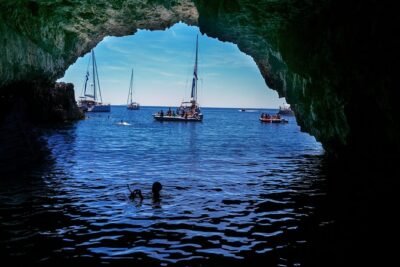
Blue Cave and Pakleni Islands group Tour from Hvar
Read our review →
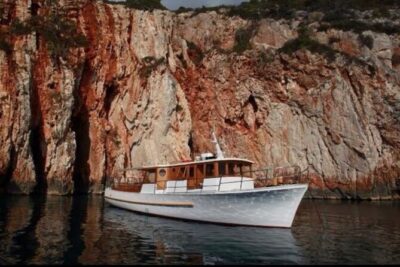
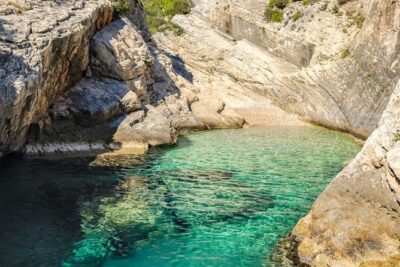
Blue cave group tour with swimming and snorkelling from Hvar
Read our review →

Half Day Sailing on a comfort yacht around Hvar and Pakleni islands- small group
Read our review →Browse the lists this tour appears in